This is The Indicator from Planet Money.
I'm Darren Woods. And today I'm joined by Business Journalist, Tala Bhaisaram.
Welcome. Thanks so much for having me.
And today you're here to talk about international students.
Right. As you know, since March, the Trump administration has been revoking visas from foreign students across the country, from the biggest state -school systems to tiny community colleges.
They started targeting students with perceived links to pro -Palestinian activism.
It has since expanded to include some students with minor infractions with the law.
Some universities are advising students not to travel out of the country because of the issues some visa holders have had at the border.
All of this is leading to panic among some foreign -born students who are now searching for escape routes, like Valentina Tardunio -Poleo.
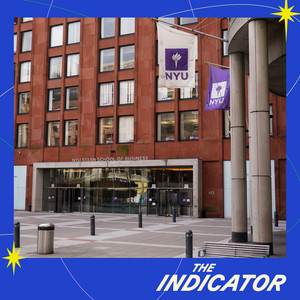
She's from Venezuela and is three years into a physics Ph .D. at NYU.
But she's relocating to Oxford University this summer.
A Ph .D. is a very long commitment.
So I had this idea in my head, this is where I'm going to be for the next five, six, seven, who knows how many years, I got a cat.
I was never planning on moving a cat to the UK.
She's choosing, essentially, to self -deport.
She feels it's best for her own safety, given the current climate.
Other current and prospective students are also shopping elsewhere.
So what happens if a new generation of bright -eyed scholars decide to forego school in the US and take their dollars elsewhere?
Today on The Indicator, the economic impact of Trump's crackdown on international students.
Do you think you have ADHD?
You're not alone. After the pandemic hit, there was a huge jump in ADHD diagnoses among adults, and at the same time the internet is more and more obsessed with saying everything as a sign of it.
You might have ADHD.
To identify the red flags when a diagnosis goes viral.
Listen to the It's Been a Minute podcast today.
At any given year, there are a million or so international students in the US.
That's about 6 % of the higher ed student population.
But last school year, they contributed $44 billion to the US economy and created and supported close to 400 ,000 American jobs.
International students coming into the country are considered an export.
That's because they purchase an American service, education, and generate revenue for the US with foreign currency.
And the US has a surplus in the sector, because foreigners buy education at a much higher rate from the US than vice versa.
They're coming with loaded wallets because they have to prove they have the money to sustain themselves, usually without work or financial aid.
So for a number of years they're boosting local economies in all corners of the country.
Barnett Sherman is a professor of Multinational Finance and Trade at Boston University.
I was looking at Mankato, Minnesota, 45 ,000 people south of Minneapolis.
It hosts the Minnesota State University campus.
They had about 1 ,700 international students calling Mankato their home.
Those students brought $45 million into that community.
Foreign students generally pay full whack on tuition and living expenses.
It turns out that New York University hosts the most. Its international student enrollment surged 250 % over the last decade.
Tuition for a four -year degree there is around $260 ,000.
These fees are a big source of income for colleges across the country.
One recent estimate says it accounts for an average of 12 % of total tuition for public universities.
It actually could be viewed, to some degree, as a subsidy to U .S. students.
It's certainly a benefit to the schools because the enrollment has been declining in U .S. institutions for the last 10 years.
It's down over 2 million students, U .S. domestic students, so the international student provides a great opportunity for schools to bolster up and improve their revenues and improve their course offerings.
It's true. One study showed that some public schools used foreign recruitment to weather the 2008 recession.
For several years, Michigan State University increased international enrollment by a factor of 6".
But now, that usually reliable source of funding might be in jeopardy.
Just between January and March this year, interest in masters and PhD study in the U .S. dropped 38%.
that's according to study portals, which gathers research about study programs around the world.
The nonprofit American Council on Education, or ACE, suggests that it may have something to do with Trump's policies.
After he entered office, DHS and the State Department started singling out students speaking in favor of Palestinian rights.
This was Marco Rubio back in March. Every time I find one of these lunatics, I take away their visa.
You're saying it could be more than 300 people.
Sure. At some point, I hope we run out because we've gotten rid of all of them.
But we're looking every day." That includes at least a few cases for crimes like drunk driving, but other reasons are even hazier.
They're canceling visas for years -old infractions like speeding, staying in parks after hours, and even catching more fish than is permitted with a fishing license.
After a ton of lawsuits, on April 25th the Trump administration temporarily restored legal status for some students, saying it is working on a new policy for determining their legal right to study in the US.
But it doesn't cover them all, and it doesn't eliminate uncertainty.
Further, Immigration and Customs Enforcement explicitly said that it is actively formulating a new framework for terminations.
They're not done with this.
We reached out to the State Department, who told us that, along with the Department of Homeland Security, it enforces zero tolerance for aliens in the United States who violate our laws threaten public safety or in, quote, other situations where warranted.
But this is all unsettling for students like Valentina.
Quick note, for all intents and purposes, Valentina is an international student but she's on temporary protected status or TPS, a category for people facing political unrest in their home countries.
Trump tried to take Venezuelans off the list and though the courts pause that, Valentina does not feel that her status here is safe, so she made the decision to leave. All of my friends are here, I have an apartment that I love, roommates that I love.
My close family is all in the US.
Once I leave, I'm probably not going to be allowed to come back for who knows how many years.
As a PhD student in the sciences, Valentina does receive fellowship funding so does not pay tuition, but she is contributing to the economy and is having her life uprooted nonetheless.
She's glad she planned ahead with the move to Oxford University because she says she feels even more unsafe in the U .S. now, after more than 200 Venezuelans with alleged but tenuous ties to gangs have been sent to the hellish Seacock Prison in El Salvador.
The plan is to leave in June but I kind of have everything packed.
So, if at a moment's notice I had to leave, I'm ready to go whenever.
Foreign students do have options.
Most come from India and China and those countries are growing their own education offerings.
Canada, Australia and the UK are strong traditional alternatives.
And other super affordable options are attractive.
There are a lot of US students that are looking abroad and saying, gee, why should I go into debt when I can go overseas and get a great education?
Also, those foreign colleges aren't dealing with threatened freezes on funding if they don't bow down to the government's demands.
Which is happening in the U .S. For example, one of the many stipulations for releasing funds to Harvard is that it stops admitting international students hostile to the values inscribed in the U .S. Constitution and Declaration of Independence.
Whatever that means.
So overall, students are getting a raw deal for the massive checks they're writing.
No guarantees on research funding, freedom of speech or even being let into the country.
For Valentina, starting a new chapter in the UK outweighed the hassles of staying.
And there was one more thing I just had to ask her about that transatlantic cat move.
Do you have two hours?
So apparently the UK has no rabies.
If you want to move a cat, you can't fly with it, you have to ship it like a package.
And that's like 4 ,000 pounds or so.
So a friend is going to fly my cat to Paris and then I'm going to drive from London to Paris, pick it up, go to Calais, take a ferry and then drive back.
So I wouldn't recommend that.
So it turns out moving where you study is a bit like herding cats.
Who would've thought?
So much hassle. Well, thanks so much for joining us, Dalu.
Appreciate you having me here.
By the way, tomorrow on the show, we're going to dig more into the brain train and not just from students, but also professors and scientists.
We're seeing data that scientists and researchers appear to be fleeing overseas amid cuts to research grants and border issues.
This episode was produced by Kupacatz McKim with engineering by Jimmy Keighley and Harry Paul.
It was fact checked by Sierra Juarez.
Kake and Cannon is the show's editor and The Indicator is a production of NPR.