You're listening to Brainzon, a rare series about beingcurious.
Brainz on is supported in part by a grant from the National ScienceFoundation.
Molly, why is there so dark inhere?
Maxwell, welcometo...
Ouch! Myknee, Imean, welcome to Brainz onheadquarters.
So glad you'rehere.Here,here, check itout.
I even wore my super snazzy sweater vesttoday.
See? It's purple with lightning bolts onit.
Seewhat? I can't even seeanything.
You're so only dark inhere.
Isit? I hadn'tnoticed.
Molly.Okay,okay,alright.
The power went out earlier and I've been waiting for it to come backon.
But don'tworry, we'll figure itout.
We just have to find our way out of herefirst.
What ifwe...Oops. What is thisstuff?
It is so warm andsticky.
Oh,that! It's just a new concoction Mark came upwith.
Hot bananasoup. It's like if dinner and dessert had ababy, but that baby wasyellow, sickly sweet and kind ofchunky.
Here, let me get you atowel.
Oh! There's my sequincollection.
I've been looking everywhere forit.
Sequins? Hopping in asoup.
This is gettingmessy. I promise I have everything undercontrol,Maxwell.
Whoops! Just need tofind...ah-ha!
Found thematches! Now I'll just light this candleand...
Ta-da! I'm goodness formatches.
Oh, nice woodvest,Molly.
Thankyou, and I love your sticky yellow sequinsshirt.
Oh,wait.Yeah. It'sokay.
We have spare shirts around heresomewhere.
You're listening to Brains on from APMStudios, and I'm here with myco-host, Maxwell fromHouston.
Hi,Maxwell.Hey,Molly.
Hey,Maxwell. We are so glad you'rehere.
Today we're talking about those incredible little sticks that make firematches.
And asalways, today's episode was inspired by questions from a few of ourlisteners.
Hi, my name isElliot, and I am fromPembroke,Ontario.
I waswondering, how does a match innight, what's inside the match that makes itlight?
How does itwork? Thankyou.
Hi, my name isStalin.Hi, my name isLuca.
And we're fromBrooklyn, NewYork.
And we werewondering, how do matches lightfire?
Thanks toElliot,Stalin, and Luca for sending in those excellentquestions.
So,Maxwell, your family doesn't really usematches,right?
I'm just someone for the first timeyesterday.
So, when you saw a match for the firsttime, were you surprised by what it lookedlike?
Yes. They're reallytiny.
It's kind of amazing that they can make fire sowell.
Now, what's your favorite thing that you use firefor?
The birthdaycandles. They blew out thecandles.
And this is my birthday lastyear.
I love blowing out thecandles.
It's a fun thing todo. Have you used fire outside to toastmarshmallows?
Yeah, we wrote them marshmallows and we roastedsausage.
Who? You roasted blueberrysausage.
That soundswonderful.
So, is food more delicious when you make itoutside?
Yeah, itis. It'sawesome.
Socool. Matches are really useful andinteresting.
Like, did you know the name match may have come from the Greek wordmixa?
Mixa meanswick. That's the stringy thing that you light on a candle or an oldlamp.
But it can also mean slime or danglingsnot.
Like how a booger dangles from yournose.
I bet that's snot where you thought that wouldgo,huh?
Anyway, inEnglish, the word match can mean lots of differentthings, like a pair of things that gotogether.
Doesn'tmatch. A game oftennis?
Doesn'tmatch. Someone who can challengeyou.
You match yourmatch. It's kind of odd that something as unique and important as a match that makes fire should have such a totally commonname.
So, we asked you to help us come up with some new dynamic names formatches.
And your responses werefire.
If I was going to come up with a new name for amatch, it would beflickfire.
My idea for a new name for matches is small magical fireproducer.
My match's name isEmbatwik.
My new name for matches is Firestarters.
I call it a firestick. Kalimakesfire.
I would call matchesfirebox.
I would call them thefirebox.
Because at the end ofthem, it kind of looks like little littlebugs.
My name for matches would be Fireframers.
I would call matches tinytorches.
Thanks toCharlie,Claire,Noah,Owen,Gabriel,Galilee,London,Vera, and Sophia for sending thosein.
SoMaxwell, if you could come up with a new name formatches, what would itbe?
I call themMax's. You'd name them afteryourself?
Max's because Max is closer to theMaxwell's.
I like that alot. I would love to use some Maxwell brandedmatches.
So before we talk about how a matchworks, first we should say that matches are nottoys.
They get reallyhot, can startfires, and burnyou.
So don't play with themreally.
Please don't doit. Matches are nottoys.
Don't play withthem. To understand how matchesignite, first we have to talk about what you need to makefire.
For a fire tohappen, you need drinkthings.
Feel.Right.Fuel, that's the thing that burns like wood orgasoline.
Second, you needoxygen.
Oxygen is all aroundus.
It's a raremolecule, which means it's so tiny you can't seeit, but it'sthere.
It's the same stuff our bodiesinhale.
Iffinally, you needheat.
You need enough heat to kick off the chemical reaction that gets a firegoing.
And we're not just talking a littleheat.
You need a lot of heat to stormfire.
Right. If you leave a piece of wood out in thesun, that's not enough heat to light itup.
So torecap, you needheat,oxygen, andfuel.
If you're missing one of these threethings, you won't havefire.
These three ingredients are known as the firetriangle.
And we've made a little song to help youremember.
The three things you need for a fire tolight.
Number one isfuel, number two isoxygen.
Number two is the firetriangle.
Number two is the firetriangle.
Number two is the firetriangle.
The genius of matches is that they combine all three of these ingredients into one tinypackage.
Right. The match is made of littlepaper.
It'sfuel. And when you rub the match on the side of thebox, it creates enough heat to get the chemical reactiongoing.
Badabing, badaboom, you gotfire.
Sosimple, soelegant. Isn't it wild to think that for most of humanhistory, we didn't havethem?
Well, we did havefire. How do we dothat?
Greatquestion. Sometimes early humans would just find naturally occurringfire, like say from a lightningstrike.
Then they take that fire and keep it going by adding more wood when it started to diedown.
What if they couldn't find fire fromlightning?
Then they'd have to make a fire fromscratch.
They'd start with some dry grass orleaves, youknow, something that burns supereasily.
Then they'd need to make a spark to light that stuffup.
Once you got thatburning, you could move the flame to something bigger andheavier, likelogs.
Sure, but where did this spark comefrom?
There are a few different ways you can make aspark.
One way is to take two specific kinds of rocks and hit them together hard enough to create aspark.
There's also another way that you might have seen people in movies or TV showsuse.
You stand a stick straight up on another piece of wood and twirl it back and forth reallyfast.
That makesfriction.Exactly.
Friction is a force that happens when you rub two things together and it makesheat.
Here's a coolthing. Try rubbing your hands together rightnow.
Feel thatwarmth? That's thanks tofriction.
Fiction brings theheat.
Forsure. Like wementioned, you have to twirl that stick really fast to make friction and you have to keep it up for a while to start afire.
That sounds like a lot ofwork.
It is a lot ofwork. That's why ancient people would do everything they could to keep their firesgoing.
Once you have a firegoing, it's way easier to keep it burning than to start a newone.
That's why I met you so I makedeal.
Exactly. When they camealong, they changedeverything.
We'll hear about that in asec.
Butfirst, it's time forthe...
Mystery Sound Are you ready for the Mystery SoundMax?
Yes.Great. Here itis. Do you have anyguesses?
It's not like aplate. Aplate?
Verygood. Do you want to hear itagain?
Yes.Okay. What do you think thistime?
It's not like atray.Hmm, atray.
It's not like you're surmising the tray on thefloor.
I like thatguess. You'll have another chance to guess at the end of theshow.
We're working on an episode all about UFOs or unidentified flyingobjects.
They'remysterious. They'recurious.
But are theyreal? Imagine some aliens showed up at your front door interested in learning more about planetEarth.
Where would you takethem?
Maybe to your favorite comic bookstore?
Your Aunt Piper's house for a stack of hotpancakes?
Maxwell, where would you take a bunch ofaliens?
To the Aquarium What's your favourite thing at theAquarium?
I like seeingfish. I also love theAquarium.
Listeners, we want to hear fromyou.
Record yourself describing where you'd take a group of alien visitors and send it to us at brainson.org slashcontact.
While you'rethere, you can send us mysterysounds, drawings andquestions.
Like thisone. Why do we need our toes somuch?
That'sbrainson.org. And keeplistening.
Braintime. Braintime.
Time.Time.Time. You're listening to brainson onMaxwell.
And I'mMolly. Today we're talking all about how matcheswork.
We just heard how fire is a chemical reaction between threeingredients.
Fuel. That's the thing that burns like paper orwood.
Heat. Which starts the fuel onfire.
Inoxygen. Either from the air or something that makes oxygen like achemical.
That's our firetriangle.
Feel,heat,oxygen. And before thebreak, we heard how fire used to be really hard tomake.
It was so hard that once someone had a firegoing, they tried to never let it goout.
Butthen, the invention of matches changedeverything.
Once people hadmatches, it was much easier to start afire.
But it took a lot of experimenting to get them justright.
Funny you should mentionit.
I just picked up a movie from the library aboutthis.
Let's check itout. It's time for the biggest mishaps in matchmakinghistory.
Where we explore the many experiments on the road to inventingmatches.
I'm yourhost, Brock the JackvicRoxon.
Well, this is a little more intense than I thought it wouldbe.
Is that kind of wearing threesweatbands?
Match, mishap numberone.
Back in the late1600s, a chemist in England was tinkeringaround.
And he figured out that when you rub two chemicalstogether, phosphorus andsulfur, they burst intoflames.
That sounds kind ofdangerous.
It was dangerous and the fire was hard tocontrol.
Uh-oh. Fast forward a hundred years to match mishap numbertwo.
When inventors in France created something they called the PhosphoricCandle.
Ohyeah, I've read aboutthis.
The Phosphoric Candle was a piece of paper dipped in the chemicalphosphorus.
That paper was kept inside of a glasstube.
All you had to do was smash the glass tube and the oxygen in the air would cause the paper to light onfire.
Excuseme. Who's the experthere?
Is this your extreme match invention TVshow?
Do you have a line of high quality protein shakes in grocery stores acrossAmerica?
Can you bench press five hundred pounds without breaking asweat?
Touchy.Extremely. As I wassaying, the Phosphoric Candleworked.
Sortof. It started things onfire, but all that glass was pretty expensive tomake.
So people didn't really use these in theirhomes.
Can you imagine having to smash a glass tube before you start acampfire?
Or light birthdaycandles.
Which brings us to1827, almost 200 yearsago, before cars orelectricity.
That's when an English pharmacist named John Walker came up with a pretty extremeinvention.
Wait forit. A tiny wooden stick that burst into flame when you hit it against a piece ofsandpaper.
The first modernmatch.
Comingup, the five mega disasters along the road to inventing the canopener.
Don't touchthis! Youknow, those mishaps were prettyimportant.
Each one taught us something and got us closer to inventingmatches.
Right. That's just how scienceworks.
Totally. You have to try different things before you find something thatworks.
Great!Great! So the first modern match was invented almost 200 yearsago, and it looked pretty similar to the matches we havetoday.
A wooden stick that you strike on a surface to light onfire.
Which brings us back to the question that started this wholeepisode.
How exactly does the matchwork?
Well, there are two main types of matches outthere.
The ones that you can strike on any surface tolight, and the more common type called safetymatches.
To light a safetymatch, you have to strike it against the side of a matchbox.
Those are the ones we're talking abouthere.
So let's start with the matchitself.
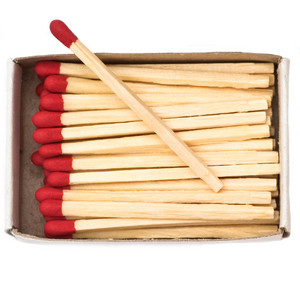
A match can be wood orpaper, and it always has a little color tip on oneend.
And in thattip, there's usually a mix of two chemicals that help the match catch onfire.
Sulphur and potassiumquarate.
On the matchbox. There's usually a strip on theside.
That strip has another special chemical plus powdered glassrefriction, which is why it'sscratchy.
When the match rubs on thestrip, it causes a chain reaction and starts the match onfire.
That reaction happens reallyfast.
Yeah, in a fraction of asecond, as soon as the match strikes the matchbox.
To see what's goingon, we're going to have to slow this waydown.
This calls for theslow-morey.
Hey,hey,hey,hey,hey,hey,hey,hey,hey,hey,hey,hey,hey,hey,hey,hey,hey,hey,hey,hey,hey,hey,hey,hey,hey,hey,hey,hey,hey,hey,hey,hey,hey,hey,hey,hey,hey,hey,hey,hey,hey,hey,hey,hey,hey,hey,hey,hey,hey,hey,hey,hey,hey,hey,hey,hey,hey,hey,hey,hey,hey,hey,hey,hey,hey,hey,hey,hey,hey,hey,hey,hey,hey,hey,hey,hey,hey,hey,hey,hey,hey,hey,hey,hey,hey,hey,hey,hey,hey,hey,hey,hey,hey,hey,hey,hey,hey,hey,hey,hey,hey,hey,hey,hey,hey,hey,hey,hey,hey,hey, heyHey,hey,hey,hey,hey,hey,hey,hey,hey,hey,hey,hey,hey,hey,hey,hey,hey,hey,hey,hey,hey,hey,hey,hey,hey,hey,hey,hey,hey,hey,hey,hey,hey,hey,hey,hey,hey,hey,hey,hey,hey,hey,hey,hey,hey,hey,hey,hey,hey,hey,hey,hey,hey,hey,hey,hey,hey,hey,hey,hey,hey,hey,hey,hey,hey,hey,hey,hey,hey,hey,hey,hey,hey,hey,hey,hey,hey,hey,hey,hey,hey,hey,hey,hey,hey,hey,hey,hey,hey,hey,hey,hey,hey,hey,hey,hey,hey,hey,hey,hey,hey,hey,hey,hey,hey,hey,hey,hey,hey,hey, heyHey,hey,hey,hey,hey,hey,hey,hey,hey,hey,hey,hey,hey,hey,hey,hey,hey,hey,hey,hey,hey,hey,hey,hey,hey,hey,hey,hey,hey,hey,hey,hey,hey,hey,hey,hey,hey,hey,hey,hey,hey,hey,hey,hey,hey,hey,hey,hey,hey,hey,hey,hey,hey,hey,hey,hey,hey,hey,hey,hey,hey,hey,hey,hey,hey,hey,hey,hey,hey,hey,hey,hey,hey,hey,hey,hey,hey,hey,hey,hey,hey,hey,hey,hey,hey,hey,hey,hey,hey,hey,hey,hey,hey,hey,hey,hey,hey,hey,hey,hey,hey,hey,hey,hey,hey,hey,hey,hey,hey,hey, heyHey,hey,hey,hey,hey,hey,hey,hey,hey,hey,hey,hey,hey,hey,hey,hey,hey,hey,hey,hey,hey,hey,hey,hey,hey,hey,hey,hey,hey,hey,hey,hey,hey,hey,hey,hey,hey,hey,hey,hey,hey,hey,hey,hey,hey,hey,hey,hey,hey,hey,hey,hey,hey,hey,hey,hey,hey,hey,hey,hey,hey,hey,hey,hey,hey,hey,hey,hey,hey,hey,hey,hey,hey,hey,hey,hey,hey,hey,hey,hey,hey,hey,hey,hey,hey,hey,hey,hey,hey,hey,hey,hey,hey,hey,hey,hey,hey,hey,hey,hey,hey,hey,hey,hey,hey,hey,hey,hey,hey,hey, heyHey,hey,hey,hey,hey,hey,hey,hey,hey,hey,hey,hey,hey,hey,hey,hey,hey,hey,hey,hey,hey,hey,hey,hey,hey,hey,hey,hey,hey,hey,hey,hey,hey,hey,hey,hey,hey,hey,hey,hey,hey,hey,hey,hey,hey,hey,hey,hey,hey,hey,hey,hey,hey,hey,hey,hey,hey,hey,hey,hey,hey,hey,hey,hey,hey,hey,hey,hey,hey,hey,hey,hey,hey,hey,hey,hey,hey,hey,hey,hey,hey,hey,hey,hey,hey,hey,hey,hey,hey,hey,hey,hey,hey,hey,hey,hey,hey,hey,hey,hey,hey,hey,hey,hey,hey,hey,hey,hey,hey,hey, heyHey,hey,hey,hey,hey,hey,hey,hey,hey,hey,hey,hey,hey,hey,hey,hey,hey,hey,hey,hey,hey,hey,hey,hey,hey,hey,hey,hey,hey,hey,hey,hey,hey,hey,hey,hey,hey,hey,hey,hey,hey,hey,hey,hey,hey,hey,hey,hey,hey,hey,hey,hey,hey,hey,hey,hey,hey,hey,hey,hey,hey,hey,hey,hey,hey,hey,hey,hey,hey,hey,hey,hey,hey,hey,hey,hey,hey,hey,hey,hey,hey,hey,hey,hey,hey,hey,hey,hey,hey,hey,hey,hey,hey,hey,hey,hey,hey,hey,hey,hey,hey,hey,hey,hey,hey,hey,hey,hey,hey,hey, heyhey,hey,hey,hey,hey,hey,hey,hey,hey,hey,hey,hey,hey,hey,hey,hey,hey,hey,hey,hey,hey,hey,hey,hey,hey,hey,hey,hey,hey,hey,hey,hey,hey,hey,hey,hey,hey,hey,hey,hey,hey,hey,hey,hey,hey,hey,hey,hey,hey,hey,hey,hey,hey,hey,hey,hey,hey,hey,hey,hey,hey,hey,hey,hey,hey,hey,hey,hey,hey,hey,hey,hey,hey,hey,hey,hey,hey,hey,hey,hey,hey,hey,hey,hey,hey,hey,hey,hey,hey,hey,hey,hey,hey,hey,hey,hey,hey,hey,hey,hey,hey,hey,hey,hey,hey,hey,hey,hey,hey,hey, heyhey,hey,hey,hey,hey,hey,hey,hey,hey,hey,hey,hey,hey,hey,hey,hey,hey,hey,hey,hey,hey,hey,hey,hey,hey,hey,hey,hey,hey,hey,hey,hey,hey,hey,hey,hey,hey,hey,hey,hey,hey,hey,hey,hey,hey,hey,hey,hey,hey,hey,hey,hey,hey,hey,hey,hey,hey,hey,hey,hey,hey,hey,hey,hey,hey,hey,hey,hey,hey,hey,hey,hey,hey,hey,hey,hey,hey,hey,hey,hey,hey,hey,hey,hey,hey,hey,hey,hey,hey,hey,hey,hey,hey,hey,hey,hey,hey,hey,hey,hey,hey,hey,hey,hey,hey,hey,hey,hey,hey,hey, heyHey,hey,hey,hey,hey,hey,hey,hey,hey,hey,hey,hey,hey,hey,hey,hey,hey,hey,hey,hey,hey,hey,hey,hey,hey,hey,hey,hey,hey,hey,hey,hey,hey,hey,hey,hey,hey,hey,hey,hey,hey,hey,hey,hey,hey,hey,hey,hey,hey,hey,hey,hey,hey,hey,hey,hey,hey,hey,hey,hey,hey,hey,hey,hey,hey,hey,hey,hey,hey,hey,hey,hey,hey,hey,hey,hey,hey,hey,hey,hey,hey,hey,hey,hey,hey,hey,hey,hey,hey,hey,hey,hey,hey,hey,hey,hey,hey,hey,hey,hey,hey,hey,hey,hey,hey,hey,hey,hey,hey,hey, heyHey,hey,hey,hey,hey,hey,hey,hey,hey,hey,hey,hey,hey,hey,hey,hey,hey,hey,hey,hey,hey,hey,hey,hey,hey,hey,hey,hey,hey,hey,hey,hey,hey,hey,hey,hey,hey,hey,hey,hey,hey,hey,hey,hey,hey,hey,hey,hey,hey,hey,hey,hey,hey,hey,hey,hey,hey,hey,hey,hey,hey,hey,hey,hey,hey,hey,hey,hey,hey,hey,hey,hey,hey,hey,hey,hey,hey,hey,hey,hey,hey,hey,hey,hey,hey,hey,hey,hey,hey,hey,hey,hey,hey,hey,hey,hey,hey,hey,hey,hey,hey,hey,hey,hey,hey,hey,hey,hey,hey,hey, hey There are lots of ways to support theshow, subscribe to Brains on Universe onYouTube, where you can watch animated versions of some of your favorite episodes or head toBrainsOn.org, where you can send usmysteries,house,drawings, and questions And you can subscribe to our SmartyPass.
It gives you a special ticket to Brains on Universe Bonus content plus add freeepisodes.
Okay,Maxwell, are you ready to listen to that mystery soundagain?
Yes,please.Okay. What do youthink?
It's on like a tryagain.
Okay, you're gonna stick with your originalguess.
I loveit. Would you like to hear theanswer?
Hi, I'm Owen fromAnchorage,Alaska, and that was the sound of me banging my mom's ear pods on herdresser.
Whoa! Banging something on adresser.
That is a hard mysterysound.
I think you were reallyclose.
Something wasbanging.
You thought it was atray, but it was really an earpod.
Is thatsurprising?Yes,indeed.
Yeah, that's a trickyone.
Now it's time for the Brains on aroll.
These are the kids who keep this show going with theirquestions,ideas, mysterysounds,drawings, and highfives.
Kate Grayson and Owen fromSacramento,California, Claire fromAuckland, NewZealand, Mateo fromPhiladelphia, William from SignalMountain,Tennessee, Hadley from Tweed HeadsAustralia, Finnegan fromMadison,Wisconsin, Jeremiah fromWynnette,California, Miles and Edie fromTucson,Arizona, Fox fromPauli, NewYork, Beatrice fromColdchester,UK, Emma and Ellie fromBoston, Violet fromSacramento,California, Giana and Bennett fromElk,River,Minnesota, Violet and Quinn fromWindom,Maine, Sadie fromHouston,Texas, Thorben fromSeattle, Catherine fromGlendale,California, Hollis fromPanama,City,Florida,Noah, and Luke fromBloomington,Minnesota,Bennett, Weston and Gemma fromEdmonton,Alberta, Remy fromPortland, Oregon and from SanDiego,California,Nicholas, Jack and Evelyn fromMillbrae,California, Jackson from LosAngeles, Harrison fromArlington,Virginia, David fromPortland,Oregon, Thomas fromColdchester, Inga fromBurlington,Washington, Hazel fromBelmont,California, Abby fromWilmington,Delaware, Ezra and Lydia fromDublin,Ireland, Owen fromHudson,Ohio, Abby fromElgrove,Wisconsin, Steve fromMiami, Marissa and Leeland from SanDiego,California, Santiago and Lucas fromHouston,Texas, Kaden fromTexas,Taipei,Taiwan, Atlas fromSnohomish,Washington, Cora and Isaac fromBirmingham,Alabama, Harper fromToronto, Elliott and Oliver fromSt.
John's,Florida, Daisy and Zoe fromAuburn,Washington, Edward fromLondon,UK, Vivian and Genevieve from CorkCity,Ireland, Kira fromCork,Ireland, Raina fromPhiladelphia, Salim from ChapelHill, NorthCarolina, Piper fromArnold,Maryland, Joseph from SanDiego,California, Deo fromJedassade,Arabia, Alisa fromShanghai,China, Evie and Clark fromSt.
Paul,Minnesota, Dash and Pilot from WeakRidge,Colorado, Sofia fromShanghai,China, Joshua fromBaltimore, California from NewJersey, Amelia fromBrentwood,California, Eshan fromSunnyvale,California, and Brecken and Cali fromDeerfield,Illinois.