Discussion keeps the world turning.
This is Roundtable.
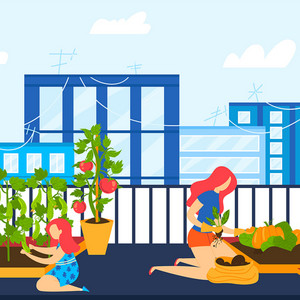
Private gardens in high rises.
China's fourth generation housing is here with bigger balconies, shared green spaces, and villa vibes.
These new homes are attracting attention and selling at a premium, reflecting China's move toward higher living standards and better home quality, what does this mean for you and the future of where we live?
Coming to you live from Beijing.
This is Roundtable.
I'm He Yang. For today's program, I'm joined by Yu Shen and Jason Smith in the studio.
Jason, I usually catch you from your podcast, The Bridge.
Tell us a little bit more about The Bridge and also where we find you.
the bridge to China is a show which tries to share cultural and economic experiences between China and United States and you can find us on all podcasting platforms look forward to you listening to us and also we can find you on social media too right oh yeah basically if there is a social media I'm on there somewhere so do I just look up Jason Smith I usually go by the hashtag Shanguang Jie Wan, spelled in the Pinyin way.
There you go! Wow! Shanguang Jie Wan.
Is that right? That's correct, yes.
Wow, that's a nice name.
And it's wonderful to have you on the show!
Thank you so much. First, on today's roundtable.
China has just implemented a major update to its residential building code, the first in over a decade, introducing new standards for ceiling height, sunlight, soundproofing, and more.
At the same time, real estate developers are promoting so -called fourth generation houses with big balconies and shared green spaces.
How do these changes add up to better living?
Let's break it down for everybody, and let's start with the new Residential Building Code.
Yu -Shan, take it away!
Yeah, so the news has it that starting from May 1st, a set of newly updated version of The Residential Building Code will bring in a bunch of new standards designed to improve how we live.
And by saying improve how we live, I'm literally talking about better ceiling heights, improved ventilation, more access to natural sunlight, etc., and also, well, stronger soundproofing as it's been so commonly complained by Chinese residents nowadays because of the poor soundproofing houses.
Also the revision of the code originated from the two sessions from earlier this year, and that is the annual meetings of China's top legislature and political advisory body.
So in March 2025, during this year's two sessions, Chinese Premier Li Chang actually announced the concept of quality homes in his government work report, defining that This term means properties that prioritize safety, comfort, sustainability, and smart technology at every stage of development.
So that includes from construction all the way through maintenance.
Not long after that, the residential building code soon followed up with an update which also marks the first time it's been revised ever since 2011.
So, that's been quite a while since the new updates.
And it's done by the Ministry of Housing and Urban Rural Development.
So, it's more like a national new code given to the real estate market here in China nowadays to develop better quality houses that fits the quality home standards.
Well, Jason, in the US, and the other places that you've lived in and read about, I suppose, The home quality, is it something that people would discuss?
Or I don't necessarily think this is the top in our minds.
We kind of just assume it should be good.
Yeah. If it's a really interesting question for me personally, because my father was a home builder.
And so my entire life was moving from one home to another and working on homes.
Even as a child, I was engaged in labor to some extent because my father would say, oh, you don't have school today, great.
You're getting $10, let's go build a house together.
and so he looked at this as educating me in my future career.
A career I ended up not going into, but I learned a lot about homes.
But, you know, I've also lived here in Beijing in about 10 different homes because every year I've moved, only until recently.
And I also lived in a couple of different homes in Wuhan.
And I actually really like the, you know, I guess it's the third generation architectural style here in China.
I don't necessarily think that it needs an upgrade.
So I am really looking forward to, you know, the effects of this program, because I'm kind of like curious how much better they could actually be because the apartments here are actually already good.
We're talking about extended balconies, but some of the balconies, like some of the ones that I've seen in Chengdu are really impressive and they have as much square footage as you have indoors.
So it's, it's fascinating to watch China go through these changes, but I think we have kind of different expectations from real estate in China than we do in the United States.
Oh interesting and we could go into that a little bit the different expectations don't we all just want a nice house or an apartment that doesn't have crumbling walls that is just of you know solid build of good quality whatever that means and we want to live there as long as we want after we've purchased it.
I think it's about bell curves, because, you know, in China you have outside homes with yards.
In the United States you have apartments with no yards.
But in the United States most people live outside and on a single floor, a double floor, with exposure to the surrounding environment.
Actually now that I've lived in China for a long time, I kind of find that scary.
Because someone can just walk up to your window and they're like right there, whereas in China you know you close your door and if it's a metal door you're like in a safe, you know.
So I kind of actually prefer living in China now.
But most people live in apartments in China and most people live in houses with a yard in the United States.
So it is a bit different but both have the other.
You know, if you go to New York you don't get a yard, obviously, but a lot of China is like New York where there's just apartments and high -rises everywhere.
One thing I think is really interesting about the facts regarding this is the soundproofing.
Because in the And it is disturbing.
In China, I haven't had that experience much. I think my neighbors could hear me because I tend to be loud, but my neighbors have been quiet.
But I am looking forward to maybe someday in China my neighbors not hearing me.
Wow. I mean, that's an experience I will be looking forward to.
I'm currently moving to a new apartment that is sort of soundproof, but the previous one, wow, I can hear my neighbor's alarm clock at 7 o 'clock.
despite mine being at 8, and I can hear everything that my neighbor downstairs is shouting at, towards the other side of his phone, even though I'm not part of that conversation.
So that's what's going on.
And I believe that compound of community, it should belong to the third generation house.
So it's apparent that the country here, we're trying to work towards the fourth generation of apartments, or rather housing as we discussed the term here, that's going to enhance all of these features within the house.
Well since you guys have referenced the numbers of different ways of building then let's give everybody a recap on the brief history of residential buildings here in China.
So yeah residential housing in China has evolved significantly over the past decade, so when we talk about the first wave of construction, that's exemplified by the tube shaped apartments.
I'm not sure if you guys have walked in one of those before but they were built before the 1990s by the by the government or state backed enterprises for their workers and also it often lacked private kitchens.
Sometimes people need to cook in the hallway with an individual stool or something and that's the first wave. And the second say the second generation, that was during the 1990s.
There were a shift towards housing with full amenities built by private companies and were traded on the market.
However, these developments still mostly like lacked landscaping so it's not with too much design.
There's no parking lot inside the community.
There's no elevator inside the buildings and the hallways are kind of say old school.
They're narrow down and the houses are probably not too tall or tall enough as well.
And that's the second generation.
For the third wave, that happened between 2009 and 2014.
And that's when, well the real estate developers they really make a dramatic improvement on their housing by incorporating say underground parking, green spaces within the community and shared amenities as well.
The problem with these communities, as we mentioned earlier, it has some poor traffic flow as experienced by many people who live there.
There's inadequate maintenance with the house like soundproof issues and drainage issues.
I can smell literally what my neighbor is cooking through the ventilation.
All of those issues exist even today.
Now as we move on to the fourth generation with the revised residential building code, which is seen as representing the start of this fourth wave of construction regulations.
And the point is it translates quality homes into quantifiable standards, which features, of course, many important things that people value nowadays when talking about moving into a new house, such as the razing of house height.
Yeah, so the ceiling height?
Yeah, ceiling height, right.
Yeah, so that's been raised from 2 .8 meters to 3 meters.
I suddenly realized Americans don't do meters and you guys have a completely different measurement system.
And I can't do the math to translate that into, is it converted into foot?
In the United States we use feet.
And I wanted to talk about this really briefly, if I can interrupt.
Go ahead! Because my father tried to build our own home with 7 foot ceilings, which are actually really They're just above your head.
Oh yeah, of course!
And the reason is to save on heating and cooling because you have less volume in your home, but most Americans like 8 -foot ceilings, which is kind of where China's going with this fourth wave. Because it does give you that roomier look.
Which has very much been seen as a luxury in Chinese housing for some time because we are kind of used to going into an apartment and it's kind of it's a little bit dark if you don't turn the lights on and for a tall person like myself i think i'm 6 8 or something like that okay i can't really do the conversion right now but um but no i can't be that tall no you'd be basketball player yeah so i would be like 6 .4 maybe some gosh, okay, I give up sorry guys.
So I'm just 1 .75 or 1 .74 meters tall, and that's pretty tall for a Chinese lady usually.
And I remember going to friends houses and feeling that Yeah, I can touch the ceiling if I want to.
And if I jump, I definitely can.
And then that's pretty common. But now we're talking about elevated space up there.
And that's that's great aesthetic -wise, but I know Jason is thinking from a different point of view.
You don't really think that extra space is always good, especially when it gets cold, apparently.
Well, it's also just not about the cost of heating and cooling.
It's also about environmentalism, the energy that is used, because maybe the homeowner in the north of China doesn't spend much money on heating in the winter because it's covered by the landlord, but the landlord's certainly paying for it.
I think it's actually not that bad for China because China is now the solar and wind king of the world and installing more solar and wind energy than anywhere else.
And apparently a bunch of nuclear reactors were just approved recently also.
So, I don't think it's gonna be too bad for the environment in China's case.
But, you know, for me personally, as a consumer, I might want my bill to be like slightly lower, but I also, I don't think that matters as much in China because the energy bills tend to be a lot lower here anyway.
Mmm, if you're comparing let's say with the UK right now or, you know, some of the other places yes, and I think you're you touched upon something that's kind of fundamental and definitely in the minds of policy makers in this country that is you have such a huge population and you need to keep people warm during winter time and preferably cool during summertime and we're a growing nation which means we need electricity and then this is you know national policy level decisions to power people's homes and to improve living standards as we can tell that people want better places to live.
And as you've enjoyed better quality then you're kind of on an upward trajectory in terms of expectation.
But there's another angle as well and in that a lot of these apartments were talking about are the preset ones that you get that are already ready for furniture.
But a lot of Chinese apartments actually don't come like that.
They come as this huge empty concrete box, and you design it, you decide the height of your ceiling, you decide where the walls go and everything.
So you know, for a lot of people, the limitations of this fourth wave aren't going to affect them directly because they're going to end up just designing their own apartment anyway.
But with the ceilings, there's not much you can decide on.
You can only make it less.
You can't make it higher.
Most of these apartments, because I've done this, they're actually large enough for at least two floors when you buy them.
Really? Yeah, these apartments that you buy that are all just not ready and you design them yourself actually don't have any limitations.
You determine how high the ceiling is.
We went in and built a two -story home in our apartment at Wuhan that I own.
And we were able to determine the ceiling height, whether we wanted an open ceiling from the first floor to the second floor and all of that was up to us.
Is that like, sorry, is that like a loft kind of place?
Because like with the usual average apartments in Beijing, I can't decide on that.
The, you know, these aren't things you can build.
You can maybe add a sort of a layer to, ah, it's like a partial layer.
It's kind of a style that's gone out of style.
You can only make it lower, but you can't make it higher.
I'm not sure with the case in Wuhan, but here in Beijing, I've been to some very traditional style houses that were built earlier in, say 1980s or 1990s.
I'm not sure, is it a Soviet style or a Russian style of the house?
The hallway is very tall and the inside of the apartment is also extra taller than usual and sometimes like you Jason, some Chinese families they would design their own semi second floor inside their house as well if they feel like it.
Sometimes people just leave it tall and live in the say the quote -unquote first floor and enjoy the first floor as it is as an usual house or apartment but yeah sometimes people can indeed do some sort of say improvisation with the height they were given.
But it was not always the case.
Is that like the second generation?
Even the first? Yeah, very old, like decades old, for sure.
And also as you guys walk through the different waves slash generations of housing, that's also sort of a brief history of the privatization or at the marketization of homes in China.
Because prior the 1990s, people didn't - you didn't have property to It was still a very much planned economy.
So yes, I think we sort of casually walked through some humongous changes in our society and in our economy as well.
And one more thing I'd like to highlight about this building code before we move on to what exactly does the fourth generation of housing entail is that we now are talking about elevators are a must for all buildings above four floors tall and you know how important that is we've been talking we've raised the point on this show multiple times about how some old residential communities here in China and I'm only talking about like three decades four decades old communities they do not have elevators and getting your neighbors to agree on to add an elevator from the outside of your old building
is a major headache and it's actually been done in recent years and that is fantastic but now we're talking about new buildings that has this that have this inbuilt amenity and I'm sure those who are in chairs or find it a great hassle to walk, then this is great news.
Yes, and now let's move on to another exciting explanation of definitions.
Fourth generation of housing, and that's sudaija.
I've seen this term come up on social media in recent months.
What features make them better than earlier designs.
So as we mentioned earlier, the fourth generation housing literally just got the name because, well, it's in comparison with the previous three waves of house constructions here in China.
And currently China has not yet issued unified technical standards or clear definitions for the fourth generation housing.
But it features typically with houses that has urban forest garden within the residential area, comparing with traditional housing.
Each unit of the 4th generation housing, they typically include, say, a private garden area or a shared green area, along with more extensive public spaces, which can enhance the overall quality of the residence and improve the living experience to some extent as well.
This person, Wu Jing, Director of the Real State Research Center at Tsinghua University said that such houses use large outdoor open spaces such as balconies, Jason's favorite, terraces, or aerial corridors.
These can significantly increase the actual usable area of the house.
More importantly, these features provide families with greater outdoor living space.
So imagine going back home and part of your indoor area is actually semi outdoor so that's like you're living inside an apartment within the building but you still have that experience of living outdoors so that's like a mixed feeling of sort of not always locked up in say a safe box of sort and apparently the fourth generation houses they are popular in some in many Chinese cities and this is According to a recent article by TechMediaHusho .com, a fourth -generation housing program in Guangzhou in South China's Guangdong Province sold 14 ,000 square meters of houses just in January 2025, tanking
the highest on the sales area listed in Guangzhou.
In Xinjiang, in central China's Henan Province, a fourth -generation housing program sold for over 900 million yuan, which roughly equals 125 million US dollars back in 2024.
And that's ranking the highest on the sales area and revenues listed in Xinxiang and Henan province.
So apparently people still are willing to pay for the fourth generation housing for its, say little gardens and outdoor areas, as calculated house and better living environment in general.
Well let's talk about something that we both have in common in China and the United States.
We both love barbecue.
Our barbecue is different but we both love that and having a terrace or you know an outdoor area balcony is wonderful for that purpose especially some of these really large balconies that some of the new apartments have they're like the size of an extra living room.
So you can just throw the doors wide and be you know kind of watching the game inside and barbecuing outside and everyone's Do people in the US actually do balcony barbecues like that?
Absolutely they do.
Most people don't live in an apartment, they have a yard so they would do that in their backyard but people who have balconies and they live in apartments, yes.
You can't stop Americans from barbecuing.
Okay as a Chinese person, and to play the devil's advocate a little bit here, immediately I can think of neighbors complaints.
so much noise from the people downstairs.
What are they doing?
Barbequeing? Blasting that music?
My kid, I don't even have a kid.
My kid needs to, you know, study math to...
These are extra curriculum classes that I'm paying private and I'm not telling anyone.
And we need peace. And also as a northerner who is used to very stark for seasons in Beijing, for example, and it gets so cold during winter time, I don't want a big terrace.
I, first of all, as a stingy, no economic person, I just want more space slash square footage in my apartment.
And then all that terrace, that's sort of out in the open air.
Well, that could be converted into an extra bedroom.
Boom! Oh, extra money when I resell this apartment so You fourth generation housing that's not my dream house What I do, I'd spend extra and I would convert that big terrace into maybe a greenhouse So I'll build the windows and I can still have I can still have the floor to ceiling big windows and And, or I can just make it into an extra bedroom.
That's going to sell well for mama once I decide to.
So what's your argument against that?
I wouldn't say against. I would say convertibility is key because you know, maybe in the spring you do want it open.
And I've seen that China has the technology to have the convertibility of balconies.
So you could have it open in the spring, in the fall in Beijing, and then you could close it off in the winter and have that greenhouse.
but then in the spring suddenly you're growing different things maybe you're had tomatoes.
I like fresh tomatoes I wouldn't say no to that.
That fits the greenhouse image in a way and you know how I think about barbecuing in Chinese apartments that's a dead no because it just happened in my previous old apartment that falls into a third generation category and this is something real okay.
So somebody in the building actually did that the indoor barbecue.
I'm not sure if it's on the balcony or just inside the kitchen but after that was done each and every door inside that building was pasted with a warning sign by the community management team saying that no indoor barbecued our ventilation system is connected.
You do that everybody smelled it and it smells like fire alarm to some of our residents which is kind of dangerous so people don't do it.
So be community -minded, as those follow the rules.
One other thing that people love about the fourth generation housing is the high usable floor area ratio.
And to explain that is basically it's much higher efficiency of space, and then you enjoy actually more space when the ratio is high.
And that is something that's been written and considered by the authorities in coming up with this Yeah Because before fourth generation homes came to the public view this Efficiency ratio or usable floor area ratio in most commercial housing in China It actually wasn't all that high and that's because shared spaces like hallways and elevators they took up a big chunk of the overall area as well and typically that ratio set somewhere between 70 % and 90 % here in China but with many of these new fourth -generation homes we're now seeing efficiency ratios over a hundred percent and in some cases even
going beyond a hundred and forty percent so that's a good news.
Yeah well Jason I wonder what you think about this one of the reasons why the revised building code has been rolled out, as well as the fourth generation housing has been touted as a wonderful new standard that real estate developers are adhering to is that the implication here is that the new houses and the new apartments being sold are going to be of higher quality and for those who are looking to buy, maybe this will tantalize them a little bit more in opening their wallets and writing up mortgages to buy these houses as we all probably know that the Chinese housing market could use an injection of vitality,
so to speak. So do you see this being something that could excite people who are looking to buy a new apartment or want to switch to a new apartment would get on board with?
Absolutely. Absolutely.
You know, I do have an apartment, but we're thinking about maybe selling that one and getting one of these new apartments.
We had a chance to look at apartments that were along these lines.
I don't think it's actually part of this rollout.
But maybe they were just forward thinking developers.
We're already building homes like this and I went to see them in Chengdu.
And my wife and I were blown away.
They're just so beautiful.
They're so amazing.
The extra balconies make it look like something out of a fairy tale that you just wish that people would design apartments like this.
So yeah, we are reconsidering buying one of these and selling our old home because they are so much more spectacular.
When you mention paying out of their wallet, all I can think of, He Yang, is how prices are added up for the fourth -generation housing.
because it is true that it's popular but in the meantime they're also pricey and that's not without a reason because every 10 centimeter increase in floor height could increase the cost of construction by up to 3 % while soundproofing will add about 200 yuan or roughly $27 per square meter.
And imagine that's like a 100 square meter three bedroom house with all of that feature, that's going to be a lot of money.
And these data is not from me, they're from a risk control engineer at a state -owned developer company.
So, when people are considering moving into fourth generation houses, there are multiple facets that they need to balance.
Sometimes it's not always just that, oh, it has some higher ceiling height, oh, it has better soundproof, but also the cost behind it and how their, say, financial capability is able to cover that extra house or comfort they're praying for and you know the mantra of real estate location location location and a lot of the older houses there and buildings they're constructed in really nice or central areas and that's another trade -off you know with these newer buildings it's not like they're all built in the outskirts but location is definitely another thing that people would consider maybe top
on their lists when they make that decision.
I mean actually you know when a new car comes out the older version of the car gets less expensive.
So I think for third generation homes that have excellent locations and people already like their layout they might actually become more reasonable in the future.
Well that's... see, buying an apartment or a house is really complicated.
There are so many factors that one needs to consider, and I'm sure, I mean, I trust that we'll all come up with the best decision for yourself.