From media, to tech, to politics, the world around us is changing.
Sometimes it's hard to know what you can rely on or trust. Your support means that NPR will be here for you tomorrow and the next day and the day after that.
We're not going anywhere.
Show up for public media, for public media giving days.
Make your gift now at donate .npr .org.
You're listening to LifeKit from NPR.
Hey everybody. It's Maryl.
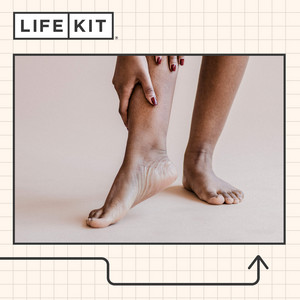
Alright, y 'all. I'm starting this episode with a deep sigh because we are talking about feet.
And it's a deep sigh because feet elicit a lot of strong feelings.
Everything from the shape of someone's toes, the height of their arch, the skin of their heel, the overall look and smell can provoke insecurity, disgust, even deep fear.
And then there's the wikiFeet side of the spectrum.
If you're not familiar, that is a foot fetish website where people post photos of celebrities' feet and rate them.
A couple years ago, The Huffington Post published an article proclaiming that the unruly online culture around feet has made a lot of Gen -Z -ers wanna hide their feet away almost entirely.
And let me tell you, I can relate to that.
So yeah, we can get weird about the aesthetics of our feet, but let's take a step back, okay?
And think about the utility of feet.
Oh my gosh, our feet are so amazing.
If you just think about the anatomy, we have 26 bones, we have 33 articulations.
The 6 degrees of freedom of motion.
And so these feet are complex, but they serve us many functions.
Irene Davis really knows feet.
She's a professor of physical therapy and rehab sciences at the University of South Florida.
And she has spent decades researching the biomechanics of feet and the lower extremities.
They're a base of support.
They can become a spring.
They become mobile adapters to uneven terrain, and yet sometimes they have to be rigid for push -off.
So yes, they're really critical structures and I think they're very highly underappreciated.
That is, oftentimes, until something goes wrong, she says, like we get hurt or lose function.
But we shouldn't wait for the worst to give our feet our full attention and care, because they do a lot for us, starting with the 5000 or so steps that we take on average every day.
So there's 5000 repetitions.
So it's really the repetitive nature of walking.
And especially if something is not functioning correctly, it can add up.
On this episode of Life Kit, everyday foot health.
Reporter, Andy Tagle, is going to help us get to know and appreciate our feet.
She'll talk with experts about common types of foot pain and what you can do at home to treat them, and walk you through the surprisingly complex world of footwear recommendations.
Disney Plus. Season 1 of Andor had critics calling it the best Star Wars Series yet.
Season 2 of the Emmy -nominated series is now streaming on Disney Plus follow Cassian Andor as he embarks on a path from a rebel to a hero.
Starring Diego Luna and from creator Tony Gilroy, writer of Michael Clayton and The Bourne Identity, season 2 of Andor is now streaming only on Disney+.
This message comes from NPR sponsor Acura.
The all -new Acura ADX is a compact SUV built for versatility.
Available all -wheel drive for weekend escapes, Google built -in for seamless connectivity, as well as a bang -and -all of sin premium sound system for high quality audio.
The all -new Acura ADX is crafted to match your energy.
Visit Acura .com slash ADX to learn more.
Google is a trademark of Google, LLC.
When Malcolm Gladwell presented NPR's Through Line podcast with a Peabody Award, he praised it for its historical and moral clarity.
On Through Line, we take you back in time to the origins of what's in the news, like presidential power, aging, and evangelicalism.
Time travel with us every week on the Through Line podcast from NPR.
Do you think you have ADHD?
you're not alone. After the pandemic hit, there was a huge jump in ADHD diagnoses among adults.
And at the same time, the internet is more and more obsessed with saying everything is a sign of it.
You might have ADHD to identify the red flags when a diagnosis goes viral.
Listen to the it's been a minute podcast today.
Thank you so much for this education.
Yeah, absolutely. We've got a lot of ground to cover folks.
so I'm gonna hit the ground running, literally.
Our first takeaway, good footwear is good foot care.
Get up to date on basic best practices for sizing up new kicks and tossing out old ones.
We're gonna go kind of towards the outside of the sidewalk here where it's a little less slanted.
And then I'm just gonna watch you run down to the end of the block and back, closer to the road.
It's a brisk Friday morning in the North Park neighborhood of San Diego.
I'm coming to milestone running, a specialty running store where co -owner and co -founder Chad Crawford mercifully met with me an hour before opening to demonstrate the shoe fitting process.
Part of it is giving some shoes a spin and watching how you run in them.
Whether or not you're actually an athlete, it can be very hard not to be self -conscious of my running.
Listen, I walked into this story with a lot of assumptions about what my feet did or did not need.
maybe you can relate.
You go ahead and put your right foot on this measuring device.
We call this a bronic device.
And I'm gonna have you go ahead and put all your weight on that foot.
It kind of allows the foot to totally splay out.
I couldn't tell you the last time I bothered to step on one of those contraptions, for example.
As someone lucky enough to use her feet every day, I figured, surely I already knew everything there was to know about them.
So you're actually measuring right at about a six.
Yeah. it turns out even bare bones basics, like my true shoe size, had that wrong.
See, you wanna get checked every so often because even though generally the bones of your feet stop growing longer when you stop growing in height, your shoe size can still change, famously due to pregnancy, but also from things like weight fluctuations, aging, wear and tear, and that was just a start.
Chad says he generally suggests wearing a half size to a full shoe size up in running shoes.
Because your feet often swell when you walk or run for long periods of time.
I always think it's like the most important thing here.
Some people think it's like, oh, what support category do I need to be in?
But yeah, I think for general foot health, having enough space in a shoe is definitely gonna be like the number one thing.
So, space is one. Now, let's talk about how else to evaluate if like me, you might be due for a new pair of walking or running shoes.
Oh man, i can tell you already these are old.
You got the foam coming out the back part of the heel treads completely worn off...
how long have you had these would you say?
General guidance says you want to replace your shoes every six to twelve months or...
We typically will say 350 to 500 miles.
Common errors of course are that maybe you both run and walk around in the same pair of shoes.
Well, all those miles count.
Meet Dr. Adam Ten40, a former competitive long distance runner and?
Professor in physical medicine and rehabilitation at Harvard Medical School, where I serve as the director of running medicine and shockwave medicine for Mass General Brigham healthcare.
He says it's important to regularly replace your shoes because for one, if you're used to a lot of cushion when you exercise, remember all that padding will slowly wear away.
From use, friction with the ground, weather.
And that shoe will start to put more and more demand on your foot and ankle, which can make you more prone to injury.
Other pieces that we're asking our foot to be supported by this footwear.
And so if other aspects of the footwear are wearing out, it affects our biomechanics with walking and with other daily function.
For the front of your shoe or your toe box, you need the rule of thumb As in you should have about a half to a thumbs with between the end of the toe and the shoe And that's your longest toe to be clear.
You need wiggle room In fact, you want space for your toes in all directions for all types of shoes wearing the heels first Be very judicious when you're thinking about the toe box.
That's probably the most important thing This is Dr. Erica Rowe Urquhart, an orthopedic surgeon who shares a private practice with her husband.
Urquhart, orthopedic associates.
Fear not, my fellow high -heeled lovers.
She gets it. There's some high -heeled shoes with red bottoms and names shall remain nameless that I love and I have a few pairs of that I have no business owning, because the toe box is very narrow and they're very painful.
But Erica says you can still have healthy feet — and wear your favorite fashionable shoes.
You just have to be smart about when and where you wear them.
There are time limits.
Oh, these are two -hour shoes.
These are four -hour shoes.
These are six -hour shoes.
And then — let's be real — they're those shoes that are strictly for the outfit picture.
So bring those backup flats to the party, commute in your tenies, and listen to your body, friend.
Pain will help you understand if you're making the right choice.
Studies show high heel wearing perhaps unsurprisingly can increase your risk for bunions or make matters worse if you have one and is associated with numerous foot injuries.
Ebony Vincent Sleet, a doctor of podiatric medicine says neuromas specifically Morton's neuromas are one particularly painful example.
They're sometimes described as like constantly stepping on a marble and can be caused by compression of the toes, often from narrow pointy toe boxes.
And aesthetically, you look fine.
There's nothing wrong with your foot, but inside your nerve is screaming, you know, so there are consequences to putting your foot into a hostile environment.
Ebony is a foot and ankle surgeon in private practice throughout Southern California.
You might have seen her on the TLC show My Feet Are Killing Me.
She says it's important to take just a little bit of time to inspect your feet every day.
she'll bring us into Takeaway 2.
Check in with your feet daily.
You might be totally missing things.
If nothing's wrong with your feet, you should at least get to know them a little bit.
I know sometimes people don't look at things that aren't problematic, right?
I've had patients who have told me they don't actually scrub their feet in the shower, like they just kind of let the soap roll over them, you know?
You should actually scrub the dirt off of your feet.
Now, this episode focuses mostly on mobility and footwear, not skin and nails.
Because that's a whole other ball game.
But just note, being conscious of your skin and toenails are a big part of overall foot health.
And problems at the ground level could portend larger body issues, so they shouldn't be ignored.
For just one example, sudden swelling in the feet and ankles could be a sign of cardiovascular issues.
So best practice, make sure the skin on your feet is intact.
If you do have cuts, sores, or blisters, take extra care to keep your feet clean dry to avoid infection and on that note did you know that you have more sweat glands in the palms of your hands and soles of your feet than almost anywhere else on your body?
Excessive sweating is one factor that can put you at high risk for athlete's foot, which is caused by type of fungus.
It's a super common ailment that ebony says people misidentify all the time.
It looks dry it's like peeling kind of skin and so you know people come like I've tried every lotion imaginable.
I've tried all kinds of things, but when I see their feet and I'm like, oh, well it's not gonna be cured because this is a fungus and when you put excessive moisture on fungus, all you're doing is feeding it further.
Bothered by corns, cracks or calluses?
Dr. Google doesn't always have the right answer and a pedicure isn't always a solution or even a good idea.
Always consult an expert if you have concerns or note any big or sudden changes like swelling or discoloration.
I usually allow patients to send a picture, send a text, you know, making sure that we are not in an emergency, and then at that point, if you still feel like you need to come in, let's have you come in.
Another thing to be aware of, the sensations in and of your feet.
Like, you know that pins and needles feeling when your foot falls asleep, if you find that kind of thing or something similar, muscle weakness, numbness, decreased feeling, is persistent, not just a reaction to an odd sitting position, it might be a sign of peripheral neuropathy.
That's nerve damage or dysfunction which can be experienced on a spectrum and can be caused by a number of underlying health conditions.
It's a common concern for people with diabetes but it's not exclusive to that condition.
So Ebony says, if you're worried about any sensations that arise, persist or worsen, talk to your doctor.
And then of course there's how your feet move.
Takeaway three, get a non -slip grip on foot strength.
If you're listening to this episode, I'm guessing it's because you're a person with feet who maybe deals with the odd foot cramp or the every so often foot pain and wants to know, hey man, what gives?
Well, there are a number of common foot ailments caused from stress and overuse of the foot that probably sound familiar, namely Achilles tendinitis, posterior tibial tendinitis, plantar fasciopathy, or plantar fasciitis.
Now, you might not know what exactly you're dealing with because we all cope and compensate for foot pain in different ways.
So Adam says in his clinic he'll sometimes ask patients to just walk and then see what he notices.
A toe pointed out might suggest deficits in the hip, for example, or maybe one ankle doesn't bend as much as the other.
But these aren't things you just wanna learn to live with.
It seems significant asymmetries where someone can't move normally.
That really places people at risk for other injuries.
Or as we age, it places people at risk for falls, which, you know, are one of the leading causes of significant morbidity and even mortality.
To clarify, that's for adults over 65.
Anyway, you get it.
Foot pain can significantly impact your quality of life, not just how often you can beat your personal record on the treadmill.
But what might surprise you is just how much power you have to curb your own aches and pains.
Here's professor and researcher Irene Davis again.
I think what people need to realize is that they have these amazing muscles in their feet and they actually have the ability to increase the strength and capacity of their feet which can help with the pain.
Ever heard of your foot core?
There's a whole lot of talk about the importance of core stability when you exercise.
You know, all those trunk muscles like your obliques or other abdominal muscles, plus a bunch of tiny muscles that support those bigger ones in keeping you strong and limber.
Your foot core, less visible, less celebrated, but the same kind of deal.
These small muscles of the foot provide the stability so that the larger muscles that move the foot and ankle can do their job.
And just like your regular core, you can strengthen your foot core.
Regularly going to the foot gym has been proven to help some of those most common foot pains.
No gym or athletic footwear required.
In fact, Adam says, by all means, practice in little spurts when you're in line at the market or brushing your teeth, just get into the habit.
Like you might start your day with a little footsie warmup.
Rotate your ankles or, Ebonie says, simply stretch your toes against a wall.
Hold it for thirty seconds.
Do that three times and do it three times a day.
Then, you might go for ten reps of short foot exercises, also known as foot doming.
You press your toes into the ground.
Try not to flex them, but press them into the ground.
And then you pull the ball of the foot back towards the arch and squeeze your arch. So the idea is that you're trying to really activate those muscles in the arch to raise the arch. Next step, toe yoga.
Or toga, try lifting up your great toe while leaving the remaining toes on the ground.
Then keep the big toe on the ground, and lift the lesser toes off the ground.
The muscle that does this to your big toe—it's called abduction of your big toe—is really important for stability as you're pushing off.
And then calf raises are a good idea to help you with balance.
And not just bouncing up and down on your calves, but really trying to control what call the eccentric phase, which is lowering the heel gradually to the ground.
And one final option I love for warming up or cooling down at the end of the day.
Hold hands with your feet.
To do like a personal massage.
So actually sort of interlacing your fingers between the toes, and then massaging your foot and rotating the foot and ankle, releasing some of that tension that might be there.
Well, so maybe at this point you're thinking, sure.
All this sounds well and good, but couldn't I just opt for some custom orthotics if I'm having foot pain?
Short answer, yes, you could.
Whether or not you should, well, that's where we need to tread lightly.
Takeaway four, aren't you sure you need extra support?
Don't just toe the line.
Understand the debate around modern footwear before you buy your next pair.
So if you've bought a pair of walking or running shoes in the last 50 years or so, you've likely been told it's best to opt for a pair that matches your foot type to avoid pain and injury.
And in some cases, that might be the exact right thing to do.
A very advanced foot and ankle condition or you'll have someone with a neurological injury where they really need corrective footwear long term.
If you suffer from large foot deformities, severe arthritis, or suffer from complications due to diabetes or an injury, for example, custom orthotics or specialized footwear might be best suited to your needs.
Or as Erika, an orthopedic surgeon who works with a lot of athletes, told us, she recommends supportive footwear and orthotics as needed to help her patients improve performance and alleviate pain symptoms. Pain will help you understand if you're making the right choice.
One 2022 study on people diagnosed with plantar fasciitis, for instance, showed that more supportive shoes led to less pain.
But Adams says, for average walkers, people with more or less healthy feet who suffer minor aches and pains… We probably don't need as much cushioning and we don't need as much focus on orthosis to maintain the function of the feet.
And we would be better off going back to the basics of looking at strength and function mobility to have the healthiest feet possible and from there figuring out how much support the feet need.
The number of times I prescribed custom orthosis for long term is on one hand.
Irene says if you have average feet and you find yourself experiencing some pain it's not a bad idea to support those feet temporarily.
If you had a back pain and you put a back brace on your back just just I kind of tied you over while you're having that pain but you wouldn't want to keep that, that back brace on you for life.
Irene says this is her issue with overly supportive shoes and foot orthotics, tools that she once made for herself and taught people about early in her career, by the way.
You wouldn't want to immobilize the muscles of say, your neck long term, because that would weaken those neck muscles over time, and you wouldn't be able to hold your head up.
But depending on who your podiatrist is, this sentiment might feel really odd, counterintuitive even, because the prevailing wisdom in most circles is to match the footwear to the foot.
And this generally leads people to highly cushioned, highly supportive shoes as a starting point.
So, if you have a high arch, you probably should be in a more cushioned shoe, and if you have a really low arch, you should be in a more supportive shoe.
And for a neutral arch, a neutral shoe, meaning, flexible, lightweight, not too many stabilizing elements.
And for certain activities, there is definitely good reason to be selective and protective.
One recent study showed orthotics improved comfort while running.
Also, specialized shoes for certain sports are a very good idea.
Everyone's playing pickleball and they can play a new sport in the wrong shoes and I can't tell you the amount of fifth metatarsal fractures and peroneal tendon tears.
But one piece of data that really stopped me in my tracks on the promise of supportive footwear was a large -scale study of over 7 ,000 participants across three branches of the military in 2014.
Where they try to match people's foot type to footwear and compared that to people that were just given a neutral shoe and they showed no difference in injury.
That is really the purpose of having that foot type match to the shoe.
The idea was that it would help to reduce injuries.
There's no reduction in injuries at all.
Now, participants were generally healthy, so it wasn't a study of acute foot pain or foot injury, just to note.
On the other side of the spectrum are minimalist or barefoot shoes.
Footwear that doesn't offer much, if any, cushion or arch support.
Irene says basically you want to be able to roll your shoes up in a ball, which is the polar opposite of what many podiatrists suggest. And yet, she says to date just about every study she has found looking at minimal shoes, Whether it's walking or running and has looked at the effect of minimal footwear on the size of the muscles, or the strength of the muscles, or the volume of the muscles has shown that minimal shoes lead to stronger feet.
However, research has also shown that minimal shoes can lead to injury.
Irene says that's because making the switch to this type of shoe requires a slow ramp up period, especially if you're used to a lot of cushion or motion control or you regularly wear orthotics?
It's like going to the gym and lifting a hundred pounds, when you've never lifted, and getting injured, nobody would say, don't go to the gym.
We know going to the gym is good for you.
Just don't do it that way.
There isn't a perfect regimen you should follow if you want to make the switch, but if you have inserts, you're going to have to slowly wean yourself off of those first. And then she suggests slowly starting to incorporate your minimal shoes into your daily routine bit by bit.
Maybe for a morning walk to start, then the morning's errands.
The pace and rigor of incorporating minimal shoes into your life, she says, will depend on your individual capacity.
Someone who's done a lot of gymnastics for example, where they've actually had to use their feet quite a bit then they might be able to transition faster.
If you have some soreness in your feet, take a day off, come back to it after a day, stay at that level, don't increase and then just increase a little more slowly.
Minimalists' shoes have also been criticized for their lack of shock absorption, but Irene dismisses this too.
She says our feet are adapted for all kinds of surfaces.
There are plenty of places around the world where barefoot walking is the norm, for example.
And it's why, with proper conditioning ramping up, people can run the Boston Marathon all concrete, barefoot.
Fully feeling the surface you're traveling on increases your proprioception.
or your body's ability to sense its own movement, location and action without the use of just sight.
It's critical and worth mentioning that all of our experts agree it's a good idea for young kids to walk around barefoot or in minimally supportive shoes to develop those sensory skills.
And research shows that kids that use minimal shoes in the long term benefit from them.
Investing in your foot health.
It's worth considering no matter your age.
If you make your feet nice and strong and keep them strong, you're going to have more resiliency against your feet breaking down later.
It's like, should you do back exercises or should you keep your core strong if you're not having a problem?
I think you should.
I think you still should.
At the end of the day, of course, we're all walking or running our own paths.
So what are you looking for in your footwear?
No matter your choice, be thoughtful with how you dress your feet.
We wear shoes for multiple reasons.
We wear it for fashion.
We wear it for performance.
We wear it for general health.
But it's recognizing that each type of footwear places different demands through the foot and ankle, and those changes need to be done gradually.
And if ever you're not sure exactly what your next move should be, find a provider that you trust and, it just has to be said, take it one step at a time.
That's a great pun, but it's well -landed.
You need to take it one step at a time.
You need to have a systematic approach. Ok friends, let's walk it back and recap what we've learned.
Takeaway 1. Good Footwear is good foot care.
That means replacing your walking and exercise shoes every 500 miles or so and making sure the new ones fit you correctly.
And if you're gonna wear uncomfortable shoes, make sure to give yourself regular breaks to avoid pain and injury.
Takeaway 2, check in with your feet on a regular basis.
Changes in color, growths, discoloration could tell you something about your health, from circulation issues to skin cancers.
Takeaway 3, consider a foot -strengthening regimen.
Adding simple exercises like calf raises and foot filming to your daily routine can help you avoid pain and injury.
Takeaway 4, there's mixed messaging out there about how much support the foot really needs from your shoes and orthotics.
Ultimately, what type of footwear is best for you is up to you, and what you think is best for the health and longevity of your feet.
Choose wisely and make any transition from one shoe type to the other slowly to avoid injury.
Every foot is different, and everyone is walking their own path.
That was LifeKit reporter Andi Tagel.
For more LifeKit, check out our other episodes.
We've got one on preventing eye strain and another on protecting your hearing.
You can find those at NPR .org.
And if you love LifeKit and want even more, subscribe to our newsletter at NPR .org.
Also we love hearing from you so if you have episode ideas or feedback you want to share, email us at lifekitatnpr .org.
This episode of LifeKit was produced by Margaret Serino. Our visuals editor is Beck Harlan and our digital editor is Malika Green.
Meghan Kane is our supervising editor and Beth Donovan is our executive producer.
Our production team also includes Claire Marie Schneider, Sam Yellow Horse Kessler, and Sylvie Douglas.
Engineering support comes from Zo Vangenhoven.
Special thanks to Greta Pittinger and Barclay Walsh.
I'm Mariel Segara. Thanks for listening.
you.