Discussion keeps the world turning.
This is Roundtable.
This is Roundtable.
I'm Steve, together today with Niu Honglin and Yuxuan.
Coming up, forget you are what you eat.
The real game changer?
How you eat it. Science says tweaking just one thing about your meals, no willpower required, could dial up your focus, steady your mood, and keep your blood sugar in check.
There is one downside, though.
It's just my opinion.
It may make eating a little bit more annoying.
After that, new AI -powered pet mini -dramas are blowing up the internet and melting the hearts of everyone who watches them.
These homegrown soaps are even being covered by international media outlets.
What are they, and why are they so popular?
Our podcast listeners, that's you, can find us at Roundtable China on Apple Podcasts.
And don't forget, we love hearing your voice as well.
So we're asking you to send us a voice note with your thoughts on any of the issues that we discuss here on the show.
You can do that by sending them to roundtablepodcast at qq .com.
That's roundtablepodcast at qq .com.
And now, have you ever considered that the secret to feeling better after a meal might not be what you eat, but how you eat it?
We talk a lot about diets, don't we?
And we often focus on ingredients and calories and fads that come and go.
But what if a simple shift in your eating routine could unlock surprising benefits for your energy, your mood, and maybe even your long -term health?
It's a really fascinating idea that could change how we think about food and its connection to our bodies.
It's called meal sequencing, and we're about to learn that a small adjustment adjustment to our meal times could come with some pretty significant health benefits.
So meal sequencing, what exactly is it?
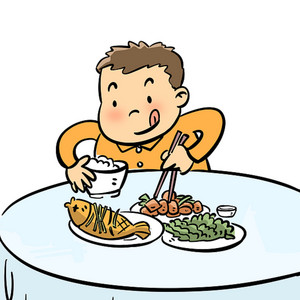
Meal sequencing is the practice of eating different food groups in a specific order during a meal.
I really love this because I've been practicing this for quite a long time without even knowing that you were even knowing it.
And it's it's right.
It's a very very straightforward and easy to understand kind of strategy.
It's when you consume certain components of your plate rather than entirely eating everything all together.
So you group them. So you have a lot of different foods on your plate.
And what you do is to make sure you eat your fiber first, meaning that the vegetables goes in first and then protein.
And the most most importantly is carb goes at the very last. So have vegetables and protein, a little bit meat and bread, pasta or rice goes at the end.
And it's gaining attention because it's so easy and so accessible and it does not change your diet at all, but it makes a difference because it will impact your blood sugar situation.
So we know that the blood sugar effective, we know that managing Blood sugar effectively helps prevent energy crashes reduces the risk of chronic diseases, including type two diabetes, and it supports healthy weight management.
And I realized this when I, I think I've shared on roundtable once I have got myself a dynamic blood sugar tester on my arm, so I would be able to see the changing wave of my blood sugar, while I do different things during the day I eat, I exercise, I sit down for hours and work and do not move.
These are bad behaviors, by the way.
So based on the waves or based on the data of my dynamic blood sugar tester, I know that when I consume fiber first, when I eat more vegetables and kind of like lay the foundation in my stomach with my food, and then goes with meat and finally carb, it definitely, the rising situation of my blood sugar is definitely much less sharp.
So let's go back to that then.
You eat your vegetables first and then your protein sources and then you move on to your carbs like your breads, your pastas, or your rice okay so how then does eating foods in that particular order affect your blood sugar what's the connection there so it is said eating these kind of fiber and protein furs creates a kind net in your gut think of it as a gentle barrier forming in your digestive system and And this physical presence slows down how quickly carbohydrates are like broken down and absorbed into our bloodstream.
And my understanding is that, you know, eating high fiber first helps you feel full more quickly.
Oh, that's true. And then, yeah, consuming protein.
That's quite important and healthy for you.
And finally, eating carbs or sugary foods helps reduce overall sugar intake.
take and that is why the this way is making people healthier or in some way lose weight yeah you ever go to a brazilian restaurant before yes yeah they just keep bringing meat meat meat meat meat right but at the little like side dish station station you'll find the bread and the rice and all the carbs there you know i've eaten with friends and they'll go for the bread in the beginning and i slap their hands say don't fill up on the bread before all the meat comes Yeah, that's a joke, of course, but this is a pretty significant impact on your health, right?
Because that net that you're putting at the bottom of your stomach, the fiber and the protein, it's like a pillow, if you will, where the carbs sit on top because you eat them last. That has a big effect.
That slows down the absorption, like you said, of the carbs, and that leads to a blunted glucose response and a reduced insulin response.
And a blunted glucose response, what that means is that your blood sugar doesn't spike as high or as quickly.
And the insulin response, the reduced insulin response, means your body needs to produce less insulin to manage that sugar.
When you eat foods in a specific order, you can blunt the glucose response by 73 % and the insulin response by 48%.
and maintaining that stable blood sugar and healthy glucose response is really important for everyone, right?
Not just people with diabetes.
Definitely. We see that for people with diabetes, for sure, managing their levels is critical, but for others, we see constant blood pressure spikes and crashes can lead to fatigue, brain fog, weight gain, and increase the long -term risk of developing insulin resistance and type 2 diabetes diseases.
And for me personally, when I reach the age of 30 I guess or maybe even just 28 I realized that I would have to stop eating around 40 dumplings for a meal and dumplings only I used to do that you could eat 40 at a time I could 40 40 dumplings 40 40 what I told we keep confirming the number like we don't believe her I can only have 14.
So the idea is that I love dumplings.
You think? And I have them.
You're obsessed. Okay, so previously when I do things like this, 40, sometimes 35, it was fine.
And then I realized at the age of around 28 or 30, I realized that when I do that, definitely they're still tasty and delicious and everything, and you do not need anything else besides the dumplings the dumpling has.
the wrap would be the carb and you have the filling meat and vegetable you have it all for some reason i can smell dumplings in this studio i don't know why she's got some in her pockets right now and you know the problem was that i realized one day that every time when i had a full meal of dumpling and dumpling only i feel dizzy and i have to have a long nap after the meal and even after waking up from the nap i still don't feel good and now i realized that that you cannot really group your dumpling wraps together and put it at the end.
You were doing dumpling sequencing.
It's not okay. And also the thing is blood pressure spike is definitely bad for you and it's bad to the degree that you can actually feel it.
So yeah, it's a thing.
And for those of you who don't know this, you should know this.
That's also what I want to say.
you know, probably this is a good habit in some way.
And but it's it's probably not applying to every kind of meal.
Yeah. Especially for Chinese food.
Right. Well, yeah. Talk about that.
Yeah. You know, fortunately, I had lunch before the show.
Did you? So I and I just realized that it's so hard for a Chinese food to you actually do this kind of food uh or meal sequencing because we have maybe first of all staple food and then vegetables and then meat and sometimes the vegetables are mixed with meat yeah and and if you are going through this kind of uh strategy you're eating vegetable first which can be really salty because you're only eating the the vegetables because for chinese people you You normally eat the vegetables and meat and the rice together.
All at the same time.
All at the same time to make it not that salty or too sweet or anything.
So like for Chinese food, it's meant to eat them together.
They should be together.
But the other side of the story is that not everybody is as sensitive as, well, the same level of sensitive when it comes to food sequencing.
For example, for me, I had my dynamic blood pressure little device on, so I know sometimes changing the order a little bit helps me, but I can have vegetable first or protein first as long as I put the carb at the end.
And also sometimes even if I am full and I have had everything and then I have a bottle of very sweet milk tea, it's fine.
but if I have the milk tea by itself before lunch it's not okay so everybody's different I think this is a really interesting finding and good tip but you should find it for yourself whether or not it's for you yeah but you you've been doing this and you can actually feel when you meal sequence you know depending on the foods that you're eating of course but when you do this you can actually feel a difference in your body when you're finished eating Yes, for me, for sure.
Yeah, it's amazing, isn't it?
Because when you do mix all of those foods together, which is what I do, right?
When I sit down to a meal, Chinese meal, Western meal, Korean meal, doesn't matter.
I'll take a bite of one thing, then a bite of another, then a bite of another, right?
Because I want to have that flavor difference.
I can't, I can't. Yeah.
I can't eat all the broccoli first before touching any of the proteins.
I can't eat all of the rice first before I touch any of the soup.
It's just not my style of eating, right?
But I think most people don't know that if you do actually layer your foods, it does actually make a difference in how you feel.
When you mix all of your foods together, you get that spike, that blood sugar spike, and it causes a crash, right?
We know that feeling, don't we?
When you finish your lunch or your dinner and you just feel like you're about to pass out, right?
All your energy is completely gone.
Well, meal sequencing helps out with that, and you can avoid those crashes.
Here in China this year, we call this year the first year zero of really strictly managing your health because we see definitely a lot of strategies and policies from the government calling on people to take care of their health, starting by doing a little bit of weight management, which is why these days I see a lot of trendy tips on the internet.
Young people are talking about how to live a healthier life and food sequencing is one of those.
And there are some other ones.
For example, if you're eating, do not drink too much water because there is an effect called gelatinization.
It refers to the process by which stretch absorb water and swell during cooking.
Yet, if you are drinking and you're having carbs, for example, In your stomach, it's basically a whole pile of glue, which makes it easier for your digestion system to absorb it and to give a high push on your blood pressure.
So do not drink too much water while you are eating.
And also after 12, excuse me, after nine o 'clock in the evening, eating after that time increases risk of cerebrovascular disease by 28%.
So even if you're eating the same amount of food during the day, if you're eating it too too late, it's actually very bad for you and eating a meal four hours closer to going back going to sleep is the same idea.
And also, I have tips about eating more dark colored vegetables, it's supposed to be better for you.
And when you're consuming your protein, make sure that white meat is is with the large proportion and maybe at least two servings per week of seafood food.
So there are so many different tips.
That's really great information.
You have anything about the number of dumplings people should be eating?
Maybe a little less than 40.
I want to check out that internet page as well.
Just as a final point, and yeah, you're right.
I mean, the research on meal sequencing is promising.
It shows significant benefits for many, but also please understand that it's not a guaranteed magic bullet for everyone.
Here's the last kind of fun thing that I wanted to share with you because I was thinking, okay, this works if you're having a healthy meal like like chicken breasts and broccoli and some rice.
The meal itself is healthy already.
What if it's 11 p .m. and you just found a discount coupon for a cheeseburger set?
Does meal sequencing matter then?
And the answer is yes.
Meal sequencing can be applied there.
Prioritize the protein and fat first. So start with the patty of the cheeseburger.
This will begin to create that net in your stomach, and then consider the vegetables.
So if your cheeseburger has lettuce or tomato or onion, try to eat those first. Eat the bun and the fries last and avoid the cola if you can.
But if you do need to drink it, drink it last. And avoid the concept of a burger.
Altogether. Who's going to eat a cheeseburger set like that?
Deconstructed. But anyway, if this is your number one priority, then there you go.
Even doing that during a fast food meal will have an impact.
Interesting story. sorry.
Meal sequencing, good for many, but maybe not for all.
You can try it out if it interests you.
You're listening to Roundtable.
And coming up next, what if your cat could roast your life choices or your dog demanded a promotion to CEO?
AI pet mini dramas aren't just transforming our world, they're giving pets a voice and an attitude.
Stay with us. Looking for passion?
How about fiery debate?
Want to hear about current events in China from different perspectives?
Then tune in to Roundtable, where East meets West and understanding is the goal.
You're listening to Roundtable.
I'm Steve today with Niao Honglin and Yuxuan.
Imagine your pet could talk, but not just a simple woof or meow, but a full -blown conversation, maybe even running a corporate empire or making snarky comments about office life or plotting world domination.
That's the magic behind these AI -generated pet podcasts and dramas that are taking over social media nowadays.
And like I said in the beginning of when I introduced this topic, this is being covered by international media as well.
So what is this new wave of pet -themed AI -generated short drama all about?
So first of all, these short dramas are the things that we, of course, had discussion about this basically these cheesy classic uh short videos that into get into series one example is uh the handsome ceo alpha falling into falling love into that maid in his family and the maid happens to be a daughter of a billionaire and then they live happy after We've seen those stories with humans But now these are being recreated The main characters are becoming Pads like cats and dogs And people are Loving these things Not only because of these cheesy plots But also the cute Animals And they are all AI
generated So there are no real animals Who have been Forced to do any strange things No not at all So they are just AI generated videos and some of them can be really really popular um one um aai this one featuring a ginger cat went viral online racking up nearly 150 million views and this 59 second clip tells the story of this poor ginger cat as i said i get it i get it yushen is uh struggling with describing the show because on the surface of it it sounds ridiculous but But it's not, though.
It's not. It's quite cute.
I checked out it. And I understand how people are falling for it.
The characters are cute.
You do not have to worry about their appearance, whether or not it's for your taste.
Because, you know, people have different looks.
And you might consider someone who's setting, by saying setting, I mean the setting in the story, is the most beautiful girl in the world.
And you're like, huh, that's not convincing.
Yet, if it's a beautiful, fat, fluffy cat, you cannot say no to that.
Yeah, there's the emotional appeal and the business is big.
That's why I said like, yeah, this is this is no joke, right?
Because of the use of the AI generated content, because of that technology, the barrier for entry into the market is so low now for content creators.
creators anyone who has access to ai tools can now produce these really high quality engaging pet dramas for little to no cost and if you're wondering oh okay well how much you know can we make from this there's one case uh from a guy who owns several ai generated cat drama accounts two of which have more than a million followers and several other with 500 000 he said that he can can make between 1200 and 2000 yuan that's about 170 to 280 dollars from one video with more than 10 million views generating about 20 000 yuan or three thousand dollars a month and it's not only about paying for the content
you're watching we see that some of the content or some of the income are from advertising partnerships such as bringing in human brands the brand deals of course so yeah Yeah, it's a quite lucrative business.
But I would say there, you know, there may be some survivor bias.
You know, a few top accounts like these, they got, you know, millions of followers, and that is why they can earn that amount of money.
But that's not necessarily the case for the average creators, right?
That said, it's worth noting that the cost of producing this type of content is very, very low.
but you don't need uh you know real you know sets or even a real dog or cat with some of your tools you can generate an endless stream of these short videos but the thing is that is really is it really that profitable for everybody that is definitely the biggest question besides that i do have to say in the short drama market i see the quality of the short dramas are getting better and better For the real human ones, the settings are better, the shots are better.
And for the AI -generated ones, yes, these cats' drama are very nice.
I love cats. But there are some very imaginative moves and plots, very interesting images are happening in this world.
And you see that with the help of artificial intelligence, people are able to bring the scene, the picture in their brain to the real world.
And that is fascinating.
fascinating. It's fascinating that I was watching an Australian news report talking about Chinese pet mini dramas, AI generated.
It's crazy how popular these things are.
The world is paying attention.
That being said, if you're listening to this right now and you're thinking, well, wait a minute, I have access to AI tools, but I don't really know what to do.
Maybe I should pay someone to teach me how to do that.
Please be careful. There are claims out there like follow my class or my course and gain 1 million followers in 30 days those are probably exaggerated numbers and you should be aware that there may be people out there that are trying to take advantage of the popularity of these as well no doubt they're cute though I was watching one and there was like a little puppy in a KFC he was wearing KFC delivery outfit I don't know what the story was about I didn't care that was it that's all I needed to know That is why it's popular.
Yep, I was hooked after that.
That will do it for today's roundtable.
Thank you to Ngo Hung Lin, the dumpling lady, the dumpling queen, we'll call her from now on.
Thank you to Yushun, and thank you to you, as always, for sharing your time with us on today's edition of Roundtable.
I'm Steve, and we'll hope to see you again next time.