Discussion keeps the world turning.
This is Roundtable.
You're listening to Roundtable with myself, Hye Young.
I'm joined by Steve Hatherly and Yoo Shoon in the studio, coming up.
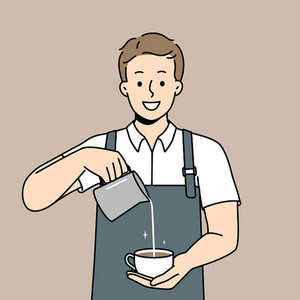
At some cafes in North America, baristas aren't just pulling espresso shots.
They're expected to remember names, offer a smile and maybe even write a motivational quote on your cup.
This makes me think of our motivational Monday segment, actually.
So we happily deliver that motivational quote to you on a Monday.
Anyhow, some customers love that warmth.
Others think it's asking too much. So is this kindness or unpaid emotional labor?
Who decides how far emotional labor should go in service jobs?
Let's talk about the hidden layer of work in our daily lives.
Emotional labor. It's the effort behind being nice, calm, or supportive and it often gets unevenly assigned.
Is it time to rethink how we divide responsibilities and compensate different kinds of work?
Our podcast listeners can find us at Roundtable China on Apple Podcast. Got something on your mind?
Whether it's the world of pop culture, technology, or something that touches your heart, we are here to chat.
drop us a line at roundtablepodcast .com or go big and send us a voice memo!
We'd love to hear your voice.
And now let's switch gears… When you swing by your favorite cafe for that much -needed caffeine fix, chances are you're greeted with a smile, maybe even your name scribbled on the cup with, I'm having a great day if you live in North America.
A global coffee conglomerate even requires this baristas to write uplifting messages on the cup.
Like they are part time therapists with espresso machines.
Welcome to emotional labor where your job isn't just what you do, but how you feel, or at least how you look like you feel.
Maybe that's a better way to put it, how you're representing yourself.
Yes, and whether it's serving customers, teaching students and caring for patients, the vibe you give off becomes part of the gig.
That fake smile, the chipper tone, even when you dread inside?
That's all part of the performance, or shall I say, the modern definition of a job.
So let's give people a review of what's going on.
Now there are a few news reports about this?
Yeah, so this is made it into the news as of late, and there are a couple of different examples to talk about.
Yeah, the coffee shop chain who is known for, or used to be known for, writing customers' names on the side of the cup, which, to me, was a nice thing.
Now, it's taking it a step further.
Seize the day, or you're amazing, or whatever on the side of the cub.
It's another level.
Here's another example.
This is from a jewelry company, a big jewelry company, Tiffany.
They launched an internal app called Tiffany Joy.
So this is an internal thing, right?
This is for the employees of the company, Tiffany Joy.
And here, the employees are expected to post content that conveys some sort of positive emotions, and it's done.
The idea behind this was to boost morale within the employee group, but the employees, they responded by making a nickname, calling it forced joy, because they felt pressure to appear happy.
I'll give you one final example.
This is from South China Morning Post from last year.
There's a supermarket chain in Japan, and they adopted an artificial intelligence system, an AI system, to This is wild, to assess and standardize its employees' smiles They want to standardize the employee smiles And that of course sparked a whole new debate about workplace, you know expectations and things like this.
It was the world's first company to promote a smile -gauging AI system system, which they used across 240 shops around the country.
The system itself is called Mr. Smile.
And it's supposed to be able to accurately rate a shop assistant's service attitude.
And it draws on 450 different elements, including facial expressions, voice, volume and tone of greeting.
And these are all different examples of the expectations of employees at the office and the emotional labor that goes into work.
It's interesting you mentioned office.
Because I suppose for corporate jobs, it's maybe a different kind of emotional labor that we can chat about in a second, but just out of the examples you just gave us, would you appreciate that uplifting message being written on your coffee cup?
Or is that a bit much for you?
To be honest, as a customer And from the perspective of being a customer, I would appreciate that and seeing a motivational quote or just a smile on the cup, I would be uplifted.
And it's kind of a nice gesture, I would say.
What do you think, Steve?
I just kind of feel bad for the employees because they're busy at that shop, right?
And then all of a sudden, it's not writing the customer's name.
It's not writing Steve and then saying, Steve, your coffee's ready.
No, it's creating some sort of inspirational thing to get Steve through the rest of his Tuesday afternoon.
So they have to think about that.
So it's not just a, I mean, do they have a database that they just kind of randomly choose motivational quotes?
From I don't. So this I don't, I don't get it.
I mean, I agree with you.
You shouldn't that.
Oh, okay. It's nice.
I feel bad for the employees.
I don't. I don't think this is necessary.
I suspect that there's one hardy person you get these people who are just really kind very nice ah didn't we talk about a topic about somebody who's like habitually nice to people and always motivating other people at the expense of their own health anyway I hope it's not gone that far but there are people or maybe there was one fantastic employee who did this and who maybe truly wanted to uplift a customer but then the bad news is when the company picks this up and makes it a requirement for all the employees.
Yeah it becomes company policy.
Yeah and then like you said I think eventually people will have to come up with a a colleague did, she has this motivational calendar and then she can just pull one calendar, one page out of it, you know, no brainer, you know what to say in a motivational message.
But if it's done in a massive production way, then it's inevitable that it will get to that point and people stop being human beings and become robots, at least in that segment.
Yeah, I mean, about that specific example, you're going to lose the sincerity aspect of the point Which makes it kind of mmm...
pointless, perhaps.
The idea of emotional labor is not a new concept.
This goes back to 1983, there was a book written by Arlie Hochschild and Arlie Hochschild is a sociologist and the book was called The Managed Heart.
and this term, emotional labor, describes the effort that's required to regulate your emotions, regulate your expressions, to fulfill the psychological demands of a job.
I think we'll discuss a little bit later that it's not strictly related to work, but it does relate to work in many aspects of it.
And there are a lot of industries where there's a lot of emotional labor spent.
healthcare, for example, hospitality, for example, and maybe we'll talk some more about some different examples, but it's been around for a long time.
And when the book came out 40 years ago, she thought that about a one -third of all jobs required quote substantial demands for emotional labor.
By 2013, she the author, Arlie Hochschild, by 2013, she estimated it had grown to about half of all jobs required emotional labor, and today it's probably even higher because hard skills are being taken over by robots a lot of the time, and the emotional labor is the human skill in perhaps an otherwise digitized and AI dominant, and maybe even a little impersonal environment.
Maybe we'll talk about this later, but a lot of people are treating these kind of emotional labor as, as you said, opposed to hearts skill as soft skills.
So it could be something that an additional requirement for a lot of these employees, but they're not getting paid for these kind of things.
And it's interesting in the definition though, there are two primary ways, apparently it's being categorized by the author.
Surface acting, deep acting.
So these are both acting.
It really takes the authenticity out of the equation.
That's where you don't.
Yeah, the surface acting is where you're displaying emotions that you're not really feeling at the time.
I see this a lot in in western restaurant culture where you'll go and the servo will say, hi I'm Steve I'm gonna be your waiter today.
I hope you're having a wonderful afternoon.
I appreciate that part of Western service culture.
But at the same time I feel like okay just dial it down 10 % but Steve you know what's worse?
When I traveled to the US last year to accompany my parents etc. And then many times we've discussed on the show as well how the tipping situation has really just blown out of proportion to a level that's so difficult for most people to accept really.
Every time we go to a restaurant you get the Hello, I'm happy to serve you, my name is Heung, it's great to have you blah blah, but You can see in their eyes, they're just waiting for the tip.
Yeah. You can feel it.
So, it's not... I understand it's tough.
Everybody needs to make a living.
It is tough, yeah. But you know that this is not honest. This is manufactured?
It might be for some people.
I've known people in the service industry where that's actually...
They really love. They really love their job.
But for others, obviously it's going to be a little bit forced.
But can I also just quickly ask you a question here?
since you brought up the Western perspective or the situation.
Circles back to that coffee example we gave from the top of this discussion, they don't do it here in China.
The same exact global conglomerate does not do this in China.
And I wonder whether it's because they have been considering it's a different set of customers with a different cultural background Or maybe, you know, that writing your name on a coffee shop or coffee cup in China.
I don't see any or or correct me if I'm wrong.
I don't see any coffee shops do that is common that yes, you're expecting a smile and a gentle greeting, but it doesn't go that far.
So do you think that there might be something different going on about the writing your name thing?
I think five years ago they still do that on your coffee cup.
Yeah, and they will call your name Grande Latte for blah, blah, blah.
So they they did do that.
But I think after a lot of these digitalization of ordering things on your app, they have already developed these things into you all.
You will say a motivational catchphrase and to get your drinks.
So maybe different situation of online payment and online ordering kind of thing and we have developing into another situation.
Is this good news for the baristas or the coffee shop employees that they're not expected to know the name, scribble, draw a picture or do that extra stuff but you're still expected to be nice, to greet and I think it's also kind of interesting that what you just mentioned with the motivational message in a catchphrase that pops up in the user's app is personalized, but it's digital at the same time.
And that is so Chinese in the 21st century.
As we sit here and talk about this, though, it sounds like we're saying, oh, poor employees, they have to be nice.
How exhausting. There's got to be another side of this.
Of course, if you're a customer -facing business, right?
And you have your employees dealing with customers, this is make or break time for your business.
The interactions that your staff have with the customers.
So to me, it makes complete sense.
You know, call it emotional labor.
Unpaid emotional labor.
Well, sorry, there are certain industries in certain jobs where that's part of the job description.
Disney, my sister applied to Disney many, many moons ago.
Many, many moons ago and she, I still make fun of her for this.
She was told, at the end of the interview, oh, you seem like a lovely person, we just don't think you're happy enough.
Oh, yeah. I see what you mean.
Well, how common is emotional labor?
How is it manifested in work conditions well we mentioned you know consumer -facing coffee shops Disneyland oh my you have to be so happy eight hours a day that's the happiest place on earth yes yeah what about like other scenarios what do you have for us so specific service roles where certain emotions are expected as we listed some of them including store clerks they have to be patient and friendly flight at and flight attendants.
They kind of are required to be enthusiastic and also nurses to be caring, doctors to be calm, funeral home workers to be sad and Disney actors to be happy and surprised.
And also roles in high consumption venues like luxury hotels, which often provides significant emotional value by creating pleasant emotional experiences for your customers.
Yeah, but that's my point, right?
Imagine walking into a luxury hotel to check in and you were greeted by someone who was like, hey, show me your ID.
Immediately you're going to have a bad opinion about that business, about that hotel, right?
I agree. And I think in a certain, to a certain extent, emotional labor is largely inevitable and often central to professions like we listed, precisely because they revolve around human interaction.
And as AI continues to automate routine, cognitive, or even creative tasks, as we've discussed on this show, what remains irreplaceable in many service and education sectors is the authentic emotional engagement that only humans can provide.
But the problem is where do you draw the line as opposed to what extent should that be a requirement, and whether that's being compensated as well.
Well yeah, I mean, you're right.
I presented. I'm of two opinions on this topic because I presented what I think from a business point of view before, but from a humanistic point of view, from the employee's point of view, think about this.
If you're working in customer service and you're working for a call center, for example, and you are constantly taking calls all day long from angry customers, I mean, that's going to take an emotional toll on you.
And you're probably not being compensated anymore.
There's a psychological toll there.
There's a physical toll too, right?
The level of exhaustion.
And do you remember, I think we talked about this on the show.
This is from, well, this is from many media outlets.
From last year, the Japanese telecommunications company called SoftBank, they announced that they were developing emotion canceling technology that it was AI tech that would alter the voices of angry customers to sound calmer during phone calls with customer service representatives.
The story said they were planning to launch that by March of March of 2026.
So what that means is, if you're the customer service agent Youshun, and I'm the customer, I'm calling you, I say Youshun, I can't believe my phone service blah blah blah blah blah.
AI will change my tone.
So what I heard is a calm you.
You heard, I can't believe that the telephone company changed my plan, like something like that.
So that the emotional and psychological toll on Youshun isn't as strong.
I think that's a very interesting invention, but I wonder if you being the angry complainer would be satisfied with what you're getting as a response because it might not address the urgency.
I wonder if this could work or maybe backfire.
But this customer service they are required to actually reply you calmly even when they're so I think it could be a better situation.
Well let's talk about treatment for the workers who, yes you can argue yes this is the job that they've landed they know what they're walking into but if it's eight hours of answering angry complaints and the easier ones are being handled by AI bots already, how would you workers survive in a healthier way and not be exploited in the face of this reality.
This is tough, because this is what they call — you know, the impact of this is what they call invisible overwork, where employees might feel that emotional strain, and that emotional strain just makes you feel so exhausted.
And even though you may not have felt like you did much that day, then you still feel that drain, right?
So there are different strategies that can be put into place to help protect employees, to help eliminate this emotional labor.
There's one called exercising empathy detachment.
It's a method that's recommended to avoid being overwhelmed by others' emotions or unconsciously making decisions to please others.
But this type of stuff is, work, almost extra work, that the employees have to do for themselves on an emotional level.
Right. Yeah. And also when you are putting these kind of requirements into this drop description, this becoming kind of, you know, the subtle and unsaid thing that you need to accomplish.
But the thing is that, as you said, some of these jobs from a perspective of customers, like when you're visiting Disneyland or when you were getting service from the flight attendants, if they stopped offering any form of emotional service, the experience you get as a customer would definitely be diminished.
Of course. So, the thing is that no matter you are being an employee or a manager, the first step is to stop calling emotional labor a soft skill or recognize this kind of thing as a part of your job because it is often lumped together with soft skills like communication, adaptability, and teamwork, but this classification underestimates the complexity and psychological cost of having all of these emotional labor.
And all of these skills require training and experience and company awareness, so that companies are aware, like you said, don't just call it a soft skill.
Recognize that employees are putting a lot more into their work than simply the nine to five.
Yes, and we only have like 16 seconds but I would still like to highlight what about the...
okay we think these are everyday soft skills we're let's say not directly customer -faced jobs that we're holding but to have a career to survive in the workplace it requires you to regulate your emotion, it requires you to be calm, emplo -a -thetic with your co -workers and to lead a team or what not.
So that's also one quiet side of...
And super quickly and we didn't have time to get to it but shout -out to the moms and dads out there and the grandparents and the emotional labor that they put into taking care of their kids and their family members too, that's a part of people's everyday lives.
Absolutely, and that's the full time, unpaid, often unrecognized, hardest job that you can't quit in life.
So kudos to you all who provide the calmness, the support that we all need.
And that brings us to the end of today's roundtable, we'll see you next time.