This BBC podcast is supported by ads outside the UK.
Yes, Mayflower has been there for it all and will always have your back.
Every moment, every move, every step of the way.
Schedule your move now by going to Mayflower.com.
The U.S. electric grid is approaching a breaking point.
As demand soars from data centers and home energy use, our aging infrastructure can't keep up.
And the Department of Energy warns that without action, blackouts could surge 100-fold by 2030.
The good news?
One solution is already here.
Propane.
It's American-made, stored on site, and always ready.
Powering homes and businesses with cleaner, reliable energy that doesn't depend on the grid or the weather.
Learn more at propane.com.
This is the Happy Pod from the BBC World Service.
I'm Celia Hatton, and in this edition how one man's search for his birth mother led him back to someone he already knew.
It's like I automatically knew him.
I felt like I hadn't been separated from him.
She was already a lady that I respected, and I felt like the conversation was always like that of a mother figure.
Also...
With power comes responsibility.
And hopefully, you know, with this platform we can become stronger, you know, and be able to change all these things that truly can be changed.
The international football star who cycles to work and wears secondhand clothes.
Green turtles have bounced back from the brink of extinction.
It just tells this great story of how people across the planet can come together to turn things around.
And that is amazing.
Plus why the man who won one of the world's most prestigious awards initially thought his wife was joking.
She started screaming, my God, my God.
And she said, you won the Nobel Prize.
And I said, I did not win the Nobel Prize.
She said, I have 200 text messages that said you won the Nobel Prize.
Well, first, we start with an incredible story about separation, love, and cake.
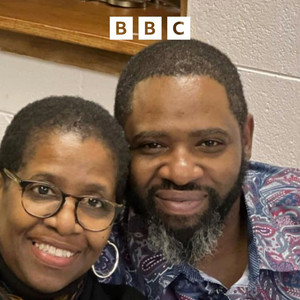
Vermar Hunter loved to visit the Gimme Some Sugar Bakery in his home neighborhood in Chicago, enjoying the cakes, pies and cookies, but also the warm company of the owner, Lenore Lindsay.
Vimar had a tough time growing up and only discovered he was adopted when he was in his 30s.
Years later, he decided to look for his birth mother.
A genealogy expert tracked her down and told him to expect a call.
When his phone rang, it was the bakery, and his birth mother was none other than Lenore.
Mabin Azar spoke to them about the moment they discovered their unbelievable connection.
So I called and he said, Miss Lenore?
I said, yeah.
He said, give me some sugar, Miss Lenore?
I said, yeah.
And he said, it's Vermar, Vermar Hunter.
So hold on.
So straight away, he knew you were the woman in the bakery?
He knew because he had my number in his cell phone.
And I had called him from the bakery phone because I wasn't exactly sure who he was, so he wouldn't have my real number.
It took a second for me to put it together.
I knew I was calling my son.
Okay, he didn't know.
But he didn't know who was calling him.
So therefore, when Gimme Some Sugar popped up, he's just thinking why is Gimme Some Sugar calling me?
Right.
When I'm waiting for a call from my mother.
Right.
How did the conversation progress?
What did you actually tell him?
We didn't say anything.
We just realized...
The minute I'm hearing his voice and he tells me who he is, then I knew oh my goodness, he'd been coming in all this time.
And this was my son.
And that was just like clicked in my spirit.
And I knew it was real and that this was true.
So we're just like crying and screaming on the phone.
And we just for like five minutes or something like that.
And this was unbelievable because the complete miracle of it.
She was already a lady that I respected.
And I felt like the conversation was always like that of a mother figure.
Like, you know, she'd be like, so when are you going to get married?
You got to play house and, you know, like that.
So that was always the interaction.
The next step was to organise a meet-up.
You know his family was going to want to meet me and everything and some of his friends.
And so we actually had a big meeting at the church.
That was a pretty exciting day.
Were you nervous?
No.
I mean, I know you.
She actually fit in with my circle and how I move amongst people anyway.
It was really for me.
It was kind of like after we had that conversation it's like I automatically knew him.
I felt like I hadn't been separated from him, which is really what my friends and family say.
They kind of go, you just like went zoop and connected.
And being around him more, he is like so much more. us, it's crazy.
He is just like my family without having been around my family and that's what's so absolutely cool.
Lenore, would you say the reunion has changed you in some way?
Yeah, it's made me a lot more open.
It's made me I think I'm more emotional now.
This made me more motherly.
Yes.
Toward Rachel, too.
It's a weird thing.
It's like almost like now I'm free to be a mom, sort of.
Where before, I had to lock that down.
So it was like from the time I was 17, you know, that was on lockdown.
And you didn't have those kind of emotions.
And you had to get through your life.
And my job was to march through life.
So, yeah, I was feeling things in a lot of different ways.
So now, you know, Rachel and I will be on the phone for three or four hours at a time.
I can't even describe it.
It's just how much warmer i am and how much more, you know, attentive i am to her life.
I'm just uh, i'm just i'm a mess.
You know mostly these days about both of them.
I think she's awesome as a mother.
At this stage of life, I view things a lot differently than somebody who probably has had their mother for the entirety of their life.
At my age, you've had your parents in your life long enough to say, you get on my nerves.
I'm sick of y'all.
I don't feel like it, you know, whatever.
But of course they still love their parents, but there's that level of you take them for granted.
And for me, there's none of that.
It's like, man, you know, I'm eager to learn more about her.
I love everything about my mom.
You know, I love her sincerity, her humor, you know, her work ethic.
But it's fun to talk about our differences because we're both at a stage where we can do it in a healthy manner and a respectful manner.
And we have ears open because we both want to hear.
I want to know what you're thinking.
You know, she want to know what I'm thinking.
It's like there's that curiosity.
And it's been awesome, you know.
Vimar Hunter and Lenore Lindsay.
And you can hear more from them on Lives Less Ordinary, wherever you get your BBC podcasts.
Now, around the world, the top players in men's football are associated with luxury lifestyles, Rolexes and all of that.
But one player is determined to do his part to change that image, opting instead to cycle, to work, use public transport and wear secondhand clothes.
Hector Bellerin, who plays for the Seville team Real Betis in Spain's La Liga, is passionate about trying to live a more sustainable life, something he shares with his 37 million followers on social media.
He's just been named global champion at the BBC Green Sport Awards and he's been speaking to the BBC's Elizabeth Conway.
Well, I feel with power comes responsibility.
I think it's some sort of duty for the people that we have these kind of platforms, and not just on social media, but just football itself.
Every time they put a microphone next to you, there's always a chance to talk about issues.
For me, sustainability is something that... has touched me pretty close since I was pretty young.
I'm a kid that has grown up in nature, in the sea, in the mountains.
Football has brought me to many different cities and to question the way I and we consume, we move around, we eat.
There's so many decisions that I feel that I could take and I could promote these messages to just try to generate and promote a better life and a safer space for everyone.
So when we talk about what you do on a daily basis, where you make more sustainable choices, can you give us some examples of things you do daily which other people perhaps wouldn't, that you try to encourage?
The first one, which for me, is the most important, and it's not something that happens every day, but it's something that we all must do, which is vote.
For me, that is the number one way that we can all change.
There's always governments that are more willing to to taking projects and laws in favour of a greener planet.
And when we talk about our day-to-day lives, I always feel that it's important to take time to really think.
Every time we consume and where from think, we're bombarded constantly with like ads and publicity making you feel the need that you need to buy something.
That was probably something that two days ago you didn't even think about.
I've been consuming secondhand clothes and shoes for a really long time, but I remember there was a time that I saw these shoes.
It took me six months to buy them and I wear those shoes almost all the time.
And that's just a way of not just questioning before you consume, but once you consume a good, make sure that you use it, make sure you give it a good life and when you never you don't need it anymore for whatever reason, make sure that another life is given to to that product.
And we also hear that you don't often take the car and when you can, you would cycle to training.
Yeah, the heat here is pretty overwhelming at times, but I move around walking or by bike around the city.
I also take the bus quite a lot here in the city.
I know it will be easier many times to just ring a cab.
You know i'm very privileged, i know i have the the chance to do it, but i feel that's the way it should be and i know sometimes i need to plan my journey the day before and sometimes it's a bit more uncomfortable.
To be honest, most of those decisions are a bit more uncomfortable, but if you have the chance of making them and you have the time, i feel the more demand there is on it as well, the better the public transport would be.
And I think it's the right thing to do.
We need greener cities with less cars.
And it's a joy when you just walk down the street and the air is cleaner.
The streets are for everyone and they're for us to enjoy.
And we need to also ask for cities that everyone can enjoy.
And I think that in itself creates more community.
Is it difficult to have your opinions on the fact that football needs to be more sustainable when things like the World Cup happening this summer are across three different countries, with more countries than ever, so much air travel?
Is that a difficult conflict for you?
Well, definitely it is.
I'm not the one that makes the choices over here.
I've come to the realisation with time that just because football works that way, I'm not going to stop doing what I've worked for and what I love.
I'm very conscious of how the football industry works.
But I'm just a football player and I don't even think that I can change anything but...
I can raise my voice and hopefully, with this platform that we have, we can become stronger and be able to change all these things that truly can be changed.
Hector Bellerin.
Now to a major conservation victory.
Green turtles have been rescued from the brink of extinction.
They were once hunted extensively for their meat, eggs and decorative shells and had been listed as endangered since the 1980s.
But thanks to decades of global efforts, green turtle populations are now rebounding.
The Happy Pod's Harry Bly asked our science correspondent Helen Briggs just how significant this is.
The red list of endangered species is updated regularly and more and more species are added to the list all the time, and generally it's bad news, things going from bad to worse.
So it is quite remarkable to get a story like this where numbers are rebounding.
But a long history of exploitation, a massive conservation effort across the world over five decades to protect the green turtle, and news that it's been downgraded on the red list to of least concern, as Dr Nicholas Pilcher of the Marine Research Foundation, based in Sabah Malaysia, explains.
It just tells this great story of how people across the planet can come together to turn things around and turn the negative trajectory of turtles into a positive one.
And that is amazing.
It really is.
We've got to be careful though, because while this is a great story, there are other species that aren't faring anywhere near as well.
Let's use this win as a catalyst to achieve numerous other wins.
Helen, tell us more about how this was achieved.
Lots of things.
So working across the whole life cycle of the sea turtle, if you like, of the green turtle on land.
It was about protecting the beaches where the females lay their eggs.
So patrolling the beaches, protecting the females, protecting the eggs, releasing the hatchlings out into the ocean, at sea.
Sea turtles tend to get accidentally caught in fishing nets, so it's developing technology to try and help them.
Something called a turtle-excluded device, which is sort of like an escape hatch that's added to a net so that if a turtle gets stuck in the net it can find its way out, and education and public awareness that these animals are endangered, working with local communities to protect them.
So a massive effort across the world, involving huge numbers of both conservation scientists but crucially, local people and the general public.
And this work has to go on as well.
So, even though numbers are rebounding, they have to keep doing this conservation work to protect the green turtle.
So presumably some of these methods that have helped green turtles you've mentioned there the turtle escape hatch will also be good for other animals which are endangered or under threat.
That's right, yes.
So a lot of work on stopping fishing nets catching accidentally species that shouldn't be there.
And it's about protecting a whole ocean habitat and whole ecosystems, really.
So by protecting some of these...
Species that grab the limelight like sea turtles because they are incredibly charismatic.
You can also protect whole areas of ocean and lesser known species that perhaps don't get as much attention, as Dr Pilcher here explains.
You can't deny that green sea turtles have everything going for them.
The little baby hatchlings are some of the cutest things on the planet.
And so what happens with species that aren't quite that majestic?
Well, one of the things I think is that sea turtles can actually bridge that divide.
There's a whole bunch of seahorse species, for instance, growing in seagrass beds where sea turtles feed.
And if we protect sea turtles, that means we have to protect seagrass beds, which means indirectly we're protecting those less charismatic seahorses.
We need to step up and we need to recognize that it's all species on the planet that require protection.
It's not about just the pretty ones.
The scientists, they sort of tell me their lessons from this.
It's about celebrating this win, but using it to galvanise support for conservation, inspiring people to make a difference and inspiring people to love the oceans.
Because, despite all of the depressing stories we hear about species sliding to extinction, we can all do little things that can make a difference.
Harry Bly speaking with Helen Briggs.
Coming up in this podcast, the cafe that's helping homeless people with jobs as well as meals.
What a great community.
You're feeling welcomed and everybody loves you.
I mean, truly, they welcome you and trust you.
Massively uplifting.
As America's most trusted movers, Mayflower has seen it all from big dreams and new beginnings.
All right, here we are.
Oh, it's perfect.
To first steps and fixer uppers.
From starter homes.
So guess what?
We're having another.
Another?
We definitely need more space.
To more practical homes.
Yes, Mayflower has been there for it all and will always have your back.
Every moment, every move, every step of the way.
Schedule your move now by going to Mayflower.com.
The U.S. electric grid is approaching a breaking point.
As demand soars from data centers and home energy use, our aging infrastructure can't keep up.
And the Department of Energy warns that without action, blackouts could surge 100-fold by 2030.
The good news?
One solution is already here.
Propane.
It's American-made, stored on site, and always ready.
Powering homes and businesses with cleaner, reliable energy that doesn't depend on the grid or the weather.
Learn more at propane.com.
I'll see you next time.
All five of her best-selling products, including the amazing youth activating melon serum.
This next generation serum has the power of melon leaf stem cell technology.
It's melon leaf stem cells encapsulated for freshness and released onto the skin to support a visible reduction in the appearance of wrinkles.
With thousands of glowing, five-star reviews, why not give it a try?
Subscribe today and you can get the amazing Meaningful Beauty system for just $49.95.
That includes our introductory five-piece system free gifts, free shipping and a 60-day money-back guarantee.
All that available at MeaningfulBeautycom.
This message comes from green light.
Ready to start talking to your kids about financial literacy?
Meet green light, the debit card and money app that teaches kids and teens how to earn save, spend wisely and invest with your guardrails in place.
With green light, you can send money to kids quickly, set up chores, automate allowance and keep an eye on what your kids are spending with real-time notifications.
Join millions of parents and kids building healthy financial habits together on Greenlight.
Get started risk-free at greenlight.com.
It's been the week of Nobel Prizes, recognizing some of the amazing discoveries that are improving lives around the world.
And in medicine.
The prize went to three scientists for their discoveries that explain how our immune systems attack hostile infections, but not our body's own cells.
The work of Japan's Shimon Sakaguchi and US researchers Mary Brunko and Fred Ramsdell is being used to develop new treatments for autoimmune diseases and cancer.
But while the rest of the world learned who won the award on Monday, Dr Ramsdell didn't hear the news for a while, as he explained over the phone while on the road to my colleague, Tim Franks.
My wife and I and my two dogs often take a long, extended camping backpacking trip right after Labor Day.
We did so this year and we were in the high country, in western Wyoming, a little bit east of Yellowstone National Park, up pretty high in the mountains.
So there's no service of any kind up there.
So I stick my phone in airplane mode.
And we had a bunch of snow, but we managed to get out.
It was our last day of the trip, actually.
And we drove through Yellowstone looking at elk and moose and all sorts of other things.
And then, as we got out of the mountains, my wife's phone essentially exploded while I was walking my dogs.
And she started screaming, my God, my God.
And we're actually in grizzly bear country at this point.
And so I started looking around for a grizzly bear, which was not the problem.
And she said, you won the Nobel Prize.
And I said, I did not win the Nobel Prize.
She said, I have 200 text messages that said you won the Nobel Prize.
And so we still weren't in cell communication space.
So I actually we drove down to a small town in southern Montana, which is where we're headed anyway.
And I went to the front desk of the hotel and said, I need to check in like now.
So I get service, which is what I did.
By then, it was probably 3 o'clock in the afternoon here.
I called the Nobel Committee.
Of course, they were in bed because it was probably 1 o'clock in the morning there.
So then I started calling my fellow laureate and good friends and started returning phone calls, etc.
So it was an interesting day.
My goodness me, an interesting day is a wonderful understatement.
I just wonder, I mean, so many questions spring to mind.
I just wonder whether I mean first off, whether it's the sort of trick that you might imagine that your wife would play on you.
She couldn't be that cruel.
No, she shouldn't.
And my first thought was okay, I have a lot of friends, but they're not coordinated enough to pull off this joke.
Not with that many of them at the same time.
So I knew it wasn't a joke and I knew it wasn't beyond the realm of possibility, but I certainly didn't expect a Nobel Prize at this point.
I mean, just enormous congratulations.
And I presume that your drive to where you managed to get a signal or Wi-Fi must have been one with hands shaking.
But now that you've had a little bit of time I mean you probably had zero sleep but now that you've had a little time to digest, I mean your reaction to the news itself.
It's obviously amazing.
I was actually doing a television interview and that person came on before we went on and said You're smiling.
And I said, how could I not be smiling right now?
It's fantastic.
Beyond the personal recognition, which is great, but the team.
I've been in constant contact with the team that was involved in this.
And, you know, they're over the moon excited.
I love the fact that my two co-laureates are being honored, because they're both incredibly deserving.
You could argue people who should be on this list.
I'm not going to quibble with the Nobel Committee on any of that.
But it's great to have the work recognized and to really see highlight what can take decades to come to fruition with some perseverance and some luck and really just some really hard work.
And so it's just incredibly gratifying to me to see the work and the field get the recognition that it really deserves.
Tim Franks speaking with the Nobel honoree Fred Ramsdell.
And you can find out more about his research and that of all of the Nobel Prize winners on the BBC News website.
A central London project set up as an emergency response to those left homeless on the streets during the early stages of the COVID pandemic, has just celebrated its fifth anniversary.
It now serves up to 90 in a pop-up restaurant inside a church hall supported by prestigious hotels and private members clubs in the city's wealthy Mayfair district.
The project also runs a cafe that's open to the general public and it's staffed by homeless people and others trying to get back into work.
Bernadette Keough went along to find out more.
In the grounds of a Mayfair church.
A large crowd of supporters gathered to celebrate the milestone, as well as to witness the launch of a new community vegetable growing project.
It's the latest development in a much more humble, original outreach initiative.
So I'm Father Dominic Robinson, I'm the parish priest here at Farm Street and I run also the Central London Catholic Church's homeless services, which we started five years ago in Trafalgar Square, at the time when everywhere was being closed down because of the pandemic.
There were about 200 to 300 people left on the streets and we provided food for them.
Everything's gone up several notches since the early days, with support from prestigious local hotels and private members clubs such as the Connacht and Annabelle's.
My name is Linda McHugh and I am the volunteer coordinator and it's different from the norm.
We do not peel potatoes and cook food from scratch.
What we've done is get together with lots of very prestigious restaurants, hotels and clubs, and they provide us with the food.
We're not running a soup kitchen.
We're running a restaurant where they come in sit down.
They have waiters and waitresses who are our volunteers.
Volunteer Mark Smith reflects with pride on how the original charitable project is now twinned with a going concern a stylish cafe open to the public which is giving people who've fallen out of the world of work a second chance.
The restaurant service that we offer on Wednesdays and Saturdays is a sit-down service for homeless and precariously housed individuals.
But then an outgrowth of that project was the development of the Cana Café.
And we employ people who are guests upstairs so they're homeless or unemployed in the capacity of cooking and serving in the Cana Café, serving regular folks who come in off the street to pay for the food.
Martin started off as a guest at the drop-in lunches and has progressed into a position of responsibility in the cafe.
I basically run the cafe in terms of organisation, management and administration and the selection of volunteers.
We have people that are having some disabilities, some people that suffer from certain substances use, so we try to get them involved as much as we can.
There are people who can't really work that many hours, but they can still work a little bit, or people that can have some problems with concentration, you know, and so they can do little tasks and contribute.
Brian has also benefited from being part of the project.
I'm the dishwasher.
So I get to wash all the dishes and I get to cook a little bit too.
What a great community.
You're feeling welcomed and everybody loves you, you know.
I mean, truly, they welcome you and trust you.
Yeah, massively uplifting.
But it's certainly not just about food, as Father Dominic Robinson explains.
We have also creative writing, we have pilates, we have job creation days, we have wonderful relationships with different businesses here.
It's a real local success that the local community have come together to realise that those who are on the streets and for whatever reason they've hit hard times and need our help and need to be shown dignity.
Father Dominic Robinson, ending that report by Bernadette Keogh.
And finally for this week, we wanted to share the story of a simple act of kindness that will hopefully make you smile.
It's about a hotel worker who went above and beyond, driving hundreds of miles, to return a forgotten bag to a stranger because he could tell the things inside the bag meant a lot to its owner.
Kieran Galpin tells us more about the journey.
Driving back after staying by Loch Lomond, Sharon Bolton realised she'd left her handbag containing several sentimental items at the Queen of the Loch pub.
She said she was really upset about it but couldn't get a courier because it would cost as much as the contents of the bag.
Soon after, her phone rang.
Here she is describing the call from Andrew Leggett, a staff member at the pub.
He just floored me with this conversation, saying oh, I hear what happened and I hope you don't mind.
I've had a look through your bag.
He said look, I can see there are some things in this bag that's just sentimental value and you really ought to have.
I believe there is a solution to all problems.
And he was so upbeat.
So I thought, well, thank you.
His solution to this problem was to drive 400 miles, taking over seven hours, to meet Sharon near her home.
Then he handed over her bag without anything in return.
He explained why.
It was the right thing to do.
There were some personal things in there.
And to be honest with you, it was off the next day and I thought, why not?
It was really good to get your belongings back at the end.
When I met with the outsider the most, that's probably my outsider.
The smile on his face was enough for us.
So it was a good day.
And if you hadn't already realised from his chipper tone, Andrew had no regrets about the 800-mile trip.
It was a good journey down.
It was well worth the journey.
Kieran Gelfand reporting.
That's all from The Happy Pod for now.
But if you have a story you think we should cover or you'd like to comment on anything you've heard, we'd love to hear from you.
As ever, the address is globalpodcast at bbc.co.uk.
And you can now watch some of our interviews on YouTube.
Just search for The Happy Pod.
This edition was produced by Harry Bly and Rachel Bulkley and mixed by Rebecca Miller.
The editor is Karen Martin.
I'm Celia Hatton.
Until next time, goodbye.
America is changing, and so is the world.
But what's happening in America isn't just a cause of global upheaval.
It's also a symptom of disruption that's happening everywhere.
I'm Asma Khalid in Washington, D.C.
I'm Tristan Redman in London, and this is The Global Story.
Every weekday, we'll bring you a story from this intersection, where the world and America meet.
Listen on BBC.com or wherever you get your podcasts.