Discussion keeps the world turning.
You're listening to Roundtable with myself, young!
I'm joined by Yushan and Steve Hatherley in the studio.
Coming up, we share with you what brought us cheer to light this week.
Join us for a dose of positivity, laughter, and all things that make our hearts sing.
In Roundtable's happy place, your voice matters.
If you've got a question, something you're itching to share, fire up that voice memo,
and hit us up at eZ, at the Roundtable, at FoxMail.com.
You could just be the one that's stealing the spotlight in our next Heart to Heart segment.
And as summer sun blazes down, folks face the pressing question of how to best shield
themselves from the sun.
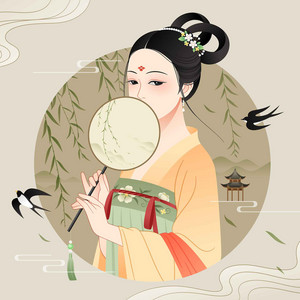
The spotlight is on Hunfu, the elegant, traditional attire of the Han people.
This time, it's not just for fashion, culture, and history, but for its practical, sun-blocking
benefits.
Can you believe that?
Our podcast listeners can fight us at Roundtable China, on Apple Podcast.
Now, welcome to the happiest corner in the airwaves!
Roundtable's happy place.
What is it?
Happy days from Roundtable.
Mr. Steve Hatherley was made you happy this week.
Oh, arriving in China for the first time to live in Beijing.
Oh my goodness.
Everything's new.
Every street corner is new.
Getting lost is fun and exciting.
Where are we again?
Yeah, open up the map, app the navigation app, translating things from Chinese into English,
trying to figure out how to order food to the hotel successfully, which I was able to
do, which I felt like was a milestone for me.
Yeah.
Right?
But it's true.
And it's so fun and exciting to be experiencing these feelings again because I lived in Korea
for 24 years and I speak Korean.
And so nothing was challenging in terms of that type of thing.
But when I came here, then I get that feeling that I had 24 years ago when I moved to Korea
for the first time.
So my happy place is that plus all the new foods that I've been...
Oh, I'm going to gain a thousand pounds living here.
I know I am.
Well, there's two favorites that I've had so far.
One was the little red crayfish, mala, maybe.
Yeah, crawfish.
Crawfish, yeah.
Those little things were incredible.
Don't you find it to be really tedious to eat it?
I'm from Nova Scotia in Canada.
If you see lobster in a tank at a restaurant around here, probably it came from Nova Scotia
in Canada where I'm from.
Okay, but they're the big lobsters.
Those are big, but my point is, I know how to eat those though.
I grew up eating those things.
So eating the smaller version of that is not a problem at all.
Then another favorite dish I had, oh my goodness, I've never even seen this before.
It was duck, but it was prepared on a plate and then duck ribs, I guess, would be the
best way I could describe it.
And it was barbecued, grilled.
It was one of the best things I think I've ever eaten in my life.
Are you talking about peaking roast duck?
No, I'm not talking about it.
Duck ribs?
Are they, is there meat?
I had never seen it before.
It was at an outside place where you sit outside, plastic tables and chairs.
Typically, at those places, you don't expect to find like amazing food, but I ordered it
just based on the picture.
I didn't know what I was ordering.
And then out it came and it was one of the most wonderful things.
I'll show you a picture a little bit later.
Yeah.
My happy place is always food.
My happy place this week is finding new foods that I haven't experienced those flavors before.
Right.
And savor every taste of it.
Yeah.
I mean, I haven't liked everything I've tried, of course, not right.
I mean, what didn't you like?
I wanted to know about that.
There was a, okay, so we went for breakfast with the porridge.
You can get the, I think they're duck eggs.
They're, oh yeah, the duck egg eggs, so you have it separately, right?
Yes, yeah.
You order it separately.
The salty duck eggs.
I'm not a big fan of that.
You like that?
Not really.
Oh, that's a delicacy for both Chinese.
Yeah.
You're like a wonderful little snack.
Right.
We grow up eating it.
Mm-hmm.
Wait until you tried the dark color century eggs.
Those I do like.
How strange.
Those, those are a little bit more, a little bit more rubbery in texture, right?
Yeah.
Yeah, yeah.
And their color is quite nice as well.
The outside is like this brown purple and then the inside is like a greenish type
color.
Yeah, those are good.
I like those.
Uh, the Guangdong people like to chop it up and then put it in the congee.
Yeah.
That porridge is congee.
Congee, sorry.
No, it's fine.
Um, and to have the century egg bits in it as well as shredded pork.
Yum.
So good.
Oh, and spring onion bits in it too.
The hot pot.
We've been loving the hot pot.
You know what?
Hold your horses.
I think this experience of exploring new foods and delicacies in China,
it deserves to be like a multiple episode, multiple segment.
A one by one.
Yeah.
And then, you know, and then our listeners would know what to expect next week.
And it's like, oh, Steve's new adventure.
Oh, yes, exactly.
I can.
I can.
I am more than happy to do that.
Yeah, folks, what do you want to hear Steve discover next?
Leave us a comment.
Yeah.
Exactly.
What should we, what dish should I be trying next?
Yes.
And we want to hear the faves and the hates too.
Or that's just a reserve for me.
Sure.
All right, lovely.
Thank you so much.
Oh, I feel like a little bit hungry.
Yes.
A tad pick a shrunk out.
You, Shen, what do you have for us for this?
Well, for my happy place, it's literally like a happy place because, well, one of my cats
is like recovering from like a long-term kind of condition lately.
Oh.
And yeah, like me and my parents, we have three cats.
And if one is always in such a condition, we kind of need to, you know, it's like managing
your diet for children.
Like you have to be careful not to mix the food and et cetera.
So with her condition with this particular cats, her name is Snowball, by the way, that's
getting better.
We kind of can share food among the cats.
And there's no jealousy.
There's like so much more peace and, you know, energy in all of the cats, all of a sudden.
So yeah, that will be my happy place for this week.
I'm just really happy to hear the news.
I don't really live with them on the daily basis, but I'm looking forward to like, and
reunion with all of the cats.
And of course, my parents during the weekend to see, you know, just how well Snowball is
doing.
Aww.
It's really stressful when your pet is sick.
Oh, ours.
Oh, ours.
I think non-pet owners might not understand how sad and how stressful it can be and how
worried the, you know, that's your family member.
So I totally understand.
Was he, or she?
She.
Was she sick for a long time?
Yeah, she's kind of carrying this condition ever since she was young.
So she's always had digestion problems.
And yeah, we've been through the vet for like numerous times, spend thousands and thousands
trying to figure out why.
But well, I guess at the end of the day, it's just one of the natural gene determined condition
that she carries.
So these days, she's kind of getting well because of the diet control after so long.
So yeah, that's just some progress we're making.
Perfect.
How old is Snowball now?
Oh, she's five.
She's the oldest cat we have.
Like her younger brothers are just babies.
Yeah, they're just boys, you know, boys being boys.
That's Snowball still young too in terms of a cat's life span.
We've always had this concern that if she keeps on having it, maybe it will shorten her,
you know, life span.
So if this continues to grow and continues to progress, that she can eventually hopefully
get rid of this condition, then yeah, let's hope that she can live much longer than we
expect.
That's great news.
Congratulations.
Thank you.
Thank you.
Too long, healthy and happy life for Snowball.
Exactly.
You're going to pass that to her.
Yeah.
Play this audio clip for Snowball.
Exactly.
Have fun with her.
Yeah.
And here's my happy place this week.
Well, classics always have a way of drawing us back.
And my initial encounter with the seven episode podcast, Estown, was a binge-worthy experience.
Now, seven years later, by a twist of podcast fate, I've really listened to it again this
week, and it was just as good, if not better.
Estown, the groundbreaking 2017 mega hit podcast from the creators of serial and this American
life, remains one of the most powerful, haunting and devastatingly beautiful podcasts ever created.
What began as an investigation into an alleged murder soon unraveled into an appointment,
character study of John B. Mackamore's complex life, his struggles with loneliness, sexuality,
mental health, and the harsh realities of life in Woodstock, Alabama, a small town in
rural America.
And the podcast mass-fruity humanizes John B. Mackamore, an antique clockmaker and
restore or antiquarian, herologist, whose brilliant mind and wit, masked deep wells of sadness
and isolation, his unexpected death, midway through the series shifts the narrative to
grapple with questions of privacy, ethics of storytelling, and how to honor someone's
life without exploiting their secrets.
In the last seven years, some of John B's worst fears have sadly come to pass.
Climate change has worsened the sprawling hedge maze he built has turned brown, tragically
another death of someone he cared deeply about has occurred within the Estonian orbit.
John B. and his hometown, which he referred to with the S-word, I can't say on national
radio, will always be remembered thanks to the globally acclaimed podcast, Mass-Fruity
Written, and narrated by journalist Brian Reed.
To me, Estonian's greatest legacy is opening our hearts and ears to the struggles of humanity
within every community and person's story.
It's rare for me to recommend a podcast on this show for obvious reasons, but stumbling
across it again seven years later and also checking the comments area was astounding and
it becomes sort of like a gravestone and a place where listeners and audiences can go pay
respect because I saw so many reviews from this month as well, just shows the lasting
popularity of it.
Once it's great works presented in front of us, I wish, okay, this is like a personal
and career inspiration that I hope that one day I'll be able to make something that is
a lasting effect and can truly tackle humanity's inner world like that.
I've listened to this series.
Yeah.
I think it's really unique, isn't it?
Because you suddenly are introduced to this really, really troubled character.
He's a real person.
He's very smart.
He's extremely intelligent, but he's suffering.
And he lives, if you're not familiar with Alabama, and I'm not American, I'm Canadian, but
I do know that in Alabama, it's kind of small town culture.
Many people have lived in these same towns for many years of their life, if not their
whole life.
You join this man and you just kind of thrust into his life with him.
And then, as you mentioned already, there's a tragic turn in the middle of the series,
and it's just really quite shocking.
And the power of this show is that it makes you feel like you're there with them somehow.
It's really well produced.
It's really well narrated.
And the interviews are fantastic.
It's about as good as it gets for a podcast series, isn't it?
Yes.
It's like you're invited to step and live in this Southern American Gothic novel.
And it's amazing what audio products can do.
So revisiting the podcast, Estown, is my happy place this week.
Coming up, imagine stepping out in a gorgeous Hanfu, turning heads while staying sun-synced
safe this summer.
How are you keeping the sun at bay?
Stay tuned.
Looking for passion?
How about fiery debate?
Wanna hear about current events in China from different perspectives?
Then tune in to Roundtable.
Where East meets West and understanding is the goal.
It's the hour of Roundtable with myself, how young I'm joined by Yushan and Steve Hathorley
in the studio.
With summer's sizzle and full swing, many Chinese women are tackling the hot topic of sun
protection.
From sunscreen creams to cool anti-sun gear, there's no shortage of ways to stay safe under
the sun.
Under Hanfu, the traditional attire of the Han people in this country, it has made a
major style comeback, led by trendy young people flaunting it everywhere, it seems.
I guess what, the breezy, elegant Hanfu is now the hottest sun-blocking fashion.
So, is this true?
Have you, oh, are you wearing one right now, Yushan?
Yes, I am wearing this dedicated to the fact that we're talking about it and also like
what I'm wearing just for the purpose of sun-screening.
Oh.
Well, and looking good.
Yeah, and I bought this one.
It's actually just as I'm looking at it, I feel like it's more like a song style jacket
that it doesn't have any robe or knots on it.
It's just a light cover.
As I'm reading from the label here, it's not made of cotton or leanin as most Hanfu would
be produced in, but rather just something called shell fabric, which is 100% polyester
fiber.
So it's like, you know, modern material, but the fact that this is very light and very
thin and kind of cool to be worn both under the sun or indoor kind of proves to the fact
that Hanfu is getting kind of popular, kind of cool.
Always very popular everywhere.
Yeah.
I mean, like I see people wearing this in and outside of buildings too.
Right.
And when you see that people wear this in the office, when, well, not everybody agrees
with it, but once you see that, you know it's popular.
So this is like a modern take on a traditional Chinese attire?
Yes.
And also, I suppose with any like field-specific area, you've got people who are
snops who treat this in a very orthodox way, otherwise doesn't qualify, otherwise these
are amateurs, but for something to be popular, you need all kinds of amateurs to join in.
Of course.
This is happening in Korea now a little bit too.
Hanbok is the name of the traditional wear with the really broad, wide bottom to the
dresses and then the tighter top.
Modern Hanbok designers now, you know, you can't wear that and walk down the street and
get a sandwich or something.
Oh, is that?
No, it's the traditional ones for the women are, they're too big, they're too bulky at
the bottom, right?
So it's not practical for every day wear, but modern day designers are doing exactly that.
They're taking the traditional designs and they're making it into something practical that
people can wear out on a daily basis.
So that trend is happening, happening there as well.
But just looking at what you're wearing now, I wouldn't have known, I wouldn't have guessed
that was based on some sort of traditional design.
Yeah, like that's the trend now, right?
Like we have this quartile or China chic theme going on every, on every aspects of our
life and for sure, a clothing included.
And just like how it's adapted in Korea here in China, a lot of the, you know, popular clothing
brand, they also try to involve a lot of traditional Chinese Hanbok elements on to just usual
modern day-to-day wear, like a t-shirt, like a child's.
So people are wearing these, these days partly for fashion, but also partly to help block
the sun.
Because the lighter materials and like the longer sleeves a little bit, is that it?
Right.
Data has shown that as early as the beginning of May, e-commerce data of short video platform
dough in, which is also the domestic TikTok, showed that the sales volume of Hanfu increased
by here this, 389% from platform here on here.
So that's how popular is getting, especially during summer.
And we know why it's because you know, Hanfu, especially the adapted, lighter thinner,
breathable version of the say the covers and the longer like, shoulders, they're also
good for blocking the sun because the purpose of Hanfu in our style, in most of the cases,
is to cover skin exposure.
So yeah, I wouldn't be surprised at all if, you know, more and more people are using it
to, you know, block the sun instead of just enjoying the clothing style.
It's like a fashionable sunscreen.
Right.
Yeah, that's so interesting because every summer we have to talk about the wide range
of measures people take to shield themselves from the sun.
And this year, it's sort of like an unexpected combo that Hanfu, at the same time, can
act as, you know, the most fashionable sunscreen of the year by the sound of it.
But what are the most common ways for people to sort of stay out of the sun when they
still need to go out in such scorching heat?
One style that I noticed starting from this year, or maybe recent years, I'm not sure,
is that people start to wear masks as a way of hiding like physical blocking sunlight
on their face.
Some are even extending from just half a face mask to a full face mask and they call it
face-cleaning or something.
Yeah, it's really.
Yeah, bikini, but face-cleaning.
So it's like some, just imagine someone from the old times like a bang robber or something
putting a bag with holes on the eyes and on the mouth as their facial cover.
Nowadays people are using something similar, but just to block the sun, not to rob anything.
That's quite dramatic, isn't it, though?
I know, that's why I prefer hand food than face-cleaning.
Yeah.
But sorry to bring this up.
You're wearing the hand food, which is perfect for blocking the torso, the body from the
sun, but you still can't block the face.
Umbrella.
So you go with the Umbrella hand food combination package and then you've got full coverage
from the sun, right?
And Steve, you've been living in South Korea for so many years.
And I heard that folks over there can go full on when it comes to trying to shield from
the sun.
Is that how it's done there?
Yeah, so people wear sunscreen, of course, in the summertime, which is really, really
important for everyone.
And then if they do go to the beach where I lived in Busan, there's seven beaches there.
Hyundai is the kind of biggest, most popular one.
So they'll hang out underneath the sun umbrellas, but if they go in the water, they'll wear
like the full-length, spandex style of swimsuit, almost like an Olympic swimmer to help cover
their skin.
And then, yes, sun hats at the beach as well.
Yeah, skin coverage from the sun in Korea is a big, big priority for people in the summertime.
What about, let's say in the office building area, would people show up wearing these obvious
attire to sort of shield from the sun?
No, no, no, no, not at all.
That's only for, yeah, I mean, for that, for going to work on a daily basis, applying
your sunscreen in the morning to your face, and maybe your arms, if your arms are exposed
as well.
But yeah, nothing dramatic like that just for office work.
Right.
Interesting, because now I see that there's this obvious sort of genre of fashion that is
like fengshai, and these are, they come in these kind of like, little cloaks.
Yeah, little cloaks that...
Like a Harry Potter style cloak?
Or sometimes it's like shorter, just shorter half a body kind of lens.
Yeah, yeah.
And they usually come in like pastel colors, and you know that the thing is for blocking
the sun.
It's not for fashion purposes.
And at first I used to think, oh, right, that on the streets, it's worth.
Is it necessary, right?
Yeah.
But now I see many people are doing that.
I'm just walking around the radio station neighborhood here, I see plenty of people.
Some people are not protecting themselves at all, and we know the temperatures have been
really hot here recently, but some people, yeah, it looks like they're a celebrity trying
to hide from the paparazzi.
Like, they're fully, completely covered.
And they're just trying to avoid the sun the best they can.
And apparently if you do that too much, if it's excessive sun blocking, then it can be
actually really bad for you.
Yeah, of course.
Like, I was reading this piece just previously as I was noticed wearing such a cloak that
we were mentioning before.
I was reminded, again and again, by a lot of like people from the older generation who
see me wear it and just feel sorry for me that I have to wear it, that the chemical
then this is in the skin under sunlight or ultraviolet race is exactly how we gang vitamin
D. And a long term lack of vitamin D can lead to something serious like increased bone
loss, increased risk of fractures and weakened immunity and all that.
So I've been warned more than once that if you don't want to get all crispy and fragile,
by the time you head 40 or 50, just take that cloak off of you and get some sun ray.
Like, you deserve that, okay?
And you have to because otherwise, okay, I can't believe that.
I suffer from this as well.
Vitamin D deficiency.
Oh, really?
Yeah, and I was so surprised because, well, I have to admit, Steve, I mean, we're so easily
persuaded by the culture, the environment we're living in.
When I was living in London, I used to put on sunscreen, cream, obviously, but nobody's
carrying sunblocking umbrella in a sunny day.
Nope.
Nobody's wearing the face-kini.
You don't really see that as often, but some people are doing that within recent years.
And like, all kinds of weird stuff, gear that people wear.
Like, you don't get any of that.
And then, like, the breaths are really, in my opinion, a little extreme when it's still
super chilly outside and springtime.
Don't go to the beach.
But with the first ray of sunshine, everybody's, okay, now I need to get some sun.
And then they're in bikinis and sunbathing.
And I'm still in my sweater, like, shivering over there.
It's relative, isn't it?
Yeah.
I mean, if you walk down the street in Canada where I'm from, you're not going to see people
walking with sun umbrellas or things like that.
When I moved to Asia, that was the first time I had ever seen that.
And I thought, is it going to rain later today?
Yeah.
They're like, they're prepared for it.
But yeah, it's just different culture.
It's different attitudes about overexposure to the sun and things like that.
I guess who's right?
Who's wrong?
I don't know.
Just a balance.
You need vitamin D.
You need to get your sun fixed, if you will.
Yeah.
But overexposure to it is really not good for you either.
So wearing sunscreen, apparently, is the recommendation?
I looked it up.
I mean, these are things that I had heard so many times before.
But since we're going to be talking about it today, I decided to look it up.
Do you know what SPF means?
Say, well, enlighten us.
Sun protection factor.
I didn't make sense.
I had never heard of that before.
But do you know why it's like at 30, why it's at 50, what that actually means?
Let's nerd out.
All right.
So they say that, well, first let's start with the difference between 30 and 50.
So this is from some skincare website.
And they said that the difference between 30 and 50 is marginal because your protection
difference is only about 1.4, 1.3 percent difference between 30 and 50.
But the math is kind of interesting how it works down.
So let's say that if you start to get sunburned after about 10 minutes in the sun without any
protection at all and you put on SPF 30, that means you can spend approximately 5 hours
in the sun without the risk of a sunburn because 10 minutes is your natural time to get a
burn, times 30, the sun protection level, that equals 300 minutes.
So 10 minutes in the sun to get a sunburn, times your SPF, which is 30, equals the total
number of minutes, that's how long you can spend in the sun and not get a sunburn.
Okay.
So that's how that all works out.
So what they also recommend is if you don't know the answer, how long it takes to get a
sunburn, don't try to find out.
Don't go out in the sun and stand there until you get a sunburn.
But yeah, people, you know, still wear sunscreen every day and it's because they should,
they have to.
Yeah, but also I question with, you know, the stuff that you're applying to your skin,
of course, your skin absorbs it and I wonder if these chemicals are really good for us.
Are they completely harmless?
I know you need to read the ingredients chart or label to understand this, but when you
are putting something on your face and body every day for at least a few months, then
it's not a good feeling because I have these quandaries.
That's why a lot of people are wearing the hunfu or the physical anti-sun protection
gear.
And they say you should choose sunscreens with natural and organic ingredients because
natural, they use natural oils that absorb into your skin properly.
You know, if you put on some sunscreen sometimes and like it leaves that white mask, maybe
you didn't see there's a famous picture of Mark Zuckerberg, the Facebook founder.
He's surfing in Hawaii and he had put on so much sunscreen that he basically looked like
a ghost on the ocean and surfboard.
Do get a face keening instead.
Yeah, exactly.
You could probably afford to hire someone to stand there with an umbrella with them.
Anyway, just choose your sunblock that's right for your skin and right for you.
And that brings us to the end of today's show.
Thank you so much Steve and you, Shan, for joining the discussion.
I'm Ha Yell.
Thank you next time.