This message comes from NPR sponsor, Capella University.
Interested in a quality online education?
Capella is accredited by the Higher Learning Commission.
A different future is closer than you think with Capella University.
Learn more at capella.edu.
Hi there.
It's Linda Holmes.
Before we start the show, we're marking Giving Tuesday this week.
NPR celebrates this global day of generosity every year, but we've never had a year quite like this one before.
You've probably heard by now that federal funding for public media was eliminated as of October 1st.
That means NPR is now operating without federal support for the first time in our history, more than 50 years.
It's a big change and a big challenge, but it's one that we can overcome together.
So we hope you'll take a moment to think about what you love about Pop Culture Happy Hour.
Maybe we've helped you find a new show you love or made you think differently about the movie you just saw, or kept you in good company while you're on a walk or getting ready for work.
We're so grateful to the listeners who have already stepped up to donate.
Like Patrick from Indiana who says
My biggest sense of loyalty and appreciation goes to Linda, Aisha, Stephen, and Glenn at PCHH.
They are all the best and I love how they have helped the show evolve in format, broadened voices and persisted with integrity, wishing you all the fortitude to keep it going.
Well, that is very touching, Patrick.
You, if I may say, are the best.
Thank you so much.
Thank you to everyone else who supported NPR this year.
You know I'm going to say this, but you are what's making us happy this week and every week.
If you haven't yet, please make your Giving Tuesday gift right now by signing up for NPR+.
It's a simple recurring donation that gets you perks to NPR's podcasts and bonus episodes of Pop Culture Happy Hour, where you can get a peek behind the scenes of our show.
Join us at plus.npr.org.
Thanks again for your support, and let's get on with the show.
Hamnet tells the story of a young English couple played by Jesse Buckley and Paul Meskel.
They meet, fall in love, have children, and suffer an unspeakable tragedy.
And then one of them writes Hamlet.
It runs from William Shakespeare first meeting his wife to an early production of Hamlet.
And along the way, it does everything it can to make you cry a whole lot.
I'm Aisha Harris.
And I'm Stephen Thompson.
Today we are talking about Hamnet. on Pop Culture Happy Hour from NPR.
Your experiences may vary.
RootMetrics rankings are not an endorsement of AT&T.
When you compare, there's no comparison.
AT&T.
This message comes from Dell.
It's time for Cyber Monday, one of Dell Technologies' biggest sales of the year.
Enjoy huge savings on gift-worthy accessories and select PCs like the Dell 16 Plus featuring Intel Core Ultra processors.
Shop now at dell.com slash deals.
This message comes from NPR sponsor, Capella University.
This message comes from BetterHelp.
BetterHelp president Fernando Madeira, relates to needing flexibility when it comes to scheduling therapy.
I have kids under 18, so time is very limited.
That's why, at BetterHelp, our therapists try to have sessions, sometimes at night, depending on the therapist, or during the weekend.
So I think that's what we need to tell the parents.
You're not alone.
We can help you out.
If a flexible schedule would help you...
Visit BetterHelp.com slash NPR for 10% off your first month of online therapy.
Joining us today is NPR film critic, Bob Mondello.
Hey, Bob.
Hey, good to be here.
It is a pleasure to have you.
So in the opening scenes of Hamnet, we meet a witchy young free spirit named Agnes.
She's played by Jesse Buckley.
Agnes catches the eye of a young tutor named Will.
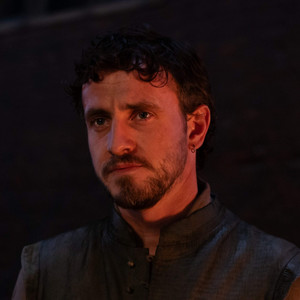
He's played by Paul Meskel.
Their story is a fictionalized account of the lives of William Shakespeare and his wife, who's more commonly known as Anne in other accounts of her life.
But we'll go with Agnes here.
Agnes and Will have three children together, and though Will is a doting father, he's increasingly absent from the family's day-to-day lives as he begins his career writing and producing plays in London.
When their only son Hamnet, played by Jacoby Jupe, dies at the age of 11.
It creates a rift in their marriage and inspires Will to write one of his greatest works.
Hamnet is based on Maggie O'Farrell's 2020 novel of the same name, and the film was written by O'Farrell and director Chloe Zhao, who previously won an Oscar for directing Nomadland.
It's in theaters now.
Bob Mondello, I'm going to start with you.
What did you think of Hamnet?
I fell apart.
It really fell apart.
I saw it at the Middleburg Film Festival a few weeks ago, about 36 hours after NPR's founding mother, Susan Stamberg, died.
And I was primed for a movie about grief, and this movie is very definitely about grief.
And I was.
You know, I was doing fine for a long time and we got to the end scene and I thought I was holding it back.
I thought I was holding it in.
But I was sobbing so hard that the woman sitting next to me grabbed my arm to see if I was okay.
I just lost it.
And I acknowledged that I was being manipulated.
I mean the moment where I lost it.
I thought oh, that is like really over the top.
It didn't change the fact that it just worked for me.
This is a movie that is designed for me in a way.
I'm a theater critic and fan from way back.
I have seen 37 or 38 Hamlets at this point.
I know this basically back to front.
And so finding a new way into it for me was kind of fascinating.
So yeah, I'm with it 107%.
All right.
How about you, Aisha?
Well, I saw this at the Toronto International Film Festival a couple months ago.
And afterwards I had to check my pulse to make sure I was still alive, because I left this feeling cold.
I left this feeling unmoved.
Oh, wow.
This is maybe a me problem, because everyone in my theater and this was a packed theater you could hear the sobs.
You could hear the sniffling.
It was like just a sea wave of sniffles and just uncontrollable crying.
There were a whole bunch of Bob Mandellos there.
Yeah, a whole bunch of Bob Mandellos in the audience.
And there is me, the cold, icy-hearted, not into this person.
You know we can talk a little bit about this, but I think one of my biggest issues with this film is is Paul Mezcal's performance.
And I've kind of had this weird relationship with him where I can't quite figure out if he's as good as everyone else seems to think he is or if he's just kind of finding himself as an actor.
He's still relatively young and he's still relatively new to film acting.
So...
Steven, I'm so curious to hear how this hits you because, as we like to tease you about it, as you like to tease yourself about it, you are the type of person who is primed for this.
You are a dad.
You cry at a lot of things.
Tell me why was I so cold?
Well, I was laughing with a colleague shortly before heading into this movie.
Like will my legendary stoicism be a match for the works of Chex Notes?
Chloe Zhao, Paul Meskel, Jesse Buckley, with music by Max Richter, who has made some of the most tear-jerking music I've experienced in my life.
And the answer is, I guess I come down somewhere in between you two.
I counted.
I cried five times.
Wow.
For a film with this subject matter, for a film that is working this hard to make audiences feel and cry.
I felt like, for me, that was relatively restrained.
I really liked this film.
The performances at its center.
I think Paul Mezcal was fine, but I think Jessie Buckley, as she basically always has been in everything I've seen her in, is just transcendent.
I think she's a magnificent actor.
She gets a lot to chew on here.
I'm not necessarily a deep Shakespeare guy.
I've read a couple of plays.
I've seen a few adaptations.
I've not seen Hamlet 38 or 39 times.
I still found myself moved by the parallels between the story and the work and was sort of fascinated by the way this film is in conversation with another awards season favorite, Sentimental Value, which is another recent film about kind of using art as a means of escape.
I found that really interesting.
In general, I sat down expecting to cry and I cried.
Yeah.
That pause said world.
Let me explain myself further.
I think one of my biggest issues is that I often find, okay, this is totally a me thing.
When it comes to films that projects that are set in this era of history.
Like it is a much bigger hurdle for me to latch on to what is happening here.
And I think, yes, Chloe Zhao, she is very good at manipulating.
And manipulating is not necessarily a bad thing.
I think a director, that is what they do.
Sometimes you see the strings more.
And I think here you see the strings so much.
And it also just felt like a very familiar story to me in a way that didn't transcend how kind of artsy-fartsy it felt for me.
Oh, man.
Yeah.
Yes, it's about the loss of a child and that is a big part of it, and that is a big part of the climactic ending of this film.
But it is also like, at its heart, a story about like, two people who fall in love but then like, The husband goes away.
And now it's about the mother who has to like, bear all of the tragedy and bear all, And I'm like I've seen this before.
Nicole Kidman has done this type of movie 800,000 times.
And it may not be quote unquote better than Hamnet when I see it, but I do find it more interesting.
And Paul Meskel for me, with the exception of something like All the Strangers or After Sun, where
Yes, he's kind of the lead, but he takes the back.
I think that usually when I see him, he's not the best part of that movie.
And for me, he's a bigger role in this movie.
He is kind of a co-lead with Jesse Buckley.
And that time we spend with him, he just doesn't.
He's just kind of sappy and soggy and Well.
And now, in fairness, which he needs to be for the plot to work.
I mean this is about Jesse Buckley's character not recognizing that her husband is also grieving.
And she is grieving, and her grief is so all-consuming that she actually thinks that he's off writing a comedy in London, that he's simply gotten past this.
And she doesn't realize that he is working through all of these things himself because he isn't good at expressing himself, which is a really interesting concept for Shakespeare, of course.
You need him to not be forthright, to not be out there unless he's on stage, which he is at one point, or playing with the kids, or something like that.
You need him to sort of to step back a little bit.
And Jessie Buckley.
Her character is so consumed by what she's feeling that to have two people on screen who are doing that would drive you nuts.
It would be just too much.
I think it's by design.
The thing that is bothering you about it is by design.
Yeah, and I also don't know that Paul Mezcal is – he's billed kind of as a co-lead with Jesse Buckley, in part because of name recognition.
But it is a bigger part for her than it is for him.
He disappears again by design for long stretches of the story because he's gone off to London to do whatever it is that William Shakespeare does.
And the film I think centers her in – in ways that I kind of appreciated in having watched so many historical epics focused on great men.
I found myself kind of appreciating the fact that this is about another facet of their lives that is not necessarily overloaded with scenes of him putting quill to paper and writing a masterpiece.
It doesn't seem as interested in the process of writing a masterpiece as so many historical epics about art are tend to be.
I do appreciate that aspect of it.
Yes, it's about the art, but it's how you deal with that outside of the art as well.
I guess where I just keep coming back to is, you know, I rewatched Zhao's feature debut songs, My Brothers Taught Me, and it's a fictional story using sort of mostly amateur actors set on the Pine Ridge Reservation, and it centers on indigenous characters in a modern day setting.
And It has a lot of similarities.
I mean, all of her films, except maybe Eternals, which I haven't seen.
I have no idea what happens in that movie, but whatever.
But all of her films sort of have that sense of loss and grief and how you deal with that.
And I think it's done to varying effect.
And for me.
I just think that a movie like Songs My Brothers Taught Me is just way better at feeling.
You feel the sort of manipulations happening, but there's just something more naturalistic about it.
And maybe it is because in the case of Will here in this film, he is theatrical.
I just kept seeing the scenes and feeling it and just being like, this is not working for me.
I'm not connecting with this.
I feel bad that this is happening to them, but I felt as though Everything just was washing over me.
And this is where it just gets hard to critique something where I just like really didn't like it.
And it really moved other people, but I just couldn't connect with it.
After seeing it, I wanted to make sure.
As I say, my initial reaction was colored by the fact that a friend, Susan Stamberg, had just died.
And I wanted to make sure that when I saw it a second time, it was still effective, and And I thought it was, although my husband didn't think it was as effective as I did
He thought it was a good movie, but he wasn't sort of blown away by it.
I confess, I just was awash.
And I don't do that very often.
I'm not Steven.
I have all these devices to separate myself from the event.
And there was something about this.
And look, I'm looking at this.
And here's Shakespeare.
And he's sitting there.
At one point there's a scene where he's white light from yonder window breaks and he's making sure that the meter is right for iambic pentameter.
And I thought, well, that's a nice touch.
I actually talked to a critic who went to this film and didn't realize, until somebody said the name William Shakespeare that this was about him.
Right?
Had somehow just missed.
I could see that.
There's a crawl at the beginning.
Well, it says that Hamnet and Hamlet are the same name, sort of like Jonathan and John are today.
Sure.
Right.
They pronounce Agnes as Agnes.
So Agnes and Anne are also very close.
They're making it clear that certain things worked differently when pronunciation was not set in stone the way that we do today.
I found that theatrical... touches to it, kind of fascinating on their own.
And then there's this coup de theatre at the end.
That is, you know where they sort of drag you into feeling in the way that you feel in a theater.
And that's, as a theater nut, I love that.
I mean, it's a thing that film often doesn't do for me.
And so I was moved.
What can I say?
It's funny because The History of Sound, another film starring Paul Meskel, which came out this year 2025, that is just as sort of manipulative and many times kind of overly sentimental in ways that you would think I would find like be resistant to.
But that one I just was drawn to more, I think, in part just because there were elements about it.
This is.
You know, it's set in the early 20th century and Paul Meskel has a like sort of romantic relationship with Josh O'Connor, but then it's also about like documenting sound in that era.
And it's just fascinating to me.
And it ends in a very cliche way.
And yet I was drawn to it in a way that I just couldn't get drawn to this here.
I love that response because that is exactly what I'm doing to myself.
Hamnet.
I am drawn to it for the surrounding stuff, not necessarily for the plot that's being told to me.
And it's interesting, I didn't get clobbered by History of Sound in the same way, but I get what you're saying absolutely.
It has a lovely sort of theatrical moment at the very end, which is really something.
I just appreciate any movie that's set say, around 1600 or whatever.
That really shows you how grubby and miserable life must have been.
Yeah, it does do a pretty good job of that, yeah.
I did find myself constantly admiring the craft that went into this.
The construction of the houses, the kind of irregular shapes of the housing.
It feels, I'm sure there are anachronisms somewhere.
I'm sitting here like, when was this invented?
When was this invented?
I would occasionally get distracted by that.
But I do think it does a beautiful job of situating you in that era and making you not want to live there.
Yes.
Most of these movies again make me realize I'm so lucky to have been born in these times for many reasons, but especially because, oh man, it does look miserable.
You just see them wishing for medicine.
Yes.
Vaccines.
All of the things.
All right.
Well, we want to know what you think about Hamnet.
Find us on Facebook at Facebook.com slash PCHH and on Letterboxd at Letterboxd.com slash NPR Pop Culture.
We'll have a link in our episode description.
That brings us to the end of our show.
Bob Mondello, Aisha Harris.
Thanks so much for being here and disagreeing so profusely.
Thank you for having me.
Thanks for helping me work through my resentment of this movie.
This episode was produced by Liz Metzger, Carly Rubin and Mike Katzeff and edited by our showrunner, Jessica Reedy.
Hello, Come In provides our theme music.
Thanks for listening to Pop Culture Happy Hour from NPR.
I'm Stephen Thompson, and we will see you all next time.
Support for this podcast and the following message come from Lisa.
Lisa mattresses are meticulously designed and assembled in the USA for exceptional quality.
The entire lineup offers premium materials and full body support for restorative sleep.
Lisa has been recognized as best hybrid mattress by New York times as wire cutter.
Lisa includes free shipping, easy returns and a 120 night sleep trial.
Right now you can receive 25 off mattresses.
Visit leesacom and use promo code NPR for an extra 50 off.
This message comes from Carvana.
Selling doesn't need to be stressful.
With Carvana, it's quick, easy, and all online.
Enter your license plate, get a real offer, and get paid.
Visit carvana.com to sell your car today.
This message comes from Capital One.
Banking with Capital One helps you keep more money in your wallet with no fees or minimums on checking accounts.
What's in your wallet?
Terms apply.
See CapitalOne.com slash bank for details.
Capital One NA.
Member FDIC.