If you think that the Chinese New Year ends when the fireworks stop, you would be mistaken.
The real finale comes with the first full moon.
Lanterns light the streets, families gather, traditions run deep, but now technology is crashing the party.
What happens when ancient festival meets modern world?
We're live from our studios in Beijing.
This is Roundtable.
I'm Steve.
Hello there.
Thanks for being with us today.
And for the show, I'm with Fei-Fei and Yushan.
First up, the Chinese New Year ends when the fireworks fade, right?
Nope, you're wrong.
The holiday doesn't truly wrap up until the first full moon rises on the calendar, and that is when it's lantern festival time.
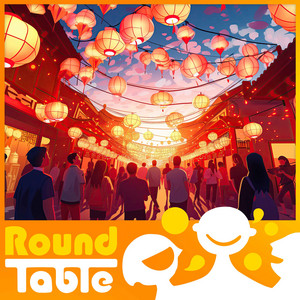
Oh, the streets are flooded with the beautiful lanterns, laughter fills the air and there are festivals galore.
It is a centuries-old tradition built on togetherness and light.
But it's getting a bit of a glow-up.
This year, the lanterns, traditionally done with paper and other products, are now seeing some high-tech advancements.
We're going to discuss all of that.
It is Lantern Festival time.
Yishan and Feifei, good afternoon to you both.
I was watching videos yesterday.
I've never been to a festival before, like a full-on festival festival.
Everywhere is decorated with lanterns.
But these festivals look like they are absolutely worth visiting, that is for sure.
We're going to talk about a couple of different examples, but maybe we can start with a little bit of background.
Yeah, sure.
Today is the Lantern Festival.
It's also known as Yuan Xiao Jie or the Shang Yuan Jie.
It falls on the 15th day of the first month on the Chinese calendar.
And also this day is the first full moon of the year.
So in ancient Chinese, night was called Xiao Jie.
Yuan can also mean the beginning of something, hence the name Yuan Xiao, as in Yuan Xiao Zi or the first moon night.
So that's a nationwide celebration that's also marking the time that we wrap up the Chinese New Year season, the holiday season.
I don't know how I feel about that.
It feels like the past New Year season has been like a dream.
That's so true.
That feels so true.
But yeah, here we go.
We're wrapping it up officially.
Feels so far away now.
This goes back to, I mean, the Han Dynasty, I guess, right?
More than 2,000 years ago.
But the traditions, I would say, somewhat stayed very similar over the past 2,000 years.
It's basically admiring a lot of lanterns, going to fairs, eating sticky rice balls, and so on and so forth.
And also, for example, this year, they are also hunting up a lot of lanterns that people gather around in parks and also in homes, in streets and shopping malls.
And sometimes there are riddles made into that lanterns yeah, and people.
You know, trying to crash those riddles is also one part of the activities that we do um, during the lantern festival.
So i heard about this last year.
So you might find this in a park, for example, and there will be a riddle master there, and the riddle master is typically an older man, and then this is what i learned last year.
Correct me at any time.
So the Riddle Master is in the park, for example, and near the Riddle Master will be some lanterns and there will be some papers hanging off the lantern.
And that is the riddle?
Yeah.
And then you take that paper and you go to the Riddle Master.
And if you can get the answer correct...
You get a small prize.
A new electric vehicle or something like that.
Just kidding.
A little tiny prize.
Yeah.
Also this time last year I learned about how the Lantern Festival is closely related to another idea of the Chinese Valentine's Day.
You know, because traditionally people believe that the Qixi, or the double seventh day, that usually falls on the seventh day of July, to be the traditional Chinese Valentine's Day, given the the mythology that goes with it.
But unlike Qixi, where women are the main participants in activities such as, you know, praying for very clever handicraft skills, the Lantern Festival, now that we're talking about it, is when unmarried young men and women go out to admire lanterns, to do what you just mentioned, Steve guess out the riddles and meet with each other and chat with each other and have fun and form romantic connections together.
So is this the unofficial valentine's day in china?
It's not the official.
Oh really, according to traditions, apparently.
Oh what, what?
Yeah, i mean, it makes sense.
I mean, these lanterns are absolutely gorgeous and the atmosphere looks very romantic.
So, and also, after guessing the riddles, you start to build on, you start to bond, and one thing led to another.
What happens if you get the riddle wrong?
Well, it doesn't really matter, isn't it?
Oh, okay.
Yeah, just to celebrate and have fun.
See.
So if I'm a single guy, I'm going to the park early and I'm bribing the riddle master to give me the answer so I can look good on that date.
I'm sure people do that.
Probably.
So something's happening in the sky as well during the Lantern Festival.
So this is going to be today a rare total lunar eclipse.
It's coinciding with the Lantern Festival.
So the moon is going to disappear for about an hour before reappearing as a deep red blood moon.
And this will be the only total lunar eclipse of the year.
I was curious about this.
I don't know if I've seen a blood moon before, but this is going to be apparently the last blood moon until New Year's Eve 2028, at least according to a couple of different media outlets.
And there are some various live streams on the internet, if you're curious.
I think they're starting at around 5.30 p.m. today.
Oh.
As a matter of fact, if you want to check out this very impressive moon.
So that's kind of cool.
That adds to the romantic aspect of the day, I think.
Yeah, and also it's also very rare, because the next time that we get the chance to actually see another blood moon would be 2072, 50 years from now.
That is to collab that astrological view with Lantern Festival.
Hopefully we'll still be doing roundtable at that time.
All right.
So we've got the romantic historical vibes happening on the day.
We've got the astronomical phenomenon, too.
But how is the holiday, the Lantern Festival, typically celebrated, and maybe more how it's celebrated this year?
It's going to be a little bit different this time around.
Yeah, I mean, it's the Lantern Festival.
So we got to have Lantern Fair.
That's always one of the most representative celebrations during this festival.
And these things happen all across the country.
All across the country.
For example, if you look at places like Zigong, which is in southwest China's Sichuan province, then that place is known as the City of Lanterns and also the home to one of the most representative lantern fairs in China.
So picture this.
Hundreds of giant lanterns lighting up the night, some of them towering several stories high and stretching across huge themed zones.
You turn one corner and suddenly you're in the middle of an ancient Chinese legend, glowing in color and light.
And if you walk a little bit further, and then there is the massive dinosaur lantern, because Zigong is also known for its fossil heritage discovered locally.
So that's such a colorful picture that I remember seeing a video from that lantern fair.
And then there are also AI-powered interactive displays where kids they can literally talk to digital creatures, as in talk to the lanterns, I would imagine.
And families.
They can also travel there and get into the immersive light world that almost feel like a dream and more like stepping into an active space.
Live action fantasy film.
I'm i can't describe it because it's too visual.
Yeah, i hope what i describe is sufficient.
I i i'm glad you said that how visual it is, because before i watched i watched a video.
Yesterday somebody was in zugong um for the festival and they it was, i think they were from the uk, And they were completely blown away by this.
And I felt what they were feeling, even though I wasn't there.
When you think or when you hear Lantern Festival and you're not familiar with this aspect of Chinese culture, you might think oh okay, you walk down a street and there's like some lamps hanging or something.
No, no, no, no, no, no.
It's not that at all.
I'll give you an example.
There's a fiery phoenix.
This is from the People's Daily.
There's a fiery phoenix lantern.
I think this is in Zugong right now.
It's pieced together from 15,000 red chili peppers.
Yeah.
And 46,000 recycled medicine bottles.
And it's huge.
And it's so extremely colorful.
And it looks like you're walking in the middle of a dream when you're at this particular festival.
And you might argue all of these festivals.
They're just stunning.
And I know that probably doesn't do it justice either.
But I just want people to know it's way, way, way more impressive than you might realize.
There's another cool thing I wanted to mention from this Zhigong Festival.
So they have an international competition for kids, and There's one that's on display this year and it's called Music Robot.
If you're not going to check out the festival, maybe you can just find an image of it online or a video.
So that's based on a drawing by Jaden.
Jaden is an eight-year-old boy from the UK and it's part of a special exhibition in Zugong where artisans bring to life, or brought to life, more than 6000 children's drawings from 40 different countries.
Wow.
And then I think they select a few of the.
I don't know if they're winners or not, but they select a few of them and they make them into full-sized, huge lanterns.
So I said it's like you're walking in a dream before, right?
But for that special exhibition, it's like walking into a child's dream.
It's really, really cool.
And this makes this truly an international event.
Yeah, it was.
Yeah.
Thinking about your drawing become 3D and lighting up in the night.
Made by professionals, too.
Yeah, because this city, Zugong, I was curious about it.
There's apparently 24 million people that live there and about 100000 people are employed in the lantern sector.
So it's it's big business.
And a lot of the lanterns made from that city travel to international locations.
That's why it's called the City of Lanterns in China.
Yeah, exactly.
So what's especially striking this year in terms of the scale and the fashion?
I mean I'm really glad you mentioned the lantern makers, because this year is all about a combination of tradition and also modern culture from today's young Chinese, because traditional lantern making, which is of course recognized as part of China's intangible cultural heritage, is very much alive everywhere in China.
You'll see artisans, or rather bending bamboo frames by hand and stretching silk over them to make the lantern, and also paint beautiful patterns in the traditional way, same way as how it's been done for generations.
But there's also and this is where it gets very interesting, because there are also those who make lanterns layered with projection mapping, motion sensors and dynamic lighting system.
So that's like high-tech slash traditional Chinese lantern.
That looks traditional at first glance, but suddenly it moves, it shimmers, and I guess some of them talk too.
They blink their eyes.
It nods if you sort of decide to interact with them.
It reminds me of when I was a child going to a lantern festival.
Yeah, they're making into a very big size of these lanterns.
But it's just, for example, in the year of the horse.
This year, it's just a horse standing there still.
But now maybe the horse can nod to you, can blink, can do other things.
Sort of like responding to you.
And another thing I think is also very interesting is how now lantern fairs are blended with their local architecture.
For example, in the city of Datong or Xi'an, they're known for their ancient architectures.
And if you've been to Datong, for example, you know they have these ancient walls that are very, very thick that people are able to walk and even cycle and even have a car running on top of it.
Yeah, so it's in the downtown area of Xi'an and it kind of like, yeah, it's four giant walls, right?
And it's right downtown and it's huge.
Yeah, people, tourists and probably locals too, will use that as a walk, go for a long walk.
And it's cool because you're so elevated, you can look down on the city.
It's kind of cool.
And now they installed a lot of lanterns on top of those walls.
So you can see, when I was in Datong, I saw this before like some sort of a lady figure lantern standing on the wall.
It looks like if you are standing beneath the wall.
It looks like the lady is looking at you and greeting you yeah the hand.
But is the lady, what's the lady?
In a traditional yeah costume as well, you know.
This year also in datong city in shanxi province in north northern china, so it was along the city's historic walls where the organizers set up 46 massive lantern displays featuring characters from the 2025 hit animation nobody well, i think in chinese is called um.
The very cartoonish yeah, little little spirits, or um spirits in Chinese mythology, is being adapted into lanterns.
And then there's another series featuring the playful plushies, plushy IP called Sun Niao Family.
So that's a Wuhan-based, Wuhan dialect-inspired plush toy IP.
So you see, now we are seeing a striking mix of Tradition with contemporary culture.
Instead of just having traditional Chinese ladies waving at you, we see all different kinds of Chinese animation figures and young IPs showing up too.
Yeah.
Again.
I was watching a bunch of videos yesterday because and I think this is the reason why the UK visitors in one that I watched were just so blown away is because we don't really have anything like this in Western culture that I know of.
I mean, I know that they celebrate the Chinese Lantern Festival in other countries around the world.
And I watched one from Calgary in Canada.
But I should have watched it the other way around, because I watched the one from Zegong first, which is, I think it might be the best in the world.
I'm not sure.
Arguably, maybe.
Arguably.
I mean, it's the lantern capital of the country, right?
And then I watched the Calgary one.
And I'm Canadian.
I'm watching the Calgary one like, well, this is amazing.
Just regular lanterns.
I'm now a lantern snob, apparently, after watching just a couple of videos.
But yeah, it's now.
Of course, I don't know how it used to be, but it is very modern these days and their designs are super high-tech and the characters that they used.
I mean, they're just characters that are going to make everybody feel excited too.
It makes it more interactive for the kids.
Yeah.
And also speaking of about interaction, you can also make your own lanterns.
For example, in a lot of workshops launched in museums or at the fair itself in a lot of cities.
There are workshops for especially families to get their hands on.
They have these semi-finished lanterns so that they can assemble, decorate and light lanterns themselves.
So you don't have to be, you know, you don't have to start from bending bamboo sticks.
Or the metal.
Yeah.
Which they often use too.
You just sort of assemble them pieces by pieces and then light up the lanterns.
Very easy.
And children are very happy because they They get to make them by themselves.
AI and robots have brought themselves to temple fairs now as well.
I mean, you want to talk about transforming from the traditional to the modern.
What do those look like when you see a temple fair that incorporates AI and robots?
Absolutely.
I'm turning to Yushun when I'm talking about tech stuff.
For example, there is a tech temple fair held in the International Robot Industry Park in northern Beijing's Zhongguancun area.
So that one features over 30 intelligent robots and interactive AI experiences, such as greeting robots like rabbit lord and god of wealth.
I understand god of wealth.
They are everywhere.
But what about rabbit lord singing, picking opera?
Oh yeah, like the beijing, the traditional beijing character figurine yeah, in the shape of a rabbit well, in the shape of a human with rabbit hair.
Yeah yeah, rabbit head.
Years and years.
So it's called.
Or uh, rabbit lord.
Yeah, and they're singing, picking opera and uh, doing sports competitions and child-friendly robotic pets showing around.
Then there is the large-scale tech exhibition that allows visitors to see advanced tech displays like Giant lantern, symbolizing dialogue between human and AI.
And then there's the unmanned boats, flying cars and a bionic robotic hand that mimics human movements.
Pretty cool.
Just interesting demonstration of how tech is celebrating among us.
The spring festival celebrations are ongoing.
They are not limited to homes.
They are not limited to organized fairs.
They also extend all the way to museums and they've become kind of a part of the vibrant cultural hubs where the tradition can meet the creativity, and it's happening here in Beijing.
Yeah, for museums like the Grand Canal Museum in Beijing.
I think it's in the district of Tongzhou in the eastern part of the city.
They host many special workouts.
For example, visitors can craft palace lanterns and paper flowers.
Well, there are also other museums that can offer riddle guessing games or AI-powered opera, face-changing experiences or other hands-on New Year print color.
You know just a lot of experience-wise, you know, trying to turn in heritage into a more interactive holiday fun.
And when it comes to Shanxi Province, in a town, ancient town called Pingyao, they have this tech art museum that reimagines festive light displays through immersive technology.
So visitors can touch ancient brick walls to trigger flowing projections of light and petals and experiencing the changing of seasons of the old city and how you can sort of seeing the four seasons within one touch.
Lovely.
I really this might sound like I'm segregating away from Lantern Festival, but I'm really out by like, surprised also by how museums are advancing their themselves nowadays in order for it to become a place not just to exhibit but also to experience, but also for the its visitors to really get immersive with what they're trying to promote, either locally or based on certain themes.
So back in the past two weeks, me and my boyfriend we went to multiple museums, but The best experience-wise is the Capital Museum here in Beijing, because it offered free booking.
You can just land there and enter after security check, of course.
And then there is a one-of-a-kind kind of exhibition that features temple fair in Beijing and Hebei and in the municipality of Tianjin.
That's something new I've even never had. seen before.
Apart from the usual temple fair equipments showcasing how temple fairs were like 100, 200 years ago here in Beijing, they also record from local temple fairs, perhaps from decades ago, to showcase just what people are yelling.
What are they selling?
You can just pull in and listen to the celebration vibe from across time.
Oh, that's cool.
That's like a time capsule inside the museum.
So really great jobs for these museums and then walk outside and catch a drone show, because drones are now, you know, i think, in many parts of the world and it's true here in china too the, the fireworks performances are a plenty, perhaps during the the new year's time, but drones are now oftentimes replacing fireworks in a lot of different cities, and these are just as impressive.
The drone shows well, if not, in my opinion, more more impressive.
Yeah, and also they are basically everywhere, especially during the holiday season, like the Chinese New Year, like the Lantern Festival.
And also it can be part of the corporate events and even private celebrations, because the visual that it brought to people up on the sky, for example, in Taiyuan, which is also in the province of Shanxi, this Thousands of drones rise simultaneously to create iconic Shanxi cultural symbols in the night sky and, you know, attract a lot of visitors.
And also when we are talking about drone performances, I can't stop thinking about the city of Chongqing.
Yeah. because it has world record level scale of drone shows.
I think in a documentary, talked about how they incorporated 5000s of drones to put on a display in the night sky and how it, I think during the Chinese New Year holiday, put up on a show every day, every night, in the city of Chongqing for 15 minutes.
And that was the other video that I watched yesterday.
I did a whole deep dive on this festival and on the drone shows.
I didn't know this before.
I've seen drones before, drone shows before.
I think on a smaller scale, and I never kind of put any thought into you know, where are these drones coming from or how is their battery life or things like that.
The video that I watched was from Chongqing.
It was the oh gosh.
What was his title?
It was something like drone flight path coordinator, the planner for this event.
The event planner essentially yeah, and he was explaining how how the whole operation works.
So it was next to an area of water in Chongqing and that's where the drone show takes place.
But next to the area of water, you have the landing pads, if you want to call them, for the drones.
And there are also the recharging stations.
So in one, they put them all on the ground.
It looks like a computer chip almost, thousands of these things.
And in one pack, there was six drones.
And there's a battery that gets inserted into that pack.
So that means that the drones can take off do their thing, come back and charge.
Take off, do their thing, come back and charge simply by landing on the pack.
And they can recharge three times for one particular show.
Oh, that's awesome.
Pretty cool, right?
I didn't know about that.
I think I also watched another video, sorry, on drone shows.
How do you coordinate it?
5,000 or thousands of them in one go.
So apparently it takes advantage of, for example, satellites and other connection network technologies.
Like GPS coordinates?
Yeah, so that they also have.
Apart from the drones, they also need some sort of signal equipment by the side of it and also they need to shield away some of the interference coming from other wireless technologies, to make sure that these drones are sort of communicating with the planner and also communicating with each other without interference.
And that only reminds me that I didn't realize having a drone show with thousands of these little flyers is such a complicated task.
Imagine how long ahead they started preparing for this.
Yeah, I think for the drone show that I mentioned during this Chinese New Year in Chongqing, for 15 minutes of performance, they need to spend seven hours in preparation.
Well, that's not so bad.
Yeah, that's a whole day.
I thought it was going to be like four months.
But they put on like every day.
If it's like 5,000 people.
I'm such a jerk.
What's wrong with me?
Those are amazing to watch.
Yeah, so I mentioned Calgary.
You know, and I was teasing before saying, oh, their festival wasn't that impressive.
But it was still really cool to see because...
In the city of Calgary, they have like a Chinese cultural center there.
And it was outside that they had some music and some vendors and dragon performance.
Lion dance, perhaps.
Yeah, lion dance performance.
And it was really cool.
Everybody was having a great time.
So there are plenty of places around the world where this festival is celebrated. yeah for example on february the 22nd this year there's an art troupe held who held a lantern festival gala in uk door that's attended by the chinese consul general and representatives of the local chinese community so this event featured singing dancing and instrumental performances that one created joyful and festive atmosphere locally So such celebrations not only kind of bring overseas Chinese communities together, but also it's such a good way to demonstrate our culture to people who's interested to become part of it.
And I also watched a video that my boyfriend sent me.
It's in Toronto where perhaps harbors one of the world's biggest Chinese communities locally.
They had such fun there in the Chinatown or outside of Chinatown in usual streets and communities where people make sugar-coated fruits and all the other snacks and of course there's lion dance and all the other dancing and cultural shows but you see people of different groups different skin colors attending and having fun together that's the point of our celebration here just having fun and also for those who don't really have a Chinatown or big Chinese celebration locally they can also catch up on these um performances and temple fairs online for example in shanxi they live streamed their temple fairs to international audience they generated over 400 million views on short video platforms so so viewers can still get a glimpse of how this fairs and what the land has really looked like yeah if you don't have a chance to go out and we just explained a lot of different um events and things that you can do to enjoy the festival but if you don't have a chance to get out and enjoy it yeah grab a live stream if you can and do it that way but if you can get out i think it would be a much more immersive experience to see it At the end of the day, though, I guess the Lantern Festival, it's not about the scale.
It's not about how many visitors you can get to one particular event.
It's about sharing the experience together, sharing the light together, sharing your wishes for the new year together and spending time with your family, your friends or your loved ones.
Really cool.