Discussion keeps the world turning.
This is Roundtable.
You're listening to Roundtable with myself, Huyang.
I'm joined by Steve Hatherly and Yuxhun in the studio.
Coming up, first day back at work and your brain is still possibly in holiday mode.
Slow, fuzzy, and definitely not ready for spreadsheets.
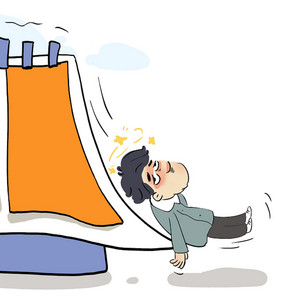
That's post -holiday or post -spring festival syndrome kicking in.
But don't worry, you're not alone.
Let's talk about how to snap out of it and get back on track.
And Your Voice Matters, and it would be great to hear it on our Heart to Heart segment.
Got a question, something you're itching to share, or something that you just really want to share with us, some thoughts, feelings, whatever's on your mind, Fire up that voice memo and hit us up at roundtablepodcast at qq .com.
And we would love to hear your voice because that really makes your voice shine in our show so special.
Our podcast listeners can find us at Roundtable China on Apple Podcasts.
Now, the post -holiday syndrome.
you know, the feeling of emptiness, not wanting to do anything.
And that I can't believe I have to go back to work moment.
That's the aftermath of all the holiday fun.
But hey, don't panic.
It's totally possible to shake it off.
Let's dive into why this happens.
And more importantly, how you can kick the post spring festival fog to the curb and pick up a few tricks to jumpstart your brain okay so please explain what's post holiday syndrome and when did you start feeling it so first of all i think what time this morning did you start feeling it or even earlier than that to
be honest first of all i think everybody knows um you know how it feels and what post holiday syndrome is it actually refers to a psychological and physical state that people may experience after a holiday as they readjust to their work or study environments and common symptoms include like fatigue,
lack of motivation, difficulty concentrating.
For me, I have to say that I even experienced post -holiday syndrome even before holiday.
Before the holiday.
Before the holiday.
By thinking about, oh, I have so many work to do after the holiday and I already had that kind of anxiety even before the holiday started but anyway this is something or a thing that that may appear yeah post -vacation depression it's not a clinically recognized condition according to medical news today
but it doesn't mean that people don't experience it they say that it wasn't really covered maybe it goes back as early as the 1950s but the general agreement seems to say that the concept arose with the rise of workplace psychology that started the research started in the 70s and 80s and that's when researchers
began to examine kind of the emotional impact of transitioning from leisure back to work and we're joking you know you said you should you were feeling that anxiety and stress post vacation even before the vacation started.
But that happens for a lot of people, right?
It's very difficult to relax when you're supposed to relax and then be in work mode when you're supposed to be in work mode.
And it's tough for your brain to go back and forth so abruptly.
And that's why this is a thing.
Right. And also, when you suddenly have a week or eight days of rest or time that is completely at your disposal, at your disposal, in theory, then it changes your routine, right?
It changes your perception of time and space in a way, because you're not following the regular routine of commuting, going to work, commuting, come back from work and doing stuff.
And then instead, you could stay in bed as long as you want, maybe after the first few days and you're maybe eating a lot more than you usually do and you're you're basically on holiday mode yeah and then now coming back to work you gotta you gotta switch back yes and you have to switch back so abruptly
and this i thought was pretty well said this is from psychology today they say that it might feel like depression and for you it could be but for most it feels like depression, but it's more likely the mood of one's loss of something.
And the reason for that, they say, is that when we go on our holiday, we have high levels of activity, right?
From the period of planning to the holiday itself, right?
When you're in planning mode, you're thinking, okay, I've got to get my tickets for this and I got to plan this and I got to buy this gift for this person.
Your brain is really busy, right?
And then when you're on vacation, you're talking with all your family members and you're doing this and you're doing that your brain is really busy but then when work starts again all of a sudden all of that high activity it just stops and it's hard to readjust to that so how do you snap out of it and come
back to the daily grind yeah and hopefully with a sense of happiness if possible i think every day i mean everything that we're going to say is so much easier said than done.
But anyway, part of the reasons that people will have these kind of post -holiday syndrome is because some, what we say, that kind of holiday behaviors, we may have these kind of indulgent behaviors that maybe stay up too late or get up too late or eat too much.
And these things we may need to adjust.
you know some kind of a rhythm or your sleep is something that you can adjust and then maybe when you go back to that healthy circle and then you may get back to your previous or normal life more quickly yeah they give all the typical advice of you know make a plan and control the quantity of your work
and relax your mind and body and all of those types of you know typical pieces of advice that that we find and hear about and those are good things i guess but what i would say personally is if you are aware that it's going to be a difficult transition for maybe up to a week even right it might not just
be the first day back to work it might be the second and third day back to work as well but if you know that it's coming if you're aware that you might have a little bit of a heavier workload when you return, just take a deep breath and say, I know this is coming.
I know how I'm going to feel.
So that might make you feel a little bit better.
Also, can I just say, give yourself a little bit more allowance in the sense that the spring festival celebration period officially ends sometime next week when it's the lantern festival so you know always give yourself a hope yeah so i actually i do know um some of the workers in this country come
back to their uh regular job posts on that day or after that day so anyway give yourself a little bit more leeway it's okay to sort of ease back into your daily routine.
And you don't have to do it like clicking, flipping a switch overnight.
And that's okay. And just find yourself something to look forward to.
Like, for example, the Lantern Festival.
Yes, that's coming up next week.
And now that we've acknowledged the holiday hangover, here's a way to reset and get back to feeling like yourself.
I have to admit, this is the first time I've heard of this junk journal junk journaling yeah this is all over the news these days if you do a quick internet search on junk journaling you'll find articles from CNN and Rolling Stone and Yahoo and iHeart and many many more and they're all writing about this little
hobby that's extremely hot these days and it's called junk journaling I love the concept and here's what it's about.
Junk journaling is where you take little things from your life that you would typically throw away, and you turn those things into a little scrapbook or a little kind of collage.
We know what scrapbooking is, right?
Where you'll cut out, you know, pretty pictures from magazines or stickers, and you'll put them on a page in a book, and it's like your own little aesthetic, your own little design.
Junk journaling is the same thing.
But as I said, it's things that you would typically throw away.
Let me give you an example.
One woman who wanted to make a plan for the new year about visiting more new coffee shops.
This is kind of one of her 2025 things that she wanted to do.
So what she did was when she visited a coffee shop with her friend, she decided to keep the receipt from the coffee shop, which was what two coffees and a cookie or something like that.
She also took a business card from the coffee shop.
She also designed a little message for herself.
Visit more coffee shops these years.
Now, why is that junk journaling?
Because your coffee receipt is something that you would typically throw in the garbage immediately, right?
You typically would not take a business card from a coffee shop.
It's not something you would normally do.
So the idea of junk journaling is to keep things that you would typically throw away so that you can create a special memory where in a place where you might not have had a memory at all.
How often do we think, oh yeah, right.
Back in 2017, I had a coffee with Yushin at this corner coffee shop.
It's something you wouldn't remember probably, right?
Not because it was you but you see the point here but you know I have to say I had that experience exactly what you said you know because I have a junk journaling enthusiast around me which is my girlfriend who you know collects anything that can be stuck into her journal you know as you said coffee
cup sleeves receipts uh from meals or packaging bags they they uh she cut some of some parts of it and stuck and stick in her journal um you know even uh is that called like ruffia from gifts that the filling that you use oh the little paper yes stuff inside yes yeah yeah and that can also be some of things
that you collect you know many online uh users jokingly call it you know the new way that young people collect trash that is how people call you know junk journaling yeah keep things that would normally just be thrown away and also i think that leads to another huge huge industry which is stationary
industry you know not only people collect trash they also you know make even though we call it junk or trash they make their notebooks so so delicately sure it's so beautifully designed and collected and once you fall into this kind of junk journaling then you are going to be interested in stationary
as well the stationary world is is such a huge world um what i can think of is um you will buy a lot of notebooks first of all and then you can buy a lot of pants and then different types of ink and then uh you'll go into the world of colored ink and then stamps paper tape stickers countless things
you can fall into yeah and if you're thinking to yourself, okay, well, what's the point?
You know, why would I do this?
And what the experts say, and I love this, this is where you can find beauty in the mundane.
You can find beauty where beauty typically wouldn't be found before, and turn it into your own little creative project.
And that's benefit number two, is that the creative side of you can be expressed.
A lot lot of people when they go to work or when they go to study at school, you don't have an opportunity, depending on what you're studying or what you do for a living, you don't have a lot of opportunity to be creative.
We do on this show.
We're very lucky because of that.
But for a lot of people, that creative chance doesn't come during the day.
Even on the weekends, it might not come.
So this is just a little window of opportunity to express your creative side, which I think is wonderful too.
Yes, I absolutely agree with you.
I think creativity is a fantastic outlet for every human being as well.
Although I'm like terrible with working with anything that requires my fingers basically.
But I can see that while you're doing this craft, you're not only working with your fingers, you're cutting stuff off, gluing stuff in, etc.
But also mentally, you're reliving that experience of, oh, I had such a great time with this lovely guy, like your girlfriend, I mean, if I were in her shoes trying to imagine, and then she wants to keep that memory.
And she's reliving the memory when she's doing the journaling.
Absolutely 100 % true.
And not just reliving it for a second, which is what we might do if we just recall a memory in our minds, that period when you're cutting, slowly cutting out the paper or getting the glue stick ready and gluing the thing, you're thinking about that event the whole time that you're doing that slow process.
And that adds to the enjoyment of the memory as well.
And that's actually really good for your mental health, I would think, for your Yeah.
This kind of also give yourself an opportunity to pause and also reflect on what you've experienced, which is also a form of self -reflection.
And some of these things can be so satisfying when you are doing these kind of things because this could be one of your interests.
Right. And you are doing something that you really enjoy.
Yeah, and it gives you a chance to unplug.
When you're doing this stuff, you are not connected to the internet when you're using your scissors and your glue stick and your stickers and your paper scrapbooks.
Everything is done without a connection to 5G, which is a good thing for a few hours a day.
I think so, too. And also, this is another great example of one man's or girl's trash is another's treasure.
And I don't know if you are like me, just maybe a little careless and not really having this awareness that the for me, I think the only way, if not the one of the rare ways to try to relive and remember some of these special moments is in the past few months or a year, is to look up the geotag of my
photo album on my smartphone.
And that's the only way I can recall.
What did I do? What did we talk about?
How did we spend those few hours at that?
Oh, I went to a cafe.
I went to a museum.
I don't remember any of that until I look at my photo album.
And I think it's just a shame.
I think we could be living life so much, I wouldn't say better, but I think in more meaningful ways for our minds, too, when so much of our everyday life is dictated by electronics.
And that's terrible.
And it's only going to continue down that path.
It's going to become more and more and more digital with the further developments we get, technologically speaking.
Yeah, indeed. And so we've talked about so many aspects of how to get over this post -holiday blues.
And apparently, yes, we've talked about the digital, the scrapbooks, junk journaling, and also maybe incorporating some of the traditional Chinese medicine methods can also help us a little bit, apparently.
apparently even in traditional Chinese medicine there's some breathing techniques as well there is one word in Chinese me saying huh so this is also kind of a breathing technique you know pair it with reverse abdominal breathing expand the abdomen while exhaling and contract it while inhaling so this is how
you do it And each time you excel and pronounce huh, counts as one round and do it for six rounds for one set and complete three sets.
This helps relax your body and mind before you go into bed and improving your sleep quality.
Oh, this is a pre -sleep activity.
Right. So inhale, when you inhale, contract your stomach muscles.
And then when you exhale, you actually say, huh?
You say it out loud.
Right. And then kind of push out with your stomach muscles.
Okay, I'll give that a shot.
Yes. Aside from these kind of techniques, you can also drink some TCM drinks, like tendering peels.
That could be something that is really healthy.
You know, after a big meal, if you're feeling bloated or experiencing indigestion, try eating more fiber -rich fruits, grains, and vegetables.
For example, eating one grapefruit after a big meal not only helps you, you know, control blood sugar, but also aids in digestion and promotes bowel movement.
That is actually really good for you.
and yes using these more traditional methods as well as some of the more modern ways to deal with this state of mind could be really useful I hope you've got some inspiration from today's show and then we can ease back into our routines with a sense of purpose using the tools we've created to stay motivated
and grounded coming up let's have a moment of heart to heart First of all, I'd like to say a big thank you to so many of our listeners who have actually made time to listen to Roundtable, even during the holidays, because I know a lot of you are on the move and and our feed has been keeping people busy
I would say we've got a lot of new shows even during the spring festival period coming out and also there's the CMG China Media Group Super Night show that's been sliced and diced into multiple segments and then people could enjoy the audio version on our platform.
And all of you who've left us messages, given us a comment, a five star review on all these podcast platforms, it really helps more people to know about us, hear our voice, and we really appreciate that.
And also we have somebody sending us a really sweet and special message.
So here's Weenie. Hi, everyone at Roundtable.
I hope you are all doing well.
My name is Wennie, and I've been listening to this podcast for a few months.
And I really enjoy the dynamics and vibe between you guys, the host.
And it reminds me of the US TV show Friends, but in a more educational and professional way.
And everyone treats one another with respect and I love that.
And first of all, I would like to give a special shout out to the newly joined host, I guess he's newly joined, Mr.
Steve Heverly. You are truly a gem on the show with your arrival, with your coming.
I think we've been able to hear more diverse perspectives and thank you for bringing your humor to the table as well.
You're really humorous sometimes.
And I also want to say hi to my favorite host, Hoi Young.
I think I can see why some English learners want to emulate your speaking styles.
It's not just about language proficiency.
To me, I think it's about the confidence, the sincerity and the inclusiveness in the way you speak.
So sometimes I think voice and language are really powerful things.
And Yushin, I like the way you host too.
your ideas are very constructive too.
Sometimes you've provided us with views we never thought of.
And Neil Hongling, I hope I didn't butcher your name.
And I also listened to takeaway Chinese.
And actually, I came across your podcast or your videos first because I was trying to learn more about Chinese culture.
And your videos were so interesting that they eventually led me to roundtable here.
And yeah, anyway, I'm just so grateful to have the opportunity to listen to your podcast.
And I have so much love for this show.
And I wish all of you a happy and smooth 2025.
Thank you so much, Wenny.
And wow, just thank you so much for your super thoughtful message.
And I'm so glad you're enjoying the show.
I've made sure to pass this audio clip on to Neil Holand, who's been sent on a business assignment for the rest of the week, but she's listened to this audio clip as well.
And you're absolutely right.
It's a team effort, first of all, And I'm so lucky to have such incredible colleagues to bring your unique perspectives and talents to the show.
And the variety really does make it really special on Roundtable.
Hi, Winnie. I think one of the cool things is that you're relatively new to the show, just like I'm relatively new to the show.
But this show's been along for many, many years now.
For 12? Almost going on 13 years.
Which is incredible.
And I know because I hosted a show that was 13 years old in another country.
And I always loved that feeling because there was a mix of listeners.
Some people listen from the very beginning and some people have been around for three or four years and some people have been paying attention, pardon me, for, you know, five or six months.
And then there are people out there, even today, I'm sure, who are listening to Roundtable for the very first time.
And thanks to you, Winnie, when we get these messages, it reminds us that we really, really do have a special opportunity here with what we do.
We love our jobs. We love being able to do this.
And it makes us really happy that you enjoy the show as well.
Now, Winnie, why did you say humorous sometimes?
Sometimes. Winnie, you could have just said Steve, you're humorous, not Steve, you're humorous sometimes.
Because you cannot be humorous all the time, right?
I don't need your opinion right now.
I'm speaking with Winnie.
No, I'm teasing. I'm teasing, of course.
Winnie, thank you so much for your message and happy that you were able to find Roundtable and happy that you were able to find Takeaway Chinese, too.
And Steve, sometimes you're on Takeaway Chinese, too.
A lot. Yes. Yes, a lot.
I'm humorous there.
Sometimes. Okay. Yeah, you should.
What do you have to say to our lovely listeners out there?
Yeah, and I will try to be more humorous sometimes.
But anyway, it feels so honored to have someone who can actually resonate with us.
And it actually made my day.
And we've always tried and strive to bring some kind of unique perspectives to our listeners or to these discussions.
And this is something I've always wanted to do to, you know, offer insights that can stand out and spark meaningful conversations.
And I believe that is also one of the things that make us, make Roundtable different, right?
And knowing that our listeners are appreciating it actually motivates us to keep and pushing for even more thought -provoking content.
And actually, your support is so rewarding.
And sometimes our ideas may not be fully developed, but I think that's also part of the process of our communication, both with each other and with our listeners.
So we're not here to actually define things, but to offer different perspectives for everyone.
So of course, if you have any other thoughts or ideas, we'd love to hear them and engage in a dialogue.
And just email or send a voice memo to roundtablepodcast at QQ .com.
And everybody's different on this team, yet we all share this deep respect for each other's right to speak.
It's a beautiful thing, like a modern day roundtable.
Our show brings together diverse voices and ideas, each person contributing to the conversation with respect and purpose, much like nights gathering to share wisdom and seek solutions for the greater good.
And that's it for today's roundtable.
We will see you next time.