You're listening to Roundtable, I'm Steve Hatherly together today with Fei Fei and Yohong Lin.
Coming up, the cryonics.
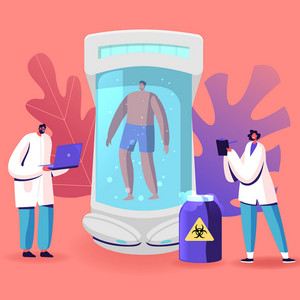
It's the practice of super -cooling individuals after legal death.
And it strikes many as a plot from a futuristic novel.
Proponents envision a time of medical mastery, a literal, frozen return to life.
Detractors say, let it go.
They think this isn't possible at all, and they also talk about irreparable harm to biological structures.
It is a decidedly cold storage bet, but for some, it's a chance to postpone their final chapter in their human story.
After that, we age and our pets get old right along with us.
And just like us, when our four -legged friends get a little long in the tooth, their needs tend to change.
The market for senior kittisms and other frail furry friends is on their eyes.
Our podcast listeners, that's you.
You can find us at Roundtable China on Apple Podcasts and please don't forget that we love to hear your voice as well.
Well, yes, you can send us an email, but we want to hear that beautiful voice of yours.
So send those voice notes our way with your thoughts on any of the issues that we discuss on the show, roundtablepodcast .qq .com, that's roundtablepodcast .qq .com.
And now, a German cryonics firm's offer to freeze individuals post -mortem sparked deep philosophical debates.
states? Would people dare embrace this chance, potentially waking up in a wildly different future?
Moreover, would the psychological burden of such a transition outweigh the potential benefits and how would future societies integrate individuals revived from a past era?
The ethical questions are immense, grappling with mortality, hope, and the essence of life itself.
Does Does this technology promise genuine extended existence, or does it pray on our fear of death's finality?
There are so many things to discuss here.
I want to know first, would you consider freezing your body after you pass in the hope that that you could return at some point in the future, albeit 10, 20, 50, 200 years later.
Of course not. You know, just let it go, let it go.
I would want to upload my soul, meaning my memories, my way of thinking, my mind, onto the internet.
Okay, hold on, hold on.
I don't think the German company's doing that.
Instead of, yes, freezing my body and come back someday.
I'll give my opinion a little bit later on.
Fei -Fei, tell us, what is this company all about?
So the company we're talking about today is called Tomorrow .Bio.
Their mission is to freeze patients after death and one day bring them back to life, as we just discussed.
And the cost for that is $200 ,000.
It's not cheap. So you can see that's pretty much a wealthy people's game.
Yes, so already we're seeing a problem with this, right?
This is for rich people at the moment, and no one else.
Yes, but the founder of that company, who was actually a cancer researcher, and I guess that's one of the reasons that he or she wanted to start this company, is that they want to find a sort of putting a pause on people's life in the hope that probably in the future the technology and the medicine knowledge is well equipped enough to cure disease like cancers.
That is a nice idea and if we take a little, you know, rewind a little bit and see their mission is to freeze patients after death and one day bring them back to life and remember the second part of the sentence they're not able to do that just yet.
So you're paying that amount of money on a hope.
You are. Yes and I think that is definitely a problem because no one has ever been successfully revived following this kind of procedure and even if they were the potential result could be coming back to life severely with severe brain damage.
Yeah, that's right and there There are so many critics out there of this practice.
One is Clive Cohen.
He's a professor of neuroscience at King's College, London.
He calls the idea preposterous.
He says pronouncements that nanotechnology or connectomics, mapping the brain's neurons, will bridge the current gap between theoretical biology and reality, these are over promises, he said.
But that being said, that's one critic of a whole lot more, but that has not deterred tomorrow .bios ambitions.
Again, the founder was a cancer researcher and the founder was frustrated by the lack of progression in cancer research and that's where this kind of idea, at least for this founder came from.
So how does this all work?
What exactly do they do?
Well first of all of course the patients need to sign up a lot with the firm and then the doctor confirms they're within the final days of their life.
And then the company will dispatch an ambulance to their location and when that patient is legally pronounced dad, they're moved to Tomorrow Bials' ambulance and then the procedure freezing begins.
and so the bodies will be cooled down to sub zero temperatures and then supplied with a fluid that can freeze the body but also protect the tissues on the body.
Yeah, they call this cryoprotective fluid and once you go under zero degrees you don't want to freeze the body.
This is a quote from the company you want to cryopreserve it because if you freeze it you will have ice crystals inside everywhere and that's where the tissue will get destroyed so to counteract that you replace all the water in the body everything that could freeze inside and you replace it with this cryo -protective agent and this is the solution for that type of problem yes and actually this is not the only company in the world that is doing this and these people are definitely not the only people who are thinking about freezing their body and not the only people that have already done that.
And in fact, China was the world's third country in the world to do this.
And the company is in Shandong province, it's called Infone Life Extension Program, that is their program, and they've been doing it since 2017 and even prior than that.
And their process is quite similar and for them it's a little bit different.
It's instead of rich people wanted to live forever or wanted to come back so that they can continue to enjoy their wealth and maybe success, here we are looking at those who want to basically donate their body to this scientific research so you have to do consultation with professionals so that you know whether or not you want to be a volunteer and yes you sign up to be a volunteer.
You visit the scheduling of everything including the facilities that in the future the body would be stored in and the volunteer application requires you to sign up all these information especially in the state that you're still capable of full civil conduct and there are also medical evaluation because many of those volunteers in fact almost all of the volunteers are suffered from certain kind of disease that has no cure in today's day and age but they still need to be first of all under the age of 80 and also having a full -body checkup to know that their body besides the disease they can still
go through all the process and similarly there's legal evaluation, ethical whole evaluation because after the body goes into the storage, of course, we need to figure out what are the following process that can be applied with Chinese laws, support life science research, and processes a rational understanding and dedication to medical contributions and stuff.
And there's also the transportation in the sense that one is, like Fei Fei had said, pronounced legally dead.
that you have to transport that body into their facilities, clinical response, life support, the procedure that Steve has explained the cryo -protective perfusion surgery and then controlled cooling and then personalized services.
Wow, it really does sound like something from a film, doesn't it?
Something from a futuristic film.
There's a company in Australia that's been doing this as well.
in America, this is an interesting yet somehow expected turn of events.
U .S. billionaires are turning to cryonics with the hope of future revival, and this trend has spurred lawyers to create what they call revival trusts.
A revival trust is a legal framework designed to manage and protect the wealth of the cryogenically preserved.
You talked about coming back and enjoying their money later.
Well, if that's 200 years later, what happens to your money in the meantime that's formed this legal trust?
It's really quite a fascinating topic.
And speaking of rich people in the United States, Jeff Bezos, he holds investments in Altos Labs, which is an anti -aging science startup.
A team of scientists and researchers with experience in aging studies.
they lead that organization.
They're looking for ways to improve cellular health and resilience through a process called cellular rejuvenation.
billionaire Peter Thiel and Jeff Bezos, they invested in another company.
OpenAI CEO Sam Altman invested 180 million dollars in something called retro biosciences.
That's where they look for ways to rejuvenate the body's T cells which are crucial for fighting cancer and defending the infection.
My point is we think this is such a weird strange topic I read one quote from a doctor I think it was from the German start -up saying look there was a time when doctors would have said taking an organ a heart from one person and putting it into another is crazy science what are you talking about we can't do that and now they do it every day so why even though now this seems like such a far away and crazy concept the doctors who are involved are saying maybe we shouldn't think that way yes and also Also bringing people back to life is not the only goal or only achievement they're looking at.
Actually, the institution I mentioned here in China, the institution has successfully preserved over 190 cases of human tissues and organs, including skins, severed fingers and toes and bones, ovaries, and tendons so that they can use these body parts to do further research and put them back to the people who got hurt.
And actually they can even use 3D printing and stem cell technology and they have begun customizing and developing artificial tissues and organs in vitro so that these can also help people who have suffered from certain disease or hurts.
But, apart from the scientific values in these practices, I still can't go get over with the ethical issues - There's a lot.
There's a lot. Right, like what Steve just mentioned with the revival trust, you know, probably if he or she was brought back 300 years later, and he still wants to enjoy his wealth.
But, you know the problem, what the problem is?
The problem might be, you yourself, your kids, your grandchildren, your great grandchildren have all been frozen into this facility.
And after 400 years all of your revived together and you're all in your 80s, you're in similar age, different generations, with the same amount of money and you fight over who has which portion.
No, no, it's not the same amount of money.
Think about it. If you put one dollar in the bank account today and froze yourself for 500 years with interest, even with a low interest rate, that's going to be a pretty good amount of money when you come back 500 years.
Not one withdrawal, not one withdrawal from that bank account.
That's a powerful bank that can exist for 500 years.
That's a strange, sci -fi story.
That's true. But you can bury something physical underground and dig it up 500 years later and sell it as antiques I'm still thinking about four generations same age in the same room yeah and that's kind of the barriers for me is about these practices that I don't want to wake up 300 years later and face my great great grandchildren we are about the same age in our 80s that's a bit chilly but I think it's because that has been or like living and aging and get wiser and experience the world.
That is how human species experienced the world for thousands of years.
That is something that we're familiar with, that we can understand.
But wouldn't you be curious to have a conversation with your great, great, great, great, great grandchildren to find out what happened on planet Earth in your absence and all the advancements and technology and what's going on and what was going on in terms of Uploading yourself onto the Internet solves all the problems.
Yeah. Okay. So let's say let's say they can do this, right?
Let's say that the scientists the 300 million scientists who totally disagree with this let's say they're all wrong let's say you can protect yourself with this fluid and you can freeze your brain and Bring it back with zero tissue damage Let's say that you can do that.
There's still a trillion unanswered questions.
Are you still the same person are your memories?
Still intact would you have any?
idea Who you are? Those are questions that they're there's no answer to that And even if your purpose is only to wake up and see what happens in those hundreds of years of your absence When would you want to be waken up?
Well, when there's a cure for what exactly who's gonna make the cure who desires that this what I mean What I'm saying is since we're talking about all those things are possible now You can choose to wake up 300 years later 500 years later when when is the time I mean since we I think this is really a hard to answer question and Actually when the weather is good as summertime Actually, the first bunch of people who freeze themselves or freeze basically their family members due to certain disease, some of them have even only frozen the heads, instead of the entire body, and that would lead to even
more problems. More questions.
We didn't even talk about what happens with the world's population, if this becomes an option for everyone if it became affordable so that everybody could do it.
Then in effect, nobody dies anymore.
We have 6 billion 80 -year -olds.
I hope Mars is ready for us.
We might need to come a little sooner than we planned.
Interesting topic though, isn't it?
It's actually happening.
There are scientists, very, very smart people in the world studying this topic as we speak.
You're listening to Roundtable and coming up just like pets get older and just like people they need taking care of.
Just how big is the elderly Pet Care Market.
Stay with us. Looking for passion?
How about fiery debate?
Want to hear about current events in China from different perspectives?
Then tune in to Roundtable, where East meets West, and understanding is the goal.
You're listening to Roundtable.
My name's Steve, together with Nyong 'eun and Fei -Fei.
Now if you're a pet owner, you know that feeling when your furry little friend starts to slow down a little.
Maybe they're not as playful as they used to be, or their naps are getting a little bit longer.
Nowadays, elderly pet care is gaining traction on social media platforms driven by an ageing pet population and increased pet ownership all around the world.
It all started with a lovely dog video that went viral via TikTok, followed with the heated discussion on what to do to care for our senior furry friend.
So what video are we are we talking about here?
Well, we're talking about a video on TikTok and actually it is a video that goal that goes viral in 2024.
In the video, a 15 year old dog named Kobe slowly walks toward the camera with unsteady steps and the background voice asks, Do you want to open your Christmas presents?
In the caption, the content creator writes, he is 1 ,000 years old, in dog years, exaggerating for sure, and expressed the family's concern that no one knows if he will make it to Christmas.
And at the time of the report, the video had received over 700 ,000 likes on TikTok, with over 6 ,000 people commenting and talking about of course, talking about how lovely it is to have such a good family friend and also talking about how to take care of senior pets.
Yeah, on TikTok, in the United States on TikTok alone, topics like hashtag dog health, hashtag pet health, they have hundreds of millions of use, if not billions of use as a matter of fact, And this is definitely increasing the sales of products related to pet health, especially for older pets who have more needs for preventative care and related services.
Yes. And it's happening in my life, as well.
In my building, when I'm taking the elevator, I often see a lady, an elder lady, carrying a crib with wheels so that it's kind of like a kid's infant's crib, and she would push it around and walk a little.
And in that crib there is this old dog.
And I talked to her a little bit, and she said the dog is no longer able to walk herself.
And she walks the dog in the crib.
So she takes the dog out, walk around in the neighborhood.
And then she would take the dog out so the dog can does the business.
And then that is their way of walking the dog.
Yeah right. I think that the the industry is huge and one of the things that is becoming more popular I think is insurance.
I'm not sure about here in China but in the United States or in the North American Pet Health Care Association this is big business.
More and more people are getting insurance for their pets.
The industry has exceeded the four billion mark they set new records in total premium sold just a couple of years ago and this makes sense because more people are owning pets now those pets get older and it makes sense to get insurance too because yeah I was a dog owner before and I know and this is always the advice that I give to people when they're considering getting a pet for the very first time make sure that you can afford it because there are a lot of unseen costs that come, a lot of unpredictable costs.
Things will happen where you'll need to take your pet to the vet when something happens to them unexpectedly.
So all of those types of things need to be taken into consideration.
And from the insurance point of view, procedures can be very, very expensive.
My dog needed an ear surgery and it needed to happen immediately, it was an emergency and that was $1 ,600.
Just like that. So medical services on pets are normally more expensive than for humans?
It depends on how you look at the situation and there are different types of procedures.
I think two of my friends, both pet owners, cat owners, have had their cats having surgery for their kidney situation and afterwards they also have to take care of the pet, They would require, of course, medication, but also special type of cat feed.
That is another amount of money.
And also definitely you want to take them back to the vet to see their situation.
You want to take extra care because they have already suffered from this.
So yes, it can be quite consuming.
And insurance, pet insurance is also big here in China as well.
And also here in China, I think we have 30 million pets that are sort of stepping into their senior years in the next three years.
And with about 25 % of them will be aged over 7, and that in human years is quite senior as well.
So, they will have like demand I think for insurances, especially considering a lot of pests do have health issues, especially I think problems with their joints, and some of them may suffer hearing impaired and other issues and that ease can be a financial burden for some families.
It can be but I think one thing that's happening too is that because and by the way I was talking about the insurance numbers from the United States, the main driver for those numbers is the younger generation.
So what that means is that younger people who are owning pets are getting their pets insured and they're very aware now that you have to take care of the health of your pet just like you have to take care of the health of your family member.
So, what I mean by that is not ignoring problems until it's too late.
What that means is that pets are living longer perhaps than they did before.
And that drives the industry too.
And even if the pet enters a stage that you have to take care of them in a very intensive manner that you cannot afford to, in the sense that you do not have that kind of time and energy in your life, actually in cities like Beijing, Shanghai and Guangdong Province, pet nursing homes have started appearing, offering specialized care for aging cats and dogs, and these facilities provide private suites with small courtyards for elder pets, on site vets for regular checkups and medical care including medication and also injections and stuff.
And we would even see cat or dog nurses give pets frequent cleaning, bathing, and drying, changing pee pads, and also injection, medication, and monitoring blood sugar, blood pressure levels.
There were so many services available.
I took, I had a mini -doxone before, Heidi was her name.
I took her for acupuncture one time, the doctor recommended acupuncture - Excuse me?
I thought the doctor recommended acupuncture, right?
Doxins, they have a long back and they can have back problems.
So the doctor said, I think she needs acupuncture.
And I said, are you crazy?
What are you talking about?
He said, no, I'm serious.
And trust me. So I put the dog up, put Heidi up on the little table and her little paws were hanging down.
She looked like she was at the spa.
She had her chin propped up on a pillow and they did the acupuncture.
She was having trouble walking before the minute that acupuncture was done she was walking no problem.
The doctor said told you so.
Traditional Chinese medicine also has a role to play here.
Yeah, yeah. At least in my, at least in my dog's life for sure.
The pet senior homes though, that's new information for me.
And the idea is that in the beginning stage of your pet's life if they company you and they give you emotional support in a sense, but in their senior year, even when you feel like it's a burden taking care of them, you still provide them with the care they need.
That is really cool.
I didn't see that coming.
And you visit them, by the way.
In the industry, goodness me.
Well, if they are getting on in years, maybe I can recommend a German cryonics company here, no?
Little insensitive right now?
The company did freeze pads.
That's it for, who knows what the future holds.
That's it for Roundtable for today.
Thanks to Yeo Hong Lin and Fei Fei.
I'm Steve. Enjoy your time, and please do come back next time.