This is the Global News Podcast from the BBC World Service.
I'm Charles Haverland, and at 0430 GMT on Friday 20th February, these are our main stories.
The world reacts to the arrest of Britain's former Prince Andrew in the wake of the Epstein files.
An amnesty bill has been approved in Venezuela, which is expected to result in the mass release of political prisoners.
The US president welcomes global leaders to Washington for the launch of his Board of Peace, which has pledged billions of dollars for the reconstruction of Gaza.
Also in this podcast.
The principle by which this vaccine works is a radical departure from the principle by which all vaccines have worked so far.
Scientists make a revolutionary nasal spray, universal vaccine for cold flu, COVID and allergies that works on mice.
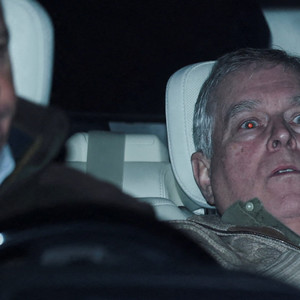
The British former prince, Andrew Mountbatten-Windsor, has been driven back to his home in eastern England following his arrest and questioning by police on suspicion of misconduct in public office.
Mr Mountbatten-Windsor faces allegations that when he was a trade envoy, he shared confidential documents with the late sex offender Jeffrey Epstein.
He has previously denied wrongdoing in relation to his links with Epstein.
In a statement read by a colleague, his brother, King Charles, said the investigation would have the royal family's full support and cooperation.
I have learned with the deepest concern the news about Andrew Mountbatten-Windsor and suspicion of misconduct in public office.
What now follows is the full, fair and proper process by which this issue is investigated in the appropriate manner and by the appropriate authorities.
In this, as I have said before, they have our full and wholehearted support and cooperation.
Let me state clearly, the law must take its course.
As this process continues, it would not be right for me to comment further on this matter.
Meanwhile, my family and I will continue in our duty and service to you all.
Amanda Roberts is the sister-in-law of the late Epstein survivor Virginia Dufresne, who'd accused Andrew Mountbatten-Windsor of sexual abuse.
The former prince has always denied all wrongdoing in relation to Virginia and while this investigation is not into her allegations against him, her family expressed delight at the day's events.
Wow.
Um...
You know, it was 3 a.m. our time when we got the news.
And a bit of a shock, like, hits you in that moment.
And I think we celebrated in that moment and we were just, like, all struck.
And then you know the wave of emotions hit you because you know usually we can call her and you know, scream with her on the phone and jump up and down with her and just get to tell her like how proud we are and um of her and her tenacity and her courage.
And if it had not been for virginia um, none of this would have been uncovered, none of this would have happened.
And so we are just um, we're all of the emotions right now And I think we'll be up and down all day.
To be honest.
But you know, I still think we have to have that moment where we close the door and get to sit with ourselves and just love our sister.
The arrest of the king's brother has been headline news right around the world.
In the US, President Trump gave his reaction.
He spoke to journalists on board the US presidential plane.
I think it's very sad.
I think it's so bad for the royal family.
To me it's a very sad thing to see it and to see what's going on with his brother, who's obviously coming to our country very soon and he's a fantastic man, the king.
So I think it's a very sad thing.
There were already calls for the former prince to testify in the United States concerning what he knew about the activities of Jeffrey Epstein.
With more, here's this report from our North America editor, Sarah Smith.
A stunning development in Great Britain.
Former Prince Andrew arrested.
British police have now arrested.
News of the arrest of a former prince is dominating the headlines in the United States.
A stunning royal arrest.
Britain's former Prince Andrew has been arrested on suspicion of misconduct in public office.
American politicians have been quick to point out that, other than Jeffrey Epstein himself and his accomplice Ghislaine Maxwell, no one has been arrested in the United States, despite the fact that this is where Epstein largely operated and where many of his victims came from.
They are demanding action to see justice done in the United States.
The former Republican Congresswoman, Marjorie Taylor Greene, posted on social media saying we have zero Epstein-related arrests and investigations since the release of the files.
The Democratic Congressman Stephen Lynch spoke to CNN about Andrew's arrest.
Look what the British government is doing in light of the evidence.
And look what the United States government's doing.
Nothing.
It is refreshing that the British government is coming forward and actually, and the king is actually saying we need to follow the law here.
I wish our government were doing the same.
Lawmakers investigating Epstein and his network are eager to question Andrew Mountbatten-Windsor, but do not have the legal power to compel foreign nationals to testify.
Democrats who sit on the House of Representatives Oversight Committee said in a statement No one connected to Jeffrey Epstein will escape accountability for their crimes.
Our work is just beginning and we will pursue justice for every individual who participated in the abuse of women and girls.
And look for Global News in the podcast section there.
Venezuela's interim president, Delcy Rodríguez, has signed an amnesty law that's expected to see the release of hundreds of political prisoners, though it is significantly less generous than earlier drafts.
The president had pushed for the legislation under pressure from Washington after she rose to power following the seizure of the then president, Nicolás Maduro, by the US military last month.
Jorge Rodriguez, the president's brother and head of the National Assembly, said Venezuela was now ridding itself of hatred and intolerance.
Let's hope that this attitude shown at the Assembly be the base for the new political time that the country needs to go through.
My only regret is that such regretful and catastrophic events had to take place so all of us could seek fraternity, union and peace for the Republic.
So how many prisoners are expected to be released and who will be excluded?
I spoke to Luis Fajardo, our Latin America specialist based at BBC Monitoring in.
There is still a degree of uncertainty because there's some details that have not come out yet.
However, from the information we're getting, it is estimated that there were around 600 political prisoners right now, according to some Venezuelan NGOs.
And this seems to cover maybe 400 people, or more than 400 people, who have been involved in actions since the beginning of the Chavista movement in power back in 1999.
So a very substantial period of time and people facing all kinds of accusations against the government, the government of Nicolás Maduro which, of course, was removed a few weeks ago by the US military intervention.
Specifically, we know that it would not seem to cover military officers who are accused of rebellion.
There is also some interpretations are saying that what Venezuelan authorities refer to as quote unquote hate crimes, which involved actions like publishing anti-government messages in social media applications.
Apparently, according to some Venezuelan media sources, this would not be covered either.
Also, there's some versions that people accused of corruption would also not be covered by this amnesty.
However, even though there is some criticism of the result, of the process by opposition figures.
Many are saying that it is nonetheless a very important step towards the reconciliation of the country and certainly a very welcome piece of news for the families of many hundreds of people who have been detained by the government.
Some family members of detainees have actually been on hunger strike.
Is it likely that many of those will now feel able to come off hunger strike?
Definitely, there have been expressions of hope around this measure.
There is also some uncertainty of the actual release.
According to the early interpretations of how this law came out, people would still need to go to obtain the release order from a court.
It would not be automatic, apparently.
Some fear that this could lead to some delays.
So there is still anxiety, but there's still a feeling of relief in the sense that this is seen as a step forward towards reconciliation in the country after a long period of time in which people had been facing very difficult situations and very little hope of their conditions improving.
Luis Fajardo, and following the passing of the amnesty law, family members of prisoners camped out at a detention centre in Caracas have said they will stay there until the last of the prisoners is freed.
As human rights groups continue to try to identify the thousands of Iranian protesters killed last month, it's emerged that dozens of them were promising athletes.
The US-based Centre for Human Rights has already verified the deaths of 47 sportsmen and women, with more under investigation.
It says that athletes who have shown support for protests in the past are currently under severe intimidation.
Caroline Hawley reports.
At a recent football match in the Iranian equivalent of the Premier League.
The commentators as animated as ever.
But when the first goal scored, there's not a single cheer because the stadium is empty.
The regime has banned spectators, presumably because it doesn't want to allow any opportunity for its opponents to gather.
Iran's sports fans are in any case in collective mourning for players past, present and future killed in last month's ruthless crackdown.
This was the funeral of a 21-year-old basketball star, Ahmad Khosravani, shot dead in Tehran on January 9th.
In distressing images posted online, relatives kiss his face as they say goodbye.
Tributes to him posted on Instagram recall a kind soul, standing tall in every way.
And there's shock disbelief for the games he'll never play.
The US-based Centre for Human Rights in Iran has documented footballers wrestlers, swimmers and taekwondo athletes from all over the country, all shot dead in just two days.
Several high-profile sporting figures are also under arrest for supporting the protests.
I was banned from leaving the country, participating in Olympic Games.
Sardar Pashai is a former world youth wrestling champion and coach of Iran's youth wrestling team, now in exile in the United States where he runs a human rights group.
I think deliberately targeting and arresting athletes has a history with the Islamic regime, because they want to send this message that we have no red line.
Whoever stands against Ayatollah will be shot and will pay the price.
I have never seen anything like this.
This is the biggest tragedy we have seen.
This was a birthday celebration for a 15-year-old swimming champion from the city of Gorgan in northeastern Iran.
Arnika Dabar is reported to have been shot in the heart.
At her funeral, she's carried in a small white coffin.
On Instagram, her father describes her as his hero, taken too soon.
She's said to have dreamt of competing in the Olympics.
Four Iranian skiers are currently taking part in the Winter Olympics in Italy.
Late last month, the International Olympic Committee expressed concern for Iranian athletes.
But Iran's also qualified for the World Cup in June, and Minky Warden, director of global initiatives at Human Rights Watch, says international sporting bodies need to use the leverage.
They have to do much more to stand up for Iranian sportspeople.
The irony of this event that the world loves taking place against the very recent backdrop of unprecedented mass killings, arrests and ongoing executions.
That's the disconnect.
The only responsible thing for the international sporting community to do is to take these cases up.
No one knows how many athletes are currently on death row, but Sardar Peshayi says he knows of at least one wrestler at risk of execution.
We hear even from 15 years old athlete getting arrested, teenagers, you know, across this country.
And this is where we're really worried about if they torture them, make them force confession and then giving them death penalty.
Despite the dangers, sports people are still finding ways to stand up to the regime and show their anger.
Some footballers have scored goals and then made a point of not celebrating.
And footage has emerged of the winners of a women's football championship last week.
The young women have medals around their necks and there's a huge golden trophy.
But as the confetti cannons go off, they stand in a blizzard of coloured paper, still unsmiling in silent protest at all the lives lost.
US researchers say a single vaccine may be able to protect against all coughs, colds and flus, as well as some bacterial infections, and may even ease allergies.
They say their work is a radical departure from the way vaccines are normally developed.
The research in the journal Science tested their universal vaccine in animals and human.
Clinical trials are still needed.
Here's our health and science correspondent, James Gallagher.
If you think of every vaccine that we use so far, it's pretty much one vaccine protects you against one infection.
So we have covid vaccines against covid, we have measles vaccines against measles vaccines, we have flu vaccines against flu, etc.
Etc, etc.
And going back, that has been the principle of vaccines you train the immune system to spot and then respond to a specific infection.
But what this team at Stanford University have done is to find a way to get the immune response against everything.
And that's what Professor Bali Palentran has done.
This vaccine, what we term a universal vaccine, has been developed on the principle of programming our immune systems in such a way that it elicits a far broader response than that is broadly protective against not just the flu virus, not just the COVID virus, not just the common cold virus, but against virtually all viruses and as many different bacterias as we've tested, and even allergens.
So, in this sense, the principle by which this vaccine works is a radical departure from the principle by which all vaccines have worked so far.
Really important to emphasise that this is animal research.
This has not been in a single human being yet and there'll be big questions about whether it does translate.
But the way it's been done is mice have been given a nasal spray containing this vaccine and it has shown that it leads to this stimulating effect in the immune system that lasts for about three months.
And when those mice are tested with a range of different viruses and other types of infection, they are protected when other mice would have had a fatal dose.
James Gallagher.
Still to come in this podcast, the fantasy epic Game of Thrones gets a Shakespearean twist.
TV's all about realism and doing things for real.
This is much more sort of metaphorical, much more poetic and non-literal in the way we're approaching it.
This is the Global News Podcast.
President Trump has told the first meeting of his Board of Peace in Washington that billions of dollars in funding have been pledged for the reconstruction of the Gaza Strip.
The US says it will contribute 10 billion and that several countries, including Saudi Arabia, Qatar and the UAE, have pledged 7 billion.
Other nations, including Britain, Canada, France and Germany, have refused to join the board.
Here's our State Department correspondent, Tom Bateman.
President Trump lavished praise on those present for their prestige and wealth, as well as on himself in a freewheeling speech where he stood in front of leaders and representatives from some two dozen countries.
There were announcements of 7 billion to fund a Gaza relief package, largely from Gulf Arab countries, and on a start of recruitment for a Palestinian police force.
But none of the security or reconstruction plans are likely to advance without progress on the issues of disarmament of Hamas and eventual withdrawal of Israeli troops.
Mr Trump reiterated his sense of optimism.
Hamas has been, I think they're going to give up their weapons, which is what they promised.
If they don't, they'll be harshly met, very harshly met.
They don't want that.
All this stuff, like they don't mind dying.
They told me that's not true.
So far though, there are few public signs that Hamas will hand over its weapons, which it appears to have made contingent, at least, on Israeli withdrawal.
The meeting was characteristic of Mr Trump's approach to Israeli-Palestinian peacemaking, over his two terms, a future envisaged, often through real estate development, via wealthy investors.
But there is no Palestinian representation on his leadership board.
Israel is wary about the prominence of some Arab and Muslim countries on it, while membership is in effect being boycotted by major European countries who see his board as a rival to the United Nations.
Tom Bateman.
Well, the task of rebuilding Gaza is huge, with infrastructure shattered and the majority of buildings damaged or destroyed by Israel's bombardments.
One UN report estimated reconstruction would cost more than 70 billion and would take decades to complete.
Our Middle East correspondent Lucy Williamson has been looking at the scale of the challenge.
Donald Trump's plan for Gaza is a plan for the future of Gazans like Nadja and Mohamed Khalafala.
They were following the meeting in Washington today from the debris of their old home in Khan Yunis.
Marginally better than a rain-filled tent, they said.
Four months into the ceasefire, still surrounded by rubble and pancaked buildings.
What do the billion-dollar pledges mean for them?
I'm very optimistic.
Hopefully the board of peace will speed up reconstruction and everything in Gaza will return to normal.
Honestly, let any forces come, international, Arab, foreign.
What matters is that we want peace.
This is not just about rebuilding homes.
Whole communities have been erased from Gaza.
Ammunition litters, the rubble and even basic services have been destroyed.
The US vision of a future Gaza separates new residential areas into isolated hubs and puts industrial sites on the grounds of old northern communities like Bet Lahia and Bet Hanoun.
The beachfront is earmarked for tourism.
Critics say this plan cuts the roots of Gaza's old communities and makes it easier to control the population.
A plan designed not with Palestinians in mind, but profit, they say.
Rubble is already being cleared in areas under Israeli control, with new temporary housing complexes reportedly planned there.
But Gaza's reconstruction can only begin in the areas run by Hamas if the group now disarms, as outlined in Donald Trump's peace plan.
If not, Gazans like Najat and Mohammed could face the choice of a home in areas run by the enemy that bombed them, or life in the rubble of areas run by Hamas.
Lucy Williamson reporting.
A high-profile case in Austria has ended with a man found guilty of gross negligent manslaughter after leaving his girlfriend on the Grossglockner, Austria's highest mountain, during bad weather, where she died of hypothermia.
The 37-year-old man, whose full identity is protected under Austrian law, was facing a possible three years in prison, but he's been given a five-month suspended sentence and fined around 11000.
The case ignited debate around the obligations people owe each other in dangerous situations.
Stephanie Prentice has been following it and told me more.
So Thomas P pleaded not guilty to the charges.
He said, his girlfriend, known as Krestin G, told him to go and get help because she couldn't carry on.
But the judge, who is a specialist in alpine trials, said it was difficult to reconcile his version with the circumstances of the discovery.
Now, the prosecution really focused on the fact that Thomas was much more experienced as a climber.
He'd failed to make sure they were properly equipped.
Kirsten, for example, was hiking in snowboard boots.
This was a dangerous climb and they set off despite strong winds and freezing temperatures.
We also heard that Thomas failed to turn back as the weather became really treacherous or when Kirsten started to falter.
Prosecutors then said, when he left her in what they called an unprotected exhausted, hypothermic and disorientated state, he didn't move her out of the wind or wrap her in a blanket or a sleeping bag, both of which he did have.
He then continued on towards the summit.
Another major part of their case was Thomas' patchy attempts to get help.
So that included a call where Mountain Police said he wasn't clear they needed rescuing, then didn't respond to their follow-up calls and messages.
And another call that was made hours after he left his girlfriend, at which point it was described as too late.
How did Thomas P respond to some of those arguments?
Well, he said he was endlessly sorry.
He denied any responsibility.
He said this situation escalated quickly.
That was also his explanation for ignoring this rescue helicopter that flew overhead at one stage of the climb.
He blamed his phone settings for not responding to calls.
He said he'd been using aeroplane mode to save battery.
And he explained continuing that climb as part of a plan to get help in a shelter on the other side of the summit.
He couldn't really explain why he left her exposed and without the blanket.
He just said the situation was stressful.
Stephanie.
This was seen as an influential trial in a broader sense when it comes to how liable people are for the safety of others in the high mountains.
Yeah.
So just briefly, a paid tour guide would have that legal obligation to keep members of the party safe.
So key to this case was the argument that he was more experienced should he be held responsible.
He said he wasn't and they made joint decisions.
But it will be very interesting to see how this guilty verdict could influence future cases involving alpine deaths and potentially, other extreme sports.
Our reporter Stephanie Prentice.
Now, it's the theatrical adaptation that's been a long time coming.
Britain's Royal Shakespeare Company has announced the premiere of a new play based on...
Game of Thrones.
The fantasy drama based on the books of George R.R.
Martin will make its stage debut this summer with Martin as the executive producer.
It's called The Mad King and is a prequel set over a decade before the events of Game of Thrones.
Dominic Cook is the director.
He's been speaking to my colleague Tim Franks.
So what's the attraction of this story for the Royal Shakespeare Company?
Obviously, it's very useful to have a show that's going to have a built-in audience.
There's no question about that.
But they wouldn't be doing it just for that, because they're asked to do those sorts of things all the time.
The reason why they've gone for it is that we've been working on it myself and the writer with George RR.
Martin for eight years.
We've started very much from the fact that the first books by George R R Martin were based on Shakespeare's history plays.
So when we came to think about how we were going to approach it for the theatre, we thought we would use the form and structure of a Shakespeare play to organise the material.
So we did that work.
And then, by the time we got to a point where we had a sort of finished script, it was sent to various possible people to work with.
And one of them was the RSC and they really responded to it.
They could see a way of sort of making it work within their programme.
That was the sort of clincher, I think.
Game of Thrones is a TV saga on the most fantastic scale, with the most remarkable special effects and cinematic sweep and all the rest of it.
How far are you embracing that challenge?
Well, I mean, the original material is the books.
You see, it was TV.
It was books first and then it was TV.
So we've sort of gone back to the source of it.
And we're not really looking at the TV show as a reference point, because theatre is so different and it's such a completely different form of storytelling, which is why we sort of wanted to find an existing form of theatre that sort of was epic and was working on a huge scale, because it is a massive scale project.
And the story is really epic.
It's about a sort of huge rebellion, a political rebellion.
So we're sort of using that form, which is not naturalistic.
It's not, you know, the TV is sort of, TV is all about realism and doing things for real.
This is much more sort of metaphorical, much more poetic in the way, non-literal in the way we're approaching it.
And I'm sure that do not want to give too much away.
But what can you tell us about the plotting of this?
Because this is a prequel.
This is the run up to the stuff that people might be more familiar with from the Game of Thrones.
So what are we going to learn?
For most people who know the show, it's sort of the myth of origin.
It's how all the people who came to be in power at the beginning of the first book and the first TV show came to get that position.
So the king at the beginning of the TV show is Robert Rathian.
It's about how he became kick.
So it's a sort of epic story about that.
Sort of six or seven major characters from the books and TV show that audiences who are familiar with the show will recognise.
We have also really this is very important to us to make a show that's going to work for people who know nothing about the series.
One of my starting points for the whole thing was to make this about something, not just a cynical exercise in IP.
There's a very interesting conversation about power, about the corrupting nature of power and what it does to people.
That's also one of the ways it links to Shakespeare.
Dominic Cook, director of the theatre production of Game of Thrones, The Mad King, which goes in depth and beyond the headlines on one big story, available wherever you get your podcasts.
This edition of the Global News Podcast was mixed by Louis Griffin and the producer was Rebecca Wood.
The editor is Karen Martin.
I'm Charles Haverland.
Until next time, goodbye.