Take away Chinese, where you can take some Chinese away and experience progress day by day.
Take away Chinese, we will promise you a difference.
你好 ,欢迎收听随行汉语。Welcome to Take Away Chinese, I'm Niu Honglin, with Steve Hatherly in the studio.
Hello Steve. Hey, thanks for having me back.
Good to see you again.
Always a pleasure having you on the show, and I have to ask, it has been, you know, several weeks.
have you learned any new chinese i think so and what i mean by that is i learned a new sentence and i've been trying it out but it's only been successful about 30 percent of the time and i find this i find this very interesting and i i knew this about chinese before but i think it just got reinforced so the sentence that i learned was jin tian which is today no try me try me don't tell me what it is just try me just try me okay it's up to 33 percent now good job good job i think the problem lies in tiny little details tones to start with and also uh think about hen hen hen the poultry oh chickens
chickens chicken hen and say make it a bit bigger 狠 狠 Yes, that's better Because there is this nuance Between 恩 and 昂 And your 恩 and 昂 Mixes a little all the time With different pronunciations And different sounds So when you say 今天红热吗 People don't really get it But when you say 今天很热不是吗 It gets better See, now you're Okay, so the way I was initially taught Was 很热 and then I heard 很乐 from another source and now you're saying 很热 Yes So 热 乐 热 All three are acceptable?
乐 is not acceptable And 热 is the proper tone So what I said by the way if you're listening and you don't know Oh, you already said it It's very hot today, isn't it?
Today is today you say hun.
Hun. Oh, right. Hun.
Uh -huh, better. Hun -ruh.
Hun -ruh. Hun -ruh. Ruuh.
Ruuh. Yes. Hun -ruh.
Burnsha -ma. Perfect.
Burnsha -ma. Burnsha -ma.
Burnsha -ma. Uh -huh, better.
Okay, see that's it.
That's the tone thing.
Right. So I'm trying to make both your pronunciation more precise and the tone more accurate.
Okay, so here's my question.
question when I went to the convenience store and said this to the I love them they're lovely it's an older couple they own the shop and they're really nice to me so when I said this to them neither of them could understand what I said but I went to another person a security guard who I see often and I said the same thing to him now I said exactly the same thing at the time I guarantee I said the same thing because I only knew one way to say okay he understood what I said so my My question is, I wonder why when I said it to a couple of people they told I mean they totally couldn't understand what I
said totally 100 percent but he could.
So I'm just wondering what might be behind that.
My best guess is that he is more familiar with the way foreign people talk in Chinese because he's the guard. He is in the building with a lot of foreign people living there.
And the one big challenge that people outside of China have when starting to learn Chinese is the tone.
So when he listens to more foreign people talking in Chinese, He gets used to it.
He gets used to it.
So he knows what to listen for.
Whereas, and that makes sense because he works near a foreign community.
So he would have people speaking to him all the time.
Whereas the shop owners, that was a little bit further away and maybe people don't go there so often.
So, okay. Yeah. So the thing that got reinforced for me and the thing that makes, you know, they say Chinese is one of the most difficult languages in the world to learn.
And again, I knew this, I forgot about it.
And then I remembered again, when you're learning to speak Chinese, you're not just learning the words or the characters, you're learning the tones at the same time.
And the the tones are like a language unto their own.
Because for me, and this was another question I was going to ask you, is there, like if you're speaking about the weather, like terms related to the weather, is there a tone that's always used with weather related?
No, no, no. So there's no help there, right?
No, no. Yeah. So therefore the tones are almost like a language unto their own.
And you have to learn both of them.
Yes. No, just remember them together.
together don't think you're learning the pronunciation and the tone the tone is a part of the pronunciation if you remember each and every character with the right tone instead of matching them with the four tones it'll be better yeah it'll be easier anyway it's fun going out like when i learn something new i just try to use it wherever it's great wherever i can and sometimes it's successful and sometimes it's not but it's always fun it will get better and better And in the meantime, I think that is a really right comment when you say it's really hot 今天很热不是吗?
These days, it's really hot It makes my appetite for food changes a bit I don't know if you have this with you When it's a really hot day, of course, you would want popsicle, ice cream Something with ice in it, a cold drink makes you happy But I would also occasionally want something very hot Both the temperature and the taste You want to have hot pot And you sweat And you have cold drinks Cold soda, iced soda with it And it's just so refreshing In Korean, there's something called 一月七月 Which means fighting fire with fire So We would have a similar saying in Chinese too What is it?
一毒攻毒 Fighting poisonous with poisonous Okay So the concept is is if you eat really hot food on a really hot day, you'll raise your body temperature up closer to the temperature outside.
So you won't feel as hot as you would if you cooled your body down.
But to be fair, in general, I enjoy spicy food quite a lot.
Do you? Do you like spicy food?
I do. I love it. My stomach doesn't love it as much as my brain and my mouth do.
But I do. you know and it goes back to this is kind of a stereotype about western uh people is that they can't handle spicy food oh yeah yeah in some restaurants we even have a level of spicy that is foreign or spicy yeah which means it's not very spicy yeah yeah yeah and do you have to ask by the way if you go to a restaurant and you order a spicy food do you have to clarify to your server like hey please make this like china level spicy yes you actually do.
And there are so many different ways to specify the spiciness of your dish to the server.
And that is going to be the theme of today's Takeaway Chinese.
For those of you who are listening, if you're interested in Chinese culture and you want to get a grip on the Chinese language, then this is the show for you.
Stick with us for 30 minutes and you soon see the rewards.
And for more fun Chinese learning, follow our Facebook page, Learn Chinese, to watch many fun videos and live streams but now let's provide you with some free Chinese spicy Chinese to take away so here it is spicy to start with some Chinese to take away do you know how to say spicy in Chinese No ah oh that's easy la yes it is easy okay so if I'm at a restaurant and I'm I'm curious about a dish, I can ask the server, 辣吗?
Perfect. Is this spicy?
Is this spicy? And if he said, she said no, then they would say 不辣。 不辣。 There are so many different ways to say things like this.
They can say 有点辣, a little bit spicy.
They can say 可以免辣。 可以 means we can, we're able to.
免 means exempt. So it's saying that it is originally a spicy dish.
but we can make it not spicy.
It would not affect the flavor of the dish because for certain dishes, you cannot really do a non -spicy version.
It will completely destroy the taste of the dish.
But for certain ones, they can take away the spice.
So 可以, 免辣。 So it's not saying 可以不辣。 Well, the meanings are basically the same, but the idea is that it's not saying this dish can be not spicy.
It's more like we can take the spice out.
So 面辣 is another way to put it.
And like I said, you can also customize, kind of like customize the level of spiciness of the dish you order.
So can you repeat that?
If they say to me, we can make it not spicy, that sentence would be what?
可以面辣 可以面辣 Perfect. Perfect.
And you can also ask this because now a lot of restaurants take order on apps or you scan a QR code and their menu would jump out.
You can see the pictures of the dish.
If it's all red and hot, you know it's a spicy dish.
So you can also ask, 可以面辣吗?
Can you make a non -spicy version?
Yeah, can you give this to me in the non -spicy version?
Okay, let me practice that again.
可以面辣吗? Perfect. 可以免辣吗?
If you say 可以不辣吗, people will still understand.
But 可以免辣吗 would be a more authentic way.
A more standard Chinese speaking way.
可以免辣吗? Okay. What if I wanted to ask them because I know I'm an expat so they're going to tone it down.
even without me saying anything?
Depends. Depends on different restaurants.
OK, but just to make sure that doesn't happen, if I do want something regular spicy, then what can I say to them to say just give me the spicy one, please?
You can say 正常做. 正常 means regular or normal.
做 means to make the dish, to make or to do.
So 做 is the verb. So you are essentially saying cook the dish the regular way that you do it.
So 正常做, it means do not level it down, do not make it spicier, just do the way that you usually do that is supposed to be the best level of spiciness that people can enjoy with this dish.
正常做 正常做 正常做 Perfect.
正常做. Like, you know, your regular level.
I would like to take the regular level.
Okay. So if you go to a restaurant and you want to eat something like regular level spicy that they would make for Chinese people and you want to make sure they don't tone it down for you, all I have to say, well, first I would ask, is this spicy?
And if they say yes, then I can say, okay.
Perfect. Got it. Thank you.
Yes. Regular level spicy.
And like you said, here in China and different restaurants.
Prepare for 25 glasses of water.
Oh, that's true. And it's not only against people from outside of China.
We attacked people in, for instance, Guangdong province.
Some restaurants would jokingly say Guangdong people live spicy because the stereotype is that people from Guangdong province cannot take things that are very spicy.
So their level of spicy is not very spicy.
Oh, that's fun. I'm teaching you all the politically incorrect way of saying things.
But that's fun because I could try that out and I bet they would be super surprised if I said it.
And there are regular ways.
Normally, if you're in a restaurant that provides spicy food, which in my opinion is all the restaurants now here, you can choose from 微辣, minor spicy, 中辣, medium spicy, 特辣, very spicy.
特辣 特 means 特别 or 特殊, 特 stands for 特别 or 特殊, especially and very much, so very spicy.
So it's kind of like minor spicy, 微辣 ,中辣, medium spicy, 特辣, very spicy.
But there are different levels.
For instance, if you wanted to be super, super spicy, killing people spicy, you can say 变态辣, or 魔鬼辣, 魔鬼 is devil, and 变态 is devil, devil level spicy.
Yes, 魔鬼辣, 变态辣 is like abnormal kind of spicy, really spicy that no one actually asks for it, kind of spicy.
And there is also 宝宝辣.
Some people would say 宝宝辣, baby level spicy, which means it's not very spicy.
So here's a question for you.
We say 特辣, very especially spicy, that's very spicy.
中 is medium, so 中辣 is medium level spicy.
微 means a little bit.
And so 微辣, minor spicy.
Take a guess. 微微辣. Is 微微辣 more spicy than 微辣 or less spicy than 微辣?
By logic, it should be less spicy.
It is less spicy. Yeah, okay.
Yes. So 微 is like a minor of the minor spicy.
Like really not spicy.
Really not spicy. Okay.
I know that you like spicy food.
I do. I know that you love really, really, really spicy food because one day, um i was telling you how much my wife loves spicy food and you said oh really and you opened up your desk and you took out some packaged tofu yes tasty tofu that you can buy at the store it's a snack for me it's a snack yeah and you gave it to me and said she'll like this then and i took it home and i gave it to her and she took two bites and she said oh does new homeland hate me that's how hot and i said oh really why let me try it i took one bite i was like oh my goodness gracious but that's one of the great things
though isn't it about you know getting food in china and i guess it's probably true everywhere but you do have those options right if a dish is spicy you can ask them don't make it too spicy please or if it's moderately spicy you can tell them to bump it up and they'll they'll do that for you yes and here in china We say this all the time, but China is vast, which means when we say spicy, there are different level of spicy.
There are different types of spiciness in different parts of the country.
When you say中辣, medium spicy in Beijing, it means one thing.
But if you're in Sichuan province, if you're in Guizhou province, you would also say things like外地人辣.
So 外地人 is people outside of the province.
so outcomer kind of level of spice which means outsider spiciness is not that spicy that is really interesting because what you're saying is spicy means something different depending on where you are in china yes and people would pair spicy up with other taste for instance in szechuan province szechuan province is famous for its spiciness it's famous for being numbing ton Tongue -numbing and spicy.
Mala. Mala. Yes, mala.
Because they would put the hot pepper with the black pepper and also the green pepper together.
And the tongue -numbing feeling is also there.
I really enjoy that too.
I don't like that one so much because if you've never had that kind of Sichuan spice before, it's totally different.
You know, if you eat spicy Mexican food, spicy Indian food, spicy Thai food, spicy Korean food, spicy Chinese food, it's all different kind of spicy, right?
But usually the spice will hurt the inside of your mouth.
You can feel it everywhere, right?
The Sichuan pepper, it's different.
It doesn't hurt that much. It's not hot in that way, but you can't feel your face.
that is the mada numbing feeling yeah your lips you know you think oh yeah you're doing takeaway chinese you're exaggerating for the audience no it literally it's like a trip to the dentist's office it's like an injection you literally cannot feel your lips but you also cannot stop eating because it's really delicious yeah it's it's not my favorite of the spice different spices i've had here in china but it's unique that's for sure and it like your face buzzes too it's not it buzzes it's not just that you can't feel your lips it's it's your face is like plugged into the wall it's really it's weird
it's weird but it's tasty and recently i visited guizhou province previously i thought sichuan is the most spicy province it has hot pot it's numbing spicy it's very nice but recently I realized I learned that the vegetable itself calling pepper a vegetable is weird but it is a vegetable and it is much much more produced in Guizhou province oh really and Guizhou red pepper is among the best red pepper produced in China are you talking about the chili peppers the ones that you know they're like a few centimeters long are you talking about the peppercorn things the little tiny balls i'm talking
about the pepper itself the pepper itself and the pepper itself there are different types there are relatively longer ones redder ones there are the bell pepper bell shaped pepper that some of them are hot some of them are not that hot but still very tasty in different ways and in guizhou specifically in zunyi city they produce one of the best type of peppers the best bunch of peppers so good that pepper sauce makers they would consider the pepper from guizhou province as the condiment of the really it's like if you're making pepper sauce and you're using ordinary peppers from different provinces
it's okay but you need to add a little a bunch of guizhou pepper just to make the flavor or richer and tastier um i'll give you a tip if you come to china and you can learn from my mistake the red peppers you can kind of tell when they're spicy right just by looking at them you can assume safely that one's going to be spicy with the green peppers you can't tell sometimes times the bigger ones are often okay and the smaller it gets the more dangerous it becomes i thought the opposite logic would apply bigger equals spicier and i remember biting into an entire like the whole thing not you know usually
when you try a chili pepper just at the end right right?
It's too spicy for me.
You don't eat the whole thing.
I ate the whole thing and learned very quickly.
It's a good idea to ask whatever staff is around, 辣吗?
Point to the pepper and ask, is this spicy before you try it?
Yes, that would be a safe bet.
And we talked about 辣 being spicy.
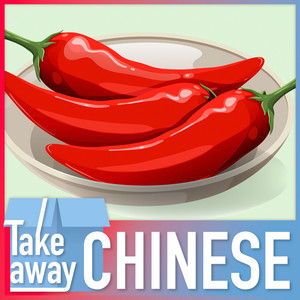
In fact, pepper, the vegetable, its Chinese name is 辣椒.
辣椒. Yes. Initially 椒 is the black pepper For instance, 胡椒 is the black pepper And 辣椒 Because peppers were introduced to China rather late And it was introduced to Guizhou province Guizhou is a mountainous area For those of you who do not know It's very hilly It is the only province in China That does not have any flatland and plains So even within the cities, it's quite hilly It's quite hilly And that is why back then When transportation system was not that good people find it hard to travel outside of the province, let alone communicate and cooperate with people in different areas, which makes
the place a poverty -stricken area.
People were not well off in those places, which is why back then they find it even a little bit challenging to have enough salt in their daily cuisine.
And that is the reason when pepper was introduced to China, introduced particularly to Guizhou province they realized that this spicy flavor can be a replacement can be a substitute for salt and they can chop the pepper into little pieces and ferment them so that they can be brushed onto different ingredients different food and they put put these things together as a way to store different food and also, again, to, you know, spice things up a little.
So that was the origin of pepper in Guizhou Province and later on move on to Sichuan Province, Chongqing and Hunan.
辣椒 辣椒 辣椒 One fun anecdote.
We talked about 椒 being the pepper, like black pepper, little seed, small and round, with many on one branch kind of vegetable.
And because it has so many seeds, in ancient times, the royal family would shred the pepper and brush them on the wall of the palace of the wives of the princesses and wives of the emperor.
Because they have so many seeds they see it as a good sign of you know hotness of warm of smells good and of bringing a lot of offsprings because so many seeds okay so that is why these palates are called jiao fang in chinese jiao is the jiao of pepper and fang is a house so it's the pepper house so that's cool By the way, 辣椒, does that refer to all chili peppers, no matter what color they are or what size they are?
Or does that refer specifically to a special type?
All kinds of chili peppers.
All of them. All of them, 辣椒.
And the Chinese character 辣 can have many other connotations as well.
I'm still talking about taste.
For instance, if you're having alcohol, especially Chinese 白酒, 酒, there is this burning taste or this dry taste in the alcohol.
In Chinese, we also use 辣 to describe that.
Ah, okay. 这个酒很辣。 It's really...
Spicy but in a different way.
In a different way, precisely.
And you can also, for instance, use this to show, or initially this character, because we talked about peppers were only introduced to China, rather in Ming Dynasty or so, So previously, we didn't used to have pepper, so we didn't used to have this feeling, this taste.
So 辣 was initially the meaning of the sharp kind of taste.
Okay, yeah. From ginger.
Yeah. It still carries a bit burning feeling, but it's a different taste.
Yes, yes, yes, cilantro would work.
I understand. Even garlic.
Yeah, yeah, yeah, yeah.
Yeah, garlic would definitely be described as 辣.
Something that has a bite to it.
Yes. And when I was visiting Guizhou province, I also learned that pepper was one of their most famous and most proud product in the province.
There, we did a show in a dry pepper market.
market, we saw piles and piles of pepper, like little hills.
And we sneeze and cough all the time because it's too much. I was going to say working in that environment must be kind of challenging because of your eyes and your nose.
Yes, but it was also the place that you must visit if you want to get to know about the industry.
They even have something called a dry pepper index what's that means dry pepper is index you usually see index in the stock market you have a index indicating the price of a certain uh stock of a certain product and is the dry pepper index showcasing the price of different types of pepper around the country I thought you were, oh, around the whole country.
Yes. Oh, cool. I thought you were going to say indicating the spiciness level of the different peppers.
Oh, they have that too.
I was going to say, they probably have that too.
They do have that. And I learned that the most spicy or the highest level of spiciness is not even consumable for human beings.
Really? It's not an ingredient anymore.
You cannot really eat it anymore because it's too spicy.
It's just hurting your tongue.
hurting your mouth it's dangerous it's dangerous and they use it the they extract that chemical from that type of pepper and they would brush them on the bottom of crews and when the crews on the bottom of a boat a boat and won the boat why would they hold wait wait take a guess so they turn it into like a paint a paint uh why would you paint the bottom of a boat and an insanely spicy pepper i'm thinking like keep fish away from the boat so it doesn't hurt them well um similarly but for different reasons there are different types of creatures like shells like they attach themselves on the bottom
of the boat and would enroach the boat on the bottom of the boat and would enroach the boat of shellfish will attach themselves to the bottom and then you have to clean them off which is really hard to do i know have you ever watched the short videos of a sea turtle being covered by the shells and it's it's it's insane and it's not good it's definitely not healthy for the sea turtle and people live near the sea would help crunch them out and to clean to help the sea turtle and it's the same logic for the boat it will definitely hurt the huge ship or cruise or boat you have but by applying crazy
insane hot pepper extracts from or onto the boat it it it's cure the situation that is a really fun fact and a really great quiz question too yes and And we talked a lot about 辣, 辣椒.
辣椒. Now, do you know how to say different levels of 辣?
Let's talk about different levels of spiciness.
Well, different levels of spiciness.
You told me the different ones like not that spicy, medium spicy is 中辣.
中辣. A little bit spicy, minor spicy.
That one I didn't catch, but I got very spicy.
See, I told you I like spicy food.
You don't care about the smaller spicy.
I won't need it. I'll never need that.
Minor spicy. Yeah, 特辣 is very spicy.
正常酌 正常酌 Make it normal level spicy.
But what is it to say not spicy at all?
不辣 不辣 不辣 or 免辣, no spicy at all.
And if you are being even more picky, you can think about 酸辣, sour and spicy, 甜辣, sweet and spicy, 鲜辣, fresh and spicy.
Well, there's 酸辣汤. 酸辣汤.
Yes, 酸辣汤 is sour and spicy, and it's also very tasty.
That's my favorite.
That's my number one favorite.
Love that one. Yes, it is quite a great dish.
I love it too. And for those of you who are listening and having your mouth watering a little bit.
Yeah, I want some hot food now.
Yes, and welcome to China.
If you're in China, you might be able to enjoy just the most tongue -numbing, sweat -inducing, sinus -clearing cooked dish that you've ever tasted.
And if you ever run into Niu Honglin and she offers you tofu, take it at your own.
Be careful with it.
Yes, and if you ever had the chance to visit Guizhou province, make sure you try their different spicy sauce as well.
They have got the best ones.
Look forward to that someday.
And that brings us to the end of today's Takeaway Chinese.
I'm Yao Honglin with Steve here in the studio.
For more episodes of the show, you can visit our website at radio .cgtn .com and go to the column podcast. You can also listen to the show and read the script there.
Find us wherever you listen to your favorite podcasts.
Just search for Takeaway Chinese.
Don't forget to leave your questions, comments, and ratings.
感谢收听 ,我们下次再见! 谢谢, thank you, and see you next time.
We'll be right back.
Thanks for watching!