You're listening to Roundtable with myself Hyung.
I'm joined by Steve Hatherly and Fei Fei in the studio.
Coming up, car brands now pitch their models the perfect first car.
Apparently these rides are bigger, pricier and loaded with features.
Are young drivers getting what they really want or are they buying into clever marketing?
And joy is everywhere, you just have to find it.
Join us at Roundtable's happy place for stories, songs and all things feel good.
Our podcast listeners can find us at Roundtable China on your favorite podcast platform.
Have a question worth exploring?
We're game. Send it to Roundtable Podcast at qq .com.
Emails are fine but bonus points for voice memos.
They're our listeners' favorite.
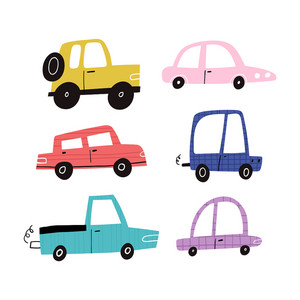
Now on Roundtable, let's turn our attention to what do you really want from your first car?
Bigger, fancier, more expensive.
First cars for people in China have come a long way.
According to a white paper produced by Bili Bili and Nelson IQ, the average age of aspiring first -time car buyers in China has dropped to just 30.
But what do young people really want from their first car?
Status, comfort, or simply a ride to freedom?
And can this shift drive long -term profits for car manufacturers?
This has been seen as new battleground for the hearts and wallets of aspiring car owners in this country.
So tell us, brands are really trying their best to promote towards younger consumers with this first -car idea.
I remember my first car.
Well, you know, in Canada, you can get your driver's license when you're 15 years old.
That has some rules with it.
I think you can only drive in the daytime and then when the sun goes down, you can't.
And I think you can have one other passenger in the car with you, but that's it.
You can't have two.
When you turn 16, then you get your full driver's license.
It's not common, I don't think, in Canada for a 16 -year -old to have a brand new car.
You know, you'll see it in the movies sometimes, like, oh, I'm 16.
Oh, here's the keys.
No, that's not the most common thing.
I did drive my family's car, my mom and my dad's car at that time.
My first car came when I was 21 years old, I think.
And that was a special, really special day.
I remember that. It wasn't necessarily looking for the fastest or flashiest or fanciest car with the latest gadgets.
I was happy to have four wheels and a seat with a steering wheel that I could call my own.
I remember that. How old were you guys when you had your first car?
I think I got my first car when I landed my first job, which was more than 10 years ago.
So when I was 20 something, 25, 23, something like that, I had no idea what to look for in a car.
The decision is made solely by my father who paid for the car.
And I know nothing.
I don't know what I need.
I don't know what I'm looking for.
I don't know what size, what's my preferences.
Do I want a really fashion -looking sports car?
Do I want, you know, flash the street or...
Sorry. Do I want to drive in and surprise everybody?
Or do I want in more of a family that the whole family can use?
Like a van? Something like that.
I had no idea. Like the only choice I can make is like I want a white one instead of a black car.
That's the only decision I make.
Yeah, we shouldn't laugh at that.
Color is a big thing to consider, isn't it?
There is a lot of research that goes into that.
Nothing about the car.
Color is the only thing you can pick.
That's important to car makers as well.
Yeah, so brands, what are they looking at when they're promoting to young people, trying to sell their cars to young people for their first car?
Apparently color is very important in their slogans.
For example, for Xiaomi, who launched their first electric vehicles, they pretty much got a lot of, putting out a lot of promotion when it comes to the appearances and the color ranges they offer.
And I think in one of the interviews the CEO, Lei Jun, mentioned was the color designs, that they specifically offered a lot more colors options for consumers, especially young consumers out there.
And it's not only Xiaomi, but also, for example, Xiaopan also promoted his new model with the slogan of first super -beautiful and interesting car for young people.
And they even hired designers to design the car models, especially those from luxurious car brands like who used to work for Ferrari, Lamborghini, and Audi.
And that designer also worked for Xiaopan to design their car models to attract and appeal to the younger generations.
Wow, it would be nice to have one of those cars you mentioned as your first car, that's for sure.
A nice shiny Italian sports car, that wasn't mine, that's for sure.
Speaking of foreign car makers, Volvo, they did a special promo video for one of their sedans in the summertime and they were targeting young people there.
And what they seemed to focus on, at least in a portion of the video, was the safe aspect of the vehicle, referring to it as a luxury sedan that was very, very safe.
So I think marketing the safety aspects of a vehicle for younger people is an attractive thing for car companies to do too.
I think safety, just like skiing, circles back to the previous topic, is top concern, I think, for driving as well.
But also, nowadays you're seeing more and more of these car brands.
They're really trying to take a, well, sort of gain a strong foothold of this slice of the younger car owner market and promoting this first car concept seems kind of genius.
Yeah, I think you're right.
And the car, you know, it's business, right?
And the car industry, they see what young people are looking for, they do their research, they try to figure out what young people are looking for in their first cars, and then they follow suit and they do their marketing campaigns and their advertising and all of it to try to be as effective as possible.
I looked it up because I was curious to know, you know, what are young people actually looking for when they're looking for their first car?
And I found a story from drive .com .au.
That's an Australian website.
And it was written by a young person who was just about to buy their first car.
And I thought this was kind of interesting.
You know, people born between 1997 and 2012, that's Gen Z.
They represent 25%, roughly 25 % of the world's population.
And if you think that corporate, you know, world corporate is not paying attention to that, well, they certainly are.
There's a lot of purchasing power there.
And part of that advertising is going to come into the automotive industry.
What this writer was talking about, and I didn't realize this, but there's a lot of car promotion on TikTok and Instagram.
You can find a lot of videos on there promoting cars.
And it's not necessarily that they're expecting immediate business from those outlets, from, you know, social media platforms.
But they are advertising to a group of people, a very large group of people, that is about to come into the market, which I thought was an interesting strategy.
And it's something that I never thought about before.
What the writer said in terms of what they were looking for, what young people were looking for, luxury brands.
I thought that was a little bit surprising.
There's a study done by CDK Global.
Gen Zs want luxury cars.
It's the study showed that 39 percent of Gen Zs would consider buying a new or used vehicle from a luxury brand as their first vehicle.
But they're using a wait and see approach because they're thinking, should I go with this one or an EV first, an electric vehicle?
And they're looking at luxury brands because these luxury brands are promoting on social media all the time.
And that's in America or Australia?
This was written from an Australian point of view.
Let's see. And we congregated figures and saw that here in China, apparently the top three key words that the first cars offer are attractive appearance, number one, number two, cost performance, number three, smart driving techniques.
So for young people, quote unquote young people, aspiring first car owners in this country, these are maybe the things that they're really looking for.
Is that something you agree with?
I actually went on a sort of an online forum where people communicate about cars.
And apparently one of the young people posted a question up there and asking that he as a first car buyer, he or she definitely wants something with good looking and also with smart technologies.
But his father, who is going to pay for the car, is more towards prefers buying a second hand used car, which makes more sense because you only just getting your driver's license.
You don't need a really good car.
It's kind of an interesting thing business wise, because from a car company's point of view, to whom are they selling?
Are they selling to the 21 year old who has just entered the market or are they selling to the parents who might be the person, the people or the person who is putting the down payment on that car or paying for the lease on a monthly basis.
So from a marketing strategy, it's kind of interesting.
Who are you supposed to focus on?
Do you focus on the young people, the sleek, cool, stylish, sporty appeal?
Or do you focus on the safety with parents, probably concerned about safety, right?
Do you focus on that aspect?
I guess they try to cover everything.
Well, who has the final say on paying and swiping the card, I suppose.
Yeah, do you think that?
But I suppose every generation might be a little bit different.
Maybe nowadays, if the parents are really pampering their grown up children, they might tilt towards what the aspiring young person, this young driver might want.
Well, it's kind of difficult to say back in my day, I'm a younger millennial and I remember back in the day, first time car owners.
Well, actually, let's say for my dad's generation, first generation, first time car owners was that's when my dad got his first car in his 40s.
So somebody in his 40s and is going to drive the car to see clients, his demand and aspirations would be very different as opposed to today, a 21, 22 year old Gen Z Chinese person want in a car.
And let me just give you some figures to show how different car ownership has turned out in this country.
According to Bili Bili and Nelson IQ, that white paper from last year, 48 % of respondents born between 1990 and 1994 own their cars before they turn 30 and the percentage was 23 % for those born between 1980 and 1984 and 34 % for those born between 1985 and 1989.
And here this 83 % of those born between 1995 and 1999 without a car think they will buy it before they turn 30.
Yeah. And the percentage is 96 % for those born in the 2000s.
It depends, I think, on where you live in the world.
You know, I looked at a survey done from Canada and they asked young people, what do you think is the ideal age to buy your first car?
And the answer was 21 years old.
And I thought, oh, that's interesting.
That's how old I was.
But that doesn't mean they are going to buy their first car at 21 years old.
They just asked them what age do you think is the right age.
But I think if you compare somewhere like Canada to a place like Seoul, South Korea, for example, where the first time car ownership might be from mid 20s to early 30s.
And the difference I think would be, or at least part of the difference is because of the geography.
You know, when I was a teenager, it wasn't a luxury for me to drive the car and it wasn't a luxury for me to have a car when I was 21.
It was absolutely necessary because there is no subway system.
The bus system is not overly expansive.
You need to have a car.
Whereas if you live, you're born, you grow up in Seoul or Beijing, then you don't need to have a car and it becomes almost like a luxury part of your of your life because of the subway system and the bus system.
It's almost even more convenient to get around without a car.
You don't have to worry about parking or things like that.
So I really do think it depends on where and where in the world you're from.
Definitely. I think for here in China, a lot of the young people are buying their first cars after getting their job because they probably need it for their commuting or want to get away for a weekend trip in another cities.
And that's the way that's the reason for to make their purchase for their first cars.
And it's not it's also not a essential purchase decision to make because as Steve just said, for commuting, they don't really need the car to commute between works.
But and so the down payment is kind of different when you are a first time car buyer in China.
I think a lot of young people's mentioned about they would pay for from one hundred thousand to one hundred and fifty thousand yuan for down payment for their first car.
And so probably they can afford to buy a brand new car instead of a second hand used car, which for a lot of the young people's they don't really want a car to the appearance of the car.
It looks really outdated.
That makes them look lame, maybe.
So they want a good looking one.
And I thinking back, I just shared this story with her young before the show was the first car my high school teacher got.
He bought something I think was produced in 1970s or 80s.
It was really an old SU.
Was that an SUV? I don't think they had SUVs back then.
But it's more of a Jeep.
A really old Jeep. And he was really proud because he was thinking, you know, as a first car, I don't really need a good one.
I just need something to practice practice my driving and then I will buy a brand new good one.
And he invited us to take a ride on the car.
And after getting into the car, we realized the back door can't really properly close because it was so old.
I'm not even sure it was illegal to drive on the road.
It was so cool. And look at this, the doors don't even close.
And we were crammed in the backseat thinking, you know, don't fell out of the car because the door was not really safe.
And for someone who was born in the 1960s, that was a pretty smart purchasing decision, I think, to buy something of a one ten thousand yuan a used car to drive it for a couple of months.
Yeah. Well, in the 1990s or even maybe in the early 2000s, having a car was a major I don't think all people say this, but it was a status symbol.
Absolutely. One hundred percent true.
And it didn't matter what kind of car you have if you have any car.
That was still that that made you one of the coolest people driving down the street.
It was a big deal for Chinese families.
But now when you see a young new generation of car potential car owners entering the market, their aspirations, their preferences seem to be all that different.
And while cars may offer freedom and status, young people are increasingly opting for smarter, greener options, too.
Like we've mentioned, cities with robust public transportation systems offer convenience without the burden of maintenance and high costs like owning a car.
So for many, the future is about flexibility and sustainability, not just owning a car.
Coming up next, welcome to the happiest corner on the airwaves roundtables.
Happy place. Delivery, delivery, delivery.
What is it? Happiness from Round Table.
Fei Fei, what's your happy place?
Well, I started to run again over the past few months and running definitely become the highlight of every week of mine.
And by, you know, running and dragging, I start to notice things that I didn't notice it was there in my neighborhood before.
Like, for example, some trees, I didn't know they plant these kind of trees and or there is a new mini park around the block that I've only noticed by dragging.
And also the change of seasons became more prominent when during dragging when I was just, you know, getting on and off the subway.
So it's it's it's quite a be the happy place for me, especially in this season.
I think it's perfect for outdoor activities.
It's not very cold.
So you don't need a lot of layers and it's not too warm for people who don't like sweat a lot.
You won't sweat a lot in these temperatures as well.
So I think it's definitely perfect.
And I encourage everyone of you to go outdoors and experience the weather.
Did you start jogging because maybe you're using your new fridge a little too much?
That's your new fridge these previous show, if you miss that episode, you don't know what we're talking about.
But Fei -Fei got a brand new fridge.
How is it? It was perfect.
It's perfect. I love it.
And that's why I started jogging.
Interesting connection.
Steve, was your happy place?
Oh, it's not my happy place.
It's my mom's happy place today.
Happy birthday to her.
She is 82 years old today.
They are fans of the Roundtable.
My mom and dad, they listen in Nova Scotia, Canada.
So I wanted to take just a minute to say happy birthday to my mom.
She's an amazing woman.
She's 82. She still runs her own business, sets the schedule, how she likes.
She's been a career business woman.
And for her to stop would be a painful thing for her.
So she's still super active.
She's an inspiration to everybody around her.
So happy birthday, mom.
Keep going. Happy birthday.
Yeah, that's great, Joy.
And I do. Well, do make sure that mom listens to this show.
Yes, she'll hear it for sure.
Yeah. All these happy vibes sent all the way from Beijing.
And here's my happy place moment I had this week.
There's something truly gratifying about stumbling upon a hidden gem online, whether it's a video, an article or even a tweet.
And it's like opening a treasure chest by accident.
And in this case, discovering this awesome video, which is Brian May, the legendary guitarist of the British rock band Queen, which I'm a huge fan of, and Andrea Bocelli, the Italian tenor, performing one of Queen's biggest hits.
Who wants to live forever at Bocelli's 30th anniversary concert in July this year?
And the combination of Bocelli's powerful operatic tenor and Brian May's iconic electric guitar and a little bit of chiming in as well was just incredible.
Their musical styles, rock and classical influences, though distinct blended seamlessly on stage, creating a harmony that transcended genre boundaries.
Bocelli's soaring tenor and May's signature electric guitar riffs complimented each other so perfectly.
And this song, Queen's No One...
Well, OK, this song, Who Wants to Live Forever, is a reflection on the inevitability of death and the haunting question of whether one can truly bear immortality.
The line Who Wants to Live Forever encapsulates the struggle.
How do you reconcile the desire to live fully with the knowledge that time is limited?
But the song ends on a powerful and hopeful note.
Forever is our today.
Who waits forever anyway?
And seeing May and Bocelli honor this vision was a powerful moment.
I know Queen's late frontman, Freddie Mercury, one of the most iconic vocalists ever graced the face of Earth, would be smiling from heaven because he was such a big fan of opera and would have loved the blending of rock and classical music.
Two legends, one unforgettable tribute, and that is my happy place.
So as we wrap up today's show, I'll leave you with the tune of Queen's Who Wants to Live Forever.
And that brings us to the end of today's roundtable.
Thank you, Steve Hatherly and Fei -Fei for joining the discussion.
I'm He Young. We'll see you next time.
What is this thing that builds our dreams?