Brought to you by the Capital One Venture X card if you love to travel Capital One has a rewards credit card that's perfect for you.
With Venture X earn unlimited double miles on everything you buy and turn all of your purchases into extraordinary travel and you get premium benefits at a collection of luxury hotels when you book through Capital One travel.
Plus you'll get access to over 1000 airport lounges worldwide Capital One what's in your wallet terms apply see capitalone .com for details.
President Trump's announcement of universal tariffs on the whole world, including the European Union, is a major blow to the world economy.
For Australia these tariffs are not unexpected, but let me be clear, they are totally unwarranted.
The system of global trade anchored on the States that Canada has relied on since the end of the Second World War is over.
The consequences will be dire for millions of people around the globe.
Well, this is a tragedy.
This is also the new reality.
We're coming on the air because the stock market is plummeting in response to President Trump's escalating trade war.
The Dow, the S &P 500, and the NASDAQ We're all down more than three percent at one point.
Retail stocks in particular are really selling off.
Nike, Adidas, LULU, Lemon. Global markets are also taking a hit.
My fear, I've got to say, my fear is that stocks are down and they stay down for a protected period of time.
From The New York Times, I'm Michael Bobaro.
This is The Daily. On Thursday, the fallout from President Trump's sweeping new global tariffs reverberated across financial markets and foreign capitals, spreading fear and, in many cases, fury.
Today, we try to make sense of Trump's strategy and its consequences with three of my colleagues, Peter Goodman, Natalie Kitrowieff, and Gina Smilek.
It's Friday, April 4th.
So, colleagues, welcome to The Roundtable.
Peter Goodman, thank you for being here in the studio.
Great to be here. Natalie Kitrowieff, thank you for joining us from Mexico City.
Thanks for having me.
And Gina Spike, I don't know where in Europe you are.
I am in Brussels, sunny Brussels.
Thank you for joining us from Sunny Brussels.
We have assembled the three of you because you have tremendous experience covering the three regions of the world that are at the center of this historic and historically disruptive moment, Trump's sweeping global plans for terrorists, what he's calling Liberation Day for the U .S. Peter, you have covered Asia for years and years, for the times you lived there for a many years.
Gina, you are covering Europe, Natalie, you are our economic authority on Mexico, but really in some sense North America.
So my first question to the three of you, with twenty -four hours to reflect on what the President just announced, how big a deal is this?
I wanna start with you, Peter.
It's honestly difficult to convey how big a deal this is.
This is an astonishing development.
It is a development that takes direct aim at the mode of globalization that has dominated most of our lives.
I mean, we have grown up in a world where we've been invited to imagine that place really doesn't matter.
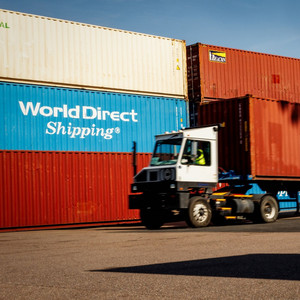
If you've got container ships that can bridge the oceans and you send factory production wherever it's cheapest or most efficient, then factory in Ohio is the functional equivalent of a factory in China.
and whatever you think about these tariffs and how they're going to play and whether they're going to fix the problems that have popped up and emerged from trade policy, this is clearly taking direct aim at that sense of place isn't supposed to matter.
And that entire era.
That's right. And where we essentially make policy on the strength of the argument that the consumer must be served and the consumer wants cheap stuff and cheap stuff has, in the last few decades, come in from places like China, Mexico as well, and this is a reorientation of policy that, at least on its face, is about, we gotta make stuff in the United States.
There are a lotta reasons to doubt whether it'll work, whether it will satisfy the people it's aimed at satisfying, but that, at least in broad strokes, is the policy.
Globalization's bad.
Making stuff at home is good.
Natalie, how big? I mean, I was going to say, Michael, that you might forgive the three of us, I think we're all either current or former business reporters on this roundtable, for being really worked up about all of this.
You might think that we're a little bit excited because this is our sandbox that we play in, but it's a huge deal.
It's not just a huge deal for markets, which we're seeing a massive reaction in global markets, But it's a huge deal for the way that Americans live their lives, as Peter is saying.
We're talking about a total reconfiguration of the trade order, and that is not just an econ nerd concern.
So it's huge. Gina, any argument that this is not a big a deal as these hyperbolic colleagues of yours are claiming it is?
I'm joking. No, no argument at all.
I think this is a massive deal.
I had someone earlier actually tell me that this is one of those before and after days.
We're going to remember the world before today and we're going to remember the world after it.
And it just sort of, this is a moment that is going to fundamentally reorder the global economy potentially.
And I think at the same time, I mean, I'm sitting in Europe right now where this is part of what is really a multi -pronged assault on the transatlantic relationship.
This is part of a sort of decoupling that is happening between the US and its trading partner the European Union, which has, you know, for 80 years been among its closest allies.
And so I think it's hard to overstate what this means diplomatically and not just economically.
Okay, so now that we have absorbed the bigness of this all, I want to ask you all to help make sense of this as a strategy.
And Peter, one of the things becomes very clear when you look at these tariffs is that as universal as they appear, they are seemingly pretty targeted at a familiar trade foe of the Trump administration and that is Asia.
Look, it's always been about China, principally, and that's because China is the world's factory.
It's a place where enormous amounts of investment went, chasing cheaper wages.
In the free trade era, yeah.
In the free trade era, I mean, China has become the dominant purveyor of all kinds of things from auto parts to chemicals to sneakers and clothing and exercise bikes so if you come at things as Trump does from the standpoint that a bilateral trade deficit Which is a fancy way of saying we buy more stuff from you than you buy from us If you come at it from the standpoint that that's bad and a sign that you're getting ripped off Which is a concept that economists take real issue with then China stands out, but it's not just China look at this chart.
Vietnam now hit with a new tariff that represents 46 %...
Well, Vietnam is effectively the extension of China.
Cambodia, 49%, Thailand, 37%, Malaysia...
This is precisely because in the first Trump administration when Trump unleashed these tariffs a lot of big companies like Walmart to pick an obvious example but really every company that sells into North American marketing.
Well we don't want to pay all these tariffs to China seems like this US -China divorce thing is real we better go find another lower wage country.
And moreover, Chinese companies moved a lot of investment into places like Vietnam and Cambodia, and they just exported their model to these other countries.
In other words, these manufacturers took a side door out of China into their neighboring economies.
Set up shop there, same problem with trade imbalance.
That's right, and so when we - So this is meant to catch that.
This is meant to catch that and divert production to friendlier places, from the Trump administration standpoint.
Got it. So, the goal, if we think about the focus on Asia, is to make it far more expensive for goods to come from Asia to the United States.
Thereby discouraging that trade scenario where all that stuff comes from those places in the first place.
Okay, that's the strategy that I think I can wrap my head around.
Natalie, what in your mind is the strategy here for the North American side of that equation?
Well, okay, it's not totally clear exactly what the aim is here, but as Peter just said it sort of seems as though a big motive of these tariffs is to shut down Asia as a source of manufactured goods.
And the tariffs that were announced on Wednesday did not include Mexico and Canada.
Notably and obviously by design.
Right. there is this sense among some of the analysts that I've been talking to that the goal here or At least a potential effect is to strengthen the North American trading bloc So where do you go?
If it's not? Vietnam or China you potentially go to Mexico I mean obviously Trump's ideal is that you go to the United States But even if you don't go to the United States a potential outcome here is that there is more incentive for manufacturers to make their stuff in Mexico, in the United States, or in Canada, and there's a potential gain there for the North American trading block, which is that it gets preferential treatment.
We don't know if that's what's gonna happen, but it certainly seems as though, as you said, Michael, the design might lead us there.
Now that's complicated, of course, because of what you were saying is true, that Trump is trying to create a much stronger North American kind of trading block.
He's been going about it in a very strange way, given how much he's been attacking both Mexico and Canada and threatening tariffs on them individually even before this.
So if we're all supposed to be operating as one vast, beloved set of partners, it hasn't been feeling that way.
No, for weeks he's been smacking Mexico and Canada in the face.
I mean, there are 25 percent tariffs that went into effect on Thursday on finished vehicles.
We expect the same tariffs to go into effect on auto parts in the beginning of May There are tariffs on steel and aluminum that really hits Canada hard. It also hits Mexico There are 25 percent tariffs on all goods that don't fall within the USMCA the Free Trade Agreement between the countries This is a huge economic burden on these countries and a big big hit to their trading relationship with the United States and so It would seem as though this potential world in which the trading block of North America is strengthened also comes with real downsides for the two major trading partners in that arrangement.
Can I throw a wonky point at you?
So, I think it's worth remembering that there's so much integration between the US, Mexican, Canadian economies that when we buy a finished good from Mexico, something like 30 cents on the dollar, the value of that good, actually made in the United States, with American labor.
The counterpart number for China is three cents on the dollar and Chinese state policy is directed at driving that number as close to zero as possible.
So it's been true, going back to the first Trump administration, that if we assume, and there are a lot of reasons to debate, what's the real objective, what does Trump really wanna do.
Does he just wanna centralize power?
Does he want chaos, whatever.
But if we take as a given, just for the sake of this conversation, It's about bringing production back to the United States, generating jobs in the United States.
Well, it's always been true that Mexico and Canada are the potential solution, I'm putting in air quotes, to our also air quoted China problem.
And we've gone through a very bewildering couple of months where it seemed like, oh no, maybe Mexico's the enemy to Trump, oh maybe we really are a man who can't.
But that's not really the case, because you were saying bringing manufacturing back to North America, even if it's Mexico, is more American production.
and better for the American economy, by far.
It's creating opportunities for Americans.
This is starting to make a lot more sense to me.
Gina, where does Europe fit into all of this?
And what does the U .S. get from hitting our allies in Europe with tariffs?
And I'm sure I'm ignorant, what kind of jobs are gonna be coming from Europe back to the U .S. in manufacturing?
So I think there are several reasons.
I think one is that there are these strategic goals The Trump administration wants to get Europe to bend on.
It wants them to change their digital regulation policies.
It wants them to change some of their taxation policies, and so I think the goal is to negotiate on some of that.
I think there are also a few key industries that the administration cares about a lot that do matter in Europe.
Cars are one of them.
We definitely see this desire to reshore the automobile industry and there are some really big car industries in Europe.
Think BMW, think the Audis of the world.
And so, I think in this sort of multi -pronged trade war, Europe is very clearly in the crosshairs for reasons that are partially trade and economic related and partially actually quite a bit broader than that.
I want to pick up on cars and the idea of reshoring and Natalie and Peter, how realistic is the idea, and it's not just related to Europe, that through these tariffs the United States is going to be bringing more car manufacturing jobs back to the U .S. We talked at length about the fact that cars are made up of component parts assembled all over the world.
So this gets really tricky really fast. Thirty thousand parts in modern cars.
And it's astonishing.
I think that cars are the most obvious place to drive the re -shoring strategy.
So to speak. So to speak.
Yeah. We will stick you with tariffs if you don't make your stuff in the United States with a whole bunch of caveats.
Let's take a look at a company like Hyundai.
This is the group that owns, not only Hyundai, the brand, but Kia as well.
This is a South Korean company?
So, they've spent significant amounts of money setting up factories in Georgia.
And they did that with the understanding that they could tap the global supply chain for their parts and components.
Now, we're telling them you're gonna pay more for steel, more for aluminum, we're not sure what is gonna apply in terms of tariffs if you're bringing in electronics from Malaysia, from China.
And so the net effect of this could be, and we don't really know how this will play out, that Hyundai will say, well, whatever we're gonna do, we're gonna do it more slowly.
Maybe we won't add that extra shift. In the U .S. Yeah, I mean, you could see the pressure to move faster, to reduce your import of finished cars from Korea, replace that with your domestically -made cars, except again, you don't know about your access to the global supply chain.
It's not like you can just flip a switch and suddenly all the stuff you need to make a car or just comes back to the United States.
Right, I do wanna recap what you're saying.
It's a little bit complicated, very fascinating.
A company like Hyundai did exactly what we in the US say we want a company from South Korea to do.
Right. They moved more manufacturing to the US.
Then we just hit them within the last 48 hours with all these new costs through these tariffs that are gonna kinda undermine the fact that they moved here in the first place.
Exactly, and so here's this policy that's supposed to be about bringing jobs back to the United States creating more jobs for blue -collar workers, and we've taken aim at some jobs that are already here.
We have injected greater anxiety, added more variables and uncertainty to this large multinational company that did exactly what they were supposed to be doing.
Natali, what Peter's describing is a kind of paralysis that might set in as companies look at these tariffs and fear that consumers are not gonna be biting in this moment.
Is that something you expect?
I mean I think we're seeing a lot of uncertainty that's true and uncertainty does cause paralysis.
But I think that we have to keep in mind that America is just the most important consumer economy in the world.
And companies are already trying to figure out how to secure their duty -free access to that market.
you know as much as they can and I agree that uncertainty reigns, but I just I do think that there is a motive now to figure out how to make this work just because you want to be able to sell to American consumers mm -hmm Can I complicate that a little please because I actually I think that is absolutely the case I think there's also a more complicated dimension here though Which is that I think we're going to see both companies and countries trying to figure out what other markets they might access to replace American consumers.
I think we're seeing that a lot in Europe right now.
I think Europe, one of their big strategies for dealing with this very large problem that they have been presented with is to go find new friends.
They are just sort of making the rounds, going all around the world trying to figure out who they can buddy up with to try and make sure that they have a consumer market to sell their products into.
I think it was symbolically relevant that Ursula von der Leyen, the President of the European Commission was actually in Central Asia talking about trade when this all went down.
OK, well on that note we're going to take a break and when we come back we're going to talk about what retaliation we suspect is going to look like from all the countries in the regions you all cover against the United States in response to what we have just done with these tariffs.
We'll be right back.
My name is Thomas Gibesenff.
I'm a journalist at The New York Times.
I served in the Marine Corps as an infantryman.
When it comes to reporting on the front line, a lot of the same basics are at play.
You're looking at the map of where you're going.
If you're on a paved road, a fueled roads, is there a hospital nearby?
Is your body armor fixed with a first aid kit?
Does everyone know where that first aid kit is?
We arrive into a military position.
I get out of the car, I look at my watch. You know, I set a timer, no more than an hour.
I'm listening for drones, jets, check in with the team, is everyone comfortable?
And if they are, then we proceed.
frontline reporting is dangerous, but I think nothing is more important than talking to the people involved.
You know, hearing their stories and being able to connect that with people thousands of miles away.
Anything that can make something like this more personal, I think is well worth the risk.
New York Times subscribers make it possible for us to keep doing this vital coverage.
If you'd like to subscribe, you can do that at nytimes .com slash subscribe.
So Peter and Gina, Natalie, let's talk about how this is all going to play out over the next few months, specifically in the form of retaliation and the impacts of the retaliation from the countries who've just been hit with these tariffs and are stewing over that and planning to essentially fire back at us.
Where should we start?
Who feels like they have the best handle on the coming retaliation?
Probably Gina does.
Yeah, Gina go. So, you're in retaliation land.
Yeah, we're in retaliation mode already over here, so we were early movers on the retaliation front.
Is it worth saying, Gina, that the European Union is how big of a trading partner is it to the U .S. when we think about the meaning of retaliation?
Huge, enormous. When you think about the EU as a block, actually, all 27 countries that form it, it is the U .S.'s biggest trading partner, essentially.
And when it comes to services, it actually buys a lot more services from the U .S. than it sells into the US.
When we say services, what do we mean?
Just to be clear, when we say services, we mean things like financial services, you know, banking services.
But most importantly, we mean technology services, the cloud, the Google searches.
And the reason that's so relevant is what we've seen so far is that the European Union has very much retaliated by announcing additional tariffs on goods.
It is said that it's going to put tariffs on things like whiskey and motorcycles and women's lingerie and a whole list of products.
But what we know from our reporting, what we're hearing about from our sources over here is that they are also very much considering slapping some kind of trade barrier on services.
This would really be sort of crossing a rubicon that the European Union hasn't previously crossed, but it could potentially be really powerful and it could have the real risk of escalating this trade war pretty significantly.
What does it look like this crossed Rubicon?
Does that mean they're going to tax our tech?
That essentially is what it might mean.
So we saw a French official today suggests that this would be some version of a tax on information services on Internet technologies.
This is very much the kind of thing that is clearly still under development.
They've been trying to keep it under wraps.
And so I think we're still waiting for the final, actual retaliation to come through to try and understand exactly what this would look like in real life.
But nice little tech economy you got here.
Hope nothing happens to it.
Exactly. But, Peter, can you explain, why does that matter?
When I think of Amazon or Metta, these companies getting taxed by Europe, wouldn't on its face seem like such a big deal?
What am I missing? Because Europe is like the California of the world.
It's the one market - That's big enough that the standards that they set affect the nature of business everywhere.
Europe's huge. I mean, you're talking about 27 countries that extend from Greece to Ireland.
and if Europe, if they start to take a coherent approach to privacy and they start to look at taxation, that will be a significant problem for a very big chunk of the U .S. economy, and that would open up a vast new front in this Global Trade War.
Right, so you're saying if Europe decides to cut American tech out of Europe, then suddenly the American tech industry is really unhappy and they're probably gonna tell President Trump that the tariffs are the reason why.
That is effective retaliation.
If they threaten access, they threaten new taxes, new regulations, that yes, that could be further forced toward business leaders saying, hold on a second, we didn't sign up for this.
We signed up for tax cuts and deregulation in business as usual, we didn't sign up for getting kicked out of our potentially largest market on Earth.
And I wanna just add, I think it's not an accident that Europe is talking about tech in particular.
I think it's partially because that industry is so affiliated with the White House right now, because they have been doing this ingratiation exercise because they've made friends with the Trump White House.
And so I think the idea is if you hit tech, you're hitting X, you're hitting meta, you're potentially hitting these big tech companies that have got CEOs who are really close to the president.
And that might be an effective way to really sort of force the White House come to the negotiating table, which for Europe, is the end goal.
Can I just... Go ahead Nelly.
I just want to throw a wrench into things, which is, I hear you that it is a well -designed potentially strategy for retaliation, but we just don't know how effective it's going to be because for example, these tariffs that are hitting the auto manufacturers have been a big deal for a long time now.
These executives are not happy.
They have been complaining about it.
They've been going to the White House.
What we've seen is that Trump has been surprisingly resistant to changing course even though there have been big reactions on Wall Street and by executives, and so I'm not sure we know that these tech executives kind of going to Trump and complaining is going to really make a difference here.
Oh, I think that's absolutely true.
We don't know, and in fact, it's not at all clear that there's an appetite amongst business who are afraid to cross MAGA, whatever happens.
Tariffs, stock market falling.
But I think it's fair to say, that does seem to be part of the European strategy in terms of retaliation.
So the typical thing you retaliate on is, you go after bourbon, because you hit Mitch McConnell's home state of Kentucky.
You go after grains, because you hit the Upper Midwest, and especially red states like Indiana and Nebraska.
And so this is taking it to a new set of Trump allies, if you go digital.
Whether it will work is a whole other question.
And I just want to point out that there's another big question here, which is can they even do this?
You know, it's not like Google has an alternative in Europe.
It's not like they have services that can just easily plop in and fill the void that is going to be left by some of these things.
And so there's this real risk of how do you design a response that doesn't hurt your own consumer base in a way that makes it almost unsustainable to carry this out.
And so it's an untried tool and it's going to be really challenging for them to actually use.
What's going to be the retaliation from China?
And how's that going to impact American consumers, Peter?
Well, the obvious place China goes is agriculture.
They go after American farmers.
Yeah, I mean, China buys a ton of soybeans from the U .S. and they have an alternative.
and that they can look to South America, especially Brazil and Argentina, there are other parts of agriculture that would likely get hit as well.
Part of the problem for China, and this is something that's been discussed on the show, is just that because of the trade imbalance between the two countries, China just buys so much less from the United States than it sells, right?
So there actually are fewer products for China to put tariffs on than, you know, for the US.
Like, that's the nature of the very trade imbalance that Trump is trying to address.
JS What you're all outlining here is just a huge dose of uncertainty.
And so I want to ask each of you to think about what the best case and the worst case scenario is from these tariffs.
Let's call it over the next six months to four years.
I made up that window.
But just think big about how this might play out.
OK, best case scenario.
We see companies take the hit in terms of their margins.
So Chinese suppliers, Mexican suppliers say, well, we want to maintain our market share in the US, so we will drop our price to the brands that are buying our stuff.
And prices go up a little bit, but not as much as the tariff.
And in the meantime, the overall thrust to the policy works and more investment comes into the U .S., builds more factories, you make more stuff in the U .S., and then eventually the suppliers follow their customers and we're makin' the peace parts of industry in the U .S. and we get more jobs in four years.
That is the rosiest possible picture you can imagine.
The worst case scenario is that prices go up quite dramatically and the result of that is a so called destruction of demand.
Oh, you need a car, because your old car is gettin' old.
Well, you go off and you see that prices are up quite a bit.
The domestic cars on offer are hard to get because there's more demand for that and that's driving their prices up and you're hearing horror stories about how hard it is to fix a car and so you just defer your purchase and kind of muddle through and meanwhile, the cost of everything from exercise, clothing, to groceries is going up and just so you're buying less and that leads to a good old fashioned recession where people lose jobs and the economy slows down and people's living standards decline, and by the way, the political implications of that are likely to be quite unpleasant.
Mm -hmm. Natalie? So the best case for North America and specifically for the two trading partners, for Canada and Mexico, is that the tariffs that were already announced that include a lot of goods go away or at least are significantly reduced So that there is a seriously preferential treatment to these two countries while you know Trump does whatever he wants with the rest of the world, you know, so that you see a real Strengthening as we talked about of this North American trading bloc Which would hugely benefit all three countries and you basically keep things the way they've been You know
free trade in the North America lives.
That's the best case the worst case is At least in Mexico, a recession and a really damaging one.
I mean, we're talking about a country that depends heavily on trade with the United States, millions of jobs depend on it.
This is not something that can be easily recovered by going to other markets, and so you could really see devastation across the board. We're talking about people potentially regressing into poverty from the middle class.
Which has serious implications for the U .S., given the border relationship and migration between the two countries, we would presume.
Gina? So hopefully I won't be running out of Brussels for saying this but I think that the best case scenario for Europe could actually be really positive here.
I think there's a world in which some sort of negotiated settlement happens fairly quickly.
You get some tariffs down on certain products.
This is the optimistic, the administration just wants to make a deal scenario.
So trade basically resumes.
And in the meantime, Europe has made this whole new friend group, they've expanded the posse, they have really sort of had this moment of sort of standing up and having political will and figuring out how to sort of grow some of their own industries in a world where they thought the US was really going to sort of fade as a trading partner.
So they emerged from this a little bit more independent, a little bit stronger.
And potentially Europe's economy, which has really been in the doldrums for years, Now, has this extra impetus for innovation and particularly coming from some of the manufacturing stuff tied to defense that's happening right now, but I think there's a positive outcome here.
I think there's also an extremely negative scenario, which is they get locked in a sort of tit for tat retaliation where both sides are just escalating, hoping that somebody finally blinks, but it takes a really long time for that to happen.
And in the process, Europeans are facing much more expensive products, they're facing lack of access to services.
They are watching companies really do layoffs because they are no longer able to sell into the American market.
And that would all be extremely painful at a moment where Europe is already struggling economically and already feeling a little bit isolated.
We've already had Brexit.
Russia has obviously taken a much more aggressive and much less friendly tone toward the West in general.
I think we could end up in a really bad place where they are in a really unfortunate position and potentially dealing with a big influx of cheap goods from China, all at the same time.
Did you want to say something, Peter?
Yeah, I just want to add that, think about the last great shock that we experienced globally, the pandemic.
COVID. And we ended up with shortages of goods.
We ended up discovering that our supply chains were not very resilient.
And a lot of confusion, right?
It was hard to get stuff on container ships.
In the U .S. our railroad system couldn't handle it.
We supposedly ran out of truck drivers, our warehouses got all messed up, and I think you wrote a whole book about this.
I wrote a whole book about it, it's called How The World Ran Out Of Everything Inside The Global Supply Chain.
That's an unfair advantage, Peter.
This is a - You write a book, you get to say it.
This is a self -inflicted shock.
This is a similar set of unknowns where we are asking virtually every large company on Earth to take a look at where they're buying and selling their stuff and think about moving it around, absorbing very quickly a dramatic change to the terms of trade and we don't know what's going to happen, but we know that the last time we had a big shock, it was extremely disruptive.
It was traumatic. It was traumatic.
And that's the gamble that the president has just made.
That's the gamble that the president is telling us he is making.
The president is telling us that if we go through this period of pain, we will come out the other end much stronger with many more jobs, but so much would have to go right for that to pan out.
And we know that immediately what we're looking at is enormous chaos and upheaval.
Well, on that note, I'm going to thank you all, Peter, thank you.
Thanks very much, Michael.
Gina, thank you. Thank you.
Natalie, always a pleasure.
It is always a pleasure, Michael.
On Friday morning U .S. time, China retaliated against President Trump's new tariffs in a variety of ways.
It issued 34 % across -the -board tariffs on imports from the U .S., essentially barred 11 major American companies from doing business in China and opened multiple investigations into US trade practices.
We'll be right back.
I use New York Times cooking at least three to four times a week.
I love sheet pan bibimbap.
It said 35 minutes.
It was 35 minutes. the cucumber salad with soy, ginger, and garlic?
Oh my God, that is just to die for.
This turkey chili has over 17 ,000 five -star ratings.
So easy, so delicious.
The instructions are so clear, so simple, and it just works.
Hey, it's Eric Kim from New York Times Cooking.
Come cook with us. Go to nytcooking .com.
Here's what else you need to know today.
President Trump has fired six officials from the National Security Council after an extraordinary meeting in the Oval Office with the far -right activist Laura Loomer, who laid out a list of people that she believes were disloyal to the president.
The sequence of events suggests that Loomer, who has floated the baseless conspiracy theory that the September 11th attacks were an inside job, is now wielding more influence over the staff of the National Security Council than the cabinet officials who officially oversee them.
Today's episode was produced by Will Reed and Mooj Zaidi.
It was edited by Maria Byrne, Paige Cowett, and Lisa Chow.
Contains original music by Dan Powell, Diane Wong, and Marianne Lozano. And was engineered by Alyssa Moxley.
Our theme music is by Jim Brunberg and Ben Lansford of Wonderly.
That's it for The Daily.
I'm Michael Bobardo.
See you on Monday. Thank you.