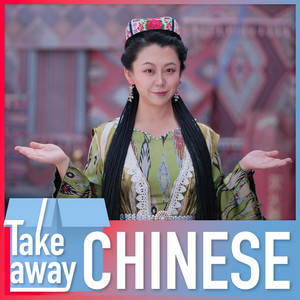
Takeaway Chinese, where you can take some Chinese away and experience progress day by day.
Takeaway Chinese, we will promise you a difference.
你好,欢迎收听随行汉语。 Welcome to Takeaway Chinese.
I'm Niu Honglian with Steve Hatterley in the studio.
Hello, Steve.
Good afternoon, good evening, good night, good morning, whatever time zone you happen to be in, wherever you're listening from in the world.
Oh, that is a lovely, lovely, long and comprehensive greeting.
I stole that from a Jim Carrey movie.
I forget the movie name, but he said he was super friendly and he would always say to his neighbors in the morning when he would see them.
He would say good morning and good afternoon and good evening and, in case I don't see you, good night.
Oh, I remember that.
Yes, yes, that's...
Truman's World Truman Show Truman Show Truman Show Truman Show That is a good one.
A good way to say hello.
Yes, because here on Takeaway Chinese, we do not know when you're listening, but we would always, always want to greet you, since that's the basic or the essence of communication.
The reason we're sharing language, we're sharing culture, is because we want to be able to talk to each other, to appreciate each other's value and culture and perspectives.
And speaking of culture, we're going to be learning even more today on the show.
Yes, we are introducing to you a kind of special but integral part of the Chinese culture.
That is the culture in Xinjiang.
Yeah.
Now, this is going to be a 100% learning experience for me.
And you asked me before we turned on our microphones today you know, how much do you know about the region?
And I said, really zero.
I don't know anything about it because, being from Canada, we don't have an opportunity to hear about the foods that are enjoyed there or the clothing that is worn in that part of the country.
So this is all going to be brand new, for Xinjiang is very important to China because there we know that in the majority of the country the major population are the Han ethnic group.
Yet in Xinjiang, the situation is different.
To start with, it's the Uyghur ethnic group that's the majority in Xinjiang to start with.
And also on top of the Uyghur ethnic people, there are also many people from other ethnic groups.
So the culture there, the landscape, everything can make you feel like it's quite different.
Well, I guess I did know a little bit, because I knew that that part of the country was the Uyghur Autonomous Region.
But I didn't know that that part of the country was known for its diversity, too.
Oh, definitely.
多元 is a key word in Xinjiang.
It's demonstrated in different ways.
Like you said, it is demonstrated in culture in the sense that so many different ethnic groups are there.
And also the landscape can be quite diverse.
In Xinjiang you get to enjoy desert, you get to enjoy river mountains, even snow-capped mountains, and forests.
Wetland, lakes, even I have one to a mine pit that is strangely beautiful.
I was going to say everything sounds beautiful except for the mine pit.
How is that beautiful?
The mine pit because it's an on-ground mine pit, so now it's like a leftover mine pit.
That is just a huge hole on the ground, yet you can walk down there to the center of it, and now the center of it is just kind of like a little lake.
And it can be quite magnificent.
It's just the landscape that you would not expect before you go there.
Sounds like they really do have everything.
They do have everything because it's really, really large.
For those of you who are familiar with Europe, for example, you can fit France Germany, Spain and the UK inside of Xinjiang, with room to spare.
That's how huge it is.
And for those of you who know, for example the United States, Xinjiang is larger than Texas California, Nevada and Minnesota combined together.
Oh, so it's huge.
It is huge.
So that means that in Xinjiang, your neighbors don't live immediately next door.
It depends on where you live.
If you live in, for example Rumqi, which is the provincial capital of Xinjiang Uygur autonomous region, then it's just like in any major city.
Any big city?
Yeah.
I'm guessing it's not like Beijing or Shanghai.
There's got to be a little less traffic.
Yeah.
It's funny to imagine it that way, but definitely 多元 or 多样化 would be a keyword for Xinjiang.
I just had an idea.
We can talk about Xinjiang and learn about Xinjiang with all these different types of keywords.
I like it.
So 多元.
多元.
多元 means diversity or diversified.
多 is like more or many of something, and 元 is element.
So if a place is with different elements, is filled with different elements.
It is a diversified area.
So 多元.
多元.
And Xinjiang also has its weird obsession with word records.
Consider the words largest wooden plate, largest tablecloth.
It has the words largest wooden plate, largest tablecloth.
There are many others I could mention here, including the words largest dense tube, the words largest flat bread.
So all these things, they did it on purpose.
If you think about it, these things are man-made objects.
They're tourist attractions.
They are.
And they are proud of being able to manufacture these words most.
Yeah, that's really cool.
There's something in Canada.
I think we have the world's largest nickel.
A nickel is five cents in Canadian currency.
And that's like a tourist attraction, too.
So I understand.
Yeah.
Yes.
So 罪.
罪.
世界之罪.
世界.
世界 means the world.
And 之 is ancient time or an ancient form of 的 of apostrophe s. Okay.
So it belongs.
Worlds.
Worlds.
And 罪 is the greatest of something, the most of something, the best of something.
So it's the highest form of the adjective we're using here.
Okay, tell me one more time.
世界之罪 Perfect.
世界之罪 So the greatest of something around the world.
Okay.
Understood.
It has a lot of.
It sounds like it.
Those are the examples we mentioned.
Lots of places to visit and lots of things to see when you go to that region.
And I think it's a lovely sense of pride as well as.
That is, we want to create something that no one has seen in the world before.
Something that's uniquely ours.
And also unique enough that can attract visitors from all around to come and see.
So that, in my opinion, is the second keyword.
Great.
And another one I want to mention I can think of would be 大八家 or just 八家.
八家 is not the word that you will be able to use, that common across China, even if it's a Chinese, even though it is a Mandarin word.
It is a transliteration of the word bazaar.
Like a market?
A market.
Bazaar, bazaar, bazaar.
Yes, it's a market.
And it's market in Xinjiang.
Market in Xinjiang usually are called bazaar or bazaar.
When we're talking about the Bajia in Xinjiang, these must be... Now, I'm guessing here because what I'm doing is, you know, two plus two equals four.
If you've got the world's largest wooden plate...
And you've got the world's largest tablecloth.
You must have one of the world's largest bhaja.
Yes, Xinjiang International Grand Bazaar in Rumuchi is the biggest bazaar in the world.
Two plus two does equal four.
Well, you know.
It covers an area of around 40 000 square meters, which is around 100 basketball courts.
Oh dear, that is.
That is quite large.
It is quite large and the brand islamic buildings and prosperous booths make it an ideal place to visit and, To be honest, I've been to Xinjiang for two, three times.
And every single time I would go to the Xinjiang International Grand Bazaar.
And we even just call it.
Da Ba Zha means big, so if it's big enough, you can just, you know, call it.
The character is literally in its name.
You could probably spend a whole day there, i guess.
Oh yeah, yeah.
There are so many different types of booth, and one funny anecdote i learned from my last trip there is that We know that the buildings are with a lot of Islamic characteristics and style.
It looks quite traditional.
It's very beautiful.
Yet the Grand Bazaar was first built in late 2002 and was open to public 2003.
So the buildings themselves have no historical value.
It's just the style, the architectural environment.
That they're trying to create for you is with Islamic style, because the culture element is quite prevalent in Xinjiang.
Still relatively new then, right?
Only 23, 24 years old, those buildings are and the bazaar itself.
Yes still, like you said, relatively new, but it's becoming one of the, if not the most attractive tourist destination in Rumuchi.
What can you buy there?
Anything.
I was going to say, I'm guessing literally anything.
Oh, I would throw in another keyword which is well still kind of really essential for Xinjiang, that is nang.
Nang is a flatbread that you bake and also you put in an oven to toast a little bit.
It's very tasty, just freshly off or out of the oven.
Similar to Indian food.
Indian food has naan.
Ah, yes, yes, yes.
Right?
It's a flatbread that they stick inside.
I forget the name of the kind of oven.
It's like a clay pot, and I think they just slap it against the inside.
Must be similar.
Do they have similar flavors?
Like...
The garlic nang.
Oh, you have any kind of flavor you look for, the kind of nang.
And also the fillings.
You can also have those with fillings, but there are the traditional ones without fillings.
And since we're already on the subject of food, there's also food bazaar.
食物 is food.
So the food bazaar, food bazaars, you get to enjoy all kinds of different delicious Xinjiang food.
How big is the food bazaar?
It can be quite really, really big.
There is a food square in Xinjiang International Grand Bazaar.
Oh, within the bazaar.
Within the bazaar, there is already a food square.
It covers a little more than 3000 square meters.
It offers delicious snacks from all 56 nationalities in China.
And you can.
You know across international franchise chains, as well as local dishes like whole roasted sheep, Xinjiang noodles, rice eaten with hands.
We call it shou zhuafan or just zhuafan.
Zhua is the action, the movement of grab with your hand.
And fan is rice, cooked rice.
So zhuafan, shou zhuafan is hand-grabbed rice.
So zhuafan.
It's very delicious.
I've seen the cooking process of shou zhuafan.
You have the rice, you have different types of ingredients, different fruits and also a lot, a lot of meat.
Fruit rice.
Fruit and vegetable, like diced carrot.
And also diced onion.
And sometimes they would include pineapple.
Depends on the kind of dry fun you're looking for.
So you grab it with your hand and then kind of mush it together?
You don't have to mush it together.
Just eat it.
Oh, it's like sticky rice a little, but the point is even it's called dry.
Fine, you don't really have to eat it with your hand, you can still use spoon or chopsticks.
Yes, and the key here is you also put in the sauce, special sauce or oil in it, and to just blend them together.
So the rice is specially tasty with the sauce in it and it's a bit juicy.
It's just really really.
Ah, delicious is that?
Is that like a side dish?
Like a bowl of rice would be almost like a side dish.
Right, i think it's staple food, it's the main food you have.
Yeah, because you've got your vegetables and sometimes meats or even fruits mixed in there together.
Yes, but I don't know about the ratio.
I think when it comes to the ratio, when you look at the bowl of rice, the steel majority is rice.
Looks like rice.
Yes, yes.
And besides that, another staple food with Xinjiang character would be 拉条子.
拉条子.
This is also fun language-wise.
I'll discuss it a bit later.
To start with, it's Xinjiang-style noodle.
Okay.
And 拉 means to pull or to stretch.
Okay.
And that suggests the cooking process of it.
So you have the noodle, have the dough, and you use your hands to stretch them longer.
Understood.
And a little bit like ramen because it's ramen.
Yeah.
And the 条 is a stripe or a long form of something.
Okay.
I'm explaining the Chinese character 条.
And 子 is a character you put at the end of the word to make it complete, yet it does not carry a real meaning.
It's kind of like a functional character.
Do you do this with like all nouns?
That is what I'm talking about here.
In Mandarin, it happens in different nouns, in different scenarios.
And for example, 房, 房屋, that's a house.
But we also say 房子 or 屋子.
So this phenomenon is seen in Mandarin.
And the funny thing is, for instance, we have 辣条子.
That's one.
And also there's 皮牙子.
皮牙子 is onion.
It's only used in Xinjiang.
In other parts of the country.
If you say 皮牙子 well, people who have been to Xinjiang would be able to understand you.
It sounds like Mandarin.
It kind of is Mandarin, but it's not exactly Mandarin.
You know what I mean?
So how do you say onion in Mandarin?
Oh, it's not even totally different.
That's the funny thing.
And for 辣椒, that's chili.
When you are speaking Mandarin in Xinjiang, you would also call it 辣子.
So that one is similar.
It's similar.
And liangpi is a Chinese snack that you often find in Xi'an, for example.
Well, you find it everywhere.
It's just it's famous in Xi'an, in Shaanxi province.
And in other parts of the country, you call it liangpi.
Cold peel of noodle.
It's cold noodle.
It's kind of jelly-like when you chew them, And usually you would have some 辣椒 or 辣子 to go with.
Yet in Xinjiang you would call them liang pi zi.
Liang pi zi.
So you add a zi at the end of it.
So if you're going to the area, you want to talk about some noun, just put zi at the end.
And you're probably going to be safe.
You're probably going to be right, or at least people might be able to understand you.
I think that is partly because in Xinjiang, especially if you are a Uyghur ethnic person, you would be speaking Uyghur language instead of Mandarin, which means some of them see Mandarin as their second language.
And when they do things where, when they speak Mandarin, sometimes people in Xinjiang would understand each words.
But the logic can be a little bit funny in the sense that, for example, I've seen this video talking about Xinjiang people who are not that fluent in Mandarin speaking Mandarin.
And instead of saying things the way that we will say, for example, 喝酒不开车,开车不喝酒。 That means if you had alcohol, do not drive.
If you drive, don't drink.
See, that's the logic of it, the words, that's the direct translation of the sentence i just said.
Yet when people in xinjiang say it, they say if i am in the belly of a car, alcohol is not in my belly.
Yeah, If my belly is filled with alcohol, I would not be in the belly of the car.
That is more poetic.
That is very beautiful and funny.
Yeah.
Cute.
I've never heard of a car described as a stomach before, but it does make sense.
It does make sense.
And it's even longer in Mandarin.
Yet, you understand that they understand each word's meaning, but they put them together.
Mm-hmm. in a way that a native tongue might not.
It's kind of like when I speak English.
Sometimes I would quote unquote, create some phrase that I felt like I've heard of, but I do not know or do not remember exactly how to say it.
And I said it wrong and it's cute.
Yeah, those little mistakes almost make it even better than the original, right?
Oh, yeah.
I remember another one.
Allow me to share.
That is also a very cute one.
Sometimes, when they want to say I'm smarter than you, they would say the things on my neck work better than the things on your neck.
Why neck?
Why not brain?
Because the head is on neck.
Sits on your neck.
Yes.
Oh, the thing sitting on my neck.
Yes.
Works better than the thing sitting on your neck.
I understand.
Isn't that funny and cute?
That is funny.
Yeah, right.
My neck attachment is better than your neck attachment.
Yes.
See, in English, understand it.
Yeah.
Yet it's a funny and lovely way to express.
I love it.
I don't speak this language at all, but I'm starting to love it more and more.
Well, it's the things that they say in Mandarin.
So I was wondering, as you were, maybe the sentence in Wigger is with that logic.
And that is why they are saying it in Mandarin, perhaps.
Maybe.
Yes.
So I think I've gone too long.
Let's go back to my keyword list.
OK.
The next keyword I was thinking about is. is 音乐.
音乐 means music.
Because music is a very important part.
If you're talking about Xinjiang culture, because people there again I am generalized a little bit, but my feeling is that maybe it's because I am from the Han ethnic group.
I feel like all the other 55 ethnic group are filled with talented people who can dance and sing very well.
I myself cannot.
Maybe that's more of a you thing than a Han thing.
Probably.
But Xinjiang people are very artistic and passionate.
They enjoy life and they sing and dance a lot.
I love that.
Yes.
For someone like me who's never heard their local music before, what would it compare to?
Or is it just so completely unique that you couldn't compare it to anything?
I think you can compare it to everything.
It's like they have their own music instrument And for me, someone who has been in Xinjiang, whenever I hear a music that is with Uyghur style or with Mongolian style, which is also a very important ethnic group living in Xinjiang, I can tell.
But It also is true that, using their own musical instrument, they can also mimic other types of music.
So I guess you don't have to compare it to anything, because it's special and beautiful enough and it's very easy to be identified.
Is it easy to dance to?
Oh, it's really easy to dance to.
When I was visiting Xinjiang around six, seven years ago, it was a really long trip.
And I was there and all of a sudden I got involved into a dancing party where everyone is dancing and you would look weird if you do not dance, but I have two left feet.
So I was very clumsy, walking and running and dancing in circle jumping, jumping a little bit, spinning around, spinning around in the group, jumping and running and spinning around.
That's called dancing in many cultures.
It kind of need to go with the music.
I was not going with the music.
And funny thing is when I was playing around in the group.
Well, I didn't know how to dance, but it was a very happy moment and experience.
And someone all of a sudden hold me up and start spinning.
I think I was not good, but that moment was the best dance I had at that moment.
I'm wondering if this is just a quality of Chinese people in general, because I was about to say well, that's something you don't see in Beijing.
But it is something that you see in Beijing at the at the microparks in the evening times.
People will gather and music is kind of blaring there and people are dancing and having a great time.
So I guess that's not unique to the western part of the country.
That's just a country thing, I guess.
Yeah, because who doesn't love music?
It's true.
Maybe it's not even a country thing.
It's a universal thing.
And another key word I'd like to share here is religion.
宗教 Perfect religion.
For some people who have an idea about Xinjiang but do not really know the place that well.
When I say 宗教 and say Xinjiang, people directly go to the Islamic religion.
That's not wrong.
Definitely, Islamic religion culture is a very important part of the xinjiang culture.
However, xinjiang has multiple religions.
To be honest, like we talked about, diversified.
It has islam buddhism taoism, they have protestants, they have catholics and also eastern.
Our orthodox churches are there, wow.
Yes, it has 24800 venues for religious activities, including mosques churches, Buddhist and Taoist temples, with over 29000 religious staff.
All these places, all these religions, all these people with different religions actually are in Xinjiang.
And they're living together, respecting each other's religions, respecting each other's beliefs.
Yeah.
So again, Xinjiang is a beautiful place to be.
It sounds like a place worth visiting.
Now, geographically speaking, it is way out west on...
Well, I mean, the region itself is huge, but... It's on the northwest side of the country.
Yeah, so it borders other countries too.
Oh, yes.
It borders a lot of Central Asian countries, which means you get to see 交融. of culture.
So communication and the little merge of different cultures in Xinjiang.
From Beijing to Xinjiang, how long would it take to get there?
To fly there would be... Four hours around.
Not too, too, too bad.
Not too bad.
I thought it was going to be further than that. depends on where you go.
If you go to Rumuchi, which is the provincial level capital, then it's around four hours.
I see.
Yeah.
But if you go a bit further south, it can be a bit longer, takes a bit longer on flight.
But in general, my feeling is that The southern part of the autonomous region is with even more diverse cultures, a lot of intangible cultural heritage items and sites, a lot more different ethnic groups living together, demonstrating in a really positive way their cultures.
Whereas the northern part of the autonomous region, you get to see the natural landscapes, sightseeing very, very beautiful lakes and mountains.
So the capital city rumuchi, and again forgive my ignorance, but when i'm thinking about the region itself i have more of a countryside feeling.
But is that fair?
I mean, is rumuchi on the smaller side of cities or is it?
If you go there, it just looks like another big city.
It just looks like another big city.
But if you go to other cities, even counties yes, you get to have the countryside feeling.
I've visited one county, Tacheng.
It's located on the border of China and Kazakhstan.
And the Batik port has a trading history of more than 200 years.
So you can easily imagine the merge of culture and also living habits and food.
And the fact that, like you said, it is the kind of place that you find a bit countryside look, or character.
That sounds amazing to me.
And there are so many, so many more to talk about Xinjiang, about this beautiful autonomous region.
And hopefully in the future we get to spend a bit more time on other, also very important keywords of Xinjiang.
Sounds great to me.
I hope you have me back for that episode.
And that's a deal.
And that brings us to the end of today's Takeaway Chinese.
I'm Niu Honglin with Steve here in the studio.
For more episodes of the show, you can visit our website at radiocgtncom and go to the column podcast.
You can also listen to the show and read the script there.
Find us wherever you listen to your favorite podcasts.
Just search for Takeaway Chinese.
Don't forget to leave your questions, comments, and ratings.
Hopefully a five-star rating.
感谢收听,我们下次再见!
Thanks so much!
谢谢!
See you next time!