I spent nine years working in banking surrounded by high earners, complex investments and people who supposedly understood money.
I had the finance degree, the accounting qualification, the investment banking career, yet some of my worst financial decisions happened during that exact time.
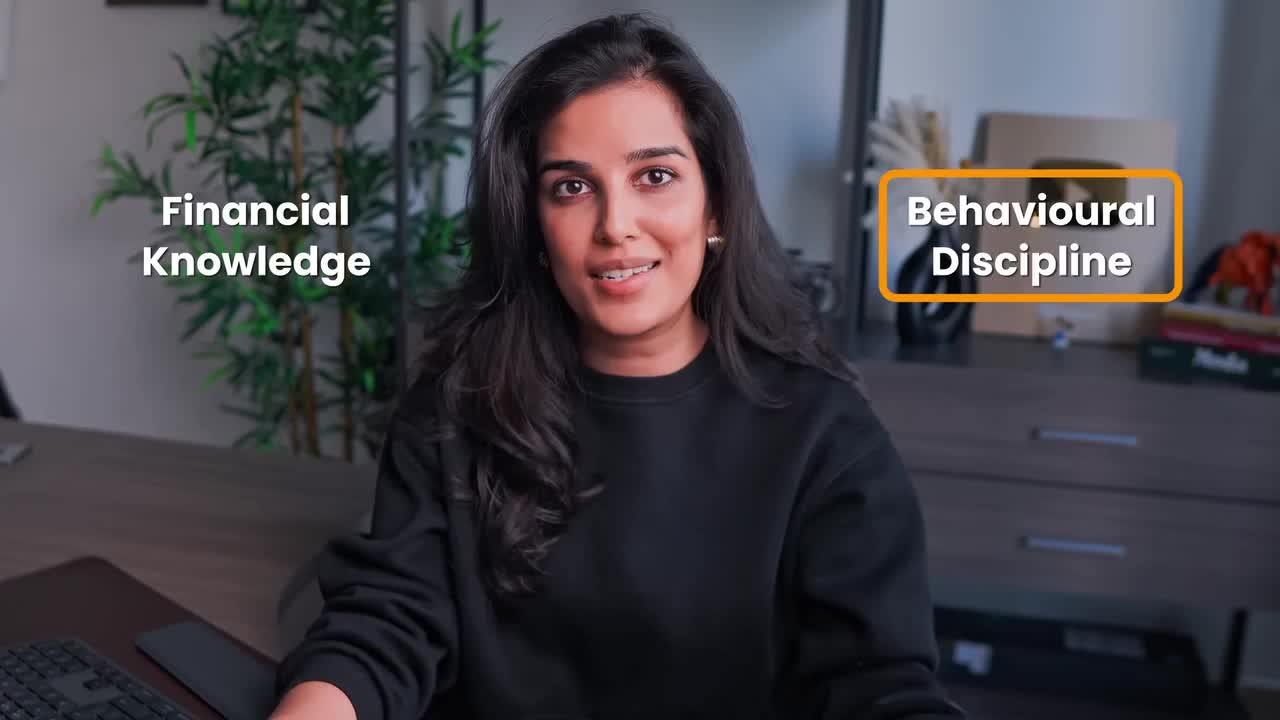
Not because I didn't understand money, but because understanding money and managing your own behavior around it are two completely different skills, and nobody teaches you the second.
So in this video I thought it'd be interesting to walk you through my biggest money mistakes I made during my years in banking.
The ones that cost me time, cost me stress and more money than I'd like to admit.
And I'll share with you what I'll do differently now.
Because if someone working in finance can fall into these traps, it is very likely you might be drifting towards a few of them too.
So let's start with the first one.
Confusing income with wealth.
When my income jumped after getting into banking, I very quickly felt like I'd made it.
I wasn't used to earning that much and suddenly things that used to feel expensive didn't anymore.
I'd buy a coffee on my way into work every single morning.
I'd pop into a cafe for lunch and order what I wanted without even thinking twice about it.
I'd meet up with friends in the evening. and pay for some social plans.
I didn't keep track of any of the spending because as far as I was concerned, I didn't need to.
But what I didn't consider was how dependent I was on my income and how quickly that income could disappear.
It was only when I actually started thinking about doing a career transition that I really acknowledged how much I'd wasted.
I could have spent the last few years saving, investing, building proper cash buffers.
If you relate to this, Maybe you're earning more than you used to.
Maybe your expenses are somewhat low and you could spend a bit more freely.
If you're in that place, I really recommend pausing and really thinking about what you want to do with your life and what your life trajectory looks like.
Ask yourself what would happen if you lost your job or you were unable to work due to an illness or a change in industry, or if you wanted to, later on down the line, change your career path.
Would you be able to, Or do you have the financial means to be able to make such decisions or to make sure you're financially equipped during these situations?
I'm not saying this to scare you, but I'm saying it because I wish someone had said it to me sooner.
You don't want to be dependent on your income forever.
Number two, underestimating the emotional side of money.
Working in banking teaches you a lot about numbers, but very little about how your emotions quietly drive your financial decisions.
And this one caught me off guard more than almost anything else.
When I was stressed, I'd spend to feel better.
When I felt behind, I'd make impulsive financial decisions just to feel like I was doing something.
When things felt uncertain, I'd either freeze completely or overcorrect.
None of it was rational, but it felt rational in the moment.
And that's exactly the problem.
The emotional side of money is something most people never examine.
But if you don't understand your triggers what makes you spend, what makes you avoid, what makes you panic you'll keep making the same decisions on autopilot.
If you relate to this, the most useful thing you can do is start noticing the feeling that comes just before our financial decisions.
Are you anxious?
Are you bored?
Are you trying to keep up with someone?
Just becoming aware of that pattern is more powerful than any budgeting system out there, because it gets to the root of the behavior rather than just trying to manage the symptoms.
The goal isn't to remove emotion from your finances entirely is to make sure your decisions are guided by your actual values, not just how you're feeling on a tuesday afternoon.
Number three cutting corners on investing in my health.
This is one of my biggest regrets still to this day, and it's prioritizing my work over my health.
Like many 20-somethings, I thought I was invincible.
I treated my health like something I could deal with later.
Long hours, poor sleep, rushed meals, skipping checkups.
And I justified all of that because I was too busy focusing on my career.
It was only when I approached my 30s that it really dawned on me how damaging that attitude had been.
I realized that even if I changed my ways immediately, all the bad habits that I built up over the years could continue to have an impact on my health for years to come.
And so, if this sounds familiar, this is your sign to start investing in your health just as much as you would invest in your job.
Actually, maybe even invest in your health more, because you'll have this body for the rest of your life.
You can't just get a new one when it suits you.
Even small changes count a healthier diet, a better desk setup, rest without guilt, getting things checked sooner rather than later.
Maybe it's time to invest in that expensive gym membership or invest in that nice gym outfit or workout wear, because if it means you'll work out more or you'll use that thing more, it is worth it.
Number four, waiting for the perfect moment to start.
There were so many things I delayed because I wanted the timing to feel right.
I knew I needed to be investing, but I was convinced I didn't know enough.
So I kept telling myself I will start soon.
The problem is that soon has a habit of never arriving.
And one year of not investing turned into two and then three.
And the painful truth was that waiting didn't make me a better investor.
It just meant I missed out on three years of compounding.
Three years of my money doing nothing when it could have been working for me.
And this is it.
Every month you don't start is a month that you can't get back.
I won't go into much detail here, as I have a completely free workshop coming up where I explain everything from how to invest and what to invest in.
The last time I held this workshop, over 35,000 people registered.
They felt more confident about what to invest in and actually took action straight after the workshop.
So I've decided to host it again completely for free.
You can sign up at nishame forward slash, invest and I'll walk you through what to invest in and how to choose, how to accelerate your investment returns over time, the single biggest mistake new investors make and how to avoid it, and how to calculate what you need to eventually live off of your investments.
Again, it is 100% free.
You can sign up at nisha.me forward slash invest before doors close.
That's nisha.me forward slash invest.
Moving on to number five, which is investing in individual stocks and chasing trends early on.
When I did eventually start investing, I made a mistake that many beginners make.
I had far too much confidence in my abilities and started buying individual stocks in companies.
I expected to do well.
And it's funny because so many of us put investing off for years, convinced that we don't know enough.
And then we start investing and, very quickly, we assume that we're experts.
This is known as a Dunning-Kruger effect, which is basically when we have limited knowledge or competence in a particular subject and greatly overestimate our wisdom and our abilities in it.
It's as if the less we know, the more we think we know.
What I didn't realize at the time is that many of my early investment decisions were driven by excitement and fear of missing out, not by a clear plan.
I didn't lose too much money on those investments, thankfully, but they did cost me peace of mind.
I was checking prices constantly.
I was tying my mood to things I couldn't and didn't need to control.
So if you're early in your investing journey or you haven't started, my advice here would be to slow everything down.
It took me a while to realize that you don't need to follow the markets, join day trading discords or invest in the next big thing to make your money make money for you.
It's actually much safer and cost effective to invest in global index funds, which track hundreds of stocks at once.
That way you're not putting all your eggs in one basket or gambling with your future.
Again, I go into this in so much more detail in my workshop.
Number six, scrimping on personal development early on.
Instead of spending hundreds a month on coffee clothes travel, what I wish I had have done more is investing in myself.
I had everything I needed to invest in courses books, networking events, but it just wasn't on my radar.
I kept telling myself I'll do that stuff later, once I was earning a bit more or felt more established.
And at the time, it felt like a responsible decision.
But looking back, it was actually shortsighted.
The things I avoided spending money on were the exact things that would have helped me grow faster, earn more and feel more confident earlier on in my career.
If you can relate to this, I'd start small but intentional.
You definitely don't need to spend thousands on personal development.
Just start with asking yourself, what would genuinely help your future self?
I'm not talking about impressing other people or trying to look productive.
People with more experience than you will see right through that stuff.
Instead, focus on learning things that will actually move you forward.
Here's the thing.
Momentum isn't magic.
It's systems.
It's putting the right thing in place so you're not constantly starting from scratch, chasing your own tail or doing everything the hard way.
So, whether you're launching something new, tightening how you sell, or finally treating your side business like your main business, that's where today's sponsor comes in Shopify.
And it's one of the platforms I use for my own business.
Whether it's a side hustle or a storefront selling locally or globally, Shopify takes the guesswork out of starting a business.
You get your own AI assistant guiding you on everything.
Directions, reports, editing images, content ideas.
Shopify, across all of these things, has you covered.
So here's the question.
What's one thing you could set up right now that would make the rest of your year easier?
Because future you will be really grateful.
So, whether you're just wanting to test an idea out or you're getting serious about launching your own brand, it's never been easier to get started on Shopifycom.
Forward slash Nisha.
That's Shopify.com forward slash Nisha.
Number seven, thinking a financial goalpost would arrive and fix everything.
For a very long time, I believed that my happiness and general wellbeing all depended on reaching a set financial milestone.
If you look at my earlier YouTube videos.
Even then I would be talking about how I wanted to hit six figures by 25 or seven figures by 30.
It took me a while to realize that, no matter how much I saved or invested, the goalpost just keeps moving.
And there's a very human reason for this.
It's called the hedonic treadmill.
Basically, our brains adjust to whatever we have, that new salary, bonus, savings milestone.
It feels amazing for a few months and then it becomes normal and suddenly we want more.
Even if we reach one goal, we set another, thinking it'll finally make us happy.
The truth is, money does help in some ways it eases stress, it provides security and it does give us options, but it's not a happiness switch.
Once your day to day needs are covered, more money mostly just increases your expectations, whilst making very little difference to your day to day happiness if you are not aligning your money with your life goals.
That's why, even when we hit a goal, it rarely feels like enough if we haven't really thought about what it is we want out of our life.
If this resonates at all, try to shift your focus away from just chasing numbers and towards using your money to give you a better lifestyle.
You'll need to save for an emergency and invest for the future sure, but you'll also need to work out how you would like to spend your time in the present.
If you think travel will make you happy, budget for it.
If you think buying a home will give you more freedom and security than renting, start saving a deposit.
Just make sure your money is helping you live the life that you actually want, not just pushing you towards a constantly moving target.
Looking back, now that we're at this point of the video, I realize that none of these mistakes are about being bad with money.
They're about being human.
We all make decisions based on what feels safe, what's easy, what society tells us we should do.
The key is recognizing those patterns, early learning from them and making small changes that add up over time.
If there's one thing that I'd want you to take away from this, it's this.
Start small, start now.
Invest in yourself, your health and your future, even if it feels awkward or imperfect at first, because the habits you build today will pay off far more than waiting for the perfect moment that might never come.
If you found this video helpful, I'd love to hear from you.
What's one money mistake you've learned from or one small step you're going to take this week to improve your finances?
Drop your thoughts in the comments, because chances are someone else will learn from your experience too.
Thank you so much for being here.
Don't forget to subscribe if you haven't already and I hope to see you again next week.