This BBC podcast is supported by the UK.
Want to know how to become the richest person in the world?
Start with the latest episode of our podcast, Good Bad Billionaire.
We're telling the story of how Elon Musk amassed half a trillion dollars from his troubled childhood in South Africa to buying Twitter and launching rockets into space, with all the boardroom dramas along the way.
Find out how he did it on Good Bad Billionaire.
Listen wherever you get your BBC podcasts.
Is Brussels about to abandon its green credentials?
There are market segments in the transport industry where electrification is not well suited.
Combustion is not the enemy.
Carbon is the enemy.
Yes, carmakers want the rules watered down.
In 10 years, most cars in the world will be electric.
And for Europe, it's really about are we going to be the front runner or not?
This is World Business Report from the BBC World Service.
I'm Ed Butler, and today we're looking at Brussels' apparent plan to water down its own green targets on the energy transition to electric vehicles.
The car lobby has won through, it seems, but what about the climate?
Also in the show South Korea's new trade deal with the UK and why some foreign visa holders are having to reveal their social media history just to be let into the US.
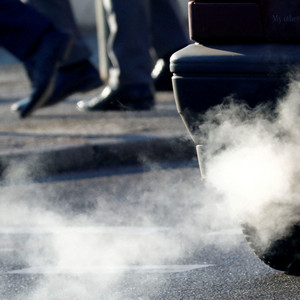
Yeah, tonight it does look certain that the EU is going to be scrapping, or at least diluting, its own plan to ban petrol and diesel vehicles by 2035.
The deadline of 2035 had been set two years ago.
It required all new cars to be fully electric by then.
But now it's thought under revision of the law proposed by the European Commission.
European car manufacturers would be allowed to reduce just 90 of their engines' carbon emissions, not the full 100.
Earlier, I spoke to Alexander Demling.
He's the automotive correspondent of Der Spiegel newspaper.
He told me about the revised rules.
We definitely expect a softening of the internal combustion engine ban that is so far in place for 2035.
The specifics are still a bit unclear, but we're probably going to see that, instead of lowering the target for CO2 emissions compared to 2021 from 100, so to zero basically, we expect a lowering to 90.
So there's still a bit.
Automakers in 2035 will still be able to sell some combustion cars or plug-in hybrids.
And aside from that, there may be some provisions around.
If they use local resources from Europe, they may be able to sell more cars with ice engines, stuff like that.
But the weakening of the rules when it comes to CO2.
That's the main thing that's going to be in the package.
We're obviously going to see the very precise details tomorrow.
But this came as a result of what?
Pressure from the major car makers themselves?
Yes, yes.
So the major car makers, also the very important suppliers, because many of the companies are supplying parts for ICE engines.
So they're very dependent on this.
The car makers are a bit more on the fence because they've invested a lot of money in in that electric transition.
And so most of them want a bit more time with this, but also what they don't want is a lot of confusion with customers.
Because if people in Europe start thinking, is electric going to be the future, then these assets that they build up, like whole factories that only produce electric cars, will be lost as well.
Well, exactly.
I was reading somebody saying this isn't going to do much for car makers.
I mean, it's just going to make a slight tweak to this.
Going from 100 to 90 emissions by 2035 is not a huge change, but it's going to undermine what is left of Europe's reputation as being the global climate leader.
Yeah, I totally agree.
For most carmakers, it's pluses and minuses, basically.
They will be able to sell some more ICE cars, which right now are higher margin for them.
So very short term, that's going to give them a bit more profit, maybe.
But...
Long term, this equation is going to flip, because if the volume of ICE cars is going to go down, they become more expensive.
And they're becoming more expensive because emitting CO2 is becoming more expensive in the EU anyways because of CO2 certificate trade.
And so in a few years, I think giving up that position as a continent that is very clear on CO2 is probably much more costly than these short-term profits for some automakers.
Alexander Demling of Der Spiegel newspaper.
Well, environmental groups have argued that abandoning the new ban would widen the gap between the West and China, which has led the transition to EVs.
And some car makers are also annoyed.
Michael Löscheller is head of Polestar.
It's a Swedish producer and it's Europe's only exclusive EV maker.
Instead of now debating this, I think we should keep the course and make sure that we get to this target, because it's an important target for climate change, but also for the competitiveness of the industry.
Look, if I go to the Shanghai and Beijing Motor Show, it's very obvious Chinese automotive industry is the most competitive in the world.
And I think European automotive industry would be well advised to catch up and instead are now having a debate like postponing targets, delaying things.
I'm a little bit frustrated with the European Union because Polestar is a very young, innovative company.
We have invested billions of dollars in innovation and I'm hoping that Europe is a place for innovation.
And I hope Europe is taking a lead in transformation and also innovation.
So actually, I hope that we win this case.
The head of the EV carmaker Polestar.
Well, as mentioned, many carmakers have also been lobbying the other way against a hard 2035 ban.
And governments, including Germany and Italy, have become increasingly critical themselves.
Let's hear now from Todd Anderson.
He's chief technology officer at Finia, a combustion engine fuel systems maker.
My anticipation and my hope is that the issue will be reviewed with an eye toward data practicality and pragmatic approach that can move us forward to decarbonization in an effective way.
But that just means more slowly in your case, because you don't believe in decarbonization.
You're selling internal combustion engines.
Oh, quite the contrary.
We believe strongly in decarbonization, and it's a significant part of our effort.
Let's be clear that combustion is not the enemy.
Carbon is the enemy.
And I say enemy loosely here, but carbon is the thing that we are working on reducing.
What's interesting is, combustion can play a significant and effective and practical role, support role in reducing carbon.
And we do this at Finia by designing developing, innovating on combustion engines that use alternative fuels.
Just to go back though, to what Brussels is saying.
The job of the legislators here is to set a benchmark that the industry has to fight towards.
If they're watering down their 2035 target...
Doesn't it just fundamentally weaken the whole objective here without really helping carmakers themselves very much?
Because it's only a tiny little tinkering at the margins.
Ultimately, the transition to electrification is inexorable.
There's nothing wrong with move toward electrification or electric vehicles.
There is a high carbon cost to do that at scale.
And so, in the interest of progressing toward some optimized future, What carbon debt will we put ourselves in if we do that in a myopic way?
Just to be clear, you're saying if we transition more slowly it will actually reduce our carbon footprint.
If there is a significant carbon cost to move quickly toward one select technology solution, then I think that is putting us in a position that is less helpful.
I would propose and recommend that we do that in a way that does not dictate a particular technology.
You do accept that there has to be ultimately a full ban on the internal combustion engine by some set date.
I do not accept that.
If we're talking about transport market broadly, and in that I include on vehicle commercial transport on and off highway work, there are absolutely areas that the electric vehicle is well suited for and does an excellent job.
There are also market segments in the transport industry where electrification is not well-suited, such as heavy commercial vehicle transportation, tractors for agriculture and construction, any application that has continuous operating cycle, high load conditions, extreme environmental conditions, remote access.
Try to get electrification to work across 100 of those platforms is very unfeasible.
The thoughts there of engine maker Todd Anderson.
We'll see what the European Commission and others say tomorrow.
OK, let's look at some of the other market news.
Peter Jankowskis of Arbor Financial Services is with us.
Peter, Uber stock has slipped to its seven-month low due to a lawsuit brought in part by the Federal Trade Commission.
What's this about?
Well, it's about basically, them potentially not living up to their claims as far as being able to cancel their service, billing people at rates that aren't fully disclosed, and similar type allegations.
Bad for Uber then.
In other news, I'm noticing how there's going to be new labor data in the U.S. tomorrow.
I mean, is everyone looking at this?
It does seem very significant, doesn't it?
Because of the shutdown, we didn't get a lot of data and now we're going to get the new jobless figures or job creation figures.
Well, we'll get some figures, because of the fact that obviously, the government offices were shut down for that length of period.
There's certain survey data that goes into these numbers that will never be collected.
It simply cannot happen.
So what we're going to be getting apparently tomorrow is is a report on the November unemployment rate and then some further data on hiring that took place in October.
So it's going to be a bit of a patchwork, if you will, due to the fact that there simply is data that doesn't exist, that they can't pull together.
I think most people are focused on the unemployment rate data.
There is a feeling that it's going to rise somewhat from the 44 figure that was reported back in September.
OK, Peter Jankowskis, thanks very much indeed.
Now in breaking news just in the last few minutes, the UK and South Korea have signed a trade deal.
This will make it easier for the two countries to do business.
It removes barriers around things like regulation and qualifications, as well as extending an existing agreement which allows 98 of goods to be sold tariff-free.
In his first interview with the foreign media, the South Korea's new trade minister, Yo Han-koo, also told the BBC his country hadn't done too badly in getting the US to reduce its tariffs just to 15.
But he began by telling the BBC's Jonathan Josephs around about the new UK agreement.
Today, with my counterpart, Minister Chris Bryan, we concluded a trade deal, the free trade agreement between Korea and the United Kingdom, actually upgrading our existing agreement into a higher level.
I think this is important for Korea and the UK because I think that our economies are complementary.
I mean the Korean economy is quite strong in the manufacturing sector in semiconductor batteries, EV shipbuilding etc.
On the other hand, the UK is quite strong in this digital AI and finance, legal, etc.
So these two economies can win-win by the corporate enclosure through this kind of framework.
So is it about reducing tariffs?
Is it about reducing other barriers to the trade framework?
Of course our existing trade agreement includes almost no tariff kind of two-way flow of goods between our two countries.
I think what we added this time around is to add new features like digital and investment protection, and then also really making our rules of origin more business-friendly.
So it's about non-tariff barriers and making it easier.
Exactly.
Exactly.
Yes.
We, Korea, consider UK as a like-minded countries.
And, you know, Korea and the UK are top 10 trading nation.
And also in terms of GDP side, you know, we are top 10 countries.
So to each other, the UK can be a kind of a gateway to Europe, to Korea.
And Korea can be a gateway to Asia for many UK companies.
And if we look beyond the UK and South Korea relationship, America is one of your biggest trading partners.
Exports are a huge part of South Korea's economy, more than 40%.
How damaging is it that there are now 15% tariffs on everything that South Korea sends to the US?
Obviously, the world has changed and we are living in a different trading order, as we used to for the last few decades.
Right now, because of that changing nature of this global trading order, 15 of these reciprocal tariffs, Korean products are subject to have to be compared with other similar countries.
So I think this 15 is not great, but comparatively speaking I think it doesn't really change competitive condition among kind of similar countries in the region but also in other parts of the world.
So you think you've not done too badly when you compare yourselves to America's other trading partners.
Yes, yes.
That's what we think.
The trade agreement that you've signed with the United States a few weeks ago.
It makes several references to the World Trade Organization.
How important is the World Trade Organization to the future of the global trade system, given the differences that we've seen between the world's two biggest economies?
And which side does South Korea sit on?
Is China more important or is the United States more important?
I think that Korea is a very good example of how a poor country can benefit from this free trade and rule-based international trading order the multilateral trading system with the WTO at its core.
But obviously this global trading system is going through a radical paradigm shift And WTO is not as relevant or critical as before.
But still I think many countries want to trade in a more kind of predictable and certain and this rule-based international trading order.
So that's why I think it's important for middle power countries like Korea and the United Kingdom and European Union work together to uphold this kind of a trading order.
South Korea's new trade minister, Johan Ku.
Well, what about Britain?
What does the trade deal mean for the UK?
I asked Simon Jack, the BBC's business editor.
The government is saying there's a £400 million boost for trade between the two countries.
And South Korea is the 25th largest trading partner for the UK.
So not nothing, but think of this.
Recently the independent budget forecaster here in the UK looked at a variety of trade deals, including UK-India, much bigger than this one, the UK-US tariff agreement and a closer alignment with the EU, and decided that none of those, either individually or collectively, were enough to actually move GDP by one tenth of one percent.
So I think it's very unlikely that in the big picture this is going to make a massive difference, but a useful one nonetheless.
And I think the broader perspective on this is.
There is a live debate in some quarters of UK politics as to whether the UK should consider rejoining the European Union in some form.
For example, a customs union.
Now, one of the benefits supposedly, of leaving the European Union and Brexit was that you could strike lots of trade deals with other countries and that would boost your international trade.
What have you?
But, having said that, since that happened, since Brexit, the Office for Budget Responsibility, the independent forecaster, have said that none of these new trade deals amount to something that they can measure not more than 01 but are still of the view that it will impact UK GDP by 4.
So, as far as the budget forecaster is concerned, these new trade deals go nowhere near offsetting the impact of leaving the European Union.
Listen wherever you get your BBC podcasts.
I'm Jack.
You're with World Business Report from the BBC World Service.
A new US policy of screening social media profiles of people applying for skilled worker visas has come into effect.
Announced earlier this month.
The measures mean that those seeking the H-1B visas must now adjust the privacy settings of all their social media profiles to public.
The Trump administration says increased vetting for national security is, for national security reasons, seeking out those who it reckons might pose a threat to US national security or public safety.
A US visa is a privilege, not a right, the administration says.
Well, some are concerned about this accessing of people's social media and their phones.
Ellen Freeman is a business immigration lawyer at Pittsburgh Pennsylvania, who represents hundreds of H-1B visa holders.
What's now will be happening.
It's people who are applying for visas, reapplying for extension of the visa, which is a piece of paper in their passport saying that they went through the legal vetting process and they're allowed to come to the United States.
And they're looking supposedly for posts that are against US government, current administration, but they're just going to look and use this time to put them on hold and not let them come back to the United States to assume their jobs and return to their lives.
So you think that H-1B visa holders people who actually already have one of these visas, might have headed home for a holiday break to see their family are now going to find themselves unable to return to their jobs?
That's exactly right.
These people already, most of them had H-1B visas or maybe in the past had a student visa.
They have been vetted.
They have been living in the United States.
They have been vetted by multiple government agencies and immigration agencies.
And now we're going to put them on hold and delay their visa appointments by as many as seven months.
Wow. just to look through their LinkedIn and, you know, maybe other social media platforms.
And we know that the Southeast Asian immigration has been always described in the United States as a model minority.
They never raised their head.
They're just working.
They're contributing to the society.
They're very much engaged in their work. community.
They're very engaged in their families.
And now we're just going to use the pretense of the social media vetting to stop them.
Well, you say that, but we don't have any evidence that they are, do we?
I mean, maybe we should take them at their word that they are simply going to check for extremist behavior, terrorist outlooks views, attitudes and simply weed out those people.
And if you like, the image of the quiet South Asian tech worker is going to be fine.
You would hope so.
And, you know, assume that that's how it's done.
It's always been done.
But the visa appointments have been moved by seven months.
So we're arguably now saying that it will take seven months to either develop technology to do so or to be able to get back to these people.
Seems quite unreasonable.
What's this going to do to the tech industry?
I mean primarily it was Silicon Valley, wasn't it, that was immobilizing a big proportion of these visas.
I think the majority of people will not travel, right?
They will avoid any type of travel.
They will be stuck in the United States.
They will miss important family events and connection to their home.
It's not designed to specifically impact the Silicon Valley.
It's designed to impact Indian government, Indian administration, to raise like wrath among the Indian immigrant community right, which is quite large, and try to move their administration to speak to the current American administration to ease the process.
And there will be definitely some quid pro quo.
There is definitely something that they want from the Indian administration to ease it.
Even though it says it's designed against every H1B and H4 visa holder, we know that the vast majority happen to be Indian.
So it's really disproportionately impacting citizens of one country.
So you think this is a negotiating tactic on the part of the Trump administration?
I just don't think that there is any other reason to do so or to delay the visa appointment by seven months, because we knew that there was extreme betting implemented this spring against F-1 foreign students and their appointments were not delayed by seven months.
They were delayed a bit, but not even closely by this amount.
And arguably the AI tools, only progress since the spring, and the Department of State already knows how to engage in extreme betting.
Immigration lawyer Ellen Freeman.
Well, many H-1B visa holders work in Silicon Valley, as mentioned, and that's where we're going to go now, where there's a race underway to build the most sophisticated AI models.
This involves powerful AI chips, massive data centre build-outs and a seemingly insatiable appetite for electricity to power it all.
But increasingly, the wisdom of that approach is being called into question.
And the scrutiny is coming from an unexpected place.
Our North America technology correspondent, Lily Jamali, is now joining us from San Francisco.
Hi, Lily.
What's this alternative approach then to developing AI tech and applications?
Hi.
Well, yeah, the approach you just laid out is what is used by most American AI developers.
Their AI models mostly are closed source.
So the code is a secret.
You can't tweak it.
Companies like OpenAI and Anthropic can charge quite a bit for access to their highest end models.
The alternative is the open source model.
And some of the best work according to my sources that's being done there is taking place in China.
Alibaba's Quen is one of these.
Moonshot AI is working on this.
It's the unveiling of DeepSeek R1 in January that really helped usher in this new era.
That's kind of proving a threat to the American AI giants.
And you've been hearing from some of those AI giants in the US.
I mean leading figures in Silicon Valley.
Yeah, it's the case from Fortune 500 companies to cash-strapped startups here in the U.S.
The Chinese AI models are just a lot cheaper to use, like one-tenth of the cost.
So they're also a lot more customizable.
I recently chatted to Pinterest CEO Bill Reddy and the company's chief technology officer, Matt Madrigal.
CEO Bill Reddy told me that open source is the Silicon Valley way.
Take a listen.
If you look at most of the companies that come out of Silicon Valley, they really depend on open source software.
Open source software, by definition, isn't owned by any one person, isn't owned by any nation state, isn't owned by any company.
And that actually propels a lot of innovation.
OK, that's Bill Reddy of Pinterest.
So, I mean, how do they operate these tools?
Well Pinterest, as you may know, is where people go to look for recipes and style ideas and the like.
The company recommends ideas as they learn a user's interest.
With these Chinese open source models, the tech team there can actually take the models, customize them for what they think will serve users with pin rec it's called their recommendation engine.
Here's Pinterest CTO Matt Madrigal talking about that.
Open source techniques that we use to train our own in-house models for what's called PINREC.
They're 30 more accurate than the leading off-the-shelf models.
That's Pinterest, one business.
I mean there are other companies involved here, I guess, but I think that's probably all we're going to have time for.
Lily Jamali, thank you very much indeed.
That's Lily Jamali, our North America technology correspondent there, speaking to us from San Francisco.
This has been World Business Report.
I'm Ed Butler.
From me and the rest of the team here in Salford, thank you all very much for listening.
Thank you.
Want to know how to become the richest person in the world?
Start with the latest episode of our podcast, Good Bad Billionaire.
We're telling the story of how Elon Musk amassed half a trillion dollars from his troubled childhood in South Africa to buying Twitter and launching rockets into space, with all the boardroom dramas along the way.
Find out how he did it on Good Bad Billionaire.
Listen wherever you get your BBC podcasts.