Alrighty, this is going to be a listening learning video.
You can go ahead and listen, just listen.
Or you can echo me.
You can repeat words and phrases that you want to remember.
Or you can shadow me, say it along with me if you want.
Depends on your skill level.
Let's jump right into it.
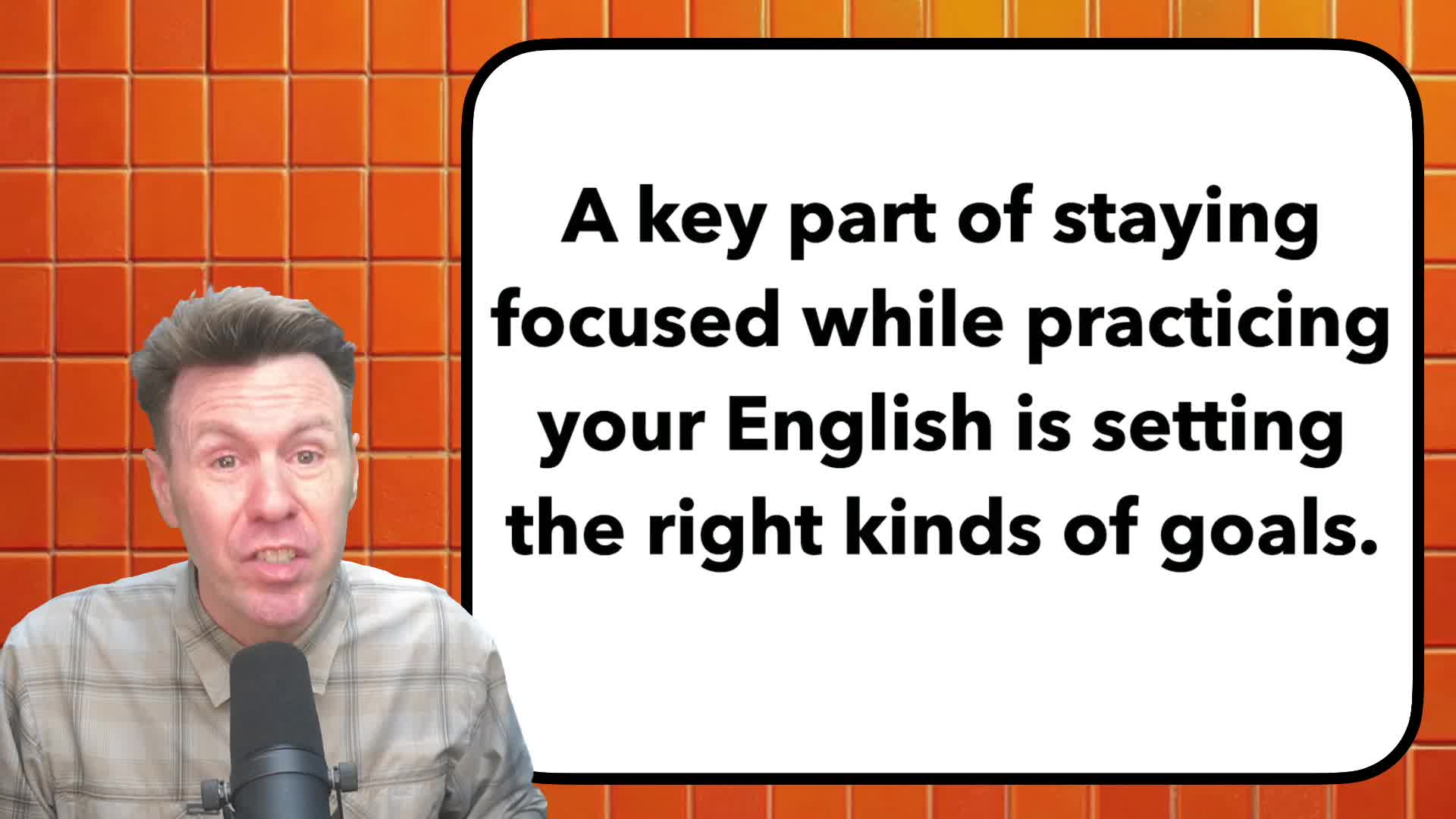
A key part of staying focused while practicing your English is setting the right kinds of goals.
Many learners set big, vague goals.
Vague, not clear.
I will learn a lot today.
Or I will improve my English quickly.
That's vague.
These goals sound good, but they're not clear.
They're not vague or they are vague.
They're not clear.
They're vague.
When your mind doesn't know exactly what to do, it gets confused, and confusion quickly turns into distraction.
A better way is to use small, simple goals.
These are goals your mind can understand immediately.
For example, learn and practice two useful sentences right now.
Read one short paragraph out loud.
Listen to one short video.
Practice speaking for just 10 minutes. with English coach Chad in practice paradise.
All right, so these goals may seem small, but they're very powerful.
Small goals take the pressure off your mind.
When something feels easy to start, your brain doesn't resist.
Instead, it becomes more open, active, and focused.
And when you finish a small task, you get a quick feeling of progress.
That little success makes you want to keep going without stress.
This method also protects you from burnout.
When you're not forcing yourself to do too much at once, learning feels lighter and more enjoyable.
And because your tasks are small, you're more likely to do them regularly, which is what truly leads to improvement over time.
When your goals are clear and simple, your mind feels more relaxed.
And when your mind is relaxed, it naturally becomes easier to concentrate.
The next factor affecting your focus is the time of day you choose to study.
Even if you have a good space, a simple routine and small goals, your concentration also depends on your energy level.
Everyone has times of the day when their mind feels fresh and alert.
At other times, the mind feels slow, tired, or easily distracted.
If you try to study during a low-energy moment, even a small task can feel difficult and staying focused becomes much harder.
The key is to find your peak time, the part of the day when your brain works best.
For some people, it's early in the morning when everything is quiet.
For others, it might be the afternoon or evening when they feel more awake and relaxed.
To find your peak time, observe yourself for a few days.
Notice when you feel most alert, when learning feels easy and when you can sit quietly without getting distracted.
Once you discover this time, try to schedule your English practice during that period.
Studying during your peak times makes learning easier and more effective.
Your mind absorbs information faster, your focus lasts longer and studying doesn't feel like such a struggle.
So now you know how to protect your focus, how to guide your mind and how to make your English practice clear and simple.
And honestly, that's all you really need.
Once you learn how to control your attention, learning English becomes much easier.
Before we finish today's practice, I want you to remember one thing.
Your progress doesn't come from big moments.
It comes from the small choices you make every day.
Even if you only practice in short bursts, if you do it with full focus, You'll improve faster than someone who studies longer but doesn't really pay attention.
And that's it.
Boom.
Good workout.
Way to go.
Good message, right?
All right.
Stay persistent.
Stay consistent.
And if you do that, you are bound to succeed.
Keep moving forward one step at a time.
And I'll see you in the next step.