Here we go, let's practice speaking English.
We're gonna use some phrases.
Our first phrase is on the same page.
On the same page, so if we're on the same page, it means we agree or we understand something the same way.
We understand something the same way.
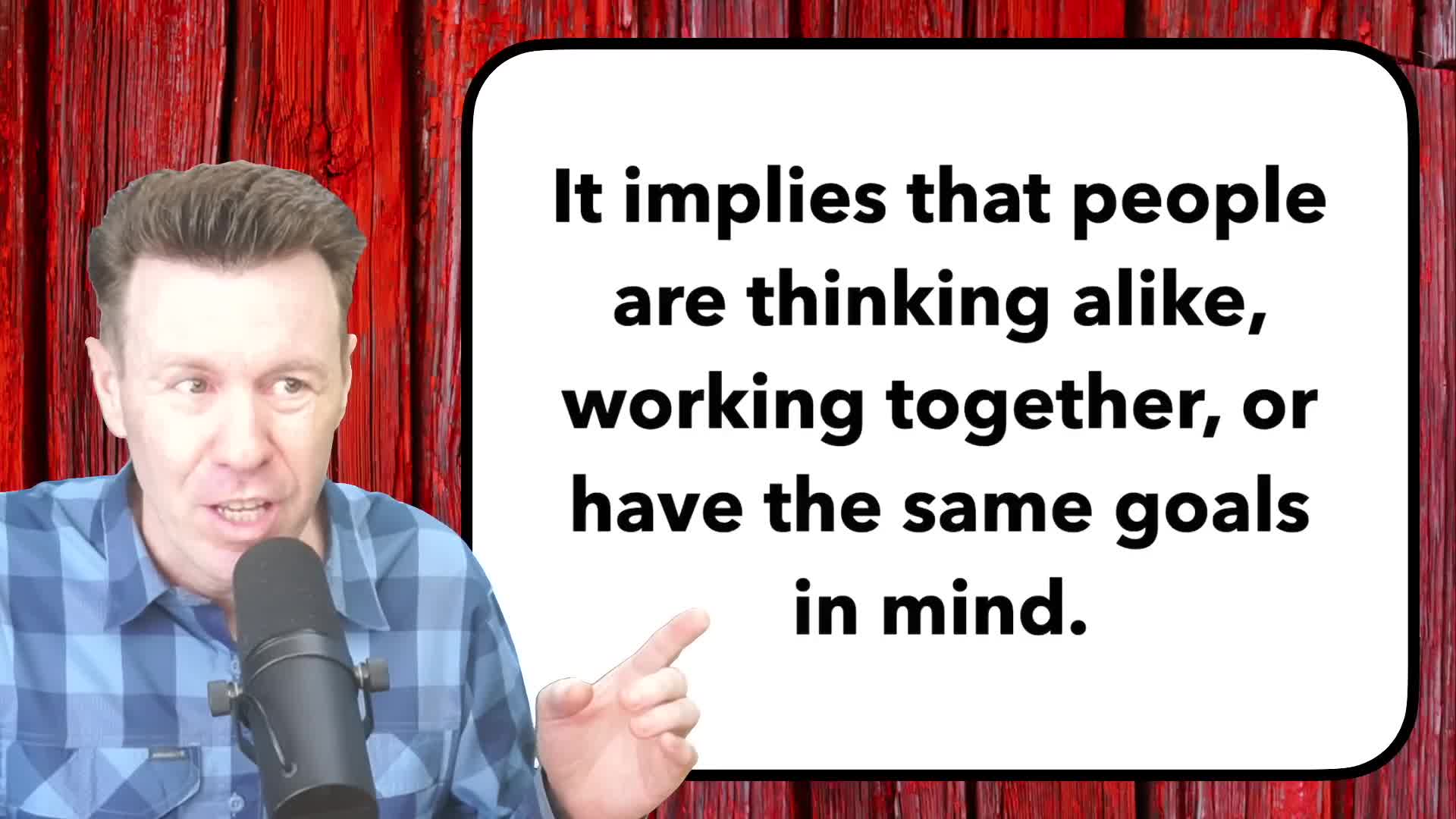
It implies that people are thinking alike, working together Or have the same goals in mind.
Oh, we have the same goals in mind.
We're thinking alike.
We're working together.
So here's an example sentence.
Before we start the project, let's make sure everyone is on the same page about the objectives.
Say it with me.
Ready?
Before we start the project, let's make sure everyone is on the same page about the objectives.
Is that too fast?
Sorry, that's my normal pace.
That's what I'm going to do.
Just joking.
All right, say it with me.
Before we start the project, let's make sure everyone is on the same page about the objectives.
One more time.
Before we start the project, let's make sure everyone is on the same page about the objectives.
Good job.
I explained the rules again to make sure we were on the same page.
Hey, are we meeting at 3 or 4?
Just checking so we're on the same page.
Just checking, just checking, just checking.
I'm just checking.
I'm just reconfirming.
I'm just checking.
Hey, are we meeting at three or four?
Just checking so we're on the same page.
Hey, are we meeting at three or four?
Just checking so we're on the same page.
Hey, are we meeting at three or four?
Just checking so we're on the same page.
After a long discussion, they finally got on the same page about what they wanted to do.
What did they want to do?
I don't know.
But they got on the same page about it.
After a long discussion, they finally got on the same page about what they wanted to do.
If you're not on the same page with your partner about how to spend money, it can lead to problems.
Trust me, I know.
All right.
If you're not, we might want to emphasize the not there.
If you're not on the same page with your partner about how to spend money, it can lead to problems.
All right.
That's good.
Get it over with.
That's our next little phrase.
This means doing something you don't want to do, but do it anyway just to finish it.
Like going to the dentist, right?
Get it over with.
You might say, I didn't want to go, but I just got it over with.
I didn't want to go, but I just got it over with.
I just got it over with.
Or for work, I was nervous to give the presentation, so I decided to get it over with.
I was nervous to give the presentation, so I decided to get it over with.
I decided to get it over with.
All right.
I'm going to try that one more time.
I was nervous to give the presentation, so I decided to get it over with.
It's about finishing something hard or uncomfortable so you can stop worrying.
That's what the phrase is all about.
Get it over with.
It's about finishing something hard or difficult or uncomfortable.
So you can stop worrying.
Get it over with so you do not have to worry anymore.
Did you clean your desk yet?
Yeah, I didn't want to, but I just got it over with.
I didn't want to.
I didn't want to.
I didn't wanna.
A lot of ways to say it, right?
Yeah, I didn't wanna, but I just got it over with.
I know you don't want to have that conversation, but just get it over with.
Let's change want to to wanna.
I know you don't want to have that conversation, but just get it over with.
Let's try again.
I know you don't want to have that conversation, but just get it over with.
Okay, this exam is awful.
I just want to get it over with.
What shall we do?
I always struggle.
Should I do wanna or want to?
Let's go wanna because that's more common.
I just want to get it over with.
This exam is awful.
I just want to get it over with, say it.
Let's just get this work over with so we can relax.
Why draw it out?
Just get it over with and move on.
Why draw it out?
Just get it over with and move on.
Do you know draw it out?
That means to make it longer than it needs to be.
You're drawing it out.
Let the cat out of the bag.
It means you accidentally told a secret.
Did you tell a secret?
You let the cat out of the bag.
So if you were trying to keep something quiet, but said too much, you let the cat out of the bag.
For example, I told Mike about your surprise party.
I told Mike about your surprise party.
What?
You weren't supposed to tell him.
What?
You weren't supposed to tell him.
Oops, I guess I let the cat out of the bag.
Out of the, out of the, out of the, out of the, I guess I let the cat out of the bag.
Sorry about that.
Or at work, you can use it like this.
Don't let the cat out of the bag about the new project.
So that means don't tell anyone yet.
Don't tell anyone about the new project yet.
Let's keep it a secret.
Don't let the cat out of the bag about the new project.
You say it.
Hey, you told Sarah about my promotion, didn't you?
Repeat after me.
Hey, you told Sarah about my promotion, didn't you?
I'm sorry, I didn't mean to let the cat out of the bag.
It just slipped out.
I just said it without thinking.
When you say something without thinking, it slips out.
It slips out of your mouth.
I'm sorry, I didn't mean to let the cat out of the bag.
It just slipped out.
All right, we did it, guys.
Boom, good workout.
Keep moving forward one step at a time, and I'll see you in the next practice video.