NPR. This is The Indicator from Planet Money.
I'm Darien Woods. And I'm Weilin Huang.
Darien, how many browser tabs do you have open right now?
Very personal question, but I have 15 open.
You have 15, that's more than me!
I'm under 10 today.
Should I feel bad? No, that seems like a very reasonable number of tabs to me.
I feel like these days, every new headline has me running to open a new tab.
Because there is so much to keep up with.
I'm reading like you are about trade deficits, the bond market, value -added taxes.
And when I'm doing this research, I often find myself on Investopedia.
It's a website with around 40 ,000 articles on economics and finance topics.
it's a really comprehensive website, takes the academic terms and distills it in this way that is super accessible.
The articles are constantly getting updated, amazing resource.
Caleb Silva is the editor in chief of Investopedia and he's a friend of the show.
What have the last few weeks been like for you?
Extremely busy. We have had so many of our readers and people interested in learning or relearning how global trade works, how the stock market works.
We're seeing people get educated or re -educated on how everything works in our economy and how it's changing right now.
Trade wars like life can come at you pretty fast. So today on the show, Caleb helps us make sense of our current economic moment.
He'll walk us through three vocab terms that are spiking on Investopedia lately.
Yeah, we have a little U .S. tariff history plus two ways that describe how people are trying to play the stock market.
This message comes from NPR sponsor Acura.
The all -new Acura ADX is a compact SUV built for versatility.
Available all -wheel drive for weekend escapes, Google built in for seamless connectivity, as well as a Bang & Olufsen premium sound system for high quality audio, the all -new Acura ADX is crafted to match your energy.
Visit Acura .com slash ADX to learn more.
Google is a trademark of Google LLC.
Imagine if you win a show from NPR that's Not Like NPR, a show that focuses not on the important, but the stupid, which features stories about people smuggling animals in their pants and competent criminals in ridiculous science studies and call it Wait Wait Don't Tell Me because the good names were taken.
Listen to NPR's Wait Wait Don't Tell Me.
Yes, that is what it is called wherever you get your podcasts.
Caleb Silva of Investopedia has come on The Indicator in the past to talk about the year's in most popular terms. And with everything going on in the news, we had to bring them on for a special, first quarter look at what people are curious about right now.
We asked Caleb to compile a list of hot topics from the last couple of weeks.
The lineup included things like countries with the highest tariffs and how to survive a recession.
You know, just a little light reading.
This is a recession indicator in and of itself.
Oh my gosh, it's so true.
and we are going to look at three topics today.
The first one goes out to all you economic history buffs.
It is, what were the Smoot -Hawley Tariffs?
Also known as the Tariff Act of 1930.
Signed by the president, Herbert Hoover, despite a thousand economists who were urging him against it, that Tariff Act was added an additional 20 % tariffs on already highly tariff goods and they wanted to protect prices here in the United States.
it had the opposite effect.
The Smoot -Hawley Tariffs have become a historical cautionary tale.
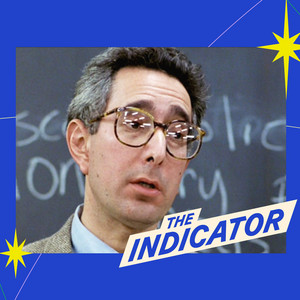
Of course, we can't talk about The Smoot -Hawley Tariffs without playing this famous clip from the 1986 teen comedy Ferris Bueller's Day Off.
You know the scene.
Oh yeah. The Tariff Act, which anyone raised or lowered raised tariffs in an effort to collect more revenue for the federal government.
A high school teacher played by the actor Ben Stein is lecturing about these tariffs to a bunch of slack -jawed, unresponsive students.
Did it work? Anyone?
Anyone know the effects?
It did not work and the United States sank deeper into the Great Depression.
And this clip has been making the rounds again online.
Fascinating that you have a 95 -year -old trade law resurfacing as part, front and center in the conversation, what's happening with the tariff war and the negotiations today.
history doesn't repeat necessarily but it does rhyme.
If you're gonna take them literally, what actually rhymes with great depression?
How about possible recession?
That's very good. Caleb says Investopedia readers do have recession fears on their minds.
He says they're also interested in how to navigate the big stock market swings of the last couple of weeks.
And that brings us to the next two topics they're both related to investing.
The first one is what does don't try to catch a falling knife mean?
Yeah, I know this one.
It's a classic. Yes.
It means wait until a price has truly bottomed out before buying.
A lot of investors say, hey, maybe I should buy this or that stock, because it's down 10 % or 20%, or maybe I can catch the bottom here.
So we always say at Investopedia, don't try to catch the falling knife.
You don't know when the selloff is going to be over.
And yeah, you may miss some of the upside if it rebounds, but at least you're not going to cut yourself if it keeps falling in the process.
You know what, Waylon?
I actually saw some people juggling knives in the park yesterday.
Were they really jug - you really saw people juggling knives in the park?
Would I lie to you, Waylon?
No, it's true. You can't conceal these knives.
They're just gigantic swords.
You were juggling a sword!
Yeah, they were juggling swords.
Don't try to catch a falling samurai sword. I don't know how sharp they were.
I'm hoping they were a little dull.
But were they catching them - like when you catch them when you're juggling you catch them by the handle or - Yes, I should be clear, they were catching the handles, but still it was frightening to watch. And that was a good metaphor for the stock market right now.
Well, don't catch a falling knife is one of these investing tips you might hear, especially when the stock market is volatile like it's been lately.
On the contrary, another trading aphorism is buy the dip.
That argues you actually should take advantage of falling prices to buy a stock or an asset for cheap.
So we don't want a dip that is actually a falling knife.
No, because in that case, you're going to have a jumbled metaphor and competing advice about how to behave when stocks are dropping.
That's true. Adding to the recent confusion, last week, President Trump posted on Truth Social in all caps, this is a great time to buy.
Once again, we're feeling Waylon.
This is a great time to buy.
This was just hours before he paused a bunch of the new tariffs and stocks went up.
Caleb says investopedia readers started searching for the term insider trading when this happened and we actually did an episode on this yesterday that we'll link to on the show notes.
The president was basically saying there is no falling knife it's time to buy, buy the dip.
This has just been one of those times of just intense volatility and uncertainty and the good side of that is that people are actually trying to get smarter about it and try to figure out what exactly is this and how do I need to interpret it to take action in my own life.
Speaking of volatility, we have arrived at our third and final trending Investopedia topic, and this one is a little wonky.
It's inverse volatility ETFs.
Whoo. That is a mouthful.
Don't worry, we will break it down.
First, we have ETFs or exchange traded funds.
These are the kind of investment that represent a basket of securities.
Those securities could be something like the S &P 500 but also things like gold or Bitcoin.
Then you've got volatility.
Financial markets use a measure of volatility called the VIX, it's also known as the fear index. The index captures how certain investors are betting stocks will behave in the next month.
And lately the VIX or volatility index has been very high, screaming like a toddler in a toy store when it's time to go home.
And when you see that happening, well you typically see market declines and a lot of choppiness in the stock market.
That's exactly what's been happening.
Combine volatility with ETF.
And you get an investment fund that tracks this volatility index. But remember, the term is inverse volatility ETF.
So with this kind of investment, you make money if the volatility index goes down.
Right. So you profit when all the chaos subsides?
For every crisis in the stock market, or for all the madness that we're seeing, we're seeing a lot of people trying to bet on it, and express that bet through these ETFs.
Yeah, I mean, this is so interesting to me given what we just talked about, which is is advice of don't try to catch a falling knife.
I mean, trying to game out and profit from volatility seems like trying to catch, I don't know, a bucket of falling knives.
This seems very scary to me.
This seems like a very scary strategy to try to do.
It's like trying to catch all the knives and the entire toolkit being thrown at you from above.
But those that know how to trade volatility ETFs, hopefully they know what they're doing.
And this is for advanced investors and advance traders that have experience with these financial products.
If you look up inverse volatility ETFs on Investopedia, you'll actually see some warnings about how risky they are compared with other investments.
Not all Investopedia articles merit warnings, but Caleb says this one does.
Maybe the Smoot -Hawley tariff article should come with a warning.
Yeah. Warning! These tariffs help push the US further into the Great Depression.
Proceed with caution when using this economic policy today.
Anyone? Anyone? And what's more with feeling?
Anyone? This episode was produced by Angel Careres with Engineering by Harrison Paul, and it was fact -checked by Sierra Juarez.
Kicking Cannon is our show's editor, and The Indicator is a production of NPR.
And just a heads -up for Indicator listeners, we will not have a show tomorrow on Friday, But we will be back Monday with another indicator quiz.
Have a great weekend.
When Malcolm Gladwell presented NPR's Through Line podcast with a Peabody Award, he praised it for its historical and moral clarity.
On Through Line, we take you back in time to the origins of what's in the news, like presidential power, aging, and evangelicalism.
Time travel with us every week on the Through Line podcast from NPR.
who are. Hey, it's Martinez.
Even as the host of a news show, it can be hard to keep up with the headlines.
That is why we make the Up First Podcast. Every morning in under 15 minutes we cover three major stories with context and analysis from reporters around the world so you can catch up on lo que esta pasando while getting ready, making the saluno or going to work.
So listen to the Up First Podcast from NPR.
If buying a home feels out of reach, you might have more options than you think.
You might be able to, especially if you have a little bit of money saved up.
And if you qualify for a low down payment mortgage, maybe even with some down payment assistance, it definitely could be a possibility for you.
Listen to the life kit podcast from NPR for first time homebuyer tips.