Hello everybody, welcome to Roundtable, I'm He Yang.
Over the past 75 years, the soundtrack of daily life in China has shifted and grown, just like we all have.
In our special series, Echoes of Progress, we're taking you on an exciting journey through the sounds that have shaped our shared experiences.
Today, we're thrilled to bring you the latest installment, where we dive into the vibrant world of China's cultural and entertainment sector, a true cultural trifecta of movies, performing arts, and museum visits.
Over the past 75 years, these elements have evolved, reflecting the broader shifts in society.
To guide us on this trip down memory lane and back, I'm joined by Yu Shen and Steve Hatherly.
Alright guys, before we jump in, I've got a sound clip for you to listen to.
Let's see if you can crack this one.
Any idea what that could be?
Super old refrigerator.
An airplane to take off.
An airplane. No, that sounds like an old projector, does it not?
Yes, it's the sound that the very old style of movie projector would make when it starts operating.
And as a matter of fact, watching a movie that's projected by those old style movie projectors was among the very first ways for Chinese people to have such an entertainment back in the early 1940s and 1950s.
Yes, and that was a real precious form of entertainment for local people back then.
And what we're hearing now is a recording of a live open -air cinema in a neighborhood in Shanxi Province, where a movie is being screened for the locals.
That's awesome because you can hear everything there.
You can hear the old projector sound, you can hear the movie playing, and you can also hear the people there enjoying the film as well.
That clip, even though it's from modern time, sounds classic.
It does! And I love that.
And speaking of open -air, actually people still do that.
Even that clip is not really that far away from us.
It's mainly in recent years.
And even this year, I was checking through the internet earlier today that during this summer, there were various provinces and major cities, even smaller cities in China that are still hosting open -air cinema screening for very old movies, and also cartoons for the children, just dominating a square or inside
a community, and put up a big screen and just project it.
As simple as that. So this was done...
Now it's pretty niche, right?
You see it done in locations, but it's not that common.
If you travel around Beijing, for example, or Shanghai, you're not going to see open -air movie parks everywhere.
But you will see them in certain locations.
But there was a time when this was commonly found.
And you said it was around the 40s or 50s, or what decade?
Around early 1950s.
That's when the city of Beijing only had 16 cinemas, according to records shown in Beijing Daily.
And back then, they have a lot of newspaper documenting how many new cinemas are growing each year.
And back in... I remember there was one year when only five new cinemas were built in Beijing alone.
So you can just know that going to the cinema wasn't really as common as it is now.
It was, in fact, a luxury for people to enjoy a movie.
And most people just watch free, projected, open -air movie that's played, as we just heard, in public.
And also, it happened a lot more in the rural areas.
And now, when we look back, there's a sense of nostalgia, also something of a romantic feeling, when you can watch movies with a whole bunch of people.
Everybody bring your own chair, by the way.
And in an open field kind of thing.
But things change in big cities dramatically.
And we've seen... Actually, by the 1960s, we'll take Beijing, the capital, as an example here.
The film screening network had over 500 units.
And that's pretty much about it, with an average watching rate of more than ten screenings per person per year, according to the Beijing Daily.
And then, as time moves on to the late 1970s, a few big hits came about.
And this includes the 1978 movie Xiao Hua, or The Little Flower.
I know for my mom's generation, this was the movie that young people flocked to the cinema.
And then they were buying up posters, including movie magazines.
Anything associated with this movie was considered very fashionable.
Oh, interesting. What was it about the film that made it such a hot item at the time?
I think the story is, to me, it sounds a little bit cliché, but it's about separated brother and sister reuniting during wartime.
So yeah, and one thing you guys probably don't know about this movie is that this one is actually among the first Chinese movies that used electronic music as background music.
And back then, I think most of the movies feature either classical music or just a folklore or folk singing style of background music, but this one adopted electronic style.
So what we're about to hear now is actually a song from the movie Xiao Hua that has such feature.
So this would have been like the cool thing to see back in 1978.
And if you've watched the movie or if you were somebody who lived through that period of time in China, then you would have images conjuring up in your mind of those two lovely ladies emerging onto the screen and so young with so much vigor and the good old days.
I think this brings back memories for a whole generation.
And it's not only the sound.
On the visual side, there's also this rotating motion of the brother and sister hugging.
And they were just so happy to see each other that they were just rotating as if the guy is hugging the girl and spinning.
And then the camera followed as if the audiences are following them during the spin.
So that was the first time the sesh technique was used as well.
Right following the spinning as the characters were spinning.
It made me feel dizzy when I was watching it.
Making the audience feel like they were a part of the hug or something like that.
So it's no longer just a viewing experience, but inviting you to feel from the angles of the leading characters as well.
And another big hit in that era is romance on Lu Shan Mountain.
That is Lu Shan Lian.
Oh, it was. Why? Why are you saying oh?
Why then? Let's just say it is deemed as the textbook of how to fall in love or how to treat your girlfriend or boyfriend for people back then.
Because before that movie came out, a lot of people just have a very vague idea on dating and the dating culture.
In fact, it's more of something that's kind of awkward to mention even.
Curious to know what falling in love in the 1980s China sounded like?
Well, let's press play.
Wow, that was very interesting.
The girl is kind of encouraging the guy to bring the moves on.
Well, now in 2024, that would be like, well, whatever, to see that in a movie, right?
But remember, this was 1978.
I wonder if there was anything a little, I don't know, risque about that at the time.
I mean, right after that line, the girl actually kissed the guy on the cheek.
But just on the cheek.
But then it's followed by a kissing scene.
And as far as I recall, that's the very first kissing scene that's ever been displayed on Chinese movies in the modern times.
Yeah, I mean, that would have been a huge deal too, right?
Yeah. I mean, nowadays, we think about what's controversial.
We see pop artists wearing less and less clothing these days and we think, oh, that's inappropriate.
But there was a time when even having a kiss on a screen was considered.
How could they do that?
Yeah. And I remember one of my dad's good buddies who I call Uncle Leo, he admitted to me that he went to the cinema 10 times, mostly to revisit that key scene.
And I think Uncle Leo is right because this movie also broke several world record, Guinea's world record, including the longest continuous run of a film in one cinema and also the film that's been played the most times in history back then.
So you can just tell how popular or how big of a topic back then it's stirring.
It had the longest run of any film in a cinema of all time.
Yeah. That showed people wanted to say Uncle Lou was not alone.
People wanted to go see it again and again and again, I guess.
Yeah, I guess so. And in 1994, something extraordinary happened.
Hollywood movies finally made their way to modern China.
For eager audiences, it was a mind blowing experience as they got their first taste of big budget blockbusters and storytelling on a whole different scale.
And what really marks that era for me is this iconic poster of Harrison Ford running towards you.
And it is a movie called The Fugitive.
Oh, The Fugitive. Oh, yeah, that's a well -known.
Yeah, that's still a well -known film in western pop culture.
That's Harrison Ford.
I think Tommy Lee Jones was in that movie as well.
And it's a story about a guy trying to prove his innocence and it's a police officer or an FBI agent trying to catch him.
And it's a pretty good movie if you haven't seen it.
Yes. And I wonder if the movie makers or the stars in the movie know that it holds, in a way, special cultural significance for Chinese people.
Probably not. And for them, it was just another big movie that brought in a lot of money, I suppose.
But for that moment in time, it was kind of special.
I don't really share that feeling that you're too young.
Because this is the first time I've ever heard of this movie, The Fugitive.
But I do believe there's other movies that's been played on major Chinese movie playing channels for multiple times.
I remember watching one called True Lies or Arnold Schwarzenegger?
Oh, yeah. Jamie Lee Curtis.
Young and handsome.
And huge. I watched that so many times.
How so? As a kid. It's a fun action movie too, wasn't it?
Oh, Steve, you probably don't realize nor do the stars or movie makers of that movie realize how big a hit it was here in China.
But, yes, I still remember the first time when I watched True Lies as a kid in China and it was like nothing I've ever seen before.
Arnold galloping through the city on a horse.
Okay, John Wick might have done that 15 years later.
But at the time, you know, 1994, this was huge.
And then crashing right into the building and that massive bridge explosion.
My jaw practically hit the floor.
But what really left a lasting impression was Jamie Lee Curtis' scene while she unknowingly seduces her own husband.
And I was and I couldn't believe what I was seeing as a child.
And I was way too shy to look at my parents were also watching the movie.
Awkward moment. Yeah, that's that's a that's a famous scene in Hollywood.
Oh, is it? Yeah, it is.
Yeah, because Jamie Lee Curtis was a real a real bombshell back in the day.
And yeah, everybody was talking about that scene, even in the West.
People were talking about that.
Yes, and for the Chinese audience, it was eye opening and every sense offering a glimpse into a style of filmmaking that was both thrilling and completely new.
And a more international style of storytelling that focuses on the protagonist's point of view, not as a hero, but as an ordinary human being has had a profound impact on Chinese movies today.
And then as time moves on in the early 2000s, a wave of Chinese cinema began to capture the hearts and minds of international audiences.
Can you recall some standout titles from this era?
I'm thinking Crouching Tiger, Hidden Dragon from that.
What year did that come out?
I think it's 2000. Was it specifically the year 2000?
Right. Oh my goodness.
People went crazy about that movie in North America.
Was it as popular? I wonder here in China as it was in the West.
I mean, it got so much attention.
People loved it. Aung Lee was the director of that film, right?
I believe it was discussed and kind of disturbed up a lot of discussion because it was starring several famous Chinese stars, including Chao Yun -Fag or Zhou Ren -Fai in Mandarin.
And also Michelle Yeo, Love Her, good old Kung Fu stars back then.
And also a relatively new star back then that's called Zhang Ziyi, which is of course a very well -known Chinese actress nowadays.
And to me, I was probably too young to remember all the stories, but I remember my parents sharing that with their friends back then.
And it was such a big topic back then.
But I was just wondering, because these days, all of the foreign friends or colleagues, including you, Steve, seems to know more about this movie than I do.
Well, as a junior high student, or maybe I was graduating primary school, can't really remember, but I remember loving that movie.
But what was the real big hit domestically, which was also a wuxia martial arts epic, was Zhang Yimou's Yingxiu or Hero.
And because this director is known for using the splash of bright colors in a visually striking and also poetic and cathartic manner.
And Hero still, I think, is the storyline isn't great, if I'm being really critical about it today, but the visual of that movie still really is fantastic today if you revisit it.
So the early 2000s then was an important time, from what I'm understanding, from what you're saying, in Chinese cinema.
Because this was a time when Chinese filmmakers and Chinese studios started to make, I don't know if more exciting movies is the right way to say it, but bigger films by the sounds of things.
Back in the day, that was the incipient era when directors were starting to get bigger, when they could acquire bigger budgets.
And then they have these, I think, really healthy ambitions of really taking Chinese cinema to the next level.
And then you see this great burst of creativity and of exciting projects being launched.
And now in hindsight, some fantastic works did come out of that era.
And what I think is really funny about the Crouching Tiger Hidden Dragon movie is that it also won the 2001 Hugo Award for Best Dramatic Presentation.
And if you don't know about this award, it's a sci -fi movie award, I think.
So maybe in the Western viewer's eyes, some martial art movements, including what we call qingong, or the lightness skill, seems to be depicting sci -fi scenes for you guys, like flying around.
Yeah, that's it. Because I think in the West, seeing a kung fu movie, Bruce Lee, or maybe Jackie Chan, or somebody like that, we've seen that kind of thing before, and we love those movies, by the way.
But Crouching Tiger Hidden Dragon, that was a whole other element, because there's no Hollywood film that I know of that had that type of topic before, that type of fantasy where you had characters, I remember watching that movie and thinking, what is going on?
You had a character flying from the ground onto a rooftop.
And I remember how she ran.
She ran as if she was jumping on a cloud, from cloud to cloud.
And it was just poetic, and it was artistic, too.
And it was aesthetically pleasing.
It looked amazing. And then in the West, we don't have any of that kind of thing in our films.
So it was exotic, and it was special, and it was something that we had never seen before.
You got excited about having Arnold Schwarzenegger on a horse.
We got excited about characters flying through the sky, attacking each other.
That was pretty fun to watch.
It's these kung fu masters defying gravity and seeing them flying from rooftop to rooftop, or from the top of a bamboo tree to another.
That was rarely depicted in such a beautiful way for even the Chinese audience to see.
But the concept is something we're really familiar with.
So it was a really exciting experience for Chinese viewers as well to watch those movies.
And this Anli martial arts epic, Crouching Tiger, Hidden Dragon, also achieved remarkable success immediately winning the Oscar for best foreign language film in 2001.
And I will always remember the fabulous Li Wen, or Coco Li, singing the theme song at the Academy Awards, dazzling in a stunning red qi pao -inspired dress.
And this moment marked a pinnacle in her career and highlighted the brilliance of Chinese cinema on the international stage in a long time.
And I remember feeling really proud at the time, because it was an era that had opportunity smelling in the air.
And Chinese people were very excited about what we can do, how to make lives better, how to make movies better, how to maybe enjoy a little bit of life of entertainment at the movies.
And really sort of making your voice heard, not only in China and maybe the outside world would be interested, maybe into what we have to offer as well.
And you can see this in the movie industry for sure.
Yeah. And I think traveling back to it nowadays, data suggests that now we have over 14 ,000 operating cinemas all over China.
And of course, according to different platforms, the figure might be a bit different.
Some said 12 ,000, some said 9 ,000, but anyways, it just suggests that as we start to build more movie theaters, the people's acceptance of watching movie and see it as a habit of enjoying daily life is all over China right now.
And what types of theaters can we see if we go to a movie in Beijing, for example?
Do you have, I haven't been to a movie yet.
That's why I'm asking.
Do you have upscale theaters?
Are there different levels of theaters that you can go to, or are they all kind of the same?
Are there more expensive tickets that you can purchase, or are all the ticket prices generally the same?
I think it's more or less the same, but if we go to the bigger brands, which features like maybe the massage chairs inside the cinema theaters, or some even offer you like IMAX screen or like the very, the kind of higher end movie viewing experiences.
That I've heard of before, but I haven't heard of a massage chair.
So I sit in a movie theater and I get a massage whilst I'm watching the two -hour film.
This is very exciting news.
And sometimes they don't even follow your order when operating, they just, all of a sudden you feel something touching your back.
Hopefully that's the chair still.
Yeah. And it happened to me once.
It ended up to be the chair, but it was giving me this startle because I was trying to focus on the movie, but yeah, either way.
Yeah. And the biggest change I think in recent years in the movie industry can be seen from the number of screens and the number of cinemas that have been constructed.
And we've seen that for smaller cities in China, now it's really common to have at least one cinema.
According to the Financial Times, 38 % of the close to 10 ,000 new screens added in China in 2016, were in the much smaller cities in China that you probably have never heard of, but still boast populations of more than 8 million something along those lines.
And even from closer data, I think I read from the main Chinese entertainment service provider, Mo Yan, that domestic box office growth in 2023 alone was propelled by expansion of cinema operations into smaller towns and cities, as well as the rural areas, proving that there are more movie facilities
that's constructed in those areas as well.
Yeah. And as of early 2024, according to the Chinese Film Administration, now nationwide we have over 86 ,000 screens, making it the most in the world.
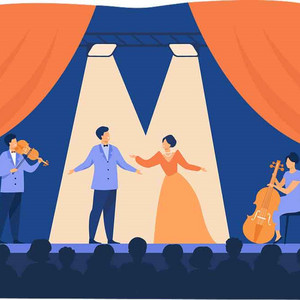
And now let's turn our attention to another part of today's cultural trifecta, the performing arts.
Well, the National Center for the Performing Arts, or NCPA, a prime venue for the performing arts in China, has premiered its own production of Richard Wagner's Das Rheingold, or Laiyin de Huangjin, featuring a live orchestra from the China National Opera House symphony orchestra.
And I was delighted to have an opportunity to see this remarkable performance.
You were there? I tried to get a ticket, but I failed.
That was all sold out?
Yeah. Well, you got to put the timer on when you're snatching tickets.
I was trying to get one of those cheaper ones, but when I got there, it was only the very up close luxurious seats left.
What do you mean put the timer on when you're trying to get a ticket?
Is it that competitive to get tickets to live performances in Beijing?
Well, it has been like this since COVID, I suppose.
And it was pretty much full house when I went.
Especially for bigger theaters like the NCPA, who I mentioned, if it's like leading artist performing or big production, don't get to be there every year, then yeah, of course, if you want to get one of those tickets, you have to wait and stay alarmed on when the tickets are released.
Like winning the lottery.
The NCPA is the National Center of Performing Arts?
Yeah. Okay. So that's like the place to go for the biggest performances.
Yes. And I suppose that for most performers and artists, this is the Holy Grail.
You want to perform there.
It's a big moment for one's career.
And also, this is the first time for the NCPA to come up with its own production of Wagner's masterpiece.
So this is all kind of a big deal.
The talk of town, so to speak.
Can you tell us about Das Reingold for our audience members who might not know what that is?
Yes, sure. Richard Wagner's Das Reingold is a monumental work that stands as a towering achievement of the world of opera basically.
And this is the first installment of the composer's epic four opera cycle.
Der Reingdas Nebelogen, and this is a really important milestone even for the NCPA because the world is kind of watching, at least the art world is kind of watching.
So that to see them pull this off is really a great thing to witness.
And actually, this is what things might be now.
But performing arts have gone a long way in China in the last 75 years.
And back in the day, the most well known opera, if you say opera with no words attached to it, then people might think of Baimonu.
Yes, I'm so glad you mentioned Baimonu, which could literally be translated as the White Hairy Fairies.
It's a Chinese national opera, what we call it the Min Zu Ge Jue, that's adapted from folklore national songs that's put together as what we call an opera.
And that style, along with other traditional Chinese opera or folk operas, have been the major ways for Chinese people to go to the theaters and enjoy such a production for a very long time, during the very beginning of the founding of the PRC.
So when you say Chinese folk opera or traditional Chinese opera, can you explain to me what that looks like when you go to watch it?
What are we looking at when we're watching that?
You know, when we talk about traditional opera, it encompasses so many different types of traditional Chinese operas.
And the best example would be Peking opera, but also every location of a region has their own operas, and sang or narrated in their local dialect.
And you've also got, let's say, Sujo Ping Tan, that's from Sujo, and also what else comes to mind.
For example, like Kun Shu, that's all, there are just so many.
And it's a little bit unfortunate that today, young people, we don't really pay that much attention to each and every of these operas, because there are so many.
And also, in a way, it feels like you need to kind of study or learn a bit before you can go in there and really appreciate it.
It's like classical music in that sense.
Like, yes, you can enjoy it.
But if you are familiar with what you're listening to, then you're going to have a different experience.
Yes. And for Peking opera, the example we mentioned earlier, is actually a combination of different folk operas.
So it's not really there as Peking opera, but really combining different styles altogether during the Qing dynasty, and to become what we call Peking opera nowadays.
And actually, back in 2019, when I was doing my master's in the UK, I was attending a Peking opera singing class that was just offered to us back then.
And guess what? Half of the classmates of mine were un -Chinese.
So, yeah, a lot of foreign theater lovers were so interested about how it's done, how do people make that sound.
And sometimes it's really high pitched.
Sometimes it's like singing, but not really.
It feels like they're making those sounds from different organs that we don't possess, in a way.
That's the joke that I heard all the time.
But of course, it's so hard for adults to do since most of those Peking opera artists, they started training and performing since they were really young.
So, yeah, it's a rather historic and very traditional cultural icon that we have here in China that's been inherited to us and still appreciated from the ancient time until nowadays.
What about theaters themselves?
We talked about movie theaters, it was around the 1950s, maybe 1960s, when things started to pick up a little bit.
Would that be similar for performing arts theaters too?
Oh, yeah, around the 1950s, many, well, I'm taking Beijing as an example, where I'm most familiar with, many theaters were constructed, or at least started to construct, were put together back then.
Some examples would include the Forbidden City Concert Hall.
And it's called Zhongshan Yinyutang, actually.
Yes, and Zhongshan is referring to the founding father of the Republic.
So it's a very special place.
I used to play there all the time, not as in playing in the concert, but playing on the lawn.
Outside. That was your performance.
Just being a kid, not an artist.
What year was that built then?
It was built as early as 1942.
So even before the founding of the Post Republic.
Is it still there today?
Yeah, it's still there and operating after multiple times of remodeling.
And now it's just, it's a professional concert hall that hosts musicians, artists from in and outside of China, all around the world.
And it's also deemed as one of the oldest theaters here in Beijing.
It's still holding concerts and it's a great place for folks to go in for after dinner walk.
Because it's within the Forbidden City itself.
It's next to the Forbidden City, actually.
Yeah. And there's a big garden surrounding it.
Perfect for a weekend trip and, you know, yes.
And it's so close to the Forbidden City.
And back in the day, in the Imperial period, of course, it was reserved only for the Imperial family.
But now every day, people, you can just go in with a very affordable price of a ticket, I believe.
And as a proud Beijinger, I suppose for our regional identity, especially when we look at the cultural scene, we must mention Beijing people's art theater that is Beijing or Beijing.
I have to say it and it's full glory.
I still remember the first time I was there, the chair felt so stiff and the leg room was so tight.
It's all following the very traditional style that you can imagine that were maybe popular back in the early 1950s.
And they still keep that style even until these days, even though they're now performing Shakespeare translated into Chinese.
After all this time, the theater remains how it was when it was first founded in 1952.
And also many of their in -house productions are true classics in contemporary Chinese theater.
Hao Yu, a very famous author, he wrote Lei Yu, so Thunder and Rain, I suppose this is just Huyang's translation, please don't trust it.
And it's one of the very classic theater productions that I think for Beijing people, a lot of us really enjoy and nationally is well known too.
That's really cool.
That's been there since 1952 and they haven't changed the interior to the point to try to put massage chairs in there, for example, if you know what I mean.
Keep it the way that it is for history's sake.
Yes, I suppose so. And another renowned theater or entertainment venue that has been here in Beijing for decades and decades is a place called Tianqiao.
But this cannot be confused.
As the Tianqiao Performing Arts Center that was built in recent times in 2015 because the Tianqiao Theater, I believe you're referring to as Tianqiao Zhiyuan, that one is as old as, I think it was built in 1953, around the same time as the Beijing People's Art Theater.
And that theater back then features ballet performing as it is today.
It's still a major theater to go to for ballet performing.
And you know, who else performed in Tianqiao Theater before?
Is it a famous cross -talker?
You would not have guessed who he is.
This figure is called Luciano Pavarotti.
And he came to China in June 1986 and right there in the Tianqiao Theater.
Oh yeah, back in the day, Pavarotti not only brought Western opera closer to Chinese audiences, but also shared his incredible talents with peaking opera singers.
What a beautiful exchange of cultures.
Now let's take a moment to hear how the legendary Italian tenor tackled his first peaking opera chorus.
You won't want to miss this.
That was Pavarotti.
Yeah. Wow. I wouldn't have believed it if you hadn't queued that it's Pavarotti singing.
I mean, I won't have any idea whether that was good or not, but this is one of the best opera singers in the world at the time.
Was it pretty good, the peaking opera impersonation?
Well, actually, even with people speaking the native Chinese language, we are not that familiar with peaking opera lyrics or the...
Actually, we need subtitles to really get it word by word.
Interesting to know that.
Because peaking opera has its own way of narrating different characters.
I remember reading those lines, but not knowing how to correctly pronounce them when I was learning to sing them in the peaking opera style.
So we can hear Pavarotti was trying to, just using replicates of sounds that could represent some opera singing styles and add that to what he thinks sounds like peaking opera.
Actually, it sounds more like a folklore or what shepherds would sing in the mountains as a way to call on the herd.
But yeah, back then, if you had watched the video also, he was dressing fully up in the peaking opera style, doing all the facial oil painting makeup as well.
There were translators telling him, oh, we're going to paint it black on your eyes and we're going to put this on your cheeks and stuff.
And he was enjoying and laughing all the time.
Oh, that's cool. What a really cool experience for him, too, at the time.
Yes. And also for folks who've sort of marched through the millennium, I wonder if you remember on June 23rd, 2001, the biggest event in town in Beijing was the three greatest tenors performed at Wumen right outside of the city, right?
And it was nothing short of magical because Ho Young happened to be there as a little kid.
I'm so jealous. I've only saw that clip from video.
I mean, yeah, online video shows.
Do you remember? I remember it being rather cold for some reason, late at night when we got out of the venue.
But it was a monumental event, not only because it showcased the incredible talents of Pavarotti, Domingo and the other guy.
Everybody everybody always says the other guy.
But also it marked a significant cultural moment, bridging Western opera with Chinese heritage.
And also, as it was happening at the backdrop of the iconic Forbidden City, it just all added to the magnificence.
And I remember this event became my hotel at school the next day or the next week, I can't remember.
And it was just a great time when everybody's so excited and seeing so much international exchange.
It was like breaking open new doors and you can feel fresh air coming in.
And that was just fantastic.
And people were thrilled with their first trial of watching the Western opera being performed in front of them as well.
Because I was reading that after it was settled for Pavarotti to travel to Beijing and perform in that year, the ticket setting as far as I've researched were 10 yuan, 8 yuan and 5 yuan back then.
And we're talking about the ticket pricing back in 1986.
That still would have been expensive.
That's the time when people's monthly salary or average monthly salary could only count about 50 to 80.
Some could go above 100, but mainly 50 to 80 yuan per month.
And people were willing to spend 10 yuan or one fifth of their monthly salary just to go and see Pavarotti performing.
And that becomes maybe the thing you can talk about for the rest of your life.
Yeah, it's true. That story will never get old, will it?
Yeah. And aside from classical opera, Western or traditional Chinese, musicals have gradually become something we're quite familiar with.
And it's cultivated quite the fan base here in China.
And as early as 1987, Broadway musicals have been shown here in China.
Oh, yeah. That was from my previous interview of a lady who is profession in introducing Western musical into China and sometimes translate into Chinese localized versions as well.
And according to her, it was in 1987, as you mentioned, Huoyang, that Broadway musicals, the Music Man and the Fantasticks were introduced in China, marking the first performances of Broadway musicals here in China as well.
And then at the turn of the century, and I think it's around 2004 to 2006, the more well -known Western musicals, including The Lion King, The Phantom of the Opera were also introduced here in China as well.
Yes. And also Cats, because I remember seeing that as a teenager and well, for the younger generation, I guess we grew up with wider availability of different kinds of cultural products, including musicals.
And I knew what I was getting into, and I was excited.
Whereas my dad knew nothing about musicals.
Oh. And the poor guy got tickets.
And Cats was his first experience.
Oops. And I remember we went to the the Grand Hall of the People, which is a very renowned place to be.
And it was difficult to get tickets, and we went.
And my dad was just confused for most of the duration.
And, of course, he'd fall asleep.
But he woke up just in time for memory.
Oh, very nice. At least the iconic song.
Yeah. So he didn't sleep through the best part of the musical.
There's a real love, obviously, for theater here in China, talking about the theater's introduction back in the early 1950s.
Those theaters still exist today.
You had Western performances coming in later on, and people paying a fifth of their salary at points to go see these.
Obviously a real love for culture and a real love for the arts here in China.
Yes. And also, gradually, we've seen that local productions have mushroomed, and now we have plenty of Chinese musicals to appreciate too.
Or rather the translated version from Broadway originals.
Because the lady I was interviewing, her main job was to import from Western companies and have someone in her team to translate that and localize that based on how it could sound more natural and colloquial in Chinese.
Here is the clip I got from that interview that we can grab a taste.
And I'll introduce more about what is being sang later on.
So what we heard just now is the trailer from Chinese musical Man of La Mancha that's translated from its original Broadway piece.
And I suppose Man of La Mancha refers to...
Dan Kiyode's story, right?
Yeah. And Dan Kiyode is translated as Tang Ziho De in Chinese, as you can hear, that was sang just now in the trailer.
And children in China have been learning to perform in musicals and dramas.
It has become part of the cultural life that everybody can enjoy.
And here is a clip of children singing recorded on site.
That's such beautiful singing from little kids.
Yeah. It's very cute, right?
Yeah. Almost angelic.
Those were the young singers aging from eight to 18 years old that formed this youth version of Man of La Mancha here.
They were teaching these kids to perform musicals, sing musicals, and be exposed into this culture at the very young age as part of their lives.
Yes, indeed. And moving on to our final stop on today's journey, let's turn our years to listen to some echoes from history as presented by another part of the cultural trifecta today, Museum Visits.
These days, museums are noticeably making cultural heritage more accessible to the general public in China.
Yes, and museums are really popular these days, but they didn't use to be on the hot ticket like it is now.
And Yushin, could you give us a little review on what it used to be like?
And now museums are a really popular place even for traveling to a new city to see.
Oh, yeah. Because, well, I remember in the early years of the founding of People's Republic of China, museums were primarily just educational institutions where groups of students were groups from certain companies who were invited to tour the museum for a day, as maybe a day trip or half of a day trip.
But nowadays, museums in China are not just places to view artifacts anymore.
They're immersively adding new elements to enhance people's experience as well as gaining new knowledge during their visit to the museum.
And that actually reminds me of one of my favorite museums of all time here in Beijing, which is called the National Natural History Museum.
And this is a clip of sound that I found that captures the best part of my trip there.
Let's hear it. Was that your stomach?
Did you skip lunch that day?
No, I didn't, but that sound captures the roaring of dinosaur or mechanic dinosaurs in the dinosaur park.
So behind all the giant bones, they actually made robot dinosaurs that could make sounds or could greet the visitors or scare some little kids.
And it was so fun to watch the kids screaming and running around and boys, after they walk past this stop, will try the return and say, mom, I want to see that again.
Or can you take a picture of me with a dinosaur and stuff?
Of course. It was like, so good.
Yeah, you gotta have your picture taken.
And I don't know any little boy that doesn't appreciate dinosaurs or little girls, actually.
I loved them when I was a kid too.
And I thought it might have been an audio clip from Jurassic Park or Jurassic World maybe.
And here we have another clip of, is this a 40 movie of dinosaurs?
Oh yeah, that's the kind of movie you can feel air blowing in front of your face, chairs shaking you as if you were riding the dinosaurs and stuff.
Just hear it. Okay, that was a far cuter dinosaur than I was expecting.
Basically, it's a self -insual of tiny small dinosaurs saying that, hi, everyone, I am blah blah blah, I am from a certain age.
And as if greeting to the younger kids, because the 40 movies were 3D movies in the museums, they are actually most popular among younger visitors.
Yeah. And this would be an example, sorry to interrupt, of museums modernizing themselves, ironically, right?
Well, we hear the title Museum.
We don't think modern, but it's a smart move.
And I think we've talked about this on Roundtable before, to attract young kids and to attract their parents as well, doing things like this 4D seats that blow wind and shake and things like that.
It's a great way to keep engaged with your customers and with your audience.
Yeah. And many museums here in China have, like you said, they've embraced this digital age by presenting more elements for the visitors during their visits and just incorporate all styles together to enhance that experience.
And especially for younger visitors to have them memorize their visit and also knowledge or for natural history or for whatever genre the exhibition was about.
And yeah, just to learn and to have fun.
Yes. And that wraps up today's installment of special series, Echoes of Progress.
We've explored three key aspects of how cultural entertainment in China has evolved in the past 75 years.
It's fascinating to see how this journey reflects broader social, economic and technological changes.
Thank you, Yu Shen and Steve Hatherley for sharing your insights.
And thank you for listening.
You can always reach us via email, roundtablepodcastatqq .com.
And check out previous shows on Apple podcast, just search Roundtable China.
I'm He Yang. We'll see you next time.