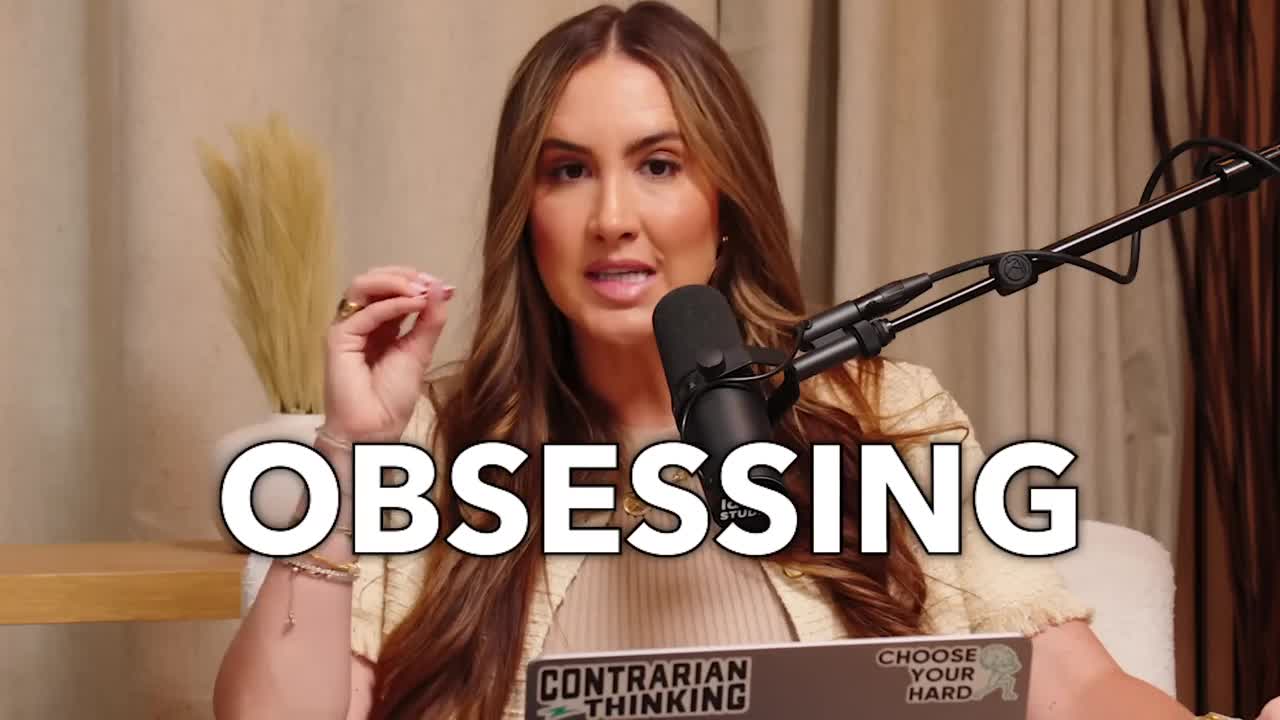
I think you will make way more money if you spend time obsessing on how to grow online.
People pay you money not just when they see you, but when they see that you understand what they want and that you are going to deliver it to them.
That's why creators are blowing up everywhere, because they realize that attention is actually the real currency.
So I want you to actually use community and attention to get a few people to buy things from you fast, get a few people to be obsessed with you.
So how do you build a multimillion dollar community of people online that you're talking to, for your brand that you're proud of?
That has a lot of intention to it.
First, I would start with Welcome back to the Big Deal Podcast.
I'm Cody Sanchez.
I am calling this episode how to build a billion dollar brand online, or how to make millions with brand and social media.
So if you want to figure out how to actually monetize social media and how to get people to care about the things that you do, this episode is going to be for you.
I've invested in a lot of businesses over my career.
And we've run a VC fund and we've raised lots of millions.
And I'm pretty confident about this one idea that if you can get more time with more users, you win.
And if you can get more time with your users the people who actually want what you're selling you win.
Which is why now i do tick tocks on the internet.
I went to georgetown.
I have a phd, i worked at goldman sachs, all the fancy things, and you know, i remember when i told my parents they were like have you lost your mind, your self-worth?
What are you going to dance on the internet next?
You know they were.
They kind of were like are you wasting private equity and all these things that you're doing today?
And i said no.
I think you will make way more money if you spend time obsessing on how to grow online.
40 cents of every dollar venture capitalists give to startups goes to distribution.
Distribution, just a fancy way to say eyeballs, just a fancy way to say attention.
And so that's why creators are blowing up everywhere, because they realize that attention is actually the real currency.
So i want you to actually use community and attention to never be poor again, Even though people are going to say.
Other things matter more, like your pricing strategy.
What's your go-to market?
What's your total addressable market?
All those things sound fancy and they don't matter.
Get a few people to buy things from you fast.
Get a few people to be obsessed with you.
That's how you win.
Pessimists sound smart.
Optimists make money.
Sophisticated often sounds good, but simple is what makes you money.
There's something called A Thousand True Fans, an incredible essay.
I'll link it in the show notes.
By Kevin Kelly talking about if you can get 1000 people to love your product, then you can make at least 100000 every year.
He did a bunch of mathematical equations showing this.
Get 1000 people to be obsessed with you, you can make at least 100k in perpetuity.
But most people get this wrong because it sucks when you first start out online, like how many of you guys have dropped a video and nobody paid attention to it?
The thing that differentiates attention versus not is going to be brand, and brand is really what led us to be able to go from zero followers online to 120 million monthly impressions, to 10 million followers, to having a really big company and eventually taking all of our attention that we got and funneling it to the things that matter, such as our venture fund, such as funneling it to our holding company, such as funneling it to our education business, to our events business.
Media for us is a giant ad.
This is the attention economy, and the way that we create content is totally changing that.
So if you guys are on board with me with that part, with like okay, first of all cody, we believe you that it makes sense to create content online and it'll lead to more dollars.
If we do it, then the real question is how do we get not just attention but intention?
What's the difference between the two?
Somebody like drake, one of the biggest names in the music world he has all the attention that one could ever have and a lot of clout and trust compared to, for instance rihanna, who you could even say is not as big as Drake in many ways, but is a billionaire because of Fenty and really smart intention she used in her attention.
Same thing with Hailey Bieber and Rode.
Same thing with Kim and Kylie and their makeup lines.
So when you have attention, you know, you won't always have it forever.
But the smartest people apply some intention to it.
And that is the path to billionaire.
So maybe we'll see Drake come up with some big, huge business idea to capitalize on it.
What you want is attention that's top of funnel that goes to intention, aka purchasing.
So I'm liking what you're telling me about.
And now I have an intention to go do something.
And the way that you get intention, in my opinion, is you don't do content, you do community.
Let me tell you what I mean by that.
We've taught 5,000 people how to buy a business.
They've bought hundreds of millions of dollars worth of businesses.
And so I create content that turns other people into evangelists for our community, such as Renan, who used to be a single dad and then bought a company using our process, and now you can go find his YouTube videos online talking about it.
Also you could do this another guy named Sean who went from his high-paying job in tech to buying a profitable small education business and you can see him creating content about that online.
Or Chris that's bought multiple businesses.
So I create a piece of content.
A bunch of people come and watch that content and then they take action and they buy from it.
Because people pay you money not just when they see you, but when they see that you understand what they want and that you are going to deliver it to them.
That is when they will actually part with their money or have intent to purchase.
So my belief is actually you shouldn't be a networker.
You should go attract them instead.
Be the attraction as opposed to, you know, kind of the thirsty handout.
I think if you can go build something, go create content that people want to watch, then that attracts them to you, as opposed to you having to go chase them.
So how do you build a multimillion dollar community of people online that you're talking to, for your brand that you're proud of?
That has a lot of intention to it.
Well, there are a couple of things that I would start with.
First I would start with find a problem so big that you can solve for your people that it's almost scary.
So for us, I'm like, I think the traditional education system is fucked.
I think it's wild that we tell young people, you know, when they're 18 years old, that they can't even drink properly because their prefrontal cortex isn't developed.
But hey, you should give us 100000 to go to school, which you don't know what for yet, but also, you can never get away from this debt.
It's just going to continue to stack until one day you can hopefully pay off to go to an educational institute where you don't actually do anything.
You just learn about theoretical ways to do something.
I think the education system is broken.
And I think young people feel like that, too.
Tell me in the comments if you feel like that, too.
And so I'm like, fuck that.
Let's teach people to buy and build things for one one hundredth of the cost and have them do it live, which is what we do at Contrarian Community in the SMB boardroom.
So first, I want you to think about what's a big, huge problem you could solve for people.
I think people should have lovely landscaping, and they're landscaping right now.
Their guys are always late.
They're always struggling to actually come on time.
They don't do what they say they're gonna do.
Whatever, you pick your big problem.
And then the first thing you do after that is you figure out from that big problem what am I actually an expert in that I could go solve it.
Do I understand landscaping?
Am I a dentist?
Or do I understand consumer packaged goods?
Do I understand how to buy businesses?
Find the thing that you are already uniquely skilled to talk about, build about, et cetera.
Because I think a lot of the problems of why content doesn't hit for people on the internet and why you don't have a trusted brand and why you don't make money on the internet and why nobody's listening to you is because God, I wish I had the confidence of a 24-year-old life coach.
Like, are you actually an expert in the things that you're talking about or are you stretching it?
And I think the truth of the matter is that most people are talking about stuff online because it's a trend, because they think they should talk about it, not because it's something they're uniquely skilled at.
Find the thing that you have unique skill and advantage at.
You can either be the expert aka, you know, I don't know.
I've been in private equity and investing for 15 plus years.
I've bought a bunch of businesses.
I've invested in a bunch of businesses.
I don't know a lot about many things, but I know some things about that.
So I do believe I'm an expert there.
That's one way.
Or you can document it.
You can say I don't know anything about buying businesses right now, but I'm going to document my whole process about how I learned.
So you either have done it or you document it.
Those are the two ways to do it.
And then the next level I want you to think about is want you to be like this guy, which is i don't want you to be talking about how big your target market is.
I want you to go yeah buddy, mine's a lot smaller.
I want you to actually niche down, and let me tell you why.
There's a reason that amazon started as a bookstore.
There's a reason that when people get big online, it's often because they started in something really really small and specific.
A bad niche is one that is really big when you're starting out because you can't be an expert enough in it.
So let's say a bad niche right now might be business for you.
A niche of small business is okay.
How about just small business owners?
Okay, that's better.
How about laundromat owners? ding, ding, ding, ding, ding, ding, we have a winner.
I want you to try to go as niche as humanly possible, because the cool thing about the internet is you got buddies online.
If you're into Japanese anime with female protagonists that have fairy tale specifications, there's a Facebook group for that.
So the more niche you can go, the more subject matter expertise you can have and also the cooler takes you can have and people can become true fans.
The way we tell if our content is niche enough is what I call the Where's Waldo strategy.
I want you to be specific.
I want you to be small.
I want you to select very targeted market, and so I think about where's Waldo?
How can we can find this guy and like these crazy images where everything's going down?
Well, it's because he's got this red, white striped shirt.
Every time he's got these blue pants, he's got this kind of crazy beanie every single time.
I know what to look at him because he's very specific, small and select.
And I want you to think about your niche the exact same way.
The second thing, once you've nailed your niche, is I want you to think about so you've got this big problem that you talked about, that you want to try to solve for people, and Now how do you turn that problem into a product?
How do you monetize it and make money off of it?
Well, that's something we call the problem to product loop.
Most people see problems and they think about obstacles.
They're like, this is in my way.
I want you to, every time you see a problem in your niche, instead say, that's the opportunity.
And let me show you what I mean by that.
When you find a problem, then the first way to turn it into a product is just to make content.
I want to buy a business.
They talked about a letter of intent.
I don't know how to do that.
So what do I do?
I create a video and a sample letter of intent.
Cool.
I got a video and a lead magnet.
What about another person might say, I don't know how to talk to sellers.
So what do I do?
I create a video and a script about how to talk to business sellers.
I don't know what a business is worth.
That might be a problem in my sphere.
And I say, okay, let's create a deal calculator so that you can calculate it exactly.
And then I'll walk through in a video or a Twitter post or a blog exactly how to fix it.
Then somebody might say, I don't know how to find businesses for sale.
And I would say, oh well, why don't we create an entire thread in our community for how to find businesses for sale?
Maybe turn that into a course.
Okay.
And what this means is that you will learn something from the doing or the documenting you're doing every day.
That gives you a hypothesis about something that you should build that you'll turn into content experiments.
Then you have a baseline to measure if it's working or not.
Did this thing get views?
Did people download it?
And then you turn that analysis into a product that you then learn from, then build, then measure, then analyze, then turn into a product.
And this feedback loop from your community helps you create products that are better than anybody else's.
And let me give you a perfect example.
Here's my billion dollar bet or one of them.
We have a company called BizScout.
How did I create BizScout, which now has 71,000 business listings?
It's like the Zillow for small business acquisition, right?
So you know, you go to go to buy a house, you go to Zillow, you check out the houses you like, select them.
I want a two bedroom, you know, one bath located in New York.
I want it to be under a million bucks, whatever.
So we do the same thing for business acquisitions.
And so that started because people started to say, well, I don't know how to find a business to buy.
And I was like, oh, here's some sites.
All the sites were bad.
I was like, well, why don't we build that?
And now that thing is 25,000 buyer and seller connections have been made.
We've got proprietary listings.
It's going to be a really big company, I hope one day.
And that all came from a video and a piece of content that started.
And so I want you to think about, as you're creating content in your business which even could be internal.
Here's an SOP for how I paint a house.
Every time you have a problem, you create a resource and you ask if it's content.
Then it will turn into eventually, if you do this right, something called the marketing infinity loop, which is where you turn your free stuff into your paid stuff.
Your paid stuff also becomes your marketing stuff and it continues to loop around.
And so here's how it works.
First, you start with awareness.
So I create a piece of content and that content gets views on whatever platform.
That's great.
That puts you into the consideration cycle, which is like all right, maybe somebody will consider buying from me.
They'll consider using my service.
Then finally, they'll move to purchase.
So they'll buy something from you online.
Then a few of them will move to advocates.
That's where they write reviews, testimonials, take surveys.
And then until finally they come into your loyalty program, which is where not only they talk about you, but they might subscribe to your newsletter list and also subscribe to a referral program.
And then do the thing that is most important more than anything else continue to buy from you and tell their friends about you.
And you just keep going.
So awareness, to consideration, to purchase, to advocacy, to loyalty.
And as you follow this infinity loop, your little content business turns into a paid ad machine.
What would I do if I was you?
Start small, find my niche, use my content to build my product and then to market it, and then continue to iterate from feedback.
And if you do this again and again and again, you will build an unfair advantage so big that others can't follow you.
So how do you start then?
If you're like, all right, I kind of see the path now for how I can make money from content.
What is the rule to start getting the number one currency, which is awareness?
That rule is first you have to have a system.
A system is what we teach at the contrarian boardroom.
But having an operating system for how you're going to run your content,
Then you have to have a team system.
So how is your team going to run your content?
And then you got to have an overview system, which is how am I going to see if this stuff is working or not?
And you can kind of see right here how we use ours.
Once you have that system in place, the next rule is a little bit more fun.
And that rule is just don't be fucking boring.
The thing about content that will kill you more than anything else is, if your content never gets attention, then it doesn't matter how good you are at selling people things.
Nobody's ever watching them.
So a couple of things that matter.
I think every company needs more opportunities for people to fall in love with them.
I think that is actually what you want.
You want people to hate what you're doing or love what you're doing, but apathy is the thing that you want the least, and so let's take a bad example first.
What does a terrible newsletter look like?
Well, most newsletters or emails from companies they look like this right, it's like i don't know.
Extra 20 off flash sale.
Uh, everything you need to know about crypto.
I mean, i'm bored.
I would never open either one of these.
Instead, i would go back to one of the greatest emails, i think, that's ever been written, and this was written by derek sievers uh, the head of of cd baby back in the day, and the the.
The email's just ridiculous, so let me read it to you.
Thank you for your order from CD Baby.
It was a CD site for young kids.
That's how we used to listen to music before Spotify.
We had these big discs and we put them in and we kept them in these floppy folders.
Anyway, Derek Seavers had a business that sold CDs.
And the email that he had when you got a purchase from his store was so good.
Here's how it goes.
Your CD has been gently taken from our CD Baby shelves with sterilized, contamination-free gloves and placed onto a satin pillow.
A team of 50 employees inspected your CD and polished it to make sure it was in the best possible condition before mailing.
Our packing specialist from Japan lit a candle and a hush fell over the crowd as he put your CD into the finest gold-lined box that money can buy.
We all had a wonderful celebration afterwards and the whole party marched down the street to the post office where the entire town of Portland waved bon voyage to your package on its way to you and our private CD Baby jet on this day, Friday June 6th.
I hope you had a wonderful time shopping at CD Baby.
We sure did.
We're all exhausted, but we can't wait for you to come back.
Thank you again.
Derek Sivers, President CD Baby, the little store with the best new independent music.
It's ridiculous.
It's such a ridiculous thank you email.
It's like, what the fuck are you guys talking about?
That this thing got shared tens and tens of millions of times.
Now it's gotten a little bit overplayed.
Lots of people have copied it, but back in its day, this was really unique.
And so what is your version of that today?
I wanna give you an example.
I told my team because we have a big newsletter business and it's an incredible newsletter, I think.
It's contrarianthinking.co.
But in it, we tell people how to make money with businesses, right?
And so every single week it's different business ideas and different ways to grow your business, all focused on money.
And i felt like our subject lines were terrible.
And your subject line, that's your face card, baby.
That's like the first thing you see when you uh, you know, are going on a blind date and you know you have your one second to impress somebody.
That's your subject line right, and so they're really important.
I could write you a beautiful email, but if my subject line sucks, you're never going to click on it, then you're never going to buy anything from me, and then i'm going to have to play my tiny violin.
And so we weren't getting enough clicks.
So i went to my team and i was like hey, subject lines are super boring.
And so we wrote a newsletter about uh, tree trimming and how a guy made money with tree trimming.
And i said i'll give you a thousand dollars if you can beat me in my subject line for this, because i think yours are boring.
And they said cody, we think you're being ridiculous, you're being too hard on us.
And i said fine, if you win and your subject line gets higher clicks than my subject lines, i'll pay you a thousand bucks.
I'll be wrong and i'll go off.
And they said great deal.
So we a b test the email and some of the subject lines were like um, growing a towering a hundred and forty four thousand dollar tree business.
How to grow your a thousand?
Uh or a hundred and forty four thousand dollar money tree with a tree.
You know?
Emoji proof that money grows on trees.
That actually was the top rated one.
Um, you want to know what my subject line was?
I love guys with wood.
Dot dot, dot.
Which one do you think you got the most clicks?
Mine.
Now, when they went in there, I had a funny first line that was like Excuse me, you dirty little rascals.
What I mean is I love guys with big wooden trees that make a lot of money.
And this thing is all about how people can make money.
Not only did that have an incredible subject line, but the responses from the email.
Like everybody, loved it because it was unexpected.
It was a little bit of a surprise.
So the worst thing that you can do in content is be boring.
So I'll tell you, it's not just about your subject line.
It's also about design.
Like most newsletters, look like this corporate standard standard images, terrible subject line, overly designed.
They don't lead with value.
They're boring like.
Look at this.
It's like a screenshot of i don't know their annual publication.
It just it looks like something i'd be pissed if i got in the mail because i feel like they're killing trees for no reason whatsoever.
As opposed to this newsletter, which is Publish Press.
This is a great newsletter.
This is by Colin and Samir and actually like I think an incredible newsletter overall.
But the design is crisp, baby.
It's clean.
It's got a celebrity up top.
Easy to grab.
It's kind of corporate but fun feeling.
So it doesn't feel like overly designed.
It's short.
It's bulleted.
It's got great subject lines.
Or this one by Scott Galloway.
This email is incredible.
It shows you right away what you're going to get with a great subject line.
It also has images that tell you things as opposed to the words.
So it's show, don't tell.
And then this one, which is mine newsletter contrarian.
Every single time we started with a quote.
People have quotes.
We have this little like kind of hand-drawn image of each person.
So every time you open the subject line you kind of know what you're looking at.
Uh, the graphics overall, uh are good.
I think some these, some of these subject lines could be better like a practical framework for thinking bigger.
That was boring.
We should, you know what we should tell jacob about that.
Jacob, we got to work on the subject lines but like eight lessons from the man who wrote the laws of power.
Anyway, pretty good.
The next is I want you to go Freud on them.
And what do I mean by that?
I mean that when you're creating content, we're talking to people's psychology, right?
We humans are weird.
And if we can get into their psychology, we can change actions.
So let me give you some examples.
So a CTA, a call to action in your content is really important.
A lot of times, people across platforms, so whether it's a video or it's a newsletter, they'll say things like subscribe now, join now, sign up.
Well, we've heard that so many times that we almost don't hear it anymore.
You know what I mean?
You go to a site, it says subscribe now.
You're like, no, I don't want to.
It's almost noise as opposed to.
Click here for this free X. Check out my list of 150 Y. Explore this value prop.
This is telling you like, hey, I'm going to give you something if you give me something, your email.
Now, I think there is a cheat code to how to become really great at content.
And this is for you 202 level people, the people who are not just doing this by yourself, the people who are ready for the bigger game.
So it's not for everybody.
You can listen if you're still 101 level, but if you're looking to scale up, there's only one real answer.
And that is, it's always a who, not a how.
So I just gave you a bunch of hows, but this slide is showing you the number twos to some of the biggest number ones on the internet.
We've got the rock.
Well, next to him is Danny Garcia, his like manager and agent, who helped really create his career in multiple industries.
We got Kim Kardashian with the ultimate momager, Chris Kardashian.
We've got Nick bear with his number two at his company.
We got mr beast with his original number two.
So who, not how?
Anytime you want to grow on a platform, the best thing you can do is go find your best who?
Because the truth of the matter is you're likely not a content expert, right?
I wasn't, and if you're not, you can always hire somebody to do that instead.
Now where i would end is if you want to build a community with a thousand true fans and make more money on the internet, the one truth that you'll have to remember over time is this formula, which is consistency plus creativity plus grit to intention.
And if you can use that formula continuously, you will find a way to make money online.
Tell me if you guys like this episode is very tactical.
And if you guys want to start a newsletter, we'll give you our tech stack.
You can click the lead magnet below.
It'll show you where we make newsletters.
It'll also show you some of my favorite content tools.
And you guys can rock and roll on your own version of a billion dollar brand.
I was just looking and it looks like more than 50 of you are not subscribed to the Big Deal podcast.
When you subscribe, first of all, it means we get to bring you bigger and better guests.
It's also the number one way you can support this podcast.
If you liked it today, subscribe on whatever channel that you're listening to.
And I want to tell you something firsthand.
You become whatever you allow into your attention span, and what i hope you feel from us every single day is that i value your attention and your time more than anything else.
I promise to only bring you things that are going to make you more money.
They're going to make you more motivated to make your life better.
So give me a little solid here.
Subscribe to the channel.
This is how we grow.
Also, leave me a review on what you want better and who you want on.
I promise you will do it.
Hey, if you're a business owner right now and you like the things you were hearing on this podcast, I have something that I haven't talked about publicly before.
That's just for you.
It's called our SMB Boardroom.
This is for small business owners who want to grow.
It is for business owners who are on their way to making at least seven figures a year.
If this is you, hit the link down below, talk to our team.
This is the place that can be your late night emergency call for the things that go bump in the night in your business.
Right now you feel like you're plateauing or you feel like you don't know how to handle your growth.
We got you, so click the link below smb boardroom.
We just built it for you builders kind of obsessed with it, and i think if you are a builder, there's no place you're going to want to be except here.
Hey guys, if you've ever thought about buying a business, we've built what I think is the best acquisitions and business buying.
Community and education curriculum in the world.
If you've ever thought about wanting to buy or own a business, or if you want to add more businesses to the mix.
It's called the Contrarian Community.
And what this is, is the goal is we give you the three things that the best business buyers use.
Your own advisory team, your own investment committee, and a deal team.
We get together each week to review deals live and beat up all the deals that you're currently looking at, while you simultaneously learn the best way possible, which is called modeling, by seeing other people put together deals.
This is how private equity buys businesses.
This is how investment teams work.
And we're stealing the methods from Wall Street and giving them to you.
If this is interesting to you, go to click the link and you can actually talk to my team direct about if this is a fit or not.
We can help guide you.
The link is in the show description.