Get Sleepy is a production of Slumber Studios and is made possible thanks to the generous support of our sponsors and premium members.
Thank you for watching.
A quick word from our sponsors.
In case you didn't know, our company Slumber Studios also has a sleep app called Slumber.
With well over a thousand episodes, it has every type of sleep-inducing content you could possibly want, from stories meditations, audiobooks and history to soundscapes and music.
New episodes are added each week, and you can even search by narrator and listen exclusively to episodes narrated by me or by any of my wonderful fellow storytellers.
Samba has other unique features too, like the ability to add and adjust background sounds to create your own perfect mix.
So I highly recommend you give Slumber a try.
It's available in the Apple App Store and on Google Play.
And as a Get Sleepy listener, you can unlock all of the content in the app, free for one month.
Just go to slumber.fm slash getsleepy to get instant access to all of the content in Slumber.
If you enjoy Get Sleepy or any of the other shows we produce here at Slumber Studios, you'll love our app called White Noise Deep Sleep Sounds.
With hundreds of sounds to choose from and even the option of mixing them together to create your perfect soundscape.
It can help you fall asleep fast, wake up less often, improve focus, reduce anxiety, relieve tinnitus and calm babies.
As a listener of Get Sleepy, we have an exclusive offer for you.
Download the White Noise Deep Sleep Sounds app and get 30 days free access to all of the premium content.
Just go to deepsleepsounds.com slash get sleepy.
That's deepsleepsounds.com. or follow the link in the episode description.
Welcome to Get Sleepy, where we listen, we relax, and we get.
As always, I'm your host, Thomas.
Thanks for listening tonight as we wrap up a wonderful series that has been running throughout the whole of 2025.
It's a series that I've had the pleasure of reading for you all, and I'd like to thank Frankie for her incredible work in writing each story.
Don't worry if you haven't had all of the others yet.
You can listen to them in any order you like.
So we've reached the last, but certainly not the least, of our Olympian gods.
You might know him under his Roman name of Bacchus.
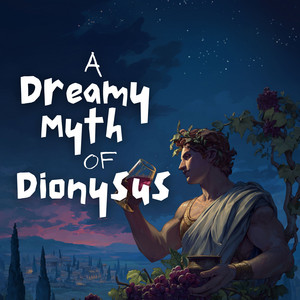
But tonight we'll explore the passions and triumphs of Dionysus as the young god of freedom liberation, passion and theatre.
As the only Olympian to have a mortal parent, Dionysus is even more connected to humanity than the rest of his family.
He is one of us in so many ways, proving that even mortals can ascend to the level of the gods.
Dionysus even descended to Hades several times. in order to deify the ones he loved most.
First though, it's that time of year where many of us are starting to think about gifts we'd like to give or receive, as we share moments of celebration and appreciation with those we care about most.
If you know someone who would love the gift of good sleep, why not treat them to a Get Sleepy Premium membership.
Or if you've been enjoying the show and would love to listen ad-free, with access to our entire catalogue of over a thousand episodes and our weekly premium bonus episodes, why not pop it on your own wishlist this festive season?
It's pretty simple to do.
When you go to getsleepy.com support, you'll see the option to gift a subscription.
So in just a few clicks, you'll have the perfect gift all sorted.
No trips to busy shops required.
No delivery costs or excess packaging to dispose of.
Just a meaningful, heartfelt gift. that exhibits your love and care for the recipient.
For more information on signing up to Get Sleepy Premium or to gift a subscription to a loved one or friend, just go to getsleepycom slash support.
Thank you all so much and I'm wishing you a very happy festive season and end to the year.
Now, before we begin our story, let's take a moment to relax. and prepare for sleep.
To immerse ourselves fully in this world of passion and liberation, we must first set ourselves free.
Genesis lives in the spaces between.
He is between Olympus and Earth, between man and God.
His existence is in many ways like that of a dream.
To follow him.
We must also find our way to the place between.
Begin by clearing away all the bits of the day that you do not need right now.
Then, imagine a large, beautifully carved table.
Strewn across it are the crumbs of conversations, spilt cups of responsibilities and the general debris of your day.
Take some time to clear the table.
Wipe away the crumbs and spills.
Put away your cares and responsibilities.
Now is not the time to focus on them.
As you clear the table, the carving underneath becomes clear.
Deeply varnished wood shows a scene.
In it, a beautiful young princess lies asleep, while the room around her bursts into life with blooming flowers and curling vines.
It is a wonderful image, and as you look closer, it seems to come to life. before your very eyes.
This is where our story begins.
Semele sleeps in her room in the palace at Thebes.
She is the daughter of Cadmus, the first hero, and his wife Harmonia. the daughter of Ares.
As she sleeps, Semele dreams.
She sees a beautiful fruit tree with glossy green leaves.
It's heavy with strange fruit that she has never seen before.
Each one looks perfectly ripe and tantalizing.
A flash of lightning and the tree is split in two, the lovely fruit falling to the ground.
A bird darts out of the sky. and alights on one of the branches of the fallen tree.
It carefully plucks a fruit and flies off.
Semele's dream follows the bird as it flies to a man.
This man is tall and strong and gives off an atmosphere of power.
The bird drops the fruit into the man's hand.
He then does something very strange.
The man presses the fruit against his thigh.
When he takes his hand away.
Instead of there being pulp and fruit juice, he seems to be holding a tiny bull in the palm of his hand.
Bull looks out at the world with eagerness and excitement.
Semele wakes up.
She barely has time to wonder about the strange happenings of her dream when she notices her room.
The bed, walls, furniture. and even the floor are covered in vines.
The vines have large, wide green leaves and clusters of little white flowers.
Her vines are wrapped around the posts of her bed and seem to weave around.
Every object in the room calls out to her parents and siblings, who all come running to marvel at the plants.
The arrival of the vines nearly drives the memory of the dream out of Semele's mind.
And yet, the little bull and the expression on its face stay with her.
Months later, Semele is down by the river, washing her sacred robes.
She is a priestess of the Temple of Zeus and is well known for being incredibly devout.
As she washes her clothes, she sings to herself.
She only looks up from her work when she notices a man on the bank of the river.
Emily greets him kindly and stands to take a clear look at him.
She is immediately struck by a sense of recognition.
She feels that she knows this man, perhaps having met him before.
The man is tall and gives off a familiar atmosphere of power.
Being a priestess of Zeus, Semele upholds the sacred practices of Xenia, or guest friendship.
As a princess of the city.
She greets the stranger warmly, welcomes him to Thebes and offers him a share of her lunch.
The stranger simply smiles and replies that it is he who has something to offer her.
He pulls out a small earthenware jug decorated with painted lightning bolts.
Semele stares at the jug, her sense of recognition rising.
The stranger explains to her that this jug is a gift from the god Zeus.
It contains a piece of his heart.
If she drinks it, She will give birth to a child that will be a god.
Something no other mortal woman has ever done or will ever do again.
The trade, however, is that she will be escorted to the underworld sooner.
She is free to decline the offer and live a long life amongst the other mortals, going to the fields of Asphodel many, many years from now.
Semele asks if she may take some time consider the stranger's offer.
He nods his assent, and Semele asks him once again to join her in her meal.
Two of them sit on the bank of the river, chatting idly or resting in companionable silence, the lightning jar waiting between them.
Finally, after a couple of hours, the stranger tells Semele that it is time to make a decision.
Semele takes a deep breath and tells the stranger that she accepts this gift from Zeus.
She is honored that he should trust her with a piece of his heart and that she should play such a vital role in the creation of a new god.
Without a word, the stranger holds out the jug to her.
Their fingers brush as Semele takes the vessel from him.
And like a lightning strike, she suddenly knows how she recognizes this stranger.
He is the man from her dream.
And as surely as she knows herself, she realizes that he is her god, Zeus.
Emily raises the jug to her lips, confident in her choice, and drinks the sweet liquid inside.
When she lowers the jug, She finds that she is now alone.
Semele's pregnancy progresses smoothly and her family dotes on her.
Emily glows with pride and joy.
With every day that passes, she can feel her child growing strong and healthy.
When she goes for walks by the river, sprouts and small flowers spring up from the earth where her feet touch the ground.
She never stands in one place for too long. aware all the time of her bedroom after her dream.
It is when she is on a walk by the river, about halfway through her pregnancy, that Semele sees him again.
Zeus in his human form approaches her with another man by his side.
This man is much younger, barely more than a youth.
He wears a hat and carries a staff.
As they get closer, Knowledge of this young man blooms in Semele's mind like the opening of a flower.
He is Hermes, messenger of the gods. and arch-psycho-pomp.
Father and son greet Semele warmly.
Hermes even hugs her asking after her fondly and inquiring about the health of the baby.
As the ground around Semele's feet grows thick with curling vines, Zeus and Hermes explain to her that the time has come for her to leave.
Hermes is here to escort her personally to the Asphodel Meadows.
Emily is confused and looks down at her belly.
Surely they must be mistaken.
It cannot be time yet.
As if reading her mind, Zeus places his hand on her belly.
Semele feels a gentle warmth from his hand, and when he pulls it away He holds a golden glow, nearly too beautiful to behold.
Zeus presses his glowing hand into his thigh. where the golden light sinks into his skin.
Semele smiles.
The true meaning of her dream all those months ago, becoming clear child, will be divine and mortal because it has been carried by both deity and human.
Semele nods. and tells Hermes that she is ready to go with him.
While Hermes escorts Semele to her reward, Zeus makes his way back Olympus.
The child is destined to spend part of the term with his mother on Earth and part with his father in the dwelling of the gods.
Zeus can feel the gentle warmth of his son growing.
Over the next few months, Zeus imbues divinity into the as yet unborn child.
When the time comes for the new god to enter the world, Athena and Artemis are the ones to deliver their new brother.
The child comes forth with two horns upon his head, in the shape of the crescent moon.
The first sound he makes is not the usual cry of a newborn, but a delightfully sweet laugh that fills Olympus.
The king of the gods knows that it is of the utmost importance that Dionysus be raised on Earth.
Zeus places his infant son in the care of rain nymphs called the Hyades, who live in the mountainous region of Nisa.
They shower the child with love and affection as he grows from baby to toddler to youth.
When he is finally old enough to venture into the world on his own, he first decides to send up praises and offerings to his father, Zeus.
He asks his divine father to reward the Hyades for their kindness.
Zeus happily obliges and sets the nymphs among the stars as the constellation that bears their name.
Dionysus spends the first few years of his independence travelling around Greece and discovering his godly abilities.
Aside from the cultivation of grapes, he also discovers his unique ability to bring joy wherever he goes.
He encourages a willingness in others to forget or put aside their troubles, release their inhibitions and embrace a sense of liberty.
This freedom is both wild and passionate.
Dionysus finds What he gives to humankind is more ethereal than the sciences or arts of Apollo, but just as valuable.
The years go by, and Dionysus begins to turn his attention within.
He is both mortal and immortal, tied more closely to humankind. than any other god.
He can walk the line between both.
He thinks of his mother, Semele.
She sacrificed a long and peaceful life in order to make her son a god.
Dionysus, firm in his belief that he can bring joy to anyone, makes his way to the one place where joy is not often seen.
He travels to the court of his uncle Hades and aunt Persephone.
If anyone was in doubt of Dionysus' power before he ventured to the underworld, they would be utterly convinced by simply watching him stride up to the banks of the river Styx and cheerfully hail the boatman Chiron.
As soon as he sees Dionysus, the ancient immortal feels an unfamiliar sensation in his face.
The corners of his mouth creak upwards and he finds himself smiling widely at the young god before offering to take him across to the other side free of charge.
Chiron, who may not have even smiled once in the entire history of the world before today, is laughing and grinning with Dionysus all the way across the time.
The little boat gently knocks against the shore.
They are fast friends and Dionysus gives Chiron a hug before venturing on.
Dionysus next comes to the huge, slobbering and slathering figure of Cerberus.
The three-headed dog is not only famously foul-tempered, but also monstrous in size.
It is nothing short of magic then when, a moment later, the huge beast is lying on its back tail, wagging and allowing Dionysus to scratch its belly.
As Dionysus walks further into the gem studded tunnels He can hear Cerberus whining after him sad to lose his friend so quickly.
Dionysus winds through the caverns and halls of the underworld, often passing the shades of mortals.
None can resist returning his smile and friendly greeting.
Finally, Dionysus comes to the Palace of Hades.
It seems to have grown naturally from huge crystals and it glitters in the dim light of the underworld.
Dionysus makes his way to the throne room, gazing in awe at his aunt and uncle sitting upon their Onyx Thrones.
Persephone, the goddess of spring, as well as the queen of the underworld, greets her nephew warmly.
She smells of fresh dew on the mossy earth and seems to glow with an inner light.
Her is stony-faced and regal.
This is going to be a tough nut to crack, even for the likes.
Persephone invites the young god to dine with them.
He regales her with stories of his youthful adventures.
Persephone laughs easily. and hangs on his every word, whereas Hades barely says a thing.
Finally, as Dionysus pauses for breath, Hades speaks.
He bluntly asks his nephew why he came to the underworld.
Dionysus Understanding that his uncle is not a god to be trifled with, lays his cards on the table.
He talks about his mother and the sacrifice she made for him.
He expresses the depth of his passion for his cause and how desperately he wants to repay her.
He talks about how grateful he is to be both God and human.
Once he finishes, Hades nods slowly and tells him that He may collect his mother from the fields of Asphodel, where the shades of humans spend eternity amongst flowery meadows.
As Dionysus turns to go, he pauses and asks Hades what convinced him to grant his wish.
Hades responds, that it was the unbridled passion and love he heard in his words.
Dionysus collects the shade of his mother, distinguishing her from every other shade as surely as he knows himself.
He takes her hand and leads her back into the world of mortals and then further to the realm of Olympus.
Finally, he places her into the starry heavens, where she lives an immortal life as a star.
Twice now, Dionysus has placed those he loves into the heavens, directly and indirectly.
And it shall not be the last time.
Dionysus returns to Earth after his mother is safely installed in the heavens.
He enjoys spending time with humans.
He rides through the lands and islands with a great train of followers, revelers and companions.
Half-goat, god of rustic music, is chief amongst the group, as well as the other satyrs and their father, Silenus.
Various nymphs and minor deities join the group as it travels through Greece.
Dionysus' chariot is pulled by two leopards. and he wears ivy woven into a crown in his hair.
He rides to the sound of the music, dancing and laughter of his followers.
It is this motley crew that a young woman can hear from the other side of the island.
Her name is Ariadne, and she was abandoned here on the island of Naxos. by the hero Theseus.
She has been sitting on the shore, sullenly tossing stones into the surf and inwardly cursing the young Athenian.
After everything she did to help him get through the labyrinth, defeat the Minotaur and escape safely.
He still left her here on this island because his crew grew superstitious about having a woman on board.
Now she sits stones forgotten as the sound of Dionysus and the revelers draws closer.
Playful music weaves on the wind. and blends with the sound of the surf.
It seems to be coming from everywhere.
And in the blink of an eye, She finds herself surrounded by the joyful group.
Nymphs are singing, satyrs are playing music, and mortals are dancing with immortals.
All along the beach, Ariadne turns to see a beautiful chariot, more finely made than any she had ever seen in her father's royal court on Crete.
It is pulled by two sleek and powerful leopards. before the chariot can even come to a full stop.
The young man driving it leaps onto the sand, his eyes glued to hers.
Ariadne fills herself blush, all thoughts of the childish Theseus banished from her mind.
It is perhaps the first and most genuine occasion of love at first sight.
Needless to say, Dionysus and Ariadne spend every waking and sleeping moment together.
He makes her his queen and consort.
They spend most of their time not on Olympus, but in the world of humans.
Neither of them really notice as the years start to slip away.
They go on to have eleven children together.
Their happiness is unbounded.
And yet, Ariadne still ages because she is mortal.
Dionysus waits for her to decide, never pressuring her for a decision.
One day it comes, and all she has to do is look at him for Dionysus to know.
He raises her to the heavens. just as he did with his mother.
He uses her wedding coronet a perfect tiara of diamonds to create a constellation that will be her home eternity.
To celebrate the immortality of his love, Dionysus organizes a festival amongst humankind.
He, along with a couple of the Muses, instructs a group of humans on how to create and perform a play.
He teaches them about the three kinds of play comedy, tragedy and satire.
Dionysus promises to reward the playwright. who presents the best three plays at his festival.
Rehearsals run all through the day and night.
Scripts are written and rewritten.
The people prepare eagerly for this very first theatre festival.
The day of the shows arrives.
Even the gods are brimming with excitement.
Near Athens, there is a natural amphitheatre formed by the earth.
Gods, satyrs, nymphs, immortals, and humans gather on the grassy turf to watch the plays.
They all tell the stories of gods and heroes.
Stories that everyone knows are retold with heightened drama and excitement.
The audience laughs, cries, gasps, and sits in awe over the course of the day.
As the last rays of the sun start to dim, the festival draws to a close.
The gods confer about the quality of the plays.
The tragedies were so desperately sad and yet cathartic in their expression of woe.
The comedies had them all nearly splitting their sides with laughter.
The satires, which of course the satyrs liked best, were sharp and witty.
How will Dionysus be able to choose a winner?
Dionysus stands in front of the assembled group.
He holds out his arms as if to embrace the entirety of existence and glances up to the sky.
Even with only the first few stars visible, he can see the coronet of Ariadne and feel her warm starlight on him.
Dionysus tells the audience that he cannot choose a winner and that he is equally impressed by all the playwrights.
But equally, He tells them it is not his place to judge the art of humankind.
What does a god know of the complexities of the human experience year?
From now on, there shall be a theatre festival held here, and the people of Athens will choose for themselves who they deem to be the best playwright of their age.
They can use theatre as a tool to explore what it means to be human.
They can also use it to bridge the gap between the worlds for just a few hours and stride across the stage as gods.
All Dionysus asks in return is that they crown a winner in his honour.
Many centuries after, Athenians held the Dionysia, the festival of Dionysus.
The central events of the festival were theatrical productions.
It was this festival that produced the fathers of Western theatre, such as Sophocles, Euripides and Aeschylus.
It grew to become the second most important festival to the ancient Greeks and even migrated to the Roman world as the Bacchanalia, or festival of Bacchus.
Others of the Olympians might be better remembered or perceived as more powerful than Dionysus.
After all, when compared to the sky, the sea, the earth, the sun and the moon, a god that is half human seems to fall short.
True power of Dionysus lies in his humanity and in the fact that he knows better than any of the rest of the Olympians what makes humans human.
This we are bound to love and appreciate him as the god of those most important attributes of life.
Freedom, passion, revelry, theater, and liberation.