We don't actually have a traditional CS team.
We also don't have traditional SDRs.
My perspective is quotas are kind of made up.
Today we have Sean Boskanian joining us in the hot seat.
Sean is the CRO Chief Revenue Officer at Figma, where we discuss how to build a sales machine on top of a PLG motion.
An average enterprise rep here might have 3 to 4x their OTE for a quota and we're happy with that.
Focus and specialization, no question, as early as possible.
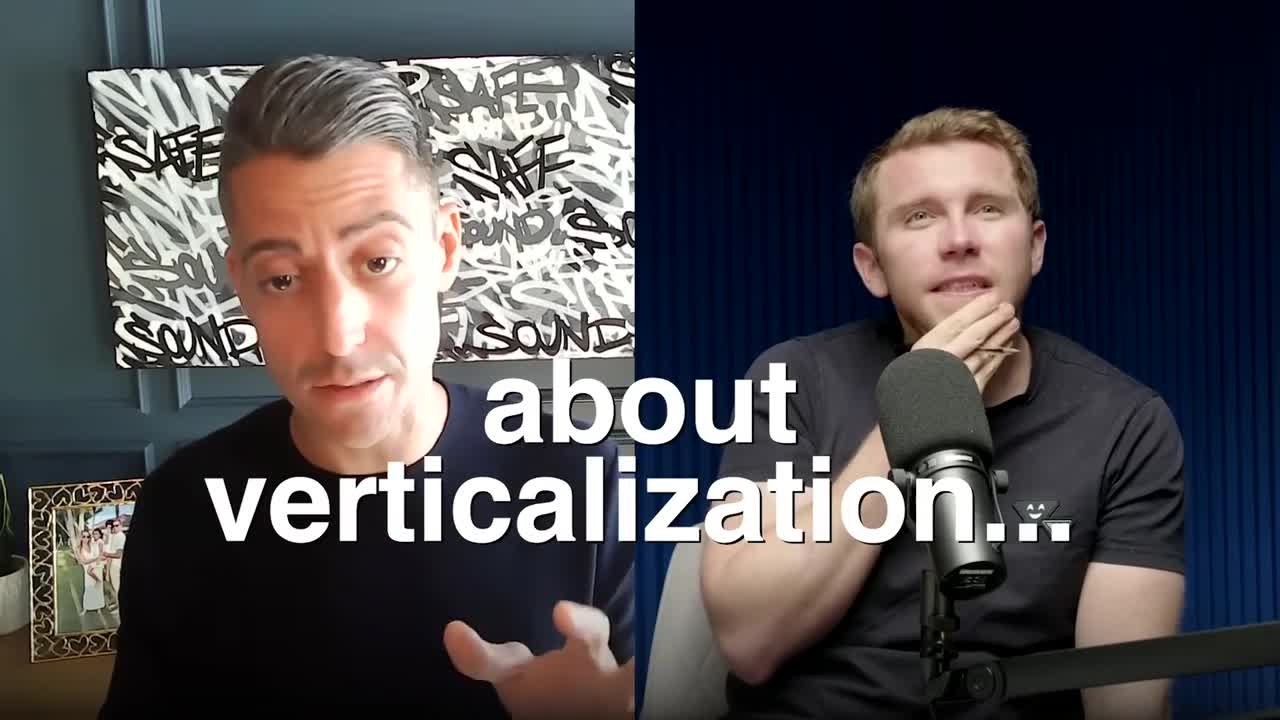
Now, if we're talking about verticalization... Ready to go?
Sean, it is so good to have you on the show, dude.
I said, I'm so lucky in the way that I get to interview the coolest people.
And Figma as a product is incredible.
The machine that you've built is awesome.
I'd just love to start on you and the love of sales.
When did you know that you loved sales?
Was there a, uh-huh, this is my career?
It happened kind of by accident, like I think it maybe does for a lot of people.
I mean, when I was going to school, graduating high school, thinking about college, it wasn't really like.
I mean, there was obviously the sales profession, but it wasn't something you really studied.
And so for me, I kind of fell into it.
I ended up going to school at BU.
I was studying advertising.
We had to get a summer job.
And I remembered, you know, For me, just like the year before, I got my very first cell phone.
So this is back 2000, cell phones were becoming a thing.
You didn't have them when you were much younger than that.
And I remember when I got my phone, it was in a mall, it was in one of those kiosks.
And I remember asking the woman who worked there, I was like, hey, how did you get this job?
She's like well, I'm a law student and this is a way to make extra money and you can do really well.
And I was like, I wonder if like I could do that.
So you know, I went to the same kiosk in the mall that I bought my own phone with my mom the year before.
And I met this guy. who was working there.
And I said, hey, how does one get a job like this?
I have no idea, but I'm, you know, I'm home for the summer.
I'm looking for work.
And he said well, why don't you start by just like writing down some information here about yourself?
So gave me this piece of paper.
I wrote down my name, my address, my phone number.
He's like okay great, you start tuesday.
And i was like what do you mean?
He's like yeah cool, you're hired.
Man like, and i showed up tuesday uh, he handed me some pamphlets.
He was like these are the planes you want to sell and you make money.
These are the ones you don't want to sell.
No one cares about the phones.
You sell whatever is in the in the bin.
Go to work.
And he left and i was like oh, my god, and um, i started figure, figuring it out.
Go back knowing all you know.
Now you can cool up that boy with those cell phones and give one piece of advice on how to be successful in sales.
Yeah, what piece of advice would you give?
Um, the first thing that jumped into my mind was be curious um, and really try to understand the person that you are trying to sell to.
What's their situation?
What's their circumstance?
Um, i don't know.
That's the first thing they can do.
You have the time today to be curious.
And what I mean by that is people are very cautious and hesitant with giving their time to anything.
It's more like, Sean, I know that Figma is this size company with this X and this problem.
Do you not need to know the customer today because you don't have time to be curious.
But if you're going to do qualification on me, I don't want to be qualified.
You should fucking figure it out.
So I do think it's a skill.
And, to be honest with you, I believe like right now, more than anything else, if you want to be great in, you know, enterprise tech sales.
It's not just about being curious.
It's about being prescriptive.
And that's an interesting balance, right?
Because you're right.
People are busy and what they really want is insights.
They want to know what can you teach me?
What what are you?
What are your other customers, your best customers doing that we haven't figured out yet?
And that's very much what we are preaching to our sales team every single day.
But you have to mix curiosity in along the way.
And I think that's the art of it is you have to be able to do both at the same time, or else you're not going to be successful.
Can I ask with you in jumping when you look at big mistake?
It's a beautiful product and it's a PLG motion in so many ways.
In a world of PLG, is sales less important than ever?
Um, I don't think so.
But what's really unique about Figma as a company?
This was what I, so I joined.
I've been here about four and a half years, and I started talking to Dylan five and a half years ago.
And at the time it was really early in the journey, but it was kind of unique in that.
You know, Figma has been around since 2012 and really spent like six years building the product, studying customers, really trying to perfect it.
Really not something that I had heard happen very, very often.
And then once you started monetizing, this is like end of 2017, end of 2018, really took off.
And it took off very much in this, not even PLG, I would say self-service way.
Like most of our customers, even today, At some point they started by going online with a credit card.
Someone bought a couple of licenses, started sharing links internally, and that's how things took off.
And that happened really, really fast.
And so when I joined four and a half years ago, we were a hundred, maybe $50 million company.
But in terms of our penetration in the market, we had tons tons of customers, way more.
So I joined Datadog, my previous company.
Similar stage in terms of revenue, nowhere near the number of customers.
So in many ways, the job at Datadog in the early days was much clearer than it was at Figma.
In Figma, we'd acquired all these customers so quickly.
And at the time, to your point, mainly what people were doing on the sales side was plg, the.
The sales role four and a half years ago was almost exclusively we're calling into or responding to existing customers that are on self-service plans and all we are doing is upgrading them to the higher tiers of the product.
That was the motion but You fast forward to today.
It's very, very different than that.
We are global.
We have multiple segments, SMB, mid-market, enterprise, strategic.
And if you look at what most of our sales reps are doing, especially kind of mid-market plus, it's very sales-led.
The PLG motion of upgrading people to new tiers, expanding seats into the existing accounts.
There's some of that, but so much of what's happening actually is what we were talking about before.
It's being prescriptive.
It's going into the customer with insights.
When you say it's sales-led, do you mean it's outbound?
Oh yeah, 100%.
Not 100 of our business is outbound, but 100, in that what the sales team is doing at Figma is majority outbound today,
Now it's outbound though, into an existing customer base.
That's the part that's unique.
So we are, These are companies that are using Figma, but they think they're happy using Figma.
They figured out how to use us in a particular way.
But we, through curiosity, through understanding patterns from how other customers are using Figma, we are approaching them with proactive insights for how they should be and thinking about doing more with us.
Who is responsible for that?
Is that account execs?
Is that cs?
How do you structure responsibilities in the team when you have that?
We don't actually have a traditional cs team.
When i started, we have a lot to figure out in terms of what is the motion and what we realize is.
Coming back to that earlier premise, most of our customers found us through a website and a credit card and they made their own decision on what they thought the value is that Figma could deliver to them.
And if you look across our customer base and this is even true today and you compare what an average customer is doing with Figma compared to what we think they should be doing with Figma, there's a pretty big gap and a pretty big discrepancy.
And so our job is how do we go and proactively educate the customer on the more that they can be doing?
And so we asked ourselves, is that a CS function?
Is that an account management function?
But where we landed is for the most part, that is a hunting motion.
That is a motion where, in order to be successful doing it, you have to go in and you have to actually get, in some cases, existing champions, but in a lot of cases new prospective champions and EBs to be really excited about something new that they haven't learned about Figma before.
What is the primary role of those, generally speaking?
Is it product expansion?
We want the same people to use more.
Or is it we want more people to use the same product?
I know it's both.
It is both.
But if there was one more...
Yeah.
Honestly, it is both.
I think for the most part.
And, by the way, this has evolved too, as we've gone from single product to multi-product.
I would say right now it's probably a little bit more in the using new products side, and it could be It could be the same people using those new products, but oftentimes we're talking about new personas, getting new individuals exposed to some of the things that we have to offer.
When you think about going multi-product.
I very often have companies which go multi-products that I'm invested in and the reps honestly know that verticalized solutions are better at point function things.
That's obviously not the case with Figma.
But what would you say if you know that your product is not as good as the vertically focused one?
But you're selling the platform.
I don't know that I have that exact situation that you presented, but I think you're saying if the power is the platform versus the specific features and functionalities of one particular product.
I mean, I think frankly, like the best sellers are not the ones that are focused on, this feature is better than this other company's feature in this product.
I think they are better at um understanding, like what where a company is trying to go you know where their business is trying to go and connecting the value to the overall solution to um.
You know those things that they're trying to accomplish.
And there's a storytelling aspect.
There's obviously the curiosity that we're talking about there.
But i think you have to be generally just honest with yourself about where.
Where is the customer really going to get the most value from what you have to offer compared to the competitor right?
And if that is through the point solution, then that's what you're focused on.
And I still don't think you use feature and function to get there.
I think you focus on value and value drivers.
But I think if it's the platform, then that's the narrative that you want to get the customer to believe in.
When we think about that platform expansion and product expansion in terms of usage, everyone is saying that seat-based pricing is dead.
Seat-based pricing, do you agree?
And if so, what comes next?
I haven't seen anything in our business that would suggest to me that that's the case.
I think it is hard to predict the future on this one, honestly.
But if you look at our own business, I mean, we had our earnings call a couple of weeks ago.
You may have seen it.
We added five points on our net retention.
Pretty significant.
I think it went from 131% to 136%.
Obviously today, we're in a pretty much exclusively seat-based model.
Now you might also know that that's changing in just a matter of a few days, where we're going to start monetizing our AI usage through credits as well.
But so far we haven't seen that in our business.
Part of that, i think, may be just the fact that um, because of all the things happening in the world and in technology, there's just more and more builders, i think coming, you know, into software as it exists.
So is that part of the reason?
I don't know, but there there's nothing that we've seen in our business yet that suggests that's dead.
I do think it's a tough one to predict long term.
Well, I think it's because your business is predicated around product people and designers.
And if you're in customer support, you can't have a seat based business.
You've got to have an outcomes based or a consumption based or in a lot of other businesses where you're replacing labor.
If you sell seats and you're replacing labor, you're in a tough spot.
Yeah, I mean, that makes sense, right?
I'm just not as knowledgeable about what's happening in those other BU's.
From what I can see in our business and the people we're selling to, that doesn't feel like a thing that we've encountered yet.
Totally get that.
It's an interesting kind of pushback on the traditional narrative.
Another aspect that I see more and more is the destruction of the role of the SDR.
Does the role of the SDR survive in two years' time?
Do AEs just be completely responsible for pipeline generation PG?
How do you think about that one?
Well, I'm kind of smiling because we also don't have traditional SDRs.
We really tried to be first principled with how we built the go-to-market at Figma.
And, by the way, this is coming from someone who had, by the time I left my previous company, maybe 200 person SDR team, a pretty traditional one.
So here's what I'll say.
First is SDRs or not, and you probably know that you spoke to my former boss at Datadog, Dan AEs have to be responsible for their own PG like full stop.
That I think is consistently true anywhere I've been, and I firmly believe in it.
I think that's critical.
That is the job in a lot of ways, like the most important part of the job.
I think with SDRs I've always tried to be really thoughtful about where is the SDR actually adding clear incremental value in a business where you expect AEs to PG as well?
And honestly, anywhere I've been, it's always been a little bit challenging to really isolate.
Okay, what did the SDR do versus the AE do?
Do you have them share accounts?
Do you have them split and have the SDR work on some and the AE work on some?
So it's hard.
Honestly, it's hard.
And I think I've always kind of struggled with it.
At Figma.
There's this other unique aspect which is again our problem is not acquiring new customers, right.
We have a lot, and so much of our focus is how do we expand in those customer bases.
And yet, even having a lot, what we've been trying to figure out is what is the job that needs to be done?
And we've tinkered with SDRs partnering with AEs to go expand into specific personas and do things like that.
But actually recently we made a new shift and we said even that we're gonna kind of take the focus away from
And we're using them now in a more pointed way on existing customers and managing small transactional renewals to get those off the plates of some of the more strategic AEs and the strategic work we want them to do.
So we're always kind of tinkering with like what's the best way to deploy that resource to get value?
And then, of course, there are talent pipeline as well.
There are future reps.
So we have no SDRs and we have no CS.
So just so I understand, the sales team is structured with AEs.
What else do we have in there?
So when I started, it was basically we had A's and A.M.'
's and we had two segments, mid-market and enterprise.
And if you looked at what mid-market and enterprise was doing back then, It was effectively the same thing.
They were doing PLG.
They were upgrading people.
It was a single product company.
And then AMs were, you know, effectively doing CS type of work.
They were driving seat expansion, but really, like they were doing support, they were trying to be really responsive to the customer.
It was, it was necessary for the the, the point of the business we were in.
When we looked at it we said okay, what do we need in the future?
And one of the things we said is like, One of the things I believe in the most is you need to have focus.
The best sales teams are the ones that are really, really focused and specialized.
So if you're asking a rep to do 14 different things, it's too hard for them to be good at all of those things.
So we looked at our business and we said, were there places where we can create focus?
And the first thing we realized is like, let's isolate this PLG motion.
So when we looked at it at the time, where is the PLG, that upgrade?
You know, when I say PLG, so by the way, maybe to define this for everyone, I think of our business in three.
I think we kind of have three distinct businesses at Figma.
One is self-serve.
That is people go on the website, they put in a credit card, they buy what they think they need.
And you can buy or lower to your plans directly, you know, through the website.
And then you get a link, you send it around and you grow.
Then we have what I'd consider our PLG business, which is really concentrated in what we call our SMB segment.
Those are reps that are covering 0 to 500 employee businesses.
And then we have mid-market.
We have our sales-led, which I'd consider mid-market, enterprise, and strat.
And those are just basically smaller book sizes, smaller companies.
So so that's the way we're kind of set up right now.
That plg motion, we said let's isolate it to smb, because we looked at the companies that were typically in that position to be upgraded from self-serve and almost all of them were under 500 employees.
Basically it was new startups that were coming into the ecosystem.
They were buying licenses themselves.
And then we try to be really sophisticated around.
When is the right time for us to proactively reach out to them, based on product signals, maturity that we see happening, to then have a conversation around?
Okay, you need to move up tiers.
I'm a founder with a PLG motion.
What is the one piece of advice you would give to me on the right time to intercept?
It could be duration, could be usage, could be seed expansion.
What is that sign?
I don't think it ever hurts to do it a little earlier than a little later, because I think what we do still find is we think it's the right time, based on our formulas.
You still have to convince someone that that's the case.
That might take a couple of go-arounds.
Our SMB team, they'll often lose a deal as in an upgrade transaction.
And then they'll win it a couple of months later.
And that's very typical.
It was typical of my last company as well.
But the what I think is dependent on so many factors around how people are using a product which features you're gating how they're interacting with it.
I don't know if there's like one specific answer to that.
When your business is basically expansions and upgrades?
Do you have pipeline reviews in the same way that are more yeah?
Oh, yeah.
So, by the way, just to finish, what we did is we said smb, that's the plg motion, everything else is sales led, everything else we do mid-market enterprise strat, which is the majority of our team and the reps that we have.
It's running like a very traditional SaaS sales business.
Again, what's unique is they're PGing primarily into what you would consider to be a customer.
We almost don't think of it that way.
The job of a sales rep.
They get their book of accounts and every year we've created more focus around them and we've had to do ruthless prioritization.
On which accounts are we gonna really go deep on?
But once they get their accounts, the job is you map it out.
You map out that org and you basically have a vision of what is the best in class deployment of Figma look like, based on your understanding of this type of business, and where are they today.
And that gap between those things is your job.
And you need to go figure out how to do discovery, how to do new business meetings, how to actually go build champions to get them to go from where they are to that future state that you want to bring them to through insights and a point of view.
And that is 100%.
They do PG.
They create opportunities.
We do pipeline reviews constantly.
We do forecast calls every week where we're digging into it.
Nothing super unique in terms of how we run that part of the business, except for the fact that it's not traditional net new that a lot of other companies would use as a definition.
What's your single biggest advice for how to create champions on steroids within a customer base?
There's a few things.
So, first is, you have to bring them insights, insights that are relevant to what they do and what they're thinking about.
That value, I think, is the biggest thing that makes a champion go.
Okay, I'm all in, because it's not just I love your product.
Of course, the Figma community is incredible, but you want to build an enterprise champion?
Like educate them.
Teach them something that they don't know.
That's going to make them and their teams more effective at their jobs.
That's the first thing that comes to mind.
Totally get that.
That makes absolute sense.
When we think about kind of teaching them and converting them.
I think sales comp is a very hard thing to get right.
We've had the CRO from Eleven Labs on the show.
I heard.
They have a 20x quota.
Is that a new world of PLG?
Is that Eleven Labs specific?
And how do you think about the right quota setting?
I've got controversial, I would say, opinions on quotas in general.
My perspective is quotas are kind of made up, honestly.
And I say that all the time to my team.
What I mean is I think there's this kind of prevailing wisdom with quotas that I've seen, especially when you're going into planning and you're trying to map out your year, where you kind of go okay, how much ARR do I need to generate?
How many people do I have?
How much quota do I need to then dish out to feel like I've got enough coverage where, if we're trying to add 500 million next year, if I've got 600 million of quota out there, that means even if people end up at 80 attainment, I'm good.
And I just think that's made up.
I don't think that has anything to do with how people are actually going to do.
And so the way I think about quota is it's more about a philosophy that you're trying to implement around what is the work that needs to be done, and how much reward do you want to dish out for that work that needs to be done?
And I think it generally comes back to that.
And so I don't have a singular philosophy.
If you don't have quota, how?
Or don't believe in quota, how do you think about setting urgency, setting incentives?
I, i believe in quotas.
We have quotas.
What i'm saying is i i don't necessarily believe that you completely de-risk your year by making sure that you've dished out enough quota to cover your target.
I think that's a bit of a false sense of comfort.
What I believe is that with quotas, you want to try to determine what are you trying to accomplish.
And the way I would think about it is I don't think there's a single answer.
And I think even at Figma, we've evolved.
In the early days of Figma, which may be similar to what's happening at Eleven Labs right now, the job was primarily take this product, make your customer really happy, know the product really really well, support them and then viral expansion would happen.
And there is frankly, if you think about the job to be done, there is a pretty wide population of people that could likely do it if they come in and they care about like learning and the product etc.
That's one thing and so you know, if you have that business you have to think about what is the reward for that.
What is the population of people that you can do that job?
Is that job not quite easy?
You're essentially an order taker.
When people are pulling the product out of your hands and desperate to use it, it's kind of easy, no.
I think there's things about it that are hard.
I don't want to say it's easy, but the way I think about it more is how many people out there could probably do it if we brought them in, trained them and they had the right personality, they had the willingness to learn.
I think about it as there's a big population of people.
You don't need to have 20 years of sales experience to figure out how to do that, even if there's things about it that are challenging.
I don't want to diminish what the job is.
But I think in that type of situation you're probably focused more on driving efficiency in the business.
Where we are right now in that SLG motion in particular, which is again mid-market enterprise strat.
What we're asking people to do, the stuff you just heard me get so warm and fuzzy about when I heard customers talk about in terms of bringing insights and building champions.
That is strategic work.
You need people who can really understand how businesses operate, who really understand not only the product but the landscape that we're operating in, who are able to PG and build these relationships, bring these insights, manage complex multi-stakeholder deals.
That is hard work and it's very, very strategic work.
So our philosophy now at Figma is kind of the opposite, which is we want to have really aggressive as in like, relatively easy quotas compared to what's out there in industry standard, because the work is hard and it's strategic and we want to really reward people that are doing that great work.
We also realize the population of people that are capable of doing it, is smaller, right?
They need more experience.
They need certain qualities and attributes.
So again, I think what Eleven Labs is doing is probably perfect for them.
I'm in the opposite side of the spectrum right now, where it's like I want people to feel like Figma is a place where you can come in, you can do this hard strategic work that's really driving value for your customers, and then you can be outwardly rewarded by it.
And so our, you know, an average enterprise rep here might have three to four x their ote for a quota um, and we're happy with that.
You can have someone who's sold that size of contract before or who's worked in, in or around the industry problem area that you solve, but you can only have one.
Which one do you have and why?
If those are the two options to choose from, I would take the person with the experience doing the deal.
Because I think the industry experience you can teach to the person who's got the right willingness to learn and the curiosity.
And obviously, you need to make sure you have that in a person and you test for it.
I'm kind of making a bit of an assumption that with those two choices, the person who's done the really big deal hasn't just got a bluebird right.
That they've managed multi-stakeholder long sales cycles have to build.
A lot of champions have to get to EBs.
Um, you know they're um likely leveraging something like calm and they're using medic and they're familiar with these concepts.
There's a lot more confidence that.
I think that needs to be built over time for people to be really good at that and i think, generally speaking, smart people can learn industries and landscapes in a shorter period of time.
So if those are my two only choices, i would probably take the person who's got the deal experience When we're running a process now for hiring people.
How has what you looked for in sales reps changed over time?
I don't know that it's changed that much, to be honest with you.
I mean, the first thing there is, I think, what you see on paper.
Right.
And I think that matters.
And I think increasingly I've become more opinionated on what I'm looking for there and what I'm not.
And I have to admit, some people don't agree with this.
I have usually a pretty visceral reaction to people who are super jumpy, you know, in terms of a resume.
And when we say super jumpy, I know it sounds awful, but this is like one year, one year, one year.
Exactly.
Like 12 months here, 18 months here, you know, 12 months there.
If you just and again people, there's so many reasons why you know people would encourage me to have more of an open mind for it.
And I get all of that.
But generally speaking, when you're doing this at scale, I don't, I don't know.
It's total bullshit.
If you've done it four times, right.
It's saying something.
Yeah.
It could be culture.
It could be family.
It could be whatever.
But four times.
Yeah.
So I mean, look then, when you're talking to someone, it's a lot of the obvious things right.
Learn from them that they have the grit that they are willing to persevere.
That's a really important one for me.
How do you tell?
Oh God, it's so hard.
I don't know.
It's really hard.
I think what Dan would tell you and I think he mentioned it when he spoke to you is he really wants to get the full history of the person, going back to school days and how they made their decisions.
And I will do that from time to time.
I don't always do it.
I think frankly, the thing that tells me the most on that front is the resume.
You know, looking at the places they were and having a sense of like the arcs of those places when they were there.
Is this someone who was just chasing something that was easy, or were they really actually, you know, sticking with something and making success out of something that wasn't successful?
I think that's a big part of it.
I think even you can create a process that forces perseverance through it in terms of an interview process.
So we always make people do a challenge or an exercise.
At the end that requires some heavy lifting in terms of learning a bit about our business, but also showing off your basic sales skills around discovery.
So I think that's a way to do it too.
It's hard.
It's hard.
What is, what is the challenge or exercise is the take home assignment.
It's a take home assignment.
It's a take home assignment.
We've evolved it over time, but it's kind of a combination of a disco demo.
You know, it's basically like we want to give people um a use case, a case study you're going to go pitch to this customer.
Here is some information about them, learn about them and come in prepared to lead a conversation, do some discovery and then turn around and get in the product a little bit and show us a quick workflow that you think would be interesting.
And personally I'm much more interested in how they do frankly, on the discovery side of that, because I think it's probably a little bit unfair to expect someone to be doing this amazing demo of your product with just a few days of playing around with it.
But I do think actually the product piece we've kept in there because it does show an element of perseverance.
If someone is actually willing to spend the time to learn a little bit of it.
I think it's telling.
And then the way they approach the discovery part I think tells a lot around their ability to actually be curious and do all of those things.
Okay.
So we're really impressed with this candidate me and you and we're thinking great, we should hire them.
And we move to offer stage.
Is there anything in the offer stage which gives you green lights or red lights around a potential sales hire?
One of the things that I always try to do is back channel.
I think that's a little bit outside of the question you're asking, but I think getting signals outside of the process in some ways I think are like the most valuable insights that you can get on someone.
I think on the offer stage itself, Look, you have some people who are going to naturally negotiate.
You're going to have people who are not.
I don't necessarily make strong judgments there, because I actually think oftentimes the person who's not negotiating is not negotiating at the end because the hiring manager, the recruiter, have done a good job of positioning ourselves and our offer in a way that makes them really just happy to jump in and take it.
I think the biggest thing I'm looking for at that point is someone's gotta be all in.
Like they have to be really excited to come on board.
And so I think if we have, and look, I understand people have choice.
And I fully respect going through a process with multiple companies.
But if at the end of a process with Figma, spending a couple of weeks doing all this work, if you're not like, all right, I'm in.
I want to do this.
It tends to be a little bit of a yellow flag for me.
And if they're actively trying to pit you against another company.
I just get nervous, because we've seen some people who we've hired like that and then, as soon as things are tough, or they didn't have the initial success they expected, or that other company that maybe they didn't tell you but they're actually more excited about came back with a better offer or a different offer, they leave.
Do all the investigation you want to do during the process, but then by the end, like both sides should feel like they're all in on this candidate
What do you do when you have to ramp a sales team hiring plan fast?
Is it better to fill seats and bluntly get rid fast and be quick with decisions, or is it better to go slow and miss hiring plan?
I think it's between those two choices.
I would prefer to go slow, uh and, and risk potentially missing the hiring plan, because if you make that wrong hire, it doesn't matter how fast you move.
Um, you've cost yourself time.
In my opinion, And look, it's a balance.
But look, at the end of the day, if someone comes to me and they're like hey, I know, I've been sitting on this open headcount for three months.
I have someone, I'm not that excited about them.
I think they could maybe grow into like a solid B player.
I'm never gonna say hire that person.
I'm just not going to do it, even if it risks the hiring plan.
I met a founder yesterday and they were increasing their sales team by 200 reps in the next 12 months.
And I was just like, honestly, how many do you think will be good?
And he was like, probably 20.
Yeah, yeah.
I mean.
So look, the flip side of it is there is a reality of you know.
I think it's slightly different than resigning yourself to hiring that B or C player, but I think it's facing the reality that you can do, you can build the best process, you can have the best instinct.
And I still come back to the little joke I made earlier, which is like really figuring out if someone's great in an interview process is actually freaking hard.
So you have to realize that only part of the job is getting the person in.
That's when it actually it really starts, where you have to figure out do you have someone who's going to be able to grow and be successful, or did you make a wrong hire and do you have to do something about it?
And I also think that it's not always as simple as right hire, wrong hire.
I actually personally think most people have the potential in them.
Some don't, and you might make some mishires, right?
But a lot of people I think have potential.
And there's so many factors that actually contribute to are they going to be successful or not?
How great is their leader?
How great is the enablement?
How much of a chance did you actually give them I've got people who've gone unplanned.
The person I'm thinking of actually from my last company went on a performance plan and was really struggling.
But we kept looking at all of their inputs.
There were so many great things that they were doing.
And we said, let's focus on just coaching around the areas that are gaps.
And came off of it.
I'm long gone.
That person is still there.
Multiple promotions one of their most successful reps.
So I actually think that It's not as simple as did you hire the right person or the wrong person, but did you put them in an environment where they can succeed?
Are you actually holding them accountable to the right things?
Can I ask you how big is your sales team today?
Uh, hundreds.
Um, you know we're probably pushing 500 in my whole org.
That's not just sales quota carriers but if you include some of the supporting resources etc.
Yeah, will sales teams be larger or smaller in the future?
Um, pushing you to be more efficient?
No, I think we're kind of going the opposite.
I feel like truly we talked a lot about efficiency in our early days.
And I think now, so first of all, like how much more efficient can you get, right?
You've got a half million customers you're trying to support with I don't know 300 quarter carrying reps, whatever the number is like.
You're pretty freaking efficient already.
So I think this might be like a unique Figma thing that for us, I'm pushing and Dylan is on board with more headcount in sales to do more of this strategic work with customers that we really are seeing great results from.
Is that the case for every business?
I i don't know, but not for us.
I think we're going to continue investing in sales headcount.
Going back to the hiring process when you've made a miss hire, what did you not see that you wish you'd seen?
Like for me, one is like when i'm constantly pushed by the candidate on role and they want an increased title And I always push it to the back.
I'm like, well, they're brilliant.
So of course they want to be X. No, no, it's always the problem.
And it always ends badly.
What's yours?
I think it's anything like that that suggests, you know, mercenary versus missionary.
And look, we're all in sales.
Like, there's little mercenary in all of us.
And I get it that in some ways where sales this is kind of what the profession calls for.
But I know lots of people who some of my best people over the years where money wasn't the first thing that they were thinking about.
Now, career growth, learning and development, different.
That's very, very different to me.
But I think the best people actually kind of know that if you're prioritizing those things, the money comes.
And I think in fact, some of the people who've been the best earners that I've been around in the past 10 years, they haven't been the ones that were focused on I gotta maximize my W-2 or I have to maximize, And in fact I've seen people who, when they're chasing that, it goes the other direction.
So I think that probably is my answer.
I think there needs to be a passion for growth, for career acceleration, for learning development, for collaboration, for people who want to just get better.
The growth mindset, I think, is the biggest thing.
And so if people are too focused on things that aren't suggestive of growth and is more focused on the individual and this very point in time thing, that's a yellow flag for me.
Okay.
So we make this hire and it's time for them to ramp.
And I'm a founder.
You're an angel investor in my company.
I'm sorry.
You've just probably burnt your money, but go with me on this journey.
How do I ramp new reps effectively?
What would you advise me?
Um, it's a good question.
I think we're always learning on this one, you know.
So I won't admit that um I've perfected it or we've perfected, or anyone has perfected it.
Cause I think it's really hard.
I always come back to first principle thinking on what are, what do you need, what is your organization need at that point in time, rather than just like a simple formula, that's like rinse and repeat, regardless of the situation.
And so i would think about what is the job that needs to be done by that person.
And I say that because even in our own organization what we're thinking about is should the onboarding and enablement plan for an SMB rep that's primarily doing the PLG motion be the exact same as the Strat rep?
It's got two accounts or one account that they're trying to go really deep in.
And I don't think necessarily that it's the case that it needs to be the same.
But ultimately, I play back, what do you need this person to do?
What do you need them to be really, really good at?
And how do you get them enabled in those things as quickly as possible?
And so is it that they really need to- Take me to a strat rep.
Take me to an enterprise rep and give me their onboarding.
Yeah, I think for an enterprise rep one of the things we want to do is kind of as quickly as possible, even before we teach them all the product stuff and the sales skills which hopefully they're bringing some with them.
We kind of want to get them into their account and their territory.
First thing, kind of throw them into the fire on.
You know you've got one or two accounts and these are accounts that are spending a lot.
There's so much work to be done.
Before you came in likely, there was another rep that was working on it, or the manager or director is talking to them.
Let's get you engaged and let's just get you having building relationships and learning that business.
And then I would say after a couple of weeks, like they've gone through, they've got their laptop, they understand what account they have.
They've maybe been on a few calls where they've listened in.
Now we want to get them into like a proper onboarding.
And the way we think about that is what are the things that this rep needs to know to be really good at their job?
A strat rep in this example, they better understand the landscape really well.
So they need to know the product, obviously in our platform, but even more so what is happening in tech around our ecosystem.
Do you create a playbook for them on that?
Is it like, here's a file of flags, go learn it.
This is... To be honest with you, we're rebuilding this right now.
What we're talking about right now.
We're like rolling out.
We actually did this week.
We're doing our like soft launch of the new version of it, but that is what we are striving toward.
It's very much like a.
We're also moving to classroom style in person and, and you know, in the covid days we kind of got away from that.
But we're going back to classroom style.
We're going back to in person, we're bringing in the thought leaders across the organization, across these different pillars.
And absolutely, we're going to educate them on this is what's happening in the tech ecosystem.
These are the different players that your customers are going to be thinking about potentially using leveraging.
Here's our positioning in that conversation.
Here is what our best customers are doing.
Here are the things you need to understand about the product.
And then of course, here is our sales process.
They need to understand our sales process, beginning to end, all of the resources that are available to them along the way, all of the things that we're going to do to help them.
Pipeline reviews forecast calls the operating rhythm that we built here.
So it's taking them through all of those things.
Again, once they've got a little bit of footing underneath them, and then it's ongoing enablement.
It's something new happened in the market.
How do we make sure the whole team is educated on it?
So we have recurring kind of enablement stand-ups that we do where it's like okay, something new happened, whether it's a product launch on our side or something launched.
You know in the ecosystem that we think is important to keep people updated on.
What sales communications platform are you on When you think about you as a team and there's an update in the market?
Is it Slack?
Is it email?
How do you ensure synchronicity of knowledge across teams?
I think, honestly, we have work to do there.
I think if you talk to our reps, it's one of the things they'd complain about.
If I'm being completely honest,
I think we have improvement to do there because we kind of use it all.
We have our sales enablement platform.
Then of course, we have Slack, and our Slack is as noisy as a lot of the other companies that get to our scale.
We are doing things in person, we are doing things on Zoom, we have content everywhere.
And again, we have so many customer stories that they end up in multiple systems.
And of course, I didn't even mention our CRM that I think we have more work to do to make searchability better across all of these different places.
Or to just say look, we're going to take a different approach and we're going to have everything go to one place and have a singular approach.
So I'm being honest, we don't have that solved yet.
How do you think about pushing the boundaries of sales technology adoption within the team?
Like, again, Jason's one of my best buddies.
He is so qualified on what he is so versed on.
Qualified momentum artisan all the different providers.
Yeah.
Do you worry that you're too focused on execution, that you don't pull your head up enough to invest in the future of sales tools?
I do worry that, if I'm being honest.
That is not something that has been top of mind for me historically.
I've been much more focused on the inputs.
What are we doing every single day?
Getting better ourselves, the conversations we're having with our customers.
But so to your point.
Just in these last few weeks and months I've been much more passionate about where can we invest more in either agentic solutions or more exciting tech that can make some of this stuff easy.
It just comes back to, I want to make the job of our reps easier.
And it's very clear where they're really happy and where there's frustrations.
I think every company, you're going to have both.
And I think the frustrations on our side right now would be from the fact that there's a lot on their plates.
And I think if we can leverage some of these new technologies to remove some of the friction on the duplication of data entry and those types of things I think it's not a hard thing to do that will make a meaningful impact.
I don't mean this badly.
Do you think you and the team are equipped to train agents in the way that they're needed to be trained?
Again, I go back to Jason.
Jason is so good now at training agents and he assumes that everyone else is.
I don't know many sales reps that are that versed in how to train the next generation of sales agents.
Yeah, I don't know.
I don't know that we are.
I think that's something that we will need to explore and figure out if we're capable.
And if not, we're going to have to learn how to bring in more resources and knowledge on that subject.
It's certainly not something that I'm an expert at personally.
This is why consulting businesses will do very well in the next few years, my friend.
Seriously.
Implementation and adoption, I think will be one of the biggest things that you can learn and improve on as a company.
Cass, you mentioned sales performance and hot takes there.
What are the hot takes around sales performance?
I'd love to hear those.
Probably my hottest take on sales performance which is not a new thing, I've said this for a very long time is I kind of don't care if you, as a rep, hit your quota or not.
And what I mean by that is a bunch of things, but first and foremost, similar to the discussion we're having before, I think I've been in situations consistently where we're doing our best to set a quota based on that philosophy right.
I just shared our philosophy right now is to try to do aggressive ones, really reward people, right?
I've been in other situations where we're focused a little bit more on efficiency based on the job to be done.
Whatever the philosophy is, I've been in situations multiple times in my career where the year starts going and you realize you didn't actually get it right.
And that could be in either direction, right?
You set them too high, oftentimes you set them too low, whatever, compared to what you expected.
You don't get it right.
And so I think of quota as both something that's more systemic than something that is entirely on the individual.
And I also, the other reasons for this is I just think it's too much of a lagging indicator.
And I think it what my fear is.
It creates lazy leadership.
If we're performance managing based on the idea that someone got to their number or didn't get to their number at the end of a month, quarter or year.
If you're a strat rep, we don't really know how to judge you until the year is over.
If you have one account and you're building towards this big renewal at the end of the year.
So then how do we judge people?
If it's not on quota, how do we judge them?
I am obsessed with behaviors and competencies as the core facets of a performance framework.
Okay.
But then how do we make that specific behaviors and competencies?
You write it out.
So we have written out and, by the way, it's probably, if I'm being honest, maybe too detailed, but one of the first things that we did is we wrote out a performance framework And we said, by the way, quota is part of it, right?
There's a results category and I'm not dismissing quota entirely, but there's a results bucket and that's just one bucket.
And that is not just results from a quota perspective, it's PG, it's all the success metrics that we are tracking.
And then behaviors, and we documented what does that mean.
And then competencies we documented all of the competencies that we actually care about.
Can we just dig in what?
What is behaviors and competencies, though?
Because like, if you have like curious and ambitious dude, i can be curious and ambitious and sign no contract.
Yeah well, I think the behaviors one is probably a little bit simpler and straightforward.
It's how are you showing up?
Are you collaborative?
Are you someone who is just looking out for, are you lone wolfing it, just looking out for yourself?
Are you collaborating with your teammates?
Do you have a growth mindset?
Are you someone who's negative constantly in the office and impacting the people around you?
I mean, there's some basic things there.
Competencies which I think are the most critical.
Those are hey, if these are the things that we've defined as important for you to be good at your job day to day, What are they?
That's the ability to do PG effectively.
That's the ability to do discovery effectively when you're talking to a customer.
That's the ability to actually manage your pipeline effectively, leveraging our medic framework.
That's when you're doing discovery.
We teach calm, we call it Figma, value selling.
But are you leveraging our methodology when you're doing discovery?
So it's all of those details.
And then back to, just quickly, the point around the hot take on quota.
Where I come back to is if someone says hey, this person is not doing well okay,
The first thing I'll ask is why.
And if they say well, they didn't hit their quota, I'll immediately go okay.
Well, let's talk about why they didn't.
And let's get into those competencies and let's get into those behaviors.
And if someone says well, actually This person's like totally busting their butt and they're grinding.
They've got amazing work ethic.
They've got a great attitude.
Like every day they're trying to get a little bit better.
And oh, by the way, their PG is really good.
And it's just taken some time.
It's not translating.
When I listen to their calls, they're executing calls really, really well.
And pipeline is being developed.
It just hasn't translated to their number yet.
My argument is if you're going to move that person out of the business, what are you hoping to get to take that person's place?
We just talked about- If you're doing PG really well and you're doing qualification really well and you're showing up to the calls, you will convert.
It converts.
I agree with the exception of, what if we got it wrong?
What if we got the quota wrong?
What if we set it too high?
And that happens, it truly does.
And like, I agree with you, Harry, but we're trying to manage things at scale, right?
And what I don't want is to create a culture of lazy leadership.
I want leaders to be in the details.
I want leaders to not be talking about.
Well, I got to move this person out because they didn't hit their quota.
I want them to say it's because this person isn't showing up right.
Like they're not working hard.
They're not capable of.
You know translating our enablement into conversation, because that tells me the leader is in the boat with the rep.
You know they're not lagging indicators, they're.
They're more real time.
I'm a lone wolf, but i make a lot of money.
Yeah, and i and i close, and i'm not bad for the culture, but i'm not collaborative and i'm not a team player.
You got a problem with me.
I think There's a place for that honestly.
And I know some great reps who you would probably define that way.
And actually, when you talk to them about it, they don't even want it.
It's not like they're proud of being a lone wolf.
It's just that this is how they're wired.
And the job means something different for everyone.
So I don't really have a problem with it.
And I think I've actually seen people who are categorized that way, where once you talk to them and you say hey buddy, you're great, but you know that like, some people are defining you as a lone wolf is that how you want to be known?
And they go, oh shit no, i don't even know.
That's what people thought of me.
Um, and you know like, thank you for the coaching.
And there's others who they're like you know what.
I'm going to be a lone wolf, but i promise i'm not going to poison any wells.
I'm not aspiring to be a leader, i just want to like, do my thing, make money and be successful.
And I think that's also perfectly okay, as long as it's not negatively impacting others.
That's one thing that I've really learned.
I've allowed bad apples to persist because they've made money and I've forgotten how damaging it is to the rest of the apple.
That is a different situation.
That is a problem.
And I think you can't move fast enough in those situations.
And we've seen them.
We've had those experiences, multiple companies I've been at.
And you can never move fast enough, is my opinion.
I will say sometimes I don't know that they know.
So I do think, even in those situations, starting with giving feedback and coaching, I think sometimes you'll find that people are like oh wow, I didn't realize I was coming across that way.
Other times it's very apparent and it is more malicious.
So I still feel like you give the feedback, you give the coaching, but then if it's still persisting, you have to make We were kind of aligned, actually, in what we were saying around quota.
And you said, well, sometimes you just set the wrong quota.
If you were advising another sales leader or me, a founder of an early stage company, around how to set quotas effectively.
It's pretty hard to do.
Thumb in the air, I think it could be this.
What would your advice or lessons be around effective quota setting?
I think it's start with what are you trying to accomplish in what you're trying to do with your sales team?
And be really honest about where your business is right now.
And are you pulling?
Is the market pulling you?
Are you pulling the market?
I think it starts with those things.
And if where you're ending up is hey, we have an opportunity, we love what we're doing, but we have to push it to the market and we have to do that in a very proactive strategic, outbound way and we need x type of people to do that then index towards giving people more favorable quotas to entice great people to come in and do that kind of hard work and you're going to reap the benefits of it.
If you're in a position where again, you don't know like the market's moving so fast and there's so much market pull and you're just trying to figure out how to keep up with it and its job is more transactional at the time, then you probably want to build in some safety nets and focus more on the efficiency pendulum.
But I think it starts with what are you trying to solve for?
How do you determine when enough is enough and when the rep's not performing?
Is it better to like fire fast and make the decision, or is it actually better to give people more time?
I think it depends on where their challenges are.
And again, I am generally pretty patient.
If you tell me someone's working really hard and they're improving and they have a growth mindset and the tools are there um, it's just not quite quite coming together yet.
I generally tend to be more patient because again, i'm always thinking about at scale i need hundreds of people right like, what is the alternative to this person who's busting their butt and getting better every day and and has the desire to win and seems to have you know the aptitude and it's just taking time.
Like you said, if you hire 200 people, maybe 40 of them are good.
It's hard to find great people.
And I think those characteristics are really fundamental in what great people look like.
If the problems are different than that, if they're like we talked about, they're bad seeds or they're not working hard you know they're complaining, those types of things then I think you have to move much faster.
I have like super high bar impatience for the people that are doing all the right things but it's not clicking yet.
And I have a very low bar for the people who are not exhibiting the will, because that's just so.
I feel like it's so in our individual control.
You might not be able to control the quota.
You might not be able to control, did we give you the right enablement or not?
But you can control your attitude and how you show up every day.
And if that is not there, I have no patience.
Final one for you before we do a quick fire.
I believe in verticalized sales teams a lot.
I think specialization and focus drives efficiency and outcomes.
What would be your biggest advice to founders or sales leaders on when and how to verticalize sales teams effectively?
Yeah, I think focus and specialization, no question, as early as possible, in my opinion.
Now, if we're talking about verticalization by definition, peeling off specific industries and focusing people in a subset of types of customers, I think that is, again, highly dependent on the product, the platform that you're selling.
So I can tell you, at Figma we to this day have not actually done any type of industry-based teams, but what we have done is we thought about sales motions, personas that we're selling to and creating.
You know, in some cases it's been trial and error, but some overlay teams.
We, you may know, we acquired a company called Weevy not that long ago and the way we're going to market with that product right now is in a little bit more of like an overlay motion.
And what we're coming back to is like, what are you asking one person to do?
And is it too much?
And at the point where you have to just make the call, at the point where it's too much for one person um, you have to think about how do you create more specialization, and that might be segmentation, it might be verticalization, it might be overlay, you name it um, but that's what i always come back to is like are we asking reps to do too much?
And too much means understand the product, the vision, the landscape pg, manage deals, etc.
Um, if we're, then You know one of the equations will be for then asking them to go master a new persona or a different type of motion.
That might be too much, but I think it depends on each organization.
Dude, we're going to do a quick fire.
I say a short statement.
You give me your immediate thoughts.
Does that sound okay?
Okay.
Which sales org other than your own do you most respect and why?
Datadog.
Well, I mean, I did work there, so I maybe cheated a little bit, but they have been able to keep great people there for years and years and years.
They really believe in promoting from within.
And they're another one of those few companies where they've kind of mastered all the segments, SDR to very, very strategic.
What is an outdated sales tactic no longer is relevant?
Sending gifts.
Sending gifts.
Yeah.
You don't think that still plays?
I've never, I mean, I've never understood it, to be honest with you.
I think I have like a pile of gifts that are sitting in some office in San Francisco that I don't occupy right now for me.
But like, I just don't understand how a gift would, it just feels so transparent to me.
You know, like I'm gonna give you- It's called a bribe.
Yeah, it just feels icky to me.
I don't get it.
Could it work?
Maybe.
It doesn't feel right to me.
What are remote sales teams, dad?
Are they dead?
No.
Are they harder?
I think so.
I mean, it just puts a lot more pressure on the system, I think, if it's fully remote.
But are they dead?
I don't think so.
I honestly think, like If you go completely the other direction, I think you're probably keeping yourself from being able to hire some really talented people that are.
You know, they've moved to cities where they're not going to have families.
Now they're not going to go to New York, they're not going to go somewhere else.
So, you know, I do think it puts more pressure on leadership, for sure.
I don't think it's dead or you're missing out on some real talent.
What's your biggest regret and why that?
I try to not live with a lot of regrets.
I will say, going back to my early days at Figma I was, I feel, like I had it in my head that I really wanted to come in and not be the guy who's just coming in hot and trying to change something I didn't know anything about.
And so I probably went maybe too much the other direction in terms of like, too much time, kind of like observing, trying to understand the culture that existed.
And that's not to say we didn't start implementing some things quickly, but I think I maybe overdid that.
And it's not a regret, but I think, looking back on it, I think it's something that I maybe would have approached slightly differently.
Final one.
I like optimism.
I'm a positive dude.
What are you most excited for in the next 10 years?
It can be anything.
So like for me, mum's got MS.
I'm very excited about drug discovery for kind of rare diseases or kind of maybe chronic illnesses.
I think that's super exciting.
Well, we could take this offline, but I've had health things surrounding me and I feel very similarly.
I'm always.
You know, I don't know if it's real or fake, but I'm always reading stuff about the advances that are happening with AI medicine.
I'm very optimistic that that's one of the really good things that's gonna come out of this new wave of technology.
I'm looking forward to... So I've got kids, they're nine and seven.
I feel like...
I've got maybe five years where I'm still and their mom are still like the most important people in their lives.
I really, really wanna do my best to enjoy that and just be in it with them um, so that i'm i'm i'm interested in obviously like continuing to grow this team and i'm really excited about the future um, and just how the landscape is evolving and and where we're positioned in it.
So there's a lot of things i'm really excited about.
It's fascinating.
By the time your kids are 18, they've spent 92% of the time.
They will have, I know I've seen that it's appalling.
Isn't that me?
And it's really scary.
And I'm always feel like I'm trying to be so in it and I think I am, but then I'm always.
Asking myself if I could have done better.
And I think that just comes with the territory.
You know what?
The older I get, the more I think we need to forgive our parents for their errors.
Oh my gosh.
No one really knows what they're doing.
Oh my gosh, 100%, 100%.
And my parents, you know, were trying to make ends meet and To their credit, I look back on my childhood and I thought it was wonderful.
And there was plenty of drama mixed in, but they did the best that they could, and that's all you can ask for.
Dude, thank you so much for being so brilliant.
Thank you so much for putting up with my inquisitive questions.
Dude, you're amazing.
The curiosity is incredible.
And just a privilege to be on the show, to get to meet you to, you know, be amongst all the other really brilliant people that you've had the chance to speak to.
So thank you.