Hello, and welcome to the NVIDIA AI Podcast.
I'm your host, Noah Kravitz. The story behind today's episode is a familiar one.
A person complains so much about a problem that their significant other finally gets fed up and challenges them to, you know, stop complaining and do something about it already.
And sometimes they do. In today's example, the problem is garbage.
People create too much waste, and more pointedly, too much of it winds up in landfills when it could be recycled.
Our guest, as you might have guessed, is the man who went from complaining about the garbage to doing something about it.
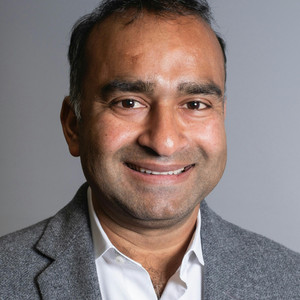
JDM Body is founder and CEO of Everest Labs, developer of RecycleOS, the first AI-enabled operating system for recycling.
Everest Labs technology is being used at recycling facilities around the world, and the company reports that an average of 25 to 40% more waste is being recovered in facilities that use their tech.
As both an AI enthusiast and a pretty committed home recycler, I'm excited to talk with JD and learn more about RecycleOS and everything else Everest Labs is doing to make our world a less waste-filled, and more recycling-friendly place.
So let's get right to it. JD Ambati, welcome, and thank you for taking the time to join the NVIDIA AI podcast.
Thank you, Noah. Thank you for having me.
So I hope I didn't overdo it in the intro.
I'm not calling you a complainer. I'm relating a story that was related to me.
But that seems like a great place to start.
Do you want to maybe tell the audience the story of that trip you took and how it sparked the idea for what's now Everest Labs?
Absolutely. It's just a fascinating coincidence.
I'm on a holiday in India with my wife and She's from here.
I grew up in India. And in 2016, August, You know, she points to trash on the streets and the recyclables on the streets And then she says, oh, look, you know, India, I've been coming here since for the past eight plus years. as a girlfriend and now as a wife, you know, this is so weird, you know, the nicer buildings, the nicer cars, better roads,
But why is the trash is still the same? Why is everything getting piled up?
Why are recyclables piled up or somebody else is coming and picking it up?
Oh, I think you should do something about it.
This is such a wasteful process. You should look into it.
You should solve some real problems with your two degrees.
And I was like, what are you talking about?
And she goes, you know... Hey, look, how much do we pay for our house in California for garbage and such?
Like, I don't know, 150 to 100 a month is an auto pay.
So that's when she tells me, look, it's a big industry. critically important.
I think you should solve some real problems with your AI background, you should look into it.
That's the extent of it. I like it. Yeah.
And lo and behold, I came back and I started reading every possible book I could get my hands on about the economics of waste and recycling.
Narrow it down, pick a couple of highlights, but what did you learn or what... Was it something you learned then or were you at this point...
You were just the kind of person who, once you got in that deep, you were going to do something about it.
How did that process evolve? Yeah. So, you know...
First, it was all just learning about what is society?
What is waste management? Like why my own family with two little children, why we are producing so many cardboard boxes, so many recyclables, so much space.
And, you know, Between 2016 fall and 2017 winter, I was still employed and I was just reading everything about it.
And then after I became a free agent, I said, you know what?
Let me go talk to the recycling companies and And I asked them about their problems.
Like, you know, I read a lot. I know basically what is happening.
And what I learned was that The waste management industry, it doesn't matter how much you and I recycle.
It doesn't matter how much a business recycles.
At the end of the day, what matters is the recycling plant that processes your materials, if it's not running efficiently and effectively, then they will lose all your recyclables to the landfill.
So I learned that... The recycling plants are actually not processing recyclables.
They're actually processing billions of data points that should be a harness to actually recover more easily.
And I learned how many struggles they have around it and what can be done.
So that was the beginning of my journey in this space.
Okay, so I might be, I have a tendency to sometimes ask, I think I'm asking one question, I'm really asking 12 questions at once.
So call me out and we'll break it down. How did this notion that they're not recycling waste, they're processing recyclables, they're processing data points change? and you need to harness these data points.
Can you break that down a little, explain to the audience what you mean by that, and then maybe that can leap into what your solution started to become.
Yeah. So what I learned is, you know, if you think about a typical recycling plant, Did they receive the trucks that took away your recycling? bin materials from your house or business and your black bin and such.
So these plants are getting the materials They're looking at it from the perspective of how many tons of material is coming in.
How much of that is getting processed? How much of the materials, valuable materials are getting recovered? and bailed and sold in the market?
And how many tons are going to the landfill?
So, you know, it's really garbage in, garbage out.
I know how much was recovered. Right. What... we learned is they were not able to quantify the patterns of what is the volume of aluminum that they are seeing on a daily, hourly, weekly basis, or plastics, or types of plastics, cardboard, a newspaper, paper products.
They didn't have the minute details that would enable them to say, no, I'm receiving a heavy load of beverage cans, so we should recover more aluminum so that we can, you know, build them up and sell and get more value. because aluminum can be recycled infinite amount of times.
So they didn't have any of these real time data insights into what's flowing through their plant on a commodity basis.
That was a big discovery for us. Because they can, as you said, but just to clarify, make sure I understand, they, I would assume these, were they called MRFs, material recycling cells?
Yes. So I would assume they have contracts, they get revenue from local municipalities or what have you for processing.
But then it sounds like they can also drive revenue by turning around and selling the materials that can be used again.
Correct, correct. So they make money two ways.
One is... the collection fees that you and I pay.
And the tipping fees, that's what they call them.
And then they make money by selling the recyclables that they have recovered in the inbound stream in the open market.
And these commodities are traded just like any stock futures, if you will.
They sell these materials in the open markets to brokers or end users or reprocessors, and they make money from that as well.
And so they didn't have the means, they didn't have the capability to, as you said, to analyze an incoming... drop or whatever the word is, an incoming batch and say, you know, oh, it's a bunch of soda cans.
We should be harvesting a lot of aluminum here, and then we'll prepare, do the things to...
Build up, turn around, sell it. Correct.
So what they faced was they are constantly fighting volume tonnage battle, volume coming in.
Machines running, optical sorters, air jets, eddy currents running, people sorting, everything should work as a well-oiled machine, and they're maniacally focused on that.
But what they were not seeing is what is the distribution of the materials, types of materials. how much they are recovering in real time from each mechanical processes. how each of their mechanical equipment is working, how is their staff doing, how much they're losing to the landfill.
They couldn't quantify it. They could only quantify in generalities.
And those generalities are adding up to tens of billions of dollars worth of commodities going to landfill, which is an utter waste of our resources.
Sure. So that is what my biggest discovery is.
Recycling plants, MRFs are are massive data engines that happen to process millions of metric tons of waste and recyclables.
They are the forefront of recycling, the central gatekeeper of what happens to a recyclable product. whether they go to landfill or they get recovered and reprocessed.
And these guys need the most help And they should have access to the same tools that companies like Google, Facebook, Amazon are using to do a great job.
Right. And so Everest Lab comes in how?
Yeah. So, you know, I, as a outsider shows up with a book and a pencil and then it does shit.
And ends up in recycling plants. They're all like, who are you?
Nobody from Silicon Valley ever comes here. either than if you're working for NPR or if you're part of a school project. taking a tour.
And I was like, look, I don't need a job.
I don't have anything to sell. I know this much from what I learned.
I know this much from what I spoke to with your truck drivers.
I'm here to listen to you about your problems.
And if I can help you, I would like to help you.
If I cannot, I cannot. And now this is where they opened up.
They opened up about lack of data, lack of technology. tools, lack of equipment being intelligent, you know, the current solutions were promised under delivering.
And basically they spoke their heart and minds out saying, we have dozens of problems.
Nobody cares. We have the same people selling the same things.
Optical soldiers, air jets, you know, whatever, conveyor lines.
There is no AI. Everybody talks AI. We need real technologies.
Here we are. That was their feedback to me.
And of course we started building the building blocks for RecycleOS from then onwards.
So tell us about RecycleOS and you can feel free to skip ahead a little bit in the timeline to what you're doing now or however you want to set it up. but what kinds of solutions did you, are you building for them?
Yeah, absolutely. So what's RecycleOS is, we brought on the problem statement into multiple components.
One is the AI engine software data component.
And then the other component is the manipulation and sorting mechanical retrieval components.
So we wrote the brains first. And then we tied it to the bronze of, say, the robotic arm and such.
So RecycleOS is nothing but an enterprise software AI engine that takes the inputs from real-time vision cameras on these conveyor lines using high-speed edge compute We analyze what is happening on the conveyor line and classify hundreds of categories of products waste and recyclables and to hundreds of subcategories of these superclasses. and quantify everything on a real time basis.
Think about itself as a every conveyor, the materials are like a, you know, your stock portfolio or S&P, how it's trading, what a course of a day or a week or an hour and such.
So you get all those analytics on an hourly, daily, minute by minute basis on the conveyor length, on a conveyor basis.
Now Noah, you know, okay, how many conveyors does the recycling plant have?
It's miles of conveyors. Yeah, I can't even imagine.
Yeah. Shockingly, it's miles of conveyors going up and down, right and left. and they are three feet wide to up to as wide as eight feet wide.
And if you don't know what is happening on the conveyors, then you can take decisions as a plant operator to recover more or how do you recover more?
How do you set up your equipment for success?
So Recyclo does exactly that. High-speed edge compute. that offers real-time analytics on what's happening.
And then we tie these analytics and tie it back into equipment such as robotic arms, equipment such as plugging into SCADA systems, plugging into optical sorters, air jets and such. to manipulate equipment to perform sorting with the highest degree of accuracy and efficacy.
So when these conveyor belts are bringing all of the recyclable, all the materials and all the recyclables, I would assume there's probably some non-recyclables that get mixed up. and all the stuff's coming in.
And so the first part of the process, you have the cameras, scanning what's going on, the vision cameras, and you're getting these real-time analytics.
Are the analytics only about like just literally what the different objects are on the belts?
Or are you gathering other data as well?
Yeah, absolutely. So we are gathering data around different types of objects.
And different classes, subclasses, superclasses, if you will, PET, HCP, aluminum, and suds.
Right. And then you're also gathering information on belt speeds. as well as information on belt, plant uptime, plant downtime, as well as the distribution data What is the material distribution from morning shifts to afternoon shifts to night?
We're on data. And, you know, I know this is a huge computational problem.
I can't hear you. Yeah, I was going to ask, I'm sure there's more layers to that.
I mean, my question I just asked you in the answer, clearly I'm not in operations.
I don't know much about recycling plants.
So there were things that I didn't even think about.
Of course, you're gathering data on belt speeds and things like that.
My sort of naive thought is, you know, to ask what are the most difficult things you know, either objects or sort of classes and subclasses to identify or for the robotic arms to sort.
But I don't know if that's even the right question.
So maybe I'll ask What were some of the hardest problems?
You mentioned how hard the computational problems are.
What were some of the hardest problems to solve or perhaps they're ones you're still working on when it comes to optimizing the operations of a plant like this.
Yeah, absolutely. So first of all, one of the hardest problems is understanding You know, how many different accommodations and combinations of shapes a particular PET bottle or a water bottle or an aluminum beer can or a soda can can take.
What is that? Right? Right. You know, you may throw your Diet Coke can in your recycling bin as is, uncrushed.
But by the time this can ends up in a MRF or a material recovery facility, These cans can be crushed in million different ways.
It's creations, crusts and troughs in the packaging.
It's almost like it's a non-homogenous data set around how can an object, a specific object can look like?
And under these conditions, you're identifying, what is it?
Is it aluminum? Is it PET, HDPE, LGPE, PP1, PP2, PP5?
All these types of plastics. What is the brand associated with them?
Oh, by the way, you know is this object occluded under something else.
Half the object is covered by cardboard or paper.
Sure. And, you know, and then you had these other metrics such as, you know, oh, it's a plastic.
But the body is plastic, but the lid of the object is made up of a different type of plastic that cannot be recycled.
How are you going to tackle with that? So suddenly you're dealing with extraordinary permutations of an object representation.
And then you need to analyze, understand the AI model should be accurate enough to identify what these objects are.
Like the classes, is it a PET or is it an aluminum can?
Just to get that, it's a hard enough problem.
And then you have to understand Okay, now I'm going to picket.
How are you going to picket? Where are you going to land?
What position? What is the right spot to land on to grab it?
What methodology do you use? Are you using suction fingers? electro madness and all these things and all that.
It's funny, it makes me think, listening to you describe this makes me think of a conference I went to, which must have been closer to 10 years ago than five. because I remember seeing a demo of pick and sort, it was a stage demo at a conference, but for warehouse operations type things.
And it was so impressive that the System then could identify between small boxes and big ones and square shapes and round shapes and whatnot.
The permutations you're talking about are so, so far beyond that scale that it speaks to both the complexity of what you're tackling and then also how quickly just the industries of AI and vision and robotics have advanced and are advancing.
Are these plants then, they've got the belt and they've just got an infinite number of bins underneath that the arms drop the objects into, or...
Yeah, absolutely. So these plants have miles of conveyors.
They have hundreds of people working in the plant. dozens of sort of sorting and dropping objects into particular bins.
And in the locations of where the sorters are standing and sorting today with their hands, We replaced them with six axis or four axis or parallel robots. and they will sort into these specific bins as well.
And the beauty of our robots is plug and play.
They can go anywhere in the plant. even on inclined belts working at various degrees of angles.
And our edge compute is one of the fastest edge compute in the industry.
To put this in context, our edge compute runs under 15 milliseconds.
So each frame identifying under 15 milliseconds identify up to 150 plus objects per frame at 30 FPS.
And not only do you have to identify, you classify, you run analytics, and then you tell the robot, go pick it now, right?
Yep. Yeah. So yeah. So yeah, these open locks are doing a phenomenal job.
Yeah. powered by the recycler's brain. Is there, so I'm going to go back to my naive question, but ask it to slay a different way.
Is there an object or a particular type of material that is just your...
I don't want to call, oh, you're Mount Everest since you're called Everest Labs, right?
But your nemesis, you go to bed at night thinking like, You know, we did all this great work.
We're a new plant. This plant we've been working with for years now, you know, their return on investment, and it's great for the earth.
It's great for the economics. But I still can't figure out how to get the system to identify and pick up Gatorade bottles.
Or like, is there one one particular thing that, you know, that's just proving to be just unexpectedly difficult to grapple with?
For us, it is the sheer number of battery containing devices.
Ooh, okay. That we cannot seem to wrap our head around how many combinations are there. they can be as small as your vape machines to vaping devices to as big as your laptop batteries.
And for us as an industry, you know, not just Everslabs, anybody if you ask, We are all struggling on how do we identify?
How do we sort? lithium ion batteries effectively, safely, because these batteries are literally burning down the plants.
Right. And lithium-ion is most sought after metal right now because of the car industry moving away from fossil fuels.
So for us, you know, in general, in the world of traditional recyclables like aluminum cans, PET, HTPE, LTPs, We are great.
We have achieved a very good success rate.
We struggle, we are working in the battery sector, significant resources are going to that.
And then you have this thin film plastics, like your plastic bags and everything.
That's the massive headache we're tackling as well, because the current NFM tools are not the best, if you will. and further innovation is needed from that perspective.
Is packaging one of the biggest problems right now?
One of the biggest, I mean, if you think about the world's top 10 polluters list.
Yeah. Pepsi, Coca-Cola, Procter & Gamble, Nestle, because it is all their packaging that is ending up in a landfill.
Right. You know, for the uninitiated, right, why should we care is really simple.
EPA claims about $10 to $12 billion worth of recyclables, recoverable recyclables that are going to the landfill every year.
Every year. Yeah, we think it's even more than that.
I'm sure it is. Now, to put this in a context, In 2020, Coca-Cola produced, no, Coca-Cola sold 74 billion unit pieces of packaging in the U.S. market. of sparkling water, soda, and such.
So that'd be 74 billion individual, you know, aluminum cans, plastic bottles, or tin cans, whatever, with the Coca-Cola products got consumed by American consumers. and put into recycling bin landfill and such.
So what happened to those 74 billion pieces of packaging?
Now, Coca-Cola knows how much they sold because they reported that in their 2021 annual report.
Mm-hmm. Now, how much of that made it back into remanufacturing actually?
And why is that difficult? Why is that not an impossible task is what we're trying to fight and showcase that, hey, they know what they sold.
We know what the morphs received. we can do a better job of identifying what the plants received and help them sort because these MRF operators are set up, are unsung heroes.
And they are under the radar, you know, we all, you know, whatever we may say, they're doing the best they can And that's why technologies from companies like ourselves, our competition, we need more companies solving these problems and not less companies.
Well, and when you put it in an ideal world, this might not be the motivator, but it is what it is.
When you're able to put the dollar figure on the other end and say, you know, we're literally throwing away $12 billion a year in the landfills. you know, somebody, whoever wants to actually do it can put the tech together and take some of that out, you know, it motivates.
Exactly, exactly. I mean, you know, for all the noise about trade imbalances with China and all these things, one of the most fundamental things we all got wrong in North America and European markets is we gave away A lot of great, really usable recyclables to China and other developing nations for really low cost. price points.
We supplemented their raw materials with our own which we could have done a better job of recovering and reusing.
They're shipping all the way across the world to China, India, Africa.
Right. And coming back as packaging doors again.
Just so we can rebuy it. Yeah. Yeah, exactly.
It's just a very absurd way of how we have deleted the past, you know.
I'm speaking with JD Ambade. JD is the founder and CEO of Everest Labs.
They are the developer of RecycleOS, an AI-enabled operating system for recycling.
And as JD has been Detailing, they are working with, I think I heard you call them MRFs.
I like that. MRFs, material recycling facilities around the world, correct?
Yeah, not just in the States, around the world, deploying their combination brains and bronze system, the software and the hardware to... scan what's going over the belts, use the robotics to pick and sort the objects, collect all the data, all the things that you should be doing and would be doing with any other kind of inventory at recycling facilities around the world.
JD, congratulations in order. Recently, your company raised a Series A round, if I'm correct.
And I wonder if you could just tell us a little bit about the company itself.
2016, 2017 is when the idea sparked, but when did the company start and you know, we're sort of, I'm not asking for financials, anything like that, but kind of where are you on the journey and where are you looking to go You know, with the Series A round kind of as a nice milestone towards the next phase of Everest Labs development.
Yeah, absolutely. So we officially started in 2018, first half.
First up, 2018, you know, I've been working on this since the beginning of 2018, and we raised our first million at the end of 2018.
And fast forward today, we're still close to 23 million. including pre-seed, seed rounds, and Series A. Yeah, as a company, we are...
We're on track to grow three to four X than last year.
And yeah, thank you. We just started commercializing.
Keep in mind, From 2018 to 2021 first half, we were we were in pure R&D phase.
Sure. And the reason we needed a lot of R&D was We spent a lot of time listening to Murph operators around what has been working, what has not been working in the world of AI robotics. and other automation for the past decade or so.
So we went about solving for all of those things.
So that's why we did a lot of original R&D.
And today, we are in double-digit millions, if you will.
Yeah, we're getting there. We're getting very close to that.
And yeah, I'm not complaining at all. We are seeing a massive rapid growth Our investments, we're hiring.
Our investments are predominantly in engineering.
And we hired our second salesperson starting two days ago.
That's great. Congratulations. Yeah. Bill Nutt, that's Salesforce.
Yep. Are there particular areas of, you're in California, you said?
Correct. In Fremont, California. In Fremont.
Okay, there you go. So you got a lot of lithium ion batteries nearby from San Andreas, yeah?
Are there particular areas of, you know, either geographically or, you know, I don't know how industries plan to, I mean, the Mercer would imagine, handle whatever comes their way.
But are there particular, you know, segments of of the market that you're going after?
Or is it more of a, you know, just trying to learn how to deal with more and more types of objects to keep them out of landfills?
Sure, sure. I think our current focus is... material decoded facilities, processing commercial and residential waste in the US market.
The US is a huge market. And then you have European markets and Japan.
So we have projects in multiple countries.
And our core is making sure we are effect RecycleOS deployments in these MRFs so that the MRF itself can run on RecycleOS with very few people, right?
And the second part of the puzzle is investing in sub-verticals such as construction, demolition, recycling. battery recycling, scrap metal and such.
We are at various stages in those verticals.
And of course, we have demand coming from all over the world and we are managing all that demand. as well.
So to answer your question, and it's a long answer, Our primary bread and butter is the main, you know, the roughly thousand odd MRFs that are in the U.S., And of course, in other European countries and expensive markets in parallel with other sub-verticals. that need a lot of attention and, you know, basically it's an uncharted territory, if you will.
Yeah. The work that you're doing touches on so many things that are... part and parcel or perhaps in part and parcel of some industries and sort of newly disruptive and growing in other industries, automation, computer vision, you know, literally turning waste into valuable data points that can be you know, harvested for revenue, for operations, streamlining, all that kind of stuff.
I say all that because I wanted to ask you kind of looking ahead, where you see Everest Labs, where you see the MRF industry, where you see recycling headed.
But then I thought, well, You know, it could be that down the line, you've got RecycleOS humming and you're deploying in more places, but now you're using what you've learned in you know, different parallel industries.
So I don't know, where do you see as far out as you can look Where do you see the trajectory of the work you're doing and how it may impact the recycling industry or perhaps what Everest might be doing, you know,
10 years hence in some other field. Sure, sure.
Absolutely. You know, I think for me as a founder, CEO and from a company on our team, right?
We believe RecycleOS will become the system of record for the consumption economy.
So consumption economy data is very powerful data we have.
You know, so we can see RecycleOS not only powering the morphs in there globally, but also empowering respective stakeholders in the ecosystem, such as CPG Brands, for example. packaging manufacturers, for example, right?
CPG brands, packaging manufacturers, and the recycling plants, they all should work hand in glove so that we can continue to consume as we're consuming with any changes we make in our lifestyles, yet increase exponentially the packaging, increase the recovery of the packaging exponentially at the recycling plants. so that we are reusing this packaging and making new packaging and decarbonizing packaging.
The more we can recover and recycle by bringing in packaging manufacturers CPG brands and the MRF operators into the same ecosystem, By being this connective tissue, Recycle OS will be the connective tissue And that is our goal.
That is where I see the future. And I genuinely feel that we can achieve decarbonization of packaging substantially this decade.
Because it's possible. It's not a mythical thing we need to figure out, right?
There are technologies that are working.
We just need to increase adoption and deploy rapidly at scale. and tie all these data points together and recover the technologies together.
Stop complaining and start doing something about it.
I love it. Thank you. JD, for people who would like to find out more about what Everest Labs is up to, Where should they go online?
Websites, social media, other places? Sure.
Yeah, on a good or a website, Everslabs.ai.
And yeah, we are reachable. My email is jg at Everslabs.ai.
I'm always reachable. Yeah, we would love to collaborate with scientists, academia, CPG brands.
Anyone who wants to make a difference, it's doable.
It's an amazing space to be in today. Excellent.
Well, I couldn't be more in favor of what y'all are doing.
So thanks for taking the time to tell us about it.
And best of luck with everything Everslabs is doing going forward. thank you Noah thank you for having me and yeah I'm happy to share our story thank you thank you Thank you.