The kid you hear playing the piano, he's not mine.
On top of the two weekly piano lessons and finger yoga, I give my son Smarty Pants vitamins to support his brain health.
Because while I'm supposed to say it's not a competition, of course, it's a fing competition.
Choose Smarty Pants, vitamins to support your kid's brain health and help them master whatever their chopsticks may be.
Shop on Amazon, SmartyPantsVitamins.com or at Target today.
So I thought it would be fun if we made $15 bills.
But it turns out that's very illegal.
Uh, so there goes my big idea for the commercial.
Give it a try at mintmobilecom slash switch upfront payment of 45 for three month plan equivalent to 15 per month required new customer offer for first three months.
Only speed slow after 35 gigabytes if network's busy taxes and fees extra, see mintmobilecom.
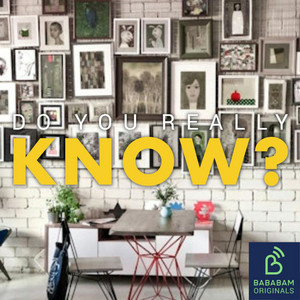
Do you know about ton design maximalism?
Thanks for asking.
In past episodes of Do You Really Know, we've talked about a number of Scandinavian lifestyle trends like death cleaning and hygge, for example.
Both of those are inspired by similar sentiments to do with feeling good in surroundings that aren't overflowing with useless items.
And yet in recent times, we've been hearing more and more about a home decor trend that's the complete opposite.
It's goodbye to Feng Shui, the Marie Kondo method and Scandinavian minimalism.
Hello to trinkets and garish colours.
Maximalism is making a comeback.
The signs have been there at interior design events such as the 2022 Milan Furniture Fair, where De More's studio displayed a maximalist interior that got a lot of attention.
Of course, influencers have been sharing pictures and videos of their interiors on social media too.
And even IKEA has jumped on the bandwagon.
Maximalism could be described as an aesthetic of excess.
It's a response to the prevalence of minimalistic interiors that started to all look alike.
Many designers and interior architects felt this trend was too perfect and soulless.
So, after years of everyone wanting to copy Marie Kondo's streamlined interior, with nothing sticking out and everything measured down to the last millimetre, it was time to embrace freedom and let mess take up some space.
A maximalist approach to decoration means a home should be filled with memories and collections that are often disorganised or even absurd.
To quote a Vox article from 2020 to look at a maximalist home is to get a sense of what the inside of a person's brain might look like.
You could sum up maximalism in three words.
Mix, accumulate, display.
You blend colours and styles, accumulate trinkets, books or anything that makes you happy and display as many prints, paintings or objects as you can.
The aim is to personalise your home as much as possible, making sure it reflects your character.
Some have made a connection between the dreariness of Covid lockdowns and people's desire for maximalist décor to boost their moods.
As interior designer Colette van der Tillert told Elle Canada, minimalism can be completely magical and poetic, but for some it felt a little barren when our homes became our entire world.
Start out by defining your tastes.
Free yourself from the usual deco diktats and ask yourself what you really like, rather than what's trendy.
The hard part is adding elements without things getting overbearing.
Maximalism may be chaos, but it's organised chaos.
Then go item by item.
You could pick a certain colour palette.
Make sure there's a balance between prints and patterns and add a few items at a time so things don't get cluttered.
There you have it!
Now you know what time design maximalism is.
In under three minutes, we answer your questions and help you understand the true meaning behind the trends, concepts and acronyms that are making headlines.
Listen along and you will really know