This is Roundtable.
You're listening to roundtable with myself, He Young.
I'm joined by Steve Halderley and Ding Hong in the studio.
Coming up, is your neck starting to feel like it's decades older than you?
That's the reality of tech neck, a sneaky condition affecting younger people more than ever before.
We will dive into how to avoid the strain and protect your neck from modern day wear and tear.
And so… what's the deal with these zero waste grocery stores popping up in China?
Have you seen the videos of people filling up jars with oats and nuts totally ditching plastic?
It's kind of a game changer in how we think about shopping for food.
Well . . . we'll discuss why this trend is catching fire with young people and what That makes it different from your typical, super -market run.
Our podcast listeners can find us at Roundtable China on Apple Podcast.
Now, let's move onto the next topic of discussion today.
We're living in an age where we spend more time on our phones and at desks than ever before.
But did you know this could be contributing to a condition that was once mainly associated with older folks?
Cervical spondylosis is a condition where the discs and bones in your neck begin to wear down causing pain, stiffness, and even dizziness.
It's often seen in older adults but now it's increasingly affecting younger people, especially with the rise of the so -called tech neck.
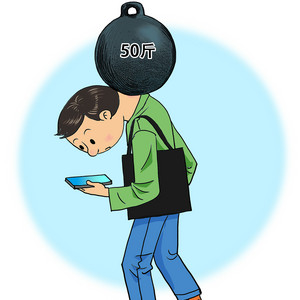
Tech neck happens when poor posture from looking down at phones or hunching over computers puts extra strain on the neck speeding up the wear and tear process.
It's time to dive into how tech neck is rapidly becoming a major health concern for younger people and we will discuss how to protect ourselves.
So how serious is this issue of cervical spondylosis?
Xi router beam or this tech neck situation?
Do you have it? Do you have it?
I hope none of us have.
It does sound like something you want though, doesn't it?
Really? Well, Techniq.
It's kind of a cool name.
This is something you definitely do not want.
No, no. And the incidence of, as you mentioned, the medical term cervical spondylosis or Techniq, it's increasing year by year, there's a noticable trend of it affecting younger individuals.
And as you mentioned in the past, this was mainly affecting middle aged and elderly populations, but now more and more young people, they're suffering from it.
Research from Peking University School of Public Health shows that the prevalence of technek among Chinese adults is almost 14%.
This means that one in every seven adults has cervical spondylosis, so I know you were joking when you asked us, do you have it, well I guess there's a one in seven chance that we do and perhaps we don't know.
And I can feel that strain in my back and neck area often.
So I've never had it checked out, but I wonder maybe, at least maybe in the early stages of it, I wouldn't be surprised if I'm diagnosis Judge knows stuff, 85 % of people older than age 60 are affected by cervical spondylosis.
So it would make sense.
It affects a large percentage of the population, but for most people it doesn't cause any symptoms, but when symptoms do occur, nonsurgical treatments are often effective.
That's from the Mayo Clinic website.
Neck pain in general though has become the leading non -fatal chronic disease causing the most loss of healthy life years in China.
In Technic, it's turned into this widespread health issue.
It's severely affecting people's health and also their quality of life according to the global burden of disease or GBD statistics from 1991 to 2021, that's a long period of study.
The number of people suffering from neck pain in China increased from over 27 million to 48 million, over 48 million, so it's a problem that seems to be getting worse in the country.
Yeah, what are the typical symptoms of cervical spondylosis or technic?
If you, like you mentioned earlier, if you're suffering from a regular pain on your neck, maybe that's the common initial symptom, and it would often worsen in the morning when you wake up or after you have had a very long period of looking at your work on your screen or on your smartphone in both of those
instances, your neck wouldn't have moved in a long in a long time.
So it would be quite stiff.
So I guess that's why you would receive pain at that time.
Oh, yes. And it doesn't stop at the neck.
There's shoulder arm in hand pain?
Yep. That could well, it could it could vary in severity.
It could be quite sharp pains.
It could ache. You can also they say have a burning sensation or in really severe cases, kind of a radiating pain that worsens when you cough or when you sneeze or when you breathe deeply.
Those would be rather severe cases though.
You could also have headaches and dizziness.
You could have difficulty with your limbs, for example.
You might feel weakness in your legs or a lack of strength in your feet.
They describe it as a sensation of walking on cotton.
That's a little difficult to comprehend, I think.
But that strange sensation when you're walking, and also an increased risk of falling down.
It could also cause swallowing difficulties, vision problems, high blood pressure, chest pain, and in very very very severe cases, even paralysis in the lower limbs.
But like I said in the beginning, most people, those are the very extreme examples.
Most experience no symptoms at all.
But when they do occur, you're likely to get just that pain or that stiffness in your neck.
Well, in terms of gender, age, and the kind of work we do, can we find some patterns on who may be more prone to cervical spondylosis or this tech pain?
They say that women are more likely to suffer from this as a matter of fact.
Studies show that the number of female patients is twice that of males.
They did a study in 2022 it was published in China medical records, and they looked at over 38 ,000 outpatient records for cervical spondylosis.
They looked at this from a top tier hospital here in Beijing, and they found that almost 67 % of the patients were women.
And again that's twice as many as the male patients.
That's by gender. In the age group of 50 -69, the proportion of female patients with neck pain is significantly higher from that of men, as well.
Almost 7 ,000 cases per 100 ,000 women compared to just 4 ,500 cases.
A little over 4 ,500 cases for men.
Now, you're probably thinking, Huh, that's weird.
Why? Because men and women, we both sit at our computers, right, and we stare at our monitors all day long.
So what's the difference?
Well here's the answer, according to the experts.
Women tend to have smaller body sizes and less spinal endurance compared to men and also women often do more household labor.
Again, that's according to the experts, not my opinion.
And during menopause, the decline in estrogen in the body leads to reduce secretion of proteins that protect the invertebral discs in your neck as well.
So those are some of the reasons behind the difference there.
But in the meantime, we are also seeing this disease invading the younger generation, not the younger generation, but the younger age cohorts I guess.
We're talking about a study here published in the Journal of Autoimmunity Review in 2023.
it pointed out that 13 .5 million people aged from 15 to 39 in China suffer from musculoskeletal diseases I think that's a bigger name but which includeshousing and taking.
This composition is one of the most common conditions.
It's, it's, um, it's noticeable that nearly everyone over the age of 40 has at least one area of their cervical spine.
Experiencing severe degeneration and, um, the study published, another study published in 2024, found that 23 % of children and adolescents aged from 3 to 18 in the Northeast and Chinese City of Harbin.
It was a survey conducted locally over there.
They had abnormal cervical conditions.
Some records show that the youngest cervical tech neck patients was just 11 years old.
That's concerning. Wow.
Well, when you have so many kids, they're hunched over their desks working on homework and all that jazz, and I wouldn't be surprised.
that you know that creates some strain in the neck but also these days children as young as five years old, six years old, they could be their parents could be relying on the iPad and these devices as digital babysitters and then they're watching these screens all the time and that could also be really
bad for the net. Yeah.
Hold kind of the same position as an office worker, right.
The kids when they watch the screens, they hold the pad with two hands and then look down so you've got that your neck at that really kind of uncomfortable angle.
This is good information for us to know as alarming as these statistics are.
It's good for us to know, so that we can start to make some changes.
In terms of occupation, if you're wondering now that we've we've got the gender demographics broken down a little bit.
In terms of jobs, the Chinese CDC surveyed 14 key industries nationwide between 2018 and 2019.
And they wanted to find out what industries have the highest incidence of neck problems.
And I would never have guessed this, biopharmaceutical industry workers come in at number one at 45 .8%.
I can't quite figure out why that is, but there are other industries with high incidence rates as well.
Healthcare, toy manufacturing, aviation.
And they say that workers in all of these industries, they often sit for up to 12 hours a day and perform repetitive tasks.
And that leads to excessive strain on your neck.
Yeah. So the key issue is that you keep sitting with a same posture for a long, long period of time.
I'm repeating the same action again and again.
And somehow it reminds me of another occupation, you know, text drivers or ride -hailing drivers.
They also have, according to some figures I have read about, they have very high incidence of tech neck.
We are talking about a percentage, close to 39 percent of these people, suffering from tech neck.
take, and prolongs driving, and this whole -body vibration.
If you're driving a car, your whole -body is in a state of vibration the whole day as long as you're working.
These are some of the important contributing factors to the development of tech neck for these people.
Yeah, indeed. And people engaged in mental labor or those who perform high -intensity household labor are also at greater risk for tech neck.
So, basically if you're in that one position, all day long.
So, also this might be leading towards like the sedentary lifestyle that most or so many city people have adopted.
Then that's all kind of triggering of tech neck.
And it's not just sitting in your office chair though or for the kids holding your iPad or slumping over your desk at school.
It could be your sleeping posture.
That's a problem, it could be your standing posture.
If you have a little bit of a hunched back or if you lean to one side for extended periods, that could be creating the problem.
Improper pillow height when you lay down or just laying down to read or watch TV or use your phone, sometimes you have your shoulders scrunched up if you happen to be laying on your stomach.
That's not good for you as well.
so, yeah, you're right, sedentary behavior, but I guess it's anywhere where you're saying in a fixed location for a long period of time and your neck is not in a optimal position.
So, how can we prevent and protect us against technic?
Inquisitive!! Shoulders back!
That's what my grandmother used to say to me when I would walk hunched over when I was a child.
So, maintaining proper posture, that's one way to do it.
Just be aware of it.
My former coworker used to have a little piece of wearable technology.
And I don't know what the name of it was.
But it was something that he stuck to the back of his neck.
And he did this because he was having neck and back problems.
So he found this thing on the internet.
And what it would do is when he would lean over into that hunched position, the thing would give him a ZAP as a remi - Yeah straighten up and he said that helped him.
So might want to look into something like that if you can Avoid prolonged sitting at the office, you know, it's recommended to take a break I don't know maybe every hour or so stand up stretch move your limbs Move your neck go for a go for a walk perhaps around the office if you have time to do that now
here are some here is one interesting finding I'd like to share I guess this is a a, a, a bio science, a study by this spine surgery and rehab separate station center.
Based in New York city has found that when the head, when your head tilt forward by some 15 degrees, then the pressure on your neck is Somewhere around 12 kilograms, roughly the equivalence of the weight of a three year old baby at 30 degrees, the pressure increases to 18 kilograms that's the equivalent
to the weight of about 36 bottles of some you know 500 millimeter drinking water on your neck.
It's a lot of pressure.
Yeah and you can't feel it.
You can't sense it.
Oh my poor neck! Until you do.
Goodness even preparing for our chat today as I was reading through the different articles on the internet I could feel my neck starting to hurt a little bit and I was wondering uh -oh.
I think I have to go for stretch or go for a walk right now but as we say you know the more we know and now that we're aware of these statistics aware of these numbers do be aware of that yourself if you're a student or if you're working in a position where you find yourself in a similar location or similar
fixed position for long periods of time give yourself a good stretch it'll help you out in the long term.
Yeah as I'm listening to you guys I just started to to sit up and up and straighter and straighter.
Yeah, it's important to remember that our bodies aren't designed to handle hours of device using.
By making simple adjustments to our daily habits, such as taking breaks, improving our posture and staying active, we can protect our necks from the strain of modern life.
After all, looking after our necks today means that we can keep doing what we love tomorrow.
0 pain, no limits. Coming up, Zero Waste Grocery Stores, where you bring your own containers and scoop your snacks straight from the jar.
Sounds like a cool idea, but how does this really stack up in China?
Stay tuned! Looking for passion?
How about fiery debate?
Wanna hear about current events in China from different perspectives?
Then tune in to Round Table, where East meets West and understanding is the goal.
It's the hour of Round Table with myself, Hi Young!
I'm joined by Steve Hatherley and fitting to the studio.
Anyone else loving this idea of zero waste grocery stores or is that just me?
It's sometimes referred to as Eventuallypper in Chinese.
The whole concept is trendy right now, especially in big cities such as Shanghai high in Shenzhen but let's be real is it just another Instagrammable shopping experience or is it genuinely a better way to shop for food and help the environment?
Could you guys please explain this ideal of zero waste grocery stores and it is closely connected to the way we pack up stuff after shopping to go home.
Mm -hmm yeah, the idea of zero waste bulk food refill stores is to sell organic and healthy foods, as well as your daily necessities and you do all of this without any plastic wrapping.
So the stores will often place items like oats or nuts or freeze dried fruits or soy sauces or laundry detergent or body lotions.
It's not limited to just food products by the way but they put all of these products into their own separate at large containers and then you, as the customer, when you go into the store, you bring your own container and you self -serve, you weigh and you package the products yourself and this is all
meant to be much better for the environment.
And the difference between your traditional grocery store and these types of stores is that, of course you can get all of those products in your typical grocery stores.
But those shops will, as we know, they'll have them prepackaged in their own bottles, their own plastic bottles, that are not good for the environment.
So the whole idea here is the focus on sustainability and environmental protection.
Doesn't this all sound super familiar if you are a millennial in China?
So those born in the 1980s and first five years of the 1990s or older?
Remember when we were little kids, we used to be sent off by your parents to to one of these grocery shops, and you bring your own empty reused bottle to fill have a refill of soy sauce, and that was, you know, a chore for kids to do back then we didn't really live that far away from the store, I suppose.
And now 30 years later, or maybe forty years later, are we seeing a return to the olden times?
And this time, you actually get charged quite a lot.
Yeah, maybe that's fair to say.
Yeah, I feel like yeah this is a new trend but it's an inheritance of continuation of something we saw as a kid here in China.
So, for example, here in Beijing, we have this shop called the bald house.
It it was open in 2018.
It is the first zero waste store on the Chinese mainland.
But, this shop does sell food only containers and some daily commodities made from reusable and biodegradable materials.
I think that's the main idea like plastic wrapping.
They are not offered Although the operation of these shops and stores sounds similar to traditional grain and oil stores, these bulk food refuel stores tend to offer health oriented foods and products that are usually labeled as organic with a focus on sustainability and environmental protection.
It is to this awareness, health awareness, especially among the younger generation.
There's a popularity in the Zero Waste stores that's reflected in the growing concern among young Chinese consumers, or just Chinese consumers in general, about the environmental damage caused by single -use plastics.
When you look... When we look at the plastics statistics, Sometimes they are digestible, meaning you can kind of understand them, but sometimes they're not.
For example, this is from MIT.
To date, humans have created more than around 11 billion metric tons of plastic.
That number is kind of doesn't make sense to us, right?
We can't really grasp how much that is.
that amount, 11 billion metric tons of plastic, surpasses the biomass of all animals, both terrestrial and marine.
That puts it in a context for you, doesn't it?
That's according to a 2020 study published in Nature.
Currently, there's about 430 million tons of plastic that's produced yearly, and a total of 95 % of the plastic used in packaging is disposed of after one use.
95 percent and that's a loss to the economy of 120 billion dollars annually not to mention the impact on the environment.
There's a move around the globe and there's a move here in China for consumers to be kinder to our planet and one of the ways that we can do this is through zero waste grocery shopping.
Yeah that's great and also everybody we should know the detrimental effect of single used plastics and it's so difficult to make them disappear, basically.
And then sometimes, you know, if it finds its way into the microfiber found in fish, even in our blood streams of these microfiber plastic particles, and that's just really scary.
But, all that being said, some of the critics or people who are a little bit skeptical about this movement are saying oh this is just for Instagrammable moments when people bring their own nice containers to refill.
And do you agree with them at all?
It can be true because these stores tend to be niche right even in the United States, they say that there are about 1300 zero waste stores across the entire country, but that's not like mainstream, is it?
These stores also tend to be very pretty on the inside, they tend to be more expensive as well, and that's also one of the criticisms of these types of shops is that they're not necessarily affordable for everyone.
In Canada this was one of the issues.
Canadian consumers obviously want to make choices that are better for the environment.
In fact they conducted surveys to find out the answer to that question and it was overwhelmingly yes and the same survey in the United States the answer was overwhelmingly yes.
The problem is it's cheaper to buy foods at your typical grocery store than it is at these niche stores, zero waste stores.
And And it's a very simple math equation for Canadians and Americans, if it's more affordable for your family when times are economically tough, then you really don't have much of a choice.
You're going to shop at the cheaper stores that aren't as good for the environment.
That's why I hear some netizens, or even consumers, who have had personal experience of these kinds of stores, making comments like, I might as well go to the bulk section of a conventional supermarket.
That's the comment.
So I guess the high prices of those products available at this stores.
They exist. They are high for a reason.
For example, firstly these stores targets a niche market of consumers like you said earlier so the demands are high I mean demand the demands are very high for for food, and for healthy food, and those organic products.
So this means higher prices.
But in the meantime, because these stores place a lot of emphasis on eco -friendly and sustainable business model, this means higher costs for ingredients and packaging as well.
So they're expensive for a reason.
Yeah, and it's challenging for the stores too, because of supply chain issues, right?
if stores are ordering these types of products, well, these products need to get delivered to these stores typically wrapped in styrofoam and plastics and things like that.
Now they have to be shipped in another way, so it's challenging for the stores as well.
I guess just having this awareness is important, and consumers will make up their mind and vote with their wallet.
While zero waste stores offer a fresh, eco -conscious shopping experience, the future will depend on balancing affordability and accessibility with sustainability, with the right support and education.
Zero -waste grocery stores they have the potential to give us a new idea in how we shop and consume.