Support for NPR and the following message come from SAPConcur, a leading brand for integrated travel expense and invoice managementsolutions.
With SAP ConcurSolutions, you'll be ready to take on whatever the market throws at younext.
Learn more atConcur.com.
This is Planet Money fromNPR.
Hey! It is political rally seasonagain.
It's not too hot outhere,right?
You know it's notbad. Former President Donald Trump has beentraveling,Michigan,Wisconsin, and recently he made a stop inNevada.
Did you see we put out a notice saying don'tcome?
So only 20,000 people showedup.
And like pretty much every Trumprally.
This openborder, so many badthings, but this open bordersituation, where you're allowing millions and millions of people to flood ourcountry.
Immigration comes up prettyquickly.
Virtually100% of the new jobs under Biden have also gone to illegalaliens.
Did you knowthat?100%.
To beclear, it is not100%.
But Trump doesn't just claim that immigrants are taking jobs fromAmericans.
He says they're also making wages godown.
Real wages of African Americans and the workers from all over the world that came herelegally.
They're down6% under BrookageHill.
Immigration is a huge issue for both parties this electionyear.
As the southern border is overwhelmed with people trying to claimasylum.
And here at thisrally, Trump is pointing to one of the central arguments of hiscampaign.
I'm sure you've heard this onebefore.
That immigrants are hurting the labormarket.
Actually, he said it again Thursday night in the first presidentialdebate.
Right. But politicians aren't the only ones who fight aboutthis.
Economists have actually been trying to answer this question fordecades.
Do immigrants take jobs and lowerwages?
Fact is the subject of one of the most contentious debates in the field ofeconomics.
Hello and welcome to PlanetMoney.
I'm AmandaArunchick. And I'm JeffGlow.
What happens when hundreds or thousands of new workers enter theworkforce?
Does it hurt Americanworkers?
This question is notoriously difficult tostudy.
Labor markets are these huge complexsystems.
And foryears, economists had to theorize about immigration'seffect.
But they struggled to prove anythingdefinitive.
Then, almost 45 yearsago, something unexpectedhappened.
That created a near-perfect experiment to study this veryquestion.
125,000 Cuban immigrants suddenly showed up on the shores of southernFlorida.
And they started looking forjobs.
Today on theshow, decades and decades and many academic paperslater, the field is still fighting over how those new arrivals changed theeconomy.
And what it means for our understanding of immigrationtoday.
Support for this podcast and the following message come fromWise.
The app that makes managing your money in different currencieseasy.
WithWise, you can send and spend money internationally at the mid-market exchangerate.
No guesswork and no hiddenfees.
Learn more about how Wise could work for you atWise.com.
This message comes fromNPR, sponsor MorganStanley.
With theirpodcast, what should I do with mymoney?
Smart people don't always feel smart aboutmoney.
Listen to what should I do with my money to hear real people getting real help from experienced financialadvisors.
When voters talk during an electionsseason, welist.
We ask questions we follow up and we bring you along to hear what welearned.
Get closer to the issues and the people and your vote at the NPR electionshub.
Visit npr.org slashelections.
The story of this natural experiment that completely changed our understanding of immigration's effect on theeconomy, it begins April 1980 inCuba.
Fidel Castro has been dictator for around two decades and the promise of the revolution is starting tofade.
The economy is on thedecline, people are being sent to prison for all sorts of smallinfractions.
And if you want to leaveCuba, you need an exitvisa, which in 1980 was nearly impossible toget.
So one way that people were trying to get out of the country was to somehow get inside a foreign embassy and to claimasylum.
But the Cuban police would try to stopthem.
Then oneday, a few guys come and dear a bus and ram past security and through the gates of the Peruvian embassy inHavana.
And once the gates have been busteddown, thousands of other Cubans jointhem.
In Havanatoday, the strange story of the embassy of Perucontinued, as many as 10,000 Cubans squatting on the embassylawn, seeking permission to leaveCuba.
NowCastro, he saw these people asdisloyal, not committed to his communistrevolution.
So he'slike,fine, you want togo?
Go. You notice that anyone can leaveCuba.
As long as they can get picked up in a boat at the port ofMariel.
Cuba, the Bay ofMariel, 25 miles west ofHavana.
This morning nearly 200 Cubans were being loaded onto four boats found forFlorida.
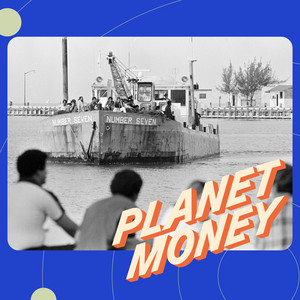
Over the next fewmonths,hundreds, then thousands of Cubans piled into boats to make the journey toFlorida, an event that would come to be known as the Mariel BoatLift.
It is an all-too-familiarsite, a motley assortment of boats awaiting a turn at dockspace,customs,immigration, 110,000 crammed aboard anything that willfloat.
By the time the governments of both countries agree to stop the flow ofmigrants, 125,000 Cubans have arrived inFlorida, and a lot of them end up inMiami, most are low-skilled workers with a high-school diploma orless, and almost immediately they're allowed towork.
Which means that practicallyovernight, the workforce in Miami grew by about8%.
That's a hugejump. What economists would call an immigrationshock.
And one economist in particular saw this shock as an opportunity to answer some fundamental questions aboutimmigration.
It'sbig. It's veryquick.
It's all over in a couplemonths, and it was completelyunexpected.
So that's perfectfor, Iguess, what you would call an actualexperiment.
This is the Nobel Prize-winning economist DavidCart.
He's an emeritus professor at UCBerkeley, and he is one of the people who pioneered the whole idea of using natural experiments to study theeconomy.
One of the tough things about being an economist is that it's really hard to prove that anything really causes anythingelse.
The economy is so complicated that it's tricky to untangle all the correlations in thedata, and the economy is so big that you usually can't run what scientists call a randomized controltrial.
But what Card and his colleagues had started to notice back in the day was that if you looked closely at what was happening in theworld, there would be these big unexpectedevents, events that radically shifted the economy in a short period oftime.
As if some cosmic scientists had set up an experiment just for them tostudy.
I started thinking about immigration that way andsaid,well, maybe the Marial Bolt lift would be a way to think about that approach for studying the effect ofimmigrants.
Cardrealized, if he compared Miami to similar cities justbefore, and then after the boatlift, he could maybe answer that centralquestion, how do immigrants impact a labormarket?
And morespecifically, do they make unemployment go up and wages godown?
Now, the prevailing assumption at the time was that the labor market would follow the basic rules of supply anddemand.
So if you increase the supply of one group ofworkers, everybody in that bucket of workers will probably have their wage reduced somewhat in avery, very simple standard typemodel.
So, forexample, let's say all of a sudden there are more people in town who want to work inconstruction.
The assumption is that employers will be able to pay less for constructionworkers.
So wages in that industry are going tofall.
And if you assume that the supply of jobs isfixed, then this model would also predict that an influx of immigrants would make some current workers lose theirjobs.
The most extreme version of it is there's 100 jobs in the labormarket.
You bring in 10immigrants, so 10 natives are going to lose theirjob.
So we call that the skating rinkmodel.
The skating rinkmodel, like in icehockey.
David Card is originally fromCanada, so inmy, we are required to make a reference tohockey.
So inhockey, there are six players on theice.
You can swap themout, but you can't have more thansix.
So the assumption of immigration is that each new immigrant knocks a native off theice.
But David Card wasn't convinced that immigration necessarilyfollowed, youknow, the basic laws of supply anddemand.
And the marial boat lift seemed like a perfect way to investigatethat.
So I thought it was in manyways, it was kind ofideal.
He pulls six years of data from the census from 1979 to1985, looks atrace, educationlevel, hourlywages, compares Miami to four other cities that did not experience any immigrationshocks.
And what he finds is that the influx of people from the marial boat lift has virtually noeffect.
Wages didn't godown. Unemployment didn't goup.
Even when he looked at the group of workers who he thought would be most affected by these newarrivals, workers with high school diplomas orless, he couldn't find an impact on their wages atall.
So I concluded that it was pretty hard to show that the boat lift had a big negative effect on thenatives.
And so the answer isnothing.
There was noimpact.Well, ofcourse, that's not what you would really say if you were writing scientificpaper.
What you would say was there's no detectableeffect.
Okay, which is kind of equal tonothing.
Yeah, people like to sort of make itsimple.
Yeah. How would you explainthat, that all of these people show up and that there's no detectableeffect?
Well, it seems like what goes on is the labor market has absorbed ofcapacity.
Absorptivecapacity, meaning that within a fewyears, the Cubans were just kind of absorbed into the labormarket.
And it's not totally clearwhy.
But one theory is that when theyarrived, the Cubans didn't just increase the supply ofworkers.
They were alsoconsumers,right?
They increased demand because they needed to buyshoes, gethaircuts, rentapartments, and that created morejobs.
It's like the hockey team getsbigger.
More people can skate at the sametime.
Yeah. So Card finds that the arrival of the Cubans is not depressingwages.
They're not stealingjobs.
And he sets out to publish hiswork.
He doesn't quite realize how big a deal his findingsare.
So I wrote the paper up as what you could call a casestudy.
And it's a very shortpaper.
It doesn't have hardly any fancy things init.
And I sent it to a very modestjournalist, a specialist labor economicsjournal.
And I knew they might give it ashot.
So I sent itthere. And ofcourse, the referees hatedit.
Nokidding. Referees are the other economists who read and review papers before theypublish.
I've been called a lot of kinds of things in refereesreports.
What did they callyou?Charloton, among other things attimes.
Spoileralert, this Charloton went on to win the Nobel Prize inEconomics.
In part because of this verypaper.
The small case study in aquote, very modestjournal, has become one of the most cited papers in immigrationeconomics.
Do you remember when you first read DavidCards, Mario Bolifpaper?
Wow, that paper is iconic in that it's referred to in most labor economics textbooks ingeneral.
It was one of the cornerstones of a whole movement inresearch.
This is MichaelClemens.
He's a professor of economics at George MasonUniversity.
And he knows the story verywell.
We've spent a lot of timediscussing, by theway,like, is that the lady Gaga of papers is thetailor's.
Is it Madonna or iconicolder?
I don'tknow. Do you have a celebritycomparison?
Oh mygosh. I think it's Hans Christian Anderson wrote the Emperor's NewClothes.
I'd compare it tothat.Yeah, that is not exactly a celebrityicon.
Guessing Michael doesn't have a subscription to Peoplemagazine.
But he has an interestingpoint.
Before David Cardswork, most everyone saw the economy the way they were taught to see it through the basic laws of supply anddemand.
And they assumed that applied neatly toimmigration.
They were told the emperor was wearing beautifulclothing.
So they saw beautifulclothing.
A young childsays, wait aminute, the Emperor isnude.
What Cards and his colleagues were doing is something likethat.
And after Cards reveals thatno, the Emperor is not wearing any clothes that know this basic supply demand stuff doesn't always apply toimmigration.
That starts become a popular view amongeconomists.
But the most well-known and respected economist looking at immigration at the time disagreed with DavidCards.
His name is GeorgeBorjas.
Here he is being interviewed onC-SPAN.
Our guest today is one of the country's preeminent economists studying the impact of immigration to the UnitedStates.
Welcome ProfessorBorjas.
George Borjas is a professor atHarvard.
His papers are heavilycited.
He wrote the textbook on immigrationeconomics.
How was it that you came to gravitate to this particularsubject?
A great question to startwith.
I was born inCuba. So I myself on animmigrant.
When David Cards published the Marial Boatliftpaper, Borjas had already been studying immigration's effect on the economy foryears.
And he took issue with the idea that one natural experiment could tell like this wholestory.
Like what if just looking at Miami was toonarrow?
What about all the immigrants who left Miami and took jobselsewhere?
And ultimately who's to say what happened in Miami would happen in othercities?
Yeah. You see Borjas preferred to look at the bigpicture.
Use big nationwide datasets.
And in his work he had found that the basic laws of supply and demand did apply toimmigration.
That sometimes immigrants can hurt Americanworkers.
Look, there aretrade-offs.
Immigration is not like mana fromheaven.
There are going to be winners andlosers.
Some people are going towin.
Some people are going tolose.
By theway, we asked George Borjas for an interview several times and hedeclined.
Anyways, he and David Cards spend years publicly disagreeing with each other aboutimmigration.
And this simmeringtension, it culminates in2015.
That is when Borjas decides to investigate the Marial Boatlifthimself, crack open the data and look for his ownresults.
So I decided I was actually going back onMarial.
And that's what actually what I spent all of summer 2015doing.
Revisiting the Marial Experiment by looking specifically at high schooldropouts.
Borjas wanted to do things differently than David Cardshad.
He thought Cards had missed something that he didn't look closely enough at the people who would be most affected by the newarrivals.
People who were primarily lower skilled and lesseducated.
So while Cards had lumped high school graduates and dropouts together in hispaper, Borjas wanted to look only at the people who hadn't finished highschool.
In otherwords, let's focus on what happened to the economic opportunities of high schooldropouts.
Remarkablyenough, David Cards did not do that and remarkably enough nobody else had done that in the last 25years.
And when he found it wasdifferent.
You'll see a remarkable drop in the weight of high school drop or TimMiami.
You find the labor market impact is precisely what people you would expect and what common sense tellsyou.
You get a lot more low schoolworkers.
The low school workforce in Miami actually did work soft as a result ofthat.
This is not the big fat nothing that David Cardsfound.
Borjas says the wage of high school dropouts in Miami collapsed dramatically by 10 to 30percent.
There was a huge negativeeffect.
InBorjas' analysis of thedata, immigrants suddenly showing up in a labormarket, they do make wages drop for the lowest skilledworkers.
Over-turning DavidCards' study and with it his pro-immigration findings was bold and controversial and not just in the field ofeconomics.
Infact, this paper started to reverberate in the outsideworld.
That's veryunusual. Extremely few economics papers get that kind of attention in the publicdiscussion.
It was afirestorm. That is coming up after thebreak.
It's a high stakes electionyear.
So it's not enough to just followalong.
You need to understand what's happening so you are fully informed onNovember.
Every weekday on the NPR Politics Podcast are political reporters break down important stories and back stories from the campaigntrail.
Do you understand why it matters toyou?
Listen to the NPR Politics Podcast wherever you get yourpodcasts.
This is myvoice. It can tell you a lot about me and I'm not changing it foranyone.
In NPR's Black Stories BlackTruths, you'll find a collection of NPR episodes centered on the BlackExperience.
Search NPR Black Stories Black Truths wherever you getpodcasts.
All that sitting and swiping your body is adapting to yourtechnology.
Learn how and what you can do aboutit.
I really felt like the cloud in my brain kind ofdissipated.
Once I started realizing what a difference these little breaks weremaking, there's no turning back forme.
Take NPR's Body ElectricChallenge.
Listen to the series wherever you get yourpodcasts.
This message comes from the journal from the Wall StreetJournal, a daily news podcast making sense of the most interesting stories aboutmoney,business, andpower.
It's everything you need to stay in the know and ahead of thecurve.
Listen to the journal anywhere you getpodcasts.
After George Borjas publishes his bombshell paper saying that immigration can make wagesdrop, it gets picked up by all sorts ofmedia.
I remember Ann Koulter specifically commenting on this Borjas paper saying thatit,quote, nukedunquote, the arguments of pro-immigrationcrowd.
I don't care how many economists are going to tell me that somehow they've managed to repeal the laws of supply anddemand.
You have more of something the price goesdown.
We havemore. Michael Clemons and his colleagues watched as Borjas became kind of the go-to economist for theright.
Dr. Borjas at Harvard is written aboutthat.
I think he's a Borjas was also a favorite of Jeff Sessions who was a US Attorney General underTrump.
He's the world's perhaps most effective and knowledgeable scholar and he says that doeshappen.
Wages can be diminished and one of thebig.
Trump was already consulting Borjas about immigration when he ran for office in2016.
Decades of record immigration have produced lower wages and higher unemployment for ourcitizens, especially for African American and Latinoworkers.
Once Trump was inoffice, when journalists pushed the administration to justify his anti-immigrationpolicies.
Aside fromme, if youcould, one or two studies with specific numbers that prove the correlation between those two things because your entire policy is based onthat.
Trump'sadvisors, like StephenMiller, would lean on GeorgeBorjas'work.
I think the most recent study I would point to is the study from George Borjas that he just did about the Merrill boatlift.
Stephen Miller cited it by name from the White Housepodium.
That's very unusual for an economicspaper.
It was a sign of the tremendous influence ofBorjas.
While policy makers and the media were busy talking aboutBorjas' explosivefindings, some economists were skeptical of what Borjasfound.
I did read the entire paper and I had concerns about the claims of overturning the originalresults.
Jennifer Hunt is a professor of economics at RutgersUniversity.
She's one of the leading economists studying immigration and she's primarily an academic but she also spent two years working for the Obamaadministration.
Around2016, Jennifer Hunt and Michael Clemons are talking with each other when they realize that they have similar thoughts aboutBorjas' work on the Merrill boatlift.
Michael Clemons contacted me to ask what I had thought of this paper and I said that I had concerns and he convinced me that we should write a paper about ourconcerns.
It was the war of thepapers.
So they team up together to look very closely at what Borjasdid, how he interpreted the Merrilldata.
And their main critique had to do withBorjas' decision to focus on a very narrow subset ofpeople.
Because if you look closely atBorjas'paper, it's clear that choosing to look at workers without a high school degree wasn't the only choice that Borjasmade.
He also narrowed his sample down to some very specific demographiccategories.
Men who are primagedworkers, basically 20s to 50s and notteenagers, not older workers who are not just low skill that is they don't have college degrees but they don't even have high school degrees and they're notHispanic.
This is thevery,very, very small slice of the labor market in Miami that Borjas was lookingat.
And why carve off people who areHispanic?
That's a greatquestion.
This is the most controversial choice that Borjas made to take out all Hispanic people from thedataset.
And the results of all this slicing and dicing of the data was an average sample size of 17 workers peryear.
Now, there are a few ways to understand this because economists are always making these kinds ofchoices.
When they want to makecomparisons, they might slice up the data to make thingsmore, youknow, apples toapples.
Borjas argued that he took out Hispanic people to make the cities in his study morecomparable.
That was achoice. But Clemens argues that it was not a goodchoice.
If you are analyzing the effects of Hispanic workers flooding intoMiami, the very first place you would look would be for effects on other Hispanicworkers.
That's a universal finding of immigrationeconomics.
If there's going to be competition between new immigrants and other workers in any labormarket, the very first place you would look at is otherimmigrants.
So they would be the people so I getit, they would be the people most impacted is other Hispanic workers who are alreadythere.
Definitely. So at the veryleast, if you wanted to write a rigorous and transparentstudy, you would start by looking at the effects on Hispanicworkers.
Clemens and Jennifer Hunt published put their stake in theground.
And while there are apparently no chairs flying at conferences or actual fistfights, there are some bad feelings and maybe some reputationalharm, which is pretty dramatic foreconomics.
Infact, around thistime, a movement was already underway to resolve these disputes within immigrationeconomics.
The National Academy of Sciences had decided to bring together the leading experts to try to come to aconsensus.
George Boros was invited as was JenniferHunt.
It's exciting because it's a great thing to try to come toconsensus.
How does one get toconsensus?
Like do youvote? Do you just kind of likedebate?
Well, youcan't, this consensus means not voting because it means everyone needs toagree.
Right.Right. Goodpoint.
Right. This group of experts work together for more than two and a halfyears.
They read all the most importantpapers.
Theydebated. Theyargued.
And some of the most contentiousstuff, as you might haveguessed, was about the impact of immigrants onwages.
That was where wehad,yeah, somediscussions, should wesay, that wereanimated.
I'll callthem. But in theend, theexperts, includingBoros, they did actually come to anagreement.
The breakthrough in this issue was we came to a consensus that there's little or no impact of immigration to the US on averagewages.
Okay. So I think that was the bigbreakthrough.
The consensus that they finally arrived atwas,quote, the long-term impact of immigration on the wages and employment of native born workers overall is verysmall.
Basically, a version of what David Card had originallyfound, thatbig, thatnothing.
So youguys, you guys didit.
You resolved thedispute.
Wedid. So I'm proud of ourwork.
AndI'm, youknow, both honored and happy to have been associated withit.
And then the next thing that happened was that Boros put commentary on his ownwebsite.
Oh.Yeah. So the day after the report ispublished, Boros takes to the internet to give his owntake.
He says that the consensus report is flawed and takes issue with that corefinding.
He said that he didn't agree with things that were written in the consensusreport.
So after all ofthat, Boros undermined theconsensus.
Yes. How didyou, how did that make youfeel?
Well, I was very unhappy because I just told you how happy I was that we had come toconsensus.
So I was very unhappy aboutthat.
That was eight yearsago.
Sincethen, economists have continued to poke at these corequestions.
And they've even continued to weigh in on the Merrill boatlift.
Infact, just earlier thisyear, another big time economist used some fancy new methodology and new data to find once again that the arrival of immigrants didn't hurtwages.
And morebroadly, over the past fewdecades, the field of economics has kind of coalesced around this one centralidea, which is that whether you're talking about jobs or wages or growth orproductivity, that immigrants are generally good for theeconomy.
In someways,though, it doesn't quitematter, but all of these papers say in the political fight overimmigration.
When I worked in the Obamaadministration, I noticed that academic work does have aneffect, which washotening.
But what was less hotening was that I realized that it doesn't actually change anyone'sminds.
It's just that it serves as support for people whose minds are already madeup.
They're always citing papers that support what they thoughtbefore.
Rightnow, politicians across the country are running on anti-immigrationplatforms, promising to shut down theborder, to limitimmigration, to protect yourjob, protect yourwages.
And when they're pushed to justifyit, they still have a paper frozen in time that they can pointto.
Today's episode was produced by Willa Rubin and edited by AnnieBrown.
It was engineered by Valentina Rodriguez Sanchez and fact-checked by SierraHwattis.
Alex Goldmark is our executiveproducer.
Special thanks this week to Professor FrancineBoulou, to Professor JoanneMonras, to the WolfsonArchives, and to Connor O'Neill from NPR's White Lies podcastteam.
White Lies produced a series about the Mario BoltLift.
It is a greatlisten. You should gosubscribe.
It'samazing. I'm AmandaArunchik.
I'm JeffGlow. This isNPR.
Thanks forlistening. Black perspectives haven't always been centered in the telling of America'sstory.
Now, we're taking centerstage.
Introducing NPR's Black Stories BlackTruths, a collection of Black led stories from NPR'spodcasts.
Search NPR Black Stories Black Truths wherever you get yourpodcasts.
In thiscountry, some truths aren'tself-evident.
An NPR's Black Stories BlackTruths, the collection of stories is wide-ranging andreal.
As the people who tellthem, we celebrate the Black experience for all its soul andrichness.