Meeting new people just got way more fun, because now, You don't have to do it alone.
With Tinder's new double date feature, you and your bestie can match together.
Tap the double date icon to see profiles built for two.
When two pairs match, the group chat kicks off.
Scope the profiles, send memes, flirt a little, maybe plan a hang.
It's always better when you're in it together.
Try the new Tinder Double Date. Explore all the possibilities.
Tinder. It starts with a swipe. Download Tinder today.
Scientific American is turning 180. To celebrate, join our photo challenge, Siam in the Wild.
It's easy. Just snap a pic of any Scientific American print issue in a setting that reflects or complements the cover theme.
Then share it on social media using hashtag Siam in the Wild, tag Scientific American, and include your name and location. or you can email it over to us at contestsatsiam.com.
You could win a one year unlimited subscription plus a bundle of awesome gadgets and gear to fuel your next adventure.
But hurry! Entries close September 5th. Terms and conditions apply.
See official rules at siam.com slash 180contest.
That's siam.com slash 180 contest. That link is also available in our show notes.
We can't wait to see where curiosity takes you.
Thank you. For Scientific American Science Quickly, I'm Rachel Feltman.
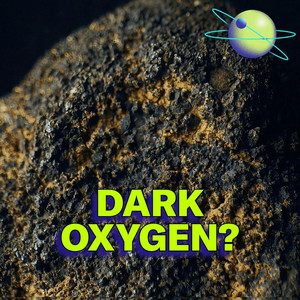
Scattered across the deep ocean floor are trillions of potato-sized black rocks packed with valuable metals like cobalt and copper.
Mining companies want to harvest these nodules to get materials for electric vehicle batteries and other clean energy tech.
But recent research suggests the rocks might be producing oxygen in the darkness of the deep sea. potentially supporting marine life in ways we're just beginning to understand.
Today, we're joined by Claire Fiesler and Jason Jacks, who recently explored these mysterious deep sea rocks in a mini documentary for Scientific American.
Jason is a documentary filmmaker and an associate professor of journalism at the University of Rhode Island.
And Claire is a scientist as well as a journalist for Canary Media. a nonprofit news outlet focused on clean energy and climate change.
Thank you both so much for coming on to chat.
Thanks for having us. Yeah, thank you. So let's start with a basic question.
What are nodules and how do scientists think that they're formed?
Nodules look like little black potato-sized rocks.
And they cover these vast areas of the abyssal plain, the bottom of the ocean.
They contain significant amounts of critical minerals. like manganese and copper and cobalt, And we didn't even know about them until the 1870s.
When the HMS Challenger, which was the world's first oceanographic expedition, went out and dragged up a bunch of stuff from the deep sea in the Pacific.
And these black rocks tumbled onto the deck of the ship.
And they're like, oh, what are these? They were just on display in Victorian museums like Moon Rocks.
And then in like the 1950s and 60s, scientists started to kind of realize that, or at least they hypothesize, that these have been formed over millions and millions of years. that they likely started off as little tiny bits of with a called a nuclei.
And it's like a shark tooth or a whale ear bone or a piece, of pumice from an exploded volcano.
Parts of debris fall to the ocean floor.
And then through a process called sorption, they begin to almost accumulate minerals from the sea water in these layers.
And actually, when you can cut into one, you'll see these rings that look like tree rings.
And you can age a nodule by counting those rings.
And so they're infinitely fascinating from a scientific perspective.
And now they're also fascinating from an economic perspective, which we'll probably talk about.
Definitely going to get into that. But like you said, these aren't really much to look at at first glance.
But they can apparently upend our understanding of how life started on Earth.
How is that? One of the remarkable things about these nodules is that they provide habitat. for all kinds of different creatures.
And those are creatures that we can see, but they also provide habitat for all kinds of interesting microbial life.
Some of these nodules, they have a really kind of rough exterior.
There's a lot of little kind of nooks and crannies in there.
And so one of our sources described those nodules to us as a Manhattan for you know, there's different neighborhoods, there's different kind of places for all of these different microbes to, to live within the nodules themselves. how that might change our understanding about how life began on Earth was that there was a study that came out last year that looked at the production of oxygen, that these nodules were actually producing oxygen within a chamber. they basically noticed that oxygen levels within this chamber were going up.
So if that is in fact correct, than the rocks themselves were producing oxygen.
And at first they thought it could be this world of microbes. that live within the nodule.
Maybe they are producing the oxygen, right?
Not the rock itself. And that might still be the case, but the source we interviewed for this film Dr. Jeff Marlowe put in kind of like this chemical cocktail that acts as a poison to kill those microbes.
And after they introduced that to their experiment, the nodules were still producing oxygen in that chamber.
And so if they successfully killed all the microbes that were living in that nodule, then it must be something else.
It might be the Rockets right? And so the paper is very preliminary and exploratory.
And the scientists even admit, like, we need to do a lot more studies, but we think it's not the microbes.
We think it's actually the rock itself. Wow.
How do rocks produce oxygen at the bottom of the sea in complete darkness without the presence of photosynthesis?
This is the mind blowing side of things.
The scientists are still trying to understand what that process is.
But they think it's something called seawater electrolysis. essentially where the nodule is acting like a battery to produce power, a process that produces this oxygen.
And we know that that exists, but whether it's happening here is still being investigated.
So yeah, batteries at the bottom of the sea is the key takeaway there.
Wow. I mean... Even just Manhattan for microbes is so evocative and then The oxygen stuff is almost a little spooky in a very cool way.
But as Claire alluded to earlier, there are Other reasons to care about these nodules What about the economic interest in these nodules?
Where's that coming from? These nodules contain minerals that are absolutely essential for electric vehicle batteries. that are made today.
This week, I bought a Kia EV9, which is an electric vehicle.
And in my new car, in the giant battery underneath my feet as I drive, There's enough cobalt where you want a reliant supply chain of cobalt if you want kind of a clean car revolution for the United States and for the world.
And cobalt exists in high quantities in these nodules.
And cobalt doesn't really exist in these dense amounts. in other places, it's not as common.
We get most of our cobalt from the Democratic Republic of the Congo, which has its own issues with human rights abuses and so forth.
And so there are people who have long thought, well, this seems like a better way from a human rights perspective to get our cobalt for a green revolution.
But I think there's also like, it's definitely a problematic narrative.
And we can talk about that later. Yeah, well, that's actually, it's a great segue.
My next question was just going to be, you know, you guys made a film about the nodules.
So I would love to hear more about what tensions exist around them and who the players are in this conversation.
Yeah. So in making this film, we discovered this kind of core tension between trying to understand this environment, this place that we really don't know much about.
And these little potato sized kind of alien rocks from the bottom of the sea it turns out have this economic potential that we didn't really know about.
So especially as we try to electrify our economy, these are really valuable minerals.
So the tension that we really were exploring in the film was, how do we understand these nodules?
In one way, they are the substrate that provide this structure for life at the bottom of the sea?
And do we want to try to understand that or do we use those resources kind of in the short term to electrify our economies. so that we can avert some of the worst impacts of climate change.
So that tension between, what are these rocks for?
Do they have value? laying on the sea floor because they might be potentially producing in oxygen or because they provide this entire habitat for what is ultimately the default habitat on Earth.
I mean, the abyssal planet covers 60% of the surface area of Earth.
If you were to lift the oceans, this is an immense habitat.
So do the nodules have a place in that or do they belong in batteries in our vehicles.
And so we interview a number of scientists who are interested as part of their research and studying the deep.
But we also look at the evolution of the value of nodules kind of economically.
And Claire stumbled across this incredible story That actually led to the rediscovery of the very first deep sea mining site which happened off the coast of South Carolina.
You might be hearing about deep sea mining for the first time now.
Deep sea mining has been around for about 50 years. it was Americans that kind of invented it in the late 1960s. very wealthy individuals.
I call them the 1960s version of Silicon Bros.
They were just like, let's do crazy stuff.
We just put a man on the moon. Let's go... dig up minerals from the bottom of the sea.
And so a wealthy shipbuilder poured a bunch of money into this And in 1970, they tested it successfully over 100 miles off the coast of South Carolina.
But then it never was really economically profitable, Technology was cool.
They wanted to prove that they could do it.
But yet a lot of these early deep sea mining companies went bankrupt because the economics were never there.
But what was so interesting is that they left this legacy of experimentation on the bottom of the sea floor.
And one of the characters in our film, Dr. Jason Shader, he kind of stumbled upon mention of the world's first deep sea mining experiment site, which had been completely lost by the US government.
It only existed in like handwritten notes in a storage facility in Woods Hole, Massachusetts that he took us to.
And he spent years trying to like piece together what happened or where it was.
And he got money from the US government to go back to see like, what does this place look like 50 years later?
They didn't know what they were going to see.
And the very first time I spoke to him about this, I said, well, what did it look like when you brought robots you know, to the bottom of the sea 50 years after mining, he said it looked like they were there yesterday.
That really gave me goosebumps and I knew I want to pursue this further.
So I told Jason, who is a longtime friend of mine, I was like, this story is crazy.
This history is crazy. Nobody really knows about it.
And the government lost track of it. Like, let's start following this.
And that's kind of how this film came to be.
Very cool. I would love to hear more about the study that the metals company paid for that. they're now contesting the results of.
What happened there? So the metals company, in pursuit of a license, to extract minerals in an area beyond national jurisdiction. which just means like an air of the ocean that doesn't belong to any country.
It's the high Cs, right? And technically... under a global treaty that most of the world's countries have signed.
That area is designated under international law. as the common heritage of all mankind, the 8 billion people alive today and all future generations to come.
So that deep sea area, it belongs to everybody.
And so in order to get a license to exploit it, all the countries that have signed on to this treaty need to kind of agree on how that's gonna happen, how they're gonna do that.
And countries haven't yet agreed on how to do that.
They're very close. And so in preparation for getting approval, in theory.
This company got an exploration permit, so they're kind of doing the the studies and they had to pay scientists to kind of understand what's down there.
Right. if we go and mine this area with the approval of all these countries under this treaty called the Law of the Sea, we need to make sure that it's going to have, you know, understand our impact down there.
They had to pay for this science. And this discovery of oxygen production was completely unexpected.
And it just happens that the results are just not great for the company's sales pitch.
The sales pitch is that this is a marine desert.
There's no life down there. These rocks are just kind of sitting out there like golf balls on a fairway.
Scoop them up and... No harm, no foul, right?
If that's not the case, as the science suggests, is suggesting.
If they're producing oxygen, then removing them is way more risky than we thought.
The day that the paper came out, it created a lot of hubbub. a lot of news coverage, and also a lot of the delegates who are meeting at that very moment of the countries that have all signed the law of the sea, they were talking about the potential of deep sea mining, they started bringing up this new study.
And almost right away, the metals company who had funded the research started trying to discredit it.
There's a rebuttal online that people can go and find.
If you look at the metals company, Dark Oxygen Rebuttal, But it's worth mentioning that there's a peer review process here, right?
Sure. If you're refuting a peer reviewed study, then you have to. submit your arguments and your rebuttal to the peer reviewed journal where it was published.
And so the metals company is in the process of doing that.
But the rebuttal has not yet passed peer review.
So it has not kind of gotten the stamp of approval from other peers that their rebuttal has scientific merit.
How might we expect the story about these nodules to evolve in the coming months?
There is a couple of things happening. At first, the researchers of the dark oxygen study, they lost their funding because their funding was coming from the metals company.
But Andrew Sweetman, who was the lead co-author of the study, he actually got quite a bit of money to continue research on this.
So research on dark oxygen is moving forward.
That's one thing. We're waiting to see if the rebuttal passes peer review, what that looks like.
But, you know, there's a new player in this space. and that is the Trump administration the Trump administration has put out an executive order to essentially support companies to mine the deep sea in areas outside of US waters.
And this is really controversial. So the International Seabed Authority, they're this international body that is designated to regulate how mining companies will move forward.
We were just at their 30th meeting in Kingston, Jamaica, where their organization is headquartered. for the assembly in which all the delegates from the countries that have signed on They were all there to continue this global conversation about how to move forward or whether to move forward, they didn't come to a conclusion at the end of this meeting.
They meet twice a year. There's also this tension between an administration that is trying to move unilaterally. and move in a different direction than a global organization that was specifically established to regulate and come up with rules about how we might exploit these kinds of resources.
So, you know, there's going to be this continuing battle between the American position on deep sea mining and a global one.
So we'll continue to watch that as it develops.
Absolutely. Thank you both so much for coming on to talk us through this.
It's been great. Thanks for having us. Thank you so much for having us.
I appreciate it. That's all for today's episode.
For more on these mysterious nodules, check out Claire and Jason's documentary about the subject over on Scientific American's YouTube channel.
You can find a link to that in our show notes Science Quickly is produced by me, Rachel Feltman, along with Fonda Mwangi, Kelso Harper, and Jeff Dalvisio.
This episode was edited by Alex Sagiara.
Shana Posis and Aaron Shattuck fact check our show.
Our theme music was composed by Dominic Smith.
Subscribe to Scientific American for more up to date and in-depth science news.
For Scientific American, this is Rachel Feltman.
See you next time. Thank you. Amazon presents Yancy vs. Dorm Hall Bathroom.
Some bathrooms offer quaint amenities. Stormhall Bathroom offers a level 7 airborne virus for your feet.
But Yancy shopped on Amazon and saved on shower sandals. oversized bath towels, and antibacterial body soap.
His opponent played dirty, but Yancy kept it clean.
Save the everyday with College Deals on Amazon.