You're listening to Roundtable.
I'm Niu Honglin, joined by Steve and Yusheng.
Have you ever paid extra for your meal for the following reasons?
A tip for the waiter?
A service fee, maybe a charge for that brand new pack of tissues or the freshly disinfected tableware?
Now, how about a tea per seat fee?
Yes, not per pot, not per person ordering the tea, per seat.
What would you think if you saw that on your bill?
We are talking about this on today's show.
And we welcome the Heart to Heart segment, where we take your voice memos and emails, unpack your questions and share our thoughts.
You talk, we listen.
No topic is too big or too small.
What's important is what's on your mind today.
But before that...
In Guangdong province, sitting down for a pot of tea with dim sum is quite the pleasure.
It involves sipping, eating, and chatting, as well as tradition and atmosphere and everything.
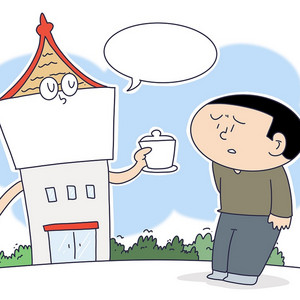
And, as many tourists discovered, it also includes a little something extra on the bill cha wei fei in Chinese, or the tea per seat fee in direct translation.
That is sometimes charged even if your cup stays perfectly dry.
This long-standing practice, rooted in the region's mourning tea culture, has now become a topic of online debate about transparency and consumer rights.
As the city of Guangzhou considers new regulation on restaurant fees, one question lingers.
Should this tradition stay or go?
So, to start with this tea or tea per seat kind of fee, what exactly is it?
Is it expensive?
Why are we paying for it?
Any tradition behind it?
Well, by its name you might guess that it's a tea house ritual, where you pay for seat at the table to have tea, right?
Traditionally, that's the case.
But nowadays it's becoming a service charge that diners pay per person when eating at many restaurants, dim sum restaurants included.
They're in South China's Guangdong and Fujian provinces.
So this tradition actually has a long history.
It could be dated back to the Qing dynasty around the 1600 to early 1900.
Wow.
Yeah, a few hundred years ago, when small tea houses there called Yi Li Guan or Er Li Guan, they would charge just a few coins for tea and a place to rest for whoever that wants to sit down and perhaps come with a bunch of people to chat and just to hang out.
So it was basically an entry fee for using the space and also have a bit of tea to sip on.
And over time, these tea house rituals become more than just charging people to drink tea, but also turning into lively community hubs, inviting people to come in to dine, to have some dim sum.
By that, I mean some little snacks.
It could be buns or just sweet snacks.
And nowadays it becomes something that exists in local restaurants too, not only tea houses.
If you come in, and especially when there's more than one person Coming in with a whole table occupied and each person kind of need to pay that tea per person fee of at least five you want to on per person.
It varies depending depending on the restaurant.
So historically, these tea houses, you'd go for your morning tea and have some dim sum or some other snacks.
You'd go by yourself, but probably not.
You'd probably meet other people there.
But I guess you'd probably stay if they were like a community hub.
You'd probably stay from morning until I don't know, maybe even mid-afternoon if you were conducting business there or doing your work there.
So I kind of understand from a historical point of view why the business owners would charge a seating fee if you were going to be there for a really long, long time.
You're taking up that space.
They were charging it so that people can come and can sit down, can use the space.
So it was Kind of a nice gesture at that time.
It was like the original WeWork.
Yes, in a very strange and tasty way.
I thought that was a unique idea when in fact it originated in China during the Qing Dynasty.
I have a question though.
Why...
That province, why Guangdong?
Why Guangzhou City?
Why not everywhere in China?
Why is it unique to there?
Because that part of the country is the part where the tea, as well as dim sum or a little bit dessert, culture is so vibrant.
People would go there, use that culture.
As the 16th century we work, not many other places have that tradition.
People would not spend that time in the community hub in that way, which is, I think, at least part of the reason that it's like this right now.
That has to do with tea growing, I guess tea manufacturing, because in the South perhaps it would grow easier than it would in the North.
But that's a topic for another day.
So how does this work then?
So it's usually a pretty small charge, right?
I think Yushan, you mentioned it.
It can just be a few yuan per person, which is roughly the price of a soft drink.
Or a cheap cup of coffee.
So it's not a really big amount on its own.
But if you think about it, if it's charged to every single person who comes into that that establishment, then that price is going to add up.
And one of the points of contention these days is that the charge is applied to babies sometimes.
In some cases.
Relatively extreme cases.
Yeah, because recently I think what's got everybody talking about this is rather on the tourist side, when people outside of that specific region travel to the Canton areas and just ran into a random tea house or a restaurant and discover hey, that's a tea per person fee added to my bill without me knowing it.
And some cases such as the this one reported by shanghai observer earlier this year, where miss huang and her group of 13 guests, including five kids and two infants, went out for seafood and spent over 3500 yuan, that's roughly 480 US dollars.
But when she checked out the bill, she discovered that they were being charged of TC fees or T per seat fees.
For everybody, even the eight month old baby.
That infant included, despite the fact that he didn't even use the tableware or drink tea at all.
So I guess that's where the controversy comes from.
Or even sit in one of the seats.
Or maybe that's just some lazy practice by the waiter.
They counted how many people goes in and they didn't actually think about it because it's a very common practice for them, which leads to my next question.
We all know that there are different types of tips.
There are service fee and it's also about the total amount of money you spend.
It's a percentage and they all exist.
Does this tea per seat kind of fee also exist in other cultures and other countries or this kind of fee?
Yeah, you can find examples in L.A., for example.
This isn't.
This isn't the exact same, but it's just about tipping tipping tipping, excuse me.
The tablet based tipping, where after a meal, they'll shove a tablet in your face and you have three different options, which is fine if you've had a meal at a restaurant.
But I was watching a news report where the anchor, the anchor, this happened to the news anchor.
They went to a store, they bought a bottle of water, and they went to a self-checkout.
And when they paid for the self-checkout, they were encountered by a tipping option of 15, 18 or 20 for the purchase of one bottle of water.
And the anchor was so upset saying, I didn't even encounter a human being in that store.
Who am I tipping?
Where is this going?
So there's that kind of issue.
But then in London I saw a story about this really kind of bougie restaurant at the top of a really nice building that charges you 15 pounds if you want to have a seat next to the window.
Because it's on the top floor, you get a view of St.
Paul's Cathedral and the Shard.
So you get this gorgeous view of London.
And if you want to sit next to the window, you have to pay more for that.
So there's that happening in London.
Then back to America, I saw another story.
This is really contentious these days.
So New Orleans in Louisiana is kind of a hot spot for food.
Everybody kind of knows that it's this amazing food hub.
And now what people are doing is they're getting restaurants at these – or they're getting reservations at these really hot restaurants.
And then they'll sell – the reservation on a different app, and sometimes it's a couple of hundred dollars, but one.
Recently someone paid 2138 for a reservation at a restaurant in New Orleans.
Jeez, that person must have a really important...
It was during the Super Bowl, which is the American Football Championship.
But anyway, regardless.
So those are some of the extra charges that are happening now in different parts of the Yes and now.
If you listen to all these stories, it's not hard to imagine how different parties would think about the issue.
For restaurant owners, of course.
They've been doing this forever and they are providing tea well most of the times.
And for consumers...
Local consumers might have already get used to it and tourists might feel like huh, this is something I have never experienced.
But really think about it.
It's not something you never experienced.
In some different restaurants, they charge people for the tableware they use.
Sometimes without knowing or they will tell you, but sometimes you will only see the bag of tissue as an extra fee on your bill.
So these all happen.
So I'm more curious about legally, what's happening, especially for doctors the local government because we know local government has already given some responses and trying to put new regulation on it.
Exactly what did they say?
Well, there has been indeed a new release of legal draft on specifically on the T per person fee.
So in October 2025, local government of the Guangzhou city released a draft seeking public opinions for the protection and regulation of Guangzhou's morning tea culture.
So the key point here is restaurants.
They must clearly list and display all fees, including tea per seat fees.
So, in other words, no hidden or mandatory charges without letting um the customers knowing that there is such fee existing.
If you're dying in our restaurant and and i think that's reasonable at least they're asking for people's advice on hey, do you agree to pay for that fee, which most, in most cases, i think, people would disagree?
What happens next?
It depends.
Well, it's your choice, and that's the main issue here.
Right?
Merchants or businesses that fail to clearly state the t-seat fee Before the customer orders?
They're violating Article 8 of the Law of the People's Republic of China on the protection of consumer rights and interests.
Right.
I read that off a paper.
I didn't automatically know that.
That gives consumers the right to know all the service costs.
And I think that's the main issue here.
Because if you go online, you'll see people saying, yeah, I mean, I don't mind this.
I kind of get why restaurants do this.
But then you'll get people saying, no, this should be completely outlawed.
Why should we have to pay just to sit down, when we're already paying for the food and drink when we go into that establishment?
It's more about letting people know beforehand.
And letting people know is very important.
I have recently been educated so many times that I realized that I have been not sufficiently or inefficiently protect my rights for a really, really long time.
For example, do you know that when you sign up for a certain service, the monthly deducted fee automatically deducted fee can be asked back?
If you decided to call whatever type of shop owner and tell them that okay, I signed up for it, I forgot to cancel it and for this month maybe it's already the 5th of November and I do not want it anymore you can get your money back.
It is protected.
But we don't know this information.
And I think, like Steve said, one of the most important things in the world is that there are so many different types of regulations and laws protecting our rights.
And what we need to do is to be more active and proactive in knowing them and using them.
And on top of this, if I am charged a tea per person fee because I bring a baby to the restaurant, I would most definitely be not okay with it.
Let me open up the law of the People's Republic of China on the protection of consumer rights and interest book once again.
Article 10 protects consumers right to fair trade.
Fees must be based on actual services provided, meaning equal value for payment.
Since infants don't consume tea or use tea sets, charging them lacks a service basis and counts as unreasonable compulsory charging.
Well said, Steve.
Well said.
And in a world where there are too many different types of different items of fee yes, we can choose to pay for it, as long as we really truly enjoy the service.
We pay for the service.
We give a tip as long as you let us know in advance.
You're listening to Roundtable.
Coming up, Roundtable's Heart to Heart.
Stay tuned.
You ask.
We answer.
Roundtable.
Heart to Heart.
This is Roundtable with me, Steve Heatherly and Yushan.
And today we are having heart to heart segment where we hear from you, our listeners.
You've sent us your thoughts, questions and dilemmas.
And now it's our turn to respond with insights, advice and maybe a little tough love.
Today's voice memo is from Helen.
Let's take a listen.
Hello Roundtable China.
I'm Helen from Guangdong, China.
The topic I want to share with you guys is nature.
In this summer holiday, I made so many botanical and butterfly specimens.
I've been.
I'm exploring in nature and just feeling the wind brushing through my hair and looking at the sunset.
Yeah, it's really, really beautiful.
I love nature.
As I've observed, there is a huge deficiency in energy and happiness in a lot of teenagers today.
And so I was wondering what caused it.
Why is that?
Why is there a phenomenon of brain rot?
So as I kept falling in love with nature and observing the things around me, I came to a conclusion.
I think they feel this lack of happiness and lacking a sense of purpose in life is because they don't really feel things, they don't observe things carefully with their heart in their life.
They don't really observe listen, smell and touch the real life.
It's also because they stay in that bubble of their internet world so they don't go out to their real life and have a real and authentic sense of it.
Yeah, so that is why i think they often feel a sense of void in their inner heart.
Yes, so this is my own thoughts.
Yeah, and I want to share them with you guys.
Last but not least, I want to give a big shout out to Steve He Yang, Niu Honglin, Yu Shun, Lei Ming.
I love the show.
I really love Roundtable China and I will continue to listen to all of your podcasts.
Thank you.
Bye.
Thank you, Helen.
That's very sweet of you.
Helen from the land of... seat for tea charges.
Let us know if you have a problem with the tea per seat fee.
Besides that, nature, getting close to nature would bring us energy.
I totally agree with that.
And young people today do complain about their life or sometimes they say that they're the kind of low energy kind of people I'm not really sure how much, or the percentage of how much percentage of their claim is for is for real and how much percentage is just them using another social hot topic or catchphrase to communicate with others.
But still, I'm very glad that you get to, you personally get to get close with nature.
Yeah, I feel like she's not just mentioning the teenagers.
I think I totally echo with that, too.
So what's your thought, Steve?
Well Helen, I listened to what you had to say about teenagers, and then I went and did a little bit of research.
I think teenagers around the world get a bad rap.
My first stop on the internet was Stanford University's medical website, and this is what I learned.
The rational part of a teenager's brain isn't fully developed, and it won't be until 25 years old or so.
And in fact, recent research has found that adult and teen brains work differently.
Adults think with the prefrontal cortex, that's the brain's rational part.
This is the part of the brain that responds to situations with kind of good judgment and an awareness of long-term consequences.
But teens process information with the amygdala, which is the emotional part of their brain.
That's from Stanford.
Then, Helen, I went over to John Hopkins University medical website.
This is what it said.
Teens, and I don't know if you've heard about this, have you heard of the teenage brain before?
Yes.
Yeah, it operates differently, right?
And this is about teens and sleeping.
Though teenagers and their sleep habits may be maddening to parents, they're partly in response to physical changes that occur during puberty.
Teens experience a natural shift in circadian rhythms that's according to a John Hopkins sleep expert and it makes it more difficult for them to fall asleep before 11 pm.
Then you've got your early start times at school, you've got your increase in homework, you've got your extracurricular activities and sometimes a part-time job, and therefore sleep deprivation in teens is a legitimate problem.
So Helen, if we take into account the information from the Stanford University website and the John Hopkins Medical website, then we have to say hmm, maybe we shouldn't be as critical as we are of teenagers.
Also taking into account the pressure of social media, which didn't exist 25 years ago.
Also taking into account the pressures of the society that exists within high school the pressure to be cool and get great grades, and then the pressure from your parents on top of that.
I say Helen, I know what you mean, but let's give him a break.
That's Steve, the teenager defender.
Yeah, that message was from 17-year-old Steve, whose brain hadn't fully developed yet.
But in my opinion, I do think when we notice the problem of less and less chance to get close to nature, more and more screen time and the fact that a lot of our feelings, of our experiences, of our knowledge about world, about life, is from the internet, is from not that tangible kind of way to get the information.
People know from very, very young that if you drill with a word on a word you might get get fire.
But it's not as simple as that.
And so little.
So few people have the experience to actually do that, to have a tangible feeling of what that skill or reason or law of nature is really about, which is why I also believe it's quite important to get away from smartphone a little bit, to go to the nature and see it for yourself.
And that is not the responsibility With the young people.
For sure their parents should take them, especially if we're talking about teenagers.
The schools would give them more opportunities to do so and society, like Steve said, might give them a bit less pressure academically or socially.
That would help with the situation.
But I see no problem in identifying the problem, Helen.
Who, so we complain that students are addicted to their screens.
Who gave them those screens?
Oh, come on.
What?
It's a fair argument.
No, no, no.
Adults gave them those screens.
Yes.
So we give them something to get addicted to and then we complain that they're addicted to it.
That is not fair.
Adults didn't give it to them.
They did.
They invented it.
It exists.
Yes, they invented it.
And when you have that existing... Steve Jobs was not eight years old when he invented the iPhone.
I love this argument.
Keep going.
The problem is when people have that in the society.
As a parent, you cannot deprive your kids the right to have a cell phone.
When it's there, it's there.
There's no way to go back.
But that is a topic we can discuss.
Your Honor, teenagers are not guilty!
And that shout brings us to the end of today's roundtable.
Please let us know what you think about at least the last one.
Thank you so much for listening.
Bye-bye.