discussion keeps the world turning this is Roundtable you're listening to Roundtable with myself hi young i'm joined by you should and Steve Hatherly in the studio coming up if someone asked you how many decisions you make daily would you say maybe a dozen try thirty -three thousand So what happens when your brain gets overloaded with choice?
You end up indecisive, cranky or just plain done?
No, I'm more like, I'm out no more.
Decision fatigue is the invisible drain that zaps your willpower.
Today we're exploring why our brains sometimes wave the white flag and what to do about it.
And it used to be the ultimate school send off.
You have one last class photo to steal years of shared memories, and this year some college students are skipping graduation photos entirely.
Is it just a personal choice, or are we low -key losing something real about connection?
Our podcast listeners can find us at Roundtable China on Apple Podcast. From the world of entertainment to what fuels your passion, our Heart -to -Heart segment is all about you.
Share your thoughts with us at roundtablepodcastatqq .com, or better yet, record a voice memo, and we'd love to share it with the world on our show.
Now let's move on to the next topic discussion today.
From the moment we wake up, our brains are bombarded with choices, what to wear, what to eat for breakfast, whether to hit a snooze one more time.
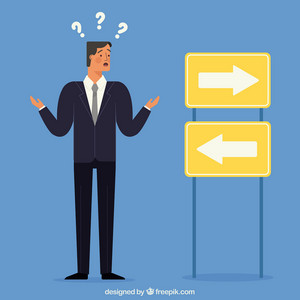
By midday, the mental load grows heavier, replying to emails, prioritizing tasks, resisting distractions, even deciding what to order for lunch. This constant stream of micro decisions quietly drains our willpower, a phenomenon psychologists call decision fatigue, leaving us mentally exhausted and prone to impulsive choices or paralysis over simple questions like, what should we have for dinner?
Yeah, that happens to me sometimes the decision for us to, what should we eat?
Uh. You decide. Yeah and it takes a lot.
That happens to be every day.
Right, that's decision fatigue at work, mmm.
Yes, but if our brains buckle under the weight of daily decisions, what can we do to lighten the load?
Yeah, we'll get to what we can do to battle the decision fatigue in a little while, but let's start with what it is.
It's this phenomenon where the more decisions a person makes over the course of a day, the more physically and mentally and emotionally depleted they become.
A person experiencing decision fatigue will struggle with executive functioning.
That's a fancy way of saying your brain's command center, where it makes decisions for planning and focus and self -control.
Decision fatigue makes that command center start to falter.
And that can have a wide range of consequences.
Some of those consequences will be, you know, whatever, it doesn't matter, but some of them could be more serious.
You said it already, Hu -Young, we're constantly bombarded by information that is competing for our attention from the second that we wake up in the morning.
This is a fun fact.
Did you know this? Our eyes take in over one megabyte of data every second.
Ooh, that's a lot! That's the equivalent to reading 500 pages of information for an entire encyclopedia every minute.
Wow. It's all around us all the time.
If you smell something, you might think of your childhood.
Your skin has 4 million receptors that provide you with information about temperature and pressure and texture and pain.
And then, as you said as well, 33 to 35 thousand total decisions a day per human.
That's gonna vary, of course.
That's from the Harvard Business Review, that's not our opinion.
And it's everything, it's what you're gonna wear, it's what you're going to say, it's how you're going to say it.
What sauce do you put on your food?
What beverage should I have with my meal?
What socks should I wear?
33 ,000 to 35 ,000 decisions a day.
That leads to decision fatigue.
Yeah, and what you listed, I think, they are, at least there are some just simple daily decisions that you have to make, and you are probably sometimes get used to it and sometimes you just know where you're gonna decide because you've got a habit of it, but sometimes there are some big decisions you have to make, like when you are doing these little decisions while you are thinking of these big decisions like when you're gonna take the annual leave or where you're gonna go when you're doing the annual leave, or am I going to buy a house or something like that?
That's kind of a your life decisions to make.
And I have to say personally, I have experienced of got overwhelmed by decision making and that was planning for a trip.
Yeah, from choosing the destination to deciding which attraction to visit and then to where you can stay, which hotel, what to eat, everything.
It's a whole series of decisions you have to make, and it can like, spend from one week to even one month or half a year because probably it's gonna be a like, annual trip that you're gonna take, then it's probably gonna take you like half a year for preparation, then.
By the time everything is planned, you can already already feel exhausted before the trip even started unfortunately.
Yeah, and how do our brains work to process all of this information?
Yeah the 33 to 35 ,000 decisions that we make every day?
Yeah great question.
How do we actually handle this?
Generally speaking, we can't process all of that incoming data and what our brains do, and this is the science behind it, our brains create habits.
These are automated behaviors or automations of the behaviors and actions that we often repeat on a daily basis.
So there are two kind of forces that govern our behavior.
One is intention and the other is habit.
And in simple terms, our brain has dual processing systems. It's kind of like a computer that has two different processors in it.
Performing a behavior, when you do it for the first time, it requires intention, right?
But you have to pay attention to what you're doing.
You also have to plan for what you're doing.
Think about if you're learning I don't know snowboarding for the first time.
It's not automatic to you.
You have to really pay attention to what you're doing.
If you're using that side of your brain, you're spending a lot of energy.
But if you use the other part of your brain, that side that first side is called your reflective system or your intention system.
The other side is called your impulsive or your habit system.
That's the side that is spontaneous and pleasure seeking and that part doesn't require much attention at all.
That part of your brain is the one that decides when you're on your way home I'm going to grab a burger from the burger shop that I just saw right now.
Right? That's that side of your brain.
There's no intent really, you're just making a snap decision.
So there's two sides of your brain that go into your decision -making all day, and those two sides of your brain is what takes all the attention.
If some of these decisions we make throughout the day are automatic and I think it's probably the, actually I can't really decide is it the intent or is it the habits?
Well the habits don't take as much, or the habits don't take as much energy, right?
Impulsive. You decide on when.
Your brain's going into auto mode there, and this is how your brain is able to process all of that information throughout the day.
But that said, it's going to happen.
You're going to get decision fatigue.
And for some people, it happens more often than others.
But it all depends on how you spend your day and then what type of decisions you're making.
If we think about some types of jobs out there and all the decisions that are made from those jobs every day.
Maybe a fashion designer.
A ton of decisions made every day, right?
How about a writer or a chef or a judge or a lawyer or a doctor or a nurse or a psychologist or a CEO or a project manager or a retail worker or a radio announcer, podcast producer, whatever?
All of those things and a laundry list more, all of those people have to make a ton of decisions every day.
And those are some good examples because with those jobs, there's no auto -pilot mode, right?
You can't be an air traffic controller and go into autopilot mode upon intended But you see my point there?
So you're really using that side of your brain that intent side of your brain So for some people depending on your work and depending on your day you're going to be spending a lot of energy making decisions which will lead to decision fatigue for Those types of people and I also saw like explanation online and that is from John yang Who is a member of the Chinese mental health association?
saying that people experienced decision fatigue due to actually kind of mindset is called perfectionist mindset Wanting it all for example They want to save money while also getting high quality products and in this way leads to overthinking an excessive time and energy spent on making decisions but the reality is that good quality usually comes at a higher price and this is a common form of compulsive thinking and and yeah yeah take my travel experience as an example it was precisely because we wanted to get the the best experience within a limited time or budget that's making decisions become very
difficult but even anxiety -inducing.
Yeah. The perfectionist, that's a personality that drains a lot of energy making decisions.
Another thing that drains your energy a lot, and this happens for a lot of people, is when you're making decisions for other people.
And what that means is, if you're a boss you're often making decisions for your employees.
If you're a parent you're often making decisions for your kids.
What they will have for breakfast every day, what time they will leave the house to go to school, all those little tiny decisions, right?
If you're a romantic partner, you're oftentimes making decisions for your partner as well.
And all of those little decisions, when you're making them for other people, or if you're a perfectionist, they'll add up throughout the course of a day and it makes you exhausted, it makes you tired of making decisions.
Not just tired, but tired of making decisions.
Right. Okay. Well, what you guys have just said sort of spurred more thoughts on my side.
Sure, there are some jobs that have all these decisions.
Like you mentioned, you're deciding on behalf of other people, or it's just plain high stakes.
If you're in an important position, including the air traffic controller, including becoming a CEO or the president of a country.
sure, including a stay -at -home parent like you mentioned.
But why do I think as an average person without kids I am suffering from decision fatigue as well.
For example it can be something as small and and mundane as I'm looking at short videos should I scroll or not?
That's one of the 33 ,000 decisions every day.
So decision fatigue at the end of the day is probably plaguing everyone?
No question it's plaguing everyone.
The point that I was trying to make before is that it plagues some people more than others.
But the thing is, and I think this is true, is that we don't realize it, right?
When it comes to 5 p .m. in the afternoon and you've had a long, busy workday and you can't think what should I have for dinner tonight?
You can't find the answer.
It's because of decision fatigue.
You've already made thousands and thousands of decisions throughout the day.
So you're not aware that you can't make that decision because you're exhausted of making decisions.
What's the danger of that?
Well, sometimes there's no danger at all because what should I have for dinner?
It takes me 30 minutes to figure it out.
What's the big deal there?
Not, nothing really, right?
But it could lead to impulsive decisions.
Decisions that you wouldn't have otherwise made because you don't want to carefully think about what you're going to do.
Let's say that you come home at the end of the day.
You've had a long day.
You've made a lot of decisions and you suddenly have an argument with your friend or with your partner or, I don't know, out in the street.
You bump into somebody by mistake.
Well, you're making a decision right there.
What am I going to say?
How am I going to handle it when you're suffering from decision fatigue that impulsivity?
I'm not going to think about I don't want to think about what I'm gonna do I'm just gonna do it that spontaneity can lead to negative results sometimes just walk away Yeah, so what do you think you should physical discomfort is something that you may get when you are like exhausted when you are making too many decisions or sometimes it's about, you're not getting some positive feedback I would say.
You've made a lot of decisions and this moment you are very tired of making decisions.
And actually, another part, actually they should give you some positive feedback to make you feel better and then have the energy to, I would say sustain because sometimes, as you said, we need to make decisions for others like what kind of breakfast, what you're going to do in the next hour but when some people are not very appreciative about your decision but you've already made them and that may lead to some discomfort when you've made a lot of you know decisions for them and they're not being grateful Yeah, there are a lot of bad things that can come from it You can feel overwhelmed.
You can it can lead to regret because it can lead to spontaneous or impulsive decisions that you wouldn't have made otherwise.
Physical discomfort, as you mentioned, or just exhaustion overall, irritability, all those things.
And now we're aware that decision fatigue is happening somewhat regularly to us.
What can we do about it to overcome it?
Yeah, there's a list of things that you can do to overcome it, but my favorite tip from and the experts is to remove some of the choices from your daily life that you can.
For example, if you struggle with that, what am I going to eat for dinner every day?
It's a waste of time, right?
So let's think, okay, how can I solve that problem?
What if on Sunday evening, you prepared your meals for the week and left them in your fridge?
That's extra work on Sunday, but what does that do?
It removes the decision, doesn't it?
from Monday, Tuesday, Wednesday, Thursday, Friday, what am I going to have for dinner?
You've already decided you don't have to think about it.
So if you remove that decision, and then you lay out your clothes the night before instead of waking up in the morning and going through your closet, oh, what am I gonna wear today?
You know, Barack Obama and Steve Jobs, they were famous for that.
They talked publicly about how they wore the same thing, essentially every single day and the rationale was that's one less decision that they had to make during the day.
So that's my favorite tip.
If you see a spot where you can remove decision -making from your life, take that opportunity.
So that's about like, like, made the decision beforehand then.
Yeah. When you are not anxious about it.
When you're not irritable.
When you're not exhausted.
Yeah. Just wear a black turtleneck every day.
I I think my tip is it's more about digitalize the decisions in your mind and have that kind of calculation in your mind for example when I was hesitant about what to eat for example Thai or Japanese and I will have a specific precise calculation or number for both of these two type of dishes for example I so I I was thinking about Thai food and Japanese food.
And both of them are okay, but the percentage that I want Thai is about 55 .69.
Snooze! But, for Japanese, it's about 45.
Oh, man! And then here comes the result.
Yeah, so both of them are fine, but this one has a benefit of okay, I don't want that raw materials in my dish.
Then, maybe Thai is the choice.
Okay, if that works for you.
Math makes me exhausted though.
It makes me want to go to sleep.
That makes your mind clear I would say.
Okay, well, to each their own, right?
When we realize just how many decisions shape our days, both big and small, it's humbling to consider the toll this is taking on our minds and spirits.
Perhaps the true challenge is to cultivate awareness about how we decide when to trust habit and when to pause for reflection.
And my takeaway from this topic is I hope to cultivate the wisdom which lies in learning when to let go, simplify, and reclaim our mental energy.
Coming up, not everyone's lining up for the class photo this year on Chinese campuses.
Some graduates are avoiding graduation photos.
Why are they skipping this once sacred tradition?
Stay tuned. Looking for passion?
How about fiery debate?
Wanna hear about current events in China from different perspectives?
Then tune in to round table where east meets West and understanding is the goal.
You're listening to Roundtable with myself He Yung.
I'm joined by Steve Hatherly and Yu Xun.
It's graduation season again.
Caps are flying, cameras are clicking, and students everywhere are lining up to freeze a final moment in time.
Well, almost everyone, because this year a curious trend is catching eyes across Chinese campuses.
Students are saying nah to the classic graduation photo.
No robes, no group shots, no thank you.
What's going on? So first of all, graduation photo in Chinese schools from elementary to high school, sometimes also in college, students are grouped into fixed classes like grade three class 1 or class 2 something like that and this group stays together for most subjects and activities or for the whole the whole time for the whole time for your elementary school or middle school not just for the whole year you know for all the years of elementary school yeah so for memory at the end of the semester or or your grade there will be a graduation photo which means the whole class of your class and also your
maybe yours your teachers from different subjects or had teacher will also join this photo and you have a huge huge group photo together well so usually you're talking about like 50 -plus people if you're this is before college but now I suppose the chattering surrounds college students or college graduates and they're they're not so keen in taking the class photo and this is seen as quite the shift and what do you think is going on there?
Yeah there are and actually they have reasons for not wanting to attend that kind of photo shooting ceremony kind of thing not taking graduation photos went viral online and the reasons young people were gave were very diverse such as they just don't want to go and they think it's not necessary and they think is too far away to go there.
Yeah. You need to go to a different part in town to go get that photo taken.
Sometimes when you've already graduated from college you're like working or living in another city and that's far away from your college but taking a college graduation photo means you need to go back to your college and meet all of our teachers and classmates and take the phone yeah well you know the proponents are saying this is one last time who knows when we're gonna meet up again and yeah why aren't you doing this what's wrong with you young people that's what the proponents were saying I didn't do it I skipped it oh yeah yeah I totally get this group of people my thought process was no I
mean And really, how long am I gonna know these people after I graduate?
Probably not that long for the majority of them.
20 years from now, I'll look at that picture and I'll think, who's that?
Who's that? That was one aspect.
The other aspect was, I didn't really see graduation as a major milestone in my life.
I just thought, okay, that's done.
So I didn't see it as this like grand, like OMG moment where, oh we all need to take a No, I didn't.
So I just skipped it.
I didn't go. Yeah, well, the proponents of the traditional way, the traditionalists who think, oh, we got to have that picture taken.
They used to think that, well, also in China, because usually even in college, the class is sort of the organization everybody belongs to.
And you see these people every day, you share the dormitory with them.
It's not like in the West when there is a very loose idea of the class.
And that's why it's different, because you spend years with the same people.
And they'd rather not take the photo now.
Yeah that's a little bit different than my situation.
And I really enjoy that moment, when someone or people spot me in a group photo.
Isn't that just fun activity, interactive activity?
Well the critics of the traditional idea say that well now people have more individuality, Or maybe at this moment in their age.
They feel like well I don't really want to do this and I'm not doing it and that brings us to the end of today's show Thank you so much Steve Hatherly and Yuxuan.
I am He Yang and we'll see you next time