You're listening to Roundtable.
I'm Nian Honglin, joined by Steve and Yishan.
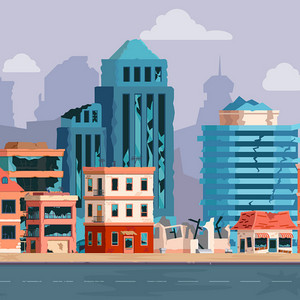
Across Chinese cities, more and more young people are venturing into abandoned factories, unfinished housing projects and closed hospitals, documenting their experiences online under labels like urban ruins exploration and ruins aesthetics.
Is this purely a creative subculture or a complex convergence of social media incentives, youth anxiety and regulatory blind spots?
And some believe a couple walking side by side is a kind of sentence.
Two clauses meant to make sense together.
When one shows up dressed for the stage and the other for the couch, the sentence breaks.
This is a swag gap moment.
Now, a growing number of young adults say they've ended relationships because of it.
Let's take a closer look at this new dating trend.
But first.
Against the backdrop of social media's prevalence ruins, aesthetics and dreamcore have sparked a widespread trend of urban ruins exploration among Chinese youth.
This phenomenon involves young people venturing into sites such as abandoned factories, closed hospitals and even uncompleted construction projects.
They document the experiences through poetic narratives and cinematic visuals shared on social platforms.
However, the romanticized portrayal of exploring hidden urban corners has obscured severe safety hazards and regulatory gaps, raising critical questions about how to reconcile aesthetic pursuit with public safety.
But let's first take a look at the ruins aesthetics and please explain what is a dream core?
Well, a dream core, as far as I just learned, is actually an aesthetics style and subculture that emerged primarily online.
That's a blend of elements of surrealism, nostalgia and sometimes unsettling or dreamlike imaginary.
You see, it's something that you seem like as if it's part of a dream, but you're looking at it, or a picture, right now and things doesn't really match in that scenery.
But it happens quite often in a dream.
So that's as per the name dream core.
Like, for example, you're standing in a swimming pool.
And that swimming pool looks old abandoned, but the water is keep on flowing and flowing, as if it's a water instead of an indoor swimming pool.
And then there's a doll floating upside.
Up above the water.
Nightmare core.
Drifting over to you.
That's something that might pop up on social media if you search dream core or stuff like that.
So Inception or The Matrix are also a little dream core kind of aesthetics.
Yeah, a little bit.
And I think we can see the connection with the ruins aesthetics too, right?
Because it's not just about sneaking into old places, but it's connected to something where people can find beauty and meaning in what seemingly would be decaying.
So for those who are thinking oh, they're exploring the kind of territory that are usually not explored and seeing ooh, it's kind of like a ghost hunting experience.
No, it's not like that.
It's not with that kind of aesthetics.
It's them going to these sites and and recording the experience and putting some filters and some music and some poetic way to document the experience.
For it to be suitable for social media, viral trends, stuff like that.
But sometimes, now that we see a large number of young people flocking into these abandoned places, abandoned amusement parks, abandoned defunct factories and hospitals, We see sometimes accidents.
They do happen.
For instance, one journalist going undercover with an urban exploration squad in Shanghai found themselves in an unexpected mess after falling straight into a muddy patch and getting scratched up while attempting to scale a wall into an abandoned factory.
Yeah, there was another photographer in Dalian looking for the perfect shot for a modeling gig and took a risk.
And entered into a closed off plaza.
There were clear warning signs around there too that said do not go in.
And then ended up with a pretty serious high fall accident.
This happened back in August.
And then in January this year there was a blogger in Hangzhou who was exploring a deserted school and then fell after climbing over a wall, got trapped and then needed to get the local fire department to come rescue them.
On Roundtable we've discussed some very niche hobbies, but the reason we're talking about this one is that they're getting a bit bit too popular among the younger generation and it's almost the kind of process that is easily copied and pasted among the younger generation because the exploration process is also almost streamlined and a lot of times the kids they gather together as a group of sort and they think it's This whole wasteland style kind of exploration is fun, but a lot of times there are danger harboring behind those kind of exploration, the way you think it is.
And sometimes these sites.
They also use it for photo shoots or even for organizing small concerts, which sounds romantic, but there's got to be some challenges behind it.
And sometimes if you don't pay attention, it might happen like those examples we mentioned.
We hope there are less examples alike in the future.
The problem here is that I learned that there are platforms organizing or providing tricks and providing places suggestions for these kind of experiences.
Yeah, explorers, they'll openly swap what they call experience tips.
You could call them intruder guides, I guess, if you wanted to, on how to gain entry to these places, and some of the tips will teach people how to locate gaps in the wall, for example, like they'll explain exactly where the entry point is and then the best spots to climb other walls or things like that, or to figure out how to damage door locks or dodge security guards.
They'll share that type of information as well.
So obviously this is not good, and these kind of explorations i kind of get a little bit about the fun of it.
We have the daredevils out there.
They just want to try things that they haven't done before.
But and the, the major, the main lover or enthusiast of this kind of exploration, what are?
What are some other drives that we didn't mention just yet?
Um, maybe it's just a better um social media trend as that too, because historically these activities was only for enthusiasts, who generally have these specialized equipments and ability to assess inherent risks, but nowadays it's just young people in general, gen z, who don't necessarily have all that just kind of groups too.
I mean, you could hop online, and the danger of it being online as well is what you see online is a polished perfect, finished product, and it encourages other young people to think oh, i can do that.
Look how easy that is.
You watch a chef online cook a cook a five-star meal and you try to cook it yourself at home.
It goes horribly wrong.
Same type of thing can happen here.
You know you have people who might be a little bit better at doing this type of thing and then you go out and do it yourself and you could end up in some real, real trouble.
Get get yourself in trouble or get yourself hurt.
Physical safety risks for sure.
And we've already mentioned the examples and also health risks, because this perhaps the most in.
We see these kind of risks not that often, but these abandoned locations often harbor long term residual health hazards that are not immediately visible when you go to these places, because no one is guaranteeing the safety of the environment, no matter if it's something you touch or something that you inhale, and you don't necessarily can notice the problem at the moment.
Yeah, I think if you were to visit an abandoned construction site, you don't know what chemicals are left over there.
You don't know what heavy metal dusts are left over there or fibers from old materials.
So if you breathe that in or if you come into contact, if your skin comes into contact with that, or imagine you got a cut on your arm or a scrape on your arm or your hands and then you come into contact with that you could really end up with some pretty serious damage.
And also we mentioned closed hospitals and unfinished construction projects.
Is it even legal to go into these places?
Yeah, that's another big issue, isn't it?
It's not because it's abandoned. that it's free territory.
These aren't theme parks.
Exactly.
It might be owned by someone else.
And if a property, now that we're speaking, has clear property rights, then entering without authorization can constitute illegal intrusion, which is something more serious than one exploration can cover.
OK.
So if the drive behind these exploration kind of activity is more of a exploring or adventurous spirit and the idea that oh, I am a content creator, I also want to do this and show my viewers what it's like.
Can we say it's kind of a fad that will slowly or quickly fade away?
And can we just let it go and don't do anything about it and just let the fashion go away quietly by itself?
Or should we do something about it?
I think there is a very famous art district called 798 here in Beijing.
That's one good example of how city management can help to curb this kind of free activity among young people.
It kind of does have that vibe there, doesn't it?
It used to be a series of abandoned factories or old resorts but now it's kind of modified into this art and aesthetics and vibing kind of district where you can see a lot of galleries and very niche foreign Western restaurants happening all around.
So, instead of just simply ignoring this demand of ruin aesthetics, I think the government, the local authorities, they can also try to explore the concept of all this and try to really modify these famous popular sites into something just like 798.
Yeah, but then nobody's going to go anymore.
I know it's different.
It's different because I'm assuming I'm not one of these explorers urban explorers but I'm assuming part of the draw is the danger.
The undeveloped part.
Yeah.
So you know, if you put some employees at the front of the abandoned hospital and said it's 81 entry and there's ice cream for sale, well then it doesn't have that same dream core appeal anymore, right.
I say...
I told you my favorite sign that I've ever seen in China so far.
It was a sign posted in public by the police.
It said, don't fight unless you don't mind going to the hospital or jail.
Awesome.
Which I thought was fantastic.
Make it very, very, very clear.
Public safety is number one here, not some 21-year-old social media post.
Make it very clear you're not allowed to go in there.
It's not safe for you to be there.
Slap huge fines on the people who get caught going in there.
And that public knowledge of how expensive it could be if you get caught would probably serve as a deterrent, I would think.
Draw the line clearly yes, but when people are staying in the line, you know young kids.
They'd like to go to forests, they'd like to climb mountains without mushrooms.
Yes, they just do things and they just try the kind of fun activities that are relatively not that harmful to them.
So if you really really want to do this, make sure, first of all, you're not breaking any laws or regulations.
You're going to the sites that are allowed to go in because there are still some abandoned factories that are not that dangerous, that have already be in the process of being transformed, and in the areas that can actually be explored.
Also, make sure you know what you're doing.
But I guess that's the thing about the younger generation, isn't it?
Yeah.
I should go for Steve's.
We're not encouraging people to do this, by the way.
Just saying, try to be as safe as possible and do not break any laws in the process.
Don't.
And try to stop hurting yourself if you are doing these adventurous kind of activities.
And on social media, here's the good news, that many of these social media sites, the Xiaoshu, the Douyin, they're already showing up keywords like urban ruin exploration, but underneath it specifies Visiting these locations without proper preparation may pose safety risks.
So it kind of reminds you from the source of where you learn about these information in the first place, that it harbors danger and do not copy if you are not ready.
And city management, go see these posts and put up the do not go in sign at these places.
Now you have the clue.
You're listening to Roundtable coming up next.
What do you feel about this swag gap?
Don't go away.
Looking for passion?
How about fiery debate?
Want to hear about current events in China from different perspectives?
Then tune in to Roundtable, where East meets West and understanding is the goal.
It's Roundtable with myself, Niu Henlin, Steve Hatherly and Yushan.
Imagine walking into a bar, already picturing how the night will feel.
The music, the lighting, the energy.
You've dressed for the moment.
Then your date arrives, and suddenly the vibe collapses.
Not because they're late, but because they're rude, in your opinion.
It's because they are dressed for a completely different reality.
What looks like a fashion mismatch quickly becomes something heavier a feeling of being unseen unmirrored, maybe even undervaluated.
And that discomfort now has a name, the swag gap.
Yup, the swag gap.
It's gone viral now.
Everybody's talking about it and it's the viral term for a relationship imbalance.
We can call it that where one partner really dresses in a stylish fashion.
They try their best to get ready when they're going out for a date.
They look cool.
They look cool and they put effort into it.
The other person on that date or in that relationship does not care.
It's hoodie and sweatpants to a classical concert.
There's no effort.
There's no sign of respect for the relationship.
And that is viewed as the swag gap.
I'm curious, is swag gap important to you, Yushan?
Which phase of the date are we talking about?
That's going to be my first and biggest question, because if it's the first date like it's the first time ever that I meet this person, and we're talking about maybe spending a relatively long time afterwards together in a romantic, intimate relationship like that, and I'm dressing like I'm attending a date and he's dressing like as if it's going to the gym, then Of course, we're not only talking about a mismatch of dating or dressing code.
Now, it's a mismatch of expectation.
How much efforts you are putting in as a way that I see as equal to me, even it can, even goes all the way up to value of respect, if you ask me.
So yeah sorry, finish your thought there.
Yeah, just a conclusion.
So if some, if we're talking about the very beginning phase of a date, then dead no, that really matters.
Yeah, sorry to interrupt you there, and that's how some people feel about it is that it is quite an important thing.
There was a blog post on online by this guy who said that he had arranged a date with this girl and it was at a Latin jazz bar.
This is in America.
And he really put a lot of thought into his attire.
He got a new flashy hoodie and he looked the part for a Latin jazz bar.
She showed up in, can I say the brand name, the spongy shoes?
Do you know what I'm talking about?
With ankle socks and some tights.
And he was like, no.
That's it.
And he he didn't end the date right at that spot, but he also didn't see her again.
This is this can go both in ways, both ways, by the way.
It doesn't matter, guy or girl.
But the point is, he felt like he put a lot of thought into getting ready in terms of his attire.
She put no effort into it whatsoever.
And he thought well, this obviously isn't going to work because these reflect our two different attitudes about how to present ourselves.
Yes.
In this way.
If someone puts in no effort in dressing up for the date, I think it could be a problem.
But what if it's just different fashion style or different fashion aesthetics?
Does it really matter for a couple to look match?
Well, the answer can be yes or no, because Style, especially in the beginning, it can substitute for substance, because it might give you something to have in common in the beginning, where you're not comfortable having deep relationship conversations yet
Right.
And you're just getting to know each other.
If you're into the same fashion, if you happen to dress the same way, even if you're putting in the same effort, then it's a bonding moment for both of you.
Social media is... a part of everyone's lives.
So if you can post that, then you have that shared kind of thing as well.
I'm not saying it's right or wrong.
I'm just saying it's a real thing right now.
Yeah, it is a real thing.
And when it doesn't exist between two people, they see it as potential for mismatch.
There's nothing there.
Yeah.
But it's not only in the dating world.
It's happening in the celebrity world as well.
Justin Bieber.
Yeah, is seen together.
Yeah, justin bieber.
So she, hayley bieber, his wife she went to why do i know so much about this?
She was going to an event for her oh, is it makeup brand or some whatever company she has and so she was dressed in like a really nice evening dress or whatever, and he had on socks and slippers and And nothing else.
And people, the quote online was, is it too late to say sorry?
Which is a Justin Bieber song title.
And people were saying like, swag gap here.
But then there's another example.
What's her name?
Selena Gomez.
Her husband is Benny Blanco, the DJ and producer, I want to say.
Anyway, she went on this talk show late at night and she was dressed to the nines, right?
And he was there.
He looked like he rolled out of bed two minutes ago.
And they don't care.
And Justin Bieber and Hailey Bieber, whether she cares or not, I don't know.
But swag gap exists with famous people.
That's what I was trying to ask.
It exists in the dating world, exists with famous people as well.
And is it because it's amplified by social media?
Yeah, you see a lot of the social media trend of me in my boyfriend style, or my boyfriend in my style.
And they're trying to not really put on girls' clothes on a guy, but rather how he will look if he is more of a match with my style.
So that goes into many variations.
I'm not going to list all of them, but you see this whole trend of people wanting to be seen as a good visual match.
Yeah, and they say that the people who do that too much on social media.
It's kind of like saying like look how good a match we are.
Look how happy we are.
See see see, we're happy, we're happy.
Uh shakespeare, the lady doth protest too much.
If you say it too too many times, it becomes disingenuous after a point.
But um, there's something to be said, you know, not just about the fashion aspect of it, but about just lifestyle in general.
People are saying that um, your fashion could reflect a large part of your, of your personality and your lifestyle choices as well.
Think about trying to date somebody.
If you're like a weekend, 11 am riser and a late night cheeseburger eater and your partner is up at 5 am.
You, Sean, was just like, oh, that sounds amazing.
But your partner is like a 5 am riser to do yoga classes and you're going to run into that might conflict lifestyleistically, if that's a word.
That's what I was trying to ask.
In the early stage of a relationship, you're still in the dating phase and there's the swag gap.
There's the difference in lifestyle.
There is the difference in consumption.
There's also a difference in, for example, values and even politics and raw expectations between each other.
There's the difference in you know language, register the way you communicate in some micro or subculture that you really enjoy, you really value and what are the most important element in the early stage of a dating world, especially to the younger people, the younger generation nowadays in china and around the world.
What do you think is the most important, Or even personally, to you?
The ability to be able to communicate reasonably.
Now, nah.
No, I mean, yes.
I don't represent all the young people out there, but I'm answering it.
And that's my answer.
No, I mean, in the very, very, very, very beginning.
I think in the very, very beginning.
What meets the eye?
Are they hot?
Do you mean?
Yeah, mutual attraction, but also shared talking points, I think.
And again, that can be just anything.
That can be social media, that can be fashion, that can be lifestyle, food, whatever.
Just shared whatever so that they can get to that second stage.
And I think no matter what you value, as long as your partner also values it the most, it works.
Well, let us know how you think about today's topics, because it is already the end of today's roundtable.
Until next time, keep the conversations going and the ideas flowing.
I'm Niu Honglin with Steve and Yishan.
Thank you so much for listening.
Bye-bye.