The biggest risk isn't what you see.
It's what you miss.
Recorded Future, bringing clarity to the signals that matter most to your business.
Recorded Future.
Know what matters.
Act first.
Hey, shortwavers.
Real quick before the show, let's talk about public media.
Public media has been in the news a lot this year.
And public media is what makes NPR shows like Shortwave special.
It's made for you.
When you listen to an NPR podcast, the people who make it aren't thinking about shareholders or advertisers.
We're thinking about you and delivering on a promise to help you understand the world a little better.
From its founding in the US, public media was always meant to tell stories from underrepresented communities, providing cultural insight that expands your perspective.
At NPR, we still believe all of that.
We always will.
But, as of this fall, federal funding for public media, including NPR and local NPR stations, has been eliminated.
And now we're heading into an uncharted future.
But we know you won't let public media go away.
We rely on your support to bring you Shortwave now more than ever.
This year we have loved bringing you stories about what happens inside a top secret nuclear facility, whether kids should be taking melatonin, why flowers are blooming early, how nightmares work and what happens when AI cannibalizes its own data.
And we can't wait to bring you more episodes like that in 2026.
So thank you if you already go the extra mile as an NPR Plus supporter.
If not, you can join the Plus community.
Get a bunch of perks like bonus episodes and more from across NPR podcasts.
Support public media by signing up for NPR Plus today at plus.npr.org.
You're listening to Shortwave from NPR.
Hey short wavers, it's Regina Barber with a very important message.
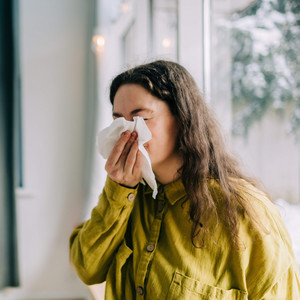
I hate allergies.
Itchy nose, runny eyes, when my throat gets scratchy.
It's like my own body is rebelling against me.
And it's not just seasonal allergies.
My allergies can strike when I'm cleaning the house, when I'm mowing the lawn, at any time of year, when I move to DC.
And after too many sneezes, I was like, it's time to take action.
What is up with this?
So the idea behind allergies is that your body is overreacting to something harmless, right?
So we're not supposed to be allergic to pollens, cats, dogs, foods, drugs.
But if you are, your immune system encounters these allergens and it's thinking danger, danger when it's really something harmless.
That's Dr. Gina DePoole-Hidalgo.
I invited her to the NPR studios because she's a pediatric and adult allergist in the D.C. suburbs.
And she very patiently began our conversation with a recap of what allergies are.
You usually had to have been exposed to the allergen in the past.
And it's that first exposure where your body ends up making allergic antibodies, what we call IgE or immunoglobulin E antibodies to those allergens.
People's bodies have been doing this, encountering allergens overreacting, creating these allergic antibodies for a long time, which means doctors have been trying to treat it for a long time.
Most patients, we end up recommending things like antihistamines, nasal sprays, eye drops really more symptomatic treatments to help decrease your symptoms.
So you can, you know, be around the allergen and be somewhat okay.
Claritin, Zyrtec, Allegra, they're really temporary kinds of treatment options.
But what if I told you there was another kind of treatment that worked for all but the most severe allergies?
One that didn't just treat the symptoms of your allergies, but the actual cause of them.
The idea is that you build tolerance over time.
By giving you what you're allergic to, you get desensitized to those allergens that you're being treated with.
Unlike medicines which only take care of the symptoms, allergy shots are actually training your immune system to react differently when you're exposed to the allergens.
So today on the show, allergy treatments.
We're learning where our allergies come from, how they're detected and even how to treat them so they're effectively gone.
You're listening to Shorewave from NPR.
This message comes from AT&T.
America's first network is also its fastest and most reliable.
Based on RootMetrics, United States Root Score Report 1H 2025, tested with best commercially available smartphones on three national mobile networks across all available network types.
Your experiences may vary.
RootMetrics rankings are not an endorsement of AT&T.
When you compare, there's no comparison.
AT&T.
This message comes from Superhuman, the AI productivity suite that gives you superpowers everywhere you work.
With Grammarly Mail and Coda coming together, you get proactive help across your workflow so you can outsmart the chaos.
Experience AI that proactively helps you go from to do to done faster.
Unleash your superhuman potential today.
Learn more at superhuman.com slash podcast.
That's superhuman.com slash podcast.
This message comes from the John D and Catherine T MacArthur Foundation, recognizing extraordinarily creative individuals whose ideas, solutions and discoveries expand people's expectations of what's possible.
So Dr. Gina, can I call you Dr. Gina?
Yes, you can call me Dr. G. Excellent.
Let's start with allergies.
I was well into my adulthood when I finally did the allergy panel to check if I had allergies, because I suspected
Can you, for our listeners, tell us how does this test work?
Yes.
So how it works is that we're actually introducing these allergens into your skin.
There's different forms of testing, but the main common one is what's called a skin probe.
Yeah, it looks like a meat tenderizer just boom on your skin.
Right on the skin.
Yeah.
So the idea is that by exposing your skin to that, if your body has made those allergic IgE antibodies, it recognizes it, it binds to it.
And then within 15, 20 minutes you get a little red itchy spot at the site of where those allergens are.
Yeah, I found out I was allergic to, let me read this, starting from most intense to least intense.
Basically all grasses dust mites, some tree pollen and weeds cats I have four cats cockroaches equal to cats feathers, mosquitoes.
What's happening in my body when I encounter these allergens?
So what happens when you encounter the allergen is that your body is exposed to that allergen.
Let's just use cat for example.
And then the IgE is waiting for its partner and then it binds to that allergen.
That IgE again is an immunoglobulin E, which is the allergic antibody.
And then within 15, 20 minutes, it releases chemicals like histamine, prostaglandins, leukotrienes.
It's these chemicals that actually cause the symptoms that are related to allergy within 15 20 minutes.
Like the itchy, the water.
Yes, itching, congestion, sneezing, all of that.
So why am I not bothered by my four cats?
Like I've had four cats for the last year and a half, and I'm just not that bothered by it.
But it's like in the middle of my allergy spectrum of like... Of reactivity.
Of reactivity, yeah.
God, it's so...
The fact that you don't have symptoms means that you might not have a clinical allergy or clinical significance to the allergy test, but you're primed for it.
So there may be certain breeds of cats, for example, that you might have issues with.
Yes.
And maybe not necessarily your cats.
So it's the idea of you've made these allergic antibodies that are waiting on your mast cells.
And then, when you are exposed to it, there are certain ones that may say oh, I'm going to be releasing my histamine from these mast cells and cause the symptoms.
So the way to see it is that you are sensitized, meaning you were exposed to it.
Your body made those allergic antibodies.
But now not everybody actually has a clinical reaction, but a majority of people do.
I was also fascinated.
I asked the doctor this, the allergist.
I do feel like a little bit bothered by them, but not a lot.
And he's like, well, you'll notice if you go on a long trip and come back.
And come back.
Exactly.
So why is that?
So we have people, you know, who really experience that.
For example, you lived with a cat and then you go off to school and then you come back home and all of a sudden,
Like to college.
Yes, to college.
And then you know, you come back home for a break or the summers, and you're like oh my goodness, why am I having this?
You know, the opposite of allergy is tolerance.
Yeah.
So when you're exposed to something quite frequently, then you're not going to be allergic to it because your allergic antibodies are not going to be releasing these chemicals all the time.
So if you are around something, then it's likely that you're more tolerant to it than allergic.
But that panel still picked up that I am allergic to cats.
I wouldn't say allergy necessarily, but that you're sensitized to it.
Okay.
So this is where this idea of like allergy immunotherapy basically exposure therapy through allergy shots comes in.
After I did that allergy panel we were talking about, the allergist came back and he was like oh, and he was like wow, you would be a great candidate for allergy shots.
And I had never heard of these shots before.
So can you tell me a little bit about the history, like who first came up with these allergy shots and when?
So it was actually introduced over 100 years ago.
So in 1911, a brave British physician named Dr Leonard Noon started purifying the grass extracts because he hypothesized that there's some toxin – they used the word toxin back then – that there was some kind of toxin that was causing these symptoms.
And that by inoculating these patients with increasing doses of grass pollen – that it would decrease the symptoms and desensitize them.
And so those were the first reports in the early 1900s that allowed us to see what we now call allergen immunotherapy and allergy shots.
That's the history behind when it started.
Yeah.
And it's since developed.
So how has it changed then as time has gone on?
So now it's more refined.
There are actually companies that make the allergen.
They grow the pollens, they grow the plants, and It's purified and extracted so that it's much more refined than when it was many, many years ago.
Got it.
OK, so can you tell our listeners like how that process works?
Like it's not just one shot.
It's a series of shots.
Yes.
So there's different protocols, but exactly what you're going through is the typical, you know, standard schedule.
So the idea is that you're starting off with very dilute doses and then you come once a week for several months.
And then at some point, when you reach this target dose or maintenance dose, then you can come every two to four weeks, depending on the protocol.
So it's two phases, what we call the buildup phase, which is all that going once a week coming coming, and then there's the maintenance phase, which is then the once every four weeks phase.
And the idea is, once you get to that maintenance dose, the amount that's in that maintenance dose has been calculated, so it contains the amount that has been shown to be effective.
But does it always work?
Am I cured?
Do I have to do shot every month for the rest of my life or...
No.
So this is something we get asked all the time.
So the idea is that by getting to the maintenance dose, you actually we recommend about a three to five year therapy.
Of just going once a month.
Yes.
And there is no cure for allergies per se, which is why we can't say this is going to cure you.
I was telling everyone that.
I'm like, these shots are going to cure me.
And they're like, no.
The closest thing to a cure.
But in general, it's long lasting effect.
And I have had some patients who did this years ago because right, this has been out for over 100 years.
Some that did this in their like middle elementary school.
They'll come back to me in their 60s and say oh, Dr Gina, I want to start shots again because I feel like my symptoms have come back.
So in that case, that was decades ago. of being asymptomatic to their allergen.
So again, it's very individualized, which is why we can't say, oh, this will cure you.
But really the percentage that we really tell patients.
It's anywhere from 80 to 90 effective for those who start shots.
Okay.
So, you know, I'm not asking for myself, just for a friend.
Like, is there any side effects from these allergy shots that I've been taking?
So there is the potential for something to happen, in the sense that you can get a little swelling at the site.
Yep. of where the injection is, right?
Because technically, those are the allergens being introduced.
But another potential reaction can be what we call a systemic or anaphylactic reaction, where it's whole body reaction you know from hives trouble breathing nausea vomiting, swelling which is very, very rare if it's again administered safely.
But all of these side effects are typically mitigated because you are usually observed for a certain period of time.
Yeah, they're like, Gina, you should stay here for a little while.
And I had to do that for Four times in a row.
Yes, exactly.
So there's an observation period to make sure that these reactions don't happen.
And of course, wherever you are getting the allergy shots, there's usually trained staff.
So if something were to happen again very, very rarely we're able to administer the proper treatment to reverse it.
Right.
So, you know, we've been talking a lot about cats.
What about food allergies?
Thankfully, I'm not allergic to any food.
But are food allergens any different from the allergens we've been talking about?
So yes, actually the mechanism is the same, but the treatment is potentially different depending on what the allergen is.
So there's no allergy shots for foods.
That is not yet available.
But there is therapy that's called oral immunotherapy, where it's giving you increasing doses of the food, similar to how we talked about with allergy shots, but it's the food that you are actually getting increasing doses of orally.
So some allergists practice this.
This is like so interesting, right?
Because I remember when I was pregnant with my daughter, this was more than 15 years ago.
The advice that was being given to us was like do not expose your kids to certain foods like peanuts and eggs, and even strawberries before like, I think, one years old, or something like that.
And I've noticed that the guidance has basically reversed since then in favor of like early introduction.
Why did that change?
Yes.
So it's exactly what you're saying, which is we didn't have it right.
Right?
So it was like 2008-ish, 2011.
Yeah, she was born in 2008.
Yes.
And the guidance back then was avoid the allergenic foods until age three.
And we're like, okay, we're going to avoid these allergenic foods.
And then my Chinese mother just gave her everything and she was like, not even one.
Yeah.
And I was like, well, I guess she's fine.
Yes.
And so after those recommendations back then, we saw this huge prevalence of peanut allergy.
And we're like, what is going on here?
And then there was a game-changing study in 2015 that was actually about a peanut allergy in high-risk patients and babies.
And they found that by introducing peanut between four to six months of age, but definitely before one year of age, it actually decreased the incidence of peanut allergy in these high-risk kids.
So after then, so now for a decade, we've been telling parents and advising our pediatrician colleagues early introduction of allergenic foods.
Early introduction of allergenic foods.
So my mom was right.
Please don't tell her.
Dr. Gina, thank you so much for talking to us today.
Thank you so much for having me, Regina.
If you like this show, we have done so many episodes on allergies.
We'll link those episodes in the show notes.
This episode was produced by Hannah Chin.
It was edited by our showrunner, Rebecca Ramirez, and the facts were checked by Tyler Jones.
Kwesi Lee was the audio engineer.
Beth Donovan is our vice president of podcasting.
I'm Regina Barber.
Thank you for listening to Shorewave from NPR.
This message comes from BetterHelp.
The holidays bring traditions and joy, but they can be tough too.
Therapy helps you care for yourself so you can truly show up for what matters most.
The First Amendment protecting the right to free speech and a free press in the US came first for a reason.
It was a bold declaration that set the young republic apart.
Today, we ask you to make your own declaration.
Stand up for NPR and a free press by giving now at donate.npr.org.
Thank you.
This is Ira Glass.
On This American Life, we tell stories about when things change.
Like for this guy, David, whose entire life took a sharp, unexpected, and very unpleasant turn.
And it did take me a while to realize it's basically because the monkey pressed the button.
That's right.
Because the monkey pressed the button.
Surprising stories every week, wherever you get your podcasts.