This message comes from Capital One.
Banking with Capital One helps you keep more money in your wallet with no fees or minimums on checking accounts.
What's in your wallet?
Terms apply. See CapitalOne .com slash bank for details.
Capital One N .A. Member FDIC.
Heads up, this episode has a few curse words in it.
This is Planet Money from NPR.
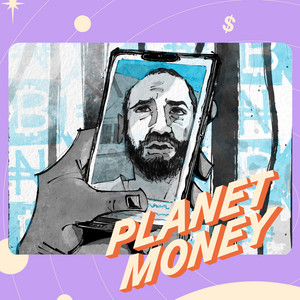
There is this video that I've not been able to stop thinking about since I first saw it.
It's a short video, just 39 seconds long, of a bearded man with a tight haircut, a white t -shirt, and a gold chain.
And he is filming himself, selfie style, but he seems to be holding the phone at this weird angle.
As if he's trying to hide it from someone.
Hello, my name is Sigrun Gambir and I'm the head of financial crime compliance for Binance.
No, I've been detained by the Nigerian government for a month.
I don't know what's going to happen to me after today.
If this is ringing a bell, it first made the rounds last spring.
I've done nothing wrong.
I asked the United States government to assist me.
I need your help, guys.
I don't know if I'll be able to get out of this without your help.
Please help. Then the video just ends.
It's haunting. I first heard about this guy in this video from legendary reporter Dina Temple -Raston.
Hey, Dina. Hey there.
Dina, you've been following this story, the story of Tigran Gamberian, since day one.
Yeah, I knew Tigran.
He's a former IRS investigator.
He's American. And I interviewed him for a bunch of stories.
So I found out pretty quickly that he'd been detained in Nigeria.
And I thought they'd hold him for a couple of weeks.
I had no idea that it was going to become such a saga.
And that saga is our episode today.
Hello and welcome to Planet Money.
I'm Nick Fountain. And I'm Dina Temple -Raston, the host of Click Here, a cyber and intelligence podcast.
Tigran's story is about more than one man in a notorious Nigerian prison.
It's about how people in places without stable economies have found refuge in cryptocurrency.
How crypto can undermine state power and how that state power bites back.
So today, that story from Tigran himself.
We landed the first recorded interview with him since his release.
And now we know all the details of his eight months in captivity and how he got out.
Oh my gosh, you look great.
I'm so rude, you look great.
Hey, how you doing?
Good to see you. It's good to see you too.
This message comes from Greenlight.
Ready to start talking to your kids about financial literacy?
Meet Greenlight, the debit card and money app that teaches kids and teens how to earn, save, spend wisely, and invest.
Start your risk -free trial at greenlight .com.
This message comes from Apple Card.
If you love iPhone, you'll love Apple Card.
It comes with the privacy and security you expect from Apple.
Plus, you earn up to 3 % daily cash back on every purchase, which can automatically earn interest when you open a high -yield savings account through AppleCard.
Apply for AppleCard in the Wallet app.
Subject to credit approval, savings is available to AppleCard owners subject to eligibility.
AppleCard and Savings by Goldman Sachs Bank USA, Salt Lake City Branch, member FDIC.
Terms and more at AppleCard .com.
Let me tell you a little bit about Tigran Gamberian.
He's this Armenian -American guy.
Super smart, really easygoing.
The type of person who has a squat rack and a gaming chair at home.
And a few weeks ago, I went to visit him at his house about an hour outside of Atlanta.
Should we take off shoes?
Are you guys hungry?
No, thank you. Some backstory.
Tigran made his name working for the IRS.
He was a special agent there, a financial investigator.
And he focused on investigating cryptocurrency and cyber cases.
And Tigran is a legend in this world.
Before him, just about everyone in law enforcement thought crypto transactions were anonymous, totally untraceable.
In fact, that's exactly why criminals in particular seemed to love it.
They saw it as a way to commit a crime and leave no fingerprints.
But Tigran suspected that these transactions were not as anonymous as people thought.
So night after night, with his infant daughter on his lap, he stared at long strings of letters and numbers, trying to figure out a way to follow transactions from one place to another.
And through just determination, he was able to do it.
He was able to trace transactions.
This completely revolutionized high -tech crime fighting.
He was involved in just about every crypto -related bust or investigation in the 2010s.
Alpha Bay, Mt. Gox, those were him.
Silk Road? Yeah, him too.
When I was reporting on this and calling around law enforcement circles, people kept telling me Tigran figured out how to track all this.
They even called him the Bitcoin Wizard.
And over the next decade, he became kind of this evangelist for crypto.
He believed that if done correctly, crypto could solve a lot of the problems in the financial system and maybe be more transparent than traditional banks.
And so in 2021, Tigran decided to leave government and take his talents to the largest cryptocurrency platform in the world, a company called Binance.
Binance is what's called an exchange, basically a place to buy or sell crypto.
And it had this kind of sketchy reputation as a place for money launderers and criminals.
He was hired as the global head of intelligence and investigations, which meant working with law enforcement across the world, showing them the ways in which he tracked crypto transactions.
So in many ways, his job at Binance wasn't that different than what he was doing at the IRS.
I don't handle business.
I have nothing to do with any products.
My whole core duties, and which is all I do, is assist law enforcement.
So officially, Tikren was hired to help with law enforcement and compliance.
But unofficially, he was sort of an ambassador for Binance and for crypto itself.
He was there to send the message.
Crypto's Wild West days were over.
That shady stuff Binance was doing was in the past.
Today's Binance is law abiding and we're here to help.
Which is why in February of last year, he found himself in Nigeria.
He was there to meet top government and law enforcement officials.
We agreed to go out there, meet with them, being like, OK, you know what, if you need anything, just to kind of even, you know, go above and beyond and help them out.
Now, Nigeria as a country has a complicated relationship with crypto.
By the time Tigran had arrived last year, their currency, the Naira, had been through years of turmoil.
They had unpegged the Naira from the U .S.
dollar. Inflation had been high, like 30 percent annually.
And so people had been buying up crypto as a kind of store of value.
Instead of putting savings in a bank, they would buy Bitcoin or Ethereum.
In 2024, Nigeria had the second largest cryptocurrency adoption rate in the world.
For the Nigerian government, the rapid adoption of crypto meant less control.
As more people started using Binance to trade Naira, the central bank's hold on the value of their currency felt like it was slipping away.
And so they were starting to blame crypto for a lot of the country's economic problems.
Which brings us back to Tigran.
Tigran's trip to Nigeria was going to be quick, just a few days of back -to -back meetings.
He didn't even check a bag.
The most important meeting was at the big law enforcement intelligence agency in Nigeria, known as the National Security Agency, or NSA.
Tigran was excited about the meeting.
But when he showed up...
They're like, oh, just come in, just sit down, they'll come in in a little bit.
We waited for a couple of hours.
Were you worried that you were waiting that long?
It started getting a little weird.
Teagan was there with a colleague named Nadim Anjawala.
Nadim was younger. He wasn't a former cop.
He was more like Binance's business guy for Africa.
And the two of them were waiting to meet with the head of the NSA to talk through how Binance and Nigeria could work better together.
But that meeting never happened.
Instead, eventually, a bunch of Nigerian officials filed into the room.
None of them were really making eye contact with Tigran or Nadim.
And when the meeting did start, Tigran realized it was not what they signed up for.
One of the guys was actually responsible for this.
He comes in, kind of slaps a folder on the table, starts saying, you know, you've destroyed the Nigerian economy.
The Nigerian authorities told them that Binance had tanked their currency, that they'd laundered money, and that they'd evaded taxes.
According to Tigran, they basically said, we are not going to let you leave until we are satisfied that Binance is on the up and up.
Among other things, they said they wanted Binance to pay those taxes and also some fines.
And they said they wanted more control over the platform, including information on Binance's users.
We want a user record for every single Nigerian user.
Until that's done, you can't leave.
We reached out to the Nigerian authorities for this story.
They declined to comment.
What we do know is that the Nigerian government has a history of being quick to find companies and seize their assets.
But Binance had no assets to seize or to hold as collateral.
In a sense, Tigran and Nadim became collateral.
And where might the Nigerian government have gotten the idea of detaining someone from Binance and slapping them with enormous fines?
We do have some breaking news on a major crypto company, Binance.
Oh, yeah, it was us, the U .S.
We are here today to announce that the Justice Department has secured felony guilty pleas from the world's largest cryptocurrency exchange.
A few months before Tigran was detained in Nigeria, the U .S.
Justice Department announced this huge case against Binance.
They'd been investigating the company for years, and they announced that they had reached a plea deal with the founder and former CEO, a guy named Chong Pang Zhao, also known as CZ.
And he and the company agreed to plead guilty to a bunch of federal charges, including flouting anti -money laundering laws and violations of the U .S.
Bank Secrecy Act. They were fined $4 .3 billion.
This is one of the largest penalties we have ever obtained from a corporate defendant in a criminal matter.
The announcement rocked the crypto world.
And, yeah, it might have planted an idea in the minds of Nigerian officials.
Back in Nigeria, Tigran and the business guy Nadeem told officials, we're not top finance executives.
We can't pay that fine.
We can't release that user data.
That's way above our pay grade.
And Nigerian officials were like, okay, then.
Call your bosses, because until that gets cleared up, we're keeping you here in Nigeria.
Authorities took them to a safe house in the capital.
Apparently, the conditions there weren't all that bad.
Tigrin had access to a phone.
He could talk to a lawyer.
Nadim convinced the guard to buy satellite TV so they could watch movies.
And the food, Tigrin says, it was good.
There was a cook that was assigned to the house.
Nadim was, like, ridiculous the whole time.
It was crazy. He would, like, make crazy requests.
He kept asking for, like, smoothies in the morning.
The cook would make him, like, two smoothies, like, an avocado smoothie and whatever.
Weeks passed like this.
Not much action, a lot of smoothies.
Tigrin took to push -ups and pull -ups to stay fit and take the edge off his anxiety, but Nadim was getting more and more freaked out, and Tigrin tried to comfort him.
And then one day, about a month after they were detained, things took a turn.
Tigrin went to Nadim's room.
It was dark, the lights were out, so I went up and knocked on his door.
He didn't answer. He opened the door.
I was like, Nadim, Nadim, are you there?
No response. I just see, you know, just a mountain of, like, blankets.
It's like pillows and I'm like, there's a foot sticking out from underneath the blanket.
I pull it off, it's stuffed a water bottle inside a sock, put it there, so...
Oh my God. Yeah. Nadim had escaped.
And Tigran says at this moment he felt his heart sink.
For weeks, he and Nadim had been in this together.
He thought, surely Nadim had at least left an explanation.
But when Tigran looked around for a note, He couldn't find one.
And in this moment, Tigran realized it was going to be just him all by himself against the government of Nigeria.
When I'm like, I'm alone.
And so I'm trying to figure out how do I handle this?
What should I do? He knew he had, what, minutes before the guards figured out that Nadeem had escaped.
And he knew that once that happened, all hell would break loose.
At the very least, he'd probably lose access to his phone and the world.
So he tiptoed out to the courtyard where no one could overhear him, and he pulled out that phone and hit record.
Hello, my name is Tigran Gamberian.
I'm the head of financial crime compliance.
Yeah, this was that haunting video that made the rounds.
I'll be able to get out of this without your help.
Please help. Two days after he sent that video, Nigerian authorities started officially charging Tigran with tax evasion.
They also said he was complicit in helping Binance launder $35 .4 million in illegal transactions.
And that Binance was operating without a license.
And once he was arraigned, he was not sent back to the guest house with the satellite TV and the chef.
This time, his treatment was much worse.
They treated me like Hannibal Lecter when they're transporting me.
It was ridiculous. Like two trucks full of people with rifles, one in the front, one in the back.
It was insane. The prison he ended up in is infamous.
It's called Kuja. It's where Nigeria puts ISIS militants.
It's actually one of the largest prisons in Nigeria.
Tigran wasn't put in general population.
He wasn't going to be bunking with some ISIS guy.
He got his own cell.
It was just a cell with no air conditioning, nothing, cockroaches.
There's a mattress and a ton of cockroaches everywhere, just like infestation.
By then, the authorities had taken away his phone.
But as he looked around him, it looked like all the prisoners had their own phones.
And he said, how do I get me one of those?
And the first night he was there, he gets an opportunity to buy one.
One of the guard comes in, didn't ask, he just opens the door, sits down in the bed and says like, I'll sell you a phone for $25 ,000.
I'm like, what? He's like, yeah, you're a Binance executive.
You're a billionaire.
You can afford this.
I'm like, I'm sorry, you got that wrong guy.
He's like, okay, fine, $5 ,000.
I'm like, no, I'm like, I'm not a billionaire.
Yeah. It was at this moment that Tigran starts to realize that while he was locked away, the Nigerian government had been painting this picture of him as not only the cause of all of Nigeria's money problems, the inflation, the speculation, but also as a billionaire, an evil one, and a crook.
How was Tigran going to get out of here?
That is after the break.
Support for this podcast and the following message come from Sutter Health.
Whether it's prenatal care or post -menopausal guidance, Sutter's team of OBGYNs, doctors, and nurses are dedicated to building long -term relationships for lifelong care.
With personalized care plans for every patient, It's their commitment to supporting every woman at every stage of her life.
Learn more at SutterHealth .org This message comes from ADP.
ADP knows any new technology, any old competitor, any trendy thing, even a trendy thing that everyone knows isn't a great idea but management just wants us to give it a try for a bit, can change the world of work.
So, whether it's a last -minute policy change or adding a new company holiday, ADP designs forward -thinking solutions to help businesses take on the next anything.
ADP. Always designing for people.
This message comes from Capital One.
Say hello to stress -free subscription management.
Easily track, block, or cancel recurring charges right from the Capital One mobile app.
Simple as that. Learn more at CapitalOne .com slash subscriptions.
Terms and conditions apply.
This message comes from Mint Mobile.
Mint Mobile took what's wrong with wireless and made it right.
They offer premium wireless plans for less.
And all plans include high -speed data, unlimited talk and text, and nationwide coverage.
See for yourself at mintmobile .com slash switch.
Eventually, Tigran did get a phone.
And he was able to talk with his family.
He says he spent hours on video calls with his 10 -year -old daughter.
They'd talk while she played video games late into the night.
And on those calls, he says he tried to pretend things were normal, that he was just on a long business trip.
But later, he found out that she'd known all along.
She'd Googled him. Months go by.
And even though Tigran's a strong -willed person, spending that long in a seedy prison cell started to wear him down.
Not just mentally, but physically.
I just can't believe that I'm still here.
I spent my 40th birthday in a Nigerian prison, for God's sake.
And then one morning, he wakes up feeling sick.
It feels kind of like food poisoning, so next thing I know, I'm thrown up.
In May, about three months into his detention, Tigran got malaria.
Pretty common in Nigeria.
It's treatable. Think like a bad flu, but worse.
But if it is not treated, it can be debilitating, even deadly.
And Tigran was not getting good care.
His malaria led to pneumonia.
Eventually, he became bedridden.
And that aggravated some of his back problems.
He ended up unable to walk.
He needed a wheelchair to get around.
But according to Tigran, when he was in public for court appearances, Nigerian officials wouldn't let him use the wheelchair.
There were local journalists showing up, and he said officials thought pictures of him in a wheelchair would be bad press and show that he wasn't being taken care of.
Yeah, there's this incredible video from last September.
Tigrin is in this echoey courthouse hallway with a single crutch.
He's struggling to walk, and he's getting more and more frustrated.
Because there is a guard in brown fatigues trying to get him into a courtroom.
But when Tigrin keeps reaching for the guard's hands, the guy will not help.
Every few steps, Tigrin has to rest against the wall.
This video, showing how much Tigran's health had declined, made it onto social media.
And it seemed to shift things in his favor.
Yeah, but the key thing that turned the tide for Tigran was when Nigerian prosecutors actually started to lay out their case against him in court filings.
The only evidence that they had in my charging documents was my business card that said I was head of the global intelligence investigations.
in my entire charging records against me, my business card is the only evidence in there.
Tigran was expecting the Nigerian prosecutors to at least have gone through the motions of building a case against him.
But instead, what they had tying Tigran to these alleged crimes was a single sheet of paper, a photocopy of his business card.
And that, that was the moment, it seems, that Tigran's case really changed for the US government.
Yeah, the whole time Tegrin had been detained in Nigeria, I'd been calling sources at the Justice Department, the White House, and even one high -level State Department official saying, what are you doing to get this guy out?
They wouldn't go into detail and they weren't authorized to speak on the record, but I got the impression that they were dragging their feet.
Maybe because the U .S.
saw Nigeria as a partner.
Maybe because at first blush, Nigeria's case against Tegrin seemed so much like the U .S.'s own case against Binance.
But after prosecutors submitted their evidence, it became clear that Nigeria's case against Tigran was nothing like the one the U .S.
had brought against CZ, the founder of Binance.
The U .S. case was years in the making.
They had reams of evidence, emails, voice messages, transactions.
Nigeria had none of that.
And when this came out, U .S.
officials seemed to kick it up a notch.
The U .S. strategy to get Tigrin out was, it seems, pretty simple.
A full -court diplomatic press.
For months, U .S. officials were told to bring up Tigrin at the beginning of every meeting they had with Nigerian officials.
With the foreign minister, the finance minister, the national security advisor, but also the minister of culture, the minister of sports.
And this strategy went all the way to the top, all the way to then -president Joe Biden.
According to four people close to the case, Biden was scheduled to meet with Nigeria's President Tenubu.
That was last September at the UN General Assembly in New York.
And U .S. officials had signaled that Biden was going to raise Tigran's case in those meetings.
And according to my sources, President Tenubu ended up skipping the entire UN General Assembly, maybe to avoid the embarrassment of that meeting.
Tigran's health, meanwhile, continued to deteriorate.
And eventually, the pressure, maybe the embarrassment, became too much.
The Nigerian government announced they were going to release Tigran on humanitarian grounds.
They said they were just releasing him so that he could get medical care.
Binance set a private plane to pick up Tigran.
They flew him to Rome.
And then he took a commercial flight back to the U .S.
All told, he spent about eight months in detention.
He's still recovering from the medical issues related to getting malaria.
And he still works at Binance.
By the way, we did reach out to Binance for this story, and they did not respond to our questions about Tigran.
For now, he's no longer running the investigations team.
He was away for so long, they brought in someone else to do the job, temporarily.
Tigran initially went to Nigeria to help the government use crypto for their law enforcement efforts.
But that project is pretty much dead.
Tigran says Binance doesn't cooperate with Nigerian officials anymore.
Neither do many other crypto companies.
People in Nigeria are still using crypto, but now it's back to the Wild West.
And Tigran is kind of over helping them change that.
Would you ever go back to Nigeria?
I don't think my wife would let me go back to Nigeria if I wanted to.
She's right. Or, like, outside the house.
By the way, Tigran and Nadim haven't spoken since Nadim escaped.
We did reach out to Nadim.
He didn't get back to us.
But as for what happened to him, Tigran suspects that he hopped the guesthouse wall, got an Uber to the airport, and caught the first flight out.
He had a second passport.
In November, Nadim sent Tigran an email saying he wanted to explain why he left and why he did what he did.
Tigran waited two months to respond.
And when he did, he basically said, I don't have that much to say to you.
You could have at least given me a heads up.
I almost died in that prison.
when i said that dina is a legend i meant it we worked in the same office for a few years and i learned so much from her by osmosis by watching how she reports and i'll admit it now to you dina by eavesdropping on your phone conversations if you want to hear more stories like this one you can check
out Dina's show. It's called Click Here.
It comes from Recorded Future News.
This episode of Planet Money was produced by Emma Peasley and Sean Powers.
It was edited by Jess Jang.
It was fact -checked by Sierra Juarez and engineered by Sina Lafredo.
Alex Goldmark is our executive producer.
Special thanks to the great Karen Duffin.
I'm Dina Temple -Raston.
And I'm Nick Fountain.
This is NPR. Thank you for listening.
This message comes from Tourism Australia.
No matter what you're into, Australia has something for everyone all year round, like the Daintree Rainforest this spring, Melbourne's music scene in the summer, and the wineries of Barossa Valley in the winter.
Come and say G'day.
More at Australia .com.
Support for NPR and the following message come from Bowl & Branch.
Change your sleep with the softness of Bowl & Branch's 100 % organic cotton sheets.
Feel the difference with 15 % off your first set of sheets at bolandbranch .com with code NPR.
Exclusions apply. See site for details.
This message comes from Viking, committed to exploring the world in comfort.
Journey through the heart of Europe on an elegant Viking longship with thoughtful service, destination -focused dining, and cultural enrichment on board and on shore.
And every Viking voyage is all -inclusive with no children and no casinos.
Discover more at viking .com.