This message is from N .P .R.
sponsor Total Wine and More.
This summer season, with so many bottles to choose from, it's easy to find your favorite and more.
Find what you love and love what you find only at Total Wine and More.
Drink responsibly, B21.
You're listening to Short Wave from NPR.
Space, I love it and the things inside of it.
Us, of course, stars and galaxies I studied.
and I even love the other cool hypothetical stuff that mostly lives in science fiction.
Like wormholes. Wormholes are a funky but possible solution to Albert Einstein's famous equations for the theory of general relativity.
These theoretical cosmic portals can shorten a trip from hundreds of light years to minutes.
Wormholes have been a mainstay of transportation in movies like Interstellar That's it, that's the wormhole.
and TV shows like my favorite, Star Trek.
The aliens who live in the wormhole, as you call them.
Which Ron Campbell says is not far off from how scientists think about these wormholes.
It's very much like a bridge.
You can do this thought experiment yourself.
You take a sheet of paper.
You fold it, kind of like in half, and you poke a pencil hole right through the middle.
And that is essentially a wormhole.
It connects two points in space and time together.
Ron's a theoretical physicist, and he wrote his PhD on funky solutions to Einstein's equations for general relativity, like worm holes.
Basically, he did this by studying spacetime, the four dimensional existence we all live in.
It includes three dimensions of space and one dimension of time moving forward as that fourth dimension.
And general relativity talks about how spacetime itself has a shape to it.
A shape that is distorted by all the wonders inside of it.
All the beautiful stars, planets, galaxies, black holes.
Their distortion of space -time is gravity.
And if you push that gravity to its extreme you get black holes.
And some physicists theorize that white holes could also exist. And that would be the opposite to a black hole.
They'd push out matter instead of and the thing that could connect them is a wormhole.
But scientists have never seen one, and as a lifelong Trekkie, I have long wanted to know, could we ever, or are wormholes purely science fiction?
I think, according to the physics, there is a non -zero chance that we could find a wormhole.
So you're saying there's a chance?
I think if we find a wormhole, that means someone else created it.
So, today on the show, wormholes, the geometry of space time, and how, to a theoretical physicist, if the math checks out, you can't rule it out.
I'm Regina Barber and you're listening to Short Wave, the science podcast from NPR.
This message comes from Schwab.
At Schwab, how you invest is your choice, not theirs.
That's why when it comes to managing your wealth, Schwab gives you more choices.
You can invest and trade on your own.
Plus, get advice and more comprehensive wealth solutions to help meet your unique needs.
With award -winning service, low -costs and transparent advice, you can manage your wealth your way at Schwab.
Visit Schwab .com to learn more.
This message comes from Mint Mobile.
If you're tired of spending hundreds on big wireless bills, bogus fees, and free perks, Mint Mobile might be right for you with plans starting from $15 a month.
Shop plans today at mintmobile .com slash switch. Upfront payment of $45 for 3 -month, 5 -gigabyte plan required.
New customer offer for first 3 months only.
Then full price plan options available, taxes and fees extra.
See Mint Mobile for details.
This message comes from Charles Schwab.
When it comes to managing your wealth, Schwaab gives you more choices, like full -service wealth management and advice when you need it.
You can also invest on your own and trade on thinkorswim.
Visit schwaab .com to learn more.
Okay, Ron. Let's start with hard stuff today.
Honestly, because like before we can talk about like fun wormholes, we kind of need to talk about Einstein's theory of general relativity.
And this seems kind of like jargony, but it has been talked about in movies.
Can you help us out, can you summarize the theory of general relativity?
General relativity is, in a nutshell, it is geometry, cubes, we're thinking about spheres, cylinders, pyramids, pyramids, tetrahedrons, pick your favorite geometry.
But there is a specific set of dimensions where general relativity works and it We have found that in dimensions of three, so we're talking about XYZ, up, down, left, right.
And the added dimension of time, right?
Physics tends to work or our reality tends to be well -behaved like a well -behaved child, right?
But the difference here is that general relativity describes these geometries using curved surfaces or curved spacetime.
How does event A and event B relate to each other through a curved surface, which is just a webbing of multiple events in between the two.
So you can think of...
Like a planet going around...like earth going around the sun. Earth going around the sun. You know, if the earth has mass, the sun has mass.
The earth is actually gonna be more attracted to the sun. They both will pull on each other.
But the Earth sits in the curved surface that the Sun creates and that's why we're being attracted to it That is that's general relativity in a nutshell Like like the things at the mall where you put the coin in that's what I'd always say to my students It is a perfect example Thank you.
Thank you Okay Space is curving and a one consequence of like that curving is wormholes like, can you describe a wormhole?
So very plainly, I would kind of describe the wormhole like a subway tube.
So you get in on one on one side.
So let's say you're getting in on Penn Station in New York, and you get off at Grand Central.
But the in between, right, so just like the subways going underground, the wormhole is kind of like what we call like a hyperspace so you're not actually, you know, traveling, like if you were on the surface, you're kind of tunneling through space time itself and then coming out on another side.
So it's a very weird kind of like physical attribute.
I love it. Okay, and like we said earlier, right, like the tunneling of a wormhole is this like connection from a black hole that consumes matter to this like theoretical white hole that pukes out matter somewhere else in space.
Yeah. This image is like hard to reconcile with like the classic way teachers describe space time, like this 4D stretchy sheet, like think of this trampoline material with like a bowling ball in the center and that's like a star in space time.
How do you feel about this stretchy sheet metaphor?
I think the rubber sheet analogy is a scam.
I think it's, because it doesn't actually, so again, like our definition of general relativity, it doesn't give you the accurate description.
This is an introductory to curved surfaces and things like that, but it doesn't actually show you the dimensionality of space and time.
So instead of using the rubber sheet, I tended to use putty.
You can ball it up into whatever shape you want and then deform and curve it and spin it around.
And now you're getting all of the physics that's kind of involved in the different configurations of space and time, which is general relativity.
Yeah. And maybe like another complication, like for people who have heard it, is this idea that black holes are like potholes in the fabric of space time.
And we've said it before on the show, because it's a great way for scientists to convey this like huge amount of gravity.
But in a conversation about worm holes, maybe it's too simplistic.
It's better to think about a black hole as a sphere.
This is why, again, I say that the rubber sheet analogy is a scam, because we assume that black holes are actually holes in space.
They're not, they're spheres.
And so they're actually squished spheres because they're rotating.
Right. And so like an interstellar that, that art, just exactly like an interstellar.
Yeah. So it's a great image.
And we've seen these, we've taken pictures of black holes and galaxies and seen that they, these are circles.
These are spherical objects.
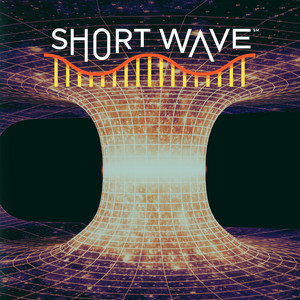
Wow. And so then the next thing would be, okay, for a wormhole, what would it look like if I entered a wormhole from one side, Would it be a hole or would there be just some tube sitting in space?
Well, no, it would be one sphere connected to another sphere.
I l okay. I love that image.
It's like, it's like a dumbbell, but why are people so resistant to like wormholes existence?
Like why would we not see one in nature?
So one of the requirements were wormholes.
You need exotic matter.
So like not regular matter that like clumps to itself?
Yeah. so you need matter that's pushing out, you need matter to keep the wormhole, so to speak, open.
And that means that that is matter that's not trying to clump together.
Like our matter that we know of, you know, if you drop a ball, it's going to fall towards the earth.
But this matter, if you drop a ball, it will repel.
It will go in the opposite direction.
And so it's like anti -gravity.
It's like anti -gravity.
But in a sense that we would need—you know, we have very weird atoms or something to hold the wormhole together, hold it together, and keep it open.
So you need a force, if you will, to push against the fabric of space -time to hold it open so that you can go through.
The other thing is that you need, so to speak, I would say like a fake extra dimension so that you can travel from point A to point B.
If point A is in four dimensions and point B is in four dimensions, how do you get from A to B if you only have four in between, right?
So you would need kind of like an extra dimension to travel through and then fall back down into four.
So like the wormhole itself is a fifth dimension?
It could have a fifth dimension, right?
So that you can have the ability to travel through it.
And this is where we get the idea of hyperspace.
Star Trek, Star Wars, it's all in there.
They went to a hyperspace that was an extra dimension larger than the one that they actually lived in to travel from point A to point B.
So I remember reading that, like you were saying, you need this weird matter or energy to keep wormholes open because they're going to collapse otherwise.
So if we were to detect a wormhole, someone from a different alien civilization would have had to make it.
Somebody. Yeah. Why would somebody have to make a wormhole like civilization?
Yeah. It's entirely based on our understanding of our, our reality.
And so according to physics in the standard model, everything, right, we have not seen any possible evidence or any clues the way matter behaves to suggest that there would be exotic matter without it, escaping to use for us specifically that wormhole.
So that is why, you know, most people, if you ask them, well, what happened if we found a wormhole?
That means, well, we found evidence of another civilization, um, or we put it there from the future.
Right. Which is another possibility.
Um, but I love talking to theoretical physicists, like anything's possible.
Anything, it could be.
Um, but all in all, it, it does suggest that something created it and not in, and not it being kind of naturally occurring because it seems unnatural to exist. So we're talking about all these like, possibilities, right?
You would have to find this exotic energy, this exotic matter.
But like, so what is the main skepticism when you're talking to astronomers, when you're talking to other scientists?
What is the main reason why wormholes is something that's kind of still in like, the outlier research topics?
Yeah, um, it's mainly because we can't test it.
So it's still kind of looked at as, like, science fiction.
I wouldn't say it's fringe, because we have, you know, real mathematical solutions that we can, you know, kind of simulate, if you will.
But in terms of something being, um, viably testable, because that's the scientific method, we have to recreate it, you can't test for a wormhole.
You can't even create one experimentally.
And so that is I would say the pushback or the, you know, the grief against wormhole research is that, you know, this seems like it is decades if not centuries of technology ahead of us.
And so then the question is, well, why would you study wormholes?
Well, I would say, why would you not?
Why not? That's kind of giving us another clue about how our universe could behave, and then given the fact that we've only seen 5 % of our observable universe, the other 95 % could have wormholes in it, and we just not looked hard enough.
For you, why is it so important to not rule out these mathematical solutions to general relativity?
Because at one point, space travel was fiction.
At one point, the cellphone was fiction, the computer was fiction, quantum mechanics was fiction.
So, I look at all of these theories, and this is my motivation as a theoretical physicist, is that someone has to work on these problems but do it creatively to generate the advancements in technologies decades later.
And so, that is why I work on black holes and jet physics and things like that, and why one would work on wormholes.
because we need some money to solve these very, very fundamental or basic problems, and do it creatively and innovatively, right?
So that we can have something to advance our technologies to later on.
Ron, thank you so much for talking with us today.
I've become slightly more hopeful for the existence of wormholes.
That's great. Thank you for having me.
This was fantastic.
This episode was produced by Burley McCoy, edited by showrunner Rebecca Ramirez and fact -checked by Tyler Jones.
The audio engineer was Jimmy Keiley.
Beth Donovan is our Senior Director and Colin Campbell is our Senior Vice President of Podcasting Strategy.
I'm Regina Barber. Thank you for listening to Shore Wave from NPR.
Support for NPR and the following message come from Edward Jones.
A rich life isn't always a straight line.
Unexpected turns can bring new possibilities.
With a hundred years of experience navigating ups and downs, Edward Jones can help guide you.
Let's find you're rich together.
Edward Jones. Member SIPC.
This message comes from Mint Mobile.
If you're tired of spending hundreds on big wireless bills, bogus fees and free perks, Mint Mobile might be right for you with plans starting from 15 bucks a month!
Shop plans today at mintmobile .com switch. Upfront payment of $45 for three -month five gigabyte plan required.
New customer offer for first three months only, then full price plan options available.
Taxes and fees extra.
See Mint Mobile for details.
Support for this NPR podcast comes from Zscaler.
Reduce infrastructure costs by 90 % and improve networking and security agility by eliminating firewalls and VPNs with Zscaler Zero Trust Plus AI.
Learn more at zscaler .com slash security.