Discussion keeps the world's turning.
This is Roundtable.
Hello everybody, welcome to Roundtable.
Coming to you live from Beijing, I'm Ha Young.
Good to have you for this ride on a day's show.
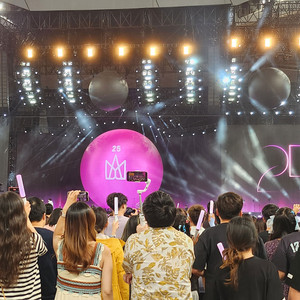
Have you noticed how live concerts continue to be the hottest ticket in town this year?
Whether it's fresh faces or veteran stars, the live performance market in China is on fire.
Fans are traveling across cities to catch these shows.
What's fueling the surge in concert popularity and how is it reshaping our culture and tourism
landscape?
And from unforgettable experiences to mesmerizing tunes, we're sharing the happiness that
lit up our week.
Essentially, what's made us happy?
In Roundtable's Happy Place.
For today's program, I'm joined by Yushun and Steve Hatherley in the studio.
First on a day's show.
Have you ever been caught in the whirlwind of trying to snag tickets for your favorite artists'
concert tour?
Only to find out that the tickets have been sold out instantly.
The concert in performance market in China is booming.
Traveling to a city for a performance is the new must-do in cultural tourism.
According to the China Association of Performing Arts, in the first half of 2024 alone, there
were over 251,000 commercial performances nationwide and a 30% increase from last year.
While I thought the market was super hot last year already and now is just adding oil
to that...
Musical fire.
I suppose so.
So let's go to Yushun first.
Give us an overview of China's concert and live performance market right now.
Absolutely.
As you can see from the stats, the market is still growing.
According to data from the China Association of Performing Arts, box office revenue reached
19 billion yuan.
That's about 2.6 billion US dollars.
A year-on-year increase of 13% with an audience of 79 million, which is 27% increase compared
to last year.
Among these, the large-scale performance, which means the performances with more than 2,000
audience, this market showed a continuous upward trend in the first half of 2024 with
concert and music festival box office revenue increasing by 134% year-on-year and audience
numbers increasing by 63% year-on-year.
The math seems to add up, right?
Because there are more concerts now.
151,000 commercial performances nationwide.
It feels like a concert every five minutes or something like that.
The concerts are getting bigger as well.
You talked about the fact that the large-scale performances were growing.
So yeah, again, this math seems to add up more concerts, more people, bigger audiences,
larger ticket revenue at the box office.
Yes.
And Steve, have you seen this sort of internationally?
Or do you see this in your friend's circles or people chatting about this, going to concerts,
seeing live performances?
We all know Taylor Swift, right?
Oh, yes.
Yeah, the Taylor Swift effect on the economy.
There was a story earlier this year from the United States that talked about coming out
of COVID in America.
People were spending vacation money on a Taylor Swift concert.
Now, that doesn't mean that the tickets were more expensive than any other location around
the world.
But what that means is airplane tickets, hotels, food, merchandise, all the money that
they would have spent these families or these individuals would have spent on their vacations.
They were using it to go to a Taylor Swift concert and experience it to its fullest.
Right.
And then, in the end of the day, she's probably the biggest global pop star at the moment.
She's got this power to attract people to different countries.
And so that, for them, is like traveling to a country just to see her performance and
do other stuff along the way.
Yep, you're absolutely right.
And then there's the trickle down effect, too, right?
When you're traveling to a city where there's a performance, getting a hotel room can be
more difficult.
And if you are lucky enough to get one, you're probably going to pay more for it than you
would during a non-concert time having to stay outside the city.
There's lots of different effects.
Yeah.
And I heard that even there are some just rumors of a one specific bit, basically, band or
celebrity is going to that city to hold a concert and then the hotel price will rise at the
moment.
So I think that is also the reason why domestically is the same.
So many concerts and performances have driven the economy of other industries like tourism
or hotel or even the consumption of the whole city.
Absolutely.
And also we're seeing not just concerts, but also all kinds of live performances are
contributing to this booming overall performance market here in China.
And tell us some of the things that stand out.
Like there are theaters, there are other things.
And yeah, so take it away, you should.
So a site from concerts or not only concerts, all of these are small theaters and new performance
spaces such as the performance venues for dramas and plays, especially these, you know,
the one that a lot of people will buy tickets to also show it a booming development trend
overall with 186,000.
I mean, 186,900 performances in 2023, which is an increase of 407 to 1%.
You know, increase compared to 2019.
And the box office revenue was 4.8 billion yuan.
That's approximately $662 million.
Which is also a huge increase compared to 2019.
This is really good news.
That number 419% or what was it 470% compared to 2019, that sounds like a shocking number,
I guess, when we think what happened from 2019, 2020, 2021, that number isn't so surprising.
What's great, I think if we dig into this a little bit and look under the covers, the
great thing is that it's not just big name performers here in China who are drawing crowds.
It's smaller artists, meaning not as popular, perhaps, or theaters or venues that aren't
the big ones.
And what this will do, I think, is create a strong base for an artistic community that
will continue to grow and support those artists, these young people who want to get involved
with theater or music as their career.
These numbers are evidence that they can be successful in that.
And it's great too, there's obviously a really, really strong art market here in China.
Yes, and I think this art market is enjoying definitely a green shoots, new growth in that
sense, because prior COVID, I don't remember seeing so many news reports about small theaters,
which is a really niche thing of being able to draw in big crowds or being able to fill
the front row seats can be already difficult.
Yeah, can be challenging, sure.
It really can be.
So it seems like there's definitely good news in this industry.
And also we see that music festival, this is something that every year it seems in the
last couple of years, especially during summertime.
And maybe since springtime, it becomes a talking point.
And going to music festivals has become sort of like a badge of honor that young people
wear in this country.
It's like, okay, you go to music concerts, pop concerts, that's one thing.
You go to like the theater to watch a play.
That's another kind of group.
And if you go to music festivals, then yeah, you're really letting it out.
And you're one of those like really, you're part of the really hip group.
It's a totally different experience isn't it going to a concert versus going to a music
festival, which kind of sounds counterintuitive because you're hearing music at both venues,
both concerts.
So what's the difference?
I remember when I saw Maroon 5, you know, Maroon 5, Adam Levine, right?
And this is...
Ask how, when was this?
Oh, this would have been maybe a few years ago in Seoul.
And I remember thinking this at the end of the concert.
Now this is not saying anything bad about Maroon 5.
They make really catchy, wonderful pop songs.
But I remember thinking at the end of the concert, that was a little bit too much Maroon 5
music.
Do you know what I mean?
Maroon 5 song after, Maroon 5 song after.
So that's a concert.
I think that's only because you're not that into Maroon 5.
Are you just hanging in up for that?
Wrong.
Adam Levine was on stage doing all his Adam Levine things, like taking his shirt off and
whatever.
The crowd is going crazy.
But my point is, when you go to a festival, it's such in my opinion, such a better experience
because you get varied musical styles from different artists, different singing voices.
You get the freedom to walk around from stage A to stage B, bigger names, smaller names.
It's just such a better experience.
Not to say going to a concert is something to be avoided.
I'm just saying, I think festivals are the place to be.
Oh, I will pick concert.
I'm that kind of concert person because I can only dance with all of these mugs that I
know or I like.
So if it is a music festival that I, with a lot of singers or artists that I don't know
or the music genre that I don't like, I'm probably not into it.
Yeah, but isn't it a great time to get to know new artists and expand your musical boundaries
or library so to speak?
Fair enough, yeah.
Yeah, it's interesting because here in China, I think even with the music festival culture
and arrangement, it's still evolving.
And with the music festivals in China, although they're pretty big for our own track record,
but if you compare internationally, it's still kind of in its nested development stage
because you don't really see wealth.
I'll offer a comparison.
Recently went to Fuji Rock and that festival is one of the biggest in Eastern Asia, this
part of the world.
And then there's a multiple, there are like six or in some years, nine stages that are
performing performances at the same time.
But here in China, I haven't checked their most recent music festivals here.
But to my memory, usually there is only one main stage and main acts happen there.
So I think for a lot of music festival goers, we're still getting used to what it might
be like if there are so many wild choices out there at the same time for you to taste.
Yeah, talking about diversity in music at a festival, right?
Is that why you shouldn't the performance market is doing so well here?
Yeah, because of the diversity in Chinese music.
I think so.
Creativity and all of these diversity is absolutely one of the main points of more and more people
are joining or enjoying these kind of performances.
There are examples in China, the diversity of music genres available from classical and
folk to pop, rock and electronic music.
Are we in the same team?
Are we in the same team?
Are we in the same team?
Are we in the same team?
Yeah, you know, because that genre is really exciting.
And you can always grab a drink and dance and swing with it.
Yeah, absolutely.
Yeah, it depends on the mood as well.
And the best part about a music festival when it's offering electric takes is when if
you feel like going a little bit mainstream, there's the main stage and if you're feeling
alternative, there's that on offer too.
And also aside from these kind of concerts or music festival offerings, we're seeing,
and I remember talking about this on our show, the rise of dance dramas, of immersive dramas
and all kinds of performances.
And what do you think is driving this boom?
I think more and more people are into these kind of immersive experience and or I would say
the form of these performances are attracting more people because the way that they are presenting
these kind of, you know, no matter it's Chinese culture or these kind of cultural heritage,
it is offering a new way for people to get into that environment.
And you can actually experience, no matter with all of these 360 dome theaters or 40 and
5D movie projects.
Yeah, wow.
You can always get into it and you can be part of the story.
And I think that is one of the reasons that a lot of people like it.
And one thing I would like to mention is that the dance drama, poetic dance, the journey
of a legendary landscape painting or in Chinese jiu zi tian luye, which got really famous
or came into public eye due to the spring festival gala.
And it is like it was touring like across the country and even overseas.
And I think that is absolutely showing the popularity of these dramas and more and more
people are accepting it.
Even me, I am also one of the audience.
Would that be something that you would typically be interested in or because of the innovative
strategies of these performers or performances?
Drawing you in because it's something new and fresh.
I think both.
Of course, first of all, the technology is one part and another one is the essence or
the story of these dramas are attracting more people, especially with all of these Chinese
traditional culture thing.
So yeah, I think that is very important.
In Canada, on the east coast where I'm from Nova Scotia, our music is very Irish.
It's very kind of stomped your feet and clap your hands and go do the rhythm and fiddle
music and things like that.
We in Canada don't have the long history, obviously, that you have here in China.
Therefore, the performers don't have that kind of cultural bank to draw upon, if you will,
those stories to tell.
But we do have our own culture in terms of music.
And it's kind of the same thing when people go out to a concert in Nova Scotia.
It's something that they're kind of looking for.
You know, having a Taylor Swift concert, for example, in Canada would be super exciting.
But also to have our own traditional music and our own performances is something that people
really want to see too.
And it sounds like here in China, that's the case as well.
Yeah.
And currently, or at least in recent years, we've seen that there have been more investment
as well as attention devoted to adding new offerings on the menu.
The dance drama that you shouldn't just mentioned, it's quickly become almost like in its
a league of its own in terms of dramas because it's so good and it's established its name
nationwide.
So I don't think the production company is worried at all in selling tickets.
But also, you know, for other dance dramas, then it might be, some of them are still kind
of struggling to make a name for themselves and to attract people to come in to see them.
Because yeah, people have very tastes, but to really go to a venue and obviously need
to pay for it and to sit down for two hours.
I mean, it's commitment for people, isn't it?
It is and I think maybe we forget sometimes when we think about business competition.
These production companies are in competition with each other too, right?
People only have so much money to spend when it comes to going to see live performances
so they have to pick and choose.
And I guess the good thing is if it's a competitive market, then the production companies, the
performances, the performers, they'll be forced to up their game.
And for a consumer, that's good news because you're going to get a better quality performance
of better quality product in the end.
Yes.
And well, it's good to see if there's more competition within their own genre, if not
than different genres as well, just so that, you know, they're all competing for your
eyeball time.
That's part of the marketing and to get you into the venue and to enjoy the performances.
And another thing, I suppose, why these days going to live performances have become a thing
is that maybe after our experiences in the last few years, we kind of realize this, we
have this new, found appreciation of a live performance of being seated next to people
when you get the ooze and a's in the room with other people.
And to some extent, I would say that for live concerts, it's kind of like modern religion.
People come together, sing along, and you feel if it's a good performance that we're on
the same with length as the performer on stage.
And you're kind of enjoying this moment that you're fully connected with like thousands
of, well, no, tens of thousands of people.
That energy is never something you can get from your own living room.
100% degree with that.
Yeah, going to a concert, going to a festival, going to the ballet, going to the opera,
you can't replicate that process on your television screen.
You can enjoy it, but you're just not going to get the same experience.
And also, I think, you know, the boom of these performances and concerts also because of
some multi-party support, you know, from the operator's side, they can see a lot of audience.
And basically, they can sell out all of these concerts tickets.
And also when audience are, they got entertained.
They will maybe go to different, you know, times of concerts.
And then with the city, as we mentioned, some of them will release some kind of supportive
policies on supporting the concert to be held.
So basically, we have different parties that are also supporting the whole industry.
A lot of, sorry, but a lot of this is driven by the local governments.
I suspect there might be this mysterious name book, a roller dex.
Nobody has that kind of thing.
But you know, you get what I mean.
And basically, they're looking at, huh, major names in, let's say, pop music or in classical
music or whatever, given genre and then see if we can get ABCD into our city, like over
a time span of three months or something and build that momentum and establish yourself
as now, you know, maybe this is the city where pop concerts, the pop concert capital or
whatever it is.
Like a culture hub.
Yes, that kind of thing.
Yeah.
Because that's really important for the local economy.
Absolutely.
I talked about how to draw people in and they're not just here to see the concert.
These performances that you've mentioned and probably many more popular here in China,
the Chinese performances, I mean, gaining some traction overseas as well or as this is
strictly domestic success, success.
Of course, they are also exposed to international audience and also a lot of foreign shows are
getting in China.
Also in recent years, not only have more international performances come to China, as we said, exposing
Chinese audiences to a broader range of music and performances.
Also more Chinese performances have also been exported overseas.
We can see in the first half of this year, several new domestic productions ventured
abroad and received positive reviews in overseas markets.
One example is the 10-year-old private music ensemble, Zizhdua Tingshuo.
They went abroad for the first time to Malaysia, attracting over 2,000 audiences and also
they performed in local high schools to teach students how to play traditional Chinese
instruments such as drum, guqin, gujong, pipa, and flute and everything.
These are examples of both domestic and international shows are getting in and out of China and
people are loving it.
It's wonderful because it's sharing culture, it's sharing art.
I remember not so long ago I interviewed one of the members and one of the producers from
the Buena Vista Social Club.
I'm not sure if you've heard of them or not.
What they did was they made an album in the mid-1990s.
They're Cuban musicians.
Now, the world had never been exposed to Cuban music before.
They wanted to go into Cuba and make this musical project.
They brought together the very best musicians that Cuba had to offer.
These musicians had been playing for years and decades, making this beautiful, wonderful
music.
They made an album.
They released it to the world.
I think it was 1996 or 1997.
The world absolutely fell in love with this album.
They fell in love with the group.
They were touring the world.
Opportunities to share their music that they never would have had before.
Sharing art, sharing music, sharing culture is the way to bring people closer together.
This is really wonderful news that these Chinese performances are finding other markets now
and finding success there too.
Yes, and music truly is the universal language.
A lot of the music that Eighth examples that you shouldn't just mention, some of them
don't even have lyrics.
This is a new music genre in China that is getting increasingly popular in recent years.
That's the appreciation of ancient Chinese musical instruments and sometimes ancient Chinese
musical instrument band.
It's a finding new flavor in something of an old wine and young people love it.
To see this going international, I think having more people, maybe without the similar cultural
background to appreciate it, I think is something really, really beautiful.
There's no doubt about that.
Yes, and guys, we've said some of the bright side of this industry as we talked about
it.
What do you think are maybe possible things that you'd like to see some improvement so
that we can enjoy better offerings out there?
More access.
Short and sweet answer.
More access.
Like I said, more art, more music, more culture available to all of us all around the world
so that we can know that it's existing out there and find out new music and new arts
that we love.
And I think the most common issue that I saw recently is the ticketing issue and a refund.
But we can see more and more platforms are giving out more clear and clear policies.
Making it easier.
Yeah, making it easier.
And also we've been through this craze for a couple of years now and I see that the
different actors involved in this industry, they're getting better and also the good ones
they survive the not so appealing ones, well, they don't always get a second chance.
And coming up during the second half of the show, do you feel the pressure of getting
in shape in some our time?
Some of us do.
Stay tuned for more discussion.