Hello, welcome to Roundtable where we serve up piping hot debates on the issues that sizzle in China and beyond.
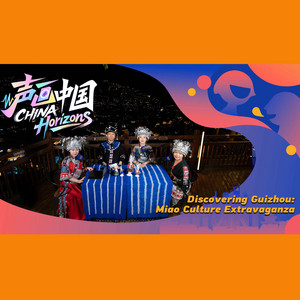
I'm Niu Honglin and Roundtable says hi, not in the studio, not from the studio, but in a very beautiful province.
Roundtable says hi in Guizhou Province.
Hello, everyone.
Hello.
Hello, everyone.
You look beautiful today, all of you.
I am joined by Yushan and Feifei, all wearing magnificent headpieces.
And Lightning, wearing his good old headset, monitoring the processing of the show, making sure the sound quality is good, taking one for the team.
But all of the rest of us, we are loud and happy.
And our headset says hi.
Hello.
Fancy you.
Very, very fancy.
Wearing very expensive headsets and noisy and brackety.
And we are wearing local traditional costume.
We're wearing Miao costume.
I like yours, by the way.
Oh, thank you.
Yours look kind of low-key, but in a very, I would say, fancy fabric, a little bit of shiny fabric kind of way.
Quite beautiful.
Are we all sort of the same?
Feifei's clothes is green, and Yushan's very classy, yes.
Yushan's blue, shiny blue, and I am red.
I don't know, I'm all filled by reflective.
I don't know this little bell-shaped trinkets that I look like a shiny, I don't know, a doll or something.
Or a shiny butterfly.
Oh, thank you.
Butterfly is the thing of Guizhou, we'll explain later.
And this is actually a very important series we're doing here in Guizhou.
We are taking you again out of Beijing, out of the studio, to different places in China.
We visit different provinces.
And this is our first stop.
The first stop is Guizhou.
And in our special series China Horizons.
In the future, we plan to take you to more places to tell the uncovered, untold stories, to find the big dreams in the smaller towns, to figure out what are some interesting stories, some fascinating skills and crafts we would be able to share with you, our lovely listeners.
This is something we've been intending to do for many years, because we somehow have been something similar to what people call armchair critics.
We often are cooped up in the studio.
We browse the news, we study them, we do research, we try to come up with the somewhat in-depth understanding of the stories happening across the country, in China and around the world in fact.
But we don't feel like.
You know, sometimes Things can run dry when we fail to come up with very fresh examples or stories that could somehow prop up our arguments on the show.
And this is something that's making us really happy to be able to do this this year.
Yeah, see the real deal, tell the real stories, talk to the people on the ground and that is super fun.
And for me, it's even more interesting because this is my first time here in Guizhou Province.
I've been to, you know, places, but Guizhou is the first time.
But I know it's the first time for Yushan as well.
Oh, yeah.
So what is your first impression?
I mean, the first time I came here, at first I didn't notice anything.
That's obviously different.
But once you travel on the road, you'll start to notice that there's no bicycle track on the road.
There's only the lanes for cars to drive by, and also there's, I see scooters running around but there's no bicycle, because Obviously there's like hilly road all over Guizhou province and no one is ever going to ride a bike up there.
Do you know Guizhou is the only province in China that has no plains, no flat lands, only hills.
The only province.
And maybe that's the reason that Guizhou is very famous for its bridge building.
And I think most of the videos that have got very popular online, especially overseas, showcasing the super project from China that line bridges along the mountains.
Most of them, I believe, are from Guizhou.
If I'm not wrong, I think Guizhou has the largest number of really high bridges, like from the bottom of the bridge to the surface of the bridge.
It's really up high.
It's a very mountainous part of the country, if not throughout the world, because here in china, in geography terms, we call it the area of hong kong mountains.
The reason why it was named so was because Well, in late Qing Dynasty I think it was around the 19th century, if not the early 20th century.
So one scientist studied the area, the terrain and the geology and geography and all, and came up with the conclusion that this is perhaps the mountain areas.
And the reason why he said that was because there are so many ups and downs.
Sometimes the mountains can go as high as 4000 meters and then the valleys can go down as low like 1000 meters Below the ground, below the ground, in fact.
And they're also the tallest mountains like going up more than 7,000 meters.
So the ups and downs and the gap is so huge.
And it's in fact also severing the communication with the rest of the country, which is why he thought of this idea of 横断, meaning suffering.
So it was so bad the ups and downs were so huge that it was very difficult it was inaccessible to move around.
It was an inaccessible area of the country and it was very difficult to communicate with the rest, and therefore the region got its name.
If I can pick a key word from Lai Ming's long speech, the key word would be was it was a place that is really hard to go to.
It was a place that people do not talk to each other living in the province, because the situation has changed.
Definitely, when we visit here, to start with we flew here very smoothly, and then we travel on high-speed rails, we travel on highways.
It's very smooth still, you know, the roads are, with a lot of curves, a little bit hard for me as someone who enjoys Sickness, car sickness all the time.
You enjoyed car sickness.
Enjoyed car sickness. who suffer from car sickness all the time.
Yet still, it's quite smooth, I have to say.
So I picked was as the keyword.
What are some other keywords that you think would fit with Guizhou Promise?
Because it's not your first time, Fei Fei.
No, but my first time coming to Guizhou was like more than 10 years ago.
I think the biggest word for me is change.
Because when I came here for the first time, it was more than 10 years ago.
And Guizhou isn't as a popular traveling destination as it is today.
So when we travel around the province, we go to the city of Guiyang and also we went to this place as well.
It's very quiet.
10 years ago.
10 years ago.
You don't see a lot of travelers, especially comparing to its neighbor, the province of Yunnan, which is always famous for its tourism.
And then If you travel around, you don't see a lot of tourists and also you don't see a lot of businesses relying on tourism as well.
So sometimes well, you can see, at that time it was enjoyable from an outsider point of view because you get to see the original, authentic indigenous people's lifestyle.
But I would argue for the locals themselves, that may not be that of a good story simply because at that time, Guizhou also didn't have as many bridges and also high speed rails as it has today.
So also when I walked around the city of Guiyang yesterday and I just see the massive crowds in the old city center and young people going to bars.
Also, do you know coffee is also one of the landmarks of the city of Guiyang?
Oh, really?
Yeah.
The locals recommend a lot of coffee shops to me and recommend must try some of them at least.
So you can see that the lifestyle is changing and also The province is turning into something new and something really modern, but also still has its own features.
As you know, Guizhou has a lot of ethnicity groups and also has its own very unique cultures.
And I think also with my trip this time, I see a lot of the more higher culture, tech part of guizhou which i can share later, but it's definitely a big shock to me.
It's about the change that the province been through.
We'll totally return to the high tech part, but i want to tag on a little bit, since i talked to someone living here in this village.
Oh, we're going to talk a little bit about where we are currently a bit later after sharing this.
I talked to him and he said that because of the pandemic period of time, people lost almost three years of traveling freely and traveling as much as they want.
So the willingness of going to different places enjoying local culture, local tourism, local landscape is higher than ever, which is why last year, the year 2024, the number of tourists received at the total tourism expenditure increased by 104 and 133 respectively.
And the number of inbound oversight tourists received increased by 81%.
A lot of people come to Guizhou and go to different places.
And this is one of the most popular destinations.
We are in the Xijiang Miao village groups.
This coincides with my observation compared to my earlier visits to this province.
My experience with Guizhou dates back as early as 2019 and already back then I was impressed by the infrastructure that I was able to experience.
Unlike many people who might be a little older, who might think that Guizhou, because of its geography, could be a very remote and isolated area of the country, My experience of renting a car and driving around on the superhighway was very pleasant, because all the highways were almost all new.
And the facilities, the service areas, and even the bathrooms were very clean.
So that was my impression.
And then my second time, when I came here to Xijiangqianhu Miao Village.
This is somehow the biggest Miao village or male congregation in Asia, if not in the entire world.
And so it's very popular.
But my second time was in 2020.
It was during the COVID pandemic.
And so tourism was hit.
And so this time, five years later, my second visit to the village, my impression is busier.
And that is compared to many years ago.
I see a lot more people From the noise that you guys are able to hear.
We are recording on the terrace of a restaurant.
And you can see people walking by us near a road that's scarcely five meters away.
And they're stopping to watch us.
They're shouting and cheering.
So it's more crowded to the place, to a point that I was asking the staffers earlier on, with a little worry with the surge in tourism numbers are they able to handle?
And they said, no problem, we can handle 50 000 people on a daily basis.
And also because we want to show you guys the beautiful background behind us, the tiny little dots, the dots of lights.
You see behind us are one household after another, a thousand one apparently, according to the name, More than 1000 in fact.
It's around 1,500 households and population more than 6,000.
And we are Well.
This village belongs to the Qian Dong, Nan Miao and Dong Autonomous Prefecture.
And in this prefecture...
There are around 37 million people living in the prefecture, and out of which more than 2 million are male people.
So male people is the majority here.
Han people are the minority.
Good for a change.
Fun for a change.
Besides that, since we're here, do you guys know a little bit about this?
For instance village, where this, now the village, is almost turning into a professional scenic spots, with a lot of different activities, a lot of different experience that you can enjoy.
The experience include one of something that fascinates me the most.
That is intangible cultural heritage.
So have you ever tried any?
Well, the headpiece is one, like the first time.
Yeah, it's huge.
Yeah, and also I think the Miao style basically is very popular internationally.
A lot of the fashion brands all come to some Miao gathering places and looking for their inspirations when they're looking for new design for the new season.
And so it's like a treasure house for designer ideas, but just give us some notice or give us some credits.
Credits.
Yes.
Are there any more specific examples of Miao intangible heritage products gaining global attention?
Batik.
Batik.
Yeah.
Batik is a technique to dye fabric.
So the way you do it is you use bee wax.
You warm it up until it's liquid.
And you use something like a knife to draw on a piece of cloth.
And so bee wax will merge into the cloth.
And then you somehow put the cloth into indigo, a tank of indigo.
And when you lift it, when it's done dying, when you lift it up, when it's dried, then the patterns can be removed by warming, heating the fabric, so the wax will go away and so the part that was previously covered by wax will be left blank and you can draw patterns with the bee wax.
In fact, it's getting more fashionable.
I can see people wearing that kind of patterns and cloth fabric designed with such technique outside of the region, in Beijing in fact.
I've tried a little bit of intangible cultural heritage skills.
Well, like Fei-Fei said.
Silver smithing?
Yes, silver smithing.
It's something quite cool.
Lai Ming has...
I pointed out multiple times that the heritage we're wearing is very tangible.
Yet the intangible part is about the skills, is about the actual techniques used to craft these silverware.
And Miao silverware, Miao silver ornaments are very important.
It is a very important part of the Miao cultural, intangible cultural heritage.
I tried a little bit.
I tried to hammer the silver.
I was told I would be able to hammer a silver stick into thinner silver stick.
Okay.
And I tried it for five minutes.
And I was like, it's not changing.
How long does it take to do that?
And they're saying, two or three hours.
So we don't have to read the final product.
No, then I move on to the next technique.
The next one is quite interesting.
It's engraving.
You use a little chisel and you use a tiny little hammer to hammer on the chisel and it will leave marks on the silverware or silver plate or silver stick or whatever you have.
I can see how some of the patterns on your headdress is done with engraving.
Engraving is cool because you get to engrave any patterns or characters or flowers or anything as you wish.
And it's not that hard per se.
If you're interested, you can check out the video I made.
I made out a Chinese character with that skill, a very bad-looking one, but still you can recognize it if you know Chinese characters.
It was really fun.
And I asked my teacher master in that silver shop.
I asked him how long does it take for someone to learn the technique that can make their own silverware?
Guess how long?
Five years?
I'm guessing five.
One day.
If you want to go, if you tell them what you want to make, as long as it's not this you get to.
Actually, by saying this, I mean my huge and beautiful and loud, noisy Exquisite and loud and valuable headdress.
Headdress.
If you're not trying to make something like that, if you're looking for something simpler and customised, it takes around half a day or one day to finish, with the help, of course, of the master.
That's how easy it is.
And that is why they are including this experience, this interactive activity, into the entire traveling experience.
You go to a shop, you spend some time, you get your very own customized personal ornament or souvenir and you take it away.
And you guys are not wrong.
If you want to be a professional craftsman of silverware.
It takes 3 years to know all the 50 different techniques.
50.
I have experienced 2 or 3 today.
Didn't master any, but there are 50.
And if you want to be someone who can teach people in these locations.
It takes around 5 to 10 years.
And if you want to be called a tangible cultural inheritor, with the skills that are valuable and recognized and should be protected.
It's hard to count the years because it has to be talent, plus hardworking, plus dedication and a real passionate heart for the technique.
So that's silverware.
Silversmithing really was an important part of the Miao lifestyle because the Miao people they were living in the mountains.
They were always on the move looking for greener pasture.
And so they prefer to transform their assets into more portable forms.
And they also are a little bit showy people.
They would like to brag about their wealth if they could.
So one way they like to brag about their wealth is to in fact invest into silverware, a whole set of silverware, for the daughters of the family and the women of the family, so that when they walk around sounding all tingly and noisy, people know oh, this is a family that's doing well, that's comfortable, that's really making their ends meet and enjoying their life and very successful.
Just to clear the air.
They do not wear like this and walk around on the streets every day.
It is ceremonial.
The very fancy, very shiny and loud ones with the headsets, it's ceremonial.
And even for men, Lai Ming is wearing a traditional Miao.
Yeah, traditional Miao costume as well.
Or some silver buttons.
Yeah, you've got silver buttons, and if you are wearing the whole set, there should be also a necklace, a choker kind of necklace or any kind of necklace around, like the one you're wearing across my chest.
So even for men it's still something quite extravagant for ceremonies.
For sure, I'd love to see Limey try that one on to showcase.
Sorry, not the showy kind, But apparently Miao people is quite showy making these enormous cut pieces.
They enjoy the results of their hard working.
I see no problem in that.
And they're really, really proud about their products, their intangible cultural heritage and the fact that they inherited it from the previous generation and from thousands of years ago.
Speaking of the inheritors themselves Me and my colleagues Ian.
We actually met one yesterday at a local museum.
And he makes the kind of clay whistle that's really made into different shapes of animals little birds, little dogs.
And then they color it before baking it to make it solid.
And when we approached that inheritor, the first thing he asked us Where do you want me to start introducing it?
Do you want to come with me to the mountains to collect the clay?
Shall we start from the beginning?
Like that's how they're serious about these skills that they're inheriting.
So yeah, they're really proud.
And they're eager to share it with whoever that's got an interest.
I really love that.
That is the ancient part of the story.
When you come here and enjoy those and you learn a little bit, get your hands dirty a little bit.
But there are some really fascinating modern part as well.
They are using different techniques to tell their stories.
For instance, not only here in the village, but also online, using different techniques, technologies to tell the stories, and also they are inviting people to show them.
There are different types of immersive performances.
There was one right down in the valley.
You mean the karaoke sound we just heard?
Yes, that is also making the experience very immersive.
And besides that, I believe here in the village the live museum model also empower local communities not only culturally but also economically.
When it comes to different types of museums, we think about the public ones, we think about the private ones, but here they call it the family museum.
It's the items they collect. from generations to generations.
Some of them are quite old.
Some of them are not that valuable, but definitely with a family story.
It's kind of like a family endowment and they have different themes and they bring those museums into this village, which is now almost a professional scenic spot.
Yeah.
There are a few family museums scattered across the village.
I've had the fortune of visiting a few of them.
And one of them, it was a very small family museum.
They showcased the belongings of their ancestors.
Talk about hunting rifles and raincoats made out of straw and old weaving machines that only the granny of the family knows how to operate, and embroidering utensils and stuff and cooking utensils.
So it really is a record of how they used to live their lives, when they were sort of relying on agriculture and hunting to make their ends meet.
Now things have changed.
Also, they used to have very expensive headsets as well.
And this old grandpa proudly showed me the headdress that was passed down from their ancestors and generously invited me to put them on.
And it was a very fond memory.
And I think if there's enough time for me to go there again, I will definitely try and see to check up on them and see how things are going.
Are these families sort of like ordinary people, not like the big wealthy family?
You can see from the legacy that they're ordinary people.
They're not super rich.
They're not wealthy.
But they are proud of their heritage and they're taking pains to preserve them, even if it means just only in their own family.
I think some of the details with these sort of older generations in their daily life, especially among the ordinary people, people who don't really have their names engraved in the history books or any of the stones out there, I think you can sort of relive their life when looking at this sort of souvenirs or things passed on generations from generations.
From my point of view, it's more interesting to look at what the emperors are wearing or the emperor's teapot.
I would love to see what an ordinary teapot 100 years ago or 1,000 years ago.
I think that means sort of relates more to me instead of you know that's the royal family's heritage.
Yes, because it was more commonly used.
It represents that period of time.
And we're only talking about these items, these quite tangible ones, because we get to experience them a little.
And yet we have experienced a little bit of the quite intangible ones.
That'll be the festivals.
The performances, the singing and dancing.
One thing I always think about is how talented and artsy people who are not Han ethnic group.
No offense to Han people.
I'm a Han person.
I love Han people.
But I think Han people or maybe just me am not that.
Most people we know.
Are not that talented. good at singing and dancing.
We're not.
We're the cheerleaders of this country, you know.
That's what they say online.
You know, 55 ethnic groups are singing and dancing and the Hainanese people are cheerleading in the background.
Yes, that's the thing.
And in 2006, festivals and art forms such as the Miao Sisters Festival, the Boye Eight Tone Seated Singing, the Dong Tours and the Shui Ethnic Duan Festival were inscribed on the first batch of China's national intangible cultural heritage list.
It's something quite impressive and very valuable to local people.
Well, we came across that topic while we were having the conversation with local people.
We talked about a festival that they only share every 13 years.
Wow, it's a really long period of time.
That was because people believe that the male people, the male ethnic group people, they have been traveling or moving or even migrating quite a lot in history.
And they find it hard to find a place to settle down, to start a life.
And even in places like Guizhou, you see it's very mountainous.
It was very hard to reach.
And once They settle in a small village.
It's even hard for them to find another village, to visit another village.
It's just that complicated, traffically speaking.
That is why, for them, they believe every 13 years or once a zodiac circle has passed, they need to find a chance to report back to the ancestors, telling the ancestors where we are now.
Are we thriving or are we struggling a little bit for this short period of time, 13 years?
And that's the way they communicate with their ancestors.
For instance, for Han people, we would visit the tombs of our ancestors.
Every year.
Because it's always there.
But for Miao people, it's harder than that.
And they created a festival for that.
And I find it very beautiful.
And previously, the festival was quite...
Serious and a little bit enclosed because they want to be very respectful.
They want to report the news to the ancestors in the most serious way possible.
But later, with the development of technology, with male people here in Guizhou talking more and more to people outside.
With Internet, you report to your family every day, if not every hour, if you want.
They find it maybe we can invite more people to our celebration every 13 year festival.
So they started to invite Miao people from all around the world to come here to Guizhou and to celebrate the festival with them.
And we talked a lot about traveling here to Guizhou, meeting local Miao people stealing a little bit, just a little bit skill from their silversmiths.
What are some other key words to think of Guizhou?
Well, when you think of Guizhou?
Because there is definitely one that I've been heard about a lot even before coming here.
And it has nothing to do with the beautiful and diversified culture.
Take a guess.
Data center.
Sure.
You mean these power monsters that are supporting, for instance, iCloud or Huawei Cloud or what have you?
Because my clouds would tell me where they are and they say they are the clouds in Guizhou or they are over the clouds of Guizhou.
And I am always curious and I'm super jealous of Feifei and Yushan, because you've visited one of the data centers.
Exactly, it's on the outskirts of the city of Guiyang, actually the provincial capital yes, the provincial capital, and they have, like this massive new district established for the purpose of gathering a lot of the data centers around the country.
And we are fortunate to visit one of them.
What it's like?
Because, when it comes to data centers, one of the big concerns about the security you know people's data on.
Probably a lot of your mobile apps are stored in these data centers.
So they want to keep it secure, not leaked.
So they're very careful when it comes to visitors.
We were able to visit like one of the buildings within those massive data center.
I think they have like three or four buildings only for storage of data.
And they're still building another four right now.
And we're only allowed into one of them.
And we are only allowed to see the outside of the machines, not... Did you meddle with my data?
I don't have a chance, frankly.
They are very sort of sealed inside of a very large box so that only professionals, only people, staff working on these machines, are allowed inside.
And also they want to keep the machines healthy.
I was quoting here because The temperature needs to be within the right range.
And also the humidity of the air also within the same range.
They're also keeping away, for example, dusts.
And power surges, fluctuations.
Not everyone is allowed inside.
We certainly weren't fancy and bragging, we certainly not, did you see shelves and shelves of servers?
Yeah, there were.
According to the experts there, there were over 3200.
They call that smart cabinets.
That's stored individually in different rooms and it's all sort of locked up.
But I see like staff walking around checking the temperature in each room.
They said that each room, in order to keep the smart cabinet just in good shape and operable, it needs to be contained at precisely 25 degrees celsius, no higher, no lower, like human beings.
Yeah, there's a huge, taller than me, size of a fire extinguisher outside of each and every room just in case any accidents happen.
So that data center they really pay attention to securing the data that's being processed, collected and stored in their smart cabinets.
And, based on how they told us, it's like They're dealing with clients, customers from all around China.
There's companies doing their very valuable data and warehouses doing their own records here with them as well.
So it's like a big I was joking with Fei-Fei earlier it's like a big kindergarten where each of these companies, they send their kids to the kindergarten and give them a smart watch to keep you in good shape.
You're in good temperature, right?
And yeah, just calling them from time to time.
Taking care of the babies.
Exactly.
So it's like a big kindergarten for data storing.
And also they have cameras so that their clients can check on their precious data 24-7.
Now I can imagine the clouds. on top of Guizhou.
They're very high-tech-y, looking in very precisely controlled temperature rooms, and they're being taken care of.
They're in the shape of babies.
Now I have updated my imagination over these data centers.
Speaking of data centers.
In this day and age, we all have numerous, uncountable amount of data on the cloud in our personal gadgets.
And people often talk about how power consuming or energy consuming these places can be.
Are they trying in any ways?
Because I can't imagine how hard it is to operate on a greener mold.
So are they trying?
Well, that's precisely the reason why Guizhou can be the place for data centers.
Because, geographically speaking, I think we can tell from the past couple of days that Guizhou is not very hot.
Even within this time of year, it's approaching summer.
Beijing is approaching 40 degrees this week, I think, 35 something.
And Guizhou is still very cool.
And it's like this all year round, which makes it perfect to store your data here, so that you don't need to spend a lot of energy cooling down the temperatures around those machines.
To keep the temperature within reasonable range.
Yes, because when it comes to the storage and also those data cabinets, they can't be stored in a very hot place and they can't also be stored in a very cold place.
So they need to be kept within a certain range all year round, and Guizhou is precisely a very perfect place for that.
And many of these data centers.
They're also using renewable energy and clean energy to run their data center.
And the area that we talked about, the place we visited in the city of Guiyang this morning, is called Gui'an New Area or Gui'an New Region.
And that place is particularly designed for more of the green energy to be used in order to secure the say, the development of the local green database.
That's what they call.
And also I heard that the one we visited this morning is just one of the 10 that's operable as of the end of 2024.
And there are overall 20 of such databases right there in Guiyang new area in the city of Guizhou.
So that's something that the local government, and also entire country as well, that's been trying to work on on say, a national basis.
I've got this question about the data centers.
I'm not really sure if you're allowed to answer them, since you're the privileged people who can visit data centers that are very sensitive and secured and they make sure no private data is revealed.
Super jealous.
But my question here is, What are they doing with the data they have?
Do they only store them?
They got to transfer them back to the owner, I assume.
What are some other things they can do or they are doing?
If you can share that with me.
Well, I think.
First of all, visiting data center is definitely not as exciting as trying Silversmith.
That's for sure.
Feeling a little bit better.
The second is that these startup centers are also sort of upgrading their technology.
As we know, AI, artificial intelligence, is definitely getting traction at the moment.
And everybody in every sector, in every industry, in every country is trying to leverage this new AI technology.
So they are so traditionally, they are only storing, transferring and also processing those radars a little bit.
For example, they are one of the engineers.
Give me a very vivid example.
Is that the photo that you store on your phone that sometimes are showing is on the cloud?
Ah yes, it's not downloaded on your phone and we are trying to open that photo.
You need to tap it and take some time to open that photo.
That means that photo is stored in one of those data centers and when you tap on that photo, the data was transforming back to your phone and that's the reason that it needs to take a few seconds, sometimes even minutes if the internet is not that perfect.
So storage and transmission, the basic service that they're providing.
I'm getting more forgiving about not being able to show my friends the precious picture of my kid as soon as I want.
Now I understand the logic behind it.
But I have to ask.
Is that or you spend more money on the phone with bigger storage unit?
I do that too.
But you still have to download it anyway, if it's on the cloud, on the beautiful clouds over the city of Guiyang or yes, over the city of Guiyang.
But I'm curious because if they're only doing storaging and transmitting, Compared to the possibility of them also processing and even computing with artificial intelligence, would the energy consumption be the same for these two different situations?
Of course not.
Imagine like a computer you use at your home and that's one case.
And when it comes to storing the data, probably that would need like thousands or even hundreds of thousands of that home computers.
And when it comes to AI, that means we need to multiply hundreds of times of the hundreds of thousands of computing capabilities.
And that means more energy.
Where is that energy from?
Well, they are taking like two paths at the moment.
One is that they are trying to use their energy efficiently.
For example, when it comes to their air conditioning system.
For example, one of the designs is to cut down the amount of cooling air conditioning.
It requires to cool down those machines.
How?
First of all, they need to concentrate all the hot airs generated from these machines in one place and then transform them through sort of a tube to another place to cool them down.
So instead of trying to cooling down those air 10 times, they're sort of cooling it only one time.
So they're sort of cutting down the knees, for air conditioning.
So better techniques to make it more efficient, to save energy.
And also the air conditioners they use are very different from the ones we use at home.
Yes, they're using a sort of a more higher end of technique that's said to be able to cut down the energy used by about 30 per air conditioner.
That's a lot.
Yeah, that's a lot.
If you're considering, they're having like tens of thousands of those air conditioning only in that data center.
And that's one path.
And another path is that with the power grid itself, the electricity they use that will come to you know these data centers, they don't generate power themselves.
They're relying on power plants.
And those power plants, are sort of operated within the province.
So the province of Guizhou they are like.
Over 50 of the power is from a renewable source hydropower, solar or wind.
And so you can see that the whole grid is greener every year.
And that means the power they use at data centers are getting greener as well.
And also means those green electricity is not sort of a privilege for data centers.
Everyone in this province, in the city of Guiyang is using greener electricity.
Greener electricity, like Fei-Fei.
Shared means the energy is from solar power or from wind, and from hydro as well.
And, as I understand, it can also be from a certain source that we don't usually think of, which you also have the privilege to visit the other day.
Oh, you mean a waste?
Yes.
A waste plant?
Yeah, that can be a privilege if you count that one.
Also, that plant is sort of transforming waste into power.
I think that plant was able to power 200000 homes per day from the waste they collect from four districts and also three counties under the city of Guiyang alone.
You can imagine that the amount of waste we generate living in cities, you know they're massive and I don't want really get into the technical terms when it comes to how to transform the waste into power.
But the gist is that they are sort of filtering the water out of the waste first and then burn them, and then they take a few technical steps to sort of the pollutant, Try and remove the polluting elements from the garbage.
Yes, within those burnt waste.
And then from the burning and the steam coming from the burning, they sort of power, the power generators.
And that's where the electricity comes from.
And also when we visited that plant.
They're also cooperating with factories, for example Gili, or a beverage factory Wahaha, on providing heating sources to those factories.
That is another source of sort of feeding back into the industrial chains within this city.
It's a more nuanced way of utilising resources, because one thing that we failed to mention when we introduced Guizhou province is that it's not a very populous part of the country and it's certainly not a very rich province in resources in its most common sense.
I mean we can see.
The view obviously is very spectacular and breathtaking and the air is clean, the water is fresh, but there are many other resources to power industries.
And also, given the scarce population, you can't expect huge industries to emerge and really grow strong in the region.
But it's interesting to see how the region is leveraging other resources.
Exactly.
As Lai Ming just mentioned, Guizhou is very mountainous.
But I think in today's term, it's also a blessing.
With the mountains, you can generate the amount of hydropower that can be generated.
It's unimaginable.
So I think well, depending on how you look at it, Guizhou can also be a very resourceful place when we are looking at it from a different lens instead of just industrial development lens.
On top of trying to make very nuanced and very carefully planned way of using the resources that they already have, another way that they're seeking development is to push for cultural tourism.
And that's circling back to something we began earlier.
And that sort of also coincides with our observation of what's really going on in the province from an average tourist perspective.
That's quite right.
With the change of the society development stage, with a change of people's perspective, the same old thing starts to feel different for people.
We talked about local people before doing the show and they say agriculture activity agriculture, laboring is definitely still one thing that they value quite so much.
Previously it was their way to bring bread or bring rice, or bring the delicious fish we've just tried this evening onto the table.
But now, with almost all the households, at least here in the Xijiang Thousand Household Village, Miao Village, they are engaged in tourism activities, in starting an Airbnb a very beautiful one and starting a local restaurant with the local delicacies that we have been enjoying for two days, making me thinking about making this business trip longer, because they're just so delicious, trying to figure out different ways to make their very own products as souvenirs that you can take away home.
They're doing all these things and they're still doing a little bit of agriculture.
Yeah, about 80 of the population in the village.
They are engaged in some kind of tourist-related activity.
It could be restaurant, could be cooking, could be taking photos, could be doing any kind of service.
But still the staff proudly claim that agriculture is still pretty much part of their life and it's part of the tradition.
They like to keep it alive.
And as compared to before, like Newholing said earlier, they're trying to make ends meet by growing mostly rice.
Now they're doing it for fun and they're growing a lot more fresh fruits including, for instance plums peaches oranges, and blueberries and strawberries.
And I can sense the very proud tone when they say, We don't sell those.
We grow them by our own hands.
We have to enjoy them ourselves.
So it's definitely a lifestyle and you get to see still their passion and their love for the land that have been helping them supporting the family generations after generations.
Only now it's a way to take the pressure out of the busy day, to get connected with nature a little bit and to get some organic food that can be quite expensive for the family.
So things change yeah, exactly.
Um, we also visited a park, actually a wetland park, in the new city center of Guiyang this afternoon and they also mentioned to me that I think the urban dwellers themselves they are also changing their way of life, because before we used to call you know cities as concrete jungles, of course, but right now, I think, at least in the city of Guiyang, it's very green, and especially in the new city centers.
They only start to build that city center around 24 years ago, So around the centerpiece of that district is a wetland park.
They have like three lakes sort of interlinked with each other, and they also have a lot of trees inside, and it's very popular not only among local people but also among travelers.
I talked to a couple of them, you know, in a working day afternoon.
The park is still very crowded, right?
It's not a very quiet park in a sense that there are people who are jogging in the park around the lake.
I talked to an auntie.
She's visiting her son in working in that district.
And she just took a stroll around the lake and admiring, you know, the nature.
And the staff also told me they are also designing the lake to sort of be an education platform for children.
So that children, especially living in cities, they can be very distant from the trees, the bugs, the water around them.
And going to the park.
They are not only allowed to run on the grass, touch the trees, catch the bugs.
They're also allowed into a part of the lake, safe part of the lake, to see what's in the water, you know, the small crabs, the small fish, what kind of grass grow under the water yeah, so so touch the water and that's more sort of concrete, more making sense to them when, instead of you know, showing them a video or a photo, you see that's a beautiful lake.
That doesn't translate into anything in their minds.
Instead of just letting them touching close to lake water.
It's quite important.
I've come across this research saying that if kids are connected with the nature in these ways, if they can touch the soil, if they can touch the water, the percentage of healthy germs on their skins would increase significantly, make their entire health system much better.
Resilient.
Resilient.
It's not only important mentally, it's even important physically.
And I get to see that because the rate of good or excellent water quality at the exit sections of major rivers remained 100 here in Guizhou.
They've done their work and they've seen the results.
And it's also reflected on people's way of living, on people's level of happiness.
I think people are quite joyful here in guizhou.
I'm not really sure if it's because the most, the majority of people i met, are tourists from around the world and enjoying their vacations here in guizhou, but definitely everyone is enjoying the life in their different ways.
We are wearing like this and doing the show and without even being blushed a little bit, because we are not the only ones.
We've seen people walking on the streets wearing like this, taking beautiful, beautiful pictures, because there are multiple shops here providing these services and people get to enjoy it.
And we're not talking about those young ladies with perfect skin, perfect figure.
We're talking about people When they're eight years old, little kids are doing the same thing.
We see ladies in their late 60s or 70s are wearing traditional Miao costume and taking pictures.
And it's amazing.
They're enjoying their lives.
They're traveling to these places with perfect air and great temperature.
And yeah, that is the kind of scene I really enjoy observing when I'm traveling with Roundtable, with all of you.
I can see how the locals are beginning to really take pride in their environment and in their heritage.
Perhaps there may have been a stage of time when the locals might complain about not having access to better opportunities.
What good use can we make of this beautiful environment?
Can we make use of our heritage if we are still trying very hard to make our ends meet, to bring bread to the table?
Now that, with development presenting better opportunities and better ways of life to them, better qualities of life in fact to them, they can really begin to take pride in the way that they've managed to keep the environment clean and also in the way they've managed to pass their heritage to the future generations.
And honestly, we need them to have that pride, because One thing that we failed to mention earlier is that Guizhou is on the upper string of many rivers across the country, if not outside of the country as well.
So we need not only efforts, but also a sense of responsibilities and pride to help the locals, as well as the rest of the country, to work on the same goal of keeping the environment clean for the rest of the world and for perhaps, our future generations as well.
We can continue for another hour, but it's only the second day we're here in Guizhou.
We've already experienced so much, we've seen so much, and we have so much to share.
And that brings us to the end of today's roundtable.
We'd love to hear your thoughts on today's topic, which is Guizhou, and hopefully you can let us know whether or not you have been here previously.
You have your personal own stories about Guizhou Province, and hopefully let us know what interests you the most so that we can go to the places and find out the stories that are specifically told for you.
I am Niu Honglin with Lai Ming, Yushan, and Fei Fei for today's roundtable.
Thank you so much for listening.
We'll see you next time.
See you in Guizhou.
See you with China Horizons.
Thank you so much.
Bye bye, everybody.
Bye bye.