This episode is brought to you by Tegus, where we're changing the game in investment research.
Step away from outdated, inefficient methods and into the future with our platform, proudly hosting over 100,000 transcripts with over 25,000 transcripts added just this year alone.
What sets Tegus apart? It's not just the sheer volume, it's the unmatched speed at which our library expands, consistently outstripping competitors.
Our platform grows eight times faster and adds twice as much monthly content as our competitors, putting us at the forefront of the industry.
Our collection is investor-led, ensuring unparalleled quality and giving you access to questions and topics investors care most about.
Plus, with 75% of private market transcripts available exclusively on Tegus, we offer insights you can't find elsewhere.
Forget the traditional way of doing things.
With Tegus, you have the most comprehensive, insightful and rapidly growing transcript library at your fingertips.
See the difference that a vast, quality-driven transcript library makes.
Unlock your free trial at tegus.com.
You may have heard me reference the idea of maniacs on a mission and how much that idea excites me.
Well, David Cenra is my favorite maniac on one of my favorite missions with his weekly crafting of the Founders podcast.
Through studying the lives of legends, he weaves together insights across history to distill ideas that you can use in your work.
Founders reveals tried and true tactics, battle-tested by the world's icons, and has David's infectious energy to accompany them.
With well over 300 episodes, your heroes are surely in the lineup, and his recent episode on Oprah is particularly great.
Founders is a movement that you don't want to miss.
It's part of the Colossus Network, and you can find your way to David's great podcast in the show notes.
Hello and welcome, everyone.
I'm Patrick O'Shaughnessy, and this is Invest Like the Best.
This show is an open-ended exploration of markets, ideas, stories, and strategies that will help you better invest both your time and your money.
Invest Like the Best is part of the Colossus family of podcasts, and you can access all our podcasts, including edited transcripts, show notes, and other resources to keep learning at JoinColossus.com.
Patrick O'Shaughnessy is the CEO of PositiveSum.
All opinions expressed by Patrick and podcast guests are solely their own opinions and do not reflect the opinion of PositiveSum.
This podcast is for informational purposes only and should not be relied upon as a basis for investment decisions.
Clients of PositiveSum may maintain positions in the securities discussed in this podcast.
To learn more, visit psum.vc.
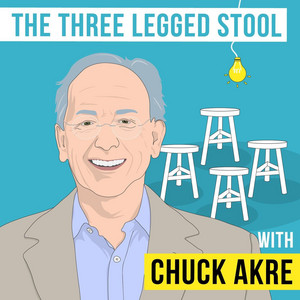
My guest today is Chuck Ocry, a now widely famous investor who founded Ocry Capital Management in 1989, which now manages approximately $10 billion.
We discussed his investing style and his three-legged stool for evaluating companies.
Please enjoy this great conversation.
So, given that Chuck, this is my first time here in Middleburg, I thought it would be a fun place to start with the place where we're sitting.
You've talked a lot about the one traffic light town as maybe an advantage, something very different from the typical investor.
Talk about Middleburg, why you're here, and what you love about it.
We're here because of, in effect, quality of life issues.
And I happen to be a person who works well without a lot of commotion around.
And I know lots of people in the business who love commotion, and I've worked with this, some of them.
But the low level of activity around here is just helpful for us being able to sit there with our doors open and not be disturbed by outside events.
And then as it relates to, let's say, Middleburg versus Central Park South, if my office were there, I'd have a thousand friends who were very bright and very interesting, and I would be distracted.
I'd become curious and engage in their thought process, and it would distract me from what it is that I do well.
So, investing on an island, so to speak, in a very bucolic, beautiful spot.
Yes, indeed. We live on a farm and that sort of stuff, so it's all, all fits together.
We're going to talk a lot about the ideas of Nirvana investing, the three-legged stool, the components of that, et cetera.
But I'd love to begin with, given that you've created this sort of interesting isolation for yourself, what a day looks like for you.
So, at this stage of your investing process, what are you literally spending your time on day to day?
Is it looking through businesses?
Is it checking in on existing businesses?
How's that sort of allocated?
My participation in the business evolves and continues to evolve and so on.
And so, I'm personally doing less pure fundamental research today than I did years ago.
There are others here who do that, and we talk about ideas and stuff all day long, and I've been a lot of time reading.
And that's how I, that's how ideas bubble up in my universe.
And others here use screens, but mostly where it is a serendipitous, inefficient, let's just say, non-quantitative approach.
You mentioned before this idea that imagination is as or more important than knowledge.
Can you talk about that concept a little bit?
Well, it's very simple.
I have, in my career, run across literally thousands of people who are very, very bright, who are not necessarily good investors.
And so, pure knowledge is in and of itself, but not a ticket to being a good investor.
Imagination and curiosity are what's hugely important, and we've discovered things over the years purely by being curious and continuing to keep involved in the search process to find these exceptional businesses.
Can you distinguish it all between curiosity and imagination?
One sounds like a search and another sounds like more of a creative force.
Well, they're both creative.
My older son was a tenured college professor for a while, and he used to say that he worked at a university that, as he said, didn't have the luxury of being highly selective in his student body.
And he said the thing that disappointed him the most was that even his best students, his students who got A's, typically only wanted to know what they needed to know to get an A rather than have curiosity.
And I find that curiosity has been useful to me in search for investing and relating real life experiences to allowing me to pursue lines of thought, whether it's trying to figure out why a stock card track might be interesting or something else, that sort of stuff.
So I guess I'm probably not very articulate in explaining the difference between curiosity and imagination, but they go hand in hand in being creative and identifying businesses.
I think the manifestation I love is in the Nirvana three-legged stool idea.
I'd love to hear the beginnings of that.
Obviously, talk about what those three legs are in the stool.
And then I'm always interested also in rates of change.
Yeah, we literally have the stools here in the room that we're in, which is awesome.
So talk about the origins of those three simple ideas.
The one on the far left over there is a milking stool from Frederick County, Maryland that belonged to the senior partner of my father's law firm and used as a milking stool.
And if you could see it from this angle, the one leg there in the back is at more of an angle than the other two.
And the farmer who would sit down and milk an individual cow one at a time would take that long handle and stick it up under his behind as he sat down to milk a cow, got close to the ground where he could work.
And if you observe that, it's actually, the three legs are sturdier than four legs.
It can adjust to uneven ground easily that four legs cannot do.
I liked that notion. And it had come to me from my father and it was just sitting on a table in my office one time.
And I sort of began to adopt that as the, what I call the visual construct for what we choose to describe as the pentatal components of what makes a great investment.
And that's something that I came to because I had no background whatsoever in the business world.
And I was an English major and I'd been a pre-med student before I was an English major and I had no courses in business whatsoever.
So I had a clean canvas and a willingness and a desire and a curiosity to learn.
And so my voyage was what makes a good investment, what makes a good investor in trying to put all this together.
There was a quantitative aspect to it, but we end up describing what makes a good investment as each of those three legs.
Well, I'll back up again a little bit and say that our investment goal has always been from the outset to try to produce an outcome that's above average.
But stepping back even a step further, I examined early and on and continued to rates of return in all different asset categories and made the observation that the rates of return in common stocks over a long period of time was higher than anything else on an un-leverage basis on a consistent long-term basis.
That the rates of return is on common stocks in the United States and let's say roughly the last hundred years is in the neighborhood of 9 to 10 percent.
And in fact, we don't care what it is precisely, we want to know what it is generally.
We made a quantitative observation about why that's so and that observation is that in our judgment it corresponds, correlates to what the real return on the owner's capital is in those businesses and we can have done many times a quick little show and tell about why that's so and conclude that our return in an asset will approximate the ROE.
In our case, we usually just free cash flow return on the owner's capital.
Given a constant valuation and given the absence of any distributions, you get that from your quantitative background completely and then you would wisely say, well, Chuck, everybody knows you don't have constant valuation in the market.
So we understand that too.
So we work hard to have a modest starting valuation if we're just a little bit to try to reduce that risk.
And so understanding that if our goal is to have above average outcomes, we need to have businesses that have above average returns.
So that's the first leg.
We try to identify businesses that have had high returns on the owner's capital for a long time and we spent a lot of time trying to figure out why that's so and what's caused that and then is there what's the runway ahead of them look like?
Is it broad and long? Do they still have the opportunity to earn high above these above average returns on capital and so on?
And then we want those businesses to be run by people who have demonstrated they're clearly great at running the business because they've achieved this, but also who, by our observation, treat us as partners even though they don't know us.
You've read it enough times.
I'm sure about I have an expression where I say that our experience is once a guy sticks his hand in your pocket, he'll do it again.
And so we just have no reason to go there.
I mean, it's human behavior.
We're constantly finding people whose behavior is antithetical to our interest.
And so leg one is the quality of the business enterprise.
Number two is the quality and the integrity of the people who run the business.
And then third leg is what is their record of reinvestment and what is their opportunity for reinvestment?
And so when we have all those things that we say once we have those in place, then we're just not willing to pay very much for these businesses.
Those are the three legs of the stool.
People remember that, but they get confused by this.
They say, oh, yeah, you're the three stools, aren't you?
Or something like that.
It was just a shorthanded way for us to sort of visually say one, two, three, this is what's important to us.
And in our experience is that if we own exceptional businesses, one of the hardest things in the world is to not sell them.
All businesses have hiccups in their business operations and all businesses have things that occur that's unplanned for or thought about, but not necessarily expected.
And that's life. I mean, nothing is perfect.
Nothing is Jack Welch's 20% a year, taking to the bank.
Long after he's left, we found out that much of that was a house of cards.
And so we just had our 30th anniversary for awkward capital management and did some presentations.
And one of our partners did one.
It was entitled, The Art of Not Selling.
And it's truly very hard to do.
And in fact, it may be one of our great assets is our ability to not sell.
I'm a quant, but I recognize the art in each of those three legs of the stool.
And I'd love to spend a few minutes on each.
So I came across a really interesting story in preparing for our conversation about a company called Bandad.
And I'd love to hear that as an example of trying to identify the essence of an underlying business's value creation and why it's ROE can be above nine or 10 for a long period of time.
So this was actually in the days when I was at a firm called Johnston Lemon in Washington, DC.
And it was a brokerage firm.
And I was a principal in the firm.
And we had some interns around.
And I took a inbox that was full of things I tear out of magazines and papers and put in a box and gave them to this intern and said, look through there and see if you find anything interesting.
And a week later, he came back and he said, well, here's a really interesting company called Bandag.
And then why is it interesting?
Well, it had very high returns in capital and then done well for a long period of time.
And I said, well, great, what business is in the citizen tire business.
And I looked at the returns in the capital and said, well, it's clearly not in the tire business.
What do you mean? I said, well, take a look at the returns and then take a look at the returns of all the other tire businesses you find and see how they relate to each other.
And Bandag's was three or four times what they were.
I mean, I said, obviously it's not in the tire business.
It's in another business.
Our goal is to figure out what business it's in.
So we went out to see them and a fellow by the name of Marty Carver was running the business that had been founded by his father.
He was in Muscatine, Iowa.
And I got the meeting and Marty had his feet up on the desk and was eating an apple during our interview.
And so you got a different feel right off the bat.
And their business was retreating truck and bus tires.
It's something I really knew nothing about before then.
And we had been through the oil embargo in the United States in the early 70s where prices of gasoline went through the roof.
And one of the principal components of tire molding and recapping is course of petroleum based.
And so it had caused all of their dealers to have a huge increase in the cost of doing business.
And when prices began to come back down, Bandag took those saving and distributed them to dealers on the basis that they had to use the money in the business.
They couldn't go buy new Cadillacs, but they could build a new store.
And so their principal competition was the major tire companies, all of whom had company owned stores.
All the Bandag stores were franchised.
So they were dealing with independent dealers who, as they say, got there at six in the morning and closed at nine at night as opposed to the employee dealers who got there at nine in the morning and left at six at night.
And these people were motivated by their own profits and whatnot.
And so Bandag very wisely shared the wealth as it were with their dealers instead of passing it all on to their shareholders at that time.
And it created a huge dealer loyalty.
And the dealers were able to, they did very sophisticated things about identifying the cost of fuel to a trucking operation if they had a Bandag tread on their tires, as opposed to some other kind of tread.
And truck tires and bus tires are built and designed to be retreaded two or three times.
Most people don't know that automobile tires are not.
Truck and bus tires are constructed that way.
At any rate, so they had built this huge loyalty network of independent dealers who continued to use the Bandag name and product in their business instead of national tire companies.
And as a result of that, the company had much higher returns on capital than other tire companies.
And so that was an issue of curiosity and observation and imagination and doing that sort of stuff and making the mark of Marty Carver.
And as I say, his father had founded the business and his father had sort of gone off the deep ends before this.
He bought an enormous yacht, an underfoot yacht and started going out with Las Vegas showgirls and all kinds of things like this because the business has been very successful.
And it was an interesting experience.
You have to be curious and open to those things that have them work out.
And in the day, the business really ran into trouble expanding in some Western European countries where they land into labor issues and so on.
And so we moved on after a while.
We owned it for a long time, though.
One of the major trends these days is enormous value creation by fairly young companies that's happened very quickly, the big technology companies.
In this period, you've managed to do quite well.
I guess I wouldn't classify you as a value investor, but value investing as a style has done very poorly.
I'm curious how your assessment of underlying business value in that first leg of the stool has evolved, say, over the last 10 to 15 years.
Are there major differences in what you're looking for in defining a great business?
Well, so the first difference is that in the last 10 or 15 years, the overall returns of all businesses have gone down.
And they've gone down in my mind and our judgment here because the lower level of interest rates, the pervasive lower level of interest rates, and while it doesn't, you don't necessarily A equals B plus C, it is a pervasive effect and it's caused the returns in all businesses to be lower in our judgment.
The second thing is that the way some of these businesses have earned their returns are ways that were new to us and we didn't catch on to them.
So our returns in the last few years, which have been continued to be well above average, have been done entirely without any of the fangs or any of those businesses, without any of them.
And it's just because we weren't smart enough and quick enough to figure them out and that sort of stuff.
So how do you think about that moving forward?
Every day is a learning day and we have to figure out which of those businesses, if any of them, are truly attractive and are not subject to rapid changes in technology or governmental intervention or retaliatory issues relating to different countries and different parts of the world and that sort of stuff.
Maybe an interesting way to dive in deeper on that would be to talk about recent businesses that either you've bought, I know you hold for a very long time.
So some of the recent ones might be seven years old or something, but talk about something, industries, companies, whatever that you find most interesting in recent times.
Well, so we try not to talk very much about the companies in our portfolio and we certainly never talk about ones that are coming in or going out.
So the issues are all the same.
I mean, this is 2019 in March of 2010, we added our first position to MasterCard and it was during the time of Dodd, Frank and issues at Congress and then more specifically about what became known as the Durban Amendment.
And MasterCard and Visa were selling it 10 or 11 times.
And when you dove into the numbers, we discovered that the operating margins returns in capital were, there's not an awarding language that's superlative enough to talk about them.
I would just say that you could cut the margins at MasterCard and Visa in half twice and you'd still be above average for an American business.
So clearly something extraordinary is going on there.
What does it mean? I asked this question rhetorically around the office.
What does that tell you?
Well, it tells you A, there's a big target on their back.
Everybody wants some of that.
B, tells you that they're probably jamming every expense they can think of into the income statement to try to reduce how good the margin is that they're showing.
And then three, we spent time trying to figure out what's causing that.
We think we know and we've quit talking about it.
So I'm not going to talk to you about it.
But I mean, if you read any research from Wall Street and we read very little, there is no one who talks about that, who talks about rates of return that they're earning on their capital.
I mean, no one does because Wall Street in general has a completely different business model than we have.
Our business model is to compound our capital.
Wall Street's business model generically is to create transactions.
Logically, well, what's the best way to create a transaction to create what we call false expectations?
And what are false expectations?
Well, earning estimates.
O'Shaughnessy is going to earn $1.73 next quarter.
And it comes in at $1.72 and the remark is they missed by one.
So we call it beat by a penny, miss by a penny.
That's the syndrome. And that gives us opportunities periodically because the markets behave in ways that we happen to think are irrational relating to something like that.
And so a name that's been in the news for four years now and had some controversy around it is Dollar Tree, where we own a big stake.
The dollar store business was really in the oligopoly in the United States with three major players, Family Dollar, Dollar Tree, and Dollar General.
Dollar General had gone through it, had been taken private and brought back public by KKR.
Dollar Tree had not been headquartered in Chesapeake, Virginia, now on their basically their third CEO in their history.
And there is a business that we through experience have learned were terrific retailers and terrific at logistics, building and managing 7,000 stores where they sell everything for a dollar.
Dollar Tree, nothing was more than a dollar.
The two competitors, Dollar General and Family Dollar and Family Dollar, were still run by the founding family, basically made itself available for sale.
And Dollar General had had lots of private conversations with them over a period of years.
And then it sort of became an auction.
And Dollar Tree had a lower bid, but one, the bid, Family Dollar selected them.
Both companies, Dollar Tree and Dollar General, simply had to bid on that.
If it's a three company oligopoly going to two, they both had to bid on it.
It was going to cause Dollar Tree basically to double the number of stores.
How many opportunities you get to that once?
I'm curious if there are other markers that you've used heuristics over the years, in addition to this simple idea of really high ROEs or ROICs or something above the market to sort of be the lead generation for new curiosity.
Yeah, what does it say? Everything should be made as simple as possible, but no simpler.
There you go. So lots of very bright people can build really intriguing, complicated ways to figure out why something is cheap or expensive.
And we try to keep things as simple as possible.
And if you read the one right behind you, sure, the bottom line of all investing is the rate of return.
And so we use that as that's the tool as our key tool for everything.
And we try to look at everything from a top down basis.
So we were talking about the fangs and modern technology.
We say that as a generalization, all of that is about changes in distribution of all kinds, whether it's information or cars or Amazon starting with books and then to selling everything in the world and then to selling cloud services.
It's all about distribution, distribution of saving information, that sort of stuff.
And so that's looking at things in a simple fashion.
Let's try to make it as simple as we can and understand the big context, what's going on, because we're all at risk of getting caught in the weeds of what's going on.
And that's misleading.
Do you think it's fair to, I love this idea of innovation in models of distribution?
Bandag was a kind of fun and interesting example of that.
Do you tend to separate things into product innovation and distribution innovation?
No. Evaluating a business?
No, we're not that smart.
Not that smart. Seems to be working okay, not being that smart.
It works okay. That's important.
That's an important observation.
It's working okay. Let's talk about the second leg of the stool, which is the people involved in these businesses.
So what are the, I love the feet on the table with eating an apple.
What would you say are the most common characteristics of managers of the businesses that you've ended up owning those stocks for a long period of time?
Well, they don't have a screen in their office showing them the price of the stock.
And there are lots who do.
And sometimes you find it in the lobby of a company and sometimes you find it on the CEO's desk.
That doesn't interest us.
We've had instances where principals and companies have called us up and said, why are you selling our stock?
Once we recover from that, a fronting question, if in fact we have been selling a stock, which may be the case, or maybe have sold it all, we say, well, actually it was good.
The right decision because we don't want to be partners with people who are concerned about those things running their business.
Their focus is on the wrong thing in our judgment.
And so this is an interesting exercise.
One of the questions that we like to ask is, I was CEO particularly, is how do you measure whether or not you've been a successor running this business?
And as you might expect, some of them say, well, the price of the stock goes up, or we hit our earnings target, or we delivered in all the things that the board asked of us and so on.
It's a rare occasion where the CEO articulates an idea that shows that he understands the idea of compounding the economic value per share.
They stand back and say, well, why is that so?
And the answer is that they're not trained to do that.
They're trained to run businesses.
They're not trained to think about compounding the intrinsic value or the economic value per share.
It's really the single most important thing.
That sounds like a capital allocation story.
I know you're a huge fan of business biographies.
And some of my favorites have always been the Henry Singleton types of the world who are sort of master capital allocators and often very flexible.
Talk about the role of capital allocation amongst the CEOs in the second leg of this stool.
So we own a company called O'Reilly Automotive.
And it's also part of an oligopoly.
And the oligopoly really basically includes O'Reilly Auto Zone.
And O'Reilly acquired a company called CSK Auto Parts, I'll say close to 10 years ago.
It was. In fact, it was 0708.
CSK had a huge presence on the West Coast where O'Reilly had none, presence in the middle part of the States, southern part of the States, very little exposure in the Middle Atlantic and northeast.
But it gave them a much greater national footprint.
And after that, and they did a superb job in the logistics of integrating all of the CSK stores into the O'Reilly network, re-merchandizing them as old business.
In O'Reilly's business also was about 50% to the do-it-for-me people, the independent garage business, as well as the do-it-yourselfers.
And that was unusual because most of the Auto Zone and.
It's competitor. Yeah, the other competitor had a much larger exposure to the do-it-yourselfers.
When you were serving the do-it-for-me group, the independent garages, time is money and they had a car on their lift.
They needed the part right away because the lift was out of commission if they had a car on it waiting for a part.
So the timeliness of the delivery of parts was critical.
And that means that they had to have a denser distribution network and so on.
That was pretty interesting.
And you've seen the others sort of trying to move into that direction.
After they did that, this company O'Reilly had very little debt they'd taken on actually in 2008 because of the recession.
They were unable to borrow all the money they'd anticipated for that acquisition and end up having to issue stock.
And we owned 10% of CSKA at the time.
And so we got a reasonable share of O'Reilly's stock, which we still own and it's 12 or 13 times what we paid for O'Reilly as a result of that.
At any rate, in terms of capital allocation, after they paid off that short debt they'd used because they were generating a lot of cash, they said, well, we're not going to be able to make any other major acquisition that won't be a Hart-Scott Rodino problem.
And therefore, they changed their capital allocation and they began to lever up the company and buy in shares, which they had never done.
They've now since that period of time bought in 40% of their shares.
And are reasonably leveraged now.
It was a really intelligent capital allocation decision by the management and the board at that time, which is highly unusual.
We've all seen boards that were rushing out to buy in their shares when they were at peak valuations and all kinds of that.
That's not what they were doing.
So that was a really interesting capital allocation.
The other side of that goes back to the late 80s where I got involved in a company called International Speedway.
And it's a long story. You've probably read about it, how I got involved.
But at any rate, at the time the company had two and a half million shares outstanding.
The family that had founded that was called the France family.
And Bill France Jr. led the company.
He was a strong and dynamic leader.
And they went through a period of time in the 70s or 80s where they hired a CFO, where they'd never had one before.
Bill France's wife, Anne, had always just had her handle the books and so on.
And there's an apocryphal story that says that that once they'd hired the CFO and they had him in the office and they were walking them through the stuff, Anne or Bill said, so shall we tell him about the cash?
This new CFO is cash. What cash?
Well, the cash that's in the safe.
What cash is in the safe?
Well, the money we've got for the Daytona tickets that we sold in advance of the race.
We put them in there because we don't earn it until the race is run.
Float, baby. And so interesting, then, if you looked at the annual report, you look down the balance sheet, there's no debt.
But when you read the notes, they describe the equities being 73% of capital.
What's the rest of it? Deferred revenue.
What's deferred revenue?
It was cash in the safe. Now, I mean, you talk about people running a conservative balance sheet in a conservative business, that's about as conservative as you can get.
Discovering that about the behavior of the people, those experiences stick with you in terms of how people behave.
I love that story. What have been some of your favorite biographies specifically and who are the people that they are about?
There was a man who had been an editor at Barron's magazine and I think he'd written for the journal as well.
He became an investment counselor in Boston and his name was Thomas Phelps.
And he wrote the book called The 101 in the Market in 1972.
And that was a book that to this day remains inspirational to me, fundamental to me in terms of thinking about the issue of compound return.
He didn't ever explicitly talk about compound return, but clearly what his message was, he outlined in round numbers 350 public companies that between 1935-1971, you could have bought and made 100 times your investment by 1972.
And so what you infer from that is that, well, the only difference is really the rate of return, the rate at which it was compounding.
That's the only difference.
So that meant that if you wanted to have higher rates more quickly, you needed to have businesses that were compounding their capital.
And so we talked earlier about Mastercard and Visa and the enormous returns that there's no way that they can reinvest that cash to earn those kinds of returns in anything else.
And so they buy in stock and they pay cash dividends and it grows and that sort of stuff.
But it's a less efficient way for us to compound our capital than if they were able to reinvest it all and get those same kind of rates of return.
So you've got some great examples in the portfolio that you've talked a lot about, companies like American Tower, where the reinvestment story is fascinating.
And that's the third leg of the stool.
Absolutely. So let's talk about that.
You can use that or any other examples.
Well, they made another acquisition last week in Africa and bought one of the players in the oligopoly of independent tower companies in their African continent.
And so while each new tower is itself a succinct individual asset, the collection of 55,000 towers around the world now, they all look similar.
And my notion about the tower companies is that they find themselves in a position that I describe as being much like Microsoft in the days of the growth of personal computer.
If you wanted to have a personal computer, you ended up having to go through Microsoft because they owned the operating system.
And it was a toll booth. And if you want growth in wireless communication, and as we've gone from 1G to 2G to 3G to 4G to 5G, and by the way, 5G is very much of a mirage.
People are talking about it and being out there on the table today.
It's not going to be here for years really and truly.
Each of those demands a denser network of towers to increase the reliability of lack of drops and so on.
And the tower companies, which are host to antennas, become that same toll booth.
If you want to growth in wireless communications, they go through antennas, which are mostly on towers.
Sometimes they're in buildings and that sort of stuff, but the tower companies are in that business as well.
And so they act as the toll booth and the growth of wireless communication.
It's staggering. I'm curious, in an idea like that, take something like retail data centers, maybe a similar take on that.
If this thing's going to keep growing, this is sort of a toll.
I don't know if you own retail data centers, but how often do you think about diversifying across that sort of bet with a big technology trend like the increase in communication, digital communication?
Well, so we're not smart enough to dance with all the dances.
We've been involved in data centers in the past.
We're not in them now. I wouldn't say that that was necessarily the correct decision.
But we explore and we learn and we observe and sometimes we, for example, we think a lot about the businesses that we've sold and was that the right decision?
And we've concluded in a number of cases that it was not.
But who does it perfectly?
You talk about being a quant and so on.
And I'm saying, if this business were susceptible to purely quantitative approach, they wouldn't need me and you just would punch the button.
And they would solve for all your problems.
That has not happened. And the really brilliant mathematician like James Simons and his building a Renaissance capital, I don't have any idea how many inputs they have, but my guess is it's probably the tens of thousands of inputs, which is a staggering way.
And they've clearly been able to do something that's truly exceptional.
And perhaps Ray Dalio falls in that category with a little different approach and so on.
We don't have any of that skill.
We don't think in those terms.
We think about it in this very old fashioned concept about businesses.
How do you tell if a business has been successful?
You've seen in my talks about that where you ask the audience that and they raise their hand.
They say, well, the price goes above, fair enough.
Suppose it's not a public company and you have no price discovery.
How do you tell? And I say, on the back of the envelope, you go to your accountant and he said, well, this is what the owner's capital is today.
And this is what it was a year ago.
And it's higher than that by X percent and so on.
It's a good indicator. And that's how you tell.
Right. And so that's why rate of return is what drives us.
Did I understand that implicitly 30 years ago or 50 years ago?
No. Stuff that is right in front of your face sometimes doesn't reveal itself in terms of its importance for a long time.
I carry a little coin in my pocket that says I'm a charter member of the slow learners.
And that's in fact the case.
I'm not a teenager. You've mentioned this idea.
We haven't talked a ton about price, about great businesses wrapped in a bad balance sheet as an American tower.
Yeah. Good example. That was a great example.
And so we still own stock.
Some of our separate accounts and in our partnership that cost us 80 cents or 79 cents, 209 dollars a share today.
It was a great business.
I mean, the incremental margin on a tower once it said, let's just say two tenants, it might be 1.8 or might be 2.1.
But two tenants, the incremental margin on that business is north of 90 percent.
And everything telephony in the 80s was levered 10 to 20 times.
And American Tower was levered 16 times.
Fully vertically integrated, they had steel companies, they had tower directors, they had RF engineering, they had everything.
And when everything telephony started to fall off the cliff in March of 2000, that's when they started falling off the cliff.
American Tower had to scramble to deleverage itself.
It had, in 2002, it had come down to five bucks a share.
And we had owned stock when it had been spun out of American radio in October of 1999.
And it had come out at $15 or $16 spun out to its shareholders and got as high as 60.
And then by March of 2002, it was five.
And then by September 2002, it was two.
And on their balance sheet, they had about $6 billion of debt, but they had, I think it was $200 million that was coming due in November of 2003.
This was fall of 2002. And they couldn't use their bank lines to pay that off because they'd taken money from bank line to pay off fund to debt.
That wasn't possible. And they were scrambling to sell assets to continue to raise money.
It was a relatively small amount of money, but it was coming due.
And we were in the middle of this two-year downturn and three-year downturn in the market that had, from top to bottom, had fallen more than 50%.
And we went and saw Steve Dodge, who was the CEO, founder and CEO, in September.
And stock was two. And he'd bought more stock on the way down at 11, that sort of stuff.
And we understood from him, and he told us, as well as he told anybody who talked to him, that he could manage that problem through private equity world.
It would be expensive, but he could manage it.
And so the shareholders' risk was not a risk of the company collapsing, it was the risk of massive dilution, because you could pay that off in cash or in shares at their option.
So it could be taken care of.
But the risk of it to the shareholders was massive dilutions.
And the stock got as low as 60 cents on October 3rd or whatever it was of 2002.
And we bought stock at 79 cents and stuff.
We still own some in partnership.
My wife and I still own some.
And there's a great example of Thomas Phelps.
Here's a really important notion.
You only need to be right in your investment decisions once or twice in a career, once or twice in a career.
And so the challenge is, how do you identify that?
And so that's why in this whole issue of the three-legged stool, the reason we have four stools up there is they're all very different.
They come in different sizes and shapes.
It's an important notion.
Visual construct. How do you figure out which ones are going to still be doing that 10 or 20 or 30 years down the road?
Which ones today have high returns and so typically you want something that's small.
So the market cap of American Tower in October of 2002 was $200 million or something like that today, as opposed to $100 billion today.
And did I properly guess that that 80-cent stock, 20-70, 90-cent stock was going to be worth $209 or $10 in 11 years?
No, I had no idea. But we've continued to buy it along the way and accordingly our clients, shareholders, partners have prospered as a result of that.
And as we say, they've done well, so we've done well.
You mentioned earlier this idea of not selling as an asset of the firm.
This is a great example.
What are the things that would cause you to sell?
So just as we describe the business model, the people model and the re-investment model, when something goes wrong with one of those, it causes us to re-examine.
And we're just like everybody else.
We're just human and we're fallible and we don't always get that right.
We had a case where we sold our holdings in Ross stores four or five years ago and they had gone through a change in the CEO.
The new CEO was not made available to the investing community.
There were some other issues going wrong at the time and we felt uncomfortable.
We moved on and took a profit and so on.
It turns out that was a mistake and it was a mistake where we didn't have, that is, it was a mistake and that the companies continued to do well and we weren't part of it.
They had an interesting and a good business model.
Retailers are hard as a generalization and we've done well in several retailers.
But we conclude now and the partner here who was doing the work on it will tell you pretty clearly he's concluded that it was a mistake to have sold it at the time.
But we didn't know that at the time and it was a reasonable thing that we did based on what we knew that happens.
I want to ask the same sort of three-legged stool question about people that you work with.
You mentioned you were an English and pre-med major, unencumbered by bias maybe when you came into the business.
What do you look for? An English major, a pre-med major, a person involved in the investment management business, they're all the same.
People, what do you mean?
I said, well, they're about collecting data points and forming judgments around them.
It's all the same. So reading business biography, you learn about people's behavior and sometimes you see it through the eyes of a biographer that maybe has a little rose tint to the glasses and sometimes you see it through just pure actions and sometimes you experience it.
And so I told you that back in the 70s and 80s we had this experience with International Speedway and we were investors in that business for over 10 years.
We haven't been in a long time for a number of reasons.
In the summers I had gone up and spent some time in Maine in the summers and I'd gone in the weekends and to a little dirt track, watched the stock car racing.
And I noticed the dirt track over a period of years got better and it got paved and it got boxes and it got better equipment and the race cars were better.
I said, well, that's pretty interesting.
And I've drawn to the idea of entertainment businesses and unconstrained possibilities and so on.
So I came back to the office and I was a stock broker at the time and went through the Standard and Poor's Corporate Records and found all the companies that were involved in horse racing and dog racing and car racing and all of that sort of stuff to try to see if I could figure out if there were some interesting businesses there.
And there were three companies involved in automobile racing tracks and stock car tracks, not Formula One or anything like that.
And those were a company called Charlotte Motor Speedway, International Speedway, in Atlanta Raceway.
And I invested in Atlanta and Charlotte didn't invest in International Speedway.
It's a long and complicated story, but Charlotte Motor Speedway, there was a man who owned 70% of it and he made him take it private after I'd started buying the stock in the market.
And it was a North Carolina based company and I thought that his going private price was insufficient.
And in North Carolina law, minority shareholders had a right of dissent.
I had a lawyer in North Carolina who was a brother-in-law of a lawyer in Alexandria and he ended up getting me into a class action suit that formed and we went all the way through Discovery and found that this man, who was the chairman of the company, taken it private, had failed to include all the corporate assets in there, had not had independent outside appraisals,
all kinds of things, caught him with his pants down.
He was a thief. We had the goods on him.
And so he settled with us for, I think probably three times, something he's going private private, and a sealed settlement that was not to be disclosed.
And so that was the example of a guy putting his hand in your pocket.
That company got reconstituted.
It was a successful business.
It is today. There's another public company that he was involved in, Principal Sherholder in, a successful public company, but I've never invested in any of them because I knew that man's behavior.
And my experience was, he'll do it again in ways that I don't anticipate.
And we've had that happen in a private investment where the people behaved in ways which we never expect and we think that they're both incompetent and dishonest.
And that happens periodically.
You mentioned earlier Bill France and him being exceptional leader, maybe in contrast to this guy.
What made him an exceptional leader?
Well, first of all, early on, he wasn't taken with Wall Street.
And he did things that he thought made sense for his business.
And for example, in chatting with him one time, they had races like the Daytona 500, which would sell out.
But he knew that his customers were, as he would call them blue collar workers.
And so there was sensitivity to pricing of the tickets.
And so he would raise the price of the seats, maybe once every four or five years, and he would raise them quite modestly.
But he had that pricing power and it actually related the old days like the Washington Post, which kept the price of the paper at a buck or 50 cents or something like that when everybody else was raising price.
They had a lot in their pricing power that they could exercise but didn't because they thought it made a difference.
In any rate, he would do things like that and he would add seats in a very modest way so that he didn't have a lot of unsold seats.
And that changed at the company towards the end of his life.
And then after he died, when they got enamored with Wall Street and they started listening to the analysts and the backers about how they needed to raise the prices for everything and had way more seats.
And they've gone through all that, had the downside, that experience in the last recession, have taken seats out and that sort of stuff.
So he was way more more customer oriented in that business than his successor who happened to be his daughter and that sort of stuff.
Hope and ask about how Curiosity has led you into a couple other spaces outside of pure business and investing.
Your interest in land conservation.
So talk to me about the background there, what interests you and how you're involved.
We're just great believers in the open space, in the beauty of open space and its value to our populations.
So the primary way that we've been involved are putting conservation easements on our farms and land.
And that's a function of the tax code actually.
The tax code permits you to make donations of an easement on land which restricts its future use.
The language in the tax code, federal tax code says that these restrictions are in perpetuity.
And as I say to people, I don't for a minute believe that that will occur.
Times will change and people will figure out ways to move around those.
So that means you just have to do the best you can while you're here.
But that's true in all things.
And then in addition to that, I'm, I sit on the board of the main chapter of the Nature Conservancy which does land conservation in a very large scale and all of the things that come from that which have to do with in Maine as well as other states in the United States and around the world.
Restoring fish to their native rivers and that sort of stuff by taking out dams or putting massive amounts of forest into hydrocarbon exchange market and that sort of stuff.
All those things of that nature which improve the quality of life for everybody around.
I love it. In terms of advice for young people, we talked earlier already about imagination and curiosity.
And I think, you know, those are precursors, you need to have those things.
Any other advice that you would give younger investors or would be investors out there in terms of what might make them more successful if that's what they want to do with their career?
Follow your passion. That's the most important thing.
And read like crazy and be curious about everything.
I make the joke about the fact that back in the Clinton administration, there was a guy who lived at the Jefferson Hotel who ended up being caught by a relationship with the Dominatrix.
And so I used to joke about the Dominatrix business model.
She could price however she wanted to price and all that sort of stuff.
So it's relating real life experiences.
I say my example of pricing power is as follows.
It's a holiday weekend, a big holiday weekend.
Your wife is having 100 people to a party in two hours and the toilets are stopped.
You will pay that plumber whatever he asks as long as he can get there before the party.
That's pricing power. So I'm always looking for ways to understand pricing power because pricing power is key.
So think about that as it relates to Mastercard and Visa and all of these things.
What's the source of their pricing power?
They say we have our notions and we don't talk about it anymore.
And you'll notice that the company never talks about it.
Yeah, I love it. My closing question for everybody is for the kindest thing that anyone's ever done for you.
Wow. Well, that's probably personal.
So I won't share that. Sure.
But the willingness of people to make themselves available, whether it's me or somebody acting towards me or my family, is incalculable in terms of its value to use a human being.
So I spend a fair amount of my week every week trying to figure out what I can do to be useful to other people.
Well, this hour has been a good example of that.
So I appreciate it. You've been an hour.
Holy Moses. Appreciate your time.
Thank you very much. If you enjoyed this episode, check out joincolossus.com.
There you'll find every episode of this podcast complete with transcripts, show notes, and resources to keep learning.
You can also sign up for our newsletter Colossus Weekly, where we condense episodes to the big ideas, quotations, and more, as well as share the best content we find on the internet every week.