Discussion keeps the world turning.
This is Roundtable.
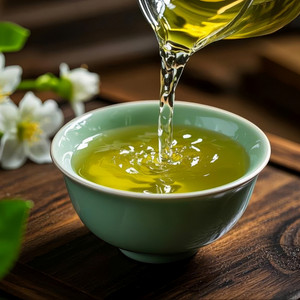
Did you know? The drink that comforted people in China 5 ,000 years ago is still soothing souls today.
From humble teacups to Nasdaq debuts, Chinese tea has come a long way.
As As we raise our cups this international tea day, let's dive into how this ancient brew is now powering billion yuan brand IPOs.
Coming to you from Beijing, this is Roundtable, I'm He Yang.
For today's program, I'm joined by Yu -Hsuan in the studio with me and Bob Jones via video link.
Hey Bob! It's been way too long since we've last done a show together, was it like eight years ago or something?
Oh, you know I don't like to think about it.
I was trying to think this morning When was the last time I saw your face, but you know I've been like a loyal dog Sitting next to the phone waiting for you to call to say come on Let's talk about some really interesting things.
So thank you very much. Thank you for having me back.
It's great It's so wonderful to have you back.
We are privileged to have you back and Bob But where are you physically located now doing this show with us?
Thanks to the wonders of the internet.
Yeah. I don't know whether you have the same thing in China.
Do you have Where's Wally?
Where you have to find the face of Wally somewhere in the picture.
And I feel like that sometimes because you have to keep on asking, where's Bob?
Where is Bob today?
Bob today is on Corfu, which is one of the islands of Greece.
Now, I don't know if you can picture Greece in your head where it is but if you go to the very north of Greece and keep on going slightly and you'll get to call for a tiny little island, if you look to the right you can see Albania, if you look to the left and you've got very good eyesight, then you can see the heel of Italy, so that's where i am and it's a lovely place very beautiful and yeah how would I compare it, probably to Hainan or somewhere like that, it's got that sort of vibe of beautiful palm trees and beaches and that kind of thing.
Oh what a way to make someone who's already jealous more jealous as we look at our very grey studio in Beijing.
One can only imagine the paradise that Bob is sharing his opinions of from and we're delighted to have you both on the show.
Let's get the party started.
May 21st marks International Tea Day and this isn't your grandma's teapot anymore.
China's new -style tea beverages are going high -tech, high -end, and high -stakes on the stock market.
Could we be looking at the next Starbucks style empire but with oolong instead of espresso?
Let's dig into the future of tea, Chinese style and how the world is drinking it up.
Why does the world need an international tea day?
Yes, tea, right. It's something that we basically can see every day and it is just so important that the United Nations is making a day for it.
The website of the United Nations shows that tea is the world's most consumed drink after water and it is believed that tea originated in Northeast India, North Myanmar, and Southwest China but the exact place where the plant first grew is not known, and there is evidence that tea was consumed in China 5 ,000 years ago.
According to a 2024 article by Statista .com, the FAO, or The United Nations Food and Agriculture Organization, estimated that some 6 .7 million tons of tea were produced worldwide in 2022, with China, India, Kenya, and Sri Lanka among the main tea producers in terms of production volume.
So this is a huge thing that the world is consuming actually.
Bob, you are British and you happen to be a tea lover yourself so...
I have in my hand...
What do you have that in your hand?
I see through the video.
Yeah, I have in my hand a mug of tea because the first thing I drink in the morning is a cup of tea, and I have to say that I am a total tea freak.
I have a certificate in tea appreciation.
So if you want if you want to ask an expert about tea, then I'm your person.
I know everything about Camellia Sanensis.
I know where it comes from.
I know where it grows.
I know how to do it.
I know all the different growing areas, et cetera, and put me in front of the cup of tea and you'll find a very happy British person, but you know, I love stories and I Seem to have this thought at the back of my mind.
Isn't there a Chinese story about the divine farmer?
Who went out to test out all the different herbs?
To see what you could use for medicine.
And see some some tea I think it was some tea plants or something fell into some water and Into some warm water he drank it and he found it it made him feel good.
So I think Is that - is that when it started?
Is that when people started drinking tea?
Is that the mythology of Shennong?
It is, that's the one that's the one yeah So I'm guessing that I mean that That's probably What 5 000 years ago are we talking and that that story's come all the way to us?
It's, you know, it's just a wonderful drink.
It's a beautiful drink.
It is so varied it is everywhere you go in the world, everyone seems to have their own kind of tea and does strange things to it.
I mean, you know, Hoi An, you know that in the UK, we drink tea with milk, which upsets a lot of tea drinkers in other parts of the world who think that putting milk and sugar into tea is a bit of a strange thing, but… Sinister!
Everyone has…yeah, very…weird. So, everybody loves tea and everybody does different things with tea.
It's, you know, universal.
It's fantastic. Yeah, then Bob, you're absolutely one of the billions of people who drink tea every morning and 2023 article by a website cod enterprise apps today comm sat that 2 billion people drink tea every morning and that's about 25 % of world population and every day 3 billion cups of tea are consumed around the globe oh, that is a really Astonishingly large figure.
I was just going to say statistics can be very misleading it might be me drinking 3 billion cups of tea a day.
So, you have to look at statistics and try and work out 3 billion people drinking tea, or is somebody out there drinking a lot of tea, but I think it's, either way, you know, people are drinking tea everywhere, and it's tons of it is being drunk.
Yeah, I wonder if in the UK, you see this kind of fluctuation or sort of changing in the level of acceptance, especially among young people because tea drinking in China four years, at least when I was growing up as a teenager, wasn't exactly seen as cool.
It was more associated with, okay this is a common thing that people would do but maybe with the older generations and people that associate it with like traditional tea houses in China and there's the tea ceremony and none of that shouted cool.
Until in more recent years in the last decade or so we've Have you seen that tea has evolved into all kinds of tea beverages to your tea drinks, and also milk tea variations, etc?
How did tea become a business empire in the modern days of China, and why are investors suddenly so thirsty for Chinese tea brands?
Absolutely, you know, probably in the past few years up until last year, I really noticed a rapid expansion of many tea brands, especially these kind of new style cold or iced tea beverages, sometimes on a single food street, these milk tea or bubble tea shops are just lined up one after another, right, even with multiple stores of the same brand right next to each other.
That is basically the situation of the whole expansion of a lot of these you know bubble tea shops and from the number it is also very astonishing.
A recent report by news website jiamian .com saying that EntiJany, which is tea brand, became the latest Chinese bubble tea chain to go public in Hong Kong debuting on the Hong Kong Stock Exchange on May 8th.
And also a report by China Insights Consultancy saying that EntiJany ranks among the top five made to order tea brands in China by gross Merchandise value or the GMV alongside Mi Xue, Kuomint, Cha Panda and Cha Jie all now publicly listed.
Well but these tea beverage brands have shown, you know, mixed performance in the stock market.
Well some like Guoming and Mi Xue saw strong gains, others such as Nigh, Snow, and Cha Panda faced some declines actually.
And these are all tea brands that you will spot on most of the so -called like high streets.
I mean, that's a British term, but, you know, these main business streets in cities big and small in China these days.
This has become part of sort of like daily consumption for a lot of Chinese young people.
In the UK, Bob, it's probably more like coffee shops, I would think, that are lined up in high streets.
But here in China now in recent years it's definitely these cool -looking Starbucks -like fantastic tea houses.
Should they be called tea houses?
You should, maybe you can correct me here.
Well they're more like just really modern tea drink chains.
That's better. Yeah, I think they've become boutiques, haven't they?
They're almost like tea boutiques, they're kind of like a very fashion - orientated store.
Over my lifetime I've seen a big change because when I...
Well first of all, with British people, tea is our blood, so that's always going to be there.
Everybody will always drink tea.
Some people can't face coffee first thing in the morning, they have to have a cup of tea.
Then when they get to work or they go past a major chain like Starbucks or Costa then they'll get a coffee.
But certainly over my lifetime, you know, we had our own tea ceremony where you had to warm the pot and then put the loose tea into the pot and then wait and then decide whether you're going to put milk in first or whether you're going to put the tea in first and then, you know, have that first refreshing sip.
That changed, I think right about the 1970s, tea bags started in the UK and became really popular.
And since then, we've seen really the the idea of tea shops in the UK dying out.
Tea now I think in the UK people think of high tea, which is where they you go into a place, a posh hotel.
And you'll sit there and have a tea at 4 o 'clock in the afternoon and have sandwiches and cakes.
Yeah. Yeah. Yeah. You can see the look on your face you know what I mean?
Beautiful sandwiches, beautiful cakes, really fine food.
So there used to be a brand called Lions Corner Shops, and they were tea shops.
They were like Starbucks, but for tea.
But that's going back into you know pre -1960.
But nowadays it's very difficult to find solely tea shops in the UK, although I will say that virtually every high street or main street in the UK has a bubble tea shop now.
So that's an import, that's something that obviously I spotted in China, but now is coming over to the UK and is that's becoming quite popular.
So that's becoming like a trendy fashionable thing to drink.
I've got to admit, I don't like it.
I've tried it and it just doesn't seem natural to me.
There's something wrong with it.
But I mean, what what kind of teas do you like because I go for all the traditional things like oolong or the gumpowder or jazz and stuff.
Jasmine, really, you know, the ones which are headliners, I guess, but then there's so many different teas and tea aficionados will say, well, tea ought to be the camellia sinensis or to be the polypte, the white tea, the red tea plants, anything other than that is an infusion, so it's not technically a tea.
So if you're talking about ginger or you're talking about i mean even even jasmine i guess is not a tea plant so there's that distinction that people sort of uh experts would make but i don't think the regular public would make that that distinction that's a very interesting distinction you're referring to and we've never talked about this bob until now and you being british actually what you just said kind of surprised me a little bit because as a Chinese person who's not a tea aficionado or purist the thing that shocked me when I first arrived in England was yes putting milk and sugar into tea and also adding
ginger and all kinds of other ingredients into it and peppermint I still don't know what that is and for us Chinese people even if you don't know anything about tea like me I Assume that it has to be full tea leaves and they shouldn't look that different from its original fresh form unless if it's fermented or it's like poor tea That's a different category But if it's green tea the tea leaves are essential and I need to see them and see them dance in my teacup with the Hot water that's what it's supposed to be and that's how I drink mighty Bob.
You have a second opinion No, I was gonna say is that the only thing that shocked you about?
Coming to the UK. Oh there are other things You mentioned something quite interesting there because you mentioned peppermint and I remember when I first went to live in Belgium and there they have a very strong coffee culture because they had links with Africa and And I remember asking for a cup of tea.
And they said, oh, are you ill?
And I said well, what do you mean explain?
And they said, well, people in Belgium only drink tea if they're ill.
So for example, you will drink peppermint tea if you have stomach problems or you drink ginger tea if you have blood pressure problems. So they didn't have the concept of drinking tea as the British might have. But that's been a growth area actually.
one thing I'm doing here in Greece is I'm spotting all the different herbs you can buy in shops because they all have health benefits.
They all have things that make you feel good and I think that's that's probably one of the big growth areas certainly in the UK is that people are thinking I don't in many ways I can't have a sugar laden coffee with lots of cream and lots of bad things in I need to now feel as if I'm doing some kind of good for my body.
So a tea is good But there are even better teas there are teas or infusions which are good for the body and will cleanse the blood and make your Your thoughts clear and give you inspiration and and things like that, you know So I think because people in the UK have become more health conscious now Then there's a move back towards tea, which was always you know, which was our tradition I guess Yes from where you were saying I can totally tell that Bob is not a these kind of new style beverages lover But there do you think that because you're recalling them maybe bad things But anyway, a lot of people no matter
they're like in China or worldwide It is actually creating kind of a sensation right now, according to the China Fund report.
Data from market consultancy iMedia Research estimated that China's new style tea drinks market would reach 355 billion yuan.
That's about US $49 billion in 2024 and that's an year -on -year increase of 6 .4%.
And another Xinhua reports they're saying that targeting young consumers New style tea drinks such as like cold brew tea Tea latte fruit tea and cheese tea.
I don't think these are all the you know, will be the dishes of Bob but they are often used fresh ingredients and are made with innovative recipes and with the support of technology and maybe that is the part that Bob said it's not that natural or but it might sound a little scary at first because people are saying it's with the support of technology, right, and adding a lot of things that are not from the green leaves, but it doesn't mean that there are any frightening additives in what you are drinking.
It just means that some tea brands are even using high -tech methods to make their products like extraction techniques or using just centrifuge to prepare ingredients to some of them um and to be honest I really like these teas you know and I've seen how popular they've become over the years since I am uh lactose intolerant whether I'm out in you know a social setting or just want something to enjoy on my own they're often my go -to choices because you know fruit teas they have these, you know, traditional tea at the base like umetal tea or jasmine tea at the base and they add a lot of tasty and sweet
fruits in it. I saw Bob shaking his head profusely just now so do tell, do spill the tea why.
I was shaking everything, it was my shoulders.
I was thinking when you were listing those teas and I was thinking no. You just answered one question because you said that you were lactose intolerant so I was going to ask about that cheese tea.
Cheese tea. What can I say?
Cheese tea? I just can't.
I just can't even get it into my head.
Can I describe it to you please?
No! I'm not sure that'd do because I'll have nightmares tonight if you start talking about...
I mean, are we talking about hard cheese?
Are we talking about...
Fluid cheese, floating on the top of your drink.
So it's like a... It's like a...
Milky foam on the top of the tea?
No, no, no. Or harder than that.
No? No. No. And I have something else that might interest you or repel you further.
My favorite winter drink and because I know it's packed with calories and possible chemicals, but I know it's tested and it's probably okay for humans to consume and it tastes so good.
It's so comforting.
I allow myself to have only one or two every year during winter time and that's the taro tea I don't know if they have actually much tea content in there But it's the sweet roots kind of thing.
It's taro its utilize.
Yeah, so kind of like yam, but it's Oh, yeah.
Yeah, it's like purplish They put chunks of taro into the drink and then it's got like five layers it's very sophisticated, and during wintertime when it's so cold outside, after a long day, I drink that.
I think I almost eat it because it's got like these chunky bits in it, but I love the texture and it's like my guilty pleasure for winter time.
Does that sound appealing to you at all, or is it have I done the opposite to that?
You've done the opposite.
Why do I even try? But think about the calories come on the calories.
I mean one of the reasons I don't tend to have some of these expensive coffees is because of you look at they've got 500 -600 calories in there now that's a quarter of the calories that you should have in a day so and some people have three or four of these coffees in a day so I mean that's one reason the other thing I guess is worth pointing out is that in these days of economic uncertainty and terrace and things, coffee getting very expensive.
The beans coming from the producers, they're natural reasons that there are problems with growing the beans in the first place, that I think probably tea is going to become much, much more popular, because coffee is going to become more expensive, coffee will become a serious luxury.
So that if you want something, you know, to drink while you're going to work or if you're just just chilling or reading paper or something, you're going to choose tea because why would you want to also choose something which is going to have so many calories and is so expensive?
Great, you know, like your taro tea.
If you're going to sit there and enjoy every single second, every single layer, of the taro tea.
Yes, which I can see that you do, then that's fabulous.
You know, that's a treat, that's going to be great, but I guess it comes down to, you know, not, people don't have too much money their pockets these days.
So coffee would get more expensive, tea will become much more popular.
So I can see why you mentioned all those figures of the various brands with the stock rising, I can understand that.
I can see regardless, it's going to become much more popular, much more common thing on the high street.
And also you mentioned coffee.
I think these days We all have read one or two pseudo -science articles online, and one thing that worries people is the caffeine intake.
And you are not supposed to have more than maybe two coffees a day or something like that, but with tea, it feels like you can't just have the refill of the cup or the teabag in the mug forever, and we don't feel bad about it and our bodies seem to be okay to take that, but also I know there's caffeine and tea as well and Bob being the expert here he knows everything about tea so you better be careful what I say here.
So for tea drinking then it can go on for most of the day and it seems to be okay but with coffee it only sustains one or two cups and that's it.
So I think in that sense tea does sort of have the upper hand in terms of this long run of competition of these two beverages.
And also these days, climate change is affecting tea planting as well.
And could this affect the price of tea in the future as well?
Could you guys also look into the future and see do you vote for tea or maybe coffee or which beverage do you think is the winner?
I think Bob's answer is kind of obvious so let's go to Yu Shun first and hear what he wants to say.
Okay so first of all of course as a new style tea drink drinker, I have to stand up for these teas right.
But to be honest I am totally agreeing with Bob you know they are two categories of products absolutely and I can totally see a lot of people have that kind of idea the Pennsylvania State University Tea Club presidents agree categorizing bubble tea as an altogether different beverage and you know she said if you drink straight tea you can taste all the different flavor notes and you know what does it make you feel what's the aroma like you can't get any of that from these boba teas so it's just completely two different products but the trend is that a lot of young people are drinking these kind
of new style iced tea, and What I want to say is that of course these all of these factors These new style teas are using tea as well And the factors that you mentioned Guiyang are all also affecting the production of tea worldwide actually And I think in a previous episode we talked about how different seasons bring different Varieties and qualities of tea right one particularly the prized type is spring tea, if you know that, Bob, which has to be picked within a specific time frame during spring time, mostly I think from February to May.
This means that if there are drastic changes in the climate, like temperature and rainfall, the yield will definitely be heavily affected.
So yeah, of course, all of these factors are influencing and I think affecting the situation of the tea drinking trend worldwide.
You mentioned the spring tea, minxian chow, which is very important here in China for the tea industry.
So the tea leaves must be picked, harvested before the tomb sweeping day.
Now for those who want to give this as a gift here in China.
That's something very opportune to do at this moment and in my family we've purchased the tea already and we are giving them to our close friends soon before it gets too late because timing is very important here and you want to have that really refreshing taste of this particular type of green tea, and it's really interesting to see.
This is a time -honored tradition of appreciating spring tea.
And we did a special show a couple of months ago devoted to this topic, and this is a tradition that's been going on passed down generation to generation.
And in China, we are a big tea planting and drinking country, and it's great to see some of these traditions being passed down, although they kind of ebbed and waned a little bit for some time.
But now with young people, we talked about previous shows about the milk tea becoming a social currency.
So it's found a new place in young people's everyday lives, although, you know, for purists like Bob and to a certain extent, you shouldn't, can you believe as well?
You kind of think about this in a very dismissive manner I think it's just a little comforting to think that this time -honored drink has found new life in Our everyday routines more or less that's not something I would have Envisioned ten years ago.
I remember back then I actually had friends who were entrepreneurs They saw the Starbucks model, these Chinese friends of mine who went to business school, and said wouldn't it be great if we can have a tea brand, just like Starbucks.
This kind of business model.
They did set up a company and sadly it did not take off after three years and then they folded the business.
But now look at all these other tea brands that Yu Xun has mentioned that have enjoyed IPO treatment.
So I guess when it comes to business, of course, it has to be your business plan allying with the demand of the market.
Is the market ready?
Are people wealthy enough?
Are their lifestyles going to coincide with what you have to offer?
Yeah. The stars have to align for a business to take off like that.
And now you do see these T -brands who are doing very well.
Yeah I'll just add that actually the slang term for tea in the UK, maybe you came across it, is cha.
That we talk about having a nice cup of cha and I think that that really says that you know China I think if there is going to be a growth in the tea market and the worldwide growth in brands and you know something similar to Starbucks but for tea I think China is going to be the place where it comes from.
From ancient brews to IPO news, tea in China has always been more than just a drink.
It's a mirror of the times, as new -style tea brands blend tradition with innovation, they're not only reshaping the beverage market, but also redefining how a centuries -old culture adapts in the 21st century.
As China's tea entrepreneurs chase scale and speed, The soul of tea still whispers something slower and possibly deeper.
Take a moment Taste the present.
Maybe that's the real value far beyond the stock ticker