Get the unmissable news stories of the day.
This is the Beijing Hour.
Examining the events that impact and shape China and the rest of the world.
This is the Beijing Hour.
One hour of news and information brought to you every weekday.
Now here's your host.
Shane Begum with you on this Wednesday, October 8th, 2025.
You're listening to a special holiday edition of the Beijing Hour coming to you live from the Chinese capital.
On today's program.
Gaza peace talks have stretched into a third day, but Israel and Hamas continue to communicate through mediators.
China's foreign minister is in Europe for a high-level meeting with the Italian government in a foreign minister's dialogue in Switzerland.
The US government shutdown is entering its second week and economists are issuing warnings for the country's economy.
In the second half of the program.
Chinese green technologies are transforming livelihoods and powering Kenya's sustainable future.
Now the day's top stories.
Talks in Egypt over a Gaza peace plan have extended into a third day.
Egypt's foreign minister says the focus will be on a ceasefire and hostage-prisoner exchange deal.
A U.S. delegation led by Envoy Steve Witkoff will also join the talks.
Adele El Marouki has more from Sharm El Sheikh.
The main focus now is to achieve two main goals.
Number one is to have a full withdrawal of Israeli troops from the Palestinian Gaza enclave.
This is the Hamas demand.
And at the same time, what is more important is to achieve a basically absolute withdrawal.
Beside the withdrawal is the full release of hostages from the Gaza enclave, as well as the release of prisoners.
Now, how will this take place is basically what has been the focal point of these talks.
But in general there are still fears, at least from Hamas's side, that Israel might resume its military activity in Gaza once it gets all the hostages.
They've seen similar actions to what happened in Lebanon after reaching an agreement, yet the fighting continued in the south of Lebanon area.
Today seems to be a very crucial day, basically because of the people participating in the talks.
You have the Qatari prime minister, which gives big weight to the level of representation for the mediators.
We have Egyptian officials are also coming.
The chief of intelligence will be here.
We are expecting also the Egyptian foreign minister, U.S. envoy to the Middle East, Steve Witkoff.
So there is a sense that their participation is basically to come to finalize an agreement and hopefully announce it, if not today, maybe by tomorrow morning.
Any action to end this war and resolve this issue, based on the establishment of a Palestinian state, will lead to a new phase for the region and its people.
As a country engaged in more than 10 mediation efforts at the moment, we understand that any plan to reach an agreement in any of these crises will not fully reflect what either party wants in entirety.
Therefore, it is expected that there will be points that are unacceptable to both sides.
So the assurances is basically what all it comes about at the end.
There seems to be acceptance from Israel and from Hamas to President Trump's plan.
But how will that implement so that everyone can ensure that no resumption of violence will return is the key point here.
Hamas indicated that it is willing to hand over the transition, the rebuilding of Gaza, to a civilian Palestinian committee, independent from any Palestinian faction, to lead the governance of Gaza, meaning it will step aside.
But what will happen after that transitional period and rebuilding phase is something that Hamas has not explicitly mentioned.
That was Adele Al-Marouki reporting.
Protests and remembrances have taken place across Israel to mark two years since the October 7th attack led by Hamas.
Demonstrators are demanding that the government bring the hostages home.
Blake Sifton has more from Tel Aviv.
On the second anniversary of the October 7th attacks, there's a great deal of sadness and reflection in Israel, but also hope that the ceasefire talks underway in Egypt could soon see the 48 hostages released and the war come to an end.
Ceremonies marking the October 7th.
Attacks have been held across Israel, including in communities along the Gaza border, as well as at the site of the Nova music festival, where hundreds of people were killed.
Protests were also held outside of the homes of government ministers, with demonstrators demanding that the Netanyahu government do everything they can to win the release of the hostages.
That was Blake Sifton reporting.
The conflict in Gaza over the past two years has claimed the lives of more than 67,000 Palestinians.
As ceasefire talks continue in Egypt, many local residents are expressing hope that the negotiations could finally bring an end to the fighting, even as Israeli attacks persist across the Strip.
Rami Almaghari reports.
The Palestinian population here are just hoping that these negotiations in Cairo will come out with concrete results.
Concrete outcomes that would end their suffering for the past two years and total destruction everywhere in the Gaza Strip.
Displacement is everywhere.
Tense our spirit and everywhere in the Gaza Strip, those have been bearing the brunt of that war against the Gaza Strip, particularly against the Islamist Hamas party.
Actually, the Palestinian population in the Gaza Strip are just hoping that United States will push for some concrete results for this war to come end.
That's what the Palestinians here in the Gaza Strip are hoping, especially after the promising remarks by the United States, Mr President, Donald Trump, that he is going to make sure that the war is stopped after these negotiations proceed and come out with aims and objectives, mainly the release of Israeli hostages and then the release of Palestinian prisoners, and actually the situation of Gaza or the administration of Gaza.
The life here is desperate.
The situation is getting worse hour by hour as the Israeli forces continue their strikes, bombardments over different parts of Gaza City, particularly.
Israel had ordered the population to leave.
More than 500000 Palestinians have so far left Gaza to the southern and central parts of the Gaza Strip.
And those hundreds of thousands who remained are now suffering from the strikes, bombardments.
So far, over the past 24 hours, actually 20 people have been reportedly killed, including people inside their localities, inside their homes, as the bombardments of the Israeli forces have been intensified over the past 40 hours.
Since the negotiations have since the talk about negotiations have been reported and now they are underway.
That was Rami Amigari reporting on the ongoing Gaza ceasefire talks.
Pro-Palestinian protests have erupted around the world condemning Israel's humanitarian blockade in Gaza.
In Buenos Aires, thousands marched on Tuesday carrying banners denouncing the killing of children and journalists.
More than 1000 protesters rallied outside the US embassy in Jakarta, while in New York large crowds gathered in support of Palestine and Israel.
Protesters also held demonstrations in Sydney and across several European cities as global calls grow for an end to the violence and the humanitarian suffering.
A study says the United States has sent over 21 billion in military aid to Israel since the latest Gaza conflict began in October of 2023.
The report from Brown University's Cost of War Project and the Quincy Institute finds that US weapons and funding have been central to Israel's operations in Gaza and the wider region.
It also estimates that Washington spent another 10 to 12 billion on military actions in Yemen and elsewhere, bringing total regional spending to more than 31 billion in two years.
Coming up, the Chinese foreign ministers in Europe for high-level meetings.
Discover the realities and responses to our changing climate with Climate Watch.
Uncover critical issues such as the Maasai Mara's disrupted wildebeest migration and the drop in the Panama Canal's water levels.
Delve into solutions for a sustainable future.
Tune in to Climate Watch on your favorite podcast platform.
Become more eco-conscious and take action to protect our planet.
Nine minutes past the hour.
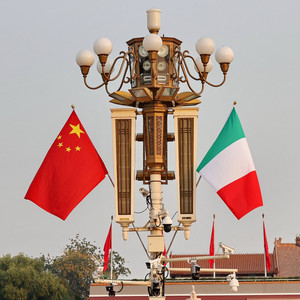
Chinese Foreign Minister Wang Yi is visiting Rome for the 12th joint meeting of the China-Italy Government Committee.
He'll also visit Switzerland to attend the fourth round of China-Switzerland Foreign Minister Strategic Dialogue.
Natalie Carney reports.
Well this will be the Foreign Minister of China's second trip to Europe in so many months.
All the activity begins first thing, Wednesday morning, when he will be meeting with his Italian counterpart, the Foreign Minister of Italy, Antonio Tajani.
They will then co-chair the 12th Italy-China Intergovernmental Committee.
On Thursday he is then set to meet with the President of Italy, Sergio Mattarelli.
Rome has been very eager and working hard towards keeping communications with Beijing.
Both countries eager to keep a pragmatic relationship going.
We, of course, saw the Prime Minister of Italy, Giorgio Maloney, head to Beijing last July, July of 2024.
They agreed on a three-point action plan. to bolster cooperation between the two countries.
Rome, of course, is very eager to bridge the trade deficit that now currently sits at around 12 billion euros.
It's about 14 billion dollars.
It's also very welcoming of Chinese investment, more Chinese investment here.
At the last intergovernmental meeting between the two countries back in 2023 in Beijing, foreign minister of italy tayani did speak about broadening the scope of bilateral relations in the area of economy finance innovation uh, scientific innovation and technology and, of course, green development, so that is likely to be a part of the discussion.
There's a lot of optimism, a lot of pragmatism going into these next two days of talks here.
The foreign minister of China, Mr Wang Yi, will then leave here to head for Switzerland on Friday, where he will co-chair the fourth China-Switzerland foreign ministerial level strategic dialogue.
That was Natalie Carney on the Chinese foreign minister's visit in Europe.
Italy has been a popular destination for millions of Chinese tourists over the National Day holiday this year.
Rome tops the list driven by its cultural appeal, cuisine and shopping experiences.
Upcoming sporting events are also expected to boost tourism ties between China and Italy.
Romani Kitson reports.
Rome is the Italian city topping the list for Chinese travellers during this year's Golden Week.
The key attractions?
Culture, food, wine and shopping.
The culture of Italy is very different from China, so we are very... impressed by Italy.
Maybe we have some special relationship between China and Italy.
So I think choose Italy for my holiday is a very good choice.
It's my first time here and it's really good here.
Alessandra Priante is the president of the Italian Tourism Board.
She says there's been an outstanding rise in Chinese visitors and a shift in their travel trends.
We have seen a 27% increase in arrivals. comparing the two years.
But what we saw is a change and they're getting younger and the groups are maybe smaller.
According to Trip.com, flights from China to Italy during Golden Week alone jumped by 22%.
The CEO of Rome Airport, Marco Troncone, says the numbers are encouraging.
From January to August this year, so the first eight months we recorded in excess of half a million passengers.
We're very happy with the level of connectivity.
We're operating direct flights from Italy to China with six different airlines to eight different destinations.
But 2026 is set to be even more successful.
The next big event expected to attract Chinese travellers is the 2026 Milano-Cortina Winter Olympic Games.
Building on the momentum of the Beijing Games, it's hoped the event will herald the return of pre-pandemic numbers.
The Games will be held across both the city setting of Milan and the mountain resort town of Cortina, offering a dual travel experience.
This will allow us to make the tourists, and specifically the Chinese tourists, explore the Italy that they have not seen yet.
So we are focusing on creating the legacy of the post-Winter Olympics, a sporting legacy that's hoped to be a game changer in Italy's tourism market.
So we're very optimistic about next year.
Next summer season will be a season which will be overcoming pre-COVID levels, because demand is growing.
That was Hermione Kitson on Italy's growing popularity among Chinese travellers.
Wednesday marks the end of China's National Day and Mid-Autumn Festival holiday, and return travel is bracing for a nationwide surge.
The Transport Ministry expects over 300 million passenger trips on Tuesday.
That's up 18.3% compared with 2024.
Our railways handled more than 19 million passenger trips, deploying over 1880 additional trains to accommodate the travel rush.
Airlines reported around 2.4 million passenger trips on Tuesday.
That's a growth of 3.6%.
The World Trade Organization has raised its forecast for global merchandise trade growth in 2025 from 09 to 24.
It attributed this year's strong performance to factors including import front-loading ahead of the US tariff hikes, disinflation in fiscal support, emerging markets and an AI-related trade surge.
Director General Ngozi Okonjo-Iweala says trade has shown resilience despite US unilateral actions, indicating an effective multilateral trading system.
As you know, since the start of the year, we have seen unilateral actions by one of our most important members and an unprecedented rise in trade policy uncertainty.
Despite the stiff headwinds, trade has shown resilience, thanks in no small part to the stability provided by the rules-based multilateral trading system and members' measured response to tariff changes.
The WTO warns that uncertainty still looms, despite the growth, slashing its 2026 forecast from 18 to 05.
Major US stocks closed lower on Tuesday after President Donald Trump announced a 25 tariff on truck imports.
Nick Harper has details.
Well, certainly not helping the markets.
We've seen the markets largely down during the course of the trading day.
We're about halfway through so far.
Wall Street is lower.
The Dow down by about 0.4%.
Similar territory for the S&P.
The Nasdaq slightly lower, about 0.7% lower.
But, of course, the bigger impact has been on the big three U.S. automakers.
Surprisingly, Stellanus is actually up on the day, up about 15, but General Motors down more than 2 and Ford down a massive 7.
Largely, it would seem, because of this new news about the import duty going into effect from November 1st, because a vast amount of trucks that are sold on US forecourts to US consumers are imported into the United States.
Many of them made by the big three, have components or manufacturing that is done in neighboring countries Mexico and Canada.
And that's why we've seen Stellanus petitioning the White House in the run-up to this, really trying to get it overturned, lobbying the Trump administration in the hope of this not coming into effect on November, the 1st.
We've also seen opposition from trade representative groups in the US.
The US Chamber of Commerce has been against this plan and many other tariffs plans for many months.
They put out a statement a while back saying The top five import sources for trucks are Mexico Canada Japan, Germany and Finland.
And they point out that all of these are allies or close partners of the US, posing no threat to US national security, because that, of course, is the argument from the Trump administration, that many of these tariffs are are in place because they pose a national security threat.
But the impact is likely to be felt by US consumers because companies importing these trucks now need to decide if they're going to absorb the costs or, more likely, pass on the higher costs to the US consumers who are out there on the forecourts buying trucks to drive around the US.
That was Nick Harper on U.S. market reactions to President Trump's truck import tariff.
Canadian Prime Minister Mark Carney has made his second visit to the White House in five months.
The Canadian government faces increasing pressure from U.S. tariffs on steel, autos and other goods.
Jim Spellman reports.
Handshakes and smiles at the White House as Canadian Prime Minister Mark Carney meets U.S.
President Donald Trump.
Issue number one, trade.
Many Canadian goods not covered in the trade agreement between the US, Canada and Mexico face a 35 US tariff.
Since June, Canadian iron and steel have been subject to a 50% tariff.
And later this month, tariffs on Canadian lumber will go up to 45%.
In other countries, they're very far away.
And there's no problem.
You can compete and you can do.
We don't like to compete because we sort of hurt each other when we compete.
And so we have a natural conflict.
It's a natural business conflict.
Nothing wrong with it.
And I think we've come a long way over the last few months, actually, in terms of that relationship.
Canada initially retaliated with a 25 percent counter tariff on some US goods, but later canceled them.
A 25 percent tariff on US steel, aluminum and autos remains as the two sides negotiate a trade deal.
There are areas, as the president just said, where we I wouldn't conflict, maybe not so much conflict.
We compete.
There are areas where we compete, and it's in those areas where we have to come to an agreement that works.
But there are more areas where we are stronger together, and that's what we're focused on.
And we're going to get the right deal.
Right deal for America, right deal obviously, from my perspective, for Canada.
U.S.-Canada-Mexico trade agreement is up for review next year.
Carney also used the meeting to back Trump's proposal to end the ongoing conflict in Gaza.
For the first time in years Decades, hundreds of years, thousands of years, this prospect of peace that you've made possible.
Canada stands four square behind those efforts, and we'll do whatever we can to support that.
And Trump mentioned potential areas of security cooperation.
So one thing where we are working very closely is the Golden Dome.
That's the protective... mechanism, and you see how that works.
It's unbelievable.
The Golden Dome is a proposed U.S. missile defense system that could cost half a trillion dollars.
President Trump has proposed that Canada pay more than $70 billion to be included in the project.
The system remains in the planning stages though, and Canada has not committed to being included in the project.
That was Jim Spellman on Canadian Prime Minister Mark Carney's visit to the White House.
Gold futures for December delivery have briefly topped 4000 an ounce on the New York Mercantile Exchange, marking the first time ever the precious metal has crossed that level.
The surge extends gold's powerful rally this year, with prices up more than 50 amid a weakening dollar, fiscal uncertainty and the Federal Reserve's recent rate cuts.
Analysts say strong central bank buying and investor demand for safe haven assets are feeling the rise, though some warn that the metal may face short-term corrections after its record-breaking run.
Europe's carmakers are warning that the European Union's new plan to cut steel import quotas could drive up costs and hurt competitiveness.
The European Automobile Manufacturers Association criticized the European Commission's proposal to nearly halve tariff-free steel imports and double out-of-quota duties to 50, saying it would fuel inflation and add red tape.
The group says automakers already sourced 90 of their steel within the EU, but still rely on specific grades that quickly run out under current limits.
It also called a new rule to trace the origin of steel production overly complex.
The plan still needs approval from EU governments and parliament, and officials warn a debate could delay its rollout.
Coming up, the US government shutdown is now into its second week.
The best military commander is not he who fights a hundred battles and wins every one of them.
The best military strategy does not lead to the desiccation of the enemy's capital city.
Decoding the art of war will help you understand why there's no art in war and how Sun Tzu stayed undefeatable using the science of war, with fun stories and insightful breakdown of famous battles.
Find Decoding the Art of War wherever you listen.
We're at 22 minutes past the hour.
The US government shutdown has entered a second week, leaving hundreds of thousands of federal workers furloughed or working without pay.
Of the 3 million civilian federal employees, only around 15 are based in the DC metro area and the rest are spread across the country.
Economists warn that if the shutdown continues, communities nationwide could start feeling the economic impact.
Rosa Kazan reports.
The yeas are 52 and the nays are 42.
A deadlock in the U.S.
Congress, shuttered museums and thousands of federal workers furloughed.
But the ongoing government shutdown is felt far beyond Washington DC, including the state of Washington.
It's home to nearly 80000 federal employees, more than 30000 of them civilian personnel, at Department of Defense installations, including the Navy's third largest base in Kitsap.
Most civil and federal workers offer a load, but the Transportation Security Administration, or TSA, officers at Seattle-Tacoma International Airport and air traffic controllers must still show up for work without getting paid.
They're not just now thinking about the airspace and the jobs they have to do in these towers or TRACONs or centers across the country.
They're thinking about, am I going to get a paycheck?
The shutdown is also hitting the state's National Forest personnel, with at least one ranger station scaling back operations.
This office will be closed on Mondays due to the lapse in government funding.
And while most of Washington's national parks remain open, tourists hit closed doors at Seattle's Klondike Gold Rush National Historical Park.
And we said, wow, we could go to the Klondike Museum, let's go over and visit.
And sure enough, it's closed.
So, have to come back another day.
Really disappointed.
Himalaya from Albany, New York as well.
Just a few blocks away.
Workers at the Internal Revenue Service and other federal agencies say they're unsure how long funding will last.
We won't know until tomorrow because it runs out tomorrow.
None of them wanted to speak on camera, afraid of violating federal policies.
Because the shutdown is a political thing, we can't even really talk about it amongst ourselves.
And after months of federal job cuts under the Trump administration, some say they feel defeated.
Those of us who want to talk about it are kind of just tired and pissed off.
You know, we're trying to keep our heads down and keep our jobs because we like doing our jobs.
We have a lot of things that we're going to eliminate.
The White House says more federal jobs could end up on the chopping block due to the shutdown, a threat economist Dave Reich says that adds to the anxiety.
I think if I was a federal worker it'd be very different if I thought well, this is going to go on for a couple of weeks and then I go back to work just like normal, and I'm going to get paid for the time I was off.
So not a big deal.
But if you actually might lose your job, that's a real threat.
From tourism to dining, Reich says.
Even those who keep their jobs missing, paychecks could ripple through the economy.
You probably cut back on your expenditures a little bit.
Maybe you don't go out to dinner as much.
Just to get through this period, let's tighten our belt a little bit.
And of course, what that means for the economy is less spending on everything.
As the US government shutdown stretches to a second week, the cost to American workers and the economy will depend on just how long the standoff continues.
That was Rosa Kazan on the effects of the U.S. government shutdown.
Florida is no stranger to hurricanes, but this year there's a new challenge.
As the U.S. government shutdown drags on, key federal agencies are operating under strain.
Experts warn that it could leave communities more vulnerable at the height of hurricane season.
Nitsa Soledad-Perez has more from Miami Beach.
The scenes from last year's hurricane season are a stark reminder of Florida's vulnerability.
Now a government shutdown is raising the risks, just as the region is in the midst of its most volatile weather window.
With federal agencies strained and climate-driven storms intensifying, the timing couldn't be worse.
I'm very concerned about the shutdown.
I've seen a lot of flooding while I was driving around, and that was scary enough.
So yes, I am very concerned about the hurricane in general.
How do you feel about storm preparedness and the ability of the government to respond to a major emergency during this current government shutdown?
I do feel good about it.
This current government seems to like Florida, so I know that they keep us in their hearts and in their minds.
I've lived here for eight years, and I've always had good response from the government.
I'm ashamed at the government for allowing this to happen.
Do you think we are prepared for a major disaster?
I hope so, but I fear we're not.
Flat-out weather and disaster agencies like NOAA and FEMA remain open.
They're deemed essential to protecting lives and property.
But NOAA, which tracks and forecasts hurricanes, is already stretched thin.
It has fewer than 4000 employees for the first time in decades, after losing hundreds of staff to layoffs and early retirements.
Now, remaining workers are tracking storms without pay.
They're doing the work without pay, without an understanding of when this shutdown is going to end.
Will they get that back pay eventually?
The question is whether a reduced crew can handle what comes next.
Climate change is intensifying storm patterns, making hurricane forecasting and emergency response more critical than ever.
What happens if we have another hurricane outbreak and some wildfires in the west, severe drought in the Midwest.
All of a sudden you're stretching that workforce so very thin.
The strain extends beyond weather forecasting.
FEMA is operating under its contingency plan.
Essential emergency functions continue, but the agency's broader preparedness and planning operations are limited.
The bigger concern is what happens if a hurricane makes landfall right now?
Well, FEMA can respond to the immediate emergency, but long-term recovery and mitigation programs are on hold.
That means that communities could face delays when they need help the most.
That was Nita Soledad Perez, on how the US government shutdowns, complicating hurricane preparedness in Florida.
The Ecuadorian government has filed a criminal complaint after what it calls an assassination attempt on President Daniel Neboa during a visit to the southern province of Canar.
The Environment and Energy Ministry said the president's motorcade came under attack on Tuesday as it headed to a local stadium for a public works event.
About 500 people threw stones and then bullet marks were found later on the president's car.
Neboa was not injured.
Police arrested five suspects who now face terrorism charges.
And UN peacekeepers and the UN Children's Fund have freed 410 children from armed groups in the Eastern Democratic Republic of the Congo this year.
UN spokesperson Stéphane Dujarric said Tuesday that the two agencies worked together from January to September to rescue 344 boys and 66 girls in North Kivu and Deteri provinces.
The official said the children are receiving support to help them return to normal life after that time with the armed groups.
At 29 past the hour checking the weather forecast and Beijing's getting moderate rainfall overnight and a low of 10 Wednesday evening.
Thursday has heavy rain and a high of 12.
Taiyuan is getting moderate rain and 8 overnight, then heavy rainfall and 9.
Zhejiang has moderate rain and 14 this evening, then heavy rainfall and 15.
Nanchang's cloudy overnight, 27 degrees.
It'll be sunny and 36 tomorrow.
And that's it for this edition of the Beijing Hour.
In the second half of the program.
Chinese green technologies are transforming livelihoods, empowering Kenya's sustainable future.
Making news today.
Gaza peace talks have stretched into a third day, but Israel and Hamas continue to communicate through mediators.
And China's foreign ministers in Europe for high-level meetings with the Italian government and a foreign ministers dialogue in Switzerland.
On behalf of the staff, Shane Bigum, in the Chinese capital, hoping you'll join us for the next edition of the Beijing Hour and open a window to the world together.
Shh, listen up.
Can you hear the heartbeat of our world?
It's vibrant and pulsating with the essence of life itself.
And right there, in the midst of all beats the heart of humanity.
What if those other heartbeats were to stop?
Would ours keep on ticking?
Every week to find out what's real with China Africa Talk.
Find us on your favorite podcast.
We'll see you there.
You're listening to China Africa Talk.
Everything China, everything Africa.
Hello and welcome to this special series of China Africa Talk where we bring you a six-episode feature together forward to mark the 25th anniversary of FOCAC, the Forum on China-Africa Cooperation.
I'm Bridget Mutampirwa.
In this special series, we meet the people at the heart of China-Africa ties, showing how FOCAC's vision is shaping lives and futures.
A green wave is reshaping China-Africa Cooperation.
In Kenya.
From solar-powered poultry coops to smart greenhouses that read the soil like a living language, Chinese green technologies are transforming livelihoods and powering the country's sustainable future.
Juliet Njao has the story.
In Kajiado County we meet Rosemary Waringa, a poultry farmer who's found a lifeline in solar energy.
My name is Rosemary Waringa.
I am a poultry farmer.
I started this business in 2016.
My initial capital was 400 chickens and so far I have continued to expand to 800 chickens and I separate them in two weeks time.
I have been using solar energy because of the cost of power and it has been a lifeline to me because it is cheap.
Curious about how many chickens she managed today, Rosemary smiles before answering.
At the moment I have 950 chickens here.
I have another coop that has 800 chickens and I have another one downstairs that has 800 chicks. is powered by solar panels imported from China, provided under a subsidized program supported by a Chinese-Kenyan energy partnership.
The partnership has made it possible for small-scale farmers like Rosemary to afford a reliable system that would have been too expensive a few years ago.
So this is all solar powered?
Yes.
For how long?
I asked her what exactly she uses the solar system for in the kitchen cups.
I only use it for lighting because these chickens eat day and night.
So lighting is essential to facilitate this.
But for the chicks, the broader has to be on 24-7.
And finally, I ask her whether she uses the solar system energy to inbreed the chicken.
I have not managed to install solar heating systems, but I would wish to have it.
And if I get it, it would be good to me.
But currently, I am facing challenges with the sun because of the weather fluctuations.
So the solar does not get enough energy to support our system.
Five years into her solar journey, Rosemary shares how it fits into her daily routine.
From reducing power bills to increasing productivity.
Rosemary's story is a shining example of how renewable energy can empower local farmers.
Her journey is not only feeding families, but lighting the path forward.
In Kebu County, we find tech meeting soil.
A smart greenhouse using solar powered sensors, again sourced from Chinese manufacturers, and is transforming how farmers grow crops.
So that is what helps to operate this function.
That's where the source of energy to run it is from.
So this is the machine that now bears all the information both from the two sensors the moisture, the temperature sensor and the nutrient.
That is the NPK sensor.
So all that information is received at the function here, this machine.
Then this is what sends now this information to the office.
It is computerized.
You see it?
Yes, I can see it.
Yes.
So all the information from the sensors comes here.
So this is powered by that solar panel.
So you'll not need to use electricity to power it, use the solar.
This small but powerful device, powered entirely by the solar panels, is the nerve center of the entire greenhouse.
Each sensor has got its own panel.
There are two panels here.
So we have got this panel, then we have got another panel here and there.
So this one has got both the temperature sensing sensor and the NPK sensor.
So at least we get to know which one is sweet and which one is dark.
So this one is for the temperature.
It helps to measure the level of the heat in the soil.
Because there is a conducive temperature at which each particular crop is able to be grown.
These sensors, like the panels, are made and imported from China as part of the broader tech agriculture initiative financed by Chinese private farms in collaboration with local agri-tech startups.
Like the cucumber, the temperature range should be from about 22 to about 25 degrees.
About 19 to 22 degrees Celsius.
So that information now From the sensor, it's transmitted to the farm shield.
Then from the farm shield, it is now transmitted to the office.
From the office now.
We can be able now to set it to the required, either now by introducing the necessary measures like increasing the level of the irrigation.
The other sensor is the MPK.
This one measures. the phosphorus, the potassium, and the nitrogen levels.
So it's able to detect for the whole greenhouse?
Yes.
You see, at this particular point, when we put the fertilizer at the fertilization tank, there it is run through the irrigation water.
So the dripping is here.
So whatever drips here is able to give us the levels of that nutrient content in that particular portion.
So we are able to see at what level is the nitrogen, at what level is the potassium, at what level is the phosphorus.
Then by knowing now if the nitrogen level is low, then that tells us now we will need to increase the level of nitrogen in the soil as per the crop requirement.
Same to potassium, same to phosphorus.
And all this is necessitated or powered by the solar panel.
The only thing the information is just transmitted today the farm shield.
Then now the farm shield transmits to the farm cloud.
There is something we use called farm cloud.
That is what gets all the information from the farm shield.
Then we'll be able to do the necessary adjustments required.
Okay.
What is the off and off button?
I can see here.
So if you take it this way, the way it is, already it's telling you it's on.
But now, when you want to put it off, you can plug it, put it that way, or you can put it on that way and it's always supposed to be on.
By switching it on.
That means now, you're now allowing it to be able now to communicate, or you are powering it to be able to communicate to the farm shield.
So if it's off you are not getting any information from the soil, but if it's on you'll be able to get because it's sensing.
If it's the nutrient you are able to sense the nutrient.
If it's the moisture you're able to sense the moisture.
If it's the Temperature levels in the soil, the same thing.
From the soil temperature to potassium levels, this greenhouse listens, learns, and adapts.
The period it takes to start harvesting varies from one crop to another.
Like this particular crop, which is the English cucumber.
This is supposed to take one month, three weeks, from planting to the time you start to harvest.
So after that, when you start to harvest, we'll harvest it for a particular period of about like three months to four months at most.
But if you manage it well, you can even harvest it for five good months.
So harvesting, there is a range at which you are supposed to the output you are supposed to get per harvest, let's say per week.
Like this particular house, we're always giving it an average of 300 to 350 kgs per week.
So that is what is harvested per week.
Depending on the price like, for example, if you are getting 300 kgs per week.
Depending now on the price, maybe let's say the price at that particular time is 100 shillings per kg.
That tells you that's about 30 K Kenyan shillings, isn't it?
So the price ranges, it fluctuates depending on the market price.
This 240 square meter greenhouse.
It livers the yield of two acres of maize without the need of diesel or electricity.
Like if you look at the wall structure that you see here, like those polythene that is used in building this structure, the polythene is China-made.
Now we have got the solar panels, which are also China-made.
But now the company which is installing this one is partnering with China, the Chinese private sectors getting them and now installing them for the private farmers.
It's now the company that is partnering.
The one I'm working on now is the one that now installs them.
That is the same company that helps with the advisory services, that is, on the sourcing of the kind of crop to be grown, planting Advising on the sprays, on the fertilized applications, on the harvesting methods and other post-harvest practices like packaging.
And also helping at the same time in sourcing the market for the farmer.
For this now, because the farmer is a small scale, he's selling them locally.
If he's continuing to expand, more likely he will get to the export market.
Ah, this is great.
Yes.
Just like this particular portion, this is about 240 meters square.
Ah.
If you compare whatever you are doing inside this greenhouse and what you maybe, if you are doing, maybe maize outdoor, this is, you can compare it to about almost an acre or two acres of maize.
Yeah, true.
On the same particular, maybe related.
If you relate now the 240 meters of this particular crop here indoor, inside the greenhouse, you are comparing it to about two acres of maize outdoor.
So this becomes more productive and cost-effective as compared to doing outdoor.
What is your view on issues to do with global warming and climate change?
You see, this is a more reliable energy compared to using power and using either diesel to power, because most of the places in Kenya you find that there's no power.
So you're forced to use petrol.
But now you have the sand.
You have the solar panels?
Yes, yes.
Only the cost you incur is to properly install?
It's just to install the structure itself and maybe now to purchase the kit, the farm shield kit.
That is it.
And you can use it anywhere depending, even at interior point where you cannot be able to access electricity.
At the same time, you're able to get away with the cost of fuel.
So using the farm shield kit, solar powered becomes more cost effective and more reliable.
It's climate smart agriculture.
Low cost, low emission, high yield and it's happening thanks to the global local cooperation.
In the bustling outskirts of Nairobi, a quiet revolution is underway.
One that replacing engine grids with silence and carbon clouds with clean rides.
I meet Felix Sifuna, an electric motorbike rider who has embraced a different way of doing business.
My name is Felix Sifuna and I use an electric bike.
This does not have a lot of cost because you only need to power it and go to work.
There is no service and it makes you money.
He's clear.
His job is smoother, cheaper and cleaner.
More money, such that when you go home you feel proud that you have done a good job.
Compared to a fuel bike also, The maintenance is cheap.
Felix has been riding this bike since July last year.
I ask him how often he needs to charge and how far the battery can go.
If I have traveled a long distance, I will have to charge it three times a day maximum.
And the third one, I will use it the next day in the morning before it runs off.
Three batteries on a day of heavy use and the third ones are still good for the next morning.
And then I point out the obvious.
There's no smoke, no fumes.
This bike is environmentally friendly.
There is no noise or air pollution.
I ask where he charged the electric batteries.
Is there a station nearby?
It's like a petrol station because they are swapping stations and they are everywhere.
From Nairobi city centre to Kitengela, they are swapping centres along the way.
If you go to Kiambu, you will also find multiple places for charging, and also in Ngong Rongai.
All these infrastructure swiping hub, batteries and bikes have a common origin.
All these are chinese made and the cost surprisingly low.
Swapping a battery costs me 130 kenyan shillings.
Using two batteries per day costs me 260 kenyan shillings, which is way cheaper compared to fuel bikes.
I can use them once or use them separately one-one.
And all of them can take me up to 80 to 85 kilometers.
That's nearly the distance between Nairobi to Naivasha.
Felix owns this electric bike.
It cost him 180,000 Kenya shillings.
If I charge twice a day, It will cost me 260000 shillings and the return on my investment for the batteries will give me good money.
He taps his board showing me the day's numbers.
These are the kilometers I have cruised today, which are 108 kilometers, and the first battery is 82 and the second one is 81.
Then he opens an app on his phone.
With a few swipes, I can see green indicators lighting up.
With this app, you are able to check the charging stations.
How many batteries are full in the said stations?
The app also shows you how many batteries you have in your bike and the system.
Once you click and zoom in, the green indicators show you the swapping stations.
As you double click, it shows you your current location.
For example, in this station, according to the app, there are seven batteries and the fully charged are six.
If this does not have the batteries, you can check the nearest one.
These stations are many and everywhere within Nairobi and surrounding counties like Kiambu, Kajiadok and Machakos.
So you just don't go anyhow, you are directed by the app?
Once you arrive at the swapping station, there are two things.
You can scan the QR code using your phone or you can use IRFID which is also used to swap.
For Felix, the economics make sense.
So does the climate impact.
It's efficient, quiet and built for the future.
Electric mobility in Kenya isn't a dream.
It's already here.
And the riders, like Felix, are proving it's possible.
Clean lights, low cost and better tomorrow.
One silent kilometer at a time.
From the solar-powered pottery coops in the heart of rural Kenya to the smart greenhouses that read the soil like a living language, to electric border borders gliding through our towns with zero emissions.
These stories aren't just about innovation.
They're about resilience, about communities solving everyday problems with a sun overhead and the tools in their hands.
Partnership.
Chinese farms have brought these technologies closer to the small-scale farmers, young entrepreneurs and everyday workers.
But what truly powers Kenya?
Green future isn't just about solar panels or sensors, it's about the people behind them.
Until next time, keep growing, keep innovating.
I am Juliet Njao from Nairobi, Kenya.
China and Africa are among the regions most affected by plastic pollution.
We spoke with Ma Jun, founding director of the Institute of Public and Environmental Affairs in China, and Ali Said Matano, senior advisor for Blue Economy in Kenya, to learn more about the challenges and the opportunities for China-Africa cooperation in tackling this global issue.
Mr Ma, what impact have you observed in China?
We noticed that plastic waste is still a big challenge.
And we have observed that plastic account for around 90 of the floating debris and from 60 to 90 of the seabed debris in China's coastal zones.
And major rivers like the Yangtze River transport over a million tons of plastic to the ocean annually.
And obviously microplastic in recent years have been found in sampled low-level creatures and freshwater creatures and ocean creatures.
And 30% of the fish also contains some microplastics.
And it also contaminated soil and even discovered in the airborne escape.
Now it's in the food water, even in the air.
There's no escape from the microplastics.
Some research have confirmed the impact on some of the low level creatures, like some mollusks, but the human impact, human health impact, is still up to further research.
How about the situation in Kenya, Dr. Matano?
Basically on land.
Plastics actually affect soil structure, affecting its soil facilities and even hence productivity.
And here we have livestock, especially in Kenya.
In the northern part of Kenya, there is a lot of livestock.
And because of plastic, we have seen that this livestock ingest plastic.
Actually, a number of them, we have had lethal effects in terms of death of livestock. and on human of course again borrowing from what maha said we are consumers of fish and fish is the one that can be affected by microplastics and this is because of what we call by accumulation of this micro plastic and they actually go through the food chain and this has of course the potential of exposing our bodies to carcinogenic you know and that's why the instances of cancers cancer have really risen.
In fact studies are showing also there is a correlation between the microplastic and the rise in cancer.
Of course, burning of this plastic also has been found to be very lethal because of the toxic fumes that lead to respiratory diseases.
So really we are living within plastics, but the effect is more than the advantages that we are getting from them.
Mr Ma, how can China and African countries collaborate more closely on plastic pollution prevention?
We both are having our public community gaining higher awareness on the impact of the plastic, and that has triggered changing policy and laws.
China, as the largest user and consumer of plastic, and also china, has been using plastic earlier and more extensively so with that, some of the impact are bigger here or materialized earlier in china, so some of the solutions are also being explored earlier.
There are opportunities for both Africa and China to compare notes on all these solutions and technology innovations and RD and to have an exchange of that.
China has certain technologies that can be transferred.
If it is found practical to be adopted in Africa, then it can be transferred.
And of course, in the meantime we can also learn the solutions developed in Kenya and in other African countries.
All these solutions sometimes will depend on the development of infrastructure that China can put find some support on that.
I hear that African countries are also trying to build their own EPR systems, the extended producer responsibility systems.
Maybe we can jointly try to develop some research labs on that and to make sure that industry, particularly the investors and companies from China investors to ensure that they will They will adopt the best practice, that they are held accountable and try to, of course, transfer this locally.
And joint research and innovation and capacity building.
I've been invited to attend some of the symposiums.
I've tried to invite the environmental agency officers from parts of the world, including Africa, to share some of the solutions and best practices, to discuss the challenges and also solutions.
That was part of our conversation with two experts from China and Africa on joint efforts to address plastic pollution.
For the full discussion on this and other topics shaping China-Africa cooperation.
Follow China-Africa Talk on your favorite podcast platforms.
I'm Bridget Mutambirwa.
Thanks for listening.
Find The Beijing Hour at precisely 6 p.m.
Beijing time.
We meet you on podcast and on air every weekday.
The Beijing Hour, your window on China and the rest of the world.
He can't live without the Yellow River in his eyes.
The Yellow River is so noble and elegant.
Both my grandpa and dad made the living from the river.
Would you like to move away from the Yellow River?
I don't think I will.
I love it so much.
The Yellow River, the second longest river in China, is regarded as a shaping force in the history, economy and culture of northern China.
Today, about 100 million people live within its water basin, making up nearly 9 of the country's population.
How is climate change felt at its headwaters?
And what are the locals doing to cope with it?
What are the descendants of the boatmen doing?
What has kept some people from leaving their home village by the river?
And what has drawn others back?
Could the fading fishing community revive in a time of digital transformation?
From 2021 to 2024.
Our reporters visited the upper, middle and lower reaches of the Yellow River, talked to the herders farmers boatmen, fishermen and eco-activists who share a close bond with the river, and present their stories in pictures, podcasts and videos.
All in our 12-part series, The Yellow River Mosaic, available only on CGTN Radio.