Get the unmissable news stories of the day.
This is the beijing hour, examining the events that impact and shape china and the rest of the world.
This is the beijing hour one hour of news and information brought to you every weekday.
Now here's your host, shane bigum, with you on this wednesday, february the 4th 2026.
You're listening to the beijing hour coming to you live from the chinese capital.
On today's program, China continues to outline priorities for the year with the number one central document and the 15th five-year plan.
China and Uruguay have agreed to elevate bilateral ties, enhance exchanges and expand cooperation into new areas.
And Ukraine's president has met with the head of NATO in Kyiv, with the two sides calling for more air defense weapons to put pressure on Russia.
In business, China remains a key destination for global investors.
In sports, China's announced its flag bearers for the Olympic opening ceremonies this week.
In culture and entertainment.
The National Museum of China in Beijing launches a new exhibit ahead of the Year of the Horse.
Now checking the day's top stories.
Chinese President, Xi Jinping, has stressed the country's commitment to expanding high-level opening up and sharing new development opportunities with countries including Russia.
He was speaking during a virtual meeting with President Vladimir Putin on Tuesday.
President Xi suggested the two sides strengthen high-level exchanges, enhance cooperation in various fields and ensure the steady growth of bilateral ties with deeper strategic coordination and greater responsibility.
Putin voiced Russia's confidence in bilateral relations and pledged stronger cooperation in trade energy, technology and multilateral affairs.
The two leaders also exchanged views on international and regional issues of mutual concern.
China has released its first major policy document of the year, outlining priorities for rural development in 2026 and the opening year of the country's 15th Five-Year Plan.
The No.
1 central document once again puts agriculture, rural areas and farmers at the center of China's modernization drive, with a strong focus on food security, farm incomes and rural revitalization.
Huang Yubei spoke with experts to find out more.
China's highly anticipated No.
1 central document has been released two weeks ahead of the Spring Festival, bringing rural development back into sharp focus.
Food security remains a top priority.
Despite consecutive years of rising grain output, the document stresses that China's food supply continues to face long-term pressure.
It sets a target to keep grain production stable at around 700 million metric tons, while calling for higher yields, improved farmland quality and stronger overall production capacity.
China's total grain output has been increasing.
But demand is rising even faster.
Forecasts by the FAO show that future demand for major crops like rice wheat, corn and soybeans will exceed our current domestic production.
This means the fundamental situation of tight supply and demand has not changed.
For the first time, the document introduces the concept of regularized targeted support for rural households.
After lifting nearly 100 million people out of extreme poverty and completing a five-year transition period, China is entering a new phase of sustained assistance aiming at ensuring farmers continue to benefit from development gains.
Rural incomes have been steadily rising, but gaps remain, especially in previously impoverished counties.
The policies aim to expand farmers' income channels and strengthen local industries, helping households sustain growth and take full advantage of rural revitalization.
The document also highlights the development of what China calls new quality productive forces in agriculture, adapted to local conditions.
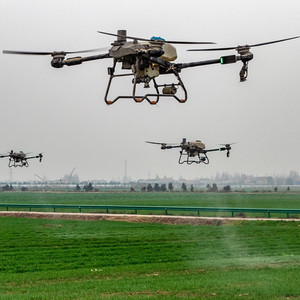
The expert says this includes advances in seed technology, expanded use of smart and automated equipment and digital tools aimed at easing labor shortages and cutting production costs, especially during peak farming seasons.
Technological innovation is key, especially with high-quality seeds.
Without them, Later efforts in cultivation, protection and processing can't make up for the shortfall.
Second, smart and automated equipment allows precise planting and protection, relying more on science than experience, while significantly lowering costs over large areas.
For more than a decade, China's first policy document of each year has focused on rural development, underscoring the great importance the country attaches to rural revitalization, agricultural modernization and farmers' livelihoods.
As the country moves forward under its 15th five-year plan, rural development remains high on the policy agenda, not only to support near-term growth, but as a key pillar of the country's broader modernization drive.
That was Hong Yue reporting.
This year's number one central document outlines plans to advance agricultural and rural modernization.
The document has six key areas that include enhancing agricultural production and building a beautiful and harmonious countryside.
On Wednesday, Chinese authorities gave a briefing on the number one central document outlining efforts to advance agricultural and rural modernization.
Liu Sirui reports.
The officials first looked back at the 14th five-year plan and here are some of the key numbers.
China's overall agricultural production capacity has stepped up.
They say.
Grain output has stayed above 14 trillion jing for two straight years, while the progress in poverty alleviation has also been consolidated.
The number who has been lifted out of poverty now in jobs stay above 30 million for five years, and also farmers income continued to grow.
In 2025, per capita disposable income of rural residents reached above 24 000 yuan.
That's like 6 increase year on year.
So let's take a listen.
A thriving rural industry is the material foundation for rural revitalization and a key way to boost farmers' incomes.
We need to highlight local features to support regions to leverage their unique local resources and develop distinctive county-level economies.
Industrial integration opens up new possibilities for rural industry development.
We should diversify industry forms, extend industrial chains and expand value chains.
In recent years, new business models like rural e-commerce and live streaming sales have grown rapidly.
We need to refine policy and standard frameworks to ensure their healthy and orderly development so they can truly help increase farmers' incomes.
So, despite all these achievements from previous years, officials still stress the long-term pressure felt in these areas.
So in the next five years, their work will continue to focus in related areas.
For example, the food security area.
Officials say the food security remained a red line of the country.
Right now, the overall capacity remains secure, despite frequent natural disaster.
However, the balance between supply and demand is still tight.
They explained that, for example, stable grain demand is easing, while the feed grain is still So.
In the next five years, they hope that they would boost their capacity through better use, for example, artificial intelligence, wider use of drones, and to better their disaster prevention measures to better cope with extreme weather.
And on increasing farmers' income they have.
The officials acknowledge the weak prices of some agricultural products.
They hope this could be fixed through better use of policies, insurances and subsidies, and also stronger employment support for the migrant workers.
That was Lu Sereh reporting on the number one central document for 2026.
For more insights, Fu Yu spoke with Associate Professor Li Li at China Agricultural University.
The number one central document called for regular and targeted assistance measures for the first time.
Please help us read into its implications and significance in China's efforts at rural revitalization.
This year's number one central document for the first time systematically deploys regular and targeted assistance, marking a key shift from the five-year transition to a stable, institutionalized framework for rural revitalization.
According to my understanding, regularity means no policy flip-flopping.
That means the fiscal, financial and resource support will stay consistent to avoid disrupting rural livelihoods, keeping the bottom line against large-scale repoverty.
And targeted means precision or moving from the blanket measures to household-specific and needs-based support.
So I think this is something relevant to a proverb in China governing a nation is like cooking a fish.
Because when we talk about the regularity, it's actually trying to avoid the over-stirring for the fish cooking.
And the second is that we should master the heat, to target all the fire, the heat, so that the cook could be just temperate and just to the point.
And the third one is to balance the flavors which could stimulate the indigenous knowledge and indigenous motivations for the people to provide organic integration of their own development willingness and the policy.
I really like how you broke it down and explained the two keywords here, regular and targeted.
So, by following these principles, What efforts do you think are needed to ensure the assistance is regular and targeted, since we know that conditions in rural areas vary at each household?
In the number one central document, which have been implied there are three actions.
The first is to continuously upgrade the precision.
So the government may use real-time monitoring to identify the household's gaps.
And they should try to guarantee that there could be value chains and e-commerce to provide the market.
And second is to provide inclusive targeting.
And that means those underrepresented groups, including the women and the elders.
How could they stay at home earning some money and having Some of them could have entrepreneurship?
And the third one, I think we could incentivize indigenous growth more.
For example, there have been a lot of vocational training to the local farmers and the East to West labor corporation is still there.
Even when our agriculture is getting modernized, such kind of paired assistant is still useful.
That was Professor Li on a new key task for China's work on agriculture, rural areas and farmers.
China's latest development blueprint puts high-quality agricultural growth at the heart of rural revitalization, encouraging more talent to return to the countryside and start businesses.
Across the country, a new generation of new farmers is taking root, bringing fresh ideas, modern skills and innovative business models.
Yang Jinghao met up with some of them in the southwestern province of Yunnan.
This is our honeycomb enzyme made from the honeycombs of a local beekeeper.
Its purpose is to attract bees to pollinate our crops.
This is Jiang Yayu, a new farmer who launched her eco-farm in Yunnan province last year.
But her connection with agriculture began much earlier.
Born in 1996, Jiang studied in the United States as a teenager and started her career in tourism after university.
In 2019, she made a surprising shift, choosing agriculture.
It's really because I love it.
I want to make agriculture my lifelong career.
Jiang didn't start by working the land herself.
Instead, she traveled across China as a company creator, visiting villages to discover quality food and share farmer stories online.
Through our videos on social media platforms, we show consumers what rural China really has to offer.
Later, she became a bridge between rural producers and urban consumers through live streaming.
Today, e-commerce is playing an increasingly important role in rural China.
Official data shows that in 2025, online sales of agricultural products rose by 9.9%.
Jiang's team has worked with more than 300 farming households.
Among them is Zhang Xueling.
Last year, Jiang produced some 30 tons of tomatoes. marking a steady growth over the years.
Under the traditional sales model, prices drop sharply when production is high and rise quickly when output is low.
The fluctuations are huge.
But now, with a stable online customer base, consumers understand how our products are grown and why they taste good.
That ensures our quality is stable, our prices are stable and our farming is stable.
China is stepping up efforts to drive high-quality rural development.
The country's latest development blueprint encourages more people to start businesses and innovate in rural areas.
As more young people like Jiang return to rural areas and take up agriculture.
With new technologies, fresh mindsets and innovative sales channels, it is hoped that China's countryside will see more sustainable growth and renewed vitality.
That was Yang Jinghao on China's agricultural modernization drive.
Coming up, Chen and Uruguay agree to elevate bilateral ties.
A selection of the best podcasts in China, covering history customs music, literature and in-depth dialogues.
Find your way to a wealth of Chinese culture and thinking, all on POS+.
At 14 past the hour, China and Uruguay have agreed to elevate bilateral ties, enhance close exchanges and expand cooperation into new areas.
The two sides have issued a joint statement on deepening their comprehensive strategic partnership.
They agreed to expand cooperation in industry investment, the digital economy and many other areas.
Uruguay also agreed to allow Chinese enterprises to take part in building the country's 5G network.
The two sides agreed to deepen cooperation in education, technological innovation, culture and tourism.
China said it welcomes more Uruguayan students to study in the country.
The joint statement followed talks between the leaders of the two countries in Beijing during the Uruguayan president's state visit in China.
Uruguayan President Yamandu Orsi is the first Latin American head of state to visit China this year.
The week-long visit comes at a sensitive moment as the United States seeks to restore its dominance in the Western Hemisphere and control Latin American affairs.
Sun Tianyuan explains.
President Yamamoto Orsi arrived in China with a high-level delegation, including nearly 100 business leaders.
It is one of the largest delegations Uruguay has ever sent to China since the two countries established diplomatic relations.
The visit is focused on economic development with a strong emphasis on agricultural cooperation.
China and Uruguay have built strong agricultural trade ties, with beef and dairy products at the core.
Uruguay's agricultural industry has high expectations for this visit.
This trip is very important for us.
China is very important for us.
It's the most important market in terms of dairy products.
I feel proud of this possibility.
Exports are very, very important for our economy.
I can see Uruguay increasing the production of meat.
President Orsi's visit also comes as the United States intensifies its engagement in Latin American and Caribbean affairs.
Following US strikes on Venezuela, countries across the region are once again facing pressure to take sides.
Uruguay, however, is sending a clear message.
It will make its own choices.
For Uruguay, China is not a geopolitical question.
It is a major market offering long-term and predictable economic opportunities.
For more than a decade, China has been Uruguay's key trading partner and its largest export destination.
Official data shows that in 2025, China accounted for about 26% of Uruguay's total goods exports.
At last year's China-CELAC ministerial meeting, China and the region announced over 100 cooperation projects for the 2025 to 2027 period, along with 20 new Chinese initiatives to support regional development.
China says its engagement with Latin America is guided by respect, non-interference and mutually beneficial cooperation, not spheres of influence.
Chinese President Xi Jinping has stressed that this position will not change, even as global dynamics continue to shift.
That was Sun Tianyuan reporting.
Andre Bruno is a tennis coach from Montevideo who's living in Shenzhen with his family.
He first visited China in 2004 and stayed in the southern city where he's since built a career.
Xu Hua spent time with Bruno to explore the personal bonds that form the fabric of bilateral ties.
I started to come to China with the professional players just for a week and then going back.
In that time I was working in Spain.
But since I arrived the first time, I feel something special.
I don't know, some kind of connection with the people. the atmosphere, the culture.
That special connection has only grown over time, finding its true expression on China's tennis courts with the next generation of players.
I really like Coach Andres.
I think he teaches very well, explaining every move with great care and patience.
Now we can see that most of the best events in the world are in China.
And we can see that more and more players are becoming professional.
And I think it's great to see how the tennis in China develops very, very fast.
I think China has a very good future in tennis.
And Les brings professional tennis from Uruguay, its techniques, its energy and its philosophy.
To truly understand the journey he's made, we have to see the life he's built off the court.
After the last balls are hit and collected, Andrews slips into his other roles as a father, neighbor and a regular at his family's favorite Cantonese restaurant.
Here, he orders the dishes his children love with the ease of a local.
And for his wife and kids, Shenzhen, too, is home.
I like my life here because it's a big city and there's good food.
Andrew's sense of home flows with the water.
The long coastline from Mount Vidiu to Shenzhen ties his two worlds together.
I hope more people from Uruguay can visit China.
They can see how beautiful, how good is China, how big it is, how rich is the culture.
I think respect. can be a good word to describe, you know, the relationship that we have.
Respect, one word chosen from Andrew's heart, is the feeling he experiences every day here.
The simple, powerful anchor of a friendship between the people of China and Uruguay.
That was Xu Hua with the story of a tennis coach from Uruguay who has made China his second home.
A think tank forum in Beijing has proposed 15 common opinions on promoting cross-strait exchanges and cooperation.
Co-hosted by research institutes affiliated with the Communist Party of China and Taiwan's Chinese Kuomintang.
The forum on Tuesday called for restoring normal cross-strait travel and resuming direct sea and air passenger services.
Participants noted that nearly 5 million people from Taiwan traveled to the Chinese mainland over the past year, despite restrictions.
Officials say the Chinese mainland will soon resume travel for Shanghai residents to the islands of Kinmen and Matsu.
The move aims to further normalize people-to-people exchanges across the Taiwan Strait and promote regular cooperation in various fields.
Meanwhile, the State Council Taiwan Affairs Office describes the resumption of travel as a response to strong public expectations for peace development, exchange and cooperation.
It also urges the Democratic Progressive Party authorities to respect public opinion and lift restrictions on cross-strait exchanges.
Coming up, the president of Ukraine and the head of NATO have held a meeting in Kiev.
You've been listening to programs from CGTN Radio.
We invite you to visit us online for more audio, pictures and in-depth reports.
At radiocgtncom, you can access a wide range of programs and find your favorite news, talk features, entertainment shows and podcasts.
Hear the difference with CGTN Radio.
22 minutes past the hour.
Ukrainian President Volodymyr Zelensky and the NATO chief of Meden-Kiv, urging allies to send more air defense weapons to put pressure on Russia.
Zelensky outlined Ukraine's stance ahead of a new round of talks with Russia.
We agree that I will remain in touch with our team.
We will hear what they have brought and what they are ready for, what compromises the Russian side is prepared to make, not only what signals are expected from Ukraine.
Our group knows from me that dialogue must be sought, but no one is going to surrender.
NATO Secretary General, Mark Rutte, reaffirmed the alliance's support as Ukraine accused Russia of overnight strikes.
We will keep up the pressure on Russia. and we will continue our support for Ukraine.
So, members of the Rada, as the very capable team appointed by President Zelensky continues their work to negotiate a lasting end to this war, know that NATO continues to stand with Ukraine and will continue to do so in the years ahead.
Your security is our security.
Akiv said Russia fired hundreds of drones and missiles targeting critical energy infrastructure.
Russia's defense ministry said they were aimed at Ukraine's military-industrial complex and energy facilities, calling them a response to Ukrainian attacks on Russian civilian infrastructure.
Negotiators in the two countries are meeting in Abu Dhabi on Wednesday and Thursday for US brokered talks.
U.S. media reports say the nuclear talks with Iran will take place in Oman on Friday.
The two sides previously planned to hold the talks in Turkey.
Reports citing an Arab source say Washington's agreed to move the venue of the negotiations to Oman.
They say Tehran prefers Oman as the venue and favors direct talks with Washington rather than a broader format involving Arab and Muslim states.
Negotiations are ongoing about whether Arab and Muslim countries from the region will join the talks.
On Tuesday, Iranian media reports said a drone belonging to the country's armed forces said completed what it called a surveillance mission in international waters.
It came after the U.S.
Central Command said that a U.S. warplane shot down an Iranian drone in the Arabian Sea.
U.S.
President, Donald Trump has signed a spending deal into law, ending a partial government shutdown and giving lawmakers time to negotiate potential limits on his immigration crackdown.
Owen Fairclough reports from Washington, D.C.
From the longest US government shutdown on record just a few months ago, to one of the shortest, the US House of Representatives voting this Tuesday to keep the federal government fully funded through until the end of September.
That vote carried 217 to 214, reflecting the degree of unease, and indeed anger, on behalf of House Republicans who'd wanted several measures they'd initially tabled but had to compromise, not least on the orders of US.
President Donald Trump, who showed some rare bipartisanship with Senate Democrats to try and keep the government fully funded with memories of that record-breaking government shutdown just a few months ago still fresh.
At the heart of all of this, funding for the Department of Homeland Security.
The agency overseeing those federal agents at the heart of those protests in Minneapolis over trump's highly contested immigration enforcement program and now not one but two fatalities there that was resolved somewhat by putting that on the back burner or at least funding the dhs for the next couple of weeks while they discuss while lawmakers discuss how that agency should proceed and whether it needs new protocols to rein in those federal agents.
But the House Republicans are also unhappy that one of the motions they initially wanted to table as part of this funding package was taken off the table.
There are hardline Republicans in the House who want US voters to have to prove their citizenship when they go to vote.
That's a highly controversial move in a country where election procedures are highly decentralized, and amid Trump's ongoing and unsubstantiated threats of election interference and now new suggestions from Trump that he wants to essentially federalize to some degree the election process.
If this didn't have a great impact on the US government, it was just a couple of days, during the business week itself, that part of the US government was shut down.
It does have some impact.
The jobs report that was due to come out at the end of this week has now been delayed.
Sure, it's only by a few days, but with so much uncertainty about the economy and ongoing concerns about the impact of inflation not just on the economy but on the jobs market, The last thing many experts want now is timely data that's delayed once again.
That was Owen Fairclough in Washington.
Republican Representative James Comer says former U.S.
President Bill Clinton and his wife Hillary will testify in a congressional investigation into Jeffrey Epstein later this month.
Nick Harper has more.
Former U.S.
President Bill Clinton alongside Jeffrey Epstein.
Images that have prompted uncomfortable questions for the Clintons.
Bill Clinton has acknowledged flying on Epstein's private jet, but the couple have denied any wrongdoing or knowledge of Epstein's sexual crimes.
But now a last-minute cave-in, agreeing to sit for a closed-door deposition after lawmakers threatened to hold them in contempt of Congress for refusing to appear before the House Oversight Committee.
The top Democrat on the panel welcomed the news.
They've accepted every single term that's been laid out by Comer.
I don't see any scenario where they can move forward with the vote.
We've been pushing for it for them.
We've said we want them to testify, and now we'll get the testimony.
The Clintons have accused Republicans of a targeted, politically motivated attack, with Donald Trump repeatedly accusing Bill Clinton of sexual misconduct.
You know, when Epstein was alive, like 10 years ago, nobody cared about him.
But they're only doing it.
But now it's really hitting back on them because Bill Clinton is such a big part of it.
The Democrats are pushing it.
And the problem is that it's turning out to be the Democrats that were with and conspired with Epstein.
Other high-profile figures are also under scrutiny for their relationship with Epstein.
Beautifully stated.
What a beautiful accent.
I'd like to have that accent.
Peter Mandelson, the then British ambassador to the United States, was forced to resign that position last year.
And on Tuesday, he announced his resignation from the UK's House of Lords.
Over allegations, he passed sensitive government information to Epstein in 2008.
My Lords, given the public interest and for the convenience of the House, I've decided to inform the House that the Clerk of the Parliament has today received notification from Lord Mandelson of his intention to retire from the House effective from 4th February.
I will formally notify this to the House tomorrow in the usual way.
The political fallout in the US and abroad is expected to continue, as Democrats continue to push for an investigation into President Trump's connections to Epstein.
That was Nick Harper reporting.
Beijing down to minus one Wednesday evening.
Thursday, we'll see cloudy skies and three degrees Celsius.
It's time for a short break.
So far.
This hour, China continues to outline priorities for the year with the number one central document and the 15th five-year plan.
China and Uruguay have agreed to elevate bilateral ties, enhance exchanges and expand cooperation into new areas.
Ukraine's president has met with the head of NATO in Kyiv, with the two sides calling for more air defense weapons to put pressure on Russia.
Shane Bigum with you.
Stay with us here on The Beijing Hour.
Shh, listen up.
Can you hear the heartbeat of our world?
It's vibrant and pulsating with the essence of life itself.
From the stem of trees.
From the silent strength of mountains to the icy whispers of glaciers.
Even the solid ground beneath our feet.
And right there, in the midst of all, beats the heart of humanity.
What if those other heartbeats were to stop?
Would ours keep on ticking?
Ever wondered what's actually going on in Africa through the perspective of an African?
How are things really going between China and Africa?
What's the narrative of this relationship?
Well, get a perspective with China Africa Talk.
Hear from African diplomats, entrepreneurs, academics, Chinese natives and more.
Get on our wavelength every week to find out what's real with China Africa Talk.
Find us on your favorite podcast.
We'll see you there.
Examining the events that impact and shape China and the rest of the world.
This is the Beijing Hour, one hour of news and information brought to you every weekday.
Now, here's your host.
Shane Bigum with you on this Wednesday.
Still to come, in business, China remains a key destination for global investors.
In sports, China's announced its flag bearers for the Olympic opening ceremonies this week.
In culture and entertainment.
The National Museum of China in Beijing launches a new exhibit ahead of the Year of the Horse.
To contact us, you can email radio at cgtn.com or follow our ex-account at CGTN Radio.
First of all, though, a check of the day's headline news.
Chinese President Xi Jinping has held a virtual meeting with Russian President Vladimir Putin.
On the same day, President Xi met with Vietnamese official Le Hoi Trung in Beijing, reaffirming strong political trust and pledging to deepen China-Vietnam cooperation.
Le special envoy to Vietnamese Communist Party General Secretary Tho Lam, emphasized Vietnam's priority on on strengthening ties with China and pledged to deepen political, economic and people-to-people cooperation for mutual benefit.
China is again called on Japan to uphold a path of peaceful development, after Japanese Prime Minister Sanae Takeuchi said she intends to write Japan's self-defense forces into the constitution.
Chinese Foreign Ministry spokesperson Lin Jian, stressed that Japanese militarism during World War II brought grave disasters to the region and the world.
Lin said, documents with international legal force, including the Cairo Declaration, the Potsdam Proclamation and Japan's instrument of surrender, clearly define Japan's obligations as a defeated country and form the political and legal basis for its return to the international community.
The spokesperson said, constitutional revision in Japan has long drawn close attention from the international community and Asian neighbors.
Lin urged Japan to seriously reflect on its history of aggression, heed domestic calls for peace and build trust through its actions.
China's intensified its crackdown on cross-border telecom fraud, prosecuting more than 11000 individuals repatriated from northern Myanmar during the first 11 months of last year.
Over the same period, officials say, prosecutors nationwide approved the arrests of more than 4300 suspects linked to telecom fraud cases, delivering a strong blow to cross-border criminal networks.
Including those sent back from northern Myanmar.
Achana prosecuted around 62000 people for telecom and online fraud during the period.
A collision between a Hellenic Coast Guard patrol vessel and a boat carrying migrants and refugees in the Aegean Sea has killed 15 migrants.
Greek media reports say authorities recovered 14 bodies from the sea, while another migrant died in hospital after being rescued.
NASA has delayed the Artemis 2 mission that'll fly astronauts around the moon to at least March the 6th, after a hydrogen fuel leak marred the dress rehearsal of the new rocket.
The space agency has been targeting as soon, or had been targeting as soon as this weekend, for humanity's first trip to the moon in more than half a century.
Mission team chair John Honeycutt said they did not anticipate this complication.
We try to test like we fly but this this this interface is a very complex interface.
And when you're dealing with high hydrogen.
It's a small molecule, it's highly energetic and we like it for that reason.
And we do the best we can.
And actually this one caught us off guard and the initial things that we were seeing and the technical team felt like we either had some sort of misalignment or or some sort of deformation or debris on the seal.
The crew is being cleared to emerge from quarantine in Houston and will re-enter two weeks before the next launch attempt.
At least 35 people have died in snow-related accidents across Japan over the past 15 days.
Authorities say Nagata Prefecture on the west coast recorded the highest number of fatalities, with 12 deaths.
The man who fatally shot former Japanese Prime Minister Shinzo Abe in 2022 has filed an appeal against his life sentence.
The Nara District Court handed down a life sentence for Tetsuya Yamagami last month.
Yamagami was convicted of murder and other charges for shooting Abe with a homemade gun in July of 2022, while Abe was delivering a campaign speech on a street in Nara.
French prosecutors have raided the offices of social media platform X over allegations including spreading child sexual abuse images and deepfakes.
They've summoned owner Elon Musk and employees for questioning in April.
X said the Paris public prosecutor's office is trying to exert pressure and conducting the investigation without following the rules.
Musk has called the raids a political attack.
Meanwhile, Britain's privacy watchdog has kicked off a formal investigation into must-chat box Grok over the processing of personal data and its potential to produce harmful content.
You're listening to The Beijing Hour.
Coming up in business, China remains a key destination for global investors.
The Beijing Hour, your window on China and the rest of the world.
37 past now.
And with business, here's Wang Zihang.
Thank you, Shane.
Chinese mainland stocks closed higher on Wednesday, with the Shanghai composite rising nearly 0.9%.
The Shenzhen component edged up by about 0.2%, while Hong Kong's Hang Seng remained almost flat.
Tokyo's Nikkei dropped by nearly 0.8% after reaching a record high the previous day.
International gold and silver prices continue to rebound, with gold recording its largest single-day gain since 2009 on Tuesday, surpassing US5000 per ounce.
Analysts believe that the ongoing global trade and geopolitical uncertainties, along with unsustainable debt levels in major economies, will continue to drive increases in precious metal prices.
A report says China has remained a key destination for global investors, offering a vast market and strong industrial support.
The China International Fair for Investment and Trade compiled the report alongside other organisations.
It analyses new trends in global cross-border investment and outlines the latest developments in China's two-way investment.
It highlights China's advantages in supply chains, market scale and favourable policies.
It also notes China's technological breakthroughs in AI and 5G, along with a large pool of skilled talent.
These factors have helped China create the world's largest tech innovation ecosystem.
Meanwhile, foreign-invested enterprises have contributed to China's growth by bringing capital, technology and expertise.
The Silk Road Maritime Network is China's first international logistics platform for the Belt and Road Initiative.
It has rapidly expanded, shipping 26 million containers of cargo since its launch.
In 2025, container throughput exceeded 5.4 million, a 9% increase.
Bulk and general cargo shipments surpassed 12 million tons, up 26%.
China Customs Deputy Director, Jiang Tao, said China is strengthening efforts to develop multimodal transport systems.
We are promoting the deep integration of Silk Road Maritime Network with the China-Europe Railway Express and the Western Landsea New Corridor.
This will create a multidimensional, multimodal logistics network to reduce cross-border logistics costs and improve customs clearance efficiency, thereby injecting fresh momentum into the high-quality development of the Belt and Road Initiative.
The Silk Road Maritime Network now covers 148 international routes linking 150 ports in 48 countries and regions.
China's services sector continued to expand in January, with the rating dog services PMI up slightly to 523.
This marks the highest increase since October, driven by new orders and a rebound in foreign sales.
Analysts expect the services sector to maintain growth momentum in February, boosted by the nine-day Chinese New Year holiday.
However, sustaining the recovery will depend on the strength of domestic demand amid lingering external uncertainties.
For more insights on China's latest services sector data.
Vivian Nunes spoke with Professor Xu Fengqi from Peking University.
This month's services sector PMI expansion was driven by a rebound in foreign sales.
What more can you tell us about that?
First of all, let me clarify that there is no conclusive evidence on the growth in service sector, PMI or foreign sales.
For example, if you look at the official data, it actually saw a contraction of the service sector PMI to 495.
Well.
On the other hand, if we look at the private sector data on the rating that given by the rating doc, it showed a fast expansion to the reading of 523.
But what is, despite the divergence, we do see a common theme behind it is that there are strong momentum of growth in both high tech and AI.
So last, let's talk about the divergence.
So why do we have the differences?
The reason is because of the survey of the data.
So for the National Bureau of Statistics, it covers a broader set of enterprises that includes both small and large enterprises and also a lot of state-owned enterprises.
Whereas for the rating data, it covers more small and medium enterprises and also concentrates around coastal cities.
So we usually know that small enterprises are likely the fastest to respond.
So that may point to an emerging trend in the future, but it will take time for us to see.
All right.
Well, thank you for that analysis.
Consumption is expected to increase over the spring festival and that will likely be reflected in this month's PMI data, perhaps from both sources.
But is it likely to sustain beyond that, do you think?
First of all, I do agree that, despite we know that the data is season adjusted, we are likely to see an uptick in consumption in February.
But from my perspective, the longer term prospect is less certain.
There are two aspects.
The first is a conducive factor.
So we do see that basically for the foreign trade.
So, even though it's kind of mixed for January, so we are likely to see uptick in the future and that basically will help increase people's income, especially those related with export.
So that's like a conducive factor.
On the other hand, we know that long term consumption, or longer term consumption, likely to be to be more closely related to both, for example, like income expectations, job stability and asset performance, which is still kind of uncertain, especially about the asset performance.
So we do know that for the past half a year, the Chinese stock market has experienced unprecedented growth.
But it's very unlikely that trend will continue.
That was Professor Xu Fengqi at Peking University.
China's steel output reached over 1.4 billion tons in 2025, marking an increase of more than 3%.
According to Director Jiang Longqiang of the China Metallurgical Information and Standardization Institute, the growth in steel production is driven by major national projects and emerging industries.
China's cumulative increase in steel production has exceeded 100 million tons, driven by construction of major national projects and the industrial sector, particularly emerging and future industries such as high-end equipment manufacturing.
China has built the world's cleanest steel production system, with over 80 of its capacity, now achieving ultra-low emissions.
The country has also launched an environmental product declaration program to share environmental performance data globally.
Shanghai has set a GDP growth target of around 5 for 2026, following stronger than expected economic performance last year.
The city's GDP grew by 5.4%, reaching nearly 5.7 trillion yuan, or around US$820 billion.
The government emphasised that domestic demand will play a larger role in driving economic growth this year.
Shanghai also aims to further strengthen its position as an international science and technology innovation hub.
Last year, the city saw more than 320 new tech firms established daily.
Its R&D expenditure accounted for around 5.5% of GDP.
Strategic emerging industries such as integrated circuits and AI grew by 6.5%.
Shanghai plans to continue supporting high-growth tech firms and establish 50 smart factories in 2026.
Disney shares fell despite the company's first-quarter revenues beating forecasts.
Two hit movies and higher profits from streaming services couldn't offset our concerns about the impact of the US political climate on theme park visitors.
Owen Fekloff reports from Washington.
From Avatar 3 to Zootopia 2, two Disney movies that gross more than a billion dollars and help propel the company's first earnings of 2026.
Partnership is the cornerstone of success.
The Zootopia sequel broke box office records internationally, including in China, where it's the highest grossing Hollywood movie ever released.
And that kind of milestone helped Disney's first quarter revenues grow 5% to $26 billion.
Streaming income grew by 72%, partly driven by higher subscription fees.
And its experiences division that includes theme parks and merchandise generated a record 10 billion.
But if those headline numbers look good, Disney's overall profitability is down.
Its share price dived in New York on Monday as investors digested modest income growth through its US parks due to what Disney calls international visitation headwinds.
In other words, fewer people visiting the US, amid international backlash over the Trump administration's immigration policies, now embodied by deadly protests in Minneapolis,
That arguably increases the value of overseas markets like China.
And during his visit there last month, Disney chief executive Bob Iger pledged continuing investment.
There was Owen Faircloth reporting.
Now the Walt Disney Company has announced that Josh DeMauro will become the company's new chief executive officer.
He will succeed Bob Iger effective at the upcoming annual meeting on March the 18th.
DeMauro has served as chairman of the Disney Experiences segment since 2020, leading it to new heights financially.
Iger will continue to serve as senior advisor and a member of the Disney board until his retirement on December 31st.
Thank you very much.
That's Wang Ziheng with Business.
You're listening to The Beijing Hour.
Coming up in sports.
China's announced its flag bearers for the Olympic opening ceremonies this week.
Sideline Story brings you all things sports related.
The hottest topics, latest events, juiciest stories, all with a very personal take.
Subscribe to Sideline Story podcast for heated sports discussions covering events that are happening in China and around the world.
47 past the hour.
Turning to sports now, here's Yang Guang.
Thank you, Shane.
China has announced its flag bearers for the 2026 Winter Olympics opening ceremony.
Speed skater Ning Zhongyan and short track skater Zhang Chutong will carry the flag.
The ceremony will take place in Milan on Friday.
China's delegation has 286 members, including 126 athletes.
67 of them will be making their Olympic debut.
China's Su Yiming was among the snowboarders taking part in the second official Big Air training session in Livigno, and the defending champion appears to have adapted to the venue quite well.
Prep work at the snow park's Big Air course wrapped up on Sunday, with the first official practice taking place the next day.
Su was the first athlete to arrive for the second session and the staff members were still making adjustments when he reached the course.
During two hours of training, the reigning men's Big Air gold medalist completed multiple rounds and learned several difficult tricks.
The 21-year-old said he will remain positive.
I think I will just stay positive every single day, be happy and be hopeful.
I'm already very happy about the fact that I can compete for my country on the biggest stage in the world, and I'm grateful every day and during my daily training.
Hopefully I can maintain my form in the next training session and get ready for the qualifying round.
Wednesday marks the fourth anniversary of the opening ceremony for the 2022 Beijing Winter Olympics, where Su claimed his historic Big Air title.
Mixed doubles curling competition starts Wednesday at Milano Cortina 2026 Olympic Winter Games.
The first games feature Norway versus Britain and Sweden versus South Korea.
Canada faces the Czech Republic and Estonia plays Switzerland.
Host Italy's defending champions begin play on Thursday.
The mixed doubles event joined the Olympics in 2018.
The finals are set for February 10, followed by the men's and women's tournaments.
One of the biggest challenges at the upcoming Winter Olympics might be moving hundreds of thousands of spectators and athletes across northern Italy.
Events will take place at seven sites, making this the most spread out edition ever.
Hermione Kitson reports.
The 2026 Winter Olympics will be defined by two very different backdrops.
On one side, the urban setting of Milan.
On the other, the mountainous terrain of northern Italy.
Olympic venues will be spread across three regions.
The main areas, Milan, Cortina, Bormio and Livigno.
With events hundreds of kilometres apart, the big question is transport.
Regional rail operator Trenord says the network is ready for the influx of travellers.
We want to be protagonists of sustainable mobility during a big event like this, so we're adding an extra 120 trips a day to serve Olympic visitors.
Milan Central Station will be the key point of departure.
In two hours and 15 minutes you can reach Tirano from Milan Central.
From there there are bus connections to reach Bormio and Livigno, two of the most important Olympic areas.
Our team travelled by train from Milan to Venice and then drove to Cortina.
The journey took around five and a half hours, but travel times vary significantly depending on traffic.
To minimise travel for athletes, there are six Olympic villages spread across the competition zones.
During the Games, we have various parallel systems for residents and spectators.
For spectators.
We have park and ride locations around 60 and 15 kilometers from Cortina, and from there they will be transported by shuttle bus.
New roads and updated rail lines are expected to be among the lasting legacies of the Games.
Not all projects are on schedule.
A new cable car connecting Cortina to the Tofane Alpine skiing venue has faced major delays.
With the final countdown underway, questions remain over how smoothly these dispersed Winter Olympics will run, but organisers insist they're on track and almost ready to deliver.
That was Hermione Kitson reporting.
All right.
Thank you very much.
That's Yong Guang with sports.
You're listening to the Beijing Hour.
Coming up in culture and entertainment.
The National Museum of China in Beijing launches a new exhibit ahead of the Year of the Horse.
From north to south, east to west, people in China are chasing their dreams and leaving their mark.
Want to know how they beat the odds and made a difference?
Footprints brings you the true life stories of their journeys.
52 past the hour now, turning to culture and entertainment.
With the Year of the Horse just around the corner, a new exhibition titled Galloping Forward is kicked off at the National Museum of China in Beijing.
It's all about the horse, an animal that's shaped Chinese history for thousands of years.
Yu Henny has more.
Did you know that the horse is seen as more than just an animal in China?
It symbolizes power, speed, and spirit of self-improvement and hard work.
And here at the National Museum of China, we're celebrating the upcoming year of the horse in grand style.
There are about 120 precious artifacts on display.
This exhibition, titled Galloping Forward, is a big team effort led by the National Museum and supported by six major institutions across the country.
Visitors can trace the horse's journey through time.
It evolved from the key figure of war and imperial power to a vital carrier of along the Silk Road, from ancient brassware and pottery figures to delicate paintings.
The horse stands as a symbol of vitality in Chinese art.
One of the must-see pieces is located right in the entrance a rare tricolored glazed ceramic horse in black glaze from the Tang Dynasty.
This is a classic example of a Tang Dynasty horse sculpture.
Unlike the simpler style of the Han Dynasty, this one is muscular and strong, showing the power of the Tang era.
What makes it truly special is that it's one of only two black glazed, tricolored glazed ceramic horses unearthed in China.
From the Tang Dynasty until today, horses have never stopped inspiring artists.
The National Museum has always excelled in developing creative cultural productions.
We want our creative products to express Chinese culture.
This black horse is perfect because it's rare and has a great meaning.
We've put these good wishes into everything, from blind boxes to this plush charm.
It has an interactive design.
If you pat its bottom, it goes like… It's a fun way for people to relax.
While these modern gifts offer a playful touch, the exhibition's physical environment is designed to immerse visitors in the elegance of the past.
We use the language of classical Chinese architecture for this space.
We want people to feel the beauty of Chinese aesthetics and see how the New Year spirit continues from the past into the present.
The tracks lifted by horse formed a living network that once connected civilization.
Today, that legacy is still going strong.
Open since January 30th, The exhibition will welcome visitors for the next three months.
That was Yuhani reporting.
CGTN has released a special video for the Year of the Horse, which begins on February 17th.
Titled The Year at a Gallop, the video celebrates the horse as a symbol of strength and progress.
It shows an artist painting a large horse on Schwann paper.
The artwork combines calligraphy and traditional Chinese painting.
The video also displays the word horse in 85 different languages, highlighting its universal meaning.
China's embassy in Georgia has held a reception for the Chinese community to celebrate Spring Festival.
Representatives pledged to continue fostering exchanges and cooperation.
Ambassador Zhou Qian highlighted contributions from Chinese businesses and teachers over the past year, and about 160 people attended the event.
The Shanghai Chinese Orchestra has begun its tour of Spain and Seville.
Their Colours of China concert is blending traditional instruments and modern music.
The performances explore themes of nature and life, and attendees have praised the show's cultural richness and unique instruments.
The tour continues with stops in Salamanca and Valencia.
On Sunday, the orchestra will join other groups for a Chinese New Year concert in Madrid.
China Media Group has announced the host for the 2026 Spring Festival Gala.
Ren Luyu, Sa Beining, Nygmat Longyang, Ma Fanshu and Leo Xinyue will host the main event in Beijing.
We're at 57 past now.
Checking the forecast before we go for the day.
Beijing's down to minus one on Wednesday evening.
Thursday is cloudy and plus three.
Shanghai will be overcast and down to 8 degrees.
That's followed by a light rain and 14.
Chongqing's overcast and 10 this evening, then cloudy and 14.
Nanchang's getting cloudy skies overnight, 8 degrees.
A light rainfall and 17 tomorrow.
Lhasa will be getting cloudy conditions and it's down to minus 5 this evening.
Sunny and 8 degrees for a high tomorrow.
Elsewhere in Asia, Islamabad's overcast and down to 8, then a high of 18 Thursday.
Vientiane will be cloudy in 16 overnight, then overcast in 32.
Phnom Penh will be getting overcast skies tonight and tomorrow, a low of 23, a high of 34.
And that's it for this edition of the Beijing Hour.
Making news today.
China continues to outline priorities for the year with the number one central document in the 15th five-year plan.
And China and Uruguay have agreed to elevate bilateral ties.
On behalf of the staff.
This is Shane Biggum in the Chinese capital, hoping you'll join us for the next edition of the Beijing Hour and open a window to the world together.
Find the Beijing Hour at precisely 6 p.m.
Beijing time.
We meet you on podcast and on air every weekday.
The Beijing Hour, your window on China and the rest of the world.
He can't live without the Yellow River in his eyes.
The Yellow River is so noble and elegant.
Both my grandpa and dad made the living from the river.
Would you like to move away from the Yellow River?
I don't think I will.
I love it so much.
The Yellow River, the second longest river in China, is regarded as a shaping force in the history, economy and culture of northern China.
Today, about 100 million people live within its water basin, making up nearly 9 of the country's population.
How is climate change felt at its headwaters?
And what are the locals doing to cope with it?
What are the descendants of the boatmen doing?
What has kept some people from leaving their home village by the river?
And what has drawn others back?
Could the fading fishing community revive in a time of digital transformation?
From 2021 to 2024.
Our reporters visited the upper, middle and lower reaches of the Yellow River, talked to the herders farmers boatmen, fishermen and eco-activists who share a close bond with the river, and present their stories in pictures, podcasts and videos, all in our 12-part series, The Yellow River Mosaic, available only on CGTN Radio.