Discussion keeps the world turning.
This is Roundtable.
You're listening to Roundtable.
I'm Niu Honglin with Steve and Fei Fei.
For many Chinese students, winter used to mean cold classrooms, extra layers under the school uniform.
This year, it means free ski passes, extra family time, and a whole new reason to love December.
The rise of snow holidays taps straight into young people's appetite for movement experience and hands-on learning.
Today Roundtable invites you to discuss with cities offering everything from free ski lessons to ice fishing festivals.
Are we doing a good job turning snow into opportunity?
And who knew that crime, I'm doing air quotes here, could be so awesome.
In 2025, thousands of grown adults voluntarily sprinted through sugarcane fields, dodged NPC guards and shouted, shouted into the places where they are having a lot of fun and they are paying for the privilege.
What started as a cheeky marketing idea has turned into a popular pastime.
But behind the laughter and the ridiculous photos is a story about how adults are reclaiming silliness, gameplay and joy in a world that often feels too serious for its own good.
But first…
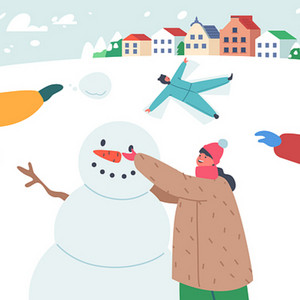
This December, northern China is turning winter into playtime with snow holidays for students.
Beyond sledding and skating, these short breaks aim to get kids moving, boost winter tourism and jumpstart local spending.
Governments are sweetening the deal with travel programs subsidies, extra transport and big marketing pushes.
But the move isn't just about fun in the snow.
There's a bigger strategy at work, and we're talking about it today.
So to start with, they're having more holidays.
Seriously, on Roundtable, we've talked Here in China, we already got summer holiday.
We got winter holiday.
We have spring and autumn holiday in many different schools.
It's not long, but it's an extra holiday.
Now they're getting more holidays?
Yes.
Starting this year for cities, for example in Alitei and Wurumqi in Xinjiang, they announced the local snow holidays for about five days.
Oh.
And from Monday to Friday this week for primary and secondary students.
And if we add those two weekends before and after these five days, that means nine days off for the students to enjoy snow fun.
And also later within this week The province of Jilin also announced a province-wide ice and snow holiday for all students in this compulsory education from year one to year nine.
And it starts on Wednesday till Sunday.
And also the authorities announced, advise schools to stop classroom teaching and not assign any written homework for the students.
No homework?
No homework, just no fun.
Imagine the happiness of these kids.
I remember when I was a kid, I grew up in Mongolia.
My school holiday is to have one day off and clean the snow on our campus.
Oh yeah, we do that too.
For our campus, right?
You sound like everybody's grandfather right now.
When I was your age...
I didn't have those nine-day snow holidays.
But, as I remember, when I was in school, it was having PE classes designated for snow-related fun on the playground.
We would use the name of cleaning or sweeping the snow on the playground.
But at the end, everybody would build a snowman, would have a snowball fight.
It's a pretty nice time.
It's not a holiday.
It's not a holiday, not as nice as a holiday, especially if we look at the details of the holidays, of what local governments are doing with the tourists, with the destination, with all the activities and fun.
Yeah, this is exciting.
I mean, for young students, this is new.
This might be the single greatest moment of their life.
So far.
That's jealous talking.
Some of the things that are happening.
There's going to be a lot of subsidies in place for students to take advantage of.
A lot of different ski resorts and skating rinks and different tourist attractions.
They're offering time-limited free entry, or free two or three hours, up to two or three hours of some sort of ice and snow experience for students.
They have to bring their ID to prove that.
That they are a student, of course.
The officials with the Tourism Authority in Urumqi.
They said six major ski resorts there's a bunch of them there that will be offering free ski passes for all primary and secondary school students all across Xinjiang.
So it's just a great opportunity for kids.
It's going to be really, really popular.
Those ski resorts are going to be crowded and also parents.
Parents can also receive like discounts.
For example, some are up to 30 off.
Um, if they are also, they need to take the kids to these ski resorts and skating rinks and also they they can enjoy.
There are also, you know, subsidies when it comes to restaurants.
They can have like a 20 discounts over meals or in supermarkets, And there are also tours and activities incorporating local cultures.
For example, in Wunmenqi they launched a tour about their local numbrate so that children, who are maybe students, who are not really into skiing or skating or they're tired of, you know, skiing for three hours, they can also learn a little bit about their local culture as well.
So it's It's a whole bunch of deals.
Feifei mentioned Jilin.
In Jilin on the 3rd of December, which is the first day of their snow holiday.
Meihekou, which is a city.
The education authority in that city has organized the 3000 primary school students.
They get into a ski resort.
They can experience three-hour skating free of charge.
And the resort decided to temporarily having four routes as the students teaching and experience area.
They have actually also located 120 trainers with the students to make sure they're safe.
Give them free classes.
And, according to estimation, it takes around 180 yuan for the equipment and 120 for students, the trainers.
So each student the cost is supposed to be around 300 yuan, yet all of it is covered by the local government.
The parents only need to pay for 10 yuan as a insurance fee for their kids.
I am so jealous right now.
It's a lot of kids too.
And I'll tell you, it's going to cover 730,000 students alone.
Yes.
And in Changchun, they're covering, well, I'm only naming specific cases.
I'm not saying only these 3,000 students in Jilin are enjoying this.
It's just, this is one of the campaigns.
Right. they're doing.
And in Changchun they have also arranged.
Well, they've decided one of the ski resorts in Miaoxiangshan.
They decided to make sure that all the tickets are free for these students in the compulsory education period of time.
And the parents who are going with the kids can also enjoy a 30% discount.
And in the very first day they have welcomed 270 families, which is a 25 compared to previous year.
Previous year, it was a good year for them as well.
So they are really, really...
Both the resorts, the ski resorts, the destinations, the students and parents are enjoying this.
And I am the only person who are discussing this and feel happy for them but kind of want to do the same thing.
Well, also, if we consider that the snow season has just started.
A lot of the ski resorts have just opened this year.
A lot of analysts say.
Maybe more northern cities in China will have similar snow holidays for these young children in the future.
The announcements that came late November in Xinjiang the searches and bookings for ice and snow tourism products for that region.
I love the quote rose significantly.
Yeah, I bet it rose significantly.
Immediately, probably up like 30,000 percent or something like that.
Airlines, too.
And this is kind of an interesting little side note to this is that Yeah, you've got the people from those regions who want to stay there and take advantage of the snow and the ice and the really wonderful culture that they have to offer.
Then there's the people who live there and think yeah, this is my chance to get some warm sun actually.
Yeah, and travel out because bookings on flights departing Urumqi and Alte they increased by 51 and 99 year on year respectively.
Young travelers there are becoming the main passenger groups.
So, yeah, this is affecting more than just one region, I suppose.
If we're talking about 90 off, why not take the whole family out?
You know, travel to different cities or different provinces, experience in different cultures.
That also makes sense, too.
But back to snow and ice activities.
I remember in 2020 when we first talked about bringing more than 800 million people to ice and snow related activities.
At that time, we were discussing building ice tracks in southern part of the country, which is doable.
And they're finding not only economic ways, but also environmentally relatively speaking environmentally friendly ways.
We're talking about bringing kids to snow, but we're also discussing that, at that time, snow-related sports skiing, skating and also snowboarding these are still considered something that are relatively expensive.
Not all the families can enjoy it, especially skiing, because it would mean that you have to travel to ski resorts not only.
Not to speak about the gadgets, the trainers and the food the food and the fact that if you are really into it, it you have.
You will have to do it again again every year.
But now, seeing all these new policies, seeing the um, the dedication of bringing kids closer to the sports, it's not about giving them the opportunity to do it every year free of charge.
It's about opening a window to the young kids and this is one of the reasons that they've done this is that it gets the kids out there.
It gets them moving their bodies, exercising a little bit, but also the cultural experience related to sports when it's done in winter in certain regions.
And this is good for the kids' well-being.
It's about exercising yes, but you mentioned too Fei-Fei, that there's cultural knowledge to be learned there.
And the break from school is It's designed to to allow local education departments that have emphasized no classes, no homework.
It gives them a break as well.
Yeah.
And also when we're talking about you know cities and places offering these kind of snow holidays to students.
Their local culture has this snow and ice element in it.
For example in Altay, is one of the earliest places in China not only in China, probably on the earth to have people skiing in history.
And it's very important.
It's the chance for these students to really experience and learn this part of local cultures.
And also, for example, in Jilin, where they also they're offering activities like ice fishing, which is also a big part of a lot of ethnic groups in the province of Jilin as well.
So it's not only about you know getting sporty, which is important, of course, but it's also about getting to know your local cultures.
By the way, if you're in Altai and you're interested in it, there are already 50 different types of free bus shuttles between the city center and the ski resorts so that if you're a student, if you are going from your home to, you know, enjoying a little bit of skiing, free shuttle for you.
Is there any thought you mentioned it just kind of as a joke a few minutes ago, Nyonglin about you know more vacation days for the kids really.
Is there any thought that this might be a little bit too much?
Because for the parents, I think I read that the companies that they work for are encouraged to allow them to take paid time off to go work with the kids.
But yet still, you know, from a parent's point of view, they still have to organize and, you know, get everything paid for and get the accommodations all set up.
Is there any thought that this might be a little bit too much?
That is a very valid question.
But I think we had the similar conversations yesterday. several months ago.
That is when the autumn and spring and autumn break was first announced in different places.
But that was in other majorly other provinces, majorly in the southern part of the country.
Many provinces decided to have those kind of breaks because it's only three to five days.
And it's the similar occasion here for the snow holidays.
It's only five days.
So to be honest, it does not affect the academia performance of kids that much.
It gives them an opportunity to enjoy life, to experience a bit more, to spend time with family.
And at that time we also worried for the parents a little bit, but apparently it has been a great success.
And I think that successful example has also pushed a little bit for this winter, or to be more precise, snow holidays, in the northern part of the country as well.
And for the kind of families that really couldn't take their kids to these places.
It's It's still not mandatory.
It's not saying you have to take your kids to ski in those days.
Well, and also I think he addressed a key issue that's been talked around China for many years now.
It's about the length of holidays. throughout the year.
In China, the only two long public holidays is around, one is around the National Day holiday.
The other one is around the Chinese New Year.
And each of them is about a week long or sometimes longer than a week.
And that is basically the only time that a whole family can really go out and have a truly day off at family time together.
And that leads to problems like crowding, like burdens on infrastructure, like transportation systems.
And now, since then, a lot of not only people but also experts been calling for.
You know, we need more holidays.
Flexible holidays.
Yeah, so that people can take time off as they want, so that not everybody is crowded within those two.
You know, week-long holidays only.
I've only been in China for a year.
I don't care how many holidays you introduce.
Those crowds are not going to disappear during spring festival.
Who are you trying to kid?
No, they're not.
But with kids enjoying their autumn and spring and autumn holidays and also snow holidays, they will
Oh, and if you notice what Fei-Fei said, these provinces are giving these days off in different time slots, making sure that first grade, second grade are enjoying their holidays separately.
So it's not overly crowded, at least during these kind of holidays.
That's smart, actually.
Yes.
And, if you think about it, adults here.
We do not enjoy really a summer holiday or winter holiday, but we take our annual leaves within the time that we want.
It's our own decision, but kids are not enjoying the same kind of freedom.
So giving them some holidays that are, you know, only theirs could be also a good idea.
Yeah, that's the conversation that my parent friends always share is that when your kids entering primary school, The only time that you can have days off is either in summer holidays or winter holidays, because there is no short breaks during a school semester.
You can't just go out and enjoy your time alone and teach the kids at home studying.
And now some of them do.
And hopefully they will be able to enjoy the snow holidays to its fullest.
You're listening to Roundtable coming up next.
Have you stolen some sugar crane?
Don't go away.
Looking for passion?
How about fiery debate?
Want to hear about current events in China from different perspectives?
Then tune in to Roundtable where East meets West and understanding is the goal.
It's Roundtable with myself, Niu Henglin, Steve Heatherly, and Fei Fei.
Remember the old steal the vegetables game from over 15 years ago?
Yes, that was an online game you enjoy with your social media friends, with your virtual farms.
Now, the fun has made its way into real life.
Recently, a farm in China transformed its sugar cane field into an interactive game center where visitors pay a small fee to, quote-unquote steal the sugar cane.
What started as a quirky marketing idea has now turned into an almost nationwide trend, with sugar cane fields, orange groves and even apple orchids jumping on the bandwagon.
But what's behind the crazy popularity of this?
I'm really curious.
How do you steal stuff when they know you're stealing stuff?
Well um, you know it's a game center, it's like a lot of the escape room.
You sort of have these um people, npc characters, who play the the the, i don't know, the sugar cane guard yeah, the guard and to trying to catch you and you play the thieves who are sneaking into the fields in the middle of the night and trying to cut down those sugar canes and take it away in in the midnight.
Well, actually a lot of these games quote unquote started at like 3 am.
Yeah, the first person to invent the steel sugar cane event was a person by the name of Wang Yonglong, who was a university graduate.
And he went back to his hometown, which is in Zhejiang province.
And he wanted to start a business.
So in October of this year, while he was recommending the sweet sugar cane that he grew using rose enzyme fertilizer online, one netizen commented, recalling the fun of stealing sugar cane as a child.
This is where this idea came from.
And Wang was inspired by this, so he set up a sign at the edge of his field that read Steel Sugarcane Area with the details that said Self-Service Sugarcane Theft 7pm to 5am 18 yuan, or about 250 per stock.
Eat all the sugarcane you want.
And then after the sugarcane field was completely stolen...
He raked in over 40,000 yuan or about $5,660 in quote-unquote stolen funds.
So previously, I go to a strawberry field.
I pick my own strawberry while eating them while I was doing it. and pay for it.
And now not only do I have to harvest my own fruit that I want to buy, I also have to steal them.
So it's like hide and seek in the middle of the night and also fruit picking.
Yeah.
All together.
All together.
That's a lot of fun.
Now that Mr Wong's idea was like basic level compared to what followed, because after that more and more sugarcane fields across the country started to transform into sugarcane stealing zones and other growers started adding new elements like
Dogs guarding the fields.
Or NPCs, non-playable characters, catching the thieves.
Performance, turning it into a performance for the caught thieves.
They would tie them to a utility pole, maybe taking it a bit too far and making them shout out.
I promise I won't steal again similar to the steal the fruit activities that popped up across the country in other spots.
Yeah, particularly in one sugarcane field in Meishan, Sichuan province.
The owner not only set up this sugarcane stealing area, he also started live streaming online and live streaming the thief catching activity.
That's also another recommendation from his comment section as well.
So if there is a demand, there is a business.
And so some thieves started to post their theft vlogs on those fields as well.
And that's why it got all the online sensations from here that people started to think you know, old time old, good time flushing back of the happy farmer games that used to be so popular in China.
And for those of you who are not familiar with the happy farmer game it's you have your own virtual farm and you well, at a certain time, your fruits and also the vegetables and everything in your farm would ripe.
And after they're there, we're ready to be harvested.
You can harvest them.
So as your friends who are playing the same game and they can steal from you, it started as something well, quote unquote steal.
They can harvest the fruit that you grow.
And the popularity of it is was partly because of the thrill of getting a lot of harvest that you didn't really sow and water and fertilize and everything.
And another is having a conversation with your friends, compare each other's farms.
And I think it's similar here with the real life stealing sugar cane game.
That is, once it's trendy, it's kind of like something that you have to try.
It's kind of gamification.
It's just turning it into a fun activity as opposed to just pulling up roadside and going in and getting some sugar cane and back to your car.
It's kind of genius because it's trending on social media.
People are taking pictures and talking about it and it's a safe kind of fun, a little bit thrilling activity.
Kind of like paintball in a sense where you don't want to get shot, but it's part of it.
You don't want to get caught. during your sugar cane quote unquote theft, but it's part of it.
So you get the energy up, you get your heart pumping.
It's really quite fun.
I think really smart.
And also an opportunity for friends to get together.
How about stealing some sugar cane today?
That's a fun conversation.
Here in China, young people create fun new games all the time.
On Roundtable we talked about the modern-day hide-and-seek, but playing cat and playing mice kind of game in public places.
We talked about getting a whole bunch of stuff in the supermarket and put a time countdown to see who can return all the things to the right spot first, the fastest, as a competition.
And all these games are well.
Some of them are a fan.
Some of them would only stay for a while, but I think they show the fun things or the fun ideas young people are having at this period of time.
Totally harmless too, right?
Totally harmless.
You're listening to Roundtable.
That is the end of it.
We'd love to hear your thoughts on today's topics.
Leave us a comment or send us an email to roundtablepodcast at qq.com.
I'm Yeho Lin with Fei Fei and Steve.
Thank you for listening.
Bye.