Discussion keeps the world turning.
This is Roundtable.
Hello everybody, welcome to Roundtable.
Coming to you from Beijing.
I'm a young, good to have you join us on today's show.
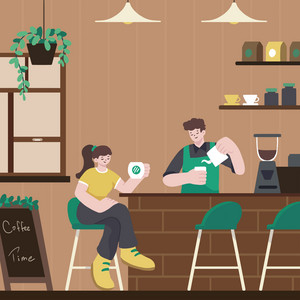
Brace yourselves coffee lovers as China's coffee industry is brewing up a storm of epic proportions.
What was once a niche market is now a full-blown caffeine craze with coffee shops popping
up like mushrooms after a rainstorm.
From artisanal roasters to international giants, everyone wants a piece of the action.
We take a look at the competition as fierce as a triple shot of espresso.
And we're all yours for your burning questions and epic stories.
Grab your smartphone and record a voice memo.
And let's make on-air magic.
Since you're fast to EZ, FM, Roundtable at Foxmail.com, you might just steal the spotlight
and are next hard to hard.
For today's program, I'm joined by Yushun in the studio and Steve Hathorley also in the
studio.
First on-it-a-days show.
With a market worth hundreds of billions of yuan and an ever-growing army of caffeine connoisseurs,
China's coffee industry is hotter than a freshly pulled espresso shot.
From trendy cafes to innovative brews, the country is quickly becoming the center of
a caffeinated revolution that's leaving the world wide-eyed and buzzing with excitement.
Recently, World Coffee Portal pointed out that China has surpassed the United States
as the world's largest branded coffee shop market by outlet count.
With nearly 50,000 branded coffee shops as of 2023, a 58% increase from the previous
year.
However, this rapid growth has also sparked concerns about profitability and positioning.
Some grown brands are launching new strategies to capture market share, while international
players are increasingly localizing to penetrate the market.
So let's go to Yushun.
What is the current lay of the coffee land in China?
First of all, I think we can see people nowadays are having more requirements, I would say,
on coffee, different types, different ways of drinking it.
The development trend of the Chinese coffee market is increasingly diversified and personalized.
Consumers demands for coffee quality, taste, origin, and other aspects is growing.
For example, there is a leaning towards increased demand for RTD, ready to drink coffee according
to a consumption report conducted by e-commerce platform JD.com.
The top five coffee categories by sales volume are instant black coffee, coffee beans, coffee
liquids, drip coffee, and coffee capsules.
And we can see data from iMedia research shows that the proportion of customers consuming
coffee daily reaches 21%, nearly 60% of surveyed consumers purchase coffee every week, while
only 1.6% of consumers rarely drink coffee.
I am not a coffee drinker.
Not at all.
No, because I am not very tolerant with caffeine.
So yeah, that is not my thing.
So no soda, no cola, nothing with caffeine in it?
So nice, fine.
I think.
And also tea has caffeine in it as well.
People don't know that.
I feel like people don't realize that.
Well, in China, which is a huge nation traditionally drinking tea, now switching to coffee for
some people at least is kind of a big deal.
And Steve, you have recently moved here from South Korea, and I heard that is a huge
country of coffee drinking.
It's a massive, massive coffee market in Korea.
You could say it's almost saturated, I think.
If you walk down the street in Busan, where I lived most recently, or a soul where I
lived for 20 years, I mean, you can't turn around and not see a coffee shop somewhere.
And I'm learning now that I've moved to Beijing and the area where we are.
It's not exactly the same and it's a growing market here, right?
I had to look around to find a coffee shop a little bit.
Yeah, in Busan.
In Busan, I don't think she is anymore, but I think at one point there was a woman there,
a barista, she was the world coffee champion.
So there's a street in Busan that's dedicated to coffee shops and bakeries and things like
that.
It's a big market there.
In Shanghai, actually, there is this street, Hangshanglu, which is known for coffee shops.
And it has boasted this reputation for many, many decades.
And when you've got a whole street of all kinds of artisanal coffee shops, and actually
the corporate brands, the chains are kind of like social pariahs there.
And you've got to be like, you've got something special to offer.
And also the decoration and that chilled vibe, but also kind of refined chilled vibe.
You know, those things really attract people who are looking for that.
Because it's become part of the, or it's becoming here, I guess, now part of the culture
in a sense of like, it's not just the coffee itself, right?
It's like the social representation in that moment.
And that's a big thing in Korea too, right?
It's like a long time ago, buying a coffee that costs, you know, four or five dollars
US for a cup of coffee is quite expensive, isn't it?
So it became like a social statement about, you know, here I am.
I've got this fancy cup of coffee and then social media.
I've combined that all together.
And yeah, I guess we're seeing that growing here now.
What you talked about that I thought was interesting though.
When you ranked the top five most popular, instant black coffee was number one.
And then black coffee beans number two coffee liquids drip coffee and coffee capsules coming
in last coffee capsules are a booming market as well.
But still here in China, instant black coffee is the top of the list.
But also I actually have a bone to pick here because that survey was conducted by an e-commerce
diet.
So therefore if the figures are accurate, then it only captures the online market.
But of course with coffee drinking, there's a huge
offline market.
And I used to assume, because this is what I've been hearing for a decade, I suppose,
that the go to coffee option for people setting foot into a coffee shop is latte.
Oh, really?
And in Chinese it's called not here.
Like sometimes people don't even necessarily know if you're like a first time drinker.
What exactly that is.
Okay.
But it's like, yeah, that's a safe option.
Oh, interesting.
Yeah, because it's less better, you know, with the dairy content in it.
It's just better for the stomach.
That's how Canadians drink coffee typically too.
Have you ever heard of Tim Hortons?
Oh, it's here.
Oh, it's here.
It is here.
Oh, I've got to bring you to one.
Yeah.
Gee, I know where I'm going after the show today.
The iconic red leaves brand red.
Yes.
Okay, so you know what Tim Hortons is.
Have you ever heard of a double double?
What is that?
Okay, so when you go to Cannada next time you go to a Tim Hortons coffee shop, tell them
you want a medium double double.
So the way it goes when you order, first you say the size, small, medium, large, and then
double cream, double sugar.
So your amount of cream comes next and then your amount of sugar comes last.
So medium double double means medium size to creams to sugars.
And that's how people where I'm from, everybody drinks their coffee like that.
It's too sweet, too sweet.
Yeah, I can tell.
Yeah.
Indeed.
I think that so much is happening within this domestic market.
And well, you shouldn't probably defies the common perception that apparently it's the
Gen Z as well as millennials that are shoring up vastly of this domestic coffee market.
Actually before we started recording, we had a little conversation that Steve saying that
it's a little bit hard to find a coffee shop around here.
But I would say maybe that's because some of the brand positioning of a lot of these
Chinese coffee brands are based on a lot of these, I would say business buildings or in
office buildings because they are located inside of the building.
It's hard for you to look at them outside.
So they're targeting office workers.
Yes.
So they go down for their morning break or maybe after lunch.
So they put them in the office buildings to make it convenient for them.
Yes.
Makes sense.
Yes.
And that is why actually we can see that the number of stores of domestic coffee stores are
actually increasing and rapidly increasing brands like Luckin coffee, Caughty Coffee have
adopted an aggressive expansion strategy opening thousands of stores, particularly in these
where we set high traffic areas such as office buildings, commercial hubs to cater to these
busy professionals or office workers.
So we can see that in China, domestic coffee brands, according to data released by World
Coffee Portal, the number of these brands outlets approached 50,000 in 2023 as Koyang said,
with an annual growth rate of over 58% and the growth of China's coffee market is driven
by the rapid expansion of these domestic brands.
So much so that these domestic brands are taking over international brands in terms of
market share in China, right?
I was reading that in 2020 Starbucks had a 16.2% of the market share and then in 2022 that
dropped down to 13.6%.
And then Luckin, you just mentioned that domestic brand, right?
Their share was 3.3% in 2020, in 2022 that jumped to 9.1%.
And in 2023 they overtook Starbucks to lead China's coffee sales.
So I think consumers here may be, I'm speculating, in the beginning when coffee started to grow,
they go with brands that maybe internationally they recognize.
But now, maybe consumers are more familiar with quality, more familiar with taste.
And I'm guessing more familiar with price now to international brands tend to be more expensive.
That's also I think another scheme or strategy of a lot of these brands.
They are promoting or introducing a lot of these campaigns with, you can buy one cup of
coffee for only 9.9 yuan.
That's about 1.4 dollars.
So a lot of daily office workers will just go for it and they taste really good.
Yes, I think both of you raised some really good points in explaining the situation.
But this ruthless price war is something we can discuss, whether it's a good thing for
the industry or not.
Because we're also seeing that it was a little bit of a surprise for some people that Starbucks,
well, when we talk about coffee, corporate expansion, I guess you just cannot leave that
name out.
Sure.
But started a lot of the coffee chain scene in China.
And I still remember in the early 2000s when I visited for the very first time the first
Starbucks store in Beijing, it was phenomenal.
Yeah.
Because we've never seen anything like that.
And the green mermaid, what a great logo to have.
It was so new, so fresh and it's exotic.
And then we're like, what should we water?
I was still a kid back then.
Oh, my parents allowed me to drink coffee.
When you were at that young, it's not a thing here.
It's not a problem.
Starbucks stores I looked it up in 2024.
In America, 16,346 stores.
Guess which country has the second most number of Starbucks?
Korea?
China.
Oh, wow.
6,804.
Korea's number three, as a matter of fact, with 1,870.
But that's not even closed.
So China's the second most populated.
That's the right word to use in terms of Starbucks stores around the world.
So it started not so long ago.
Obviously, they found success here.
Yes.
And now I think it's going through some of this, well, maybe it's midlife crisis or a certain
kind of pain.
After some years of growth here in China, because certainly what we heard recently is that
it's been churning out all kinds of coupons to try to bring the price down.
And that was a little bit of a surprise for people.
Also, there are some online videos that attract tens of millions of views and discussion
about how the company's service might not be as good as it used to be.
I saw that news where a young woman was in there and she was asked to leave because
she didn't order a coffee immediately or something like that.
And this kind of thing really catches fire on the internet.
So yeah, do you think this is a lot to do with this price war that has been taking place?
And I guess just really fierce competition that comes from the homegrown competitors as
well.
I think it's just something that naturally happens in business, right?
Starbucks is a brand that it's a premium brand.
So you're going to pay more for a cup of coffee there than you will somewhere else.
And when they come into a new market, then I think you're going to find success immediately.
When local brands start to catch up and then they start to become competitive and people
realize consumers realize, oh, I can get a good quality cup of coffee at a local brand
for half the price.
Then that's another development in the market.
Then there's another development.
When those domestic brands, they start battling with each other too.
So in Korea now, they have to come up with different ways to attract customers.
One of the ones that comes to mind for me, it's called mega coffee.
And you pay like, I think maybe $3 or $2.50 and you get a liter of coffee.
Can anybody sustain themselves?
I can drink that.
Oh, wow.
No problem.
Give me an hour.
But that's what brands have to do is come up with different ways to remain competitive,
not only with the major brands like Starbucks, but also with the local smaller brands that
exist in the country as well.
And in China, I've seen a wide variety of different types of coffee shops targeting different
scenarios of customers.
For example, there are the rather fancy type that expect people to come in and sit down,
maybe talk business.
I remember there was a time when you go into, okay, this was a Starbucks experience, but
I remember it was so noisy, a lot of people just making deals in the coffee shop.
And then it was like, it didn't mean to eavesdrop intentionally, but I heard like, I was
like, is this real?
Like people saying, oh, you know, I'm signing off this like 100 million yuan contract with
this company or whatnot.
And then, you know, like that was a place where people meet up and also conduct English
tutoring.
Yes.
What?
I was like, you've seen that.
Yeah, right.
Why in a coffee shop, you know, like shouldn't it be, I would like it to be quieter, but it
was really busy.
And so it's like a meet up place.
Anyhow, some of these domestic companies, they've set it up as maybe a fancy place, maybe
a place where to set up deals, or maybe they don't even have a seating area.
This is a place that people come over and place to order or everything is just conducted
online.
And then the coffee is delivered to you.
So yeah, I think these international giants, they're up against competition because the
local companies really know their customers really well.
Yeah, I think that has something to do with their brand positioning, just like what we've
been discussing when Starbucks first entered China back then, I think the average monthly
salary of Chinese people back then was only hundreds of yuan.
And one cup of Starbucks were causing like maybe 40, still 40 yuan.
And that's I think making a lot of people thinking that, okay, the positioning of this
brand is being like that.
And if I am the one who is drinking this type of coffee, I am the one who is discussing
a million dollar business over there.
That's why I said it's like a social status when you hold that cup of coffee and you take
that picture and you put it on social media.
It's not just saying I'm drinking a coffee right now.
It's saying I can drink this coffee right now.
But that's changing.
There's more competition and it's better pricing.
Now you talk about price wars.
I don't see it as a consumer.
I don't see any problem with these price wars at all.
Keep them coming, please.
I mean, the cheaper the coffee gets as long as it maintains its quality, then I'm happy
with it.
Also, with coffee, this is an interesting case study because apparently the added value
to the final price tag that we're paying for is huge.
The profit margin is huge because actually making a cup of coffee is dirt cheap.
Do you know if you get a takeout coffee, do you know the most expensive part of that for
the coffee shop?
Is it the packaging?
The cup.
The cup's the most...
Yeah, that's according to a friend of mine who owned a coffee shopping career.
The coffee is not expensive at all.
It's like beer, right?
Beer is not expensive to make, but it's expensive when you buy it and that's why they make a lot
of money.
Yeah.
But also, considering that we're talking in 2024.
Now, I do have the question of we've seen that the price for coffee beans have risen significantly
because of climate change and all these different factors.
Yeah, so I wonder what that's doing to the coffee industry.
I've read this report saying that for the international players of coffee chains, then
they manage to stock up months if not a year of coffee beans ahead of time.
So they're not feeling the Brent immediately, but for smaller players, like the mini-artisanal
coffee shops that we're talking about here as well in the Chinese market, then they're
going to feel that the price, the cost is rising.
And hopefully that is something that the businesses can manage.
Well, hopefully the weather doesn't change so much around the world that producers, the
biggest producers of coffee beans in the world have to relocate.
If climates change, then those beans won't grow in the same places, right?
So that might affect prices as well.
But I guess that's probably a different topic for a different day.
Yeah.
And also, I think that is why a lot of people saying that these kind of price war may be double
edged because for a lot of these big brands, maybe that not affect them very much.
But for a lot of consumers, they think, okay, the coffee can be a price like 9.9 yuan.
And then why am I buying another low-cost, small little boutique coffee store for a fancy
experience when I can get one with a cheaper price?
So I think lower price strategies have indeed attracted a large number of consumers in a
short time and it can drive rapid sales growth.
But on the other hand, the ongoing price war thing has continuously squished profit margins,
even leading to some losses of a lot of these, no matter its coffee brand chains or local
coffee brands.
Yeah.
And actually looking at across the board in various sectors and areas in China, we've seen
how these really brutal price wars could really put the smaller players in some big players
too out of business.
Oh, yeah.
Right.
So my comment before was from a consumer's point of view, right?
The cheaper it is for us, the better if the quality remains the same.
From a business point of view, I've seen it firsthand in Korea because it's such a
such a popular part of the culture that people want to get involved in the business, right?
Young people will take classes or go to school and figure out how to become a barista and
then open their own shop.
That's wonderful.
But the hard part is that when the market gets saturated, then how do you survive?
Yeah.
Because you have to pay rent in your building for your space, you have to pay your employees.
And then the markup on coffee is only so much that you have to sell a lot of coffee to
make a lot of money.
Right.
And you mentioned something interesting about young people getting the proper training,
a proper education in brewing coffee as well as the certificates.
This is happening in China as well as more people are attending what's called the coffee
academy.
Right.
A lot of people attending these coffee academies for various reasons.
We can see including the desire to become a barista or to open a coffee shop by themselves.
We can see owning a coffee shop might be a dream business for a lot of young people, I
would say, because back then when I was in university, a lot of my classmates are saying
maybe in the future when you don't think about all of these income or your work status or
something like that, what kind of job you would do?
A lot of people would say I would like to start a coffee shop in a remote area which can
just satisfy the daily necessity that's enough.
That's one thing and also simply to gain a depreciation for coffee.
That's some of the reasons that a lot of people or more people are attending these coffee
academies.
I like to see what you have to say about this, Steve.
Instead of pursuing a traditional type of employment such as working for an established company
or whatnot, how do you view the trend among young people of wanting to start their own
coffee shop or milk tea shop as well?
That's super popular as well.
There's something romantic about that, isn't there poetically romantic?
You have maybe your LP player, your record player, you have some books on the shelves, maybe
some board games, you have a cat or a dog walking around freely.
You've got that aroma of coffee in there.
It's very, very attractive.
What do I think about it?
Well, it depends on how you want me to answer that question.
If that's the young person's dream, then I say go for it.
You have to be aware of the fact that it's going to be in China.
It's probably going to get more and more competitive in other countries.
It's already competitive.
The chance of success is maybe a little lower than you might think, but that's true for
the restaurant industry as well.
To answer your question, if that's what you want to do, then go for it, I say.
As a Chinese person who's been watching this, I guess just general market for some time
more than a decade, I think there's something interesting of a sentiment shift.
Maybe I remember interviewing an entrepreneur who's a successful businessman from Taiwan
a few years back.
At the time, here in China, people talk about the grueling, working hours and then young
people throwing everything back behind everything into their hard work in a huge tech company.
They manage to acquire shares and stock options or whatever after some time and boom, boom,
boom.
That was sort of the sentiment at the time.
Then he was like, look at these young people, imbaging Shanghai in these places here.
They are the hard working people.
The future belongs to them.
Look at the young people back home in Taiwan.
Their whole dream mounts to opening a coffee shop with a cat that wanders around.
What kind of dream is that?
Isn't it a little bit too small?
I just find it fascinating because I think now maybe as the economy develops to a certain
level, a certain stage, people sentiment change.
Maybe it's not about chasing after the big dollars or yuan signs anymore.
Maybe this is about how can I slow it down a little bit?
If I can have a say in my own life and my own career and not always answering to the big
man upstairs and maybe the new round of investment.
Following what you want to do as opposed to what you think you're supposed to do or what
society thinks you're supposed to do.
Maybe that's happening too.
I'm sorry.