Get the unmissable news stories of the day.
This is the beijing hour, examining the events that impact and shape china and the rest of the world.
This is the beijing hour one hour of news and information brought to you every weekday.
Now here's your host, shane begum, with you on this monday, january 19th 2026.
You're listening to the beijing hour coming to you live from the chinese capital.
On today's program, chinese officials have outlined the country's economic outlook for 2026 and say last year's gdp met the target of five percent.
Relations between the us and europe continue to sour over the greenland issue, with both sides considering tariffs, and syria's interim authorities and kurdish-led forces have signed a new ceasefire and integration agreement.
In business, china's industrial sectors recorded strong growth across numerous sectors.
In sports, a young Chinese tennis player records her first main draw win at the Australian Open.
In culture and entertainment, treasures from two ancient shipwrecks are on display in Beijing.
Now checking the day's top stories.
Officials say China's GDP last year grew 5 to over 140 trillion yuan, or around 20 trillion US dollars, meeting the annual target.
The announcement came as the National Bureau of Statistics outlined the country's 2025 economic performance and its outlook for the year ahead.
Wang Mengjie has more.
Despite external shocks and domestic challenges, China's gross domestic product, or GDP, surpassed 140 trillion, or about 20 trillion US dollars, in 2025, marking a 5 increase year on year.
So what are the facts behind these figures?
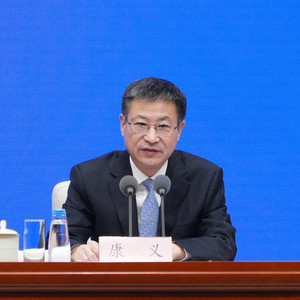
Kang Yi, head of China's National Bureau of Statistics, explained why the data pointed to the resilience of Chinese economy.
China's GDP exceeded 140 trillion yuan for the first time in 2025, while foreign exchange reserves topped 33 trillion US dollars.
For a super-large economy like China, achieving such stable development is by no means easy.
Facing mounting uncertainties.
Kang said China remains committed to a path of high-quality development, accelerating the shift from old to new growth drivers, while deepening reform and opening up.
New growth drivers have continued to strengthen.
The World Intellectual Property Organization ranked China 10th among the world's most innovative economies, up one place from the previous year.
Amid intertwined risks and challenges.
Kang said China's economy has achieved both a leap in quantity and improvement in quality.
This fully demonstrates the Chinese economy's ability to adapt and break through unstable and uncertain environments, as well as its resilience in withstanding pressure and stress.
China's growth rate now ranks among the high list of major economies, making it one of the most stable and reliable drivers of global economic growth.
Its contribution to global growth is expected to reach around 30%.
Despite the challenges ahead, Kong said China remains confident in its ability to sustain high-quality economic growth, bringing new opportunities and positive momentum to the global economy, as it works toward a strong start to the next five-year plan period.
That was Wang Mengjie on China's economic performance in 2025.
Well, this year marks the beginning of China's 15th five-year plan period.
Aaron Liu has more on the essential policies for the country's future economic development.
The fourth plenary session and the Central Economic Work Conference have laid out a clear path for China's future development.
China will focus on innovation to drive new productivity.
Innovation hubs in key areas like Beijing, Shanghai and the Greater Bay Area will lead the charge.
Artificial intelligence will be integrated into industries to boost efficiency.
Companies will gather support they need to become key innovators.
Efforts will also be made to increase domestic consumption and investment.
This includes raising incomes and implementing consumption-boosting measures.
At the same time, reforms will tackle market barriers to create a fair environment.
China will also promote coordinated urban-rural development and enhance regional cooperation.
The marine economy and key urban clusters will be further developed.
On the global stage, China will continue to open up, expanding trade and investment opportunities.
And lastly, new policies will prioritize job creation, especially for key groups like college graduates and migrant workers.
Education and health care will be improved.
Environmental protection and sustainable development will be emphasized.
These meetings have set a clear direction for China's high-quality development.
That was Aaron Liu reporting.
And for more insights on China's economy.
Do Hongyu spoke with Zhou Mi, a senior research fellow at the Chinese Academy of International Trade and Economic Cooperation.
China's GDP grew 5% last year, with the service output rising by 5.4%.
What key factors have driven this performance, especially in the service industry?
And how can the country pursue more coordinated, high-quality development?
For the service industry.
It's a kind of industry which has a lot of relations with different resources, including the software and also the intellectual properties.
And I think that in China, many cities in China are trying to have a better and higher quality development.
They want to use resources not just for the land, for the capital, but also from really the people's intelligence.
I think that is really the reasons why we are seeing our more emphasis are put for a better development of the service sectors, especially in the cities like beijing and shanghai or other are a little bit more developed cities.
We need to have the common willingness or dream that we want to realize.
Like for the agriculture, many people are really want to do it wisely and for the manufacturing, they want to extend or end more elements of the intelligent abilities to the manufacturing.
The coordination between the different industries should not just be separated.
We want to do something with the same goal.
And the second.
I mean we need to develop the certain kind of solutions or possibilities for improving the quality of development for the first and the second industry.
I think that's a horizontal flow of the people to also have a better support for the development of the agriculture and the manufacturing.
Looking ahead to the next five-year plan period, how can China face its major economic challenges, especially amid mounting external pressures?
The world is changing very quickly and we are seeing that artificial intelligence is one of the primary technology which is shaping the world.
The ways of the people doing abilities with each other, the ways of the peoples creating their own advantages.
I don't think that we can change the other countries' behavior, especially when they are just trying to benefit from their own attitude, like the pro-technism or unilateralism.
But we can just try to make the market kick bigger than ever.
And I think that is definitely one of the very important principles that you can provide the certainties other countries will have.
It depends on that certainty.
There are so many new opportunities for us to discover.
Like, can we just try to transfer from the traditional energy to a new one?
Can we just make the better use of the digital economy to benefit all of us?
I think that we do have so many possibilities.
And based on this kind of concept of a Chinese policy, we can have more friends from all over the world.
Service sectors can do a little bit more to support us to fulfill our targets and others.
That was Zhou Mi, a senior research fellow with the Chinese Academy of International Trade and Economic Cooperation.
A Chinese foreign ministry spokesperson says the country's market offers a major opportunity to the world.
Guo Jiakun made the remarks following a survey by the American Chamber of Commerce in China, which showed that more US companies in China are optimistic about growth in the Chinese market.
Chen Zeyuan has more.
Recently, the U.S.
Chamber of Commerce in China released a survey showing that the proportion of US companies in China are optimistic about growth in the Chinese market.
And the confidence has risen significantly.
Meanwhile, nearly 60 saying they are planning to increase investment and more than half of the respondents saying that they're expected to achieve the growth expected, to reach the profit and also substantial profit last year.
And over 70% are saying that they are not planning to relocate their operation in China.
Guo Jiakun said that this has reflected that China's market is a major opportunity for the world.
And also the US success stories has demonstrated that cooperation benefits both sides.
Develop a stable, healthy and sustainable China-US relations meets the common interests of both countries.
And Guo Jiakun also adds that China welcomes companies from all around the world, including the US, to seize the opportunity lease of China's high-quality development and also to share the super dividends of China's trillion yuan level market.
That was Chen Zeyuan reporting.
Hainan Free Trade Port has witnessed stable performance in the first month since launching its special customs operations.
Duty-free sales for departing visitors climbed nearly 47 to over 48 billion yuan, or 690 million US dollars.
Passenger traffic through airports in the southern province surpassed 310,000 arrivals.
That's up nearly 49%.
Customs procedures have been streamlined, with import declaration items reduced from 105 to 33.
It's facilitated 750 million yuan of zero-tariff imports, such as crude oil and medical devices.
More than 5000 new foreign trade enterprises registered in the port over the past month, a figure roughly equivalent to the total number registered in the entire fourth quarter of 2024.
Sunday marked one month since Hainan Province launched its special customs operations, scrapping tariffs on most imports to the island.
Authorities say the move represents a major step in China's continued push for high-level opening up.
Beyond goods, a record number of foreign travelers are also arriving at the tropical destination.
Chen Mengfei has more.
What used to be a 30-hour marathon is now just a 13-hour direct flight.
We are from Czech Republic.
We came here from Prague.
It was the first direct flight from Prague.
While much of the northern hemisphere is in winter, the tropical city of Sanya offers a warm escape.
This is our family's first time in China.
What we want the most is to go to the sea at Yalong Bay.
I'm happy and feel very warm right now.
Tainan has one of China's most generous entry policy, granting visa-free access to citizens from 86 countries.
The ease of travel is already turning many visitors into repeat travelers.
We arrived a second time in Sanya.
It's very good, very beautiful.
Its food is very delicious.
Nationwide, more than 70% of foreign visitors enter China visa-free.
In Hainan, that number jumped to over 90%, showing the island's particular openness.
Immigration authorities say that in the first month after the special customs operation began last December, inbound foreign arrivals to Hainan surged 60 year-on-year, topping some 70000 visits.
One reason for this growth is the increase in international flights.
Over the last year, Hainan added 22 new routes, bringing the total to 92.
With the implementation of Hainan's island-wide special customs policies and the continued optimization of cross-border aviation policies, market activity has increased significantly compared with the same period last year.
Passenger inquiries and bookings have risen by nearly 20%.
The Kazakhstan-based Scare Airlines operates the route between Prague and Sanya.
This is a rare case of a carrier allowed to fly passengers directly between two foreign countries.
It's the first of its kind in China and highlights Hainan's efforts to open up its aviation market.
To accommodate more visitors, infrastructure upgrades are also underway.
We've added 17 new inspection channels and developed an intelligent inspection assistance system.
This has increased both capacity and clearance efficiency.
Hainan has long been a favorite domestic destination.
Now, with expanding access and air links, its beaches are drawing more international visitors as well.
That was Chen Mengfei reporting.
Coming up, the U.S. and Europe continue to disagree over the fate of Greenland.
You've been listening to programs from CGTN radio.
We invite you to visit us online for more audio pictures and in-depth reports at radio.cgtn.com.
You can access a wide range of programs and find your favorite news, talk features, entertainment shows and podcasts.
Hear the difference with CGTN radio.
Fourteen past the hour.
Relations between the U.S. and Europe continue to worsen over Greenland.
The European Union is reportedly considering over 100 billion US dollars of tariffs or restricting US companies from the bloc's market if US
President Donald Trump's duties over Greenland go ahead.
Washington's allies have criticized Trump's latest tariff threats.
Italian Prime Minister Giorgio Maloney is one of them.
An increase in tariffs for countries that have chosen to contribute to Greenland's security, in my view is a mistake and I do not agree with it.
The intention of some European countries to send troops to take part in greater security should have been understood not as an initiative directed against the United States, but rather against other actors.
The eight European countries targeted by US tariffs affirmed their support for Denmark and Greenland in a joint statement.
They also warned that the US actions risk triggering a dangerous downward spiral in transatlantic relations.
William Denslow has more from Brussels.
In response to U.S.
President Donald Trump's tariff threat.
The Danish Prime Minister, Meta Fredriksen, said that Europe will not be blackmailed.
The US president says he'll impose a 10 duty starting in February that will rise to 25 in June on eight European nations, unless the US is allowed to purchase the Arctic island of Greenland.
The US maintains that it needs the semi-autonomous Danish territory for national security purposes, arguing that fellow NATO allies are too weak to stave off perceived threats.
The European nations of the UK Netherlands Finland Denmark Sweden Norway, Germany and France are included in the tariff list.
In a joint statement, those European powers said they're ready for dialogue, but warned that tariffs will undermine transatlantic relations.
The European Commission president and council president have shared that sentiment warning of a downward spiral should duties be imposed.
The European Union...
The European Union will always be very firm in the defence of international law, wherever it may be and, of course, starting in the territory of the member states of the European Union.
Right now I am coordinating a joint response from the member states of the European Union on this issue.
Ambassadors from the EU's 27 member states have convened to discuss this tariff threat and coordinate next steps.
Several European political parties have stated they'll block a move to ratify a trade agreement brokered between the EU and the US last summer that would remove tariffs on some American products.
But others want to go further.
French President, Emmanuel Macron, is among those calling for the EU to use its so-called trade bazooka in response to these US threats.
The anti-coercion retaliatory measure has never been used and would give the bloc the power to impose tariffs of its own and impose export controls, a move that would likely further antagonize the Trump administration.
That was William Denslow in Brussels.
U.S.
Treasury Secretary Scott Besson says Europe will come around to the need for the US to control Greenland.
The European leaders will come around and they will understand that they need to be under the US security umbrella.
What would happen in Ukraine if the U.S. pulled its support out?
The whole thing would collapse.
That the US Kristen.
To be clear, Since 1980 the US has spent US military spending versus NATO military spending.
We have spent 22 trillion more dollars than the Europeans have.
That we are peace through strength.
And the Europeans now are only trying to play catch up.
And that is only through President Trump.
President Trump believes in NATO, but he does not believe in the American people being dragged in.
Besant also said European weakness necessitates U.S. control of Greenland for global stability.
He said the U.S. will not outsource its national security to other countries.
His comments came as Republican lawmakers scrambled to contain President Donald Trump's threats of taking possession of Greenland.
Disagreements over the territory have deepened the divisions between the U.S. and Europe.
Owen Fairclough reports from Washington, D.C.
Greenlanders united over Donald Trump's threats to take their island by force, backed by European troops deployed to the Arctic Circle Island.
The US president's ambitions have driven transatlantic relations to a new low, with the prospect of some of NATO's founding members fighting each other their alliance, already strained by divisions over Ukraine's future, and now compounded by Trump threatening extra tariffs on eight European nations who oppose him over Greenland.
The most senior Republican in Congress on Sunday tried to dial down the tensions.
I don't foresee military intervention in Greenland.
But ultimately House Speaker Mike Johnson backs Trump's rationale that the US needs the Danish territory for its minerals and location.
Greenland has strategic importance to us because of its geography, its placement.
And Johnson's tone is different from White House Deputy Chief of Staff Stephen Miller's, whose comments earlier this month set European alarm bells ringing.
Nobody's going to fight the United States militarily over the future of Greenland.
The United States is using its military to secure our interests unapologetically in our hemisphere.
Opposition Democrats have rallied behind NATO allies, and they were joined on Sunday by the Prime Minister of Canada, who's had to fend off Trump's suggestion the US buy its next-door neighbor.
The future of Greenland.
Decisions about the future of Greenland are for Greenland and Denmark to decide.
If the Western order appears to be rapidly changing amid this escalating crisis, Trump will have an opportunity to test global reactions to it when he addresses the World Economic Forum in Switzerland on Wednesday.
That was Owen Fairclough reporting.
Lars Christian Brask is the chairperson of the Danish delegation to the Nordic Council, which oversees cooperation between parliaments in the region.
During an interview with Paul Barber.
He said a military confrontation among NATO allies is unthinkable.
We have been an ally of the U.S. in the last two big wars in Iraq and Afghanistan.
We have lost more people per population than any country.
We regarded ourselves as a friend of the U.S.
We thought we were a close ally.
And then being exposed to this kind of extortion and blackmail is sort of...
Shocking.
Is it just though, not the case to face reality now, and that Greenland will indeed need to be sold to the United States, and that a deal is simply going to have to be reached, because surely a military confrontation between Denmark and its European NATO allies is unthinkable?
Yeah, it is unthinkable.
And that's why you're going to see the Congress stepping in.
Uh, the us is not a one-man show.
It's not run by the president alone.
There's checks and balances.
You have the congress with the house and the senate and i'm pretty sure before we even get close to invasion war that would have been, it would have been stopped by congress.
That was Lars Christian Brask, the chairperson of the Danish delegation to the Nordic Council.
This year's World Economic Forum annual meeting begins on Monday in Davos, Switzerland.
The conflicts in Ukraine and Gaza are set to dominate discussions.
The meeting themed a spirit of dialogue, aims to map a way forward in business and politics amid global uncertainty.
U.S.
President, Donald Trump's expected appearance highlights the gap between his agenda and the forum's consensus-driven approach.
Juliet Mann reports from Davos.
This week, two and a half thousand chief executives, heads of state, entrepreneurs and civil society leaders will descend on this Swiss Alpine resort with big ambitions to spark ideas, unlock growth opportunities and renew cooperation on the big challenges the world faces.
And the gauntlet has really been thrown down by President Trump, who will be speaking here on Wednesday, with threats of extra tariffs against eight European countries unless a deal is reached to allow the US to buy Greenland.
And that's on top of the existing tensions over Venezuela, Iran, Gaza, Ukraine.
Can the World Economic Forum offer a guide to the way forward?
The type of collaboration that we're seeing in today's world is shifting.
Multilateralism is facing some headwinds that we see.
But we also see then, other forms of collaboration emerging minilateralism and plurilateralism, and also healthy collaboration within regions.
So that's also something that we're looking forward to seeing dialogue around that.
I believe that The first part of collaboration is dialogue.
That's why we selected the annual meeting theme.
If you're not in the room, we can't have progress.
So I think I am hopeful by the fact that we have these leaders showing up and we're really looking forward to these conversations this week.
There's the longest list ever of world leaders and business titans coming to Davos.
China's Vice Premier He Li Feng, German Chancellor Merz, the UN's Antonio Guterres and the European Commission's Ursula von der Leyen.
And 850 CEOs from top businesses around the world, including NVIDIA's Jensen Huang.
So we will have five themes, which I think a lot of them do come back to this question of growth and prosperity.
For example, one of our key themes is investing in people.
Another one is how do we innovate at scale and responsibly?
Another one is how do we unlock new sources of growth?
How do we deliver prosperity within planetary boundaries?
These are all absolutely key areas for us understanding how we will grow the economy going forward, how we make sure that's also broad-based growth.
The meeting's taking place against a backdrop of eroding trust and historical alliances, shifting markets and rapid technological change.
But this global gathering is set on attempting to rekindle the spirit of dialogue at a moment when the world seems more divided than ever.
It's going to be an interesting week.
That was Juliet Men reporting.
Coming up, Syrian Kurdish officials have signed a new ceasefire and integration deal.
Beijing Hour, your window on China and the rest of the world.
It's 25 minutes past the hour.
The Syrian Interim Authority and the Kurdish-led Syrian Democratic Forces have signed a new ceasefire and integration agreement.
It aims to end hostilities and resolve long-standing security and administrative disputes in northern Syria.
Mihal Bardavid has more.
According to the document published by the interim Syrian government, the two sides the Syrian interim government and the Syrian Democratic Forces, the SDF have come to a ceasefire agreement, an intensive and comprehensive agreement, I might say.
The deal requires that the SDF withdraw to the east of the Euphrates.
Their forces are to be integrated with the Syrian defense and interior ministries.
Damascus is going to take full control militarily and administrative control of key areas.
That includes Raqqa as well as Deir al-Zor.
They will also take control of all border crossings, as well as gas and oil fields in the region, which are, of course, very critical economically as well.
The ceasefire was signed by the interim Syrian leader, Ahmed al-Sharra, as well as SDF commander Mazloum Abdi.
And it comes after days of clashes in the region, including Aleppo, over the last couple of days.
And, of course, tension remains high in the region.
There have been.
Tens of thousands of people have been displaced over the last days and our crews, our local crews in the region have been talking talking to locals as well and they're saying that they're very tired of the fighting and that they just want stability.
The us has been really quite involved and they've been taking a key role behind the scenes with both sides in the agreement going forward.
Us special envoy for syria, tom barrack, has been in constant contact with both sides.
They've been talking in the region.
He's been trying to de-escalate the tension and trying to bring back those two sides the Syrian interim government as well as the SDF back to the negotiating table.
Now Washington has a very unique position here, because the SDF is a key ally for the US in its fight against ISIS, but at the same time, they have been maintaining positive dialogue with Damascus as well.
The US has called this agreement a pivotal inflection point, and the US has described what is called a seamless integration of its historic partner against ISIS into the Syrian state, and that they're looking forward to this.
And this comes after the Syrian interim leader, Ahmed al-Sharra, affirmed that Kurds are an integral part of Syria.
So the United States is going to be trying to maintain dialogue with both sides, trying to keep this ceasefire in place.
Iranian President Massoud Pazeshkin has warned that any attack on Supreme Leader Ayatollah Ali Khamenei will trigger a war.
He says Iranians are facing economic hardship due to inhumane sanctions imposed by the US and its allies.
The Iranian Foreign Ministry blames Washington for regional tensions.
Spokesperson Esmail Begayi has reiterated Iran's firm resolve to defend its sovereignty.
The U.S. must be punished.
The United States is responsible for the current tensions.
Escalation has now become part of the nature of US policy.
It is not Iran that deploys its military from the Persian Gulf to the Gulf of Mexico and the border of the US.
It is not Iran that interferes in the internal affairs of the United States.
It is the United States that, under various pretexts, continues to pursue its interventionist policies toward Iran and other countries in the region.
Whenever the U.S. speaks of diplomacy, it in fact means imposing its will and dictating terms.
The country's judiciary says that law enforcement and security forces are working to distinguish misled individuals from what it calls organized operatives and terrorist elements.
Officials say key organizers, including foreign-linked networks, have been identified and judicial proceedings are underway.
We're at 29 past the hour, checking the forecast ahead of the break.
And Beijing's down to minus 12 on Monday evening.
It's sunny with a high of minus 5 on Tuesday.
Wuhan will see heavy snow and down to minus 2 overnight, then a light snow and minus 1.
Nanchang's getting a light rainfall and plus 2 this evening, followed by sleet, and it continues at plus 2.
Also in Asia, Islamabad will see a light rain and 7 overnight, then overcast and 17 for Tuesday.
Vientiane will be down to 18, then sunny in 31.
Phnom Penh are getting overcast conditions tonight and tomorrow, a low of 21 and a high of 32.
In Africa, Nairobi will be overcast in 27 on Tuesday.
Kampala is getting a light rainfall overnight and tomorrow, a low of 19, a high of 27.
It's time for a short break.
So far this hour, Chinese officials have outlined the country's economic outlook for 2026 and say last year's GDP met the target of 5.
Relations between the US and Europe continue to sour over the Greenland issue, with both sides considering tariffs against each other.
And Syria's interim authorities and Kurdish-led forces have signed a new ceasefire and integration agreement.
Shane Bingham with you.
Stay with us here on The Beijing Hour.
Listen up.
Can you hear the heartbeat of our world?
It's vibrant and pulsating with the essence of life itself.
From the stem of trees to the gurgle of rivers.
From the silent strength of mountains to the icy whispers of glaciers, even the solid ground beneath our feet, right there in the midst of all beast, a heart of humanity.
What if those other heartbeats were to stop?
Would ours keep on ticking?
Ever wondered what's actually going on in africa through the perspective of an african?
How are things really going between China and Africa?
What's the narrative of this relationship?
Well, get a perspective with China Africa Talk.
Hear from African diplomats, entrepreneurs, academics, Chinese natives, and more.
Get on our wavelength every week to find out what's real with China Africa Talk.
Find us on your favorite podcast.
We'll see you there.
Examining the events that impact and shape China and the rest of the world.
This is the Beijing Hour.
One hour of news and information brought to you every weekday.
Now here's your host.
Shane Begum with you on this Monday.
Still to come.
In business, China's industrial sectors recorded strong growth across numerous sectors.
In sports, young Chinese tennis player... records her first main draw win at the Australian Open.
In culture and entertainment, treasures from two ancient shipwrecks are on display in Beijing.
To contact us, you can email radio at cgtn.com or follow our X account at cgtnradio.
Now checking the day's headlines, here's Dou Hongyu.
Thank you, Shane.
Officials say China's GDP last year grew 5 to over 140 trillion yuan, or about 20 trillion US dollars, meeting the annual target.
Authorities have also reported 4.5% GDP growth in the fourth quarter of 2025.
Per capita disposable income rose 5% in nominal terms last year.
Retail sales of consumer goods, a major indicator of consumer spending strength, climbed 3.7%.
National Bureau of Statistics, Commissioner Kang Yi defined the country's economic development in 2025 with four key characteristics.
In the past year, China's economy has demonstrated distinct characteristics of advancing with innovation.
In 2025, the RD expenditure intensity reached 28, an increase of 011 percentage points from the previous year, surpassing the OECD average for the first time.
According to data from the World Intellectual Property Organization, China's innovation index ranking entered the global top 10 for the first time.
Kang added that China has achieved remarkable progress in cutting-edge fields such as artificial intelligence, quantum technology and brain-computer interfaces, with a series of major breakthroughs emerging.
He said, green electricity, energy and economy have also flourished, with new energy vehicles accounting for over half of domestic new car sales.
A Chinese foreign ministry spokesperson says the country is ready to advance cooperation with Central Asian countries.
Guo Jiakun made the remarks after trade between the two sides exceeded US100 billion last year, hitting a record high.
China Central Asia Economic and Trade Corporation has thrived despite challenges, with the trade volume surpassing the 100 billion mark.
This highlights its momentum and the driving role of the China Central Asia cooperation mechanism, marking a historic milestone.
The trade structure between the two sides has also continued to improve, with more high-quality Central Asian products entering the Chinese market.
The Ministry of Emergency Management has sent a working group to guide the response to a factory explosion in northern China.
The State Council Work Safety Committee is overseeing the investigation.
The blast at Baogang United Steel's plate plant in Baotou resulted in at least two deaths and more than 80 injuries.
Eight people are still missing.
In response, the government has suspended production and the plant and initiated a citywide safety overhaul.
Japanese Prime Minister Sanae Takeuchi says she will dissolve parliament on Friday and call a general election to seek voter support for her spending plans and other policies.
The announcement comes just three months into her tenure as the nation's first female prime minister.
Reports say the vote to elect the 465 members of the House of Representatives will take place on February 8.
The Syrian interim authority and the Kurdish-led Syrian Democratic Forces have signed a ceasefire and integration agreement aimed at ending hostilities and resolving the disputes in northern Syria.
SANA news agency said the deal calls for an immediate ceasefire across all fronts and the withdrawal of SDF forces to areas east of the Euphrates River.
Interim President Ahmed Al-Shara calls for a complete ceasefire.
It is a battle and victory for all Syrians, God willing.
It will be a good beginning for reconstruction, development and rebuilding, and for Syria to put an end to the current state of division and move toward unity, progress and leadership.
Damascus will take control of all border crossings and oil and gas fields in northeastern Syria.
The agreement also safeguards the administrative and social autonomy of Kurdish-majority areas.
Iranian President Massoud Pazashkian has warned that any attack on Supreme Leader Ali Khamenei will be considered a declaration of an all-out war.
The comments on social media came amid heightened tensions after U.S.
President Donald Trump said it was time to look for new leadership in Iran.
Pazashkian also blamed the United States for Iran's economic struggles, citing long-standing hostility and inhumane sanctions.
All right.
Thank you very much.
That's Do Hongyu with Headlines.
Coming up in business, China's industrial sectors recorded strong growth across numerous sectors.
The Beijing Hour.
Your window on China and the rest of the world.
37 past the hour.
Going to the markets now.
And on the Chinese mainland, the markets were higher on Monday.
The Shanghai Composite was up nearly three-tenths of a percent.
The Shenzhen Component made a slight gain.
Grid equipment and retail tourism shares were among the top gainers.
Timothy Pope has more.
The good news, of course, is that GDP growth was on target, in line with projections and with last year, of course, at around 5.
Also, China has managed really to navigate 2025's chaotic global trade environment so well and the markets have clearly responded to that.
We saw that really strong growth in exports for the year but we are still seeing those persistent weaknesses in domestic demand, retail and the property market.
And there has been a dip in fixed asset investment as well.
The trading activity since late last year has really been exceptional.
In Hong Kong, the Hang Seng Index decreased over 1%.
In Japan, the Nikkei lost over six-tenths of a percent.
China's value-added industrial output expanded 5.9% in 2025.
The manufacturing sector's value-added output grew 64, while that of the mining sector increased 56.
The equipment manufacturing industry increased 92, with the high-tech manufacturing industry rising 94.
Equipment manufacturing amounted to nearly 37% of the country's industrial output.
The National Bureau of Statistics highlighted the fast expansion of the low-altitude economy, embodied intelligence and industrial robots.
Meanwhile, in December, the PMI for the manufacturing sector stood at 501, and that's up 09 points from the previous month.
Several leading global investment banks have forecast sustained growth for Chinese equities in 2026.
Goldman Sachs projects the MSCI China Index to rise 20 by the end of the year, compared to its 2025 close.
Meanwhile, it anticipates the CSI 300 Index to climb 12 to 5200 points, supported by AI-driven earnings growth and stimulus policy measures.
JP Morgan shares a similar outlook for the CSI 300.
Fidelity International ranks China's A shares among its top picks for the year, citing pro-growth policies in AI.
Morgan Stanley labels 2026 a year of stabilization, expecting sustained higher valuations, particularly in sectors aligned with China's five-year plan.
Rental demand for commercial office buildings in Shanghai recovered significantly in the fourth quarter.
Zhentong takes a closer look at the factors driving the increase.
This is a landmark project in Shanghai city center.
Covering an area of some 390000 square meters.
The development comprises three commercial office buildings.
This property project is located in Xintiandi, one of the most crowded commercial areas in the city.
So far, 60 of the office space area has all been rented out, mostly by well-known and leading multinational companies.
Because the Huangpu District is a coal CBD area, so it's not like one or two single industries we are focusing on.
Instead, we have a lot of top-tier companies from different industries.
Data from real estate consultancy KnifeRank showed that 63 of the firm's renting offices in Shanghai in the first quarter of 2025 were domestic companies, up 4 percentage points from a year earlier.
However, in core areas like Xintiandi, international companies remain a major renting force.
The completion of the office part is 2024.
We only take like one half year to lease out the whole three office building to 65 average occupancy rate.
So I think we are doing pretty well facing the challenging market.
Shanghai's office building market has indeed been challenging.
The city's net absorption in Grade A office buildings, which refers to net change in occupied space, dropped by nearly 11 in 2025 from a year earlier.
Net absorption recovered in the fourth quarter of 2025, jumping by 9.3% quarter on quarter.
We think this is an early sign showing the market recovery, backed by the resilience of the China economy.
So if you're looking at the supply side, the last quarter's new supply recorded at 216000 square meters.
It was also up by 55%.
So it pushed up the reconciling rate by 0.5%. reached to historic high at 23.8%.
So, in such a challenging environment, we're so happy to see the net absorption rate recorded at 82500.
This marginal improvement actually showing the tenant demand is beginning to stabilize.
The situation is not unique to Shanghai.
Other first-tier cities like Shenzhen saw net absorption in Grade A office buildings hitting a four-year high in 2025.
In Beijing, net absorption was up by 10% in the fourth quarter of last year.
And this trend industry insiders believe could signal that demand for commercial office space is gradually stabilizing, after suffering a sharp decline over the past few years.
That was Chen Tong reporting.
People's Bank of China has cut interest rates for relending and rediscount facilities.
The strategic move aims to enhance financial support for major initiatives, key sectors and vulnerable areas.
The central bank lowered the rates by a quarter point.
Now, interest rates for supporting agriculture and small businesses are 095 for three-month loans and 115 for six-month loans.
The interest rate is 1.25% for one-year loans.
Additionally, the rediscount rate has been set at 15 and the mortgage supplementary loan rate stands at 175.
The interest rate for special structural monetary policy tools is now 1.25%.
China's policy on large-scale equipment renewal and consumer goods trade-ins is supporting sectors including automobiles, home appliances and digital smart products.
Bradley Blinkenship has more.
Since the New Year's holiday, local governments have been actively leveraging the new policy driving activity in consumer markets.
New product categories, such as smart watches and smart glasses, have been added to the subsidy list for the first time, sustaining consumer interest.
As the training programs gain momentum, consumer markets across Anhui province have seen a fresh surge in activity.
At a dealership in Wuhu, many residents have come to view and select new vehicles.
I've always been interested in switching to a new energy vehicle.
When I learned about the really attractive national subsidy available this year, I immediately brought my family to check it out.
Factoring in the national subsidy, manufacturer discounts and the trade-in incentive, I estimate total savings could exceed about US2866.
In major shopping centers across Hebei Province.
Consumers have been inquiring about and using the new national trade-in subsidies.
I'm mainly considering these two TV models.
Currently a television priced around US1433 is can receive a subsidy of about US215, which is quite a substantial discount.
Therefore, I'm planning to make the purchase within the next couple of days.
China began rolling out subsidies for consumer good trade-ins in 2024 to boost market confidence and stimulate domestic demand.
For the 2026 program, authorities have allocated US625 billion in advance from ultra-long special treasury bonds to support it.
That was Bradley Blankenship reporting.
The Shenzhou-20 unmanned spacecraft has landed in northern China.
The vessel and cargo are in good condition.
It remained in orbit for nine months.
Its mission to carry three astronauts back to Earth in November was delayed after the capsule sustained an impact from suspected space debris.
The crew rode home aboard the Shenzhou-21 spacecraft.
Flower markets across China are heating up with activity, with the growing number of customers shopping for potted plants and floral decorations for the Chinese New Year.
At the Beijing Flower Trading Center.
Flowers of various colors and types are attracting customers of all ages.
Among the most popular items are new orchid varieties with pouch-shaped petals.
Creative new designs, such as horse-shaped flower vases and pots are also catching the eyes of many customers.
In Foshan, a flower seller has even designed a potted plant featuring orchids arranged in the form of a galloping horse, evoking the joyful spirit of the Chinese New Year.
At the Donan Flower Market in Kunming, known as the flower capital of Asia, some florists have set up live streaming rooms right at their stalls, making it easier for customers to buy flowers online and have them shipped directly to their homes.
Logistics companies have also opened priority channels for fresh flower deliveries.
According to a local logistics company, next-day delivery services are now available in approximately 15 provinces and dozens of cities across the country.
Within Kunming, customers can enjoy half-day delivery services.
You're listening to the Beijing Hour.
Coming up in sports.
A young Chinese tennis player records her first main draw win at the Australian Open.
Sideline Story brings you all things sports-related.
The hottest topics, latest events, juiciest stories, all with a very personal take.
Subscribe to Sideline Story Podcast for heated sports discussions covering events that are happening in China and around the world.
47 past the hour now.
Turning to sports and here's Yang Guang.
Thank you, Shane.
In tennis from the Australian Open, Bai Zhuoxuan has claimed her first main draw win at Melbourne Park.
Bai, ranked 702nd in the world, also became the first Chinese player to reach the second round of this year's tournament.
The 23-year-old edged Anastasia Pavlyuchenkova in 2 hours and 43 minutes.
Bai's triumph marked her second Grand Slam main draw victory following her 2023 Wimbledon breakthrough.
Next up for her is top seed Irina Sabalenka.
The Chinese player said she feels no pressure against world number one.
I think it should be Sabalenka who's feeling nervous, not me, because I'm actually under no pressure.
I think I would rather enjoy the contest.
Not all tennis players have the chance to face the best in the world on a stage like this.
It's going to be a precious experience for me.
Sabalanka beat French wildcard Tien Tsoa Rakoto Manga in straight sets to advance to Round 2.
Sabalanka won the Australian Open title in 2023 and 24 and was run up last year to Madison Keys.
The world number one is also bidding to become the first woman to make it to four straight Australian Open finals since Martina Higgins more than 20 years ago.
On the men's side, world number one Carlos Yacres beat home hope Adam Walton in straight sets under the lights of Rotleva Arena.
The Spanish player said he's aiming for his best finish at Melbourne Park.
For me, I would say tricky, not having or not have gone farther than quarterfinals here in Australia, because I feel like I'm playing a good tennis here in Australia.
The last two years, I've been playing a really good tennis.
But, you know, in the quarter-final, I just lost against Zverev and lost against Djokovic.
So it's, I think, unusual players you play against in the quarter-final if you are one or two in the world.
But it is an excuse.
Also in the first round, China's Shang Juncheng opened his Australian Open campaign with a four-set win over former top-ten player, Roberto Batista Aguids.
Chang, a former world number 47, reached the third round at the Australian Open and the U.S.
Open in 2024, but struggled to regain his form last year as he battled a foot injury.
Over to the FIS Snowboard World Cup in Lux, Switzerland.
Big A Olympic champion Su Yiming took a bronze medal in the men's slope style thanks to a solid performance in the first round.
The 21-year-old said he's happy with his choice of moves.
The route of today's competition is still different from usual.
You need to be very smart in choosing your own moves.
We should be high-class moves and also have a high success rate.
I'm very glad that I made the right choice today.
France's Roman Artment won gold while Japan's Yuto Miroma settled for silver.
Su is in good form for the upcoming Olympics in Italy.
With four World Cup podium finishes this season, he tops the table before heading to Italy.
There are 17 days to go until the Winter Olympics and Flamie is continuing its journey across Italy for the 42nd day across in Lake Garda and its valleys.
The relay started the day in Denizano del Garda and went by several landmarks, including the International Museum of the Red Cross, and touched down Verona.
Verona is the city to host the closing ceremony for the Olympics and opening ceremony for the Paralympics.
The flame will head to Mantua on its 43rd stage.
Senegal has won its second Africa Cup of Nations title after beating host Morocco 1-0 after extra time.
Controversy erupted deep in stoppage time when Brahim Diaz went down in the area and the referee awarded Morocco a spot kick after a lengthy on-field video review.
Senegal players protested the decision and walked off the pitch as brawls broke out among fans in the stands.
After an almost 20-minute suspension, play resumed and the penalty award stood.
Diaz had the chance to be Morocco's hero, but his Penang car attempt went straight at former Chelsea goalkeeper Edouard Mendy.
Senegal then struck three minutes into extra time, as Papi Gueye powered forward through a shoulder-to-shoulder challenge and blasted home the winner in the 93rd minute.
Morocco head coach Walid Ragragi said, although the result is cruel, he believes his side will come back stronger soon.
We were last minute away from becoming African champions.
Football is often cruel.
Today, we can see that we lost this match and visit our chance to be African champions.
Then, we also lost to Gamane during the game, so we end up with 10-man.
From the moment, we missed the penalty. everything turned against us.
In the end, we missed the opportunity of lifetime for some of us.
And for me, we have to come back stronger.
We cannot give up.
We have shown good image of Moroccan football.
Senegal's coach later apologised for her leading his players off the pitch in protest.
Earlier, Nigeria beat Egypt 4-2 on penalties after a goalless 90 minutes to claim the bronze.
Thank you very much.
That's Yong Guang with sports.
Coming up in culture and entertainment.
Treasures from two ancient shipwrecks are on display in Beijing.
From north to south, east to west, people in China are chasing their dreams and leaving their mark.
Want to know how they beat the odds and made a difference?
Footprints brings you the true life stories of their journeys.
53 past the hour.
Turning to culture and entertainment.
Treasures from two ancient shipwrecks discovered at the bottom of the South China Sea are on display in Beijing.
The discoveries date back over 500 years, revealing a vibrant era of maritime trade.
The exhibition also highlights the restoration work involved in bringing these artifacts back to their former glory.
Lee Chung reports.
This exhibition takes us to the deep sea to see those sunken chapters of ancient trade.
The show titled Voyage to the Deep showcases relics recovered from an incredible depth of 1500 meters.
The merchant ships which sank more than five centuries ago while carrying cargoes of fine ceramics were discovered on what was once a bustling maritime corridor.
That long immersion left the artifact saturated with salt, a problem that would shape the next phase of our journey considerably.
Artifacts recovered from underwater absorb salt into their pores after years in the deep sea.
The salt crystallizes and dissolves repeatedly, causing ongoing damage.
Desalination is the essential first step, a process that can take years, with daily monitoring and water changes in the lab.
After that, conservators use fine tools like cotton swabs to clean deposits and reinforce fragile glazes.
Step by step.
Every object in the gallery is now monitored by precise climate control systems, ensuring the fragile treasures remain stable.
Witnessing these restored artifacts, we truly appreciate how conservation science brings history back to life.
Conservation is not just about making an object look whole again.
It's a scientific process that informs how history is presented.
This vessel emerged from the water in separate pieces.
Instead of simply gluing it back together, we preserved it in the state.
This allows viewers to directly observe its internal structure and understand its craftsmanship.
From the deep sea floor to the museum gallery.
This exhibition is a journey through time made possible by modern technology.
It's a story of ancient global exchange and a testament to the patience and science preserving our shared past for the future.
That was Li Cheng reporting.
The 40th Longqing Gorge Ice Lantern Art Festival is underway in suburban Beijing.
Dazzling visitors with ice sculptures and light effects.
Public Center Director Wen Mingyun introduces the festival's highlights.
We used 5,000 cubic meters of ice to create 20 ice structures and 151 small ice sculptures.
This year, we've introduced a mountain laser show using the mountain as a natural backdrop.
Visitors can experience a breathtaking light show here.
This year's festival covers 500000 square meters, with nearly half dedicated to ice and lantern displays set against a natural ice-covered canyon.
The festival runs till March.
Thousands of people have gathered in an ethnic village in China's frozen northeast to experience local culture.
The village in Chichihar's Melisa Duar ethnic district has hosted the fourth Northeast Camping Carnival.
The event featured more than 1000 tents for the first time, turning the quiet village into a bustling winter destination.
The festival attracted people from all over China, including some who drove more than 3000 kilometers from the subtropical south.
Local culture has played a key role in the carnival's success.
Villagers hosted traditional feasts, serving up hot dumplings and soup.
The sea of tents scattered across the icy plains reflects a major shift in China's winter tourism.
Once considered a dormant season, winter is now becoming a period of strong economic activity, driven by ice and snow sports, outdoor leisure and cultural experiences.
And the beloved Boonie Bears are set to return to theaters during the Spring Festival holiday, China's most lucrative box office season.
Boonie Bears The Hidden Protector marks the latest adventure in the long-running series.
The franchise has boasted more than 1,300 animated episodes and over 10 feature-length films.
At 57 past the hour, Beijing down to minus 12 this evening.
It's sunny and minus 5 on Tuesday.
Wuhan will see heavy snowfall overnight.
It's down to minus 2.
Light snow with a high of minus 1 tomorrow.
Nanchang's getting a light rainfall, overnight and plus 2, sleet and 2 tomorrow.
El Sur and Asia.
Islamabad will see some rainfall, with a low of 7 this evening, then overcast and 17.
Vientiane's down to 18 and then sunny and 31 for Tuesday.
Phnom Penh's getting overcast conditions tonight and tomorrow with a low of 21, a high of 32.
That's it for this edition of the Beijing Hour.
Making news today, Chinese officials have outlined the country's economic outlook for 2026 and say last year's GDP met the target of 5.
Relations between the US and Europe continue to sour over the Greenland issue, with both sides considering tariffs.
On behalf of the staff.
This is Shane Biggum in the Chinese capital, hoping you'll join us for the next edition of the Beijing Hour and open a window to the world together.
Find The Beijing Hour at precisely 6 p.m.
Beijing time.
We meet you on podcast and on air every weekday.
The Beijing Hour, your window on China and the rest of the world.
He can't live without the Yellow River in his eyes.
The Yellow River is so noble and elegant.
Both my grandpa and dad made the living from the river.
Would you like to move away from the Yellow River?
I don't think I will.
I love it so much.
The Yellow River, the second longest river in China, is regarded as a shaping force in the history, economy and culture of northern China.
Today, about 100 million people live within its water basin, making up nearly 9 of the country's population.
How is climate change felt at its headwaters, and what are the locals doing to cope with it?
What are the descendants of the boatmen doing?
What has kept some people from leaving their home village by the river and what has drawn others back?
Could the fading fishing community revive in a time of digital transformation?
From 2021 to 2024.
Our reporters visited the upper, middle and lower reaches of the Yellow River, talked to the herders farmers boatmen, fishermen and eco-activists who share a close bond with the river, and present their stories in pictures, podcasts and videos, all in our 12 part series, the Yellow River mosaic, available only on CGTN radio.