Singing the song of angry men.
From the New York Times, I'm Michael Barbaro.
This is The Daily.
We'll not be slaves again.
Democracy movement in Hong Kong brought hundreds of thousands of people out into the streets in 2019.
They demanded democracy and that China uphold the freedoms it had promised when it took back the British colony in the late 1990s.
For the first time since Beijing imposed a new security law on Hong Kong, police have carried out dozens of arrests and used water cannon and tear gas against protesters.
China responded by arresting thousands of protesters, including the leaders of the movement, like a man named Jimmy Lai.
For decades, Lai had used his wealth and his newspaper to campaign for democracy.
He was a constant thorn in the side of Beijing.
If I knew that I would end up like this in prison, would I have changed the way I run my life?
And I realized that, no, I wouldn't.
We interviewed Lai on the show in 2020, just after he was arrested, because I never did anything before intentionally, just naturally.
So it must be my character.
Now, if it's my character, it's my destiny.
It's my destiny.
It's God's grace and blessing.
So I was all relief.
He was later found guilty of national security crimes.
And earlier this month, after five years of waiting behind bars, Jimmy Lai was summoned for his sentencing hearing.
And when he arrived at the courthouse, what became clear is that the movement he once helped lead had now become a shell of itself.
A small group of pro-democracy demonstrators had gathered outside, their faces hidden by scarves and masks for fear of being identified.
They, like Lai himself, were waiting to learn his sentence.
The heavy, very heavy sentence, you know, almost comically heavy sentence was expected.
20 years.
Yeah, 20 years.
For his age, that's basically a life sentence.
Jimmy Lai's son, Sebastian, was also waiting.
I mean, by the time he gets out, if he does, he'll be 98.
Given the health conditions that he's in and given the conditions that he's been kept in, I don't know if he could even serve one-tenth of that sentence.
He spent years trying to free his father and learned the news of his sentence from thousands of miles away in Paris.
His health has deteriorated massively over the last five years.
His nails are falling off.
He's got heart problems.
I mean, look, everybody knows someone around his age, late 70s, early 80s.
And if you put a man that age in a 60 square feet cell in solitary confinement the whole time, Even if you did that for someone for 100 days, the likelihood of that person surviving is not high.
And he's been in there for 1,800 days and more.
Wow.
You know that number very well.
Yeah.
Yeah, unfortunately I do.
But there was a little moment that gave me some courage.
It was when the sentence was announced and a report from court said that he even managed to flash a smile, almost to tell his captors that he's still fighting, that even though they've shackled his body, attempt to break it, they have not shackled his soul.
And I think his spirit is only being made stronger by his persecution.
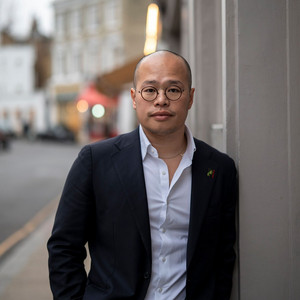
Today we speak with Sebastian Lai about his father's sentence, what it means for the pro-democracy movement And where Hong Kong goes from here.
It's Friday, February 27th.
Have some coffee and breakfast.
That's it.
So five years ago we Sebastian, made an episode about your father around the time when he was first arrested.
And so many of the details from that episode stick out to me.
He was born in mainland China and grew up in poverty during the communist takeover there.
There was widespread famine at that time.
I work as a bully.
And he recollected the story of working on the trains.
Those guys I carried the baggage for.
Carrying the bags of rich people who were going to Hong Kong back and forth, and how one man gave him a piece of chocolate.
What's this?
It's a chocolate.
I said, where are you from?
Hong Kong.
I said, Hong Kong must be heaven.
That was so extraordinary in his memory because this was a sweetness he had never known and a luxury he couldn't really even imagine that it prompted him eventually to flee to Hong Kong.
And he actually ends up hiding in a boat, traveling there.
And this was all before your time.
But were these stories that you heard growing up?
Yeah, he also would tell me the story of when he first landed into hong kong and he went to the markets and he had never seen so much food in his entire life.
So he he broke down crying and he'd always say it's one of the best days of his life, because in hong kong, even though he had nothing, he knew that at least he had freedom and that he had future.
And and i actually always heard these stories through a very happy lens And it's only growing up that I realized how painful that period of his life would have been.
Well, and he goes from nothing to becoming a multimillionaire.
He eventually buys his own factory.
He launches a clothing company and eventually starts a very popular magazine and then a newspaper, Apple Daily, when Hong Kong was still governed by Britain.
And to so many in Hong Kong and around the world.
He becomes this pro-democracy champion to others, including the Chinese government.
He's something else.
He's an agitator.
He is a troublemaker.
But to you, he's your father.
And that's what we want to talk about here.
What kind of dad was Jimmy Lai?
So I was born in 94.
Just before the handover.
Exactly.
I was born three years before the handover.
And, I mean, all the memories that I have are very happy memories.
I guess that's what memory does to you.
But he was a very good father, and he was also a very colorful personality.
I mean, he used to have a bear.
He used to have a bear.
He used to have a brown bear at home.
So when he was doing Giordano... This is the clothing line he created before the newspapers.
Exactly, a clothing line.
He would have truck drivers.
And one day, one of his truck drivers got sold a bear.
Well, he thought it was a dog.
He thought it was a puppy.
So he went to my father and just was like, here, boss, this is a present for you.
And my dad was like, well, what do you want me to do with it?
And it was one of those moments where you know they didn't want, you know, to call animal control or whatever it is to put it down.
So dad kept the bear at home.
And then eventually, you know, we got sent to a zoo and whatnot in Thailand.
But for a period, yeah.
That does suggest a certain adventurousness.
Yeah, yeah.
He pushes boundaries.
Yeah.
Suddenly you're living with a bear.
Yes.
Yes.
Yeah, he was... Well, he is.
He's still a real rebel at heart.
Hmm.
And what about Hong Kong itself?
How did you experience your dad's relationship to the city?
I mean, a lot of his favorite places were restaurants.
You always go to these like wonderful Cantonese places, you know, with the dim sums, with the steamed fish.
Very local very, you know, almost traditional but very simple dishes and, and i think, going back to to the first day he arrived, he has kind of this, and even back to the chocolate story, he has this relationship with food that gave him.
You know, it was one of those things that gave him a lot of joy in life.
I mean, not only was it absolutely delicious, but for me it was that contrast.
What do you mean, i think?
Um, You know, obviously people know how Hong Kong looks like.
You know these massive man-made skyscrapers that threaten to touch the sky.
And so you could have this massive metropolis but still have these kind of hole-in-the-wall type of place.
And as a kid, that's kind of the moment where you kind of see the Eastern influence of the place.
Hong Kong is a city that's steeped in Chinese culture, but then also had Western values free press, freedom of expression.
We had a very strong rule of law.
You know, it was one of the freest cities in that part of the world.
You know, growing up, you kind of very much realized that.
In fact, I still remember when Dad started his newspaper.
And I remember going to the printing presses with him.
And it was pretty you would hear the machines that were nonstop.
And you'd go up railings to see the machines from up top.
And I think I must have been eight or nine.
So my dad took me by the hand and then the other hand had touched the railings and I still remember looking at my hand.
I looked at it, and my hand was black from the ink.
And it was one of those moments where I kind of knew what dad did for work.
I think it was one of those moments that made it very real for me.
And was journalism something that you wanted to do?
Was owning a newspaper something that you wanted to do?
This entire line of work that your dad is doing.
It wasn't something that I particularly wanted to do.
And I think part of the reason is because he was very free in terms of how he wanted us to live our lives.
So he kind of freed you from... from that expectation to pursue what you wanted.
Yeah, exactly.
He knew that this was his fight.
You know, especially there were occasions where he was followed.
A house was firebombed, someone skinned a dog and pinned it on our door.
Wow.
And so, you know, Dan knew that this wasn't a fight.
He would say himself that it wasn't necessarily a fight that he wanted to pass on to his kids.
Because he knew the tremendous sacrifice.
And in fact, I think that's what is so remarkable about him.
This idea of someone arriving as a stowaway and becoming one of the most successful business people.
And then saying that I'm going to sacrifice all that success, all of those opportunities to stand up for what is right.
And I still remember this moment.
It's me, him and my mother.
We're in London walking through Hyde Park and it's a sunny day.
And my father was, you know, he learned how to sing.
To be completely honest, he didn't sing that well.
But he liked to sing and that's how you get better.
And on this beautiful day in London, he's just singing in the park.
What was he singing?
He was singing Ave Maria.
Wow.
Yeah.
A difficult song for anyone.
Yes, yes.
That's very true.
You know, thinking back on that day, just my father, you know, the sun shining on him saying I remember it, at the top of his lungs.
Even at that age I think I was maybe 14, 15 a thought came to me that it's what personal freedom looks like.
Yeah.
You know, here's a man who loves life, who loves so many different elements of life.
And when he escaped China, that was what he escaped for.
And it was a moment where I realized he had long achieved that.
That he had the wealth, the status, the appreciation of someone that was free, of someone that was truly free.
And had he stayed there, had he stayed in London you know he's a British citizen, he's got a British passport he would have had personal freedom.
But despite that, said that actually, I can't just be a person who lives for my own pleasure.
And you were starting to understand that even as it sounds like a teenager.
Yeah.
That your dad was a man who could have lived, if he chose to, in a state of constant indulgence.
You know, his whole life could have been essentially walking through a very beautiful park singing.
And instead, he chose a very different life with a great deal more risk and struggle.
Yeah.
Yeah, I think he chose a life that, instead of life that would have been outwardly beautiful, he chose one of inward beauty.
One that, you know, has landed him in the Hong Kong prison.
We'll be right back.
I'm curious if you anticipated at any point that the promises that China made about Hong Kong's freedoms.
I wonder when you started to sense that those promises were not going to be kept.
For me, at least, it was 2014. during the Umbrella protests.
These are pro-democracy?
Exactly, pro-democracy protests.
I was a university student at that point, and Dad used to go out every day and join the protests.
He would stand up there with a microphone and give speeches and then tell people to stand up for this and do it peacefully and whatnot.
He was always a man of peace.
He was tear gassed.
Someone even shot a canister at him.
And then there was once where they threw pig innards on him.
Wow.
And then, once the tear gas came, he'd sort of, you know, wipe his face and then go back up again and talk again.
As this is happening, are you out in the streets with your dad?
Are you participating in those 2014 protests?
Yeah, I was out on the streets, but I wasn't with dad.
But you were protesting?
Yeah.
Yeah.
I was protesting, yeah.
I mean, I was also hit with tear canisters as well.
And I still remember I was with my girlfriend and my wife at that time.
And I just told her, like, look, just turn around and start walking.
And then you feel a prickle at the back of your neck and then you breathe in and you know all the tear gas.
And so I still remember that.
I mean, you know, nothing compared to what dad was doing, which he was literally on the front lines.
Was he encouraging you to get involved in the protests?
No.
I don't think it was something that he needed encouraging.
I think you know, at that point we realized that we're fighting for these freedoms, for our home and for our kids and their kids.
You felt like you were part of something that was bigger than yourself.
Of course, after the 2014 protests, which died down for some period of time, by 2019 they are in full blossom once again.
People are out in the streets.
And those protests end up centering around this now infamous national security law that starts to take freedoms away in a pretty formal way.
And I have to imagine that in the back of your head in that period you're starting to wonder what all this means for your father.
What was, for you, the first sign that Chinese authorities might be coming for your dad?
I think it was the brutality by some of the police officers and the crackdowns on a lot of the protests.
The phrase I'll use is kind of overzealousness of it.
There was kind of a social contract that was broken between the people of Hong Kong and the police at that point.
This was new?
Yeah, this was new.
And then from there, obviously, the actual passing of the National Security Law.
And obviously many people told Dad to leave at that point because I mean, everybody kind of knew that he was one of the main targets.
That that law seemed to have his name written all over it.
That it was kind of like, you know, almost tailor-made for him, so to speak.
Did you ever try to persuade your dad to lay low, to perhaps stop what he was doing in this period?
I Honestly, I've thought about that a lot and I, i didn't, i didn't, and i keep thinking about why i did not do it, because even at that point i knew that there was a possibility that i'd never see my father again if he stayed in hong kong.
Um i, i also knew that there's a few opportunities in life where you're where you're called, you know almost by your principles, to do the right thing and Obviously everybody knows that leaving would have been a much more comfortable choice.
But he knew that it was the wrong choice.
And as a son, I could see that he knew that it was the wrong choice.
He knew that he was a captain and that he needed to go down with the ship.
And that by staying, he could almost act as a lightning rod for the persecution to come.
Hong Kong police on Monday made the highest profile arrest yet under China's new national security law for the city.
Media tycoon Jimmy Lai.
Hong Kong media tycoon, Jimmy Lai, has been arrested under Beijing's.
And then what you feared happens.
He's arrested.
Where were you when he was arrested?
So I was actually, I was on a business trip in Taiwan.
And you remember back in those days, there was quarantine.
So I was still in quarantine.
Then someone knocks on my door at five in the morning and tells me that dad had been arrested, that they sent dozens of national security police officers to our home to grab him and then perk, walk him through his own office.
Right.
— A pretty elaborate power play, let's just be honest, right?
I mean they take him from his home, where they've arrested him, to his office to say something to the world.
— Yeah, to say something to the world and to all his journalists as well.
Yeah.
—
But they started arresting other people.
And yeah, and I knew that it wasn't safe.
I mean, is it safe to assume that you understood that if you had returned, you yourself might be arrested?
Yeah.
Yeah, exactly.
Yeah.
Did any part of you think about going anyway?
I mean, i know your father freed you from the obligations of being a a freedom fighter, you know taking over his his business, but did any part of you think i should go back?
Yeah yeah, of course.
When i first heard that he was arrested, i wanted to do what i can to to free my father.
Um, And it's heartbreaking.
I don't mean to be provocative, but I'm curious if not going back entails any kind of feelings of guilt.
Um... I actually...
I think that that might be something that you have to ask me again in four or five years.
I mean, I think some part of me obviously wants to see him more than anything.
I haven't seen him in five years.
I haven't been able to tell him in person how much I miss him, how proud I am of him.
But what can I do from Hong Kong?
I'll feel powerless.
To kind of just see him through this glass screen and talk to him on the phone.
If they even let me do that.
At least by doing what I'm doing now.
There's a chance of me seeing him again.
Seeing him again as a free man.
If the advocacy you're doing to try to get him out were to work.
Yeah, exactly.
Do you have any contact with your dad right now in prison?
So I can't speak to him, I can't go back and see him, but I can still write him letters.
He sends you letters?
He sends me letters and I send letters back.
Is there anything he said to you in a letter that you can share with us?
To be honest, we just talk about.
You know what's happening in my life family know what he's doing at the moment and a lot of it is reading and a lot of it is drawing these kind of religious drawings.
He's a very strong catholic so he draws pictures of christ, of mother maria.
You know, that's his way of sort of being in touch with his faith and you can imagine if you're, you know, in the solitude climbing.
It's just between you and god And it's yeah, I mean it's very moving.
Do you know if he still sings?
That's a good question, actually.
I don't know.
I mean, are you wondering if there's really any chance you're ever going to see him again?
Or does it feel to you like you really have lost your dad in all of this?
I've been campaigning on his behalf for the last few years.
And when you do these things, you just have to be hopeful.
But yeah, it's very distressing.
Because I just don't know when it is that I'm going to get a text to tell me that Something bad has happened to him.
But until then, I'll keep fighting until he's freed.
What, in your mind, is the scenario in which he is freed?
Is it Western leaders negotiating his release?
Yeah, it's to put pressure on both Hong Kong and China.
And the thing is, there's no...
There's no upside for China to keep him in there anymore.
And if the idea of China is this place, as they would say themselves, of quote-unquote stability, of being a superpower well, torturing a 78-year-old man, it's counter to what they hope to achieve.
But you know this well.
And I don't mean to diminish what is no doubt such an agonizing situation for you.
But what China accomplishes by doing what they're doing to your father is telling everyone in Hong Kong that protest is futile.
Because look what we can do.
Look what we have done to one of the richest and most powerful men in the city.
Yeah, I think that's what a lot of people think.
But this idea of using my father's case as a deterrent, I mean, the effect has already been done, essentially.
He's already been there for five years.
They've already destroyed his health.
They've already taken everything away from him.
All they're doing now is making him into a martyr.
There's no point in him dying.
And I think, if we look at my father's story, A man who's given so much for freedom, I think he deserves some freedom himself.
I want to ask you about Hong Kong itself.
When you think about the situation your father is now in, and may or may not ever emerge from.
The pro-democracy movement, as best we can tell, is basically over, especially now that such an important leader of its cause is locked away.
Is the vision of Hong Kong as a place that could have any form of freedom, is that officially over?
Look, I can't predict the future, right?
But I think one has to ask, what is the difference between Hong Kong and any other city in China?
I mean, there's still some, you know, short-term differences, but really in the long term.
What is the fundamental difference?
Many people would argue that there isn't.
There isn't any difference.
Yeah.
Hong Kong is...
China now, and does that mean that the Hong Kong that your father fought for?
It might be hard to hear these words, but it's gone.
Hmm, I honestly I don't know.
I think, um, I think it's always in people's hearts.
It's obviously a very sad thought.
Maybe the Hong Kong that dad and many people fought for is now oppressed.
But I hope it's Hong Kong.
I always thought I'd have a family in Hong Kong, get married there, see my grandma and my parents every now and then and have yum cha with the family on Sundays.
It's very easy to take it for granted that Hong Kong was always going to be the way it was going to be.
All these things were very easy for me to take it for granted.
It's like that Office quote.
You know the Office TV show where one of the characters says I wish they'd tell you that you're living in the good times.
When you are living in the good times, you know.
Do you have children of your own now?
Yeah, yeah, I've got one.
How old?
She turned two recently, so she's never met my father before.
Hmm.
Does she know of him?
Yeah yeah, she sees pictures of him and yeah yeah, his grandfather in Cantonese.
And she'll say yeah and point out the pictures.
It's very sweet.
Has your father addressed her in any of his letters?
Yeah, yeah, he's obviously incredibly happy.
I mean, you know how grandparents are.
He misses her without having ever met her.
That must be really heartbreaking.
I'm sure she'll grow up knowing that she'll be proud of her grandfather as well.
Right.
Whether she gets to meet him or not.
Yeah.
And hopefully one day, she will get to meet him.
Yeah, hopefully one day she will.
Yeah, that'd be a great day.
We'll be right back.
Netflix has backed away from its deal to acquire Warner Brothers Discovery, a stunning development that paves the way for the storied Hollywood media giant to end up under the control of the technology heir, David Ellison.
Netflix said that for business reasons, it would not match Ellison's higher offer for Warner Brothers.
That means that Ellison's company Paramount Skydance will soon own two major studios, plus CBS, HBO and CNN.
And During a closed-door videotaped deposition on Thursday, Hillary Clinton, the former first lady, Democratic nominee for president and secretary of state, scolded the Republican-led committee investigating Jeffrey Epstein for compelling her to testify, when she said she has never met Epstein and had no knowledge of his criminal activities.
The hearing was briefly halted when a Republican committee member, Representative Lauren Boebert, leaked a photograph of Clinton's testimony to a conservative podcaster.
House rules strictly prohibit taking photographs of closed-door hearings.
Today we are sitting through an incredibly unserious clown show of a deposition, where members of Congress and the Republican Party are more concerned about getting their photo op of Secretary Clinton than actually getting to the truth and holding anyone accountable.
Democrats on the committee, including Representative Yasemin Ansari, mocked the proceedings as a partisan political stunt that would do little to hold Epstein and his network of wealthy friends accountable.
Today's episode was produced by Shannon Lin, Lindsay Garrison and Rob Zipko, with help from Michael Simon-Johnson.
It was edited by Maria Byrne, with help from Lexi Diao.
Contains original music by Alishaba Itu, Dan Powell and music by Rony Misto, Marion Lozano and Pat McCusker.
And was engineered by Alyssa Moxley, with help from Chris Wood.
Special thanks to David Pearson.
That's it for The Daily.
I'm Michael Barbaro.
See you on Sunday.