Get the Unmissable news stories of the day.
This is The Beijing Hour.
Examining the events that impact and shape China and the rest of the world.
This is The Beijing Hour.
One hour of news and information brought to you every weekday.
Now here's your host...
Shane Bigham with you on this Friday, March 7th, 2025.
You're listening to The Beijing Hour coming to you live from the Chinese capital.
On today's program, at the two sessions meeting, China's top diplomats reaffirm the country's commitment to peaceful development.
Artificial intelligence and smart solutions are reshaping China's senior care industry.
The U .S. president suspended his 25 % tariffs on goods from Canada and Mexico, at least temporarily.
In business, China's foreign trade is off to a strong start this year.
And today we have Part Five of the Yellow River Mosaic Series telling stories of people whose lives are intertwined with the famous Chinese waterway.
and today we visit an ancient ferry port along the river.
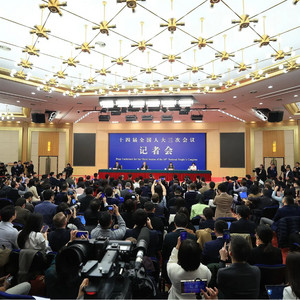
Now checking the day's top stories Chinese Foreign Minister Wang Yi says the missions of the country's diplomacy will remain unchanged despite the challenging international situation on the sidelines of the annual session of the national legislature.
The senior diplomat reaffirmed China's commitment to the path of peaceful development and pledged to provide certainty in an uncertain world.
We are living in a changing and turbulent world where certainty is becoming a scarce resource.
The choices made by countries, especially major countries, will determine the trajectory of our times and shape the future of the world.
We will be a staunch force defending our national interests.
The Chinese people have a glorious tradition of relentlessly seeking self -renewal.
We never provoke and we are not intimidated by provocations.
No maximum pressure, threat or blackmail can undermine the unity of the 1 .4 billion people or stop our historic strides towards the great rejuvenation of the Chinese nation.
We will prove with facts that the path of peaceful development is bright and can ensure stable and sustainable progress and that it should be the choice of all countries." Wang Yi also reiterated China's objection to power politics and hegemony.
He said history will prove that a real winner is the one that keeps in mind the interests of all.
New China stands firm on the side of international justice and it resolutely opposes power politics and hegemony.
History should move forward, not backward.
A saying in the West goes, there are no eternal friends, only permanent interests, but we in China believe that friends should be permanent and we should pursue common interests.
History will prove that a real winner is the one that keeps in mind the interests of all, and that a community with a shared future for mankind will ensure the world belongs to everyone, and that everyone will have a bright future." On China's relations with Russia, Wang said Beijing and Moscow stand at the forefront of a new model of major country relationship.
The foreign ministers stress that their relations will not be affected by any third parties.
Two countries have found a path of non -alliance, non -confrontation and not targeting any third Party in developing their relations.
It is a pioneering effort in forging a new model of major country relations, and a set of fine examples for relations between neighboring countries.
A mature, resilient and stable China -Russia relationship will not be swayed by any turn of events, let alone be subject to interference by any third party.
It is a constant in a turbulent world, rather than a variable in geopolitical games.
— And Wang also elaborated on China -U .S.
relations. He said mutual respect is an important prerequisite and the two countries must seek peaceful coexistence.
Wang Fei has more from the scene.
We heard extensive comments on topics ranging from China -U .S.
relations, regional security, the global south and so on.
But Mr. Wang starts with laying out China's role on the diplomatic front.
He says that China will stand on the right side of history and promote human progress, seeking strength through unity.
He also highlighted some achievements in China's head of state diplomacy.
Here's more on what he said.
The year 2025 is important for both China and the world.
There will be new highlights in China's head of state diplomacy.
Last month, President Xi attended the opening ceremony of the aging Winter Games, marking the beginning of the diplomatic events that China will host this year.
We will solemnly commemorate the 80th anniversary of the victory in the Chinese People's War of Resistance against the Japanese aggression and the World Antifascist War, and hold a series of major events, including the Shanghai Cooperation Organization Summit.
President Xi is expected to make a number of overseas visits.
States, head of state diplomacy, will write a new chapter of closer cooperation and shared success between China and the world.
Yes, there were many questions about the U .S., especially a mention of Washington's pretext for the trade war, which is that China is playing a role on the fentanyl crisis.
On that, Mr. Wang responded by saying that China actually has some of the toughest anti -narcotics measures in the world and it's helping the US curb the illegal drug on humanitarian grounds and the US cannot return good with evil.
And he says that China -US relations should be based on reciprocal cooperation and he's happy to see that more countries are resonating with this idea that the fact that three quarters of the countries in the world have joined the Belt and Road Initiative really supporting China's idea of building a community with a shared future for mankind.
This year China is also rotating president of the SEO Shanghai Cooperation Organization and Mr. Wang announced that the SEO summit will be held in Tianjin in the autumn with around 100 events across different sectors to promote exchanges under this framework.
China is also a member of the global south.
Mr. Wang fielded questions from Africa and Latin American nations, and he says that the hallmark of our era is the prominent and growing strength of the global south.
Because this area contributes 80 percent of global growth, he says that development remains the central agenda going forward.
Of course, he also touched on China -EU relations with the two sides celebrating 50 years of diplomatic ties this year.
so wide -ranging questions detailed answers really giving us a clear picture of where China stands on the global stage.
That was Huang Fei reporting.
The Foreign Minister also took a question from CGTN regarding the tensions between China and the United States in the tech sector.
CGTN, the impressive emergence of deep -seek, showcases China's innovation capability in AI.
ally. Some say that the US finds it unacceptable to let China get ahead in science and technology.
Its instinctive response to China's technological rise is if you can't win, just snatch it.
If you can't get it, just destroy it.
What is your view on China -US' competition in science and technology?
Sorry into the heavens, as well put by an ancient Chinese reverse, no mountain can stop the surging flow of the mighty river.
Likewise, hyphenses and smallyards cannot suppress the spirit of innovation and the coupling and supply chain disruptions will only lead to self -isolation.
Science and technology should not be used to put up an iron curtain, it should be the wealth that benefits all and is shared by all.
We are ready to share the fruits of our innovation with more countries and jointly explore the mysteries of the stars and oceans.
That was Foreign Minister Wang Yiyi answering an inquiry from CGTM.
Wang Yiyi also noted that China's become a more popular destination for foreign tourists in recent years.
He said China welcomes people of all countries to see a vivid China with their own eyes.
Discovering and embracing China is also becoming a trend.
More people have seen China that is safe, open, and modern and got to know the friendly, open minded, and witty Chinese people.
The people have come to their conclusion and it's like sunshine that espouses the midst of prejudice.
Heart -to -heart communication has the power to break down all barriers.
It is time to get rid of the information cocoon and take off the tinted glasses and the people of all countries are welcome to see where their own eyes are, are real and vivid China, and feel where their heart, the dynamism and drive of the 1 .4 billion Chinese people.
On cross -strait relations, Wang Yi said Taiwan is Chinese territory as proved by history and reality.
He pointed out that the only reference to the Taiwan region in the United Nations is Taiwan, province of China, which indicates that Taiwan was never a country and won't be in the future.
The foreign minister stressed that realizing China's complete reunification is a shared aspiration of the Chinese nation and an unstoppable trend.
He warned that anyone who seeks independence is doomed to fail and no one can use Taiwan to contain the mainland.
China's top political advisors have met the public at the member's corridor at the Great Hall of the People in Beijing.
They spoke about a variety of issues of people's concern, including artificial intelligence, medical care and aviation.
Yang Yi, from the Aviation Industry Corporation of China, stressed the role of new quality productive forces in the low altitude economy.
We talk about the low altitude economy that's actually a typical example of a new, quality productive forces, as also a new direction of our research.
So that covers the aviation, transportation, rescue and relief, and also to cultivate new forms of economy and improve the government's capability and also rate -shape the future's logistics.
Aamusha T said delivery services are now able to cover nearly all villages so local agricultural and other products can be sold across the country.
Changes began with the campaign of delivery service at national level.
With efforts of both sides, the delivery stations have covered every village of the county.
Those agriculture and husbandry products could be sold to every corner of the country with e -commerce platforms and transportation improvements.
Last year, the branded meat has been sold nationwide with the revenues of sales doubled.
Members' corridors channel, where political advisors answer questions on key national issues during the two sessions.
Coming up, China's transforming its senior care sector with artificial intelligence.
Transformation, innovation, sustainable development, consumption, investment and foreign policy.
People's livelihoods top the agenda as lawmakers and political advisors gather in Beijing.
The two sessions bring together China's top legislative body and top political advisory body as delegates and members discuss the country's biggest priorities and plans.
What's China's growth targets?
In our motions and proposals are addressed.
Follow CGTN's coverage of the annual political season.
A key moment that shapes China's political future.
13 minutes past the hour, China has one of the fastest aging populations in the world.
It's estimated that there were 310 million people aged 60 and above by the end of 2024, accounting for 22 % of the country's total population.
This demographic shift has fueled rapid growth in the smart elder care industry, supported by new policies and plans centered on the needs of senior citizens.
Chi Jir reports. In Beijing's Haidian District, a state -of -the -art, elderly care service center, is using digital technologies to improve quality of life.
The center is equipped with smart devices like health monitors and radar tracking systems, allowing seniors to stay connected with caregivers while maintaining their independence.
85 -year -old Zhongming requires significant assistance with her daily lives.
She is the first registered resident of the elder care service institution on Shandee Street.
Before choosing this facility, her family explored multiple nursing homes across Beijing.
Her sounding love Li Dong says they're impressed by the center's smart equipment, especially for seniors like Zhong, who often wake up at night.
Smart sensors mean someone doesn't have to watch over them constantly.
For example, older family members might get up six or seven times at night.
Before I couldn't rest properly because of this, now the technology ensures safety without needing 24 -7 monitoring.
Initially, Lee had concerns about elderly care services, but the use of digital solutions reassured him.
He says he's looking forward to further advancements, such as the use of artificial intelligence to reduce the burden on human caregivers.
If intelligent robots become common in the future, taking care of older people will get a lot better in every way.
It will also make things easier for the people who take care of them now.
Caregivers at the center have also benefited from the integration of digital devices.
Yang Chow is looking after four residents at the Shandy Street Center.
He says technological support is a great help in his daily duties.
This system helps us keep an eye on how the residents are doing, including how well they're sleeping.
When we switch shifts, we tell each other about anything unusual, like if someone isn't sleeping as long as they normally do.
By looking at how things change over weeks or months, we can spot problems early.
Then, we can talk to their families and ask doctors for advice if we need to.
This helps us keep the older people safe and stop any health problems before they get too bad.
Yan says digital technology, particularly radar monitoring, also improves communication between caregivers and families while enhancing safety.
Beyond elder care centers, digital technologies are also making their way into homes driving innovation across the industry.
Vice -President Jing Li of the Southern University of Science and Technology says China's rapid progress in AI, cloud computing, and robotics are shaping smart homes and precision health care.
I think there are so many things that the Chinese have developed unique solutions that fits its own cultural and economic unique characteristics.
These integrated, effective market plus proactive government model employed by the Chinese society epitomizes China's commitment to modernizing elderly care while advancing common prosperities in China, molding technological innovation with socialistic welfare principles.
According to the expert, this approach reflects China's commitment to improving elder care through technology and proactive policies.
For the Beijing Hour, I'm Xi Jue.
China's shared economy is reshaping industries and slashing costs, as seen with shared bicycles.
Now this model is entering manufacturing, helping small and medium -sized enterprises control costs, ensure quality and embrace intelligent transformation.
Zheng Tao visited Bai Gao, a small town in northern China known for its traditional luggage -making craftsmanship.
to explore how it's embracing this new production model.
Inside a factory in Baigo, fully automated systems work seamlessly, cutting materials into precise shapes.
Workers simply input the required dimensions and the machines execute the task flawlessly.
While automation offers clear advantages, many small local businesses can afford the high cost of such equipment.
To address this, the by -go government launched the town's shared factory in 2022, allowing businesses to rent equipment and share production facilities.
Factory head Sun Lanyin says more and more local businesses are coming on board.
Initially, many found it complicated.
But once they got used to it, they became reliant on the system.
Just insert USB drive and the machine automatically cuts.
It's that simple." Local entrepreneur Zhang Lu, one of the first to partner with the SHED factory, says traditional cutting methods were riddled with errors, but the new system - has significantly improved accuracy.
Previously, patterns were off by about five centimeters each, totaling a 50 -centimeter difference over 10 patterns.
But thus, equipment, material waste is drastically reduced, saving us substantial costs.
Unlike traditional OEM factories, shared factories offer not only equipment and production lines, but also access to professional talent and technology.
This model helps small businesses break through production bottlenecks, unlock innovation potential and drive intelligent upgrades in their processes.
This has opened new doors for over 4 ,000 largagemaking businesses in the region.
Though some remain sceptical of new technologies, entrepreneurs like Zhang Lu also already embracing the future of intelligent manufacturing.
AI and other cutting edge technologies are the way forward.
If we don't embrace them, they'll be left behind.
We need to control raw material costs and other factors.
Or our overall expenses will be too high.
Quality and price are both crucial in the markets.
The success of the shared factory in Baigo is part of Hebei's province' broader effort to modernise traditional manufacturing.
In June of last year, the provincial government introduced a guideline to promote shared factories within specialised industry clusters across the province.
Sun Nanying with the Baigo shared factory believes the key to transforming traditional SMEs lies in demonstrating the added value that technology brings.
We are looking into new custom equipment and planning to bring in more soon.
As we understand the equipment's upgrades and diversify our products, we will align these projects in parallel.
I am confident that, in the end, everyone will embrace this change because it saves time, effort, and money, and it's the future.
Sun's vision makes it clear, the wave of smart manufacturing will carry even the most traditional enterprises into a new era.
For the Beijing hour, this is Zhang Tao.
Coming up, the US has suspended its terror of Sun Canada and Mexico for at least a few more weeks.
Artificial intelligence is ray -shaping many industries, and spools is no exception.
From robots athletes to AI referees.
peace. Technology is transforming how athletes train and compete.
Listen to the latest episode of Sightline Story to join our discussion on the impacts of artificial intelligence on sports.
Should we let AI change the game or guard our sporting traditions?
Subscribe to Sightline Story and debate us wherever you get your podcasts.
At 22 past the hour, US President Donald Trump has suspended the 25 % tariffs on USMCA compliant goods from Canada and Mexico.
The USMCA is the North American trade agreement that replaced NAFTA in Trump's first term.
This is the second delay in imposing the tariffs since he announced the plans back in November.
Frank Contreras has more from Mexico City.
Both leaders, Mexico's Claudia Shanebaum and the President of the United States, Donald Trump held a meeting to discuss the possibility of lifting the tariff threats Donald Trump had suggested he would put on all Mexican exports.
The US president wrote on social media.
After that meeting he said, I have agreed that Mexico will not be required to pay tariffs on anything that falls under the US -Mexico -Canada trade agreement.
This agreement will last until April 2nd.
Donald Trump said he did this in quote an accommodation and out of respect for President Claudia Cheymbaum of Mexico.
He called the US -Mexico relationship a very good one and he said, we are working hard together.
Mexican President Claudia Shane Baum agreed she told her nation in a nationally televised news conference that things are going well there was mutual respect in the conversation with Donald Trump she said that Mexico's doing all it can to curb illegal immigration she pointed out that Mexico has sent 10 ,000 troops to the northern border with the United States to curb both immigration and Fentanyl trafficking Mexican officials including police officials and military officials have been cracking down on Fentanyl labs and this is how the Mexican president characterized the concerns that Mexico has about fentanyl
going into the United States.
Of course we do not want there to be fentanyl consumption in the United States, which is causing so much harm to its youth.
That depends on many things in the United States.
President Trump acknowledged the idea of the campaign that we proposed to him, and they have to do many other things.
But to the extent that we can collaborate— because we do not want illegal trafficking of fentanyl in the United States or anywhere else, nor for our youth to be poisoned.
The Mexican president says her country will continue to do everything possible to make certain that there is a strong positive relationship with the Trump administration in Washington.
That was Frank Contreras reporting.
Meantime, Canada says it will halt the second wave of tariffs on U .S.
goods until at the same date after Trump's decision to delay the levies.
The industry minister said Canada's retaliatory measures remain in place.
Local media say more than half of Canadian imports aren't covered by USMCA and will likely still face new tariffs.
Earlier, Ottawa said its partnership with Washington would no longer be the same as before, even if Washington removed all tariffs.
Canadian newspaper The Globe and Mail has made a striking statement, leaving the front page of its recent issue nearly blank with just the words strong and free to protest US tariffs.
The paper criticized US trade policies as isolating and destabilizing, urging Western nations to forge reliable trade partnerships, less dependent on Washington.
The move reflects growing global frustration with Washington's trade actions, and signals a potential shift in international dynamics.
It also highlights the widening divide between the US and its allies.
India is facing threats from the Trump administration concerning reciprocal action against India's auto tariffs of more than 100 percent.
The U .S. wants India to eliminate tariffs on imports under a proposed trade deal.
Some reports suggest New Delhi is reluctant to swiftly reduce the duties to zero, while others say India is receptive to Washington's position and will respond after consulting local industries.
Ravinder Bawi has more from New Delhi.
India is willing to take some reduction as far as the zero elimination or zero tariff policy in car industry has in US wants to eliminate any kind of tariff on cars because they want to push their car makers like Tesla and others into India to actually reach out to the Indian market.
As far as India's concerned India is a little skeptical about that.
India wants to negotiate on that level in terms of agreeing to some kind of reduction but zero tariff policy in cars is something India at the moment is not willing to implement immediately.
Well, India cannot rest easily as far as the trade with the US is concerned, especially in the Trump's second regime.
But at the same time, what is happening is that while India's name has come on those list of countries on which tariff will be enforced from the second of April, the officials are a little disappointed about it because if we see before Prime Minister Modi went to meet Mr. Trump last month.
Already some tariff reductions were already announced in the Indian budget, so that gave India some kind of a negotiating room.
That's why that was done.
But taking that into consideration and taking the talks between the two leaders and they talking about fair trade terms as far as the bilateral trade agreement is concerned, there is a bit of disappointment.
The Indian officials were expecting that for now the tariff impositions will be imposed.
reciprocal tariff imposition will be, you know, postponed for a while.
But that has not happened.
That was Ravinder Bawat reporting U .S.
President Donald Trump's special envoy Steve Witkov says he's been in discussions with Ukraine for a peace agreement framework to end the conflict with Russia.
Officials from both sides will meet in Saudi Arabia next week.
Washington has been pressuring Ukrainian president Vladimir Zelensky to cooperate with President Trump to convene peace talks with Russia.
Zelensky says he'll travel to Saudi Arabia on Monday for a meeting with Saudi Crown Prince Mohammed bin Salman ahead of talks with US officials later in the week.
In the meantime, the Ukrainian ambassador to Britain accused the United States of destroying the established world order.
Velary Zelusny said Washington is trying to meet Russia halfway way and warned that Europe could be Moscow's next target.
We're at 28 past the hour.
Beijing's down to 0 on Friday evening.
It'll be sunny and 14 on Saturday.
Ananshan's 5 overnight then overcast conditions in 12 degrees.
Elsewhere in Asia, Islamabad's down to 10.
Saturday will be sunny in 28.
Viennhian's at 20 this evening then overcast skies in 28 degrees.
Monpens down to 23, that's followed by a slight rainfall and 32.
In Africa, Nairobi will see a slight rainfall and 29 degrees on Saturday.
Compile this down to 22, then a slight rain in 28.
Chub is 27 in the evening, overcast in 40 tomorrow.
And finally to Oceania, Port Vila, 23 this evening.
A slight rainfall and 31 on Saturday.
It's time for a short break.
So far this hour, at the two sessions meetings, China's top diplomats reaffirm the country's commitment to peaceful development.
Artificial intelligence and smart solutions are reshaping China's senior care industry.
When the US President has suspended his 25 % tariffs on goods from Canada and Mexico, at least temporarily.
Shane Bigham with you.
Stay with us here on The Beijing Out.
The best military commander is not he who fights a hundred battles and wins every one of them.
The best military strategy does not lead to the desiccation of the enemy's capital city.
Decoding the Art of War will help you understand why there's no art in war, and how citizens stayed undefeatable using the science of war, with fun stories and insightful breakdowns of famous battles.
Find Decoding the Art of War wherever you listen!
What do they truly mean?
Masha, where did you go?
Masha! Masha! Embark on a century -long journey with CGTN Radio's latest offering.
Echoes of Coolia, a gripping audio drama series inspired by real -life tales.
Has anyone heard of Apodasha?
From unexpected encounters to heartfelt reunions, immerse yourself in a narrative of love, peace, and enduring friendship.
He's a piece of my lost childhood.
Listen to Echoes of Kulia on radio .cgtn .com and all major podcast platforms.
Bing An. Bing. Bing An.
Bing An. Examining the events that impact and shake China and the rest of the world, this is the Beijing Hour.
One hour of news and information brought to you every week day.
Now, here's your host, Shane Mega -Muthieu on this Friday.
Still to come? In business, China's foreign trade is off to a strong start this year.
And today we have part 5 of the Yellow River Mosaic Series, telling stories of people whose lives are intertwined with that famous Chinese waterway.
To contact us you can email radio at cgtn .com or follow our ex -account at cgtnradio.
But now check out the day's headline news.
Chinese Foreign Minister Wang Yi says the missions of the country's diplomacy will remain unchanged, despite the challenging international situation on the sidelines of the annual session of the national legislature while introducing the achievements and vision of China's diplomacy.
The diplomats stressed the role of the global south in global peace and development.
Wang held the progress of frameworks such as BRICS and the Shanghai Cooperation Organization and announced that China will host the SEO summit in Tianjin in autumn.
On China -U .S. relations, Wang Yi said mutual respect is an important prerequisite and the two countries must seek peaceful coexistence.
The foreign minister also reiterated that China maintains an objective and impartial stance on the conflict in Ukraine, and called on all parties to work toward achieving a fair and durable peace deal.
He said Beijing will continue to strive for justice and peace in the Middle East.
On cross -state relations, Wang Yi said Taiwan is Chinese territory as proved by history and reality.
He pointed out that the only reference to the Taiwan region and the United Nations is Taiwan province of China, which indicates that Taiwan was never a country and won't be in the future.
The foreign minister stressed that realizing China's complete reunification is a shared aspiration of the Chinese nation and an unstoppable trend.
A court in South Korea has approved the release of Arrested President Yoon Seok -you.
The Seoul Central District Court accepted Yoon's request to cancel his arrest.
The president's legal team made the request last month.
The Yoon side argued during a hearing in February that the impeached leader was indicted under detention after the expiration of the arrest warrant period.
The prosecution claimed it was a legitimate indictment.
In January, Yoon became the first sitting South Korean president to be arrested and prosecuted as a suspected ringleader of an insurrection.
It happened a month after he declared an emergency martial law.
European Union leaders have reaffirmed their commitment to working together to bolster the continent's defenses.
They also decided to free up hundreds of billions of euros for security.
This came after US President Donald Trump's repeated warnings that he'd cut them adrift to face the challenge of Russia alone.
With the growing conviction that they'll now have to fend for themselves, countries that have faltered on defense spending for decades held emergency talks in Brussels to explore new ways to beef up their security and ensure future protection for Ukraine.
French President Emmanuel Macron said autonomous defense capabilities are important for the continent.
Given the threat and whatever happens in Ukraine, we need to increase our defense capabilities and we need to build, in the next few years, autonomous defense capabilities for The leaders signed off on a move to loosen budget restrictions so that willing EU countries can increase their military spending.
They also urged the European Commission to seek new ways to facilitate significant defence spending in all member states.
The EU's executive branch estimates that around 650 billion euros or over 700 billion US dollars could be freed up that way.
Officials in the Western US who warn the public about avalanches are sounding a different type of alarm.
They worry that the firings of hundreds of meteorologists and other environmental scientists by the Trump administration could hurt life -saving forecasts that skiers and mountain road drivers rely on.
Avalanche is killed about two dozen people annually in the United States.
Predicting the likelihood, potential severity and location of an avalanche depends on critical information from the National Oceanic and Atmospheric Administration.
Director Ethan Green of the Colorado Avalanche Information Center stresses the importance of administration models for the center's work.
The model in our current configuration can't run without the models that NOAA runs.
So any changes in capability whether that's programs or people are concerning, because we don't know how that's going to impact us.
But we rely heavily on the information and the people at NOAA.
The Trump administration has not yet disclosed full details on what positions are being lost in the firings at NOAA.
Former leaders of the agency have said it will have wide -ranging negative impacts, including on flight and shipping safety and warning networks for tornadoes and hurricanes.
International education and advocacy body Global Citizen will work with FIFA to stage the first -ever World Cup halftime show at next year's tournament that's being held in the United States, Canada, and Mexico.
FIFA president, Johnny Infantino, welcomed the collaboration as the very best celebration ever.
The partnership between the two bodies aims to harness the power of sports and entertainment to change the lives of millions of children.
This is Shane Bigum in the Chinese capital.
Coming up in business, China's foreign trade is off to a strong start this year.
Thank you, Shane. Stock markets on the Chinese mainland closed lower on Friday.
The Shanghai composite was down nearly 0 .3%, while the Shenzhen component lost half a percent.
The engineering, machinery, and aviation sectors were among the top gainers.
Elsewhere in China, the Hong Kong stock market also ended lower, with the Handsang Index down nearly 0 .6%.
Meantime, stocks in Japan also saw a decline for the day.
The Nikkei lost almost 2 .2%.
China's foreign trade is off to a steady start this year.
In the first 2 months, total imports and exports surpassed USD 6 .5 trillion or around USD 900 billion.
US dollars. Exports rose 3 .4 % while imports fell 7 .3%.
Private enterprises led the way accounting for over 56 % of the total trade.
Their overall trade value grew to 2%, reaching 3 .7 trillion yuan and contributing nearly half of high -tech trade.
The strong performance of private enterprises highlights their key role in driving economic momentum.
China's authorities say the country should remain steadfast in its commitment to opening up regardless of changes in the external environment.
For more, Michael Wang spoke with Le Xia, Chief Economist from Asia at BBVA Research.
China's Foreign Minister Wang Yi highlighted the rising influence of the global south, noting that it now accounts for over 40 percent of global GDP and contributes up to 80 percent of global growth, what specific steps do you see China taking to further open up its markets to emerging and developing economies?
Yes, I think we see that China is trying to offer very good treatment to these emerging or developing economies.
For example, for those at least developed countries, China even offered zero tap treatment to these countries because this country, they need to help their development and China offer such a good treatment, that definitely that's a very important progress.
We expect that they are going to expand this coverage of this zero tariff treatment to more product, to more imports from this least developed countries.
At the same time, China already signed a lot of free trade agreement with developing countries, I think that's very important for China and this counterparty developing countries to develop their trade ties and to benefit each other.
I think that's a very important one.
For example, the receipt, the majority of these members under this receipt agreement are developing economies in Asia.
So in the future, China can further integrate its economy into this Asia center trade system.
There's another good thing for all these developed countries.
I think in the future, China can better spin over to other important trade partners, developing trade partners, by increase their investment in these countries.
So through this free trade agreement, through this overseas investment, I think China is opening to all these emerging markets is offering new opportunities to this important developing trade partners." There was economist Lew Xia on China's commitment to opening up.
Chinese authorities say the country will launch special initiatives to boost consumption including issuing treasury bonds of US $300 billion or around US $41 billion to support consumer goods trade -in programs.
Last year, the trading programme for home appliances achieved remarkable results.
Official data shows retail sales of home appliances increased by over 12%.
Chinese authorities have highlighted the row of the Global South in promoting global economic growth.
Daniel Eirup -Moy walks up through the outcomes of the cooperation between China and Africa.
The first one, we could look at the trade and investment.
Now, Africa is China's biggest trading partner with investment going up to over $288 billion annually and many of the Chinese investments in Africa are focused on infrastructure, mining and manufacturing sectors and many of these have actually been under the belt and road initiatives and the two sides also through the years cooperated in technology transfer.
Chinese tech companies through the years expanded their presence in various parts of Africa mainly focusing on telecommunication and FinTech including green energy as well and also on the political and the diplomatic side.
You know, a four -count summit that took place here in Beijing last year cemented China's with African countries and many new agreements were signed in the areas of health education and development and finally the fourth point that I see a very critical in China Africa's relations through the years is in the area of peace and security now China through the years has supported African countries in peace stabilization they have extended supports to various African countries various areas like the Sahel and the Horn of Africa to try and resolve peace and make sure that these regions cease away from conflict.
China is ensuring that Africa is stable so that Africa can grow together as one." There was Daniel Arabmoy on China Africa Cooperation.
A survey conducted by the American Chamber of Commerce in South China shows multinationals operating in the country are confident about the country's economic prospects.
The 2025 special report on the state of business in South China shows 76 % of surveyed companies plan to reinvest profits in China.
Among these companies, 77 % have budgeted under US $100 million for reinvestment in China this year.
6 % have allocated more than US $250 million in their reinvestment plans.
The report also estimates that the Chamber's member companies have set aside US $14 .6 billion from profits in China to reinvest in the next three to five years, marking a 33 % increase compared with previous figures.
The President of the chamber says businesses are increasing commitment in China to secure a stronger foothold in this critical market.
Thank you very much.
That was Wang Zihang with Business.
You're listening to The Beijing Hour and just ahead, we have Part 5 of the Yellow River Mosaic Series telling stories of people whose lives are intertwined with that famous Chinese waterway.
For centuries, the middle reach of the Yellow River had served as an important waterway connecting Central and Northern China.
The Yellow River raised my whole family.
However, as time went by, its significance as a transportation artery faded into history.
The kids are not even emotionally attached to the village, let alone the river.
Join us as we visit Huyepin, an ancient ferry port and birthplace of the renowned song titled world, 99 bends on the Yellow River, and talk to the songwriters' grandchildren.
Stay tuned to episode 4 of our 12 -part series, The Yellow River mosaic, echoes of the Boatman Shanty.
Welcome to Climate Watch, the podcast that brings you the latest on climate change, energy and sustainability, all in under 30 minutes.
Each week, we speak with global experts from energy policy pioneers to wild fire historians and covering the stories that matter most.
Climate Watch is your go -to source for insightful, inspiring conversations.
Tune in to Climate Watch on your podcast platform and let's navigate the path to a sustainable future together.
Ever wondered what's actually going on in Africa through the perspective of an African?
How are things really going between China and Africa?
What's the narrative of this relationship?
Well, get a perspective with China Africa Talk.
Hear from African diplomats, entrepreneurs, academics, Chinese natives, and more.
Get on our wavelength every week to find out what's real with China Africa Talk.
Find us on your favorite podcast.
We'll see you there.
46 past the hour now.
You're listening to the Beijing hour.
We now continue our multi -media series, The Yellow River Mosaic, and today we visit an ancient fairy port along the river and explore the lives of the boatmen's descendants.
Here's Wu Jiayu with echoes of the boatman, Shanti.
September the 28th, 2021 at Hei yi Ping, an ancient port village along the middle reach of the Yellow River.
Than you on the cliff by the Yellow River.
58 -year -old Li Haifu was singing a song of his grandfather's.
The song had been heard across China for a century.
Do you know how many bands there are around Yellow River?
And many bands, do you know how many boats?
In Shaanxi dialect, the song is entitled 99 bands on the Yellow River.
It seems the life of the boatman walking along the meandering Yellow River in the Middle Ridge in the early 20th century.
One of the boatman was Lee Sinin.
He was a third -generation helpsman in his family at Heipin, a mountain village by the riverside.
He wrote the lyrics and composed the song in the 1920s, based on the numerous work songs chanted by generations of boatmen.
It became an instant hit along both sides of the Yellow River.
At that time, this section of the river was the main highway for freight transportation and puzzled with business activities.
Hundreds of boatmen made a living there, transporting grain, coal, fern leather and all sorts of goods up and down to places such as Ningxia and Inner Mongolia.
The song, also named the Yellow River Chantee, made Huyeping a symbol and relic of the lowest land civilization fed by the Yellow River.
A century passed. Our trip to the village was made much easier, with a newly built road.
Li Haifu, the grandson of the songwriter and composer, told us Li Suning's story.
My grandpa lived a hard life.
He had followed his father's footsteps to work on the boats since he was a teenager.
That had been his life for over 40 years.
The shipping history on the Yellow River dates back to 200 B .C.
During its peak from the early 1900s to 1960s, the waterway was packed with boats like our modern highways.
The locals sent their teenage boys to work as apprentices on the river.
The young man would work as boatmen every year from spring to early winter months except only when the river froze up.
Given time, the most skillful and courageous ones would grow into a first -rate helmsman.
The elder helmsmen in the village showed us how they commanded their crew on the boat.
Many of his steady buns he helps me shout it out the instructions!
At his command, the 5 -7 member crew would maneuver their boat through the 700 km long Jin Shan Grand Canyon on the Los Plateau.
Passing the nearest point and swift in terms of the waterbed are smoothly a snake slithering through underbrush.
A single tiny mistake on miscalculation could be fatal and the boat would crash into the cliff wall on either side of the river.
I know there are 99 bands on the Yellow River.
Li Haifu's family had worked as boatmen on the Yellow River for generations.
The Yellow River raised my whole family.
Both my grandpa and dad made a living on the river.
I worked on the boat as well, but just for two years.
He said by then he could make more money doing other odd jobs.
In fact, the water volume of the Yellow River had been significantly reduced in the 1970s.
So was the volume of shipping.
With the development of rail transportation blockaging waterways due to the increasing With a rising number of hydropower stations, free boats were finally washed away by the tide of history.
Those who had worked on the river had to seek alternative jobs for a living.
Lee Haifou now works in the village's Jujube Tree Garden.
I do whatever makes money, we are not picky about work.
Hu Yiping, the once bustling port by the Yellow River, has become a quiet village and is no longer attractive to young people.
Lihai Fu's fellow villager Zhang Jingying said the place has a registered population of 800, but less than a quarter live there permanently.
People aged 60 and under have chosen to leave and find jobs in cities.
Those who are staying are mostly sick old ones and little kids.
We have 36 ,000 Jujube trees in the village.
The remaining villages have been organised to take care of the trees.
Jujube cannot sell at a good price but they bring some income anyway.
Li Haifu told him he had an annual income of about 10 ,000 Guat.
That would make his ends meet.
He added that he didn't leave the village like others because he had to take care of his mother within her 80s.
Some PEHcle attacking me was hard -won by an officer.
I helped put one more employee out of there.
75 -year -old WangFan�, a Brazilian operator from Guangzhou coloni, was once the village head.
He later went to work in a county town, and returned to haeip summarize upon retirement.
He couldn't help singing the boatman's trom mini when he usored passionately how It's not dependent the village was on the Yellow River.
He said he could not bring himself to leave the river, even though his kids were all living in cities.
I can't run away from the river, I love it so much.
The fellow villagers of my age are still playing the river in summer.
We're diving to the river and a splash around.
We plump water from the river to water the farmland when the wizard wanders.
Talking about the younger generation's connection to the Yellow River, Zhang Sh Lindsay said.
They are not even emotionally attached to the village, let alone the river.
They attend schools in a town or a county.
Then they work in cities and come back only during holidays, like the Spring Festival.
How can you expect them to love their village or the river?
Young people from the village no longer sing the boatmen's songs.
They no longer dance the local young cadets.
The villagers said many of them could not even farm the land, as the father's generation had done.
All those who can navigate and guide the boat on the river, as how they describe their old profession, are in their 70s.
Like the final link between the varnished culture and the modern life in He Ye Ping, Zhang Ji -ning has been trying hard to keep the memories of the once notable riverside village alive.
He said the Yellow River played a critical role during the time when villages like He Yepieng were filled with vigour and vitality.
He hopes one day, the river will revive his village.
I take photos and videos of the village and local activities and upload them onto the Internet to my social media account.
so more people can get to know about the village and our mother river.
He said the senior villagers hoped they could develop local tourism and invite people to see the Yellow River.
Now that a new road has been built, he believes more tourists would come and visit.
I have been following Zhang Jinying's WeChat account since we left.
He posted there regularly each month, with interesting pictures and videos.
But I am getting increasingly concerned this year because he has not been as active on WeChat.
Only three updates had been posted by the time I finished this podcast.
I hope always well with him and with Hu Yiping.
That was the echoes of the Boatman Shanti from our multimedia series, The Yellow River Mosaic.
and you can also visit radio .cgtn .com for more videos and photos from this series.
58 past the hour. Checking the forecast.
Before we go for the weekend, in Beijing's down to 0 Friday evening, it will be sunny, and 14 on Saturday, in Anshang's at 5 overnight, then overcast conditions in 12 degrees.
Elsewhere in Asia, Islamabad's 10 this evening, it's sunny, and 28 on Saturday.
Vientiane's down to 20, then overcast in 28.
but on pens down to 23 followed by a slight rainfall in 32 degrees.
In Africa, their Ruby is getting a slight rain and 29 degrees Celsius on Saturday.
And that's it for this edition of the Beijing Hour.
Making news today at the two sessions meetings, China's top diplomat is reaffirmed the country's commitment to peaceful development.
Artificial intelligence and smart solutions are reshaping China's senior care industry.
On behalf of the staff, this is Shane Bigum in the Chinese Capitol, hoping you'll join us for the next edition of The Beijing Hour, and open a window to the world together.
Take away Chinese, where you can take some Chinese away and experience progress day by day.
Take away Chinese, we will promise you a difference.
Hello everybody, welcome to Round Table, coming to you live from Beijing.
from Beijing. Round Table.
Round Table. Round Table.
Connected in China and the World.
We bring you fun and timely discussions about what's affecting our lives everywhere, every day.
Tune in to Round Table, where the east meets the west, and understanding is the goal.
From north to south, east to west, people in China are chasing their dreams and leaving their mark.
Want to know how they beat the odds and made a difference?
Footprints brings you the true life stories of their journeys.