Get the unmissable news stories of the day.
This is the Beijing Hour, examining the events that impact and shape china and the rest of the world.
This is the beijing hour one hour of news and information brought to you every weekday.
Now here's your host tianlu, with you on this monday, october the 6th 2025.
You're listening to a special holiday edition of the beijing hour, coming to you live from the chinese capital.
On today's program, families across china are celebrating the mid-autumn festival, egypt hosts indirect talks between israel and hamas on a potential agreement to end the conflict in gaza, and french prime minister sebastian lakonu has resigned.
In the second half of the program, we go to beijing's neighboring hebei province to learn about a chinese agricultural program that is empowering farmers in africa and improving the livelihoods of thousands across the continent.
Now checking today's top stories.
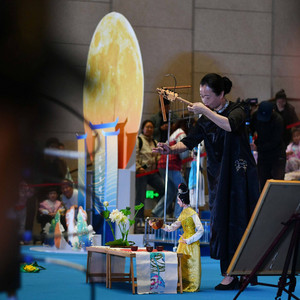
Families across China have come together to celebrate the Mid-Autumn Festival on Monday.
Traditions include eating mooncakes and enjoying cultural performances.
In the eastern Fujian province, residents dressed up in ethnic minority costumes to celebrate with tourists.
In central China, a film and entertainment center is hosting over 160 cultural performances each day.
The festival is also a time to enjoy the full moon.
Popular moon viewing spots include scenic sites like Shihu, Mount Tai and the Summer Palace.
Restaurants are experiencing a boom as families gather for reunion dinners.
Reservations at restaurants in Shanghai and Beijing have nearly doubled.
Elsewhere in China, Hong Kong is celebrating the festival with the Taihan Fire Dragon Dance, which dates back to more than 140 years ago.
Children and residents on the parade route waved LED dragons as the dance made its way around Hong Kong's special administrative region.
I come here almost every year.
It's always so lively.
And this place has a long history, over 100 years.
There are relatively few of such long-established commemorative activities in Hong Kong.
This is a representative one because we've been part of this since we were little.
The fire dragon dance is an intangible cultural heritage.
We should all pass it on.
This national intangible cultural heritage features a 70-meter fire dragon made of incense sticks, carried by 300 performers.
Celebrations of the Mid-Autumn Festival are not confined to China.
In Britain, Manchester joined the festivities as a show of cultural connection and friendship.
Jeff Moody was there.
Under leaden Manchester skies, a dose of Chinese sunshine.
I love to come here each year because I love Chinese culture and I think it's a great initiative to be able to put it all together.
Such a shame this year that the weather is not really cooperating, but it's still so nice to be able to have this in Manchester.
The Mid-Autumn Festival is about harmony and bringing people together and remembering families, and one thing and another, and I think that embraces the spirit of Manchester itself.
And it's not just Manchester.
Celebrated here, the strong ties of friendship between two worlds.
Nowadays, I think, especially after the Brexit, I think UK and China, we need each other.
We have a practical conversation and carry out this kind of cooperation.
I think in today's world, we face uncertainties and challenges, new challenges.
I think China plays a very important role to maintain stability.
The Mid-Autumn Festival is one of the most important in the Chinese calendar, a time to honour ancestors, to celebrate family and to nurture friendships.
They're very friendly to foreigners, especially when I visited.
I got people talking to me, even though they didn't know English, or they would take photos with me and smile, and they made me feel very welcome in China.
It's a chance too to try your hand at some ancient Chinese crafts.
This is called woodblock printing.
It's one of the Chinese great inventions.
Have you ever heard it before?
If you want to be safe in your house, just hang it in front of your door.
So I need to hang this in front of my door and I'll be safe and happy in my home.
Yes, he'll protect you.
No amount of English weather can dampen the spirit here.
It's the spirit of China, of celebration, of commemoration and of friendship.
Friendships that endure long after the rain has gone.
That was Geoff Moody reporting from Mid-Autumn Festival celebrations in Manchester.
Mooncakes are the iconic snack of the mid-autumn festival thanks to their round shape, which mirrors the full moon and symbolizes reunion.
Ham-filled mooncakes from Yunnan province are pleasing taste buds and capturing market attention.
Yang Jinghao travels to the hometown of Ham in southwestern China to see how tradition, innovation and industry are coming together in this savory holiday treat.
Unlock the traditional sweet lotus seed or red bean paste fillings.
These mooncakes stand out with their savory aroma and golden crust.
Our mooncake production line can make up to 1.2 million pieces a day.
Right now we're producing about 500000 to 600000 daily, and total sales this year are expected to reach around 100 million yuan, about 14 million US dollars.
Here you see a blend of tradition and innovation.
Skilled workers still make some mooncakes by hand kneading the dough and carefully wrapping each piece.
Modern machines keep production running efficiently, allowing producers to meet rising demand while keeping the flavor true to its roots.
But innovation isn't only about speed or scale.
Flavor and quality are at the heart of every new creation.
We've developed a new type of mooncake that's lower in oil, sugar and salt.
It uses local farm eggs and premium sunflower oil, so it's light and not greasy.
And we use black pork ham aged for more than two years, which gives it a rich, savory flavor.
The growing popularity of ham mooncakes reflects the robust development of Xuanwei's ham industry.
With over 600 years of ham curing history, the city is now upgrading the industrial chain.
In addition to leading companies like Lapjong, several ham manors have opened across the city where visitors can learn the traditional curing process, sample local delicacies and shop for specialty products.
We plan to further enhance the cultural, brand and tourism value of Suan Wai Ham.
For example, our ham manors industrial park museum and ham-themed pedestrians are all being developed into a series of premium tourist attractions.
That was a report from Xuanwei about Han moon cakes.
This year, China celebrates mid-autumn festival during the National Day holiday.
Monday is the sixth day of an eight-day break.
Chinese authorities are expecting 164 million railway trips, while highway traffic volume is forecast to top 16 million vehicle trips.
The railway and highway networks are preparing for an increase in passenger volume as people return to work after spending the holiday in their hometowns.
The long holiday is a good opportunity to boost consumption.
In Zhangjiakou that co-hosted the 2022 Winter Olympic Games, Chong Li has staged events to encourage spending and offer people a getaway to nature.
Li Lunheng spoke with some holidaymakers.
Amid stunning autumn scenery, Chong Li hosted a car festival that drove more than 700 vehicles and 3000 autumn enthusiasts to the mountain town.
The three-day event featured cross-country race, go-kart competitions, an autopilot challenge and a variety of other activities celebrating car culture and outdoor living.
It gave participants the perfect opportunity to hit the open terrain and savor the crispy autumn atmosphere with family and friends.
The weather here in Chongli is absolutely beautiful.
The colorful leaves and autumn scenery are perfect.
I feel so relaxed in this resort town and I join this event mainly because I am interested in electronic vehicles.
In Chongli, the spectacular autumn scenery is not just for admiring from a distance.
Visitors are encouraged to become part of it.
For those eager for more adventure during the holiday, the region offers a variety of other activities.
Grab your mountain bike and fasten your shoelaces.
Many resorts and clubs are hosting outdoor events such as orienteering and downhill races, catering to both beginners and professionals.
We came from Inner Mongolia and brought my son to this mountain bike race.
It's quite helpful for him because it encourages him to do more outdoor activities.
Building on his legacy as a skiing destination, Chong Li is now leveraging its vast mountainous terrain of over 1800 square kilometers to forge a vibrant all-season outdoor destination.
This initiative has gained worldwide admiration and throughout the rest of the holiday, visitors will continue to create memorable experiences in this stunning location.
That was Li Lunheng reporting.
Coming up.
Egypt hosts indirect talks between Israel and Hamas on a potential agreement to end the conflict in Gaza.
You're listening to The Beijing Hour.
60 minutes of comprehensive news.
Your window on China and the world.
10 minutes past the hour.
Egypt is hosting indirect negotiations between Israel and Hamas regarding a potential agreement to end the conflict in Gaza.
Hamas has stated that its conditions for a prisoner and hostage swap include a complete ceasefire, the withdrawal of Israeli troops and the suspension of Israeli fighter jet and drone operations.
The group said it accepts some points of the ceasefire plan proposed by U.S.
President Donald Trump.
U.S. and Israeli leaders agreed on the proposal.
Trump welcomed Hamas's initial response and told Israeli Prime Minister, Benjamin Netanyahu, to stop being negative.
Yasser Hakim has more on the discussions in Egypt.
They will discuss the first phase of the 22 points of the Trump peace plan.
And this first phase is about the conditions for a ceasefire, where the Israeli troops will be stationed according to the map that the US President Donald Trump has sent to the negotiators.
They will not retreat completely from Gaza.
According to the Netanyahu office, the Israeli prime minister, that they will remain in parts of Gaza.
They will discuss the conditions for the prisoner swap, which is very important for the Israeli and the US, but also for Palestinians, because everyone is talking about the hostages from Israel.
But there are about 10000 Palestinian prisoners in Israeli jails over the last few years, and many of them are women and children.
So those are also on the agenda of talks of who will be released, how many will be released and how long it will take for this release from both sides and the ceasefire itself.
And then finally, the negotiations for a comprehensive peace plan.
That was Yasser Hakim in Cairo.
Eight Arab and Muslim countries have welcomed Hamas steps toward the Gaza ceasefire plan.
Those countries, including Jordan, Indonesia and Saudi Arabia, commended Hamas's willingness to transfer Gaza's administration to an independent transitional Palestinian committee.
They also acknowledged the US president's call for Israel to stop bombing Gaza and begin implementing the prisoner exchange agreement.
They called for unifying Gaza and the West Bank, a full Israeli withdrawal, reconstruction and a just peace based on the two-state solution.
Israeli Prime Minister, Benjamin Netanyahu, says he hopes that Israel could secure the release of all hostages soon.
He said the second phase of the U.S. peace proposal will aim to disarm Hamas and demilitarize Gaza.
Professor Wang Jing from the Center for International Strategic Studies at Northwest University believes implementing the first phase that centers upon the hostage release will be easy, but the two sides may face some challenges in the second phase.
According to the agreement, Hamas needs to be dismantled.
Hamas needs to be a very, very marginal role in the possible new Gaza Authority.
All these things would be highly dependent upon the cooperation and the coalition from Hamas.
So on the one hand, Hamas needs to be dismantled.
And on the other hand, Hamas needs to cooperate very closely with terms of the possible deal.
So those things are very conflicting ideas.
So that's why I think we have these kind of prospects. over the future Gaza Strip.
Although that every size, including the neighboring countries Egypt, Jordan and other countries.
We all hope that the peace could be reached, the deal could be implemented.
But I don't think it would be the easy task.
I think all of the challenging factors would emerge particularly in the second phase, particularly over the role of Hamas in the Gaza Strip in the future.
That was Professor Wang Jing at Northwest University in China.
Gaza lies in ruins after a nearly two-year-long assault from Israel.
The Egyptian foreign ministry says it will organize an international conference to rebuild the Palestinian enclave.
Cairo also says it will train thousands of Palestinian police officers as part of a post-war plan for the Gaza Strip.
Adola Maruki has more.
Egypt and Jordan are training thousands of Palestinian police officers to help address security in the West Bank and Gaza.
5000 will be deployed to Gaza if a deal is finalized between Israel and Hamas to prepare for a new Gaza without Hamas dominance.
We are training some of these people under the supervision of very specialized and competent associations and systems in the security field.
However, I do believe that this number could be actually enlarged to 10,000 in the very near future.
We have the proficient and competent and very specialized systems who are able enough to bring out good elements to conduct the managerial security system within Gaza Strip and even more in the West Bank.
So Egypt and Jordan are professionals in this field.
The Egyptian role could include aid support, reconstruction and a possible seat at what Trump calls the Board of Peace, which will oversee the management of the Palestinian enclave.
Without Egypt, nothing can get implemented.
Gaza is the strategic extension of Egypt.
Egypt must have a role.
It is not a new role though.
It's a role that began since the crisis broke out.
It is the first country to establish peace with Israel and it is the most experienced in dealing with Israel.
I also have the main role in uniting the Palestinians.
I can only imagine that Egypt will have a main role in that board of peace.
The Hamas and Israeli delegations will reportedly discuss conditions in Gaza for a prisoner exchange.
In September 2024, there was something called the CSS, which is CSC, I mean, which is the Community Support Committee.
It was ratified by both Hamas and Palestinian Authority here in Egypt.
This committee will take over.
It's composed, or consists of 15 members to represent the ministers and the municipalities all this kind of stuff to run, run over the place.
So this this Hamas actually agreed on that and they ratified that.
They signed that in Egypt.
So they would accept that and according to their acceptance for the Donald Trump plan, a disease fire deal looms.
Egypt's role in Gaza's future could be integral to the success of any agreement.
Trump's plan suggests that regional states must guarantee that Hamas in Gaza no longer threatens Israel.
That means that Qatar and Turkey can play a role and become a vital part of the mediation efforts.
That was Adela Maruki reporting.
21 activists who were detained while attempting to reach Gaza by sea have arrived in Madrid.
They were part of the Global Sumud Flotilla, a group of 450 people trying to break Israel's naval blockade of Gaza.
Israeli forces intercepted the flotilla and arrested many of the activists, some of whom remain in prison.
Among the detainees were Spanish journalist Néstor Prieto, who alleged threats from laser weapons to end sleep deprivation.
The feeling we are left with after everything we've been through is one of constant dehumanization, of trying to blame us for acts of hostility.
It was like this the entire time. including sleep deprivation.
As further evidence of what was happening in the men's unit.
They entered several times and pointed their weapon lasers at our vital parts, at our heads, at our hearts.
Portugal also welcomed home four activists, including Mariana Motagua, leader of the Left Bloc Party, who had temporarily suspended her mandate to participate in the flotilla.
Motagua denounced the mistreatment as she experienced while in detention.
Israel's foreign ministry dismissed the claims as brazen lies and said the detained activists chose legal deportation over voluntary departure.
The arrests drew international criticism from Turkey, Colombia and Greece.
Coming up, French Prime Minister Sébastien Lacourneau has resigned.
The Yellow River Mosaic is a 12-part series of multimedia stories featuring the people who live by the river and share a close bond with it.
Subscribe to Yellow River Mosaic on your favorite podcast platform or visit radiocgtncom for more in this program.
French Prime Minister Sébastien Lacourneau has resigned less than a day after his cabinet was unveiled.
The surprise move comes just 26 days after Lacourneau's appointment, following the collapse of the previous government led by François Bayrou.
Lacourneau faced strong criticism across the political spectrum in the National Assembly, with many lawmakers opposing his largely unchanged cabinet and threatening to vote it down.
France's political instability has deepened since last year's snap elections, which resulted in a hung parliament.
This has made it difficult for any prime minister to secure enough support to pass legislation.
Beirut's government was voted down last month after parliament rejected his austerity budget, which aimed to cut over 50 billion us dollars in government spending.
France's deficit reached 58 of GDP in 2024, with national debt now at 114 of GDP, one of the highest in the eurozone.
Typhoon Matmo is weakening as it moves westward across southern China.
It hit the southern and southwestern parts of the country, forcing more than 300000 people in Guangdong and Hainan provinces to move to safer areas.
China's top economic regulator has earmarked 200 million yuan, or 28 million US dollars, for disaster relief in the two provinces.
Authorities also sent 30,000 relief items, including folding beds and emergency kits.
In Central Europe, seasonal changes happen faster and at an alarming rate each year.
Summers are hotter and storms are more violent.
Pablo Gutierrez reports on how the shift in weather patterns is forcing businesses in Hungary to adapt.
On the riverbank in Santander, owning a bar with a beach view seems like a dream.
But the Danube has become as much a threat as it is a treasure.
The river swallowed this terrorist shutting down their business for weeks.
It was the end of the summer and it happened in june as well, so it happened twice.
You can see that we can.
We can move every track and it was rising.
We we were checking the, the website and it told us that it's gonna be like five, six meters.
And when the waters finally retreated, another problem arrived.
I think today it's almost 40.
So yeah, it's hard to work like this.
However, when relieving rain arrives, it's often sudden, violent, and destructive.
The surface is heated very much.
If there are humidity in the environment, then this is generating and uplifting.
So there will be a great instability within a few hours, very strong precipitation.
Meteorologists say this is a new reality in the Carpathian Basin.
Hotter days, heavier rains and storms fierce enough to peel roofs from homes.
In June this year, the monthly average temperature was the second highest. since 1901.
Here at the Danube Bend where droughts and floods trade places, numbers really do tell the story.
Hungary's temperatures on average have risen by 1.15 degrees since the 1900s.
That's faster than the global average of 0.9%.
Hotter summers, lower rivers, and a future we can already feel.
Across Hungary, towns are adjusting.
Some now issue heat alerts that trigger radio messages, flyers, even phone calls.
Schools teach children how to stay safe in the sun.
Firefighters train to contain blazes before they spread.
How towns respond really depends on their size and how much money they have.
Most places at least have a heatwave plan.
In a country where summers once meant long days by the river, the weather is now rewriting the rhythm of daily life.
For business owners, for families, for entire towns, adapting has become part of living.
That was Pablo Gutierrez on how climate is reshaping people's lives in Hungary.
Democratic and Republican Party leaders remain deadlocked as the US government shutdown enters the second week.
Pollution monitoring and disaster response operations could stop due to major funding cuts to the Environmental Protection Agency.
A senior advisor at the Environmental Protection Network warns that toxic emissions could go unchecked, putting millions of Americans at risk.
It is Tian San reports from Los Angeles.
Earlier this summer, families in the small US town of Delton Georgia, sued major carpet makers operating in the region, accusing them of contaminating their air, local water systems and land with so-called forever chemicals, known for causing serious health problems.
I myself have health issues that have gotten worse since coming down here.
You know, I got blood pressure that they can't control.
You know, I'm on four different blood pressure medications and it still goes high.
I'm a heart patient, you know.
I've ended up with autoimmune disease.
My daughter's ended up with an autoimmune disease.
Is this all because of what's going on here?
Because we didn't have these issues before.
According to the lawsuit, pollution levels reached thousands of times above safety limits set by the Environmental Protection Agency.
But the EPA has seen major cuts to its funding and workforce since President Donald Trump took office.
And the government shutdown has forced 90 percent of its workers to be furloughed.
This shutdown that's happening now is just the latest episode, but this is a serial shutdown.
Week after week, they've been firing staff, shutting down science offices, rolling back regulations.
And every time they do that, that means we have more pollution in our air and in our water.
EPA inspections under programs like the chemical accident risk reduction are suspended, raising the exposure limit for communities near chemical facilities.
There are polluters out there who will take advantage of this shutdown, when they know inspectors aren't on the job, to dump extra toxic pollution in the air we breathe and the water we drink.
And that could be going on right now.
There's evidence that that happened in previous shutdowns.
And these toxic chemicals are usually invisible, sometimes odorless, so it makes it really hard, without EPA on the job, to know what's actually happening.
Residents in Delton are seeking accountability to having lost their health, their livestock, their livelihoods and even their property values at a time when agencies tasked with preventing such disasters are more weakened than ever before.
It is tensing on the impacts of a U.S. government shutdown.
U.S.
President, Donald Trump has expressed frustration after a judge he appointed blocked his attempt to deploy troops to Portland.
On the same day, Trump authorized the deployment of 300 Illinois National Guard troops to protect federal assets in Chicago.
This marked an escalation in federal intervention.
However, a federal judge temporarily blocked the deployment of 200 National Guard troops in Oregon.
Immigration and Customs Enforcement building in Portland.
North America's last wooden hockey stick factory is facing uncertainty due to shifting US tariffs and increased global competition.
The factory in Ontario has over a century of history and produces 400,000 wooden sticks annually.
Owner, Graham Ruston, says US tariffs on Canadian exports have led to rising costs, unpredictable delays and additional duties at the border.
There's not a single customer ever That when you tell them you have to raise the price that they're going to pay by 30 to cover a tariff.
Not one customer I've met so far or heard of is thrilled about it or is like, oh, that's great.
Yeah, yeah, sure.
Just add it to the bill.
Nobody does that.
US tariffs aim to boost domestic manufacturing, but they have introduced significant challenges for Canadian businesses.
Mexican President, Claudia Sheinbaum, has expressed confidence in being able to reach good trade agreements with the United States and other nations in her State of the Nation address.
Thousands attended the rally, in which marked one year since Sheinbaum became president.
She highlighted Mexico's sovereignty and praised Mexican migrants.
The country's first female president said Mexico does not accept interference and interventionism.
Figures from the China Federation of Logistics and Purchasing show the Global Manufacturing Purchasing Managers Index stood at 497 in September, a slight decline from August.
This indicates a steady global economic recovery, though still below the 50 expansion threshold.
The global PMI averaged 496 in the third quarter, up 03 from the second quarter, signalling moderate manufacturing growth.
Now it's 29 minutes past the hour, checking the forecast for the day.
Beijing will be cloudy with a low of 13 on Monday evening.
Tuesday will be cloudy with a high of 22.
Nanchang is down to 28 tonight, then sunny and 36.
Elsewhere in Asia, Islamabad is 15 tonight, then light rain and 20.
Vientiane is 24 overnight, then heavy rainfall and 30.
Phnom Penh is 25 overnight, then light rain and 32.
That's it for this edition of the Beijing Hour.
In the second half of our program, we take you to Hebei province to explore a Chinese agricultural project that is helping nurture high-quality talents for Africa.
Making news today, families across China are celebrating the Mid-Autumn Festival.
On behalf of the staff.
This is Tianlu, in the Chinese capital, hoping you'll join us for the next edition of the Beijing Hour and open a window to the world together.
Listen up.
Can you hear the heartbeat of our world?
It's vibrant and pulsating with the essence of life itself.
From the stem of trees to the gurgle of rivers.
From the silent strength of mountains to the icy whispers of glaciers.
Even the solid ground beneath our feet, right there, in the midst of all beast, a heart of humanity.
What if those other heartbeats were to stop?
Would ours keep on ticking?
Ever wondered what's actually going on in Africa through the perspective of an African?
How are things really going between China and Africa?
What's the narrative of this relationship?
Well, get a perspective with China Africa Talk.
Hear from African diplomats, entrepreneurs, academics, Chinese natives and more.
Get on our wavelength every week to find out what's real with China Africa Talk.
Find us on your favorite podcast.
We'll see you there.
As you sip your morning coffee, we transport you from the sea of tulips in the countryside to the exciting moments of table tennis worlds.
As you commute in the hustle and bustle of rush hour traffic, we guide you to navigate from intricacies of global markets, tech revolutions to the El Nino-triggered fires.
As you gather around a community event, we provide you the vibrant sounds on different topics, such as how AI empowers education.
What does Lung, or the Chinese dragon, mean to the Chinese people?
Why live stream shopping is gaining popularity in Brazil?
CGTN Radio, your constant companion to connect people through sharing insights, interviews and opinions that help us to see the world.
Together with CGTN Radio, hear the difference.
You can download the CGTN app to get more valued information.
You're listening to China Africa Talk.
Everything China, everything Africa.
Everything China, everything Africa.
Hello and welcome to this special series of China Africa Talk where we bring you a six-episode feature to get the forward, to mark the 25th anniversary of FOCAC, the Forum on China-Africa Cooperation.
I'm Brigitte Mutambirwa.
In this special feature, we meet the people at the heart of China-Africa ties, showing us how FOCAC's vision is shaping lives and futures.
A Chinese agricultural program in Hebei province is nurturing high-quality talents for Africa.
Leveraging China's experience and techniques.
Those young leaders are empowering farmers and improving the livelihoods of thousands across the continent.
In this episode, Gao Junya takes us to explore the project.
I'm standing in a small farming village in northern China's Xuzhou County.
It is quiet, earthy, and far from the pace of city life.
But this isn't just any village.
It is where some of the most fascinating agricultural experiments are happening.
The village hosts one of the China-Africa Science and Technology Backyards, or STVs, a program that's quietly transforming farming, not just here in China, but also across Africa.
Under the program, African students are working side by side with local farmers, taking measurements, sketching in notebooks and learning hands-on techniques in the fields.
Like I said earlier, whenever we need him, we come to him.
The science and technology backyard was launched by China Agricultural University in 2009 with a bold idea.
Move science out of laboratories and classrooms and put it directly into the fields where farmers live and work.
Students and researchers live in rural communities, experimenting with farmers, testing solutions and learning from them in return.
After a decade of success in China, the model expanded in 2019 to include Africa, bringing students from across the continent to study in Chuzhou, with the hope that they would carry the model back home, transform local agriculture and improve livelihoods.
Xiao Xiaoqiang heads the China-Africa STB program.
Our China-Africa STB was launched in 2019.
By then, the STB model had already been running in China for 10 years, helping millions of smallholder farmers.
We wanted to bring China's experience to more countries, especially along the Belt and Road, so that smallholders globally could benefit from these techniques.
While the model is from the Chinese experience, the program is tailor-made for African conditions.
We adapted our 10 years of STB experience to create a curriculum for African students.
Courses are taught in English and tailored to African agricultural needs.
Each student has two mentors one here in China who guides their thesis work, and another back home who supports their field research and demonstration projects.
I walk along a plot where rows of maize and soybeans grow together.
This is one of the typical classrooms of the STB program a classroom without walls where tests are measured in harvests.
So meaning now it is there.
It is in the inside.
African students are scattered among the crops, kneeling to measure plant height, check for pests and take notes.
The maize.
So this maize can fail to produce.
One of the students, David Mwangi from Kenya, explains his research and describes his hope for farmers back home.
Currently I am doing my project, which is on maize monocrop, whereby we are using different fertilizer treatments to grow the maize to see how it performs.
And also that I will use the APSIM model.
That is a model to simulate different growth conditions and how different fertilizer applications can be done to attain yields in different conditions.
So that will be done here, and when I go back to Kenya in November, I'll continue the same.
Also here in China.
I've been working with farmers in Suzhou Ying Village, where there are 30 STB farmers.
Before they had planted wheat, now they have planted maize.
We interact with the farmers on the way they plant their maize, the technologies they use in pest protection, the fertilizer application and irrigation.
We have learned a lot, and I will integrate some of that when I go back to Kenya.
In my research plan, I plan to go and start also dealing with 30 farmers in Kenya.
And as I do my project, they will learn from me.
Then integrate the same in the field, also in their farms, so that they can be able to attain higher yields.
So I think I can say I have learned a lot and I'm going back home a very happy person to assist my farmers.
Listening to David, what strikes me is how every lesson connects directly to farmers' lives.
It isn't just about writing a thesis.
It's also about bringing back something tangible for the African farmers.
Currently there are four China-Africa STBs in Chuzhou County and four in Africa, one in Kenya and three in Malawi.
The program requires African students to spend the first year in China, the second year at an STB in Africa and the third year back in China to finish their thesis.
Sylvester Panyani is in Malawi for his second year of study, working at the Lizasazi Science and Technology Backyard to help farmers increase output.
What are your main responsibilities?
All right.
Okay.
So I'm currently leading the implementation of STB work in Lisa Sanzi.
That's in Kasungu district in Malawi.
And my main responsibilities include the experiments that I'm conducting on the RRTC, the residential training center, which is the STB center that was established.
I train farmers and I coordinate with local leaders and monitoring demonstration plots in the farmers field trials.
I also facilitate farmer group meetings for feedback and also collect and analyze agricultural data and share the results in ways that farmers can apply immediately, which also in my day-to-day activities.
I also just go around the fields, engaging with the farmers and looking at what the current problems they are facing on a daily basis are and then discussing with them the way forward in terms of how they can solve those challenges.
So we do have a collaboration, the farmers working together on a daily basis, we communicate.
So I'm already available to the farmers, together with my other colleagues, to make sure that the interventions that we have brought are very relevant and effective for the farmers.
And is there a certain number of farmers that you've been helping or how many households?
Okay, so I have 50 smallholder farmer households that I'm working with in this area.
Of course, the number is bound to increase because, with the just ended cropping season, We have seen positive feedback from the farmers and more farmers have shown willingness to join the program.
So maybe in the coming season we are going to have a bigger number of farmers.
But right now I have 50 households that I've been working with.
Working in Zimbabwe for over five years, I reported on Malawi quite often.
The picture is clear.
Agriculture is the backbone of Malawi's economy, contributing one third of its GDP and supporting 85 percent of its 20 million people.
The nation enjoys favorable natural conditions abundant sunshine, fertile land and a strong labor force.
Yet limited resources, poor infrastructure and low adoption of modern techniques remain obstacles.
And there's another hurdle in agricultural innovation, trust.
Farmers often hesitate to change practices that have been passed down for generations.
But once they see results in their own fields, skepticism quickly turns into adoption.
Wangani Gondwe now works at Malawi's Muzuzu STB.
She shares the dramatic change as more and more local farmers are embracing Chinese agricultural technologies introduced through the STB.
One of the achievements which I can say that we have brought here at the STB is the use of modern planting techniques.
We have helped farmers with the modern planting techniques which we learned in China.
As a result, the farmers are able to improve, increase their harvest and they are able to earn more income and they are easily helping their families.
On top of that, some farmers have expanded their farming businesses and they are also creating the jobs for other farmers due to the knowledge which they have learned from us.
I chatted with a certain farmer and she was explaining to me that she's so grateful and she's so happy with the STD program Because in the back years she was not able to produce more farm produce for her family.
But currently, due to the modern techniques which we have brought here to use HDP, she's able to produce more farm produce and on top of that, she's selling and she's able to support her family.
She's so helpful and happy for the HDP program here at the Institute for HDP.
That kind of momentum can reshape communities.
As Professor Jiao explains, they've designed and adopted a three-step plan to empower African farmers.
To help smallholder farmers, we designed a three-step plan.
The first step is to ensure food security, growing maize to meet basic needs.
The second step is nutrition.
So we introduced intercropping, maize with soybeans, broad beans, cowpeas or peanuts.
The third step is small-scale livestock raising, recycling crop waste into animal feed.
This way, farmers not only secure food and nutrition, but also earn extra income to cover farming costs.
Let the small farmers not only feed their people, but also earn some small money.
They can pay the cost of farming.
The outcomes are impressive.
Yields in Malawi have climbed from two tons per hectare to as much as eight tons.
Since October 2023, when we placed students in three SDBs in Malawi, yields have risen sharply.
Local farmers normally harvest about two towns per hectare, but farmers trained through our program reached six to eight towns per hectare.
This not only boosts food supplies, but also raises incomes.
In Malawi, when we introduced maize soybean intercropping, farmers saw improved nutrition from eating soybeans and extra cash from selling the surplus.
Professor Zhao keeps in touch with his students in Africa through weekly online calls.
Sometimes, farmers themselves join in to share their excitement.
One farmer joined our online meeting and said I'm over 60 years old and I've never seen maize this big in my life.
If all my maize could grow like this, I would make a fortune.
For Panyani, the impact is also best measured in personal stories.
This year is the second year of implementing STB program in Lisasazi.
And since the introduction of the program we've seen first of all, the number of participating farmers has increased from 30 to 50 this year.
And it's also promising to increase further.
But most importantly and most notably is how...
Some farmers have given feedback to us and even have studied some farmers.
There is a specific case of a farmer who has started constructing a new house because she has managed to realize enough for home consumption as well as for sale.
So she has increased her income and managed to buy materials for house construction.
And this is one of the positive stories that we are getting.
This is just one of it.
And there are also others who have started keeping livestock because they have managed to increase their income through the yield that they have realized after implementing the interventions in the STB program.
Professor Zhao and his team visit the STBs in Africa annually to see the impact firsthand.
He's often surrounded by locals who can't wait to share with him the positive effects of the STB program.
Every time I visit Malawi or Kenya, farmers invite me to see their harvests.
One farmer proudly showed me his granary full for the first time in years, with extra grain stored in neighboring rooms.
He told me this is the benefit your program brought, and I'll share this model with more people so they can join us.
Local officials and farmers often say this approach is win-win.
It solves farmers' problems while training students.
And most importantly, the technology stays here in farmers' hands year after year.
As Professor Zhao spoke, I couldn't help but think about how a real seed has been planted to unlock Africa's agricultural potential.
Africa has 60% of the world's available arable land.
With the support of partners like China, the continent will achieve its goal of becoming a global breadbasket.
From 2019 till now, over 130 talents from 13 African countries have trained through the STD program.
Professor Jiao stresses the significance of cultivating students' passion for agriculture, farmers and rural areas.
He says the training model is a way of spreading knowledge without relying on aid.
The first one is that we have trained a group of farmers in Africa who understand agriculture, love the countryside, love the farmers and are willing to make a living.
First and foremost, we have trained a group of high-quality talents in Africa who understand agriculture, love rural areas and care for farmers, and who are willing to work at the grassroots level.
At the same time, we have instilled the philosophy of teaching how to fish rather than giving a fish in Africa.
Secondly, these talents have further motivated local farmers to adopt high-yield farming practices.
Additionally, in China, within the Sino-Africa Science and Technology Backyard Framework, we require each student to carry out the 1351 initiative.
The 1351 initiative entails first conducting a comprehensive baseline survey of production issues in the entire region to accurately identify and understand what farmers are concerned about, what technologies they need and how they prefer these technologies to be delivered.
Second, each student must collaborate with 30 farmers to conduct experimental demonstrations, ensuring that these farmers not only understand the technologies but also know how to apply them.
Third, the effectiveness of these technologies must be monitored across 50 plots.
And lastly, we aim to establish a 100 mu demonstration field.
Our science and technology backyard is built in collaboration with local agricultural technology extension stations and centers, which attract a large number of farmers to come for learning, exchange and training.
Through this 1-3-5-1 approach, we train one African student, who in turn guides 30 farmers.
These 30 farmers not only understand and apply the technologies, but are also able to disseminate them to more people.
In this way, we ensure that the technologies and talents remain in the local communities.
A key point of our training model is that we do not provide extra material aid.
What we provide is technology and concepts.
For African students themselves.
With their knowledge and techniques, they've become powerful advocates for agricultural transformation, securing the lifeline of Africa's development.
It is so hot here?
Yeah, it was very hot.
So it was an open field.
Outside of the lisasa zstb in malawi, a monument reads a farmer is a leader.
Yes, the students are leaders here, shaping the future of agriculture.
I wish to consult more in the transfer of technologies from china to to africa and also help the younger ones who want to venture into farming.
I plan on not just with the STP farmers in different STPs back at home, but even in my community.
Maybe we can introduce the model to them and also introduce the technologies that we've learned here so that they'll be able to apply them and maybe increase yield from one point to the other.
In the long term, I want to aspire to be a leader in the agricultural development programs across Africa that integrates science, technology and community engagement, building on lessons that I have learned through the STB model.
And personally I hope to continue growing as a mentor to young researchers and bridge between farmers and science.
So I just want to help them to earn as equal to, as how much or as more as they invested, by giving them the right technologies to help them achieve so that they should also live a happy life.
As you know, we all depend on farmers.
The whole country depends on agriculture.
Agricultural cooperation is a cornerstone of the solid relations between China and Africa.
China has already built more than 20 agricultural technology demonstration centers and introduced over 300 advanced farming technologies in Africa, benefiting more than a million smallholder farmers.
Over 500 Chinese agricultural experts have worked in Africa and nearly 9000 agricultural professionals have been trained.
China will continue to support Africa's modernization by improving food security and building local capacity.
For the students and farmers I met through the STP program, the message is clear.
Agriculture is not just about crops.
It's also about dignity, opportunity and the promise of a better life.
Seeds planted here in Suzhou are already sprouting in African soil, and they may well grow into a harvest that changes the future of farming across a continent.
On the 25th anniversary of FOCAC, the Forum on China-Africa Cooperation, CGTN Radio presents a special feature series Together Forward, showcasing the breadth and depth of the China-Africa partnership.
Clean water projects in Zimbabwe.
New classrooms in Botswana.
Grand innovation in Kenya.
Agricultural training in Handan, vibrant trade in Yiwu and the documentary producer's journey in Hangzhou.
These are the stories that bring this partnership to life.
We have trained a group of high-quality talents in Africa who understand agriculture, love rural areas and care for farmers, go a long way in addressing this critical need.
All the world i never see one country like china, especially like you.
So this becomes more productive, cost effective and more freelance.
I have a small dream before turning 45 i want to make 10 china africa's documentaries.
This school is beautiful and, like i'm saying, everybody wants their learners to be.
Join us in celebrating 25 years of folk art.
Stay tuned with china africa talk and discover the real impact of china africa cooperation and how we're moving forward together.
Find The Beijing Hour at precisely 6pm Beijing time.
We meet you on podcast and on air every weekday.
The Beijing Hour, your window on China and the rest of the world.
He can't live without the Yellow River in his eyes.
The Yellow River is so noble and elegant.
Both my grandpa and dad made the living from the river.
Would you like to move away from the Yellow River?
I don't think I will.
I love it so much.
The Yellow River, the second longest river in China, is regarded as a shaping force in the history, economy and culture of northern China.
Today, about 100 million people live within its water basin, making up nearly 9 of the country's population.
How is climate change felt at its headwaters?
And what are the locals doing to cope with it?
What are the descendants of the boatmen doing?
What has kept some people from leaving their home village by the river?
And what has drawn others back?
Could the fading fishing community revive in a time of digital transformation?
From 2021 to 2024.
Our reporters visited the upper, middle and lower reaches of the Yellow River, talked to the herders farmers boatmen, fishermen and eco-activists who share a close bond with the river, and present their stories in pictures, podcasts and videos, all in our 12-part series, The Yellow River Mosaic, available only on CGTN Radio.