You're listening to Roundtable, I'm Yuho Lin, joined by Steve and Yu Shen.
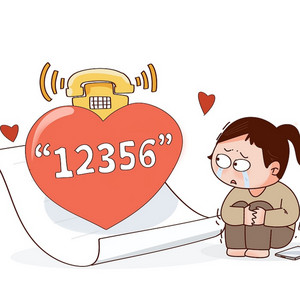
Coming up soon, a new hotline, 12356, targeting at tackling the society's growing mental health crisis.
But is this just another number, or could it be a real game -changer?
Let's dig into the reality, explore what this new effort could achieve, and discuss the broader steps needed to create a healthier society.
And after that, we'll invite you to Roundtable's happy place.
But now, China's rapid urbanization and economic growth have brought countless opportunities and success, but also unprecedented mental health challenges.
Imagine a family dealing with the silent struggles of a teenager overwhelmed by academic pressure, or an elderly neighbor battling loneliness in a bustling city.
These stories are everywhere, yet not often noticed.
As China prepares to launch a national mental health hotline, it's time to reflect what has worked in the past, what hasn't, and how can 12356 truly make a difference.
In order to answer all these questions, let's first take a look at the 2B launch, the new hotline.
Yeah, this kind of hotline requires each city -level region should set up at least one hotline, and each hotline should be equipped with at least two operators at the same time for at least 18 hours each day.
The hotline number is, as you said, 12356, and it is expected to be put into use around New Year's Eve or Spring Festival season and be accessible nationwide starting on May 1st.
Through the hotline, receptionists will provide mental health education, psychological counseling and support, as well as cope with emergency mental health needs and efforts will also be made to link the mental health hotline to the nation's hotline for police, fire, and first aid.
I want to ask you, Shen, do you know why it's 12356?
I have no idea. It's because it's easy to remember?
Is four considered a bad luck number?
No, because four in Chinese is ci, and affair or things is shuxing.
Yes, something. So no four, I mean, there's nothing.
Nothing is too important.
It should be that, yeah, mei shou.
Nothing should be that important that you want to, you know, feel so depressed about.
It will be fine. It basically says it will be fine.
I think it's a good way for people to remember it.
So just one, two, three, no four and five six.
There's also going to be pediatric hospitals that set up outpatient clinics here in the country dedicated to psychological counseling, and they're going to be training general medical staff about mental health knowledge as well.
And that's important because if the people that we're talking to, of course, don't have the necessary training, well then that's not a good situation.
So with that training, they'll be able to help detect and intervene in psychological issues while treating other illnesses as well.
So it's not just the hotline itself, which is an amazing development, but there's things happening at the community level, too.
Actually here in China, we have many, not local one, but more like provincial ones or let's say original ones.
Hotlines. Yes. For example, here in Beijing, we have been there.
There is the suicidal related or psychological crisis intervention hotline for quite a long time.
And overall, there are I think 24 sub position or sub posts in different places and a lot of volunteers are answering the films.
And I think some regional ones have been quite successful as well.
So do you think there is the need of having a national one?
Of course, you know, when we're speaking of this, when we're talking about this one, two, three, five, six hotline, it is a nationwide hotline.
And if you're asking me what is the number of Beijing's hotline, I cannot.
You don't know. So when we have this kind of nationwide hotline number, all of the people in the country can call this hotline.
It is more unified and convenient.
And this hotline as a nationwide unified mental health assistance service, it is allowing the public to access, help through a very simple and also memorable number when they need psychological support.
Also improving the convenience and accessibility of this service.
Also, I think, you know, the one, two, three, five, six hotline provides a public welfare service, meaning the service is free of charge for the public.
And this may differ from some what we've known, the paid psychological therapy clinics, also the counseling services.
Another point I would like to mention is that the service offered by this hotline includes mental health, education, psychological counseling, psychological guidance and crisis intervention.
And it is aiming to provide comprehensive psychological health support to the public.
By the way, just as a little note here, that is the original ones are still in use.
So no matter if you can remember the national one, which is easy to remember or the original ones that have been there for quite a long time, both would be still in place for, I think, at least to the the overlap period of time.
Having resources like this is necessary for the public, in my opinion, and having regional numbers is great.
But now that we have a national hotline that will be put into effect very soon, it's just another way for people to reach out.
I think the more important thing, if I can say this, and this is just my opinion, it's wonderful that we have or will have one, two, three, five, six.
But the more important thing is getting people to use it and making sure that people know that it's available and getting rid of the stigma that if you feel like you need to call a number like this, that there's something wrong with you because that is entirely false.
And that is a stigma that exists, I think, around the world.
It exists in Canada.
It exists in the United States.
It exists in many countries.
We need more education.
This is just my opinion, again, starting from elementary schools, from that young of an age, knowing that asking for help when you need it is OK.
And also the fact that your mental health is just as important as your health for your kidneys or your heart or your liver or other organs in your body, your brain needs a break sometimes.
And you need to talk about your feelings sometimes.
And there's nothing wrong with that.
That's completely and totally normal.
So taking advantage of these resources when they do exist is equally, if not more important.
Yeah, and it feels like it is kind of a signal to everyone that this is something anyone could encounter.
And we're making it a national hotline, which means that you don't really need to worry about it, which it turns in turn helps to reduce the shame or anxiety people might feel when facing such kind of issues.
Yes. So it's definitely easier to pick up the line, talk to someone who you know is a professional and also backed up by the authorities of the country, which is definitely trustworthy.
It's easier to do that than go to a clinic, get a registration number and go see a doctor and maybe even have to stand in the line among other people that makes you uncomfortable if you're already in a mentally stressed state.
Yet I was wondering, because for me personally, I don't know if I can trust this stranger at the other side of the line.
I don't think they're not professional or anything.
It's just harder for me to open up to someone who I cannot even see a face.
I would argue that it might make it easier somehow because I was thinking of saying talking with your friends and your family members, even though of course they'll be willing to help and listen as best they can.
But sometimes it's difficult for people to really, truly, honestly open up.
And when you call a number like this and there is a stranger, of course they are a stranger on the other end of the line, but they're a professional.
They know what they're doing and they're there to listen to you.
That's why they are there.
And because you don't know them and because they don't know you, I would hope that it would make it easier for people to really be honest.
And I mean honest, honest, honest, because that's one of the hardest things about therapy and making yourself feel better is really getting to the root of why you don't feel good.
Yes. And this is definitely not the only measure we're taking here in the society.
Actually, we have been by saying we, I mean the Chinese government as well as all different organizations, including different schools, companies and different places have been working on finding a way to improve the, maybe not improve the entire state, mental state of their employees and over their
people, but more like ensuring that they have a healthier state.
Yeah, we're developing a lot of the mental health workforce.
China has taken steps to increase the number of mental health professionals, including establishing 72 national level first class undergraduate psychology programs and supporting 31 universities offering undergraduate degrees in psychiatry.
The country also established a system for residency training in psychiatry with 202 accredited training basis and over 11000 psychiatrists trained.
And also I think it's kind of a policy or action that has been implemented for so long because I remember in my primary school, there is a room or we will say a corner that you can go to.
It is actually a room, you can talk to a teacher and we call her justin jiejie, which means she she she knows everything and she can talk to you and you don't have to have any anxiety when you're talking with her because even for primary school students, right, they may have different kind of psychological
issues when but they are maybe kind of afraid to say.
Yeah. And I think again, going back to that point I was making, where I think starting at an elementary school level is a really wonderful thing because not just because kids, of course, need that to which of which they do.
But also you're teaching children that it's not weird.
It's OK to express your feelings if you're not feeling good.
It's OK. It's completely normal and it's safe to do it.
So then that child grows up with that attitude.
And if you have a country filled with people who grow up with that attitude, then you're talking about a lot of benefits and business is one of the benefits.
And we don't want to think about business when we talk about this type of topic, but it's true.
I went to the World Health Organization website to see if they had information on this.
And back in 2020, they did a study on the world's 36 largest countries and they estimated that 12 billion productive days are lost each year due to depression and anxiety at a cost of nine hundred and twenty five billion dollars.
So mental health, it's not just the right thing to do from a company perspective.
Experts have proven time and again that it's also good for business.
So having, you know, your corner, you called it, or your classroom where you had the teacher there businesses, if they have this service available for their employees, it's just a smart thing to do.
And yes, actually, in some business and some companies that I know about, they have their in -house shrinks and they also have a meditation area, a space full of plants and they would have this very soothing, different color of light.
So you can sit there, sit in the couch, relax for a little bit, do a little bit of meditation and feel better.
And if you need to talk to someone, there would be the someone professional for you to talk to.
And at the same time, actually, here in China, in some provinces, they have already covered the cost of seeing a psychologist within the health insurance, which is also going to make the situation a bit better.
Oh, absolutely. That's a huge step, isn't it?
In in Canada, too, you know, I have a lot of criticism about Canada.
Canadians do that a lot, by the way.
We love our country, but we're not afraid to talk about our shortcomings.
That's for sure. And one of the things is the percentage of the budget the health budget that goes that goes towards mental health in our provinces.
It's roughly six percent.
Canada has provinces, not states.
About six percent of the the budget health budget goes to mental health.
That being said, there are provinces where Nova Scotia, for example, where I'm from, as far as I know, therapy is covered by your health insurance.
So there are things that are positive things that are negative, but to the point where health and your health insurance covers therapy and things like things related, that's just another thing that would encourage people to make use of the resources.
Yes, of course, but budget and also professionals.
All of these resources are quite important when we're trying to establish a national hotline.
But another point or we've been mentioning is that the public awareness, you know, I think this is kind of the most crucial issue.
That might still be the level of public awareness and understanding.
You know, although we're discussing this here right now, that it is so easy to remember.
But there are probably still many people across the country who aren't aware of this number or just cannot remember it.
So more, I think more promotion is definitely necessary and it could even be included in elementary school textbooks, just like we learn to remember the fire emergency number and medical emergency number, which is, by the way, 119120 here in China.
So, yeah, include it in textbooks and make everybody remember it.
Yes. One last question.
In this day and age, we talk about AI, AI, AI all the time.
Do you think artificial intelligence can play a part in helping people getting better mental state?
The reason I'm asking this is not only because AI is a hot topic, it's a key word all the time.
It's actually because actually one, for example, chat GPT was first launched after a while.
The server or let's say the manager of this AI tool realized that half of the consumers have already asked these artificial intelligence about consult them about their health mental issue already.
So I think it's definitely a need.
And yes, it's easier for us to open up to real human beings for them to talk to us.
But when it comes to whether or not this person is clinically depressed, whether or not there are some diagnosis, certain data, certain exercise to do, maybe artificial intelligence can help with the situation.
Well, I think yes. But I think we have to tread carefully on that topic because, again, things like chat GPT, AI chatbot feedback, you know, that's we're not we have to remember.
I think we sometimes forget that we're dealing with a computer here.
We're dealing with a computer that's taking data from documents from, you know, decades and decades and decades of human input.
And some of that can be positive and some of that can be negative.
So if the AI isn't trained properly, this this is a very this is not, you know, asking the population of Florence, Italy.
This is asking for serious help when you're in an emotional state that is sensitive.
So to completely rely on AI for that at this stage, not saying it's not possible, I'm just saying that we need to take that very seriously.
I am quite positive on this one, but not in a way that I can replace human, but in the way that can provide some response suggestions for the staff members.
You know, we've got discussed before how many people ask psychological help from AI.
Right. And now with with with these kind of national hotlines, with human review and supervision may be the results from AI may become more targeted and focused when these staff members are using AI to talk with.
That's a good point.
Yeah. Having AI helping us screening emotional issues, helping the experts do a better job of being more efficient, not just working alone as a AI listener or AI shrink.
Maybe that is at least what currently we should be doing.
You're listening to Roundtable.
Don't go away. We'll be back with Roundtable's Happy Place.
Delivery, delivery, delivery.
What is it? Happiness from Roundtable.
Hello, it's Roundtable with Nyo Hong -lin, Steve Hatherly and Ei Sheng and it's Roundtable's Happy Place.
Who wants to start with?
He's Happy Place. I'll start first.
So this week, my Happy Place is a secondhand store called Roundabout Charity Store.
So it's an organization run by volunteers who manage and operate this store.
And it is kind of a charity organization.
It's established in 2008.
They collect donated items and pass them on to people or institutions in need.
And items sold in the store help generate profits, right, which are also used to assist those in need.
Yeah. Here you can buy secondhand goods at very low prices, I would say.
And you can also donate items or clothes which allows you to receive discounts when you're shopping here.
Yeah. So I've been thinking about this kind of idea, you know, the concept of secondhand stores has existed for a long time.
But in recent years here in China, there has been a growing trend of these stores popping up.
For those passionate about vintage clothing and unique items.
This kind of stores provide a treasure trove of opportunities to explore.
But not only does this contribute to environmental sustainability by promoting recycling and reducing waste, but these stores also operate as charitable enterprises.
That's the point. The profits from these shops can be donated to various causes.
And it is creating, I think, a cycle of goodwill and positive impact.
And yeah, I think it is quite heartwarming.
And how did you know the place?
Oh, you know, they do have like WeChat accounts.
Yeah, they do advertisements on lifestyle sharing platforms or social media.
Yeah. That's awesome because you can feel good about your purchase knowing that your money is going to a good place.
What types of stuff can you can you buy there?
Basically, all of the things.
It is one of the biggest secondhand shop here in Beijing.
So from clothes to home appliances, vacuum machine, everything.
But mostly they are usable, but they are the things that people donate, which means they're like not the latest ones.
They're very inspiring, I think, for those of you who are like what I'm feeling right now, I would go online, look for some of the charity secondhand store and go have a visit for the weekend and feel good about myself.
Oh my gosh. That's exactly what I do.
Yeah. My mom would love a store like this if she ever visits.
It's her thing, secondhand shopping.
Me too. I love it. Buying secondhand clothes for me.
I'm a huge fan. I no need to spend a lot of money on new clothing.
And if you like I said, if you and if you can know that your money is going to a good place, well, then all the better.
Especially when you can get some of these hidden gems.
Well, that's the fun.
That's the entertainment side of visiting these types of stores.
There's some great stuff in there.
Yeah, great idea. You should thank you for sharing that.
What about you, Steve?
My happy place this week.
It's shopping related as well.
It's the holiday season.
Right. Christmas is behind us now.
Not everyone celebrates Christmas, of course, but my wife and I do.
We exchange Christmas gifts and I was excited to receive an ice making machine this year.
It's a little tiny thing that sits in your kitchen and you pour water in there and then it makes some ice.
Ice water all the time.
Ice everything all the time.
Ice Americano in the morning.
Even in the dead of winter, I still drink ice coffee.
So to have that as as a gift was a really wonderful thing.
And then I got her some some yoga related things.
But I'm not talking just about the gifts itself.
I'm talking about rewarding yourself every once in a while.
You know, we're not big fashion shoppers.
We don't go out and spend a lot of money on new clothes each week and we don't often reward ourselves.
So the message that I want to share is that for doing something for yourself or for somebody else, get yourself a little treat every once in a while.
And that might be at a second hand store.
It might be a new ice machine.
If you're an ice Americano lover like I am.
But it's all about self -care, I think a little bit.
So don't be afraid to reward yourself for your hard work or for your hard study every every once in a while.
Give yourself a little treat.
I think for this happy place, we've got a little theme here.
That is the little things that make you make you want to thank life and feel better about yourself.
Because mine is also related to that.
Actually, my happy place was found in something also very simple.
A dinner with my two longtime friends.
And we've been friends for over six, seven years.
And while we still keep in touch quite so much online and talk to each other all the time.
But we didn't have time to meet in person that often like when we first met and first become friends.
Life has gotten busier for all of us and between work, raising kids and other responsibilities.
It feels like there's never enough time to prioritize our friendship.
But something changed because one of my friends is about to leave for actually for Italy for two or three years.
And it's for a new job assignment.
And that makes us feel like she she is leaving.
And that leaving push us to feel like feel like we need to make some time for her and for our relationship.
In fact, it was our second meetup already.
This couple of weeks.
And that made me think we often say it's really actually easy to say we'll meet soon or let's catch up when things slow down.
But you have to realize life won't slow down and time won't stop for us.
Never. You have to make time.
You have to always make time.
So the dinner wasn't just a gathering.
It was a reminder to prioritize, to make time, to cherish those connections while we can.
Yeah. No matter it's meeting up with your friends or presidents exchanging, we need these kind of ceremonial or ritual moments to remind us that our lives can be so colorful.
Yes. We don't need, sorry to interrupt, we don't need a grand event like leaving the country for three years as an excuse to get to together.
But that's what we do, isn't it?
It's what we do. We just put things on the back burner.
Oh, yeah, I'll see you next month or in a couple of months.
And then it doesn't happen.
It doesn't have. So we don't we don't need that big.
I'm going to leave the country for us to get together.
Just try to make a point of of seeing the people that are important to you.
It's a good reminder.
It is. It reminds us that time is a choice.
It's not often something that happened to us.
It doesn't have to be.
You can make the choice.
And also it the the encounter makes me realize relationships need action.
We love our partners.
We love our friends.
And you have to let them know you love them by taking action.
And the last take away from our little dinner was that actually presence is more important than perfection.
It's not often about elaborate plans or something perfect or a great gift.
It's about being there fully present even if it's just for an hour over dinner.
You talk to each other genuinely and you are there for each other.
That is even more important.
Just showing up. Just showing.
Yeah. Just sometimes just showing up.
Just showing your face there is enough.
You don't need to prepare anything more than that because we need to remember that just by doing that.
That means a lot to the to the other people who are who are waiting for you to be there.
And it turns out it means a lot to us as well.
That brings us to the end of today's roundtable.
We'd love to hear your thoughts on today's topics.
Leave us a comment wherever you listen to your podcast or send us an email to roundtablepodcastatqq .com.
Until next time. Keep the conversations going and the ideas flowing.
I'm Yul -Hoon Lin with Steve and Yushun.
Thanks for listening.
Bye bye.